
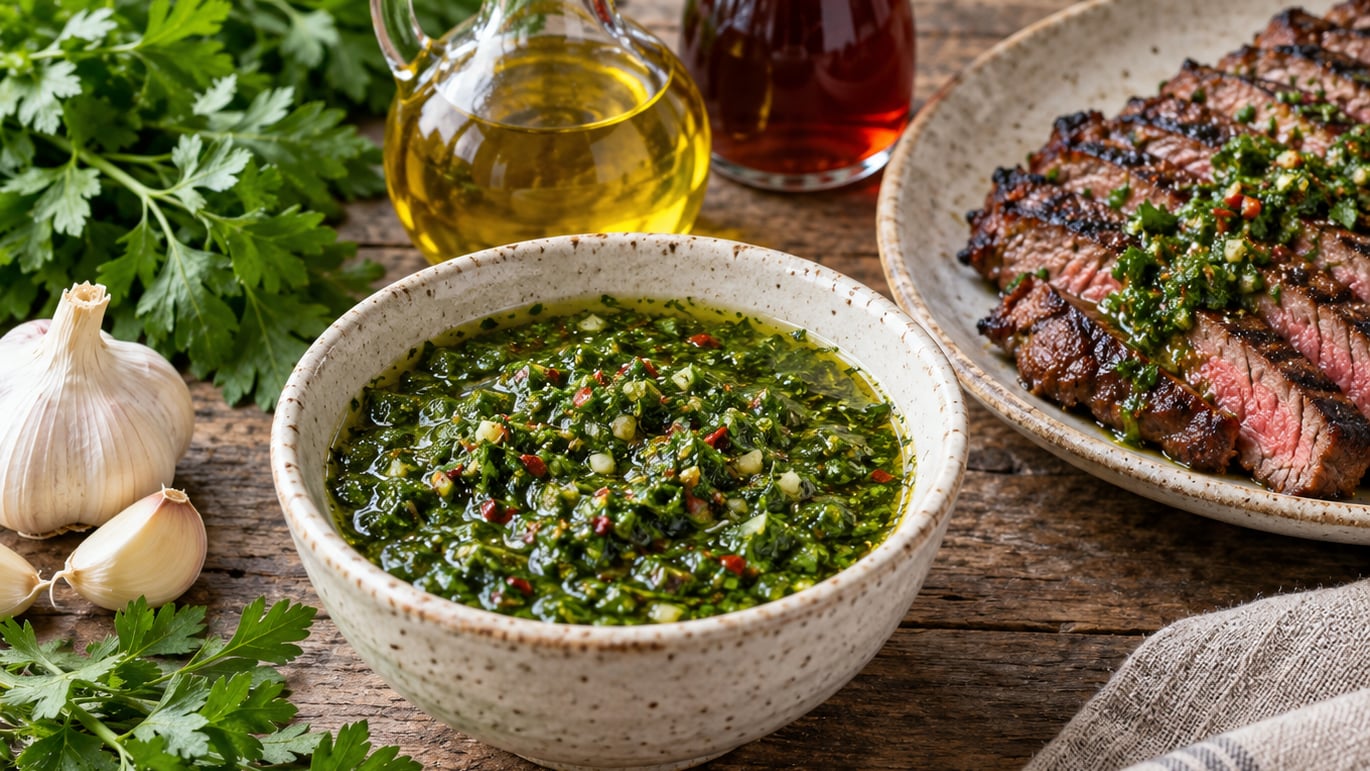
Knowing how to make chimichurri sauce for steak is mostly knife work: chopped parsley, oregano, garlic, red wine vinegar and olive oil, and about 15 minutes with no heat involved. The trick is chopping the herbs by hand, keeping the texture loose and spoonable, then letting the sauce rest so the vinegar softens the raw garlic. It is the sauce I reach for whenever a steak comes off the grill and needs something fresh against all that seared fat.
People often assume chimichurri is complicated because it is Argentine. It is really five ingredients and a knife. Once you know how the parts behave, you can make it in a single bowl, adjust the vinegar-to-oil ratio for the steak in front of you, and keep the leftovers for the week.
Table of Contents
- What You Need
- Step-by-Step: How to Make Chimichurri Sauce for Steak
- Common Mistakes
- Frequently Asked Questions
- What is the best steak for chimichurri sauce?
- Can I use dried herbs instead of fresh herbs?
- How do I make chimichurri thicker for steak?
- Should I add chimichurri sauce before or after cooking the steak?
- How long does homemade chimichurri last in the refrigerator?
- Can I make chimichurri sauce without garlic?
- Conclusion
What You Need
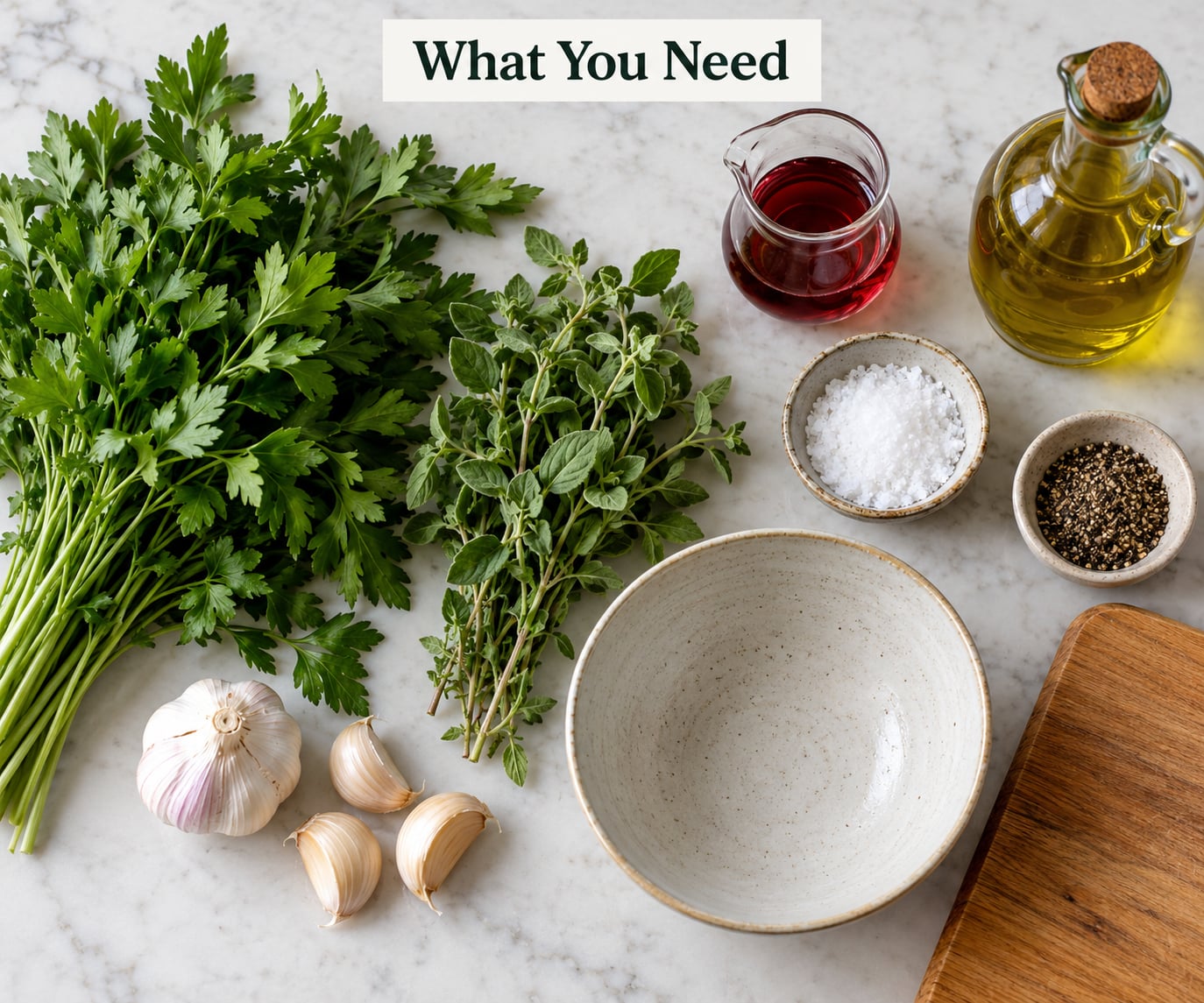
These quantities make roughly one cup of sauce, which dresses four to six steaks. Nothing here needs to be warm, and nothing needs to be cooked.
- 1 cup packed fresh flat-leaf parsley, about a large bunch, stems removed
- 2 tablespoons fresh oregano leaves, roughly 6 to 8 sprigs
- 3 garlic cloves, peeled and minced fine
- 1 tablespoon minced shallot, optional but worth it
- 1/4 cup red wine vinegar
- 1/2 cup extra virgin olive oil
- 1 teaspoon fine salt, plus more to taste
- 1/2 teaspoon freshly ground black pepper
- 1/4 teaspoon red pepper flakes, optional, for heat
Flat-leaf parsley is the one substitution I do not make. Curly parsley holds water and can taste grassy in a raw sauce, and dried herbs simply do not belong here. Cooks on r/Cooking_ac and r/grilling repeat the same thing: the fresh-herb requirement is not optional.
A sharp knife, a cutting board and a small bowl do the whole job. A food processor works, but pulse it in short bursts and stop early, which is the single biggest reason hand-chopped chimichurri tastes and feels better. A mortar and pestle is the traditional tool and gives you the most control, especially for the garlic.
Step-by-Step: How to Make Chimichurri Sauce for Steak
The process is four stages: chop the herbs and aromatics, blend them with the vinegar and oil, season by taste, then rest and store. Most of the actual work is the first five minutes with the knife.
1. Finely Chop the Herbs and Garlic
Stack the parsley leaves, roll them into a tight cylinder, and slice into thin ribbons, then cross-cut until you have a fine chop. Do the same with the oregano. You want pieces small enough to spread evenly across a slice of steak but still visible, roughly the size of coarse sea salt.
Mince the garlic and shallot separately and smaller than you think they need to be. Raw garlic in a sauce that is not cooked is aggressive, and small pieces distribute that bite instead of concentrating it. If you have a mortar, pound the garlic with a pinch of salt into a paste first.
One trick that regulars use: let the minced garlic and shallot sit in the vinegar for 10 minutes before anything else joins them. The acid starts softening the raw edge, and the finished sauce tastes noticeably rounder.
2. Blend the Chimichurri Base
Put the chopped parsley, oregano, garlic and shallot in a bowl, pour over the vinegar, and stir. Add the salt and pepper, then drizzle in the olive oil while stirring steadily. The mixture will look loose and slightly separated at first, which is normal.
Stop while the texture is still coarse. If you run a blender or processor without stopping, you get a purée that spreads like pesto and loses the rustic bite that makes chimichurri good on steak. A quick pulse of two or three seconds, then a scrape-down, is the safe approach.
The finished consistency should be a loose, chunky sauce, not a paste. If it looks oily, stir in a spoonful more vinegar or a pinch of salt rather than reaching for more oil.
3. Season and Taste
Taste it on a spoon before it ever touches the steak. Chimichurri should hit four things in order: herb, then garlic, then acidity, then salt.
If it is too sharp, add olive oil a teaspoon at a time until the vinegar reads as brightness rather than sourness. If it is flat, add salt before anything else, then a squeeze of lemon juice. If the herbs dominate, a little more vinegar and oil will settle it. If it is bitter, more oil and a touch of honey usually rescues the batch.
Ribeye and other fatty cuts take more vinegar than they take salt. Lean cuts like flank and skirt steak want less acid and more salt, because the lean meat already brings plenty of its own flavor.
4. Rest, Serve, and Store
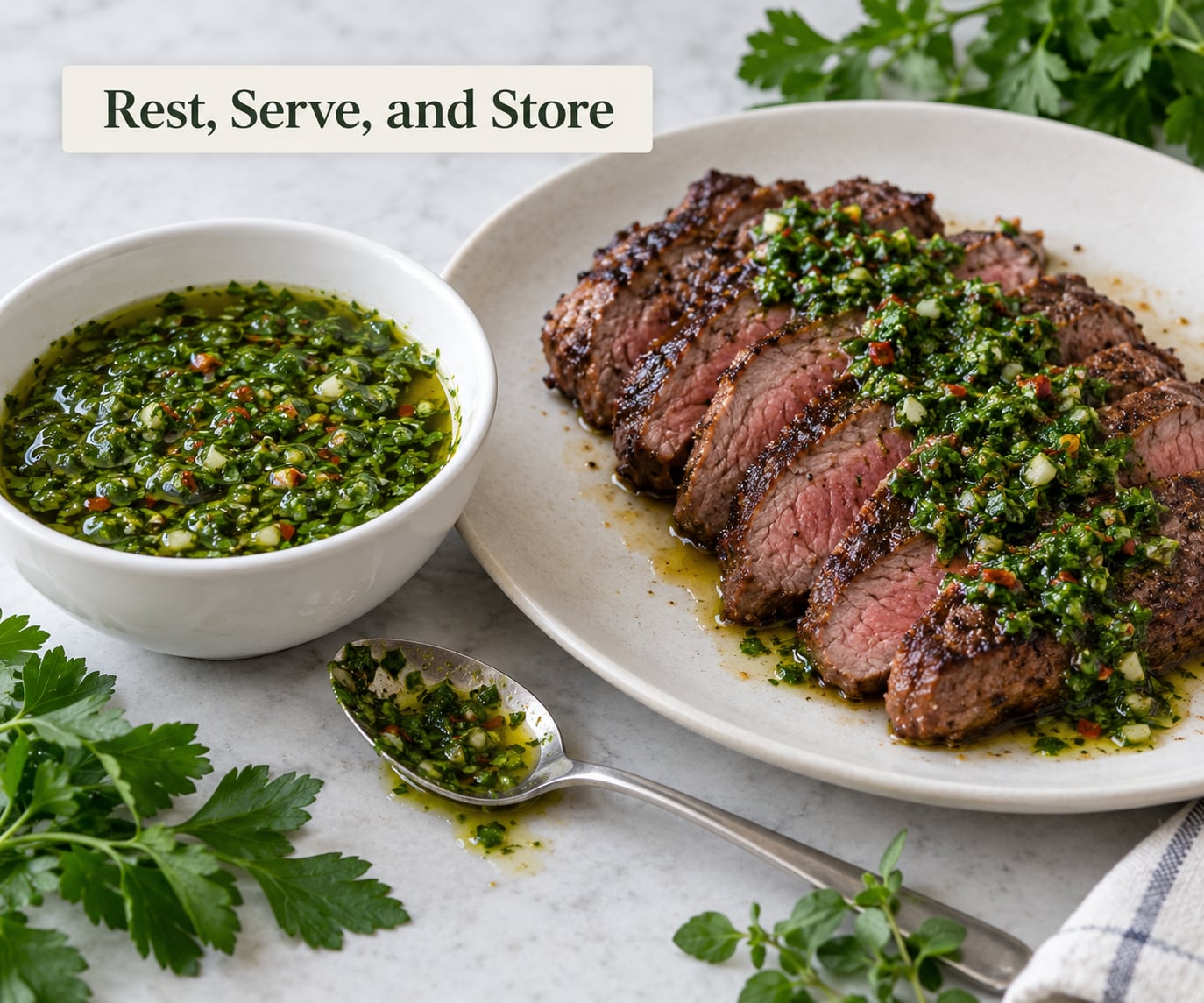
Let the sauce sit at room temperature for at least 30 minutes and up to an hour if you have the time. This resting period is the maceration step: the vinegar hydrates the herbs and the salt draws out their aromatic oils, so the sauce tastes more like itself than it did straight from the bowl.
Spoon it over sliced steak rather than a whole piece. Slice against the grain after the meat has rested, then drizzle the sauce along the slices so the herbs land on every bite. If you are serving a whole steak at the table, put the bowl beside it and let people spoon their own.
For food safety, cook whole cuts of beef to an internal temperature of 145°F (63°C) with a rest, and keep cooked meat hot or refrigerate it within two hours.
Store the sauce in a jar or sealed container in the refrigerator for up to one week, though the flavor is best in the first three days. Press the herbs down under a thin layer of oil to limit browning. It freezes well in a jar with a little headroom, or in ice cube trays for portioning, for up to three months.
For the mechanics of emulsifying a vinegar-and-oil mixture, our guide on making a simple vinaigrette that emulsifies explains why the slow drizzle matters.
Common Mistakes
The sauce turns watery. Wet produce and undrained herbs are the cause, not the oil. Dry the parsley in a salad spinner after chopping, and if you used tomatoes or roasted peppers, drain them on paper towels for ten minutes before folding them in.
It tastes bitter. Three things cause bitterness: old parsley, over-processed herbs, and raw garlic in excess. Use parsley that snaps rather than bends, stop the processor while the texture still has bite, and treat three cloves as a ceiling for a cup of sauce. A teaspoon of honey and an extra tablespoon of oil will soften a batch that already went too far.
It is too acidic. Do not reach for more sugar first. Extend the oil in small amounts and let the sauce stand for another 15 minutes; the harsh edge usually settles on its own. Cider vinegar is sharper than red wine, so if you substituted it, dilute it more generously.
It tastes bland. Bland usually means under-salted, not under-herbed. Add salt in small increments and retaste, then add acid. Over-salting is fixable with more oil and vinegar; under-salting reads as dull no matter how much parsley is in the bowl.
The texture is muddy or paste-like. That is the processor running too long, or a blender with no pulse function. Scrape down the sides, pulse briefly, and finish by hand with a spoon.
It is too thick to drizzle. Stir in a tablespoon of vinegar or a teaspoon of water at a time. Water thins flavor, so vinegar is the better first choice.
A few habits that help beyond the recipe: chop the herbs the day you need them, not three days ahead, since cut herbs oxidize quickly. Choose a peppery extra virgin olive oil for flavor, or a milder one if you want the herbs to lead. And portion with a spoon, not a pour, so each plate gets its share of herbs and not just oil.
For the plating, our walkthrough on how to make a sauce swoosh on a plate shows how to put the sauce on the plate without a rimmed bowl, and if you are building the rest of the meal, how to make a pan sauce after searing meat covers the juices you already have in the skillet.
Frequently Asked Questions
What is the best steak for chimichurri sauce?
Flank steak and skirt steak are the classic pairing, because their thin, quick-seared slices drink up a chunky sauce without overpowering it. Ribeye works well too, since the bright vinegar cuts the fat. Avoid very lean tenderloin if your sauce is heavily vinegary; it will taste sharp rather than balanced. Cook whole cuts to 145°F internal for safety, then slice and top.
Can I use dried herbs instead of fresh herbs?
You can, but expect a noticeably flatter sauce. Dried parsley loses its bright, grassy aroma in a no-cook sauce where nothing is heated to release it. If you must use dried, use about one-third the volume, crush the dried oregano between your palms first, and let the finished sauce rest an extra 30 minutes to hydrate.
How do I make chimichurri thicker for steak?
Stir in more chopped parsley, a tablespoon of minced shallot, or a small spoonful of olive oil paste rather than flour or starch. A quick fix is a teaspoon of softened butter whisked in off the heat, which adds body without changing the flavor. Thicken it only for plating; keep the jar version loose so it stays spoonable.
Should I add chimichurri sauce before or after cooking the steak?
After. Chimichurri is a finishing sauce, not a marinade. The vinegar and salt would cure the surface of the meat and dull its seared crust. Spoon it over the sliced steak once the meat has rested, or set the bowl on the table so everyone adds their own. If you want herb flavor inside the meat, use a dry herb rub instead.
How long does homemade chimichurri last in the refrigerator?
About one week in a sealed jar, with the best flavor in the first three days. Press the chopped herbs below a thin layer of olive oil to slow browning, and use clean, dry utensils each time you scoop. If the color has gone dull and brown, the aroma is flat, or there is any off smell, discard it. It freezes cleanly for up to three months.
Can I make chimichurri sauce without garlic?
Yes, and it will taste milder and more herb-forward. Use shallot instead if you want some aromatic bite, or add a small squeeze of lemon juice for brightness. Note that plain garlic-free chimichurri keeps the same vinegar-to-oil ratio, so taste as you go; without garlic you may find the acid more noticeable and want a touch more oil.
Conclusion
Start by chopping the herbs and tasting them on their own. If the parsley smells grassy and fresh, the sauce will too, and everything after that is just balance.
From there, adjust the vinegar-to-oil ratio to suit the steak in front of you: more vinegar for a fatty ribeye, less acid and more salt for a lean flank steak, and a full hour of rest if you are not in a hurry. Once you know how to make chimichurri sauce for steak your way, you will adjust by instinct.