
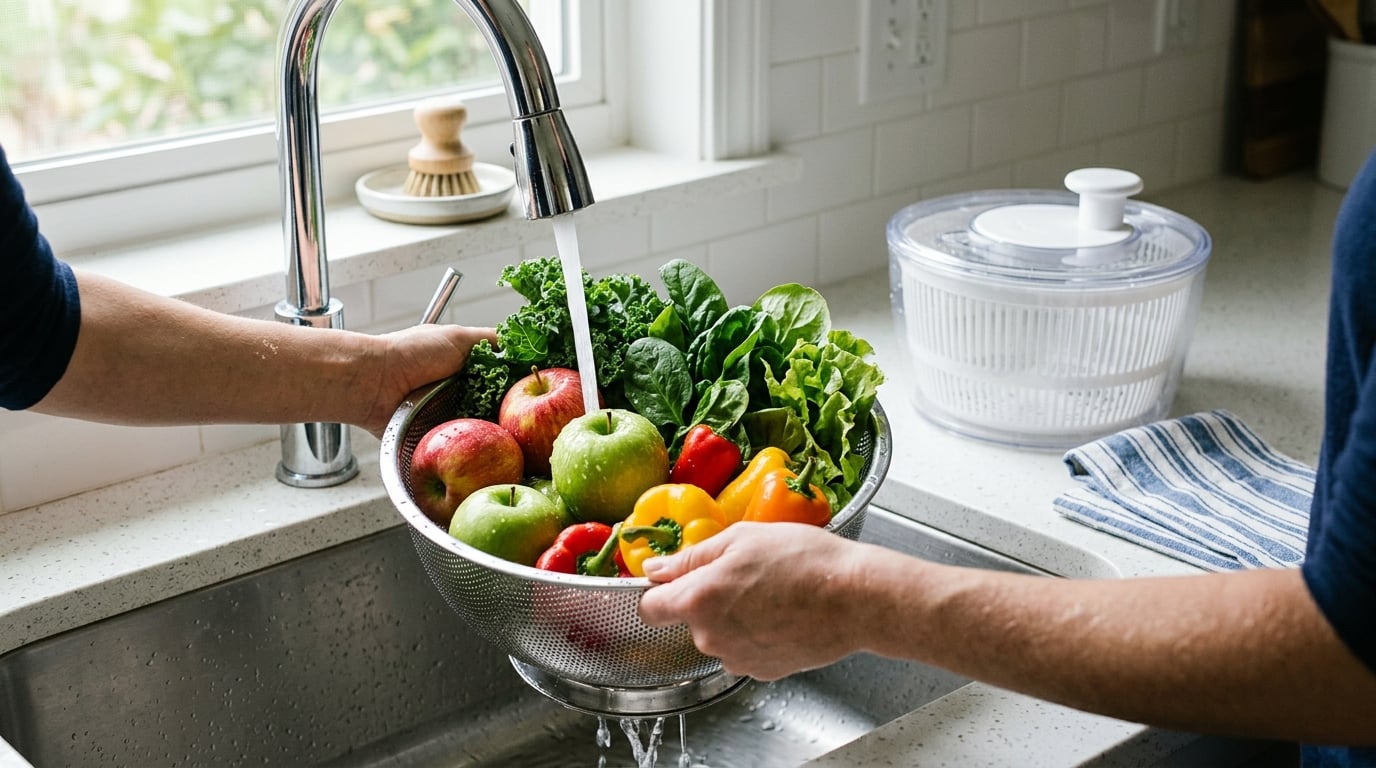
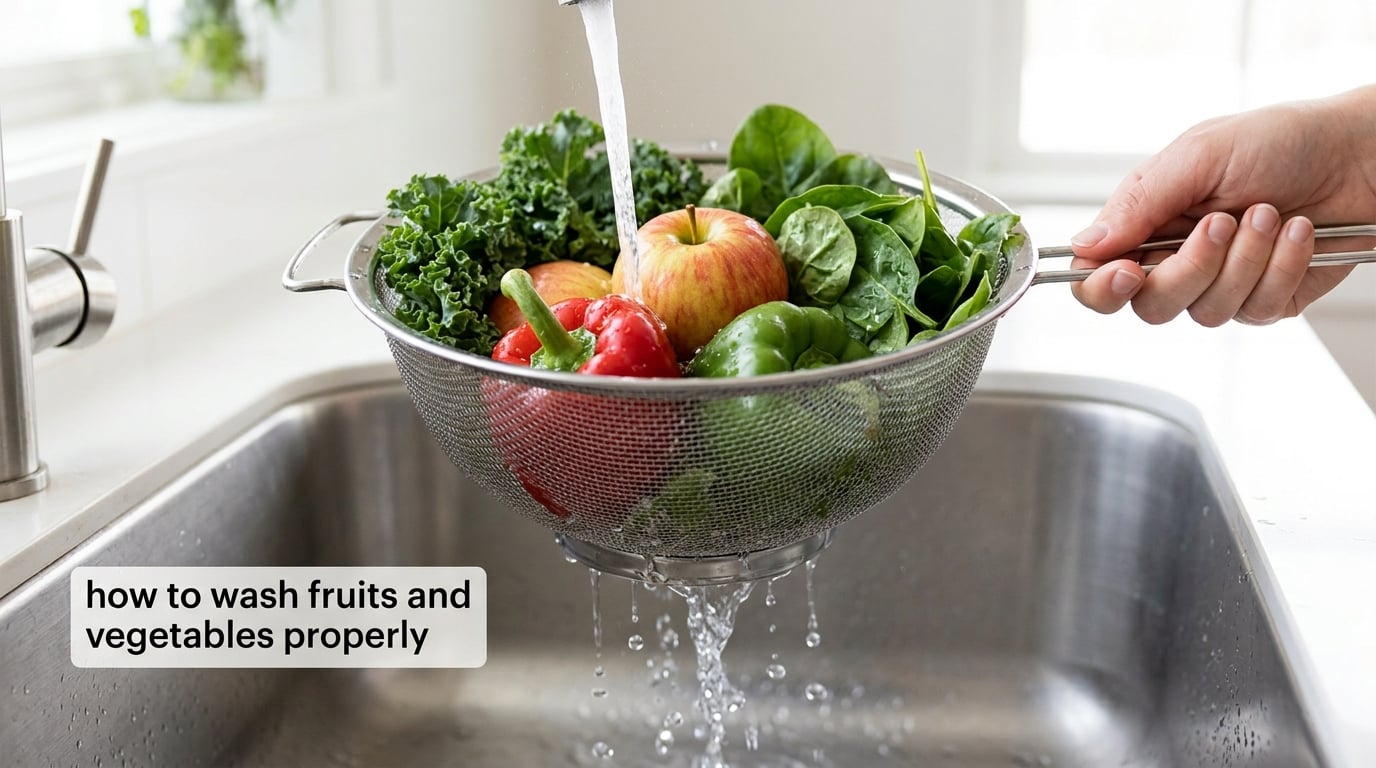
Knowing how to wash fruits and vegetables properly is simpler than most guides make it sound: rinse under cool running water, rub it gently with clean hands, and dry it with a clean towel, right before you eat or cook it. That is the whole method. No soap, no detergent, no bleach, and no store-bought produce wash. A full bag of lettuce takes about five minutes; a whole week’s produce takes closer to twenty, and doing it in a stream of water beats a basin every time.
It is worth doing at all, because produce is handled and washed dozens of times between the field and your kitchen. Bacteria such as E. coli, Listeria and Salmonella can sit in the crevices of a leaf or the stem end of a tomato, and the FDA, USDA and CDC all point to the same simple answer for reducing that risk. None of them recommend a chemical wash.
What You Need
The tool list is short, and most kitchens already have everything on it.
- Cool running tap water, and a sink or basin you have cleaned first
- A colander, or a clean bowl set inside the sink
- A soft-bristled vegetable brush for firm, thick-skinned produce
- Clean hands, and soap for washing your hands, not your produce
- A clean kitchen towel or a salad spinner for drying
What you do not need matters just as much. Dish soap, dish detergent, bleach solution, and commercial produce washes are not part of this method. FDA guidance is explicit that soap and produce washes are unnecessary, because produce skin is porous and can absorb what you put on it.
The honest reason cleaning works here is physical rather than chemical. Running water carries dirt and debris away, and the friction of your hands or a brush loosens what has dried onto the surface. You are not sterilising anything, and you are not supposed to.
How to Wash Fruits and Vegetables Properly
Wash produce just before you eat it or prepare it, not days ahead and not the moment you get home. A head of lettuce washed on Monday and sealed on Tuesday has spent two days holding the moisture that encourages spoilage. Timing is the part most guides skip, and it is the part that actually changes how the produce keeps.
Wash things you plan to peel, too. Dirt and bacteria on the outside of a potato transfer to your hands, your peeler and your cutting board the moment you start.
1. Rinse the Produce Under Cool Running Water
Hold each item in the stream and move it slowly so every surface gets water. An apple has a stem well, a blossom end and a curve where the skin folds, and those are the spots people miss. Turn it four or five times.
For a head of lettuce or cabbage, separate it rather than trying to rinse the whole ball. Outer leaves wrap the inside and block water from reaching the layers you are about to eat. Peel them off and rinse each leaf on its own.
Let the water run off rather than letting produce sit in a puddle. Water sitting in the sink or a bowl picks up whatever was in it, and it is a step backwards from the running water you just used.
2. Rub or Brush Away Dirt When You Wash Fruits and Vegetables
Rub produce gently with your fingertips while it is under the water. Think of it as taking the surface off, not scrubbing it. Potatoes, carrots, apples, melons, cucumbers and other firm or thick-skinned items can take more, and a soft-bristled vegetable brush works well on them.
A twenty-second scrub is the useful habit to build. It is the same length as a proper hand wash, and most people finish sooner than they think. Give the stem and blossom ends of apples and tomatoes extra attention, since those crevices hold dirt.
Delicate items get hands only. Berries bruise under a brush, and a strong stream can peel the skin right off a mushroom or split a ripe tomato. Warm water makes produce more fragile, so keep it cool and the pressure gentle.
Short version, by type of produce:
- Leafy greens and herbs: separate the leaves, rinse each one, spin or pat dry. A few minutes in a bowl of cool water with a swish helps, then lift the leaves out.
- Firm and thick-skinned produce: scrub for about twenty seconds under running water with a soft vegetable brush. No soaking needed.
- Root vegetables: brush off the soil first, then rinse into the crevices with your fingers and the brush.
- Delicate berries: hold them in the stream without rubbing. Skip the soak, or keep it to a minute or two, and pat dry.
- Mushrooms: a quick rinse and a gentle brush, then pat dry right away.
- Citrus and other firm fruit: rub with your hands over all sides, then air-dry.
3. Use the Right Technique for Leafy Greens and Herbs
Start at the outside. Remove the outer leaves of lettuce, cabbage and broccoli, since they take the most handling and are the most likely to be bruised or slimy by the time you get to them.
Then work leaf by leaf. Hold each leaf under the stream, rub the base and the ribs gently, and check the fold where the leaf joins the stem, because soil hides there. Soft herbs like basil and parsley get the same treatment, with more care around the stems.
If you are short on time, swish the greens in a bowl of cool water and lift them out, letting the silt settle to the bottom before the leaves come out. It works, and it takes less time than rinsing each leaf twice.
Dry greens properly. Trapped moisture is what turns a crisp head of lettuce into a limp one, and it is the single most common reason people think washing ruined their salad.
4. Dry the Produce Before Storing or Serving
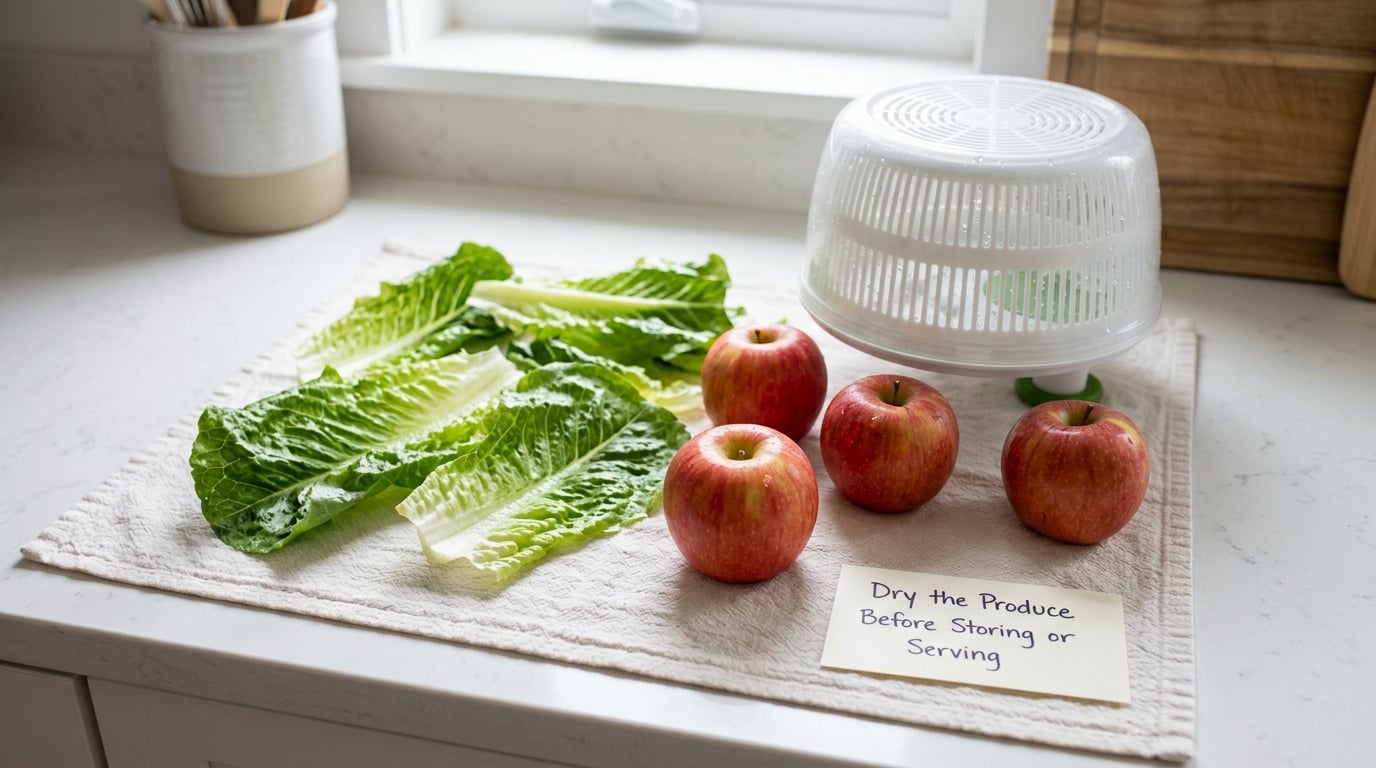
A salad spinner handles wet leaves best. Give it a few cycles, longer than feels necessary, and the leaves come out noticeably lighter. Drain the water out of the spinner, not back over the greens.
A clean kitchen towel works for everything else. Lay firm produce on it, or roll the greens inside it and press gently. Paper towels are fine for berries and mushrooms, which hold very little water anyway.
Air-drying on a rack or a towel works when you have time. The reason drying matters is simple: moisture sitting on a surface speeds up decay, and cut produce goes faster still. Dry produce keeps noticeably longer in the fridge.
5. Clean the Sink, Brush, and Drying Tools Afterward
The prep work has to be clean before the produce is, not after. Wash cutting boards, knives and counters with hot soapy water first, and keep them separate from anything you cut raw meat on. This is the cross-contamination step, and produce picks up whatever was on the surface a few minutes earlier.
Afterward, wash the brush and the colander, and let them dry completely. A brush that stays damp between uses grows its own small ecosystem, which defeats the point of having it.
Finally, wash your hands again before you handle the clean produce. You handled raw chicken or a leaking trash bag an hour ago, and your hands are still carrying it.
Common Mistakes
Most people washing produce badly are making one of these six errors.
1. Using soap or dish detergent. Even a drop of Dawn gets absorbed into porous skin and leaves residue you cannot rinse away. Soap your hands, not your carrots. Bleach works the same way, and it is a treatment for a surface you are about to eat from.
2. Soaking delicate fruit. Strawberries, raspberries and blueberries soak up water, lose their shape and turn soft within an hour. A quick rinse is enough for anything that bruises under your thumb.
3. Skipping produce because it has a peel. The potato’s dirt goes to your hands, then to the peeler, then to the board. Washing first takes twenty seconds and breaks that chain.
4. Scrubbing soft produce. A firm scrub works on a rutabaga and destroys a ripe tomato or a mushroom cap. Match pressure to the texture, and use hands on anything that gives easily.
5. Storing washed produce while it is wet. Wet greens in a closed bag go limp and sometimes slimy within a day or two. Spin or pat everything dry, and store it where air can move.
6. Washing days ahead. Produce washed at the start of the week is still sitting in moisture on day four. Wash it when you are about to use it, which is also the guidance the FDA gives.
One more question comes up constantly: does washing shorten shelf life? Proper washing does not, but the drying step is what decides it. Produce stored wet rots faster, and produce stored dry keeps. Prewashed bagged greens are the exception, and the package label tells you what the processor already did. Treat them as a convenience, not a shortcut around the rest of this.
Frequently Asked Questions
Should I use soap or bleach to wash fruits and vegetables?
No. Produce skin is porous, and soap or bleach residue can be absorbed and is not removed by rinsing, which can cause nausea and stomach upset. The FDA says plain running water is enough. Clean your hands, cutting board, counters and knives with soap, then rinse the produce itself with water only. A soft brush on firm items handles stubborn dirt far better than a chemical does.
Is it necessary to wash produce that has a peel?
Yes. Washing happens before peeling, and the dirt and bacteria on the outside move to your hands, your peeler, your knife and your cutting board as soon as you start. Rinse the item under cool running water first, even for oranges, bananas, avocados and potatoes. It takes about twenty seconds and removes the most common route for spreading contamination around your kitchen.
Can I wash fruits and vegetables in the sink?
Only if you clean the sink first, and many kitchens do not. Sink drains and faucet handles carry raw meat residue, grease and household chemicals. A safer option is a clean colander set inside the sink or a separate basin filled with fresh running water. If you do wash produce in the sink, clean and dry the basin afterward, and keep produce away from where you prep raw meat.
How should I wash lettuce and other leafy greens?
Pull off the outer leaves, then separate the rest and rinse each leaf under cool running water, paying attention to the base and the ribs. For a fast method, swish the leaves in a bowl of cool water, let the silt settle, then lift them out. Dry in a salad spinner or inside a clean towel, since trapped moisture is what makes greens limp. Wash just before you eat them.
Should I wash berries before storing them?
Not usually. Washing adds moisture, and wet berries mold faster than dry ones. If a berry is dusty or muddy, hold it under a gentle stream of cool water just before you eat it and pat it dry with a paper towel. Avoid soaking strawberries, raspberries or blueberries, and skip the refrigerator entirely for the last few hours before serving, since cold berries do not ripen further once picked.
Start at the sink, not the soap cabinet. Put the produce under cool running water, rub it with clean hands for about twenty seconds, and dry it properly before it goes anywhere near the fridge. Everything else on this page is a refinement of that, and you can skip all of it without putting yourself at risk.
Last updated September 2026.