
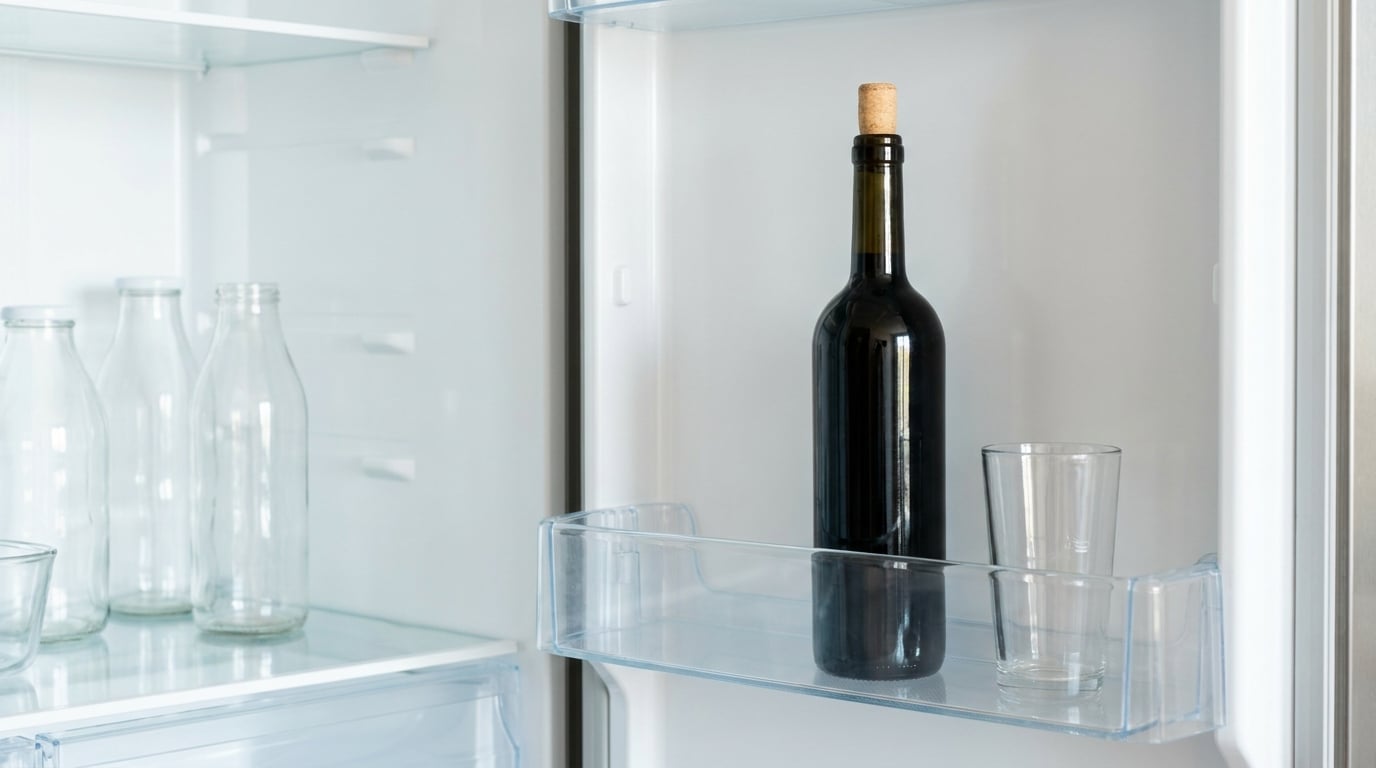
To store an open bottle of wine, reseal it tightly, stand it upright, and put it in the refrigerator. Cold slows the oxidation that flattens aroma and pushes flavor toward vinegar, and an airtight seal keeps oxygen out of the headspace. Most reds and whites stay drinkable for 3 to 5 days that way. Sparkling wine keeps its fizz for 1 to 3 days.
That is the whole method, and it takes about thirty seconds. The part people skip is the reseal: a bottle sitting on the counter with the cork leaning against it is not storage, it is a slow-motion pour.
Wine does not spoil the way milk spoils. Once opened, exposed wine is never a health hazard, it just tastes dull. So the question is never can you drink it, it is whether you would want to. Here is how to buy yourself the most drinkable days, and how to tell when the clock ran out.
What You Need
Nothing here is expensive, and the first three items are enough for almost every bottle you will open at home.
- The original cork, if you still have it and it is in decent shape. A natural cork pushed back in will hold, though it will not hold forever.
- A fitted rubber or silicone wine stopper that matches the inside diameter of the bottle mouth. This is the workhorse option for screwcap and synthetic-cork bottles with nothing to reinsert.
- Refrigerator space for the bottle, ideally toward the back where the temperature is steadier than the door shelf.
- A clean smaller bottle or a wide-mouth jam jar for the half-bottle case, which cuts the air space above the wine down to almost nothing.
- Optional: a vacuum pump with a valve cork, an inert gas wine preserver, or a sparkling-wine stopper. Each buys time, none of them rescue a bottle already left out for two days.
If the leftover wine is headed for a pan sauce or a risotto rather than a glass, skip the fancy gear entirely and pour it straight into a jar in the fridge. Cooking wine does not need to be perfect, it needs to be cold and used soon. Our white wine pairing basics for home cooks guide covers which bottles hold up best in a kitchen.
Step-by-Step: How to Store an Open Bottle of Wine
1. Choose the Right Method to Store an Open Bottle
Start by matching the method to the style, because sparkling wine and fortified wine need different handling from a young red.
- Original cork for still wines that came corked. Fastest, free, and good enough for a few days.
- Rubber or silicone stopper for screwcap bottles, canned wine, and anything where the cork is gone or dried out.
- Vacuum pump when you want to push the clock back another day or two. It works by pulling air out through a valve cork.
- Inert gas preserver for the expensive bottle you are saving for an occasion. A needle pushes food-grade argon or nitrogen in, then the stopper seals the bottle with almost no oxygen inside.
- Sparkling stopper for Champagne and other carbonated wines. A regular cork does not hold pressure.
- Smaller bottle or jar for the last glass of a bottle. Less headspace means less oxygen, and it is free.
Here is the honest timeline once the bottle is sealed and cold, which is the part most guides skip.
| Wine style | Stays enjoyable | Best method | Serve at |
|---|---|---|---|
| Sparkling wine and Champagne | 1 to 3 days | Sparkling stopper, fridge, upright | Chill, then 10 minutes out |
| Light whites and rose | 3 to 5 days | Rubber stopper, fridge | 45 to 60 minutes out |
| Oaked or full-bodied white | 2 to 3 days | Rubber stopper, fridge | 30 to 45 minutes out |
| Light reds such as Pinot Noir | 3 to 5 days | Rubber stopper, fridge | 30 minutes out |
| Full-bodied reds | 3 to 5 days | Cork or stopper, fridge | 30 minutes out |
| Natural or low-sulfur wines | About 1 day | Drink it fresh, do not plan around it | As poured |
| Port, Sherry, Madeira | Several weeks | Stopper, cool dark cupboard | 15 to 20 minutes out |
Two things in that table surprise people. Full-bodied whites like an oaked Chardonnay fade faster than light whites, not slower, because they already took in oxygen while aging. And low-sulfur natural wines are built unstable on purpose, so a day is a good day for them.
2. Reseal the Bottle Promptly
Seal the bottle before anything else. Every extra minute of open air costs more than the stopper does.
Put the cork back in the same way it came out, stained side toward the wine, which is what most sommeliers do. If the cork is too loose or crumbled, a rubber stopper is the better answer than fighting it.
There is one argument worth settling. The advice to flip the cork so the stained side faces out is not crazy: it keeps the clean outer surface away from the wine. The other side of the argument is stronger, and it is that a cork that was flipped carries the dirt from the bottle lip into your wine. Put it back the way you found it.
If the bottle is more than half empty, pour the remainder into a smaller sealed bottle or a jar rather than back and forth into the original. Sloshing wine increases the surface area in contact with air, and surface area is what oxidation feeds on.
3. Refrigerate Still Wine
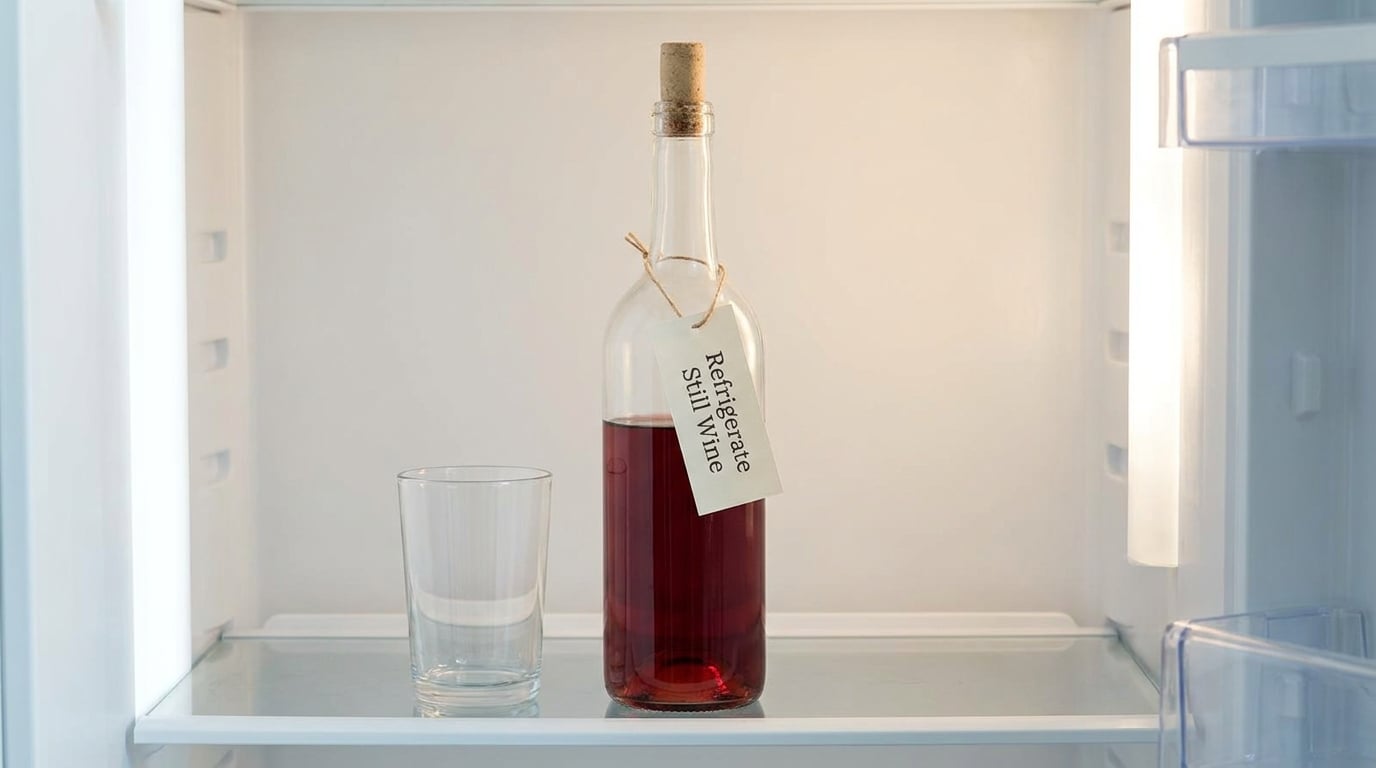
Refrigeration is the single biggest upgrade you can make, and it applies to reds too.
Cold slows the chemical reaction that oxidation drives. A kitchen refrigerator is far too cold for long-term storage of sealed bottles, since cork dries out and shrinks, but it is close to perfect for an open bottle you intend to drink within a few days. Seal first, then chill, so the air inside the bottle is already restricted when the temperature drops.
The folk rule that you should never refrigerate red wine is about serving, not storage. A chilled red tastes muted and closed until it warms up, which is why step 5 exists. Storage in the fridge costs you nothing but a little patience at the table.
Stand the bottle upright. Lying it down keeps the cork wet, which is exactly what you want for a sealed bottle aging for years, but it also pushes wine up against the closure where the headspace air sits, and that is the air doing the damage.
4. Keep Sparkling Wine Cold and Sealed
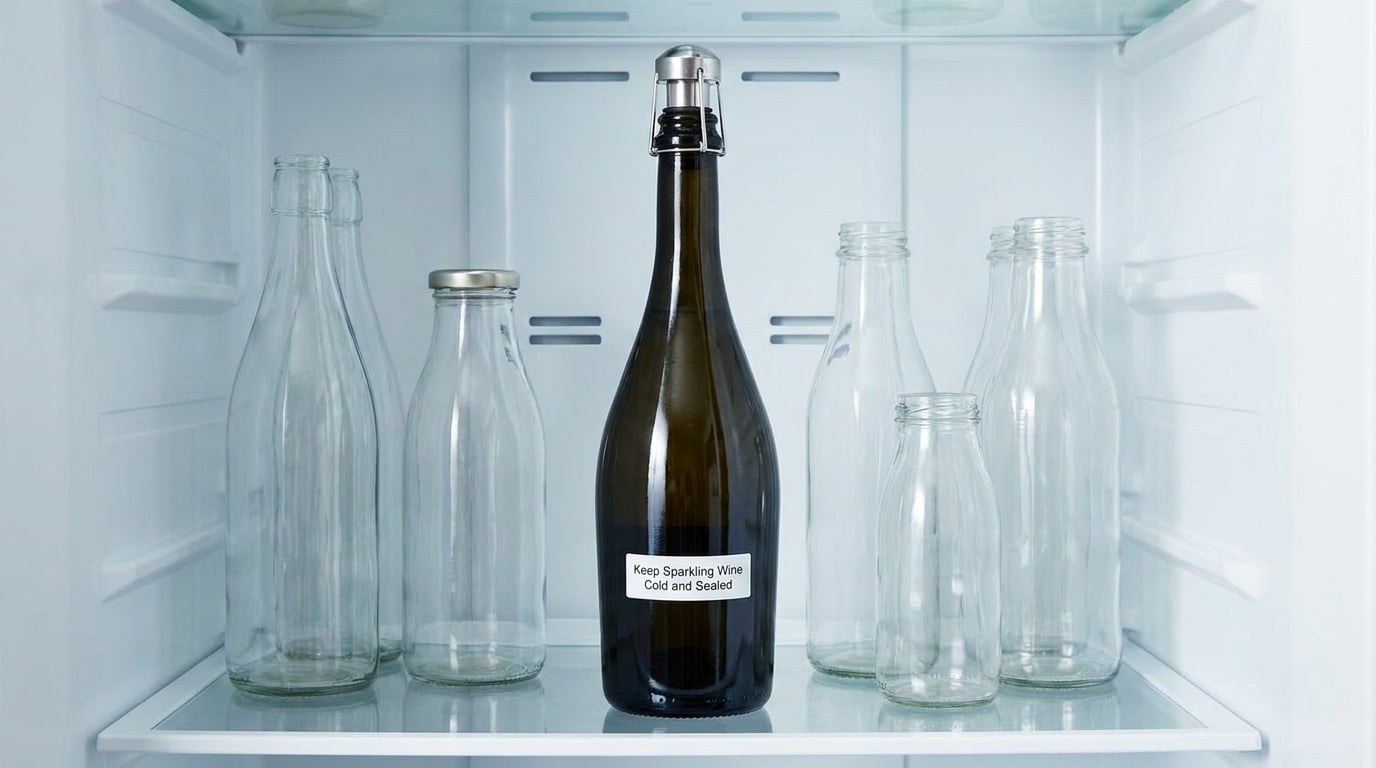
Carbonated wine is on a clock the moment the wire cage comes off, and pressure loss is the first thing to go.
Fit a sparkling stopper, which is a rigid stopper with a silicone seal sized for the pressure inside a Champagne bottle. Keep the bottle cold and upright, and expect to drink it within a day or two. Wine Spectator and the Champagne committee both put sparkling at the short end of the range for a reason: the carbon dioxide starts escaping the moment the seal is broken, and cold only slows that down.
Skip the teaspoon. The idea that a silver spoon in the neck holds the bubbles in was tested by Champagne experts and it does not work. A spoon does not slow the loss of carbon dioxide in any measurable way, and you have now got a wet spoon rattling around in your wine.
For red sparkling or Lambrusco, a standard stopper is usually fine, since the pressure is lower and nobody is counting the bubbles anyway.
5. Bring the Bottle to Room Temperature Before Serving
Taking the bottle out is a serving step, not a storage step, and it changes nothing about how long the wine will keep.
Give a red about 30 minutes on the counter before opening it. Give a white or rose 45 to 60 minutes, or run the closed bottle under cool water for a few minutes to take the fridge edge off without making it warm. Sparkling wine needs the least time of all, roughly 10 minutes, since it is meant to be cold.
Do not try to speed this up with hot water or a hair dryer. Heating wine drives off the aromatics you just spent a week protecting, and a warm bottle also accelerates oxidation for whatever is left inside.
If you are opening the bottle for a meal rather than a solo glass, it is worth knowing what to pour before you open the next one. Our wine and steak pairing guide for beginners covers bottles that are forgiving if dinner runs late.
Common Mistakes
Almost every spoiled bottle traces back to one of these.
- Leaving the bottle open overnight. A bottle pushed back into the fridge uncorked is a bottle stored in a fridge full of vinegar smells. Fix: seal it first, every time, even if you think you will be back in ten minutes.
- Leaving it on the counter for days. Room temperature plus oxygen is the worst combination available. A bottle opened at dinner and still there on Sunday should be poured away. Fix: fridge, sealed.
- Trusting a loose or reused cork. A cork that does not seat properly lets in steady air and can push itself out of the neck. Fix: rubber stopper, or trim a fresh notch in a soft cork so it compresses on the way in.
- Storing next to heat or light. A fridge door, a sunny counter, and a spot beside the oven all work against you. Fix: back of the fridge, door closed, for still wine.
- Laying an open bottle on its side. Great advice for corked bottles aging for a decade, poor advice for tonight’s leftover. Fix: upright, always.
- Believing a vacuum device makes wine last forever. Vacuum pumps get weaker as the bottle empties, because there is less liquid to pull the cork into a tight seal and more air volume left to work on. They buy a day or two, not a month. If you want real time on a special bottle, a gas preserver or a smaller bottle is the honest answer.
One more worth naming: people treat oxidized wine as a safety problem. It is not. Bacteria do not grow in a dry, acidic, low-alcohol environment the way they do in milk or meat, so the worst outcome of a two-week-old open bottle is a flat, sharp taste. Tasting it to check is always the right move.
On r/wine, the most repeated answer to this question is the least complicated one: rubber cork in, fridge, drink it within a day or two. The forum consensus also matches what the training bodies say, which is reassuring. WSET and Wine Spectator both give you the same few days, and the only real difference between the groups is that diners taste their leftovers and servers get to charge you for them again.
Frequently Asked Questions
How long can an open bottle of wine be stored?
A sealed open bottle kept in the refrigerator stays enjoyable for 3 to 5 days for most reds and whites. Sparkling wine lasts 1 to 3 days with a sparkling stopper. Oaked or full-bodied whites and low-sulfur natural wines fade fastest, sometimes within a day or two. Fortified wines such as Port and Sherry are the exception, lasting several weeks in a cool dark cupboard.
Should an open bottle of red wine be refrigerated?
Yes. Cold slows the oxidation that flattens aroma and dulls flavor, and an open red loses noticeably less in a refrigerator than on the counter. Take it out about 30 minutes before serving so it comes back to drinking temperature. The rule against refrigerating red wine applies to serving temperature, not to storage.
Does a vacuum stopper really keep wine fresh longer?
It does, modestly. A vacuum pump pulls air out through a valve cork, and a bottle with less oxygen in it oxidizes more slowly, typically gaining a day or two. It works less well as the bottle empties, because there is less liquid to seat the cork. For a special bottle you need to keep for more than a few days, a gas preserver or a smaller bottle works better.
Can an open bottle of sparkling wine be saved for later?
You have a day or maybe two, provided you fit a sparkling stopper, keep the bottle cold, and leave it upright. Standard corks and screw caps will not hold the pressure, and the carbon dioxide starts leaving the moment the seal is broken. Chill is what slows that loss. If the bottle has gone flat, chill it hard and open it well before guests arrive.
Is an open bottle of wine bad if it smells like vinegar?
A sharp vinegar or nail-polish smell means the wine has oxidized and is not worth drinking, but it is not dangerous. Bacteria do not thrive in wine, so an old open bottle is a quality problem rather than a safety one. Pour it out. If it only smells flat and slightly nutty, chill it and taste it, since a tired red and a spoiled red are not the same thing.
Conclusion
Do one thing the moment you open a bottle you know you will not finish: put something airtight in the neck and stand the bottle in the fridge. That is how to store an open bottle of wine, and it buys most reds and whites three to five days and sparkling wine one to three.
Use a sparkling stopper for anything carbonated, and pour the last of a bottle into a smaller jar if you want another few days. Before serving, take it out 30 minutes ahead for a red and an hour ahead for a white. And if it smells like vinegar, pour it out without guilt: it was never unsafe, just finished.