
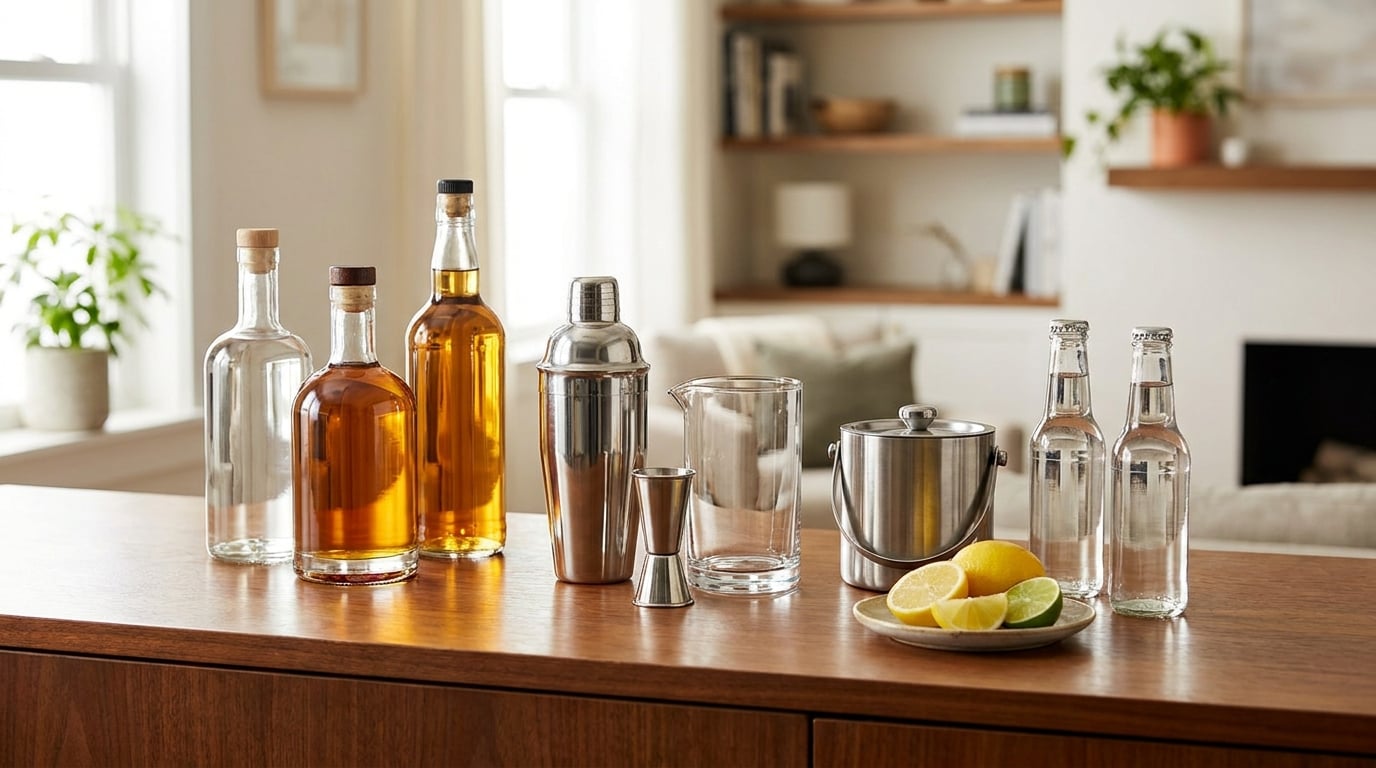
To stock a home bar for beginners, start with two or three versatile base spirits, a jigger, a shaker and a strainer, a few bottles of tonic and soda water, one simple syrup, and three glasses. Add bottles one at a time after that, based on the drinks you actually want to make. The whole first setup takes an afternoon and costs less than most people expect.
Most first-time buyers get it backwards. They spend on impressive bottles first, then discover they have no way to measure or strain anything, and the shelves fill up with syrups that will never be opened again. The order matters more than the choices.
I have watched a lot of people set up a first bar in a weekend, and the successful ones all follow the same path: cheap tools, good mixers, a short spirit list, and a plan for the drinks they will actually make. The ones who end up with twenty bottles and no cocktail habit are the ones who bought the whole shelf on day one.
Here is the practical version, updated for 2026, with no brand names and no shopping list longer than it needs to be.
What You Need to Start a Home Bar
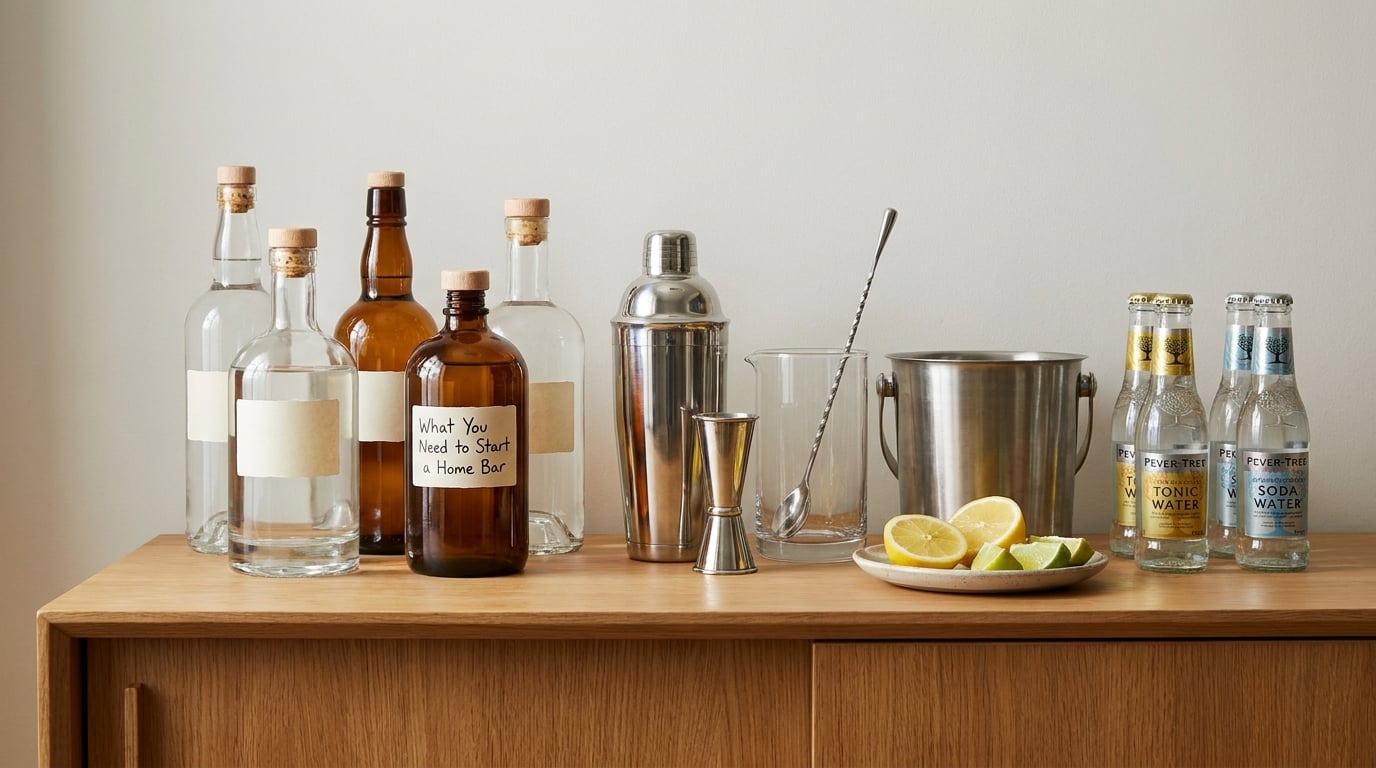
A working home bar needs four groups of things: spirits, mixers, tools and glasses, plus ice and garnishes. That is it. Everything else people describe as essential is either a nice-to-have or a duplicate of something else on the list.
- Two or three base spirits. Each bottle should serve at least three drinks. Gin or vodka, rum, whiskey and tequila cover nearly everything.
- Tonic water. The most-used mixer in home cocktail making, and the reason a gin and tonic is the drink most beginners make first.
- Soda water. Lengthens drinks and adds bubbles. Whiskey and soda, spritzes and topped-up highballs all depend on it.
- Simple syrup. Sweetens without the cloudiness sugar leaves behind, and it is the base for sours, daiquiris and Mojitos.
- Jigger. Makes every drink repeatable, which is the whole point of a measured recipe.
- Shaker and strainer. Chills and dilutes a drink properly. Together they unlock daiquiris, sours and Cosmopolitans.
- Bar spoon. For stirring and layering, which is how Old Fashioneds and Martinis get built.
- Rocks glass. For anything served over ice or neat.
- Highball glass. For tall drinks with ice and a mixer, such as a gin and tonic.
- Fresh citrus. Garnish and real juice instead of syrup, so the drink tastes like something.
- Ice and an ice bucket. Dilutes the drink, chills the glass and keeps the mixing area from getting warm.
Bitters, a muddler, a peeler and a coupe can wait. So can a decanter, a wine rack, and anything sold as a set of twenty pieces with a velvet-lined box. If you are also planning to serve bottles alongside dinner, our beginner’s guide to pairing wine with steak covers the part of the table that is not cocktails.
Step-by-Step: How to Stock a Home Bar for Beginners
1. Set a Budget and Choose Your Drink Style
Decide what you will drink before you decide what you will buy, because that single choice eliminates most of the wasted spending. Write down the three or four drinks you would happily make every week and build backwards from the ingredients they share.
If your list is martinis, Margaritas and Old Fashioneds, your core spirits are gin, tequila and whiskey. If it is mostly spritzes and highballs, you need less in the bottle and more in the soda aisle.
Split the money roughly into thirds: tools, mixers, and bottles. Tools and mixers are the parts that keep paying you back drink after drink, so they come out of the budget first. Many beginners do the opposite and it shows.
2. Buy the Core Spirits
The best first bottles are the ones that support three or four drinks each, not the ones with the longest label. A standard bottle of a mid-priced spirit in a 750ml format is the sensible size, since a 375ml bottle often works out more expensive per pour and 1.75 liter bottles risk sitting open too long.
Gin covers gin and tonic, a gimlet, a Tom Collins and a Martini. Vodka covers vodka and tonic, a Screwdriver, a Bloody Mary and a cosmopolitan. Light rum covers daiquiris, Mojitos and a piña colada. Bourbon or rye covers Old Fashioneds, Manhattans and mint juleps. Blanco tequila covers Margaritas, a Paloma and a tequila sunrise.
Buy two of those to start, not all five. A bottle of dark rum, a bottle of brandy, a bottle of Scotch and a bottle of mezcal can wait until you know which of them you will reach for twice a month rather than twice a year. That is the mistake forum regulars complain about most: prestige bottles bought early, opened once, and forgotten.
If you want to try a category before committing, mini bottles and 200ml splits are the honest way to do it. They cost more per ounce but they let you find out whether you actually like mezcal.
3. Cover the Essential Mixer Categories
Four mixer categories cover nearly everything a beginner makes, and one bottle from each is enough to start. Carbonated: soda water and tonic water. Sweet: simple syrup made at home in a one-to-one ratio of sugar and water. Bitter and aromatic: a bottle of aromatic bitters, used in dashes. Fruity: a juice or a liqueur, if your drink list asks for it.
Skip anything that duplicates a job. Three kinds of cola, four ginger drinks and two berry syrups all occupy the same shelf space. Choose one of each family and learn it properly.
For a zero-proof bar, the same shelf works with small changes. Fresh citrus, good cranberry juice, ginger beer, tonic water, sparkling water, two simple syrups and bitters cover a wide range of non-alcoholic drinks. Cold brew tea and a squeezed grapefruit also work harder than most bottled mixers.
Once the basics are in place, most of the next question is what to pour alongside them. White wine pairing basics for home cooks is a useful companion read for the bottles that are not in the shaker.
4. Choose Tools and Glassware for Your Drinks
Six tools matter, and everything else has a substitute already sitting in your kitchen. A jigger is the one thing worth buying properly, because without it no recipe is repeatable. A Boston shaker or a lidded mason jar chills a drink with far less mess than a glass. A Hawthorne strainer sits in the shaker and holds back ice. A bar spoon stirs and layers. A muddler can be a wooden muddler, or the back of a spoon in a pinch. A peeler or a Y-peeler does what a channel knife does for a lemon twist.
Three glasses cover most of what a beginner makes. A rocks glass for anything over ice or served neat, and a highball for tall mixed drinks with a large ice cube. A coupe or a martini glass is the third, and only matters if you plan on making drinks up rather than stirred.
Buy two of each at first. Glasses break, and a serving of six is easier to pour than a serving of two that makes you keep washing up mid-party. A bar mat protects the counter and catches drips, which is the second most useful thing on that shelf after the shaker.
5. Organize Bottles and Bar Supplies
Put bottles where the mixing happens, not where they look best. Every extra step between the ice and the bottle is a step that stops you making the drink at all. A rolling cart, a kitchen counter corner or a sturdy shelf within arm’s reach of the sink all work; a closed cabinet two rooms away does not.
Group by job rather than by bottle. Spirits at eye level, mixers standing together where you can see what is running low, tools in one tray, glasses stacked near the sink, and garnishes cut fresh right before serving. When the tonic is half gone you will not notice if it is buried behind the vermouth.
Keep opened bottles fresh and use them. Vodka, gin, rum, tequila and whiskey keep for years, so a small pour each time you make a drink is enough. Sweet mixers, syrups and anything with fruit or dairy in it do not last, so buy those in sizes you will finish. Label anything homemade with a strip of tape and the date you made it.
6. Make a Few Simple Test Drinks
Make four drinks in your first week, because the setup only tells you what you are missing once you have used it. A spirit and soda with ice takes no technique at all. A gin and tonic teaches you to measure and build in layers. A sour such as a gimlet or a Margarita teaches you shaking, straining and balancing. A stirred drink such as an Old Fashioned teaches you dashes and the slow build.
Whichever drink felt hardest tells you what to buy next. If stirring felt awkward, the next purchase is a bar spoon. If straining made a mess, the next purchase is a strainer with a finer mesh. If you ran out of citrus mid-week, you need a better citrus habit rather than a new bottle.
7. Expand Based on What You Actually Drink
Add one category at a time, and only when a drink you want to make has no version of its own. If you have been making Manhattans, you need sweet vermouth. If friends keep asking for Espresso Martinis, coffee liqueur solves that in one purchase. If winter calls for something warm, the answer is a different bottle of vermouth, not a shelf full of new spirits.
Seasonal thinking saves the most money. Summer needs sparkling wine, soda and more citrus. Winter needs bitters, fortified wine and spices. A host who throws four parties a year needs twice the batch quantities of the same three drinks rather than a broader list of bottles.
For serving other people, a simple rule of thumb is one 750ml bottle per three guests for a two-hour evening of spirits-forward drinks, and roughly double that for a party where cocktails are the point. Buy the extra early, since that is when prices are easiest to find and choices are widest. If the evening is really about the food, a three course dinner menu at home usually matters more than the eighth bottle.
Common Mistakes and Smart Starter-Bar Tips
Buying bottles before tools. A shelf of spirits and no jigger produces drinks that taste different every time. Buy the jigger, shaker and strainer first, even if it means the first bottle waits a week.
Buying two of the same spirit instead of two different ones. Two brands of vodka make one drink. Vodka and gin make two, and the difference shows up the same weekend.
Starting with prestige bottles. An expensive whiskey mixed with a cheap tonic is a worse drink than a mid-priced bottle of each. Bottles are where beginners over-spend, and the difference rarely shows up in a highball.
Ignoring glass and tool capacity. A jigger that measures two sizes, a shaker that holds a full drink plus ice, and glasses you own in multiples of two solve most of the problems people discover at 9pm on a Saturday.
Storing everything away from the mixing area. A tidy bar on the far side of the room is a display case. Keep the working bottles within reach and let the collection live in the cabinet.
A few habits make the whole thing last longer. Measure everything, including the pour of mixer, so the next drink tastes like the last one. Taste spirits neat once so you know what your base actually tastes like before you dilute it. Write the recipe on a small card rather than looking it up each time. Buy ice in the largest bag your freezer holds, and keep a scoop in the bucket so nobody uses a glass to serve it.
Frequently Asked Questions
What does a beginner home bar need?
A beginner home bar needs two or three versatile base spirits, tonic water, soda water and one homemade simple syrup, plus six tools: a jigger, shaker, Hawthorne strainer, bar spoon, muddler and peeler. Three glasses cover most drinks, along with fresh citrus and a good supply of ice. Everything beyond that is optional.
How much should it cost to stock a home bar?
Costs vary by region, brand and where you shop, and they change often, so check current figures before buying. As a guide, split the first setup into roughly three equal parts: tools, mixers and syrups, and bottles. Tools and mixers repay the spending fastest because every drink uses them.
Do I need a full set of bar tools?
No. A jigger, a shaker, a Hawthorne strainer and a bar spoon cover almost everything a beginner makes. A muddler can be replaced by the back of a wooden spoon, a peeler by a Y-peeler, and a mixing glass by a tall glass. Sets of twenty tools in a lined box are mostly duplicates.
What are the best first bottles for a home bar?
Pick spirits that each support at least three drinks. Gin, vodka, light rum, bourbon or rye, and blanco tequila are the usual five, and two of them are enough to start. Choose a 750ml bottle over a split or a large format, and skip the specialty bottles until you have made the classic drinks many times.
Should a home bar have whiskey, vodka, gin, and rum?
Those four are a solid backbone, but buying all four on day one usually means two of them sit untouched. Start with the two spirits matching the drinks you actually want to make, learn four or five classic cocktails, then add the others once a recipe calls for one. Breadth after depth beats breadth alone.
Where should I store bottles and bar supplies at home?
Keep working bottles within arm’s reach of wherever you mix, ideally on a counter corner, a sturdy shelf or a rolling cart, with mixers grouped where you can see what is running low. Store spirits upright in a cool dark cabinet away from heat and sunlight, and refrigerate vermouth and anything with fruit or dairy in it.
Start With the Drinks You Love
The first purchase is a jigger, a shaker, a strainer and a bar spoon, not the impressive bottle. Then buy one mixer from each category, two spirits that match the drinks you already love, and three glasses.
Once you can make four drinks without thinking about it, add the next bottle that a recipe actually needs. That is how to stock a home bar for beginners without a crowded shelf and a guilty conscience.