
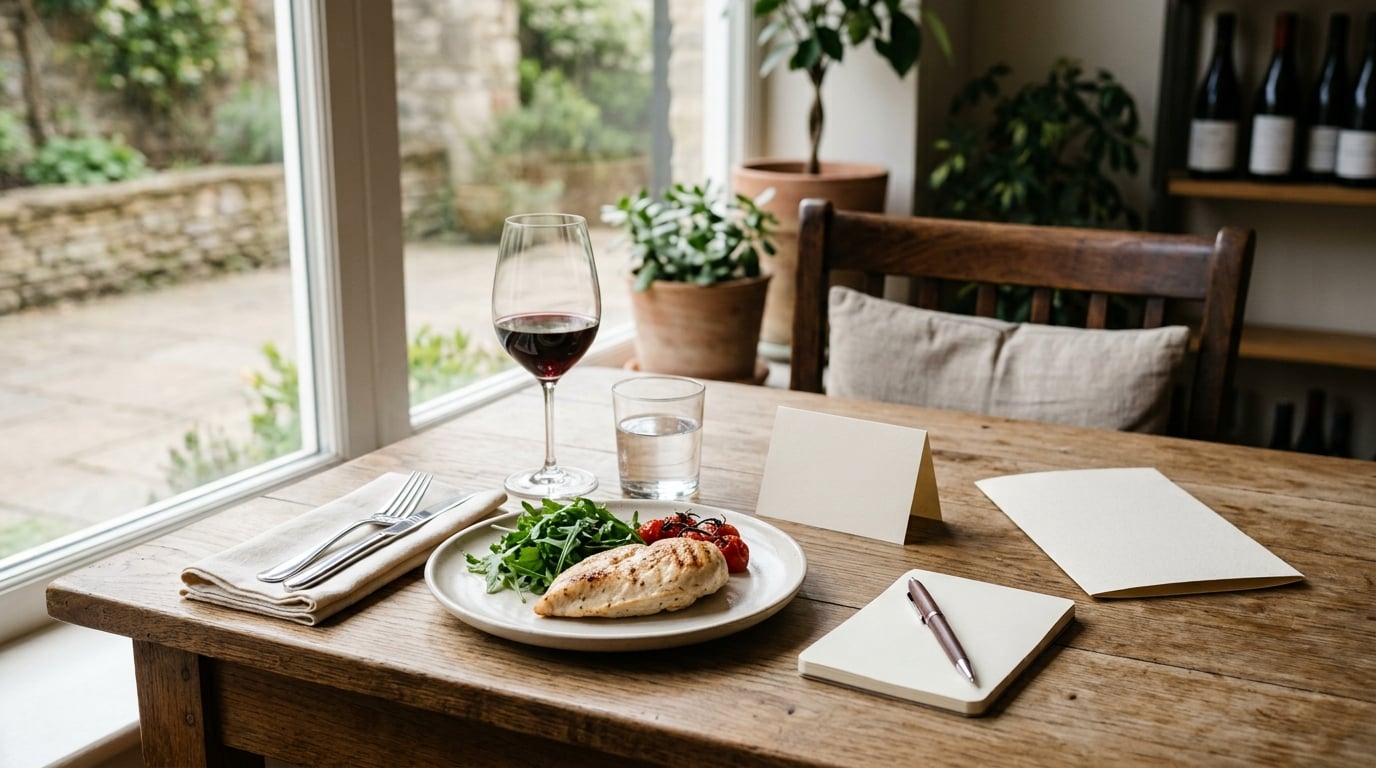
To dine out with food allergies safely, you research the kitchen, name the allergen out loud, check the ingredients, and watch how the food is prepared. If the staff cannot tell you how a dish is made, you order something else. That is the whole process, and it takes about ten minutes of preparation before you leave home.
The hard part is not memorizing labels. It is that a kitchen you cannot see runs on shared surfaces, shared fryers, and people moving fast between tickets. A server who nods along and writes nothing down is not agreeing to accommodate you.
Most reactions happen because someone made a reasonable guess. This guide is how you remove the guesswork.
Table of Contents
- What You Need
- Step-by-Step
- Common Mistakes
- Frequently Asked Questions
- How do I dine out with food allergies?
- Are restaurants legally required to disclose allergens or accommodate allergies?
- What is a chef card and what should be on one?
- What should a food handler do to prevent cross-contact for an allergic diner?
- What are the common hidden sources of food allergens in restaurant dishes?
- What do I do if I have a reaction while eating out?
- Conclusion
What You Need
You need a written list of your allergens that names them the way a kitchen does, not the way a doctor does. Sesame is a seed, not a nut. “Tree nuts” is a category, and kitchens handle almonds, cashews and walnuts on the same line.
An allergy card turns that list into something a chef can act on in ten seconds. It carries the allergen, the severity, and what a reaction looks like for you specifically. Cheap index cards work fine; so do digital cards you can pull up on your phone.
You also need two epinephrine auto-injectors if your allergist prescribed them, carried on you and not sitting in a bag in the car. Check the expiration dates when you set them out, and get a spare pair for anyone traveling with you.
Then you need the number of a person the restaurant can reach, and a backup plan for being hungry without eating. A protein bar in your pocket solves more bad evenings than any menu research.
If someone is dining with you, tell them which restaurant you are going to and which dish you are ordering. They need to know which plate is the emergency, and where the auto-injectors are.
Step-by-Step
How to research the restaurant
Look at the menu before you call, and find two or three dishes you would actually be happy to eat. Then call in the middle of the afternoon, between two and four, when the kitchen is quiet and a chef can walk to the phone.
Ask three things: can you accommodate a peanut allergy, do you have a separate preparation area or just separate utensils, and does anything on the menu already contain the allergen. A restaurant with an allergen matrix, where staff look up every dish in a binder, usually gives a better answer than one working from memory.
Skip restaurants that sound vague. If the person on the phone says we are careful, that is not an answer. We are not sure if anything has nuts in it is an answer, and it saves you the trip.
Fine dining kitchens generally accommodate allergies better than casual chains, because the menu changes and the kitchen is smaller and more deliberate. Chains often have an official allergen binder, but the staff on shift may never have opened it.
How to tell the restaurant about your allergy
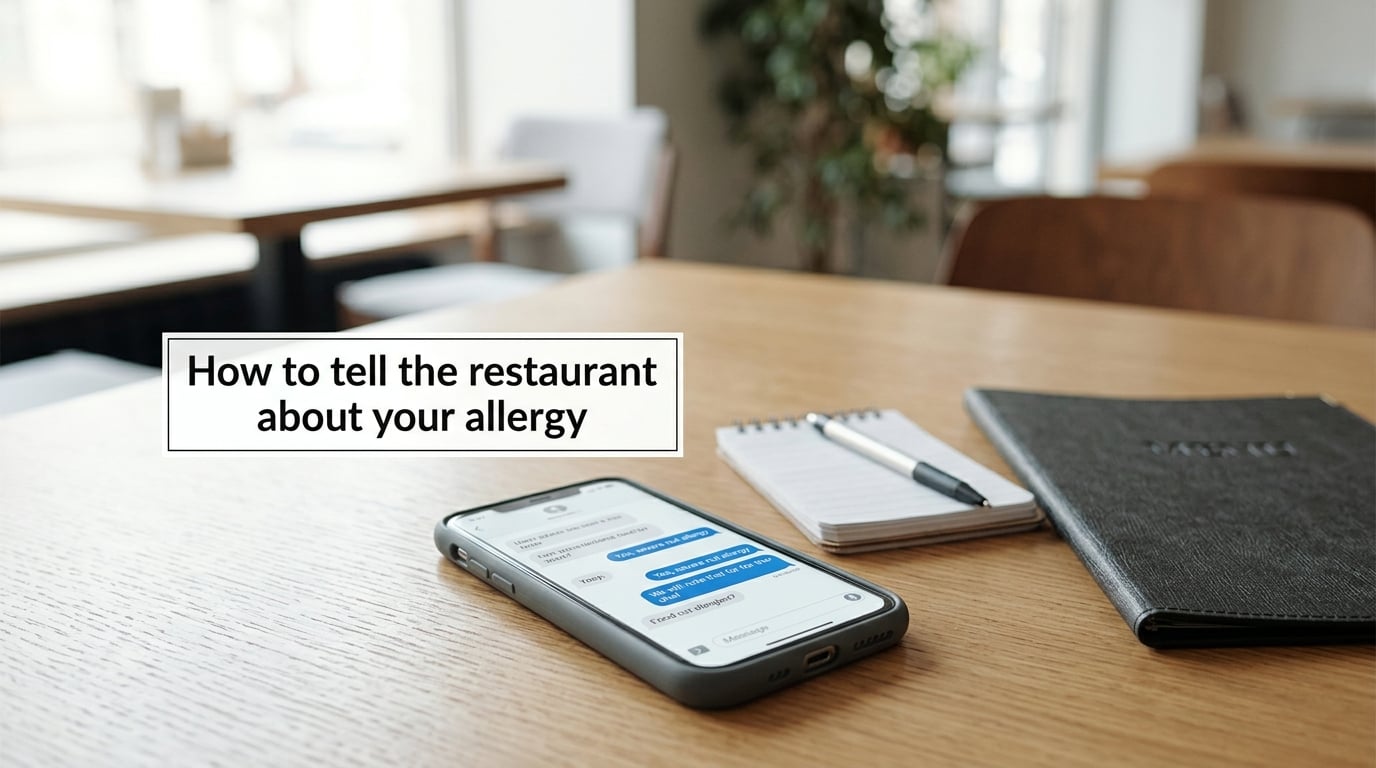
Say the sentence plainly, then hand over the card. I have a peanut allergy, it is severe, and I carry an auto-injector. I am not fussy about a dish. I need to know whether peanut touches this one.
The distinction between an allergy and an intolerance matters more than people expect. Allergies are immune reactions that can be life-threatening. Intolerances are digestive. Telling a server you are lactose intolerant gets you a different answer than saying your throat will close, and only one of those answers keeps you safe.
Ask the server to repeat the allergy back before they walk away. Watch them write it on the ticket where the kitchen can see it. Good staff take the card into the kitchen and bring it back with the food, which is the single strongest signal that your order was actually handled.
If the server hesitates, ask to speak with a manager or the chef. That is not rude. It is the request that separates a kitchen that can help you from one that cannot.
How to choose safer menu items
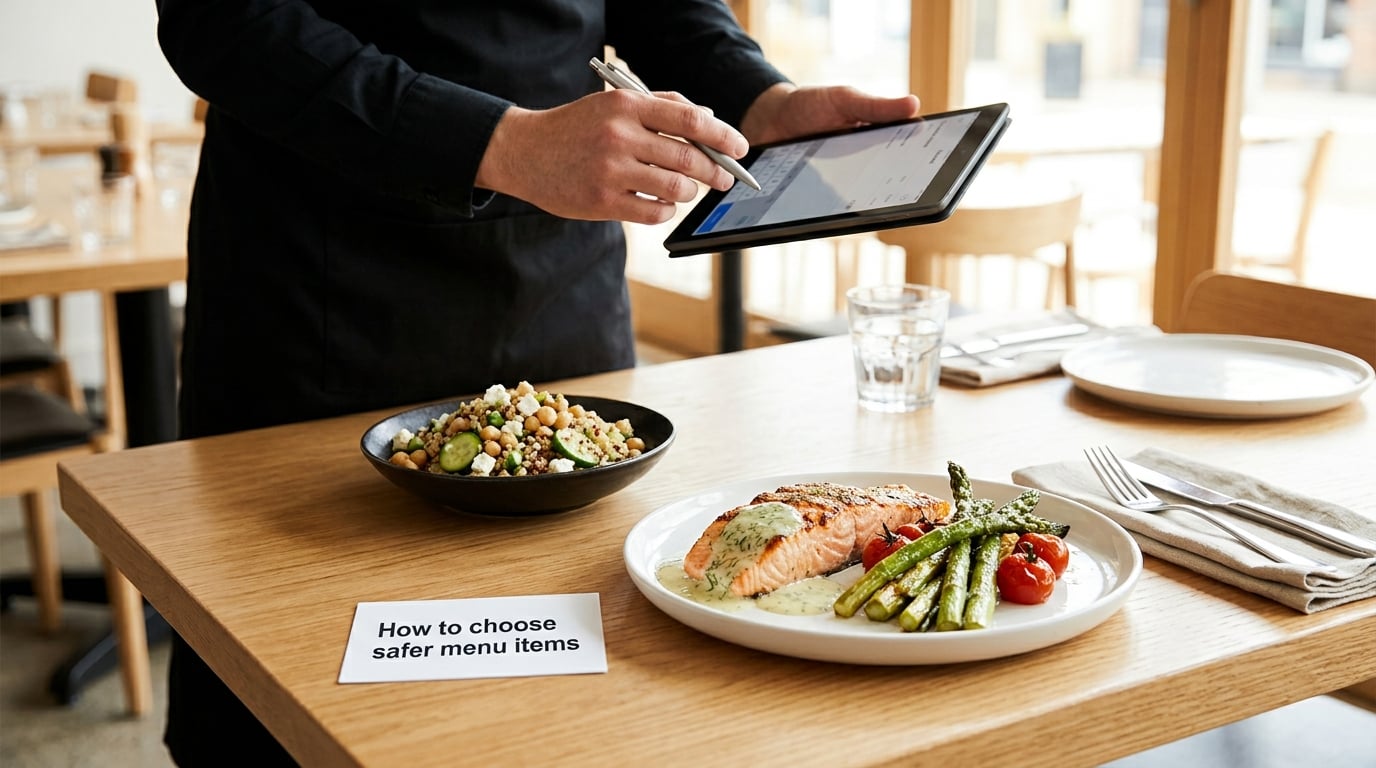
Simple, unpackaged food is the easiest thing to get right. A plain grilled protein with nothing poured over it has fewer unknowns than a dish with four sauces and a garnish added after plating.
Treat every sauce, marinade, dressing and broth as a potential carrier. Soy sauce, fish sauce, oyster sauce and hoisin all commonly contain wheat and sometimes peanut. Many vinaigrettes use peanut or sesame oil. Marinades and glazes often hide soy and sesame even when the protein itself is allergen-free.
Ask for sauces on the side, and check what is on the side plate before you touch it. The same goes for bread service, which sits in the open where a shared basket picks up whatever is nearby.
Check garnishes. Cheese crumbles, toasted nuts, chopped herbs and fried onions go on at the end, after the food leaves the line, which is exactly where your control stops. Look at every plate before anyone takes a bite.
Buffets and all-you-can-eat counters are the hardest case. The tongs, the bread, the cheese and the shared ladle are all cross-contact points you cannot control, and a dedicated allergy-safe table is often the only workable option there.
How to handle cross-contact at the table
Cross-contact means your allergen transfers to food, surfaces or utensils through a shared cutting board, a shared fryer, a shared spatula or a shared pot of water. Restaurants that wash and sanitize between orders reduce it. Restaurants that say they will use clean utensils are describing the best case, not a guarantee.
Ask where the food is cooked. A shared fryer matters enormously for a shellfish, fish or peanut allergy, and no amount of careful plating undoes it.
Say your allergy again when the food arrives and hand the server the ticket, so they can match it to the plate in front of you. Confirm the plate that is yours, and keep your own utensils away from shared serving spoons.
For dessert, ask for the scoop to come from a fresh container rather than the shared tub, and watch for toppings added with a shared scoop. Shared ice cream and nut-topping stations are a common way a safe meal goes wrong at the end.
One more thing. The two hours after a meal is when an ingested reaction usually shows up, so keep the auto-injector close for the rest of the evening rather than putting it in a coat pocket across the room.
Common Mistakes
Assuming a dish is safe because it looks plain. A salad with no dressing can still be tossed in a bowl used for a peanut dish, and a “simple” protein can be marinated overnight. Fix: ask about preparation, not appearance.
Treating vague reassurance as a yes. We are very careful, our fries are fine, nothing here has nuts. Every one of those is a statement about intent rather than fact. Fix: ask a question that has a checkable answer, like whether the fryer is shared.
Downplaying the severity. A server who thinks your allergy is a preference will treat your request as optional when the kitchen gets busy. Fix: say the word severe and mention the auto-injector. It changes the tone in the room.
Not following up on the ticket. The order gets written, the plate gets built, and somewhere in between a line cook misses it. Fix: hand the ticket to the server at the table. The ones who do that are also the ones who take the card to the kitchen.
Ignoring early symptoms. Itching in the mouth, hives, stomach pain or a feeling of something being wrong. Waiting to see if it passes is the most common way a manageable reaction becomes an emergency. Follow your action plan and use the auto-injector, then call emergency services.
Getting hungry and ordering anything. Hunger makes risk feel reasonable. Fix: eat the snack in your bag first. It is the least exciting step on this list and it prevents the worst one.
Tips for making dining out less stressful
Build a small rotation of three or four restaurants you already know work. Decision fatigue is a real part of this, and re-checking a menu from scratch every time is what makes people skip the check.
Book earlier than the peak. A 5:30 seating gives you a quieter room, a less rushed kitchen and a server who can actually step away.
Order the moment you sit down rather than browsing for ten minutes. Server attention drops as the room fills, and early orders are easier to flag in the kitchen.
Thank the staff out loud when it goes well. Most people carrying an allergy say they are afraid of being seen as difficult, so servers hear far more complaints than thanks. A specific thank you is what makes the next visit easier, and it costs nothing.
Keep a note of what worked at each place, including the dish and the time of day. Write it down the same evening while you remember it accurately.
Some readers find the emotional side harder than the kitchen. It is normal to feel that a meal is not relaxing when you are managing your own safety. If dining out has stopped being enjoyable rather than just being complicated, that is worth raising with your allergist or doctor, who can also help you review your written action plan.
Frequently Asked Questions
How do I dine out with food allergies?
Research the restaurant and call during off-peak hours, between two and four, to ask whether they can accommodate your specific allergen. Carry a written allergy card with the allergen named plainly and the severity stated. At the table, confirm ingredients, ask for sauces on the side, check every plate before eating, and keep your epinephrine auto-injector within reach for two hours after the meal.
Are restaurants legally required to disclose allergens or accommodate allergies?
Requirements vary by country, state and city, and they change. Some jurisdictions require allergen labeling on menus, others only cover packaged food or specific settings like schools. There is no nationwide US rule requiring restaurants to disclose allergens in the general way consumers sometimes assume. Treat any menu claim as a starting point, and confirm your specific allergen with the staff every visit.
What is a chef card and what should be on one?
A chef card is a written note that tells the kitchen what you are allergic to, how severe the allergy is, and the cross-contact concerns you have. It should list the specific allergens rather than a category, state that the reaction can be life-threatening, and note that you carry an epinephrine auto-injector. Keep it to one side of a business card so a server can read it in seconds and take it into the kitchen.
What should a food handler do to prevent cross-contact for an allergic diner?
Use clean utensils, gloves and a sanitized work surface instead of the ones used for your allergen. Cook your food before allergen-containing items where the kitchen allows it, or change gloves and clean the station between orders. Use a separate fryer, and dedicated cookware for items like french fries when possible. Wash hands with soap and water, since sanitizer does not remove peanut or nut residue. Check the order verbally when it leaves the kitchen and again at the table.
What are the common hidden sources of food allergens in restaurant dishes?
Sauces, marinades, dressings and broths are the usual suspects, since soy sauce, fish sauce and hoisin often contain wheat and sometimes peanut. Breading, fried items and shared fryers carry risk. Vinaigrettes and marinades frequently use peanut or sesame oil, and sesame appears in tahini, hummus and some breads. Watch for garnishes added after plating, shared ice cream tubs, and bread baskets that sit in the open. Ask about every component, including cooking spray and basting sauces.
What do I do if I have a reaction while eating out?
Use your epinephrine auto-injector as soon as symptoms appear according to the action plan your allergist gave you, and call emergency services. Do not wait to see if it improves, and do not rely on an antihistamine to handle breathing symptoms. Tell the restaurant staff immediately so they can stop serving anything containing the allergen and check for cross-contact. Stay with emergency responders, because symptoms can return after the first dose wears off.
Conclusion
The safest first steps are short: research the kitchen before you go, name the allergen clearly, and ask how the food is prepared. If the staff cannot answer those questions, you order something else or you leave.
Carry two auto-injectors, keep a snack in your pocket, and keep your written action plan somewhere you can find it in seconds. An allergist or doctor can fill in the parts that general guidance leaves open, including a plan for the specific reactions you get.
For anyone hosting a group where one guest has an allergy, the same rules apply in reverse: ask before you send out an invitation, and treat the answer as a requirement for the menu rather than a preference.
And for the cooks reading this, the honest version of allergy dining is in why restaurant food tastes better than home cooking, where the constraint shows up as a technique problem rather than a medical one. Pairing a safe dish with a drink goes smoothly too, if you want to keep the evening simple after all that checking: how to pair beer with food covers the part most people relax about last.