
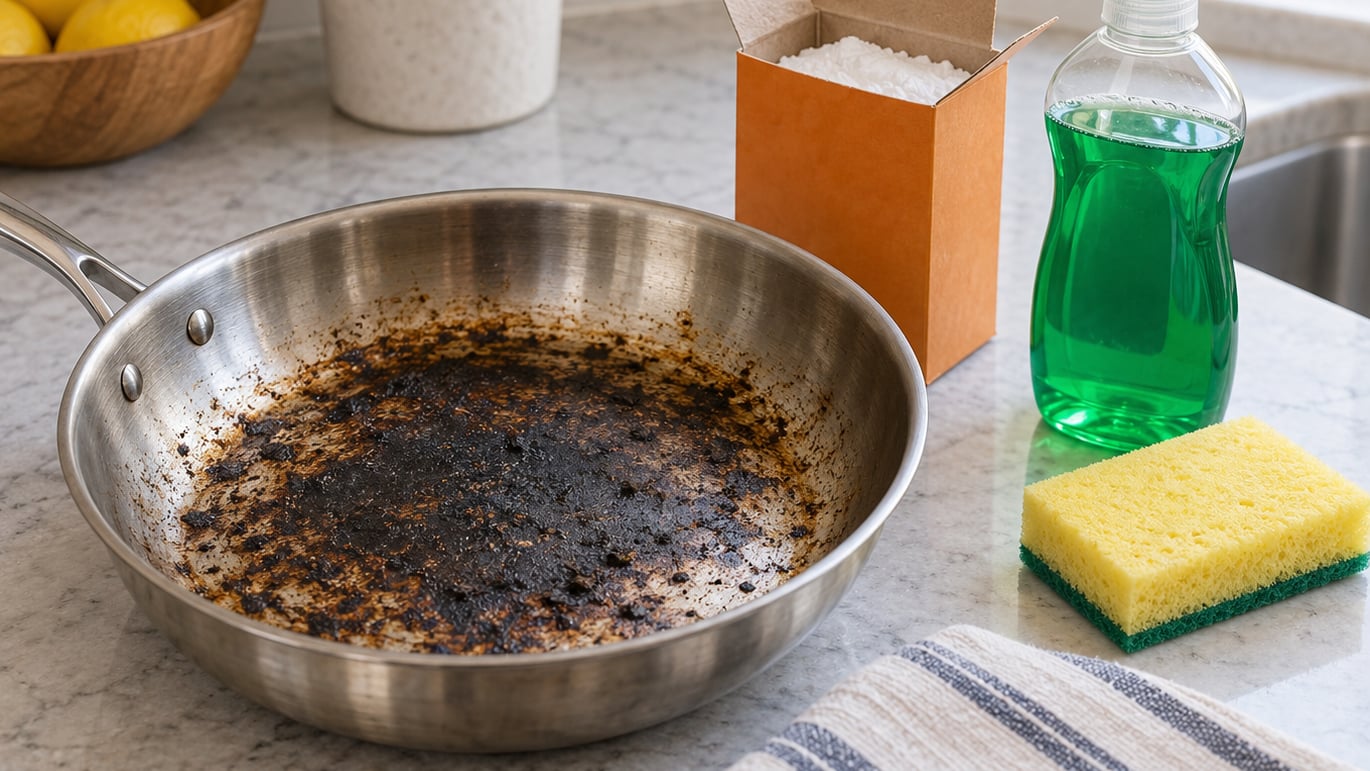
A burnt stainless steel pan comes clean with hot water, dish soap and a little baking soda, plus a non-abrasive sponge for the scrubbing. The trick is to loosen the carbon with heat and chemistry first, then lift it with almost no pressure. Most pans need 15 minutes of soaking and a few minutes of scrubbing.
The mistake people make is reaching for steel wool the moment they see black. That cuts into the brushed finish and leaves scratch lines you can see for years. Baking soda and a soft sponge fix the same carbon without touching the steel underneath.
Residue is worth removing because it holds heat in patches, so food scorches faster the second time around, and it carries old burnt flavour into whatever you cook next. A pan that looks blackened is almost always still usable. What you are dissolving is carbonised oil bonded to the surface, not the pan itself.
Table of Contents
- What You Need
- Step-by-Step: How to Clean a Burnt Stainless Steel Pan
- Common Mistakes
- Frequently Asked Questions
- Can you use baking soda on a burnt stainless steel pan?
- Will cleaning a burnt stainless steel pan make it unusable?
- Should I use vinegar to remove burnt food from stainless?
- How do I remove dark stains or discoloration from a stainless steel pan?
- Is steel wool safe for cleaning a burnt stainless steel pan?
- What if the burnt food will not come off?
What You Need
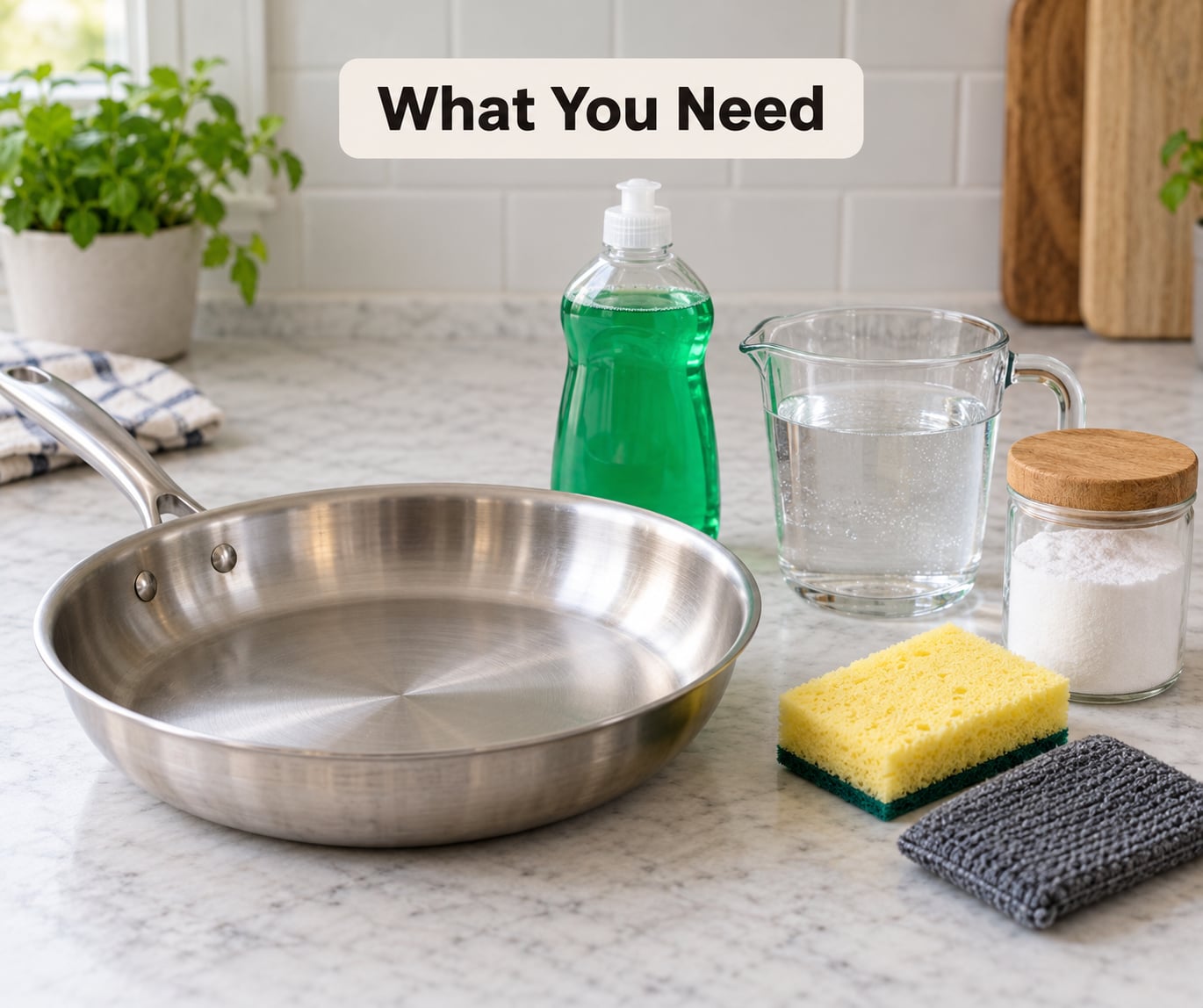
Gather everything before you start, because burnt-on food needs time to work and you do not want to be hunting for a sponge with your hands full of hot soapy water.
- Dish soap — any standard washing-up liquid. The surfactants are what break the grease loose.
- Baking soda — a box of plain sodium bicarbonate. Its mild alkalinity softens carbonised oil without cutting the finish.
- Warm water and a saucepan — for the boiling step, if you need one. The pan needs to sit on a hob for that.
- A soft cloth, sponge or nylon scrubber — the green kind with a scouring layer is fine, the purple rough side is not.
- A plastic pan scraper or wooden spoon — for prying up a thick crust before anything gets wet.
- White vinegar — optional, useful for heat tint and mineral film rather than heavy carbon.
- Cream of tartar or lemon — the gentler option if you are squeamish about baking soda.
Keep steel wool, scouring powders with bleach, oven cleaner, silver polish and copper brushes out of the sink. They all scratch, and some of them leave a film that is harder to remove than the burn was.
Step-by-Step: How to Clean a Burnt Stainless Steel Pan
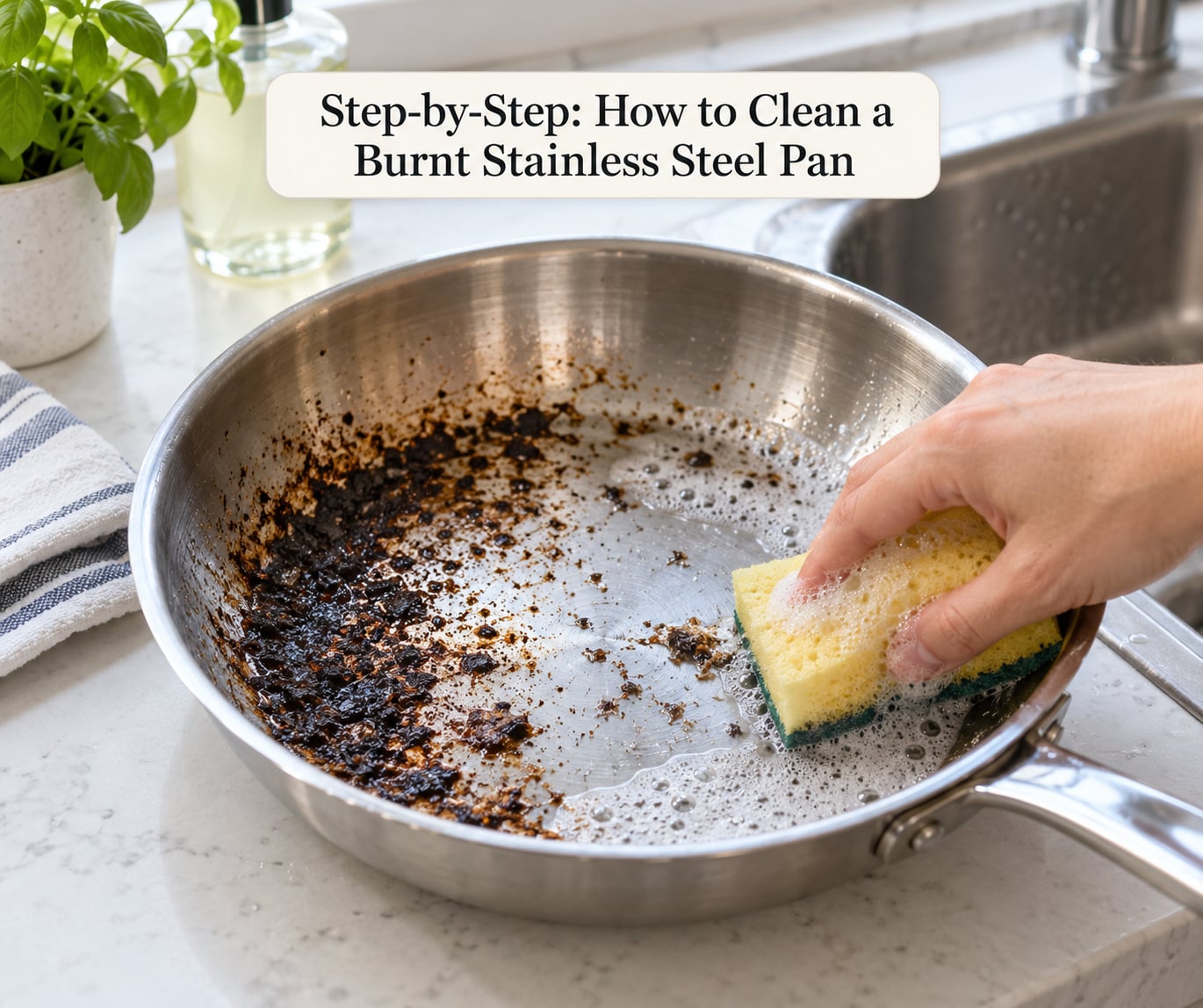
Step 1: Cool the Pan and Loosen the Crust
Turn off the heat and let the pan sit until it is cool enough to handle. Dropping a hot pan into cold water can warp the base, and warping is the one kind of damage you cannot scrub off.
Once it is warm rather than hot, scrape the surface with a wooden spoon or a plastic scraper. You are not trying to remove everything, just to break the seal so water can get underneath the crust.
Step 2: Use Baking Soda for Stubborn Burns
Mix two or three tablespoons of baking soda with a splash of water into a thick paste, then spread it over the black patches. The paste should stay put, not run off the surface.
Give it 15 to 20 minutes. Baking soda is a mild base, so it needs time to work on polymerised oil rather than a quick wipe. Scrape the dried paste off with a plastic scraper, rinse, and see how much carbon has gone.
If the pan is badly blackened, simmer the same mixture instead. Add enough water to cover the base by an inch, add two tablespoons of baking soda, bring it to a boil, then drop the heat and simmer until the fizzing stops and the crust loosens. That is the version most people call the boil-and-soda method, and it is the one that shows up again and again in cooking forums as the method that actually works.
Step 3: Soak the Pan in Hot Soapy Water
Fill the pan with hot water, add a generous squeeze of dish soap, and give it 15 minutes. This step is unglamorous and it is often the whole job for a lightly scorched pan.
You will know the soak has done its job when the surface feels slimy in a greasy way rather than crusty, and when dark flakes rinse away under the tap without pressure.
Step 4: Boil the Pan When Residue Still Hangs On
For carbon that survives the soak, add half an inch of water and a cup of white vinegar, bring it to a boil, and simmer for 5 to 10 minutes. The heat softens the carbon and the acid loosens whatever mineral film is underneath it.
Turn the heat off, let it cool a little, then move the pan carefully — the liquid is genuinely hot — and scrub while it is still warm. Warm vinegar residue rinses away far more easily than cold.
Step 5: Scrub the Burnt Stainless Steel Pan Gently
Use a soft sponge in a circular motion with light pressure, following the grain of the brushed metal. A crumpled ball of aluminium foil is the traditional kitchen abrasive for stubborn carbon: the folds catch the deposit and the foil is softer than the steel it is rubbing against. Rinse the foil and use a fresh piece as it darkens.
If the pan has a polished rather than brushed finish, a nylon pad or a cosmetic pad works better than foil, which can leave fine marks on a mirror surface. Bar Keepers Friend is the strongest option, and worth knowing what it actually does: it dissolves heat tint and mineral deposits very well, and stuck carbon only moderately. On a real carbon burn it will get you partway, and users often report a grey residue that needs a second rinse.
Scrub until the water running over the base runs clear. If it is still carrying dark colour, you have more carbon than the method can reach. Go back to the boil and soda step rather than leaning on the scrubber.
Step 6: Rinse, Dry and Check the Result
Rinse under hot water, dry on the hob over low heat, and then look at the pan in daylight. A faint grey ghost of the burn is normal and will not shift with any method. What you are looking for is a surface you can run a finger across without catching.
Heat discolouration — the blue, gold or rainbow tint that shows up after a very hot sear — is a different problem. Simmer the pan with a squeeze of tomato sauce or a splash of vinegar for a few minutes and the tint lifts off. It is cosmetic and has no effect on safety or cooking. If you are choosing cookware rather than rescuing an existing piece, our comparison of cast iron vs stainless steel pan for searing covers how each surface behaves under serious heat.
Common Mistakes
Cleaning a hot pan. Thermal shock bends the base, and a warped base will never sit flat on a burner again. Let it cool to warm first, every time.
Using steel wool. It works, and it is why the advice online contradicts itself. Steel wool is safe for a genuinely blackened pan when you accept a scratched finish, and a poor choice for a pan that only needs the soak from Step 3. Use a nylon pad and you usually do not need it at all.
Scrubbing harder than the method requires. More pressure does not remove more carbon. It removes finish. If you are leaning on the sponge, the soak was too short.
Pouring cold water into a hot pan. Same problem as the first mistake, just faster.
Relying on acidic chemical cleaners. Oven cleaner, degreasers and bleach-based powders will take the bloom off stainless and leave it permanently dull. Vinegar and lemon are acids gentle enough to use; those products are not.
Putting the pan away wet. Trapped water causes water spots and rust at the rivets. Dry it on the hob, not in a cupboard rack.
Applying a baking soda and vinegar mix and expecting double strength. They neutralise each other into plain salt water. Vinegar first, rinse, then baking soda in a separate soak. Back-to-back beats mixed together every time.
Assuming a scorched pan needs seasoning. That is a cast iron job, and it is the wrong instruction for steel. Our guide to cleaning a cast iron skillet after cooking eggs covers the seasoning method properly, so you can see the difference between the two materials.
Frequently Asked Questions
Can you use baking soda on a burnt stainless steel pan?
Yes, and it is usually the best first move. Mix two or three tablespoons with a splash of water into a thick paste, spread it over the burn, and give it 15 to 20 minutes before scrubbing with a soft sponge. For a badly blackened pan, simmer the baking soda in water for 10 minutes instead of using a paste. Baking soda is a mild base, so it lifts carbonised oil without cutting into the brushed finish.
Will cleaning a burnt stainless steel pan make it unusable?
No. What you are removing is carbonised oil sitting on the surface of the steel, not the steel itself. A pan that has been through a bad scorch is usually cleaner and better after treatment than before, because the build-up was holding hot spots. The only lasting marks are cosmetic: a faint grey shadow or fine scratches from steel wool. Neither affects cooking or safety.
Should I use vinegar to remove burnt food from stainless?
Vinegar is better at heat tint and mineral film than at heavy carbon, but it works well as a follow-up. Boil half an inch of water with a cup of white vinegar, simmer 5 to 10 minutes, and scrub while the pan is still warm. Do not mix vinegar and baking soda in the same soak, because the acid neutralises the base and you get salt water that cleans nothing.
How do I remove dark stains or discoloration from a stainless steel pan?
Dark stains come in two forms. Brown or black stuck carbon needs the soak-and-scrub method: dish soap and hot water first, baking soda paste next, then a soft sponge. Blue, gold or rainbow heat tint comes off with a gentler acid treatment. Simmer a squeeze of tomato sauce or a splash of vinegar in the pan for a few minutes and the colour lifts away, because the tint sits on the surface rather than in it.
Is steel wool safe for cleaning a burnt stainless steel pan?
It is safe but rarely necessary, and that is why online advice conflicts. Steel wool will remove stubborn carbon that nothing else touches, at the cost of permanent scratch lines across the brushed finish. Try a nylon scrub pad, a cosmetic pad, or a crumpled ball of aluminium foil first, which gives similar mechanical action with far less scratching. Reserve steel wool for a pan you no longer care about cosmetically.
What if the burnt food will not come off?
Work your way up the list rather than adding pressure. Soak in hot soapy water for 15 minutes, then baking soda paste for 20, then a boil-and-soda simmer, then a boil with vinegar, then a nylon pad or foil. If carbon survives all of that in one spot, it is bonded to that patch of steel and will probably stay. Judge the pan by whether it is safe and usable, not by whether that mark disappeared.
Start with the fifteen-minute soak in hot soapy water. Most pans are noticeably better after that step alone, and you will know whether you need the baking soda paste or the boil from there. Take it slowly, keep the heat moderate next time you cook in it, and the same pan will outlast several cheaper ones.