
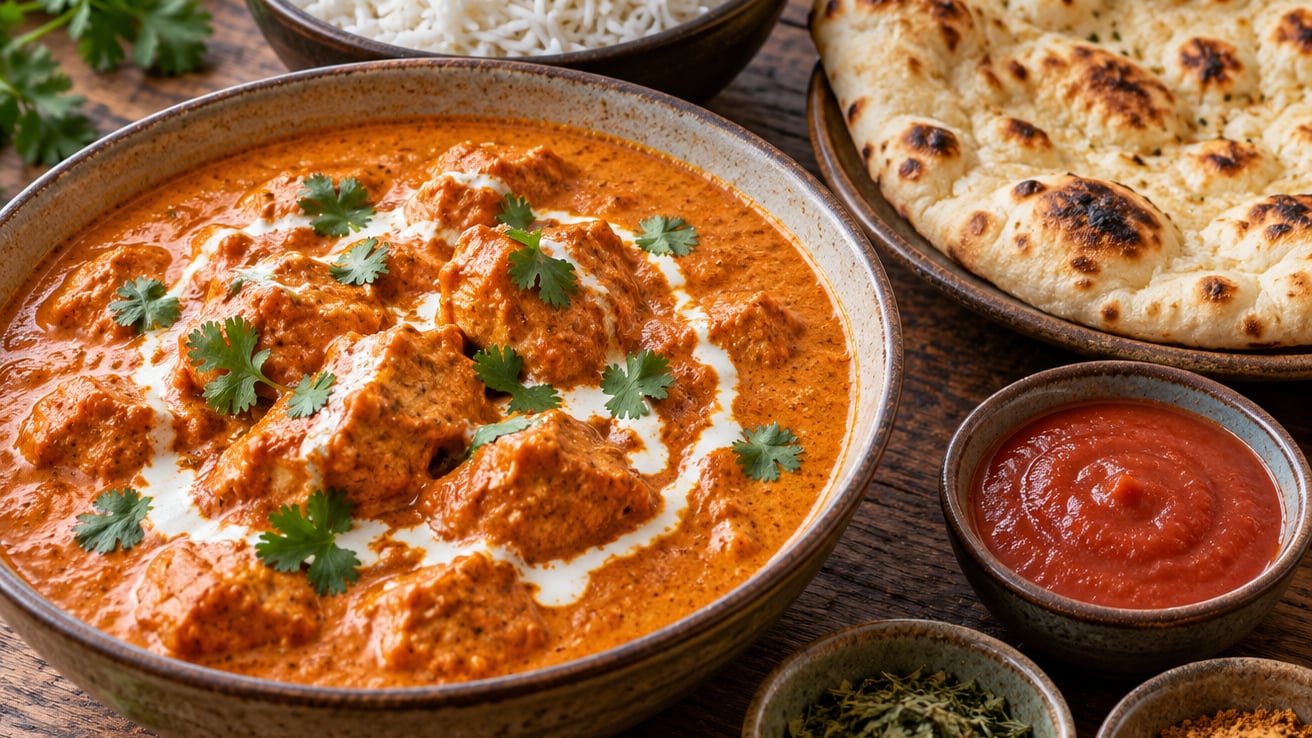
Butter chicken at home comes down to three moves: marinate the chicken, char it properly, and cook a tomato sauce long enough that it turns dark and sweet before the cream goes in. Most home versions fall short because the sauce only simmers five minutes, or the chicken goes into a cold pan and steams instead of browning.
This method takes about 50 minutes of active work. Thirty of those are hands-off, which is what makes it a workable weeknight dinner rather than a weekend project. It also uses supermarket ingredients only, no tandoor and no hard-to-find specialty aisle.
What You Need
For four servings you need about 1.5 pounds of boneless chicken thighs, a large skillet that holds them in one loose layer, a blender, and a wooden spoon. A wide heavy pan beats a thin nonstick one, because you want heat that stays high and a surface that can take a sear without warping.
Chicken thighs are the forgiving choice. They have enough fat to stay moist through a long simmer, where breast dries out and turns rubbery. If you only have breast, cut it into thick chunks rather than small cubes and pull it off the heat a minute earlier.
For the marinade: 1.5 pounds boneless skinless chicken thighs cut into large pieces, 1 cup full-fat Greek yogurt or hung curd, 1 tablespoon ginger garlic paste, 2 teaspoons lemon juice, 1 teaspoon kashmiri chili powder, 1 teaspoon ground turmeric, 1 teaspoon garam masala, and 1.5 teaspoons salt divided.
For the sauce: 2 tablespoons butter or ghee plus 1 tablespoon neutral oil, 1 tablespoon cumin seeds, 1 medium onion finely chopped, 4 garlic cloves and 1 tablespoon ginger minced, 2 teaspoons ground cumin, 2 teaspoons ground coriander, 1 teaspoon kashmiri chili powder, 1.5 cups tomato puree or passata, 2 tablespoons unsalted cashews soaked in hot water, 2 teaspoons kasuri methi crushed in your fingers, 1 teaspoon sugar, 3/4 cup heavy cream, 1/2 cup plain yogurt, and salt to taste.
Two substitutions cover most grocery gaps. Kashmiri chili powder gives the bronze-red color with almost no heat, and plain paprika plus a pinch of cayenne stands in for it when it is out of stock. Kasuri methi is the dried fenugreek leaf that gives the curry its slightly hay-like, restaurant aroma; if you cannot find it, leave it out rather than substituting fresh fenugreek, which tastes entirely different.
On temperature, cook the chicken to 165 F / 74 C as the USDA recommends for poultry, and use a thermometer rather than cutting into the thickest piece to guess. Keep marinated chicken refrigerated, and return it to the refrigerator within two hours. Bring the cream and yogurt to room temperature before they meet the hot sauce, since cold dairy hitting a boiling pan is the fastest way to a split sauce.
Step-by-Step
How to Make Butter Chicken at Home
Read the whole method once before you start, because the order is what produces the flavor. Marinate and set aside, sear the chicken and take it out of the pan, build and reduce the sauce in the same pan, blend it smooth, then bring everything back together for a short covered simmer.
Your visual cues, in order: the chicken turns opaque with browned patches, the raw spice smell sharpens and shifts to a toasted aroma within seconds, the tomato puree darkens from red to a deeper brick tone and thickens enough to hold a spoon trail, and the finished sauce coats the back of a spoon without running off.
Budget 30 minutes for marinade time minimum, 10 minutes to char the chicken, 20 to 25 minutes to build and reduce the sauce, and 10 to 15 minutes for the final covered simmer. If you are short on time, 30 minutes of marinating works fine; most cooks report the difference between that and a four-hour or overnight marinade is real but not dramatic.
1. Season and Marinate the Chicken
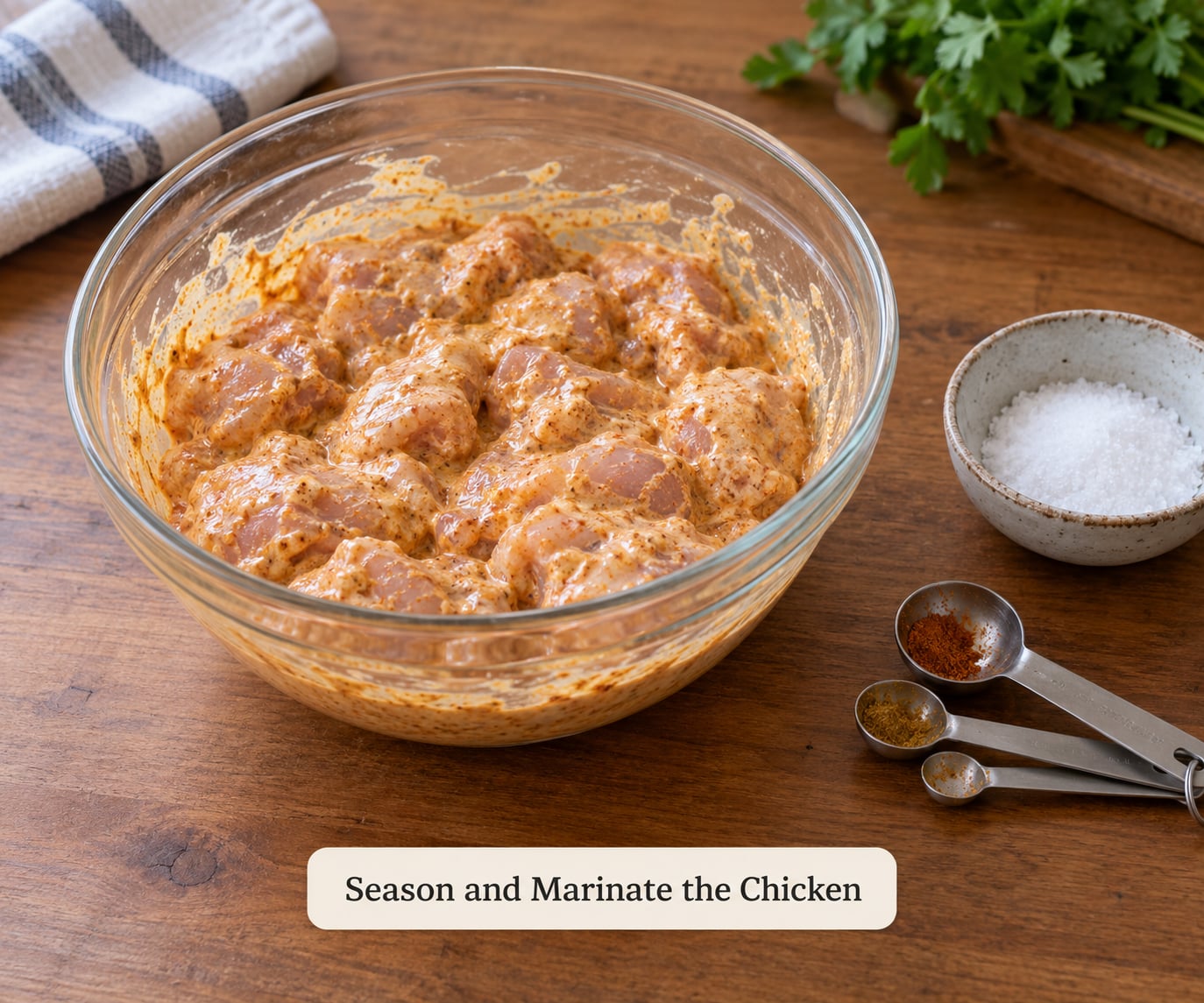
Pat the chicken dry with paper towels, then add it to a large bowl with the yogurt, ginger garlic paste, lemon juice, kashmiri chili, turmeric, garam masala and 1 teaspoon of the salt. Mix with your hands until every piece is coated and the marinade has changed from white to a pale orange.
Cover and refrigerate for at least 30 minutes, or up to 4 hours. Overnight is better still, and the acid in the lemon and the enzymes in the yogurt work on the proteins to leave the meat noticeably more tender.
Leave the chicken in the refrigerator the whole time it is marinating. If you have to leave it on the counter while you do everything else, put it back in the cold within two hours.
2. Cook the Chicken Until Tender
Heat 1 tablespoon of the oil in a large heavy skillet over medium-high heat until it shimmers. Lift the chicken out of the marinade, letting excess yogurt drip back into the bowl, and lay the pieces in with some space between them.
Sear without moving for 2 to 3 minutes per side until each piece has deep golden-brown patches. Cook in batches if your pan is smaller than the amount of chicken, since crowding drops the temperature and the pieces will grey and stew in their own liquid instead of browning. Those browned patches are where the smoky flavor comes from.
Check the thickest piece with an instant-read thermometer and cook until it reads 165 F / 74 C. Transfer the chicken to a plate and cover it loosely while you make the sauce.
For a different route to the same result, you can oven-bake or grill the pieces instead; our guide to oven chicken tenders covers the temperature and timing basics that carry over.
3. Build the Tomato and Spice Sauce
Lower the heat to medium. Add the butter or ghee and let it melt without browning, then add the cumin seeds. Swirl for about 20 seconds until they darken and smell nutty, then add the onion and cook until soft and translucent, roughly 6 to 8 minutes.
Add the minced garlic, fresh ginger, ground cumin, ground coriander and kashmiri chili. Cook for one minute, stirring, until the raw edge is gone and the aroma turns from sharp to toasted. This is the step most people rush, and it is where the restaurant flavor comes from.
Pour in the tomato puree, the soaked cashews and 1 teaspoon of salt. Bring it to a simmer and cook for 10 to 15 minutes, stirring occasionally, until the sauce darkens by a few shades and a spoon dragged through the pan leaves a clean channel that closes slowly.
Crush the kasuri methi between your palms over the pan at the end of this stage and stir it in. If you add it at the start, the long simmer cooks the aroma away.
4. Finish the Sauce With Cream and Butter
Take the pan off the heat and let it settle for a minute. Add a cup of hot water to the blender, then ladle the sauce in and blend on high for a full minute, holding the lid with a folded tea towel, until there are no lumps of onion or cashew left. Push the sauce through a fine strainer if you want the restaurant-smooth texture.
Whisk the plain yogurt with the last half teaspoon of salt and the sugar in a small bowl. Pour the blended sauce back into the pan over low heat, add the yogurt mixture and the heavy cream, and stir as it comes back to a bare simmer.
Add 1 tablespoon of cold butter off the heat and swirl it in. It will not fully melt; that is the point, since the small bits of butter are what give the sauce its glossy surface.
Simmer for 3 to 5 minutes until the sauce is thick enough to coat a spoon. Draw a line across the back of the spoon with your finger and it should stay put. If it runs clean and thin, simmer another few minutes.
5. Combine the Chicken With the Sauce
Return the seared chicken to the sauce, cover the pan, and simmer gently for 10 to 15 minutes over low to medium heat. You want the occasional lazy bubble, not a rolling boil, which is what would make the cream break.
The sauce will thicken further as it cooks and again as it sits, so check it at 10 minutes and pull it earlier if you are close. Spreading the chicken out rather than piling it in helps the sauce reach the crevices instead of just coating the top.
Taste before serving. More salt is the usual correction, and a squeeze of lemon fixes a sauce that tastes flat rather than dull. Confirm the chicken is still at or above 165 F / 74 C in the thickest piece, then keep the finished dish at 140 F / 60 C or higher until you serve it.
6. Rest, Garnish, and Serve
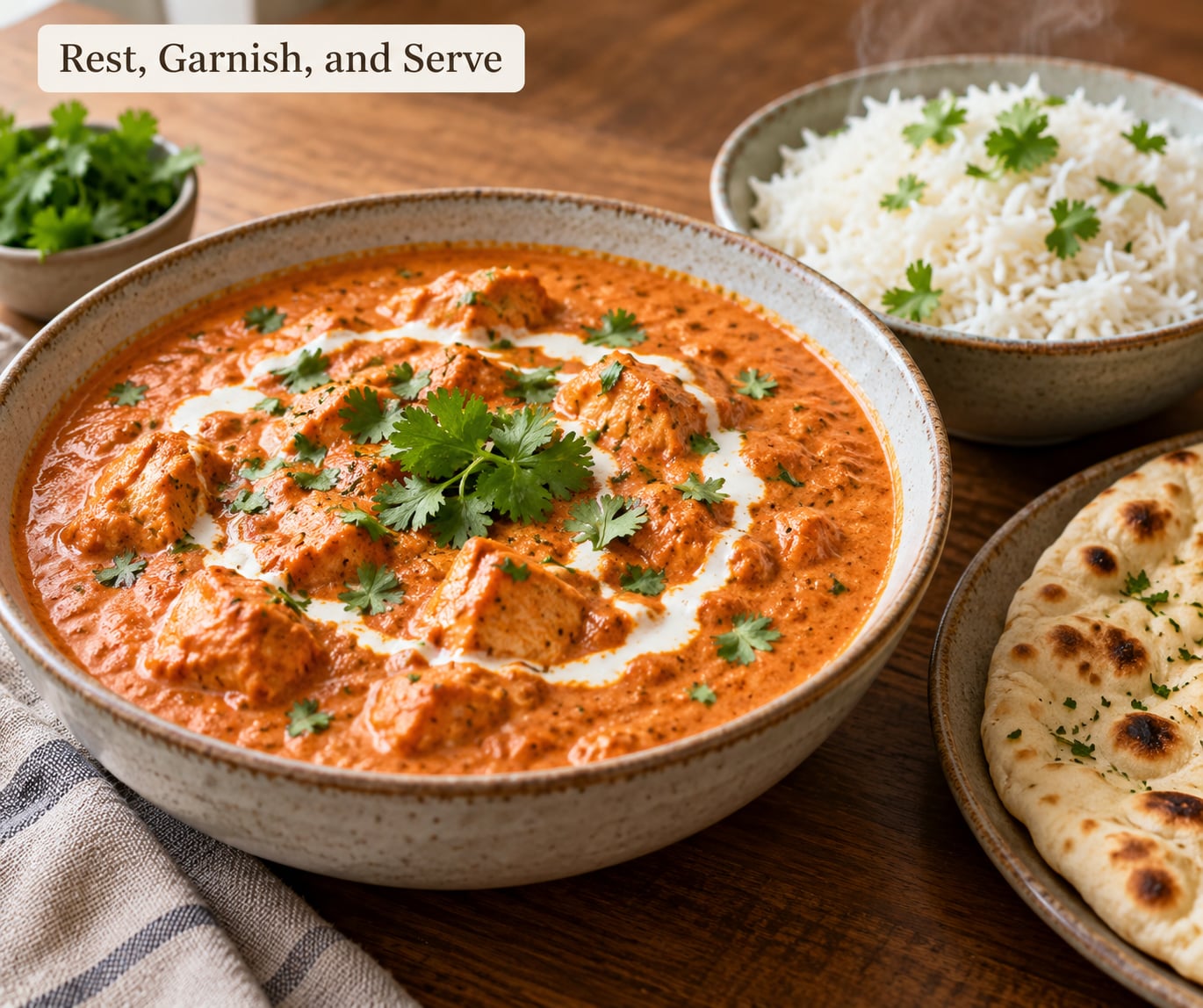
Let the curry rest off the heat for 5 minutes. The sauce finishes setting during that time, and the flavor settles into the chicken instead of sitting on the surface.
Drizzle a small spiral of cold cream over the top, add a few cilantro leaves, and season with a final pinch of salt. Serve with steamed basmati rice or warmed naan. Warm naan directly over a gas flame or under a broiler for 30 seconds a side; it should puff slightly and blister.
Cucumber raita on the side is the cooling contrast most cooks miss, and a quick pickle adds the acidic note that balances the richness. If you want to keep the leftovers for lunch, turn the extra into a grain bowl over rice with cucumber and herbs.
Refrigerate leftovers in a sealed container within two hours and eat them within three to four days. Reheat gently on the stove over low heat with a splash of water, stirring, until hot throughout, and add a little fresh cream at the end since the sauce thickens in the refrigerator.
For freezing, cool the curry fully, leave off the final cream swirl, and freeze in a flat freezer bag with the air pushed out for up to two months. Thaw overnight in the refrigerator and reheat slowly on the stove, adding cream or water as needed.
Common Mistakes
The sauce is watery. Most likely it did not reduce long enough, or the chicken released liquid into it during the final simmer. Simmer it uncovered for another 5 to 10 minutes and stir more often. For a faster fix, mash a tablespoon of cooked rice or a spoonful of cashew paste into the sauce and stir it in off the heat.
The sauce is too sour. Add 1/2 teaspoon sugar, which rounds tomato acidity without making the dish sweet, and a spoonful of cream or a little more melted butter. If it is still sharp, the usual culprit is lemon juice going into the sauce rather than staying in the marinade.
The sauce split or curdled. Dairy separated because it hit a boiling pan or because the sauce was reheated too aggressively. Take it off the heat, whisk in a tablespoon of cold cream or yogurt, and warm it gently. Prevention is simple: room-temperature dairy, butter added off the heat, and a simmer rather than a boil.
The chicken is dry. It was overcooked, sliced too thin, or braised at a rolling boil for too long. Pull it from the pan the moment a thermometer reads 165 F / 74 C, and remember that it keeps cooking as it sits in the hot sauce. Thighs are the safe choice; breast is the one that punishes overcooking.
The spices taste burnt or raw. Ground spices burn in about 30 seconds of high heat, and whole seeds scorch in dry butter before the onions go in. Cook everything over medium heat and add the ground spices only after the onions have softened, giving them just a minute.
Everything tastes mild. Two fixes usually do it. Toast the kasuri methi in your hands before adding it, and add half the garam masala at the end rather than all of it up front, since long simmering flattens it. Kashmiri chili also adds more aroma than heat, so a second half teaspoon helps more than a whole teaspoon of cayenne.
The sauce tastes greasy or oily. Too much fat went in, or the butter was added early and allowed to brown. Butter goes in at the very end, off the heat. If the surface shows distinct beads of fat, simmer gently for 5 minutes and stir, or spoon off the excess before serving.
The tomato sauce tastes cooked-out and bitter. That is over-reduction, meaning it simmered past the point where the sauce darkened and thickened. Scrap the pan and start again, keeping the puree at a simmer for no more than 15 minutes. It should taste sweet and round, not concentrated and dull.
Cooking a double batch works well because the sauce only improves overnight and reheats better than the chicken does. Cook the chicken in three batches rather than two for a bigger pot, and keep the sauce on the gentlest simmer so the cream never breaks. Many home cooks also freeze the finished curry in single portions and thaw one at a time, which works far better than freezing raw marinated chicken.
To think about the flavor profile differently, our notes on getting restaurant tomato flavor at home cover the same slow-reduction principle in a simpler dish.
Frequently Asked Questions
Can I make butter chicken without yogurt?
Yes. Skip the yogurt in the marinade and add 1 tablespoon of lemon juice or a little more salt for tenderizing. In the sauce, replace the yogurt with 1/3 cup heavy cream or half-and-half stirred in off the heat. You lose a little tang and body, so the finished curry tastes slightly flatter and thinner, but it is a workable swap when yogurt is all you have.
What can I use instead of heavy cream?
Half-and-half or evaporated milk are the closest swaps because they have similar fat content and thicken the sauce. Full-fat coconut milk works and adds a faint sweetness, so use a little less sugar if you go that route. Avoid skim milk, which lacks the fat needed to keep the sauce stable, and add any dairy substitute only after the sauce has come off the heat.
Is butter chicken the same as chicken tikka masala?
They are close relatives, not the same dish. Butter chicken is a North Indian dish where marinated chicken is added to a tomato, cream and butter sauce finished with kasuri methi. Chicken tikka masala is the anglicized British-Indian version, usually more heavily spiced, thicker, and often based on a darker or less creamy tomato gravy. If you want the butter chicken profile, follow this recipe.
How can I make the sauce thicker?
Simmer it uncovered for another 5 to 10 minutes and stir more frequently so it reduces rather than scorches. For an immediate fix, stir in a tablespoon of cashew paste or a blended spoonful of cooked rice, which thickens without changing the flavor noticeably. A final tablespoon of cold butter whisked in off the heat also gives the sauce more body and a glossy surface.
How long does homemade butter chicken keep?
Refrigerated in a sealed container, it keeps for three to four days. Move it into the fridge within two hours of finishing so it never sits at room temperature. Reheat on the stove over low heat with a splash of water, stirring, and add fresh cream at the end because the sauce thickens noticeably in the refrigerator. Do not reheat it more than once.
Can I make butter chicken ahead of time?
Yes, and the sauce actually benefits. Cook everything a day or two ahead, cool it quickly, and refrigerate it covered. Reheat gently on the stove with a splash of water, stirring, until it is hot all the way through, then add fresh cream off the heat and garnish with cilantro just before serving. If you freeze it, leave the finishing cream off and add that after thawing.
Conclusion
The order does more work than any single ingredient. Marinate the chicken at least 30 minutes so the yogurt and lemon get into the meat, toast the spices in butter until the aroma turns from sharp to nutty, and give the tomato puree a full 10 to 15 minutes to darken before any dairy goes near it.
Bring the chicken back to the sauce at the end, cover it, simmer gently, and stop while the sauce still coats a spoon. Serve it with warm basmati rice or naan, and you will have a bowl that tastes closer to a restaurant order than anything else coming out of a weeknight kitchen.