
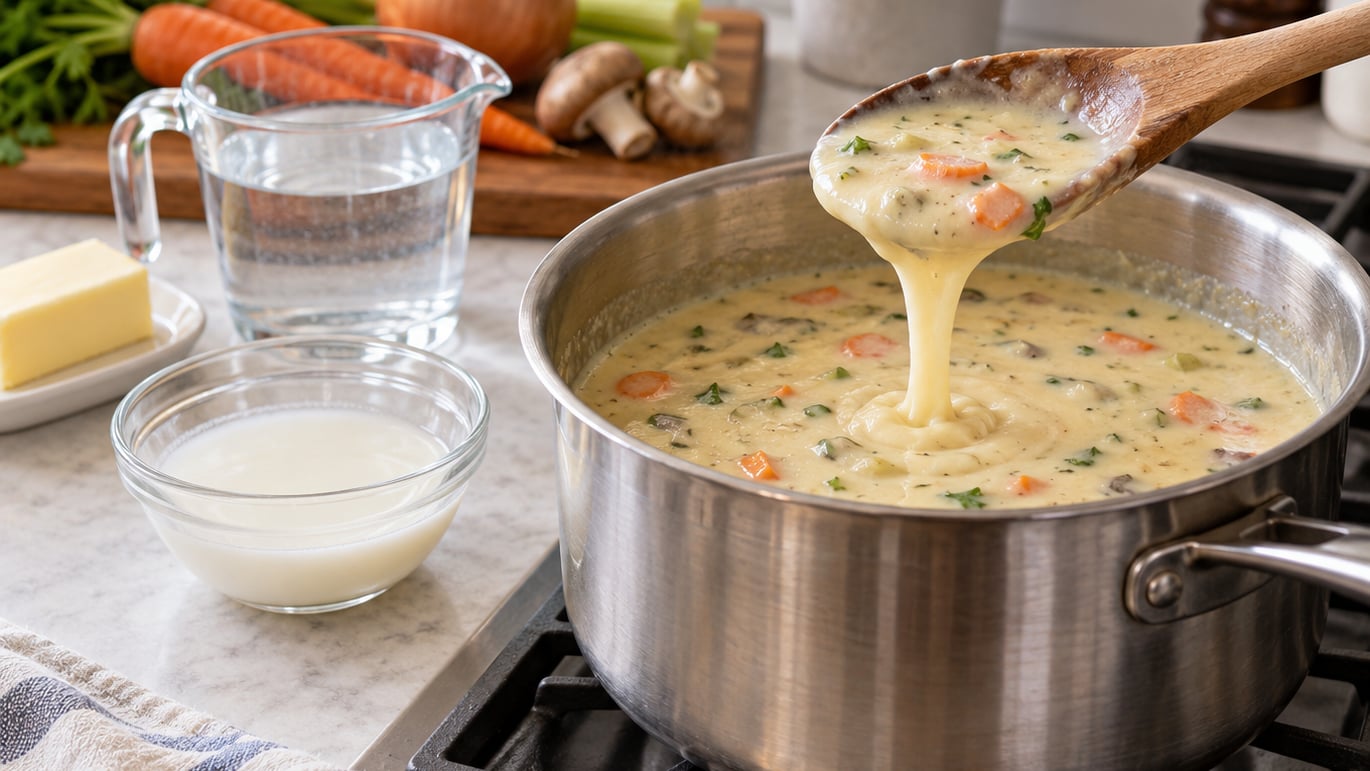
You can thicken soup without flour by puréeing solids into the broth, simmering off water, or stirring in a flour-free thickener such as cornstarch, arrowroot, or potato starch. Most soups need about 1 tablespoon of starch per quart of liquid, and you can always add more. Before you reach for a thickener, though, it is worth understanding where the flavor comes from, which is why I always start with how to build flavor in a soup base.
Thickening changes how a soup feels more than how it tastes. A thin soup runs off the spoon and reads as watery no matter how good the broth is. Add body and the same pot tastes like it took twice the effort.
Six methods cover almost everything, and each one has a different side effect on flavor, texture, and which diets it suits. Pick the one that matches the soup in front of you rather than the one that sounds most impressive.
Table of Contents
- What You Need
- Step-by-Step: Six Ways to Thicken Soup Without Flour
- Flour-Free Thickener Comparison
- Common Mistakes
- Frequently Asked Questions
- What is the best way to thicken soup without flour?
- Can I use cornstarch instead of flour to thicken soup?
- How do I fix soup that is too thin after adding a thickener?
- Which flour-free thickener is best for a gluten-free soup?
- Does simmering soup thicken it without adding ingredients?
- Can I thicken soup with mashed potatoes or potato flakes?
- Conclusion
What You Need
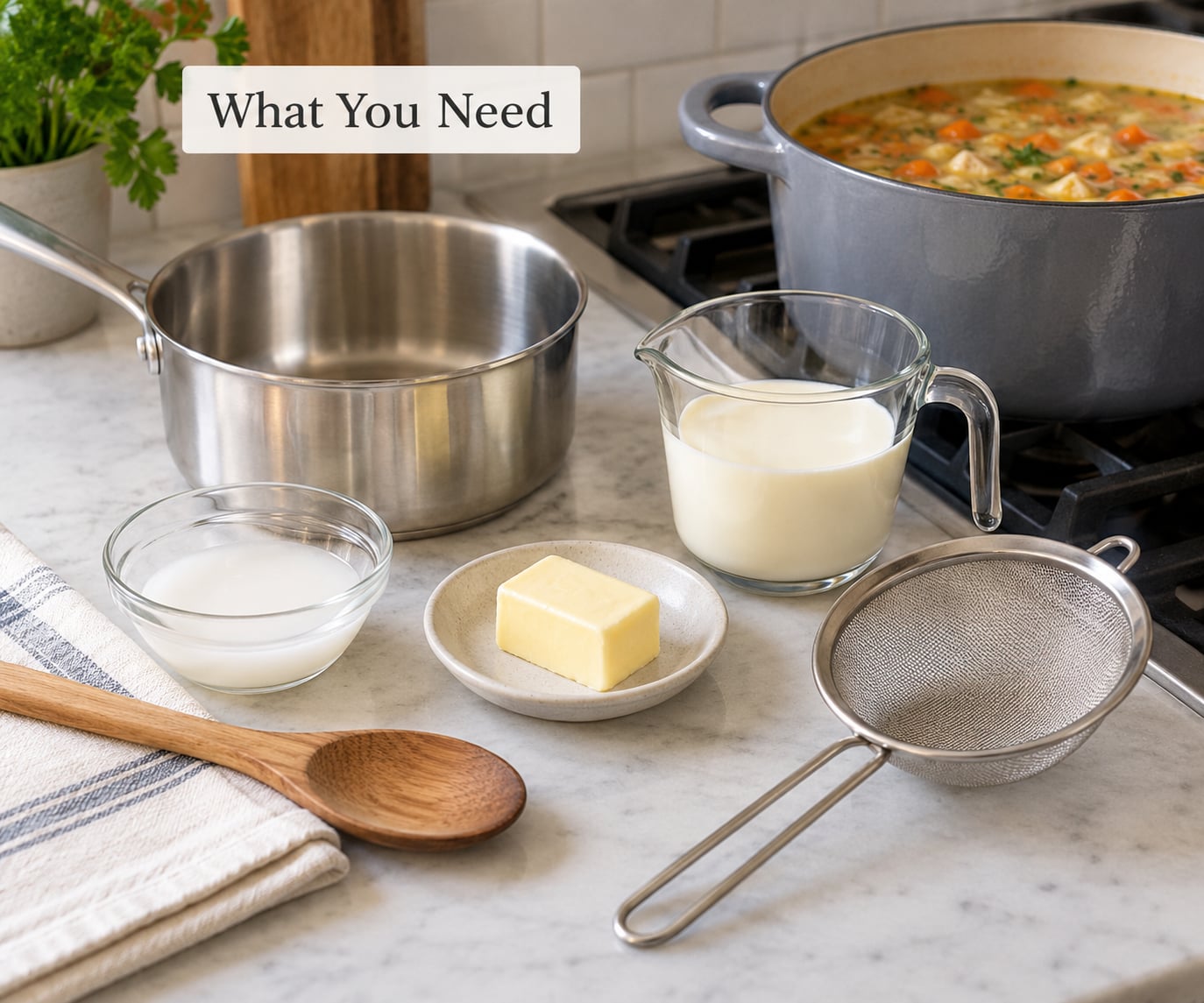
Good news: none of this needs special equipment. A heavy pot with a lid, a whisk or wooden spoon, and something to blend with covers every method below.
- A heavy pot or saucepan for reduction, wide enough that liquid evaporates quickly.
- A whisk, fork, or wooden spoon for breaking up lumps in a slurry.
- Cornstarch, arrowroot, or potato starch for the slurry methods. Measure roughly 1 tablespoon per quart of thin soup.
- Cold water in a small bowl or measuring cup. Hot water is the single biggest cause of lumpy starch.
- Half-and-half, heavy cream, milk, or full-fat coconut milk for dairy thickening. Roughly half a cup per quart.
- Butter for emulsifying, 1 to 2 tablespoons per quart.
- An immersion blender, potato masher, or sieve for puréeing.
- Salt and acid, because thickening concentrates flavor and both often need a correction at the end.
If your soup is a thinner tomato-based one and you want restaurant-level results, read how to make tomato soup taste like a restaurant at home first. And if dairy is off the table, how to make creamy soup without heavy cream has the purée and nut-butter routes covered in more depth.
Step-by-Step: Six Ways to Thicken Soup Without Flour

How to Thicken Soup Without Flour Using Cornstarch
Cornstarch is the fastest route and the easiest to dial in, and a slurry made with cold water will not clump.
Stir 1 tablespoon of cornstarch into 2 tablespoons of cold water until smooth. Whisk the slurry into simmering soup, then let it bubble gently for 60 to 90 seconds. That simmer cooks off the raw starch taste and thickens the soup further. Taste before adding more, because it keeps tightening as it cools.
Cornstarch gives a glossy, slightly slick mouthfeel and turns gummy if it boils hard or simmers for a long time. It is the one method here that a corn allergy rules out entirely.
How to Thicken Soup Without Flour Using Arrowroot
Arrowroot thickens clearer and stays put longer under heat, which makes it the better pick for a soup that will hold or reheat.
Mix 1 teaspoon of arrowroot with 2 teaspoons of cold water per cup of soup, a little more than the cornstarch ratio. Stir it in off the boil, bring the soup back to a bare simmer, and cook for about a minute. Arrowroot loses its thickening power if it boils hard for more than a minute or two, and unlike cornstarch it turns clear as it cooks, so a clear soup will not visibly change.
Thicken Soup With Pureed Vegetables
Puréeing adds body, fiber, and color with no starch at all, and it is the method to reach for when the soup already contains vegetables.
Blend about a third of the cooked solids, leave the rest whole for texture, and stir the purée back into the pot. If a soup is too watery to thicken this way, simmer it for ten minutes first so there is less liquid for the purée to suspend in. For carrot, cauliflower, squash, potato, or any soft vegetable, this works well. A potato masher does the same job if you have no blender.
Reduce Soup to Thicken It Naturally
Reduction is the only method that adds nothing at all. Simmering evaporates water and leaves every dissolved flavor and dissolved solid behind.
Keep the pot uncovered and hold it at a loose simmer rather than a rolling boil, and stir often enough that nothing catches on the bottom. Turn the heat down as the level drops, since the soup will thicken faster as the bubbles slow. Expect ten to twenty minutes for most home pots, and remember that flavor sharpens as the liquid goes, so salt and acid at the end.
Thicken Soup With Cream or Milk
Dairy thickens by adding fat and protein rather than starch, and it is the fastest route to a rich, restaurant-style texture.
Warm half a cup of cream, milk, or full-fat coconut milk in a separate pan first, then stir it into the soup off the boil. Never boil soup after dairy goes in. Boiling is what splits milk proteins and leaves you with curds floating in thin liquid, the single most common complaint in home cooking forums. Yogurt and sour cream go in the same way, at the end, off the heat. For a lower-fat version, check how to make creamy soup without heavy cream.
Thicken Soup With Butter and Emulsification
A few tablespoons of butter beaten into hot liquid emulsify with it, coating each droplet so the soup feels rounded and glossy instead of watery.
Melt 1 to 2 tablespoons of butter per quart, then whisk vigorously into the hot soup for about thirty seconds until it looks emulsified and slightly hazy. This is the French technique behind finishing a pot of bisque or lobster soup, and it is not a full thickener on its own. It rounds flavor and softens sharp edges, so pair it with reduction or purée when you need real body. Skip it for soups you are keeping dairy-free.
Flour-Free Thickener Comparison
Every method below thickens a quart of thin soup, but they are not interchangeable. This table covers how much each one needs, what it does to the flavor, and who can eat the result.
| Method | Amount per quart | Flavor impact | Gluten-free | Dairy-free | Time |
|---|---|---|---|---|---|
| Cornstarch slurry | 1 tbsp in 2 tbsp cold water | Neutral, very slightly slick | Yes | Yes | 2 min |
| Arrowroot slurry | 2 tsp in 4 tsp cold water | Neutral, clear finish | Yes | Yes | 2 min |
| Potato starch slurry | 1 tbsp in 2 tbsp cold water | Neutral, no gummy finish | Yes | Yes | 2 min |
| Puréeed vegetables | About one third of the solids | Adds vegetable flavor and color | Yes | Yes | 5 min |
| Reduction | Nothing added | Concentrates and sharpens | Yes | Yes | 10-20 min |
| Cream or coconut milk | About half a cup | Rich, mutes heat | Yes | Coconut milk only | 1 min |
| Egg yolk | 2 yolks, tempered | Smooth, silky, sets slightly on cooling | Yes | Yes | 5 min |
| Butter emulsion | 1-2 tbsp | Rounds and glosses, adds richness | Yes | No | 1 min |
For a broth-based soup with no vegetables to purée, the table narrows to starch, dairy, egg yolk, or reduction. Cookers on r/slowcooking and r/AskCulinary lean on reduction in that situation, since an uncovered simmer works on any soup.
Common Mistakes
Pouring starch straight into the pot. It hits hot liquid in clumps that never dissolve. Always mix it with cold water first.
Boiling hard after adding starch. A rolling boil breaks starch molecules down again and the soup goes thin within minutes. Hold a bare simmer and stir.
Adding the whole measured amount at once. Start with half the slurry, taste, then add more. There is no way to thin a soup without ruining it.
Boiling after adding dairy or egg. This is what causes curdled soup. Warm dairy separately, stir it in off the boil, and keep the soup below a boil from that point on.
Forgetting to re-season. Thickening concentrates flavor, and a soup that tasted fine before often needs salt and a squeeze of acid after.
Simmering for hours on a starch. Long cooking thins a soup again. If it is going to simmer a while, thicken at the end instead.
Overshooting. If you go too thick, pull a ladleful into a bowl and stir it back in with a little hot broth. It comes back to where you want it in seconds.
Waiting until the next day. Soup that cooled overnight looks hopeless, but it rethickens fine. Warm it slowly over medium-low heat, then apply one of the methods above. The starch has already cooked, so add a fresh slurry near the end of reheating.
Frequently Asked Questions
What is the best way to thicken soup without flour?
The best method depends on the soup, but puréeing and reduction are the strongest all-round choices because they add body without introducing a new ingredient. For a vegetable soup, blend about a third of the solids. For a plain broth, simmer it uncovered for ten to twenty minutes. Use a cornstarch or arrowroot slurry when you want thickness in under two minutes.
Can I use cornstarch instead of flour to thicken soup?
Yes. Cornstarch is the standard flour-free thickener and needs no gluten proteins at all, which makes it the default answer for gluten-free cooking. Whisk one tablespoon into two tablespoons of cold water, stir that slurry into simmering soup, and simmer for a minute. It is not suitable for anyone with a corn allergy, so arrowroot or potato starch work instead.
How do I fix soup that is too thin after adding a thickener?
Simmer it gently and stir for another minute or two, because starch keeps thickening for a short while after it goes in. If it is still thin, add more slurry a spoonful at a time. If it has already been simmering too long at a hard boil, the starch has broken down, so pour off a little liquid, make a fresh slurry, and add it off the boil.
Which flour-free thickener is best for a gluten-free soup?
Cornstarch, arrowroot, potato starch, tapioca, and xanthan gum are all gluten-free, as are puréeed vegetables, reduction, dairy, and egg yolk. Cornstarch is the most widely available, while arrowroot gives a clearer, less slick finish and potato starch avoids the gummy texture people associate with cornstarch. Check labels on packaged stocks and bouillon, which often contain wheat.
Does simmering soup thicken it without adding ingredients?
Yes. Simmering uncovered evaporates water and leaves all the dissolved solids and flavor behind, so the soup thickens and tastes more concentrated at the same time. Hold a loose simmer instead of a rolling boil, stir often so nothing catches, and turn the heat down as the level drops. Expect ten to twenty minutes in a home pot.
Can I thicken soup with mashed potatoes or potato flakes?
You can. Instant mashed potato flakes are a strong pantry option: whisk about a quarter cup into a quart of hot soup and it thickens within a minute or two. Fresh mashed potatoes work too, though they can add a starchy weight. Neither adds much flavor, which makes them useful in a broth-based soup where you only want body.
Conclusion
Start with a small amount and taste as you go. Slurry a tablespoon of cornstarch or arrowroot into cold water, stir it into the soup off the boil, and simmer for a minute. If the soup has no dairy or you want zero added thickener, simmer it uncovered instead. Add cream, puréeed vegetables, or butter after that for richness, and finish with salt and a little acid, because thickening always concentrates the flavor and often needs the correction.