
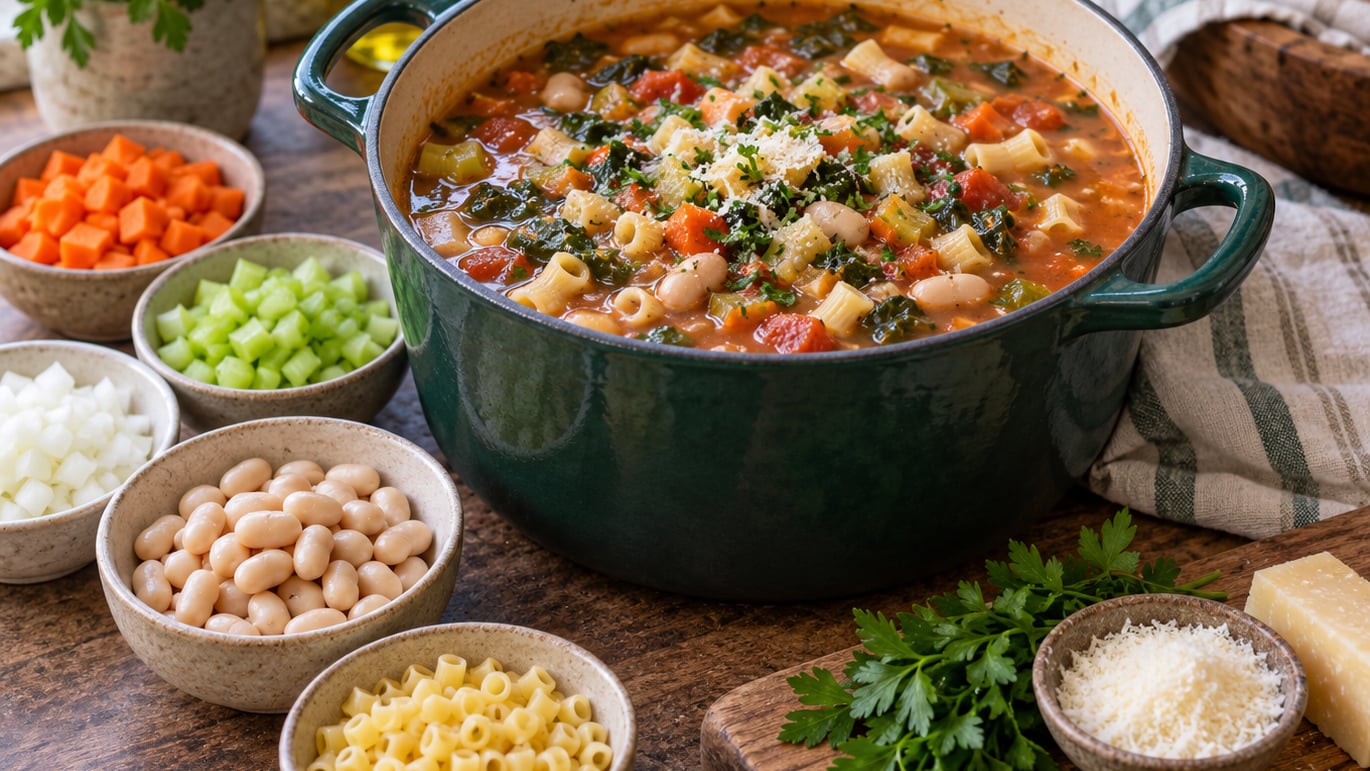
If you have 45 minutes and one pot, learning how to make minestrone soup is mostly a matter of order. Sweat the onions, carrots and celery in olive oil, cook the tomato paste until it darkens, simmer beans and sturdy vegetables until the broth turns rich, then add small pasta for the last ten minutes. That sequence is the whole trick.
Minestrone is an Italian vegetable and bean soup finished with a small pasta and eaten with crusty bread. There is no single canonical version, which is part of why people argue about it. What every good pot has in common is beans, tomatoes, vegetables cut to the same size, and a broth with body.
Difficulty is low, and the forgiving part is the seasoning. You taste and adjust at the end rather than measuring everything twice.
What You Need to Make Minestrone Soup
This makes about 6 servings. Everything here fits in a 4-quart pot with room for a long spoon.
Aromatics
- 2 tablespoons extra virgin olive oil
- 1 yellow onion, diced
- 2 carrots, diced
- 2 celery stalks, diced
- 3 garlic cloves, minced
This mix is the soffritto, the aromatic base that anchors every Italian soup. Cooking it until soft and sweet takes about 8 minutes, and skipping it is the most common reason a minestrone tastes flat.
Tomato and liquid
- 2 tablespoons tomato paste
- 1 can (28 ounces) crushed or diced tomatoes
- 6 cups vegetable broth, chicken stock, or water
Italians traditionally use water, because the beans and tomatoes supply plenty of flavor. Broth gives you a richer soup and works well if you want a vegetarian version that tastes deep. Half broth and half water is the middle ground I use most. If you are chasing the restaurant version that starts with a rich tomato base, how to make tomato soup taste like a restaurant at home covers the same cooking-paste-first method in detail.
Beans
- 2 cans (15 ounces each) cannellini, borlotti, or kidney beans, drained
Cannellini are creamy and mild, borlotti hold their shape and add earthiness, kidney beans are the most widely available. One can white beans plus one can kidney beans is a good mixed-pot version.
Vegetables
- 1 cup chopped green beans
- 1 medium zucchini, diced
- 1 cup frozen peas
- 2 cups baby spinach or chopped kale
Cut everything to roughly the same size, about half-inch pieces, so it all finishes cooking at the same time. Frozen vegetables work fine here and save prep.
Pasta and seasoning
- 1 cup ditalini, orzo, small elbows, or shells
- 1 teaspoon dried oregano
- 1 teaspoon dried thyme, or 2 sprigs fresh
- 2 bay leaves
- 1/2 teaspoon red pepper flakes, optional
- Salt and black pepper
Small shapes work best. Anything longer than half an inch tends to turn soft before the soup is served.
To finish
- 1/2 cup grated Parmesan
- 1 tablespoon chopped fresh parsley
- A drizzle of olive oil and a squeeze of lemon
The Parmesan rind is worth saving if you buy the wedge. Simmer it in the broth for the last 20 minutes and fish it out; it adds a savory depth no amount of salt replaces.
To keep the soup creamy without dairy, mash a quarter of the beans against the side of the pot before you stir everything together. The starch does the work cream would do.
Step-by-Step: How to Make Minestrone Soup
How to Build Flavor in the Broth
Start by cooking the tomato paste, not just dumping it in. Heat the olive oil over medium heat in a heavy pot, add the onion, carrot and celery, and cook with a pinch of salt for 8 minutes until they lose their raw edge and turn translucent.
Add the garlic and cook 60 seconds, then stir in the tomato paste. Let it sit in the hot oil and darken from bright red to brick for about 2 full minutes, stirring often. This is the single step most recipes shorten, and it is where most of the flavor lives.
Pour in the tomatoes and broth, scraping the bottom of the pot clean. Add the oregano, thyme, bay leaves and red pepper flakes, bring to a boil, then drop the heat until the surface barely moves. A hard simmer for 40 minutes scatters the beans and dulls the herbs.
How to Cook the Vegetables and Beans Without Mushiness
Add the beans and green beans with the broth, since both need a long cook. After 15 minutes of simmering, add the carrot pieces if yours were cut smaller, then the zucchini at around 20 minutes. Peas go in with 5 minutes left.
The greens come last, with 3 minutes remaining, so they wilt and stay green. If you add spinach at the start it disappears into the soup, which costs you the color and the texture.
Add the pasta at the 10-minute mark and stir once so it does not clump on the bottom. Cook it just under al dente; it finishes in the residual heat and turns to mush if it goes the full package time.
Cook the pasta in a separate pot and stir it into each bowl at the table if you plan to eat leftovers. It is an extra pan for ten minutes, and it saves the reheated portions that people complain about most.
How to Get the Right Minestrone Soup Consistency
Build the soup looser than you want it. Beans and pasta release starch as they cook, and a pot that looks right at minute 20 turns pasty by minute 40.
At the end, lift a ladleful and let it drip back. If it runs thin and watery, mash a quarter of the beans with a fork or the back of a spoon and stir them through. You can also blend a third of the soup with an immersion blender and return it to the pot.
For a small adjustment in the other direction, stir in a tablespoon or two of tomato puree, or add warm broth a ladle at a time. Taste after each change, then season with salt, a squeeze of lemon for brightness, and more Parmesan than feels sensible. Acid is what a bowl of minestrone usually needs.
Taste the broth before the pasta goes in, and again at the table. It should read savory and slightly sweet, with the oregano clear but not soapy.
Common Mistakes to Avoid
1. Adding the pasta too early. It absorbs broth, releases starch, and softens while the vegetables finish. Add it in the last 10 minutes, or cook it separately.
2. A watery pot. Nobody agrees on whether minestrone should be thick or brothy, but a thin soup has no body. Simmer uncovered until the broth coats the back of a spoon, and mash beans if you need more.
3. Too many vegetables. Adding every vegetable in the fridge dilutes the flavor. Four or five vegetables with beans and tomato reads better than eight with beans and tomato.
4. Skipping or rushing the soffritto. Onions and carrots need real time in the oil, about 8 minutes, to sweeten. A quick sweat leaves the soup tasting raw underneath.
5. Undercooking the beans. Canned beans added in the last few minutes stay chalky and firm in the center. Give them at least 15 minutes in the simmering broth.
6. Dumping in dried herbs. A teaspoon of oregano is plenty. More than that, added early and cooked long, turns the whole pot soapy. Stir herbs in near the end if you use fresh ones.
7. Salting twice and never tasting. Canned beans and broth bring plenty of salt. Season at the end, in small increments.
As a final tip, let the soup sit off the heat for 10 minutes before serving. The flavors settle, and the starch in the broth finishes thickening to a texture that holds up on the spoon.
Frequently Asked Questions
Do I need to use fresh vegetables for minestrone soup?
No. Frozen green beans, peas, and diced tomatoes work well because the soup cooks long enough to thaw them. Frozen works best for sturdy vegetables like green beans, peas, and carrots. Use fresh for greens like spinach and kale, since frozen greens go watery and lose their color. The only thing worth buying fresh is the onion, carrot, and celery that form the soffritto.
Can I make minestrone soup without pasta?
Yes, and plenty of Italian cooks do it that way. Skip the pasta and the soup leans more on the beans and vegetables for body. To keep the same hearty consistency, mash about a quarter of the beans and stir them back in. If you want the texture of pasta without the starch, add 15 minutes of cooked farro or barley with the beans instead.
How long should minestrone soup simmer?
Plan on 35 to 40 minutes of gentle simmering after the broth comes to a boil. That is enough for canned beans and sturdy vegetables to soften and for the tomatoes to break down. A hard boil for the whole time makes the beans split and the herbs turn bitter. Add zucchini at 20 minutes, peas at 5 minutes left, greens at 3 minutes left, and pasta at 10 minutes left.
Can I make minestrone soup ahead of time?
Yes, and it is often better the next day. Refrigerate it within two hours of cooking and use it within 3 to 4 days. Hold back the pasta if you can, and cook a fresh handful for each serving so reheated portions keep their shape. Store greens separately too, or add them only after reheating, so they do not go dark.
Can minestrone soup be frozen?
Yes, for 2 to 3 months when frozen airtight. Freeze the broth, beans, and sturdy vegetables without the pasta or greens, since both turn mushy or dark after thawing. Thaw in the refrigerator overnight rather than on the stove, then heat gently with a splash of broth. Add fresh pasta and greens after the soup is hot.
Which beans are best for minestrone soup?
Cannellini beans are the most common choice because they are creamy and mild, and borlotti beans are the traditional northern Italian pick. Kidney beans work fine and are easy to find, while navy beans are firmer and hold up better in longer simmers. Chickpeas make the soup thicker and more earthy. Using two different cans gives the broth more interest than a single type.
Conclusion
Start with the soffritto. Give the onion, carrot, and celery their full 8 minutes in olive oil, cook the tomato paste until it darkens, and everything after that falls into place. Add beans early, sturdy vegetables in the middle, and pasta in the last 10 minutes.
Before you serve, taste the broth on its own and season it with confidence. If it needs more, it usually wants salt, a squeeze of lemon, and another spoonful of grated Parmesan rather than more herbs.
If you are building the rest of the meal around this, how to make creamy soup without heavy cream covers the starchy-thickening trick in more detail, and homemade croutons from stale bread are the natural side for a bowl this hearty.