
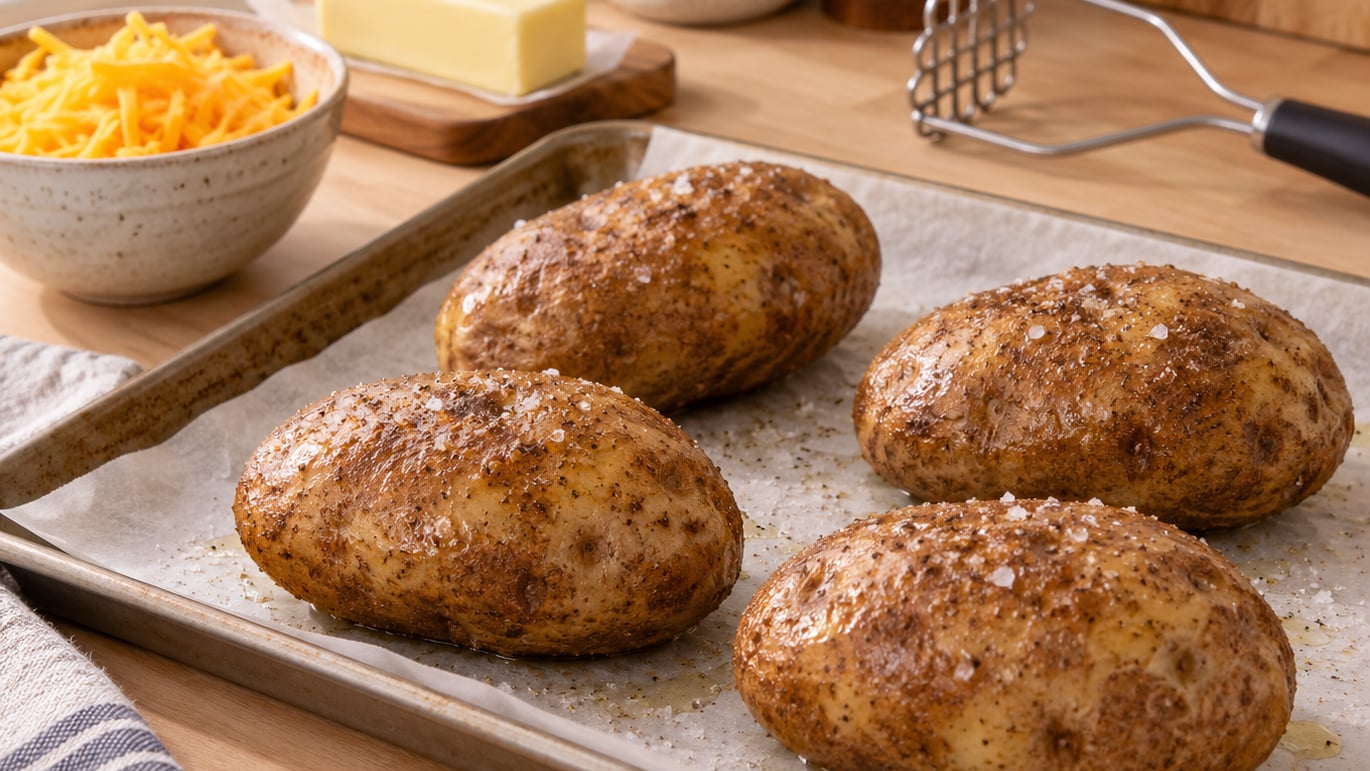
Yes, twice-baked potatoes can be made a day or two ahead, and the trick is knowing exactly where to stop. Bake the potatoes whole, cool them, scoop and fill the shells, then refrigerate the stuffed potatoes for up to 48 hours or freeze them without cheese for 1 to 3 months. When dinner time arrives, the final bake takes about 30 minutes.
That matters because the full recipe runs well over an hour of oven time. Trying to build twice-baked potatoes from scratch while a holiday dinner is happening in the same kitchen is how people end up with lumpy, cold-centered potatoes at 7pm.
I make these ahead for every big dinner, and the version below is tested on a basic batch of four. Updated for October 2026.
Recipe-style quick answer: bake 4 large russet potatoes at 400°F for 50 to 60 minutes, scoop, mash with 1 cup sour cream and 1/4 cup butter, divide 1.5 cups shredded cheddar between the filling and the top, stuff the shells, refrigerate up to 48 hours, then bake 30 minutes at 400°F until the filling steams and the edges brown.
Table of Contents
- What You Need
- Step-by-Step
- How to Make Twice Baked Potatoes Ahead: Bake the Potatoes First
- How to Make Twice Baked Potatoes Ahead: Scoop and Prepare the Filling
- How to Make Twice Baked Potatoes Ahead: Fill and Arrange
- How to Make Twice Baked Potatoes Ahead: Chill or Freeze
- Reheating Twice Baked Potatoes
- Using Extra Baked Potatoes From Another Meal
- Common Mistakes
- Tips and Serving Ideas
- Frequently Asked Questions
- Conclusion
What You Need
You do not need specialty equipment. The useful items are a baking sheet, a baking fork or melon baller, a mixing bowl, and an airtight container that lets a hot baking dish go into the refrigerator without warping the plastic.
A second sheet pan matters more than people expect. One sheet fits four large russets comfortably, and eight will not fit on a single pan without the skins touching. If you are cooking for a crowd, two sheet pans and a quick rotation of racks beat one crowded pan.
For the filling of a four-potato batch:
- 4 large russet or Idaho baking potatoes, 10 to 12 ounces each
- 1 cup full-fat sour cream
- 1/4 cup unsalted butter, softened
- 1.5 cups shredded cheddar cheese, divided
- 1 teaspoon coarse salt, plus more for the skins
- 1/2 teaspoon black pepper
- 1 teaspoon garlic powder, optional
- 2 tablespoons olive oil or vegetable oil for the skins
Optional toppings: cooked bacon or pancetta, chopped chives or green onions, cooked broccoli florets, shredded pulled pork, or sliced jalapenos. Keeping the toppings flexible is the whole point of prepping ahead.
Russet is the right choice because it is dry and high in starch, which is what gives you a fluffy mash and a crisp shell. Waxy varieties like red or Yukon Gold hold their shape but make a gluey filling. If you want a crisper side to round out the meal, my guide to how to make crispy roasted potatoes uses the same oven at a higher temperature.
Step-by-Step
How to Make Twice Baked Potatoes Ahead: Bake the Potatoes First
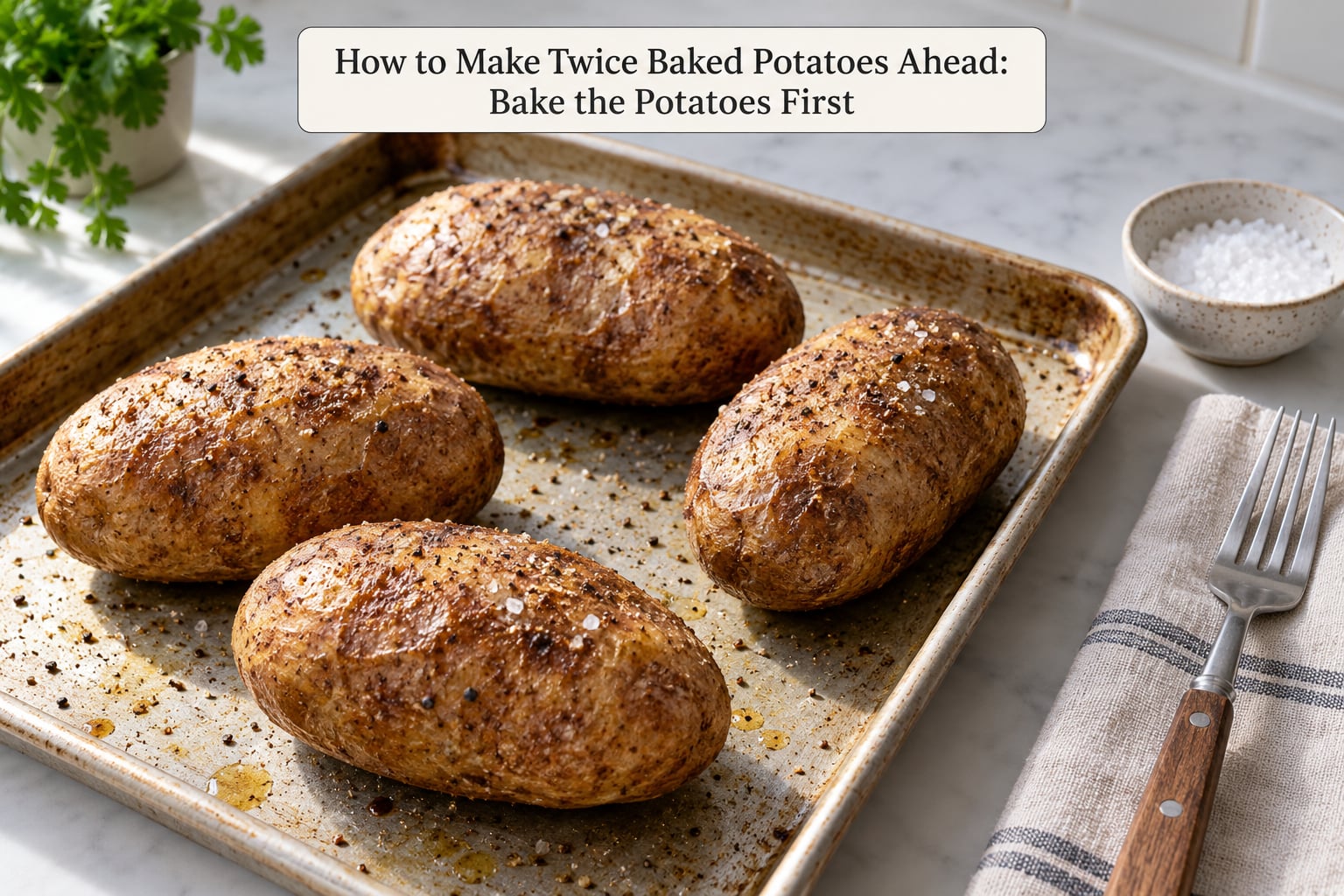
The first bake is the step most make-ahead guides rush, and it is the one that cannot be faked. Underbaked potatoes here mean a filling made from raw, chalky chunks.
Heat the oven to 400°F. Scrub the potatoes well, stab each one 6 to 8 times with a fork, then rub the skins with oil and roll them in coarse salt. The punctures let steam escape so the skins do not split, and the salt and oil give you a shell that crisps during the second bake.
Set them on a baking sheet and bake for 50 to 60 minutes, turning once halfway. The doneness cue is a fork sliding into the center with essentially no resistance, and the internal temperature should reach 145°F. If your potatoes are noticeably different sizes, pull the small ones early rather than baking the batch into a mess.
Once baked, move the sheet to a cooling rack for 20 to 30 minutes. Scooping a potato that just came out of the oven tears the skin, and that tear leaks filling onto the pan in a puddle. Fifteen minutes on a rack is the shortest I trust.
How to Make Twice Baked Potatoes Ahead: Scoop and Prepare the Filling
Cut each potato lengthwise and scoop out the flesh with a small spoon or melon baller. Leave about a quarter inch of potato clinging to the skin all the way around. That thin layer is structural — it is what keeps the shell from collapsing into a sad cup when you mound the filling back in.
Do not worry about scraping the skins perfectly clean. A couple of stubborn bits are fine, and stripping them bare weakens the shell.
Mash the scooped flesh in a bowl with the butter, sour cream, salt, pepper, and garlic powder. Mash until mostly smooth but stop while it still has some texture. Overworking potato releases starch, and that is the single cause of gummy twice-baked filling that people complain about most.
Fold in roughly half of the shredded cheddar. Save the rest for the top, and remember that the cheese on top is what gets you the browned, bubbly crust.
Users in home-cooking forums describe the exact same failure: gummy filling in the middle of the potato and a wet puddle underneath it. Both come back to starch released by heavy mixing or by a masher working a dry, over-cooked potato. Add the sour cream before the last round of mashing and use short strokes.
How to Make Twice Baked Potatoes Ahead: Fill and Arrange
Spoon the filling back into the skins and mound it slightly above the rim. A domed top browns better and gives you surface area for cheese to melt over. Level the tops with the back of a spoon if you are stacking them in a dish.
Arrange the stuffed potatoes in a baking dish or back on a sheet pan, standing upright, without packing them shoulder to shoulder. Air needs to move between them for the second bake to brown properly, and touching skins go soft and pale.
Add the reserved shredded cheese now if the potatoes are going into the refrigerator for a day or two, since cheese survives fine in the cold for that window. Skip the cheese entirely if you are freezing. Freezer burn turns cheese gray and leathery, and it will not melt back to creamy no matter how long you bake it.
Bacon is the same story. It goes crunchy and papery in the freezer, so add it after thawing, during the last five minutes of the re-bake.
How to Make Twice Baked Potatoes Ahead: Chill or Freeze
Cool the assembled potatoes completely before they touch storage. Food safety guidance is plain about this: hot or warm food goes into the refrigerator in the danger zone too long, and a sealed container full of steam also wets the skins and thins the filling.
For the refrigerator, nestle the potatoes in an airtight container lined with parchment or foil, and keep them in a single layer. Expect 24 to 48 hours for the best texture, with 3 to 4 days as the hard ceiling for cooked potatoes in the fridge. Past that, discard them. Sour or musty smelling filling, weeping liquid in the container, or a slimy skin all mean the batch goes in the trash, no matter how it looks on top.
For the freezer, set the shells on a cookie sheet unwrapped for 2 hours until the surface is hard to the touch. Freezing them soft on a tray makes them stick together and rip when you separate them. Once firm, wrap each potato individually in plastic wrap or foil, then move everything into a freezer bag or container. Label it with the date.
Freeze without cheese, without bacon, and without fresh herbs. Use them within 1 to 3 months, with the first month giving the best result.
A home-cooking community tip worth stealing: pre-freezing the shells unwrapped until the surface hardens is the step most people skip, and skipping it is why their frozen potatoes turn into one solid brick.
Another one: some cooks add a small amount of milk or a beaten egg to the filling before freezing so it holds together through the thaw. A softer filling survives the trip better, but do not go so wet that it pools.
Reheating Twice Baked Potatoes
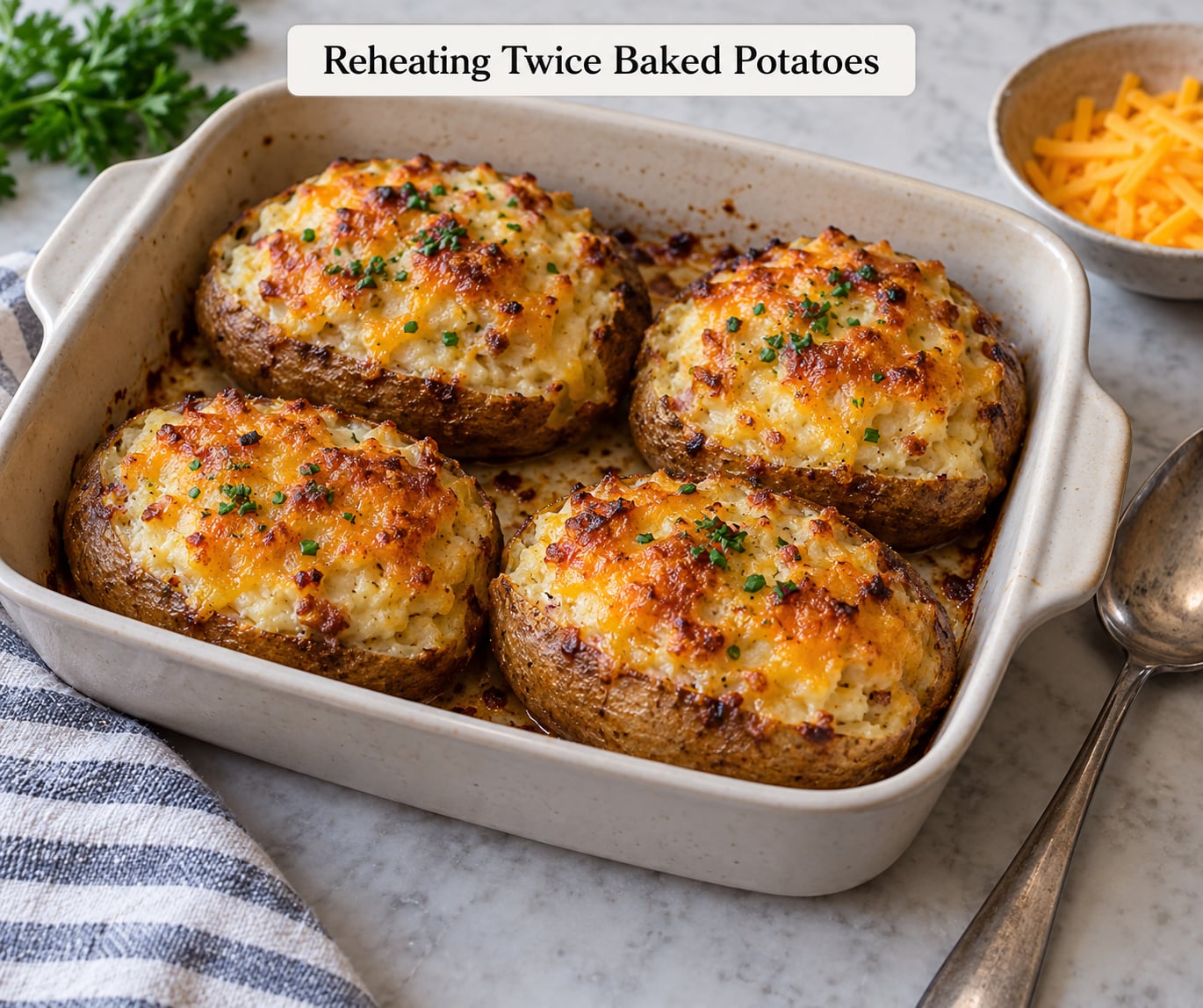
Bring refrigerated potatoes to room temperature while the oven heats to 400°F. Loosen the foil or lid, scatter on fresh cheese, and bake for 30 minutes. You want the center steaming hot, not just the edges, which is why a cold potato straight from the refrigerator needs closer to 40 minutes.
For frozen potatoes, bake from frozen at 375°F in foil for 30 minutes. Unwrap, top with fresh cheese, and bake uncovered for another 25 to 30 minutes. The foil stage traps steam and drives heat into the cold center; the uncovered stage browns what the foil protected.
For a quicker finish, microwave on high for 2 to 3 minutes per potato, then transfer to a hot oven for 5 minutes to crisp the top. The microwave gets the filling hot all the way through and the oven handles the skin. This is the method most home cooks search for and the one recipe pages almost never spell out.
An air fryer at 375°F works the same way: 10 to 12 minutes from refrigerated, 20 to 25 minutes from frozen, shaking the basket twice.
To check that a potato is genuinely hot in the middle rather than just on the outside, press a spoon into the center and feel the steam, or check for 165°F in the thickest part of the filling. A potato that steams audibly when you cut it is ready to serve.
Using Extra Baked Potatoes From Another Meal
If Sunday dinner already produced baked potatoes, you have the hardest part done. Cool the extras completely, refrigerate them in their skins for up to 3 to 4 days, then split, scoop, mash, fill, and follow the same storage and reheat steps above.
Check the potatoes before you start. Any green tint, a musty smell, or visible mold means discarding it. Once green, the solanine is not something you can bake out.
Common Mistakes
Underbaking the first time. The shell is done when the fork meets no resistance, not when the outside looks bronzed. Bake them 10 extra minutes rather than trying to fix raw chunks in the mash.
Tearing the skins while scooping. Cool the potatoes at least 15 minutes, use a small spoon instead of a knife, and leave a quarter inch of potato inside the shell.
Watery filling. Drain the baked flesh well, add butter and sour cream gradually, and mash in short strokes. Sour cream releases water as the potato reheats, so a filling that feels slightly loose when cold often firms up correctly in the second bake.
Gummy filling. You mashed too much. Starch releases when potato is overworked, and once it releases there is no fixing it. Stop before the mash is perfectly smooth.
Overfilling the shells. A generous mound is right, a heaping overflow is not. Filling that spills over the rim spreads in the pan and burns before the center heats through.
Forgetting the toppings at the wrong time. Cheese and bacon belong after the thaw, right before the final bake. Fresh chives and green onions go on after the oven, once the potato is on the plate.
Reheating too hot. 450°F crisps the outside in ten minutes and leaves the center cold. 400°F from chilled, or 375°F from frozen, gives the heat time to travel.
Storing them warm. Warm assembled potatoes sealed in a container produce condensation, soggy skins, and a thin filling. Cool them fully on a rack first, then cover.
Keeping Twice-Baked Potatoes Warm for a Party
The oven is the worst place to park them. A low oven dries the filling and hardens the skins over a couple of hours.
Warm them fully before guests arrive, then hold them in a covered dish for no more than about an hour. For longer, use a slow cooker on warm with a cup of water or broth in the bottom, which keeps ambient moisture around them. A microwave on low, in short 30-second bursts, works in a pinch for one or two potatoes.
Tips and Serving Ideas
The make-ahead approach rewards fillings that hold up rather than fillings that are at their peak fresh.
Bacon-cheddar is the crowd favorite and freezes well once the bacon is added late. Broccoli-cheddar works if you cook the florets first and drain them; raw broccoli turns to sludge in a freezer and gives off water in the second bake. Sour cream and chive stays bright and light. Pulled pork in a barbecue sauce is excellent reheated from frozen. Buffalo-style with cream cheese and hot sauce survives freezing, though expect the heat to mellow.
For vegetarian or dairy-free swaps, use plant-based sour cream and butter, top with shredded vegan cheddar, and lean on garlic powder and smoked paprika instead of bacon. Those versions freeze about as well as the original.
Scaling up is mostly a pan problem. Ten potatoes need two sheet pans and a 20-minute bake offset, and if your oven will not take two pans on separate racks, bake the first batch to the stuffing stage, refrigerate, and re-bake them in sequence while the second batch is still baking whole. If you want a starchy side to go alongside, my post on how to make stuffing that is not soggy covers the same make-ahead thinking in a different dish.
When the main course is the thing you are nervous about, keep the potato prep deliberately simple. My guide to appetizers you can prep ahead has the same day-before timeline in a lighter format.
A simple two-day timeline works well. Two days out, bake and stuff the potatoes, then refrigerate them covered. The next day, top with cheese and bake 30 minutes at 400°F, or freeze them unwrapped on a tray before wrapping.
Frequently Asked Questions
How far ahead can you prepare twice-baked potatoes?
You can go through the stuffing step up to 48 hours ahead and keep the assembled potatoes in an airtight container in the refrigerator, or freeze them without cheese for 1 to 3 months. Beyond about 4 days in the fridge, discard them. Cool the potatoes completely before covering them, and add cheese and bacon after the thaw, right before the final bake.
How long will twice-baked potatoes keep in the refrigerator?
Assembled, unbaked twice-baked potatoes keep well for 24 to 48 hours in a covered airtight container, which covers nearly every make-ahead plan. Cooked potatoes as a general rule should not be eaten more than 3 to 4 days after being refrigerated. Store them in a single layer, cool them fully first, and throw the batch away if the filling smells sour or liquid pools in the container.
Can you freeze twice-baked potatoes before baking them?
Yes, and freezing them stuffed but unbaked gives the best results. Pre-freeze the shells unwrapped on a cookie sheet for 2 hours until the surface is hard, then wrap each one individually and freeze for 1 to 3 months. Skip the cheese and bacon, since both turn leathery in the freezer. Bake from frozen at 375°F in foil for 30 minutes, then uncovered with fresh cheese for another 25 to 30 minutes.
Can I prep twice-baked potatoes the night before and bake them unbaked?
That is the most reliable make-ahead version. Bake the whole potatoes until a fork meets no resistance, cool them, scoop the flesh while leaving a quarter inch inside each skin, mash with butter and sour cream, and stuff the shells back. Refrigerate covered and bake the next day at 400°F for about 30 minutes. Cooking the potatoes from raw and reheating them unbaked leaves nothing to guess.
How do you keep the filling from turning watery?
Three things cause watery filling: overworking the mash, wet add-ins, and storing the potatoes warm. Mash in short strokes and stop while some texture remains, since released starch is what makes filling gluey. Drain any cooked vegetables like broccoli well, and let the assembled potatoes cool completely on a rack before you seal the container so steam cannot condense on the skins.
Conclusion
The easiest make-ahead method is the same every time: bake the potatoes first, cool and fill the shells, refrigerate or freeze them promptly, then add the cheese and bake until hot and lightly browned. Refill the fridge version within 48 hours and bake it at 400°F for 30 minutes. Bake frozen ones at 375°F in foil for 30 minutes, then uncovered for 25 to 30.
Start by getting the filling right rather than the schedule. Mash with restraint, add the sour cream and butter before the last few strokes, and leave a quarter inch of potato in each shell. Everything after that is just storage and a bake.