
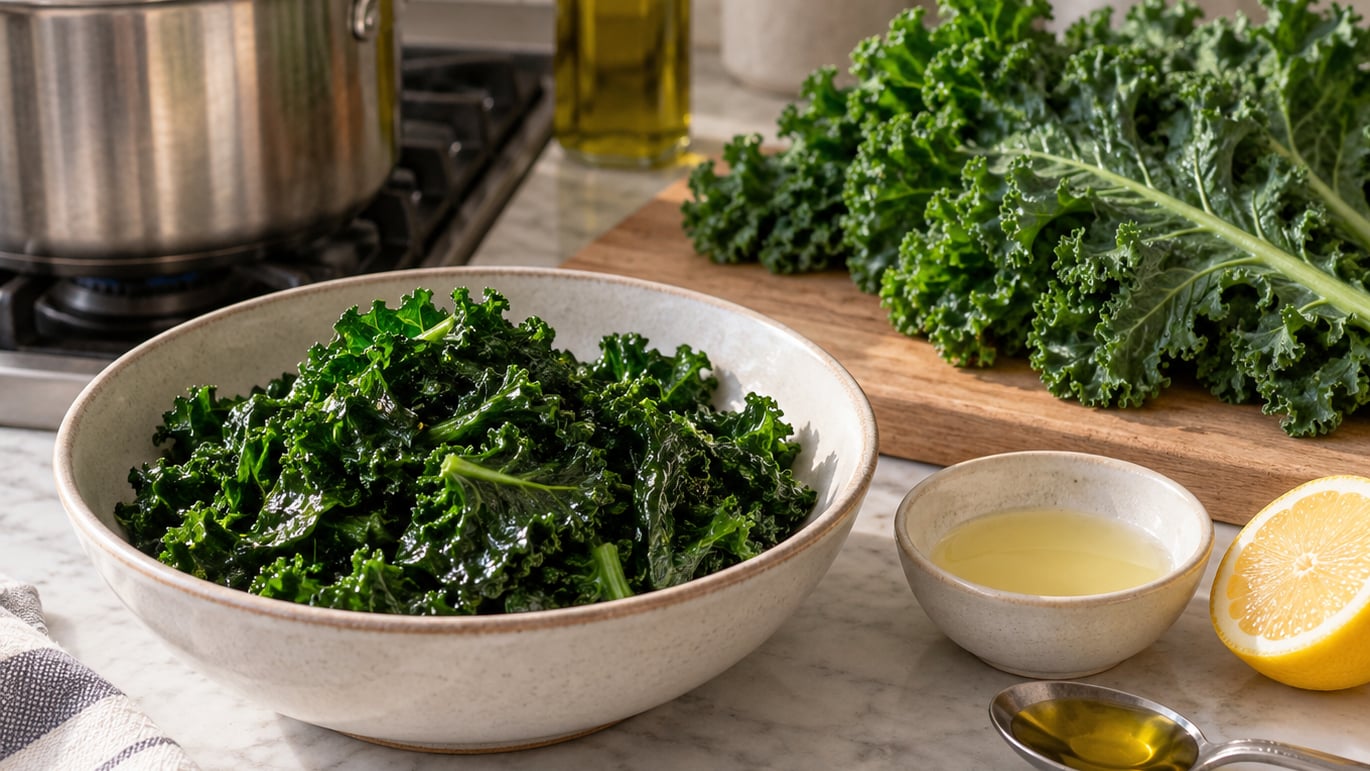
Bitter kale is usually a prep problem, not a bad bunch. Strip the thick rib out of each leaf, cut the leaves small, cook them fast over high heat until just tender, and finish with lemon juice or vinegar while a little of it is still in the pan. Total time is about 15 minutes and the fix is almost free.
I wasted years cooking kale into a dull, sulfurous sludge before I understood what was happening. The bitterness in kale comes from sulfur compounds called glucosinolates, which sit in separate compartments from an enzyme called myrosinase. The moment you cut, tear, massage or chew a leaf, the two meet and turn into isothiocyanates. That reaction is the bite you taste.
Good news: you control the reaction. Heat destroys myrosinase, water rinses the isothiocyanates away, and acid cuts what is left. Learn the order of those moves and the same bunch that seemed punishing raw turns sweet and mild.
What You Need
Nothing exotic. Here is the short list, and which items matter depends on the method you pick.
- Kale. Curly, lacinato (Tuscan or dinosaur) and red Russian all work. Baby kale is the mildest and needs the least help.
- A large pot with a wide mouth for blanching, and a heatproof bowl big enough to hold the whole bunch once it wilts.
- A bowl of ice water for the cold shock after blanching. A colander set in the sink works too.
- Coarse salt for the hot soak and for seasoning at the end.
- Olive oil or another neutral oil for sautéing and for massaging raw leaves.
- An acid. Lemon juice, red wine vinegar, balsamic vinegar or apple cider vinegar. This is the single biggest lever on leftover bitterness.
- Aromatics and fat, optional. Garlic, shallots, chili flakes, red pepper, butter or Parmesan.
- A sweetener, optional. A teaspoon of honey or maple syrup takes the edge off without flattening the flavor.
If you want to see how these stack up in a real week of cooking, my guide to seasoning food as you cook covers the same layer-by-layer approach for the rest of the meal.
Step-by-Step: How to Cook Kale So It Is Not Bitter
Do this preparation for every cooking method below, and half the problem is solved before heat is involved.
- Strip the ribs. Hold the stem end and pull the leaf away from the central rib, then cut the rib out of the remaining piece. The rib is where the bitterness concentrates, and it stays tough no matter how long you cook it.
- Chop first, rinse second. Cut the leaves into pieces about half an inch wide. Cutting before rinsing is deliberate: it opens the damaged cells so the rinsing water can carry away the isothiocyanates that formed on contact.
- Rinse twice. Put the chopped kale in a colander and rinse under cool running water for about 30 seconds, then repeat once. Swish it with your hands rather than just letting water run over it.
- Soak if the bunch is mature. For full-size curly or dinosaur kale, cover the chopped leaves with hot tap water and leave them about 10 minutes, then drain and dry. This is a mild blanch that softens older leaves.
- Cook fast, not slow. High heat for a short time gives you tender greens and the color still looks alive. Low and slow turns kale olive-drab and grassy.
- Finish with acid and fat. Off the heat, add a squeeze of lemon or a splash of vinegar and a drizzle of good olive oil. Salt at this point too, because seasoning early salted the cooking water instead of the leaves.
Blanch Kale for the Mildest Flavor
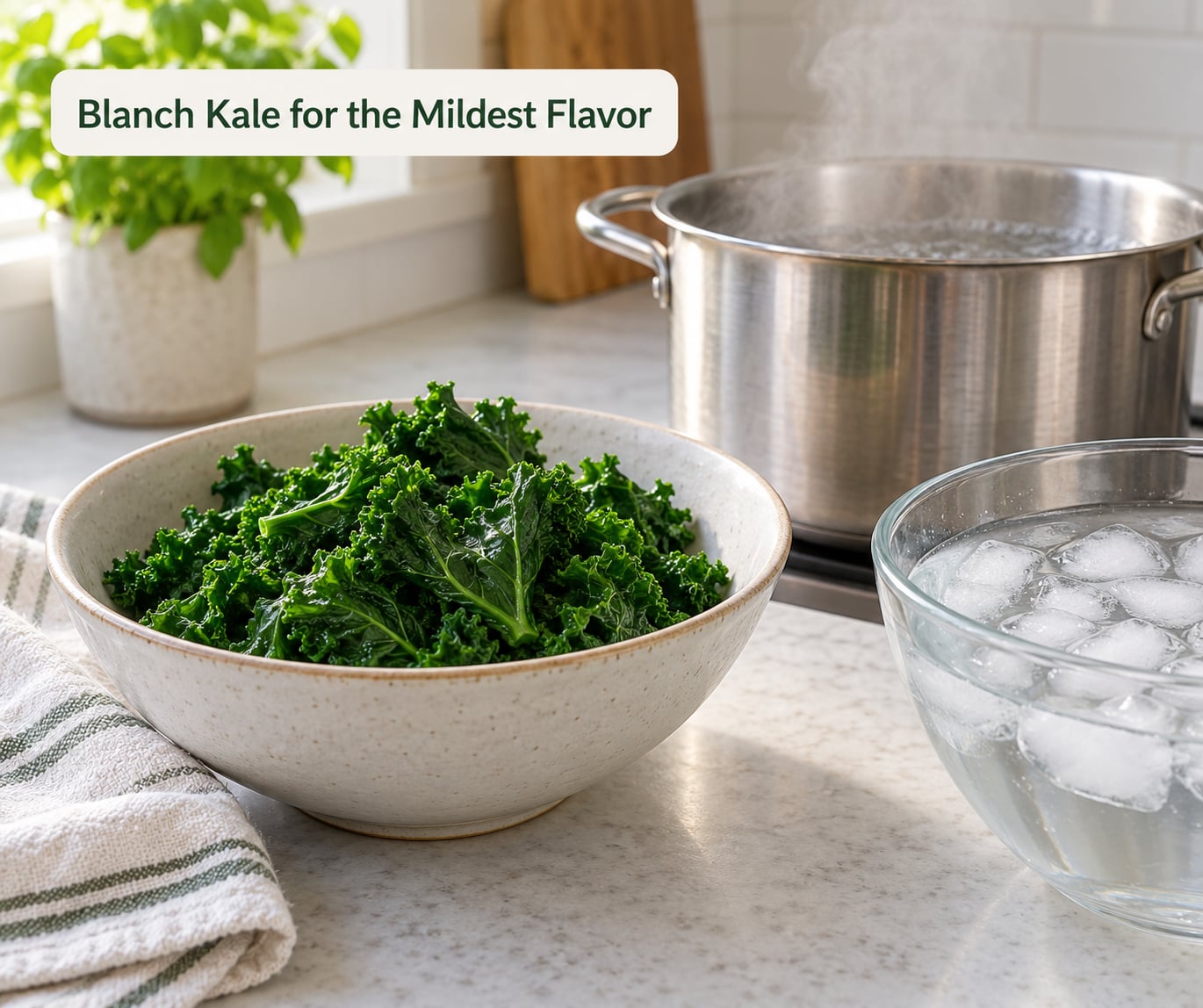
Blanching removes more bitterness than any other method. Bring a large pot of water to a rolling boil and salt it until it tastes like the sea.
Add the chopped kale in batches so the water keeps boiling. Curly kale needs 1 to 2 minutes, lacinato and red Russian about 30 to 60 seconds. Baby kale can skip this step.
The leaves are done when they look glossy, have lost their raw stiffness, and bend easily rather than snapping. Pull them out before they go soft, because that is where the grassy, sulfurous flavor sets in.
Move them straight into ice water for a minute or two. The cold shock stops the cooking, locks in the green, and leaves you with leaves that are tender but still have some bite.
Drain well, then dress. Blanched kale takes a light hand: oil, salt, a squeeze of lemon, and grated Parmesan if you have it.
Sauté Kale Until Tender, Not Mushy
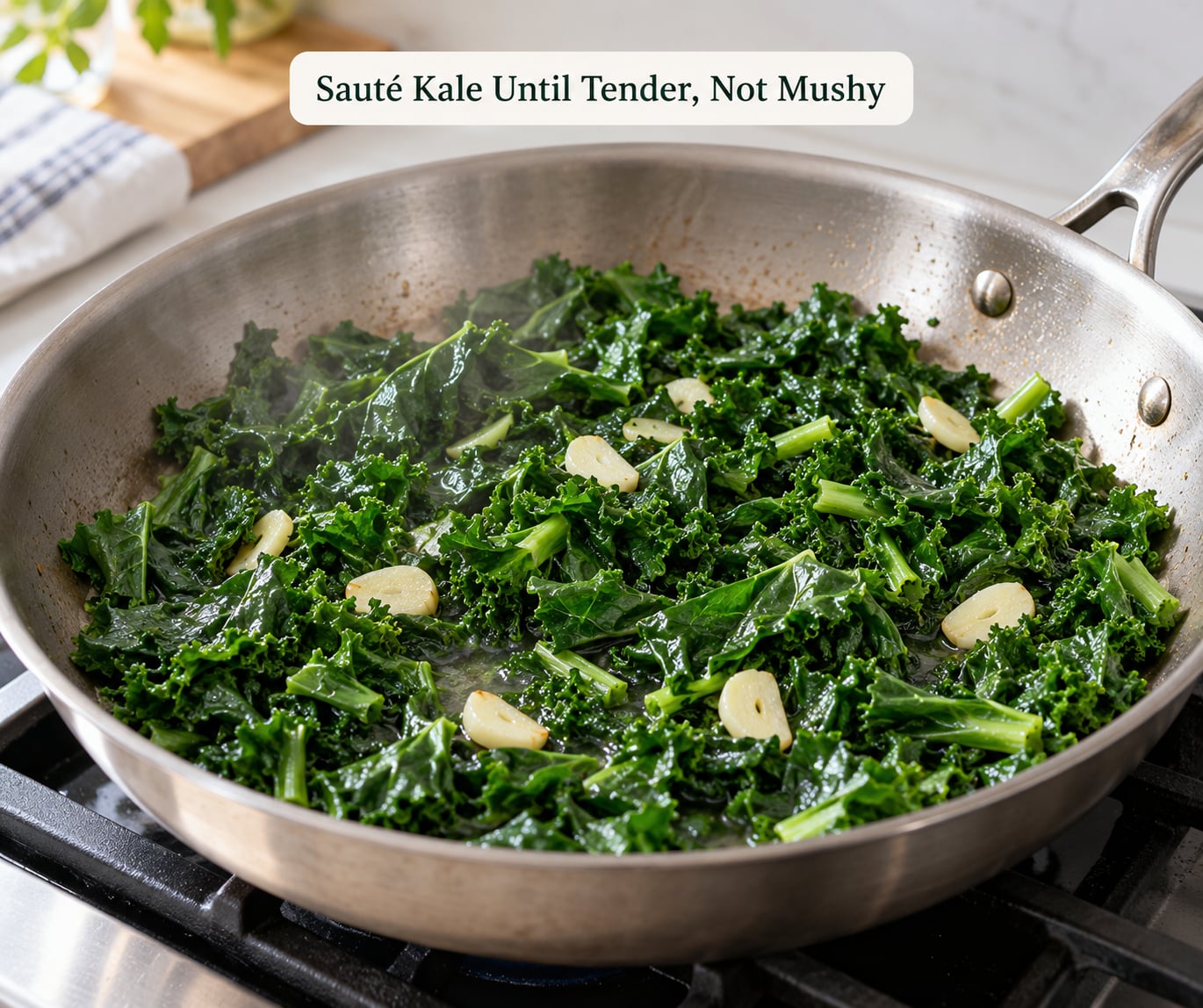
Heat a wide skillet over medium-high heat with a generous glug of olive oil. This is the method I use most, and the wide pan matters. A crowded skillet drops the temperature, and kale that simmers in its own liquid goes gray and grassy.
Aromatics go in first. Cook sliced garlic or shallot for about 30 seconds until fragrant but not colored, and add chili flakes or a pinch of red pepper if you like heat.
Add the dry kale by the handful. It will look like far too much, and that is fine. Let it sit for about a minute without stirring so the leaves start to wilt and shrink, then stir.
Keep the heat moving. When the pan looks dry and the leaves begin to stick, add a quarter cup of water, stir, cover for about 60 seconds, and uncover. That splash of water steams the greens through without oil or sugar, which is why sautéed kale stays tasting like kale.
Total time from pan to plate is 5 to 7 minutes. Take it off the heat while the stems still have a tiny bit of give, then add lemon juice, vinegar, or both, plus salt and pepper.
For the same principle applied to a different vegetable, my method for cooking tofu so it is not soggy uses the identical move: high heat first, liquid only when the pan runs dry.
Steam Kale for a Soft, Even Texture
Steaming is the gentlest hot method and the best choice when you want kale that tastes like kale but no longer fights back.
Put an inch of water in the bottom of a saucepan and bring it to a simmer. Set a steamer basket above the water so the leaves never sit in liquid, because boiled kale leaches flavor and turns dull.
Add the chopped, rinsed kale, cover, and steam for 4 to 6 minutes. Curly kale takes longer than lacinato. It is ready when a thick piece bends without snapping.
Season right after, with salt, olive oil, lemon juice or vinegar. Steamed kale is bland on its own, so lean on the acid more heavily than you would with sautéed kale.
Roast Kale for Caramelized Edges
High dry heat gives you a nutty, roasted flavor with crisped edges, and the caramelization mutes bitterness that steaming would leave behind.
Heat the oven to 425 F. Toss bite-size pieces of dry kale with enough olive oil to coat every surface lightly, plus a pinch of salt.
Spread the kale in a single layer on a sheet pan. Crowding traps steam, and steamed kale inside the pan never gets those edges you are after. Use two pans if you need to.
Roast for 12 to 15 minutes, turning once, until the edges are brown and crisp. Watch it in the last few minutes. At this temperature, kale goes from perfect to charred in under a minute, and burnt kale is bitter for a different reason entirely.
A squeeze of lemon after roasting works better than before. Acid added pre-bake has already cooked away by the time the pan comes out.
Common Mistakes
If your kale is still bitter, one of these is almost certainly the cause.
You left the rib in the leaf
This is the number one reason, and it is the most common one. The central stem carries the highest concentration of glucosinolates and stays fibrous even after an hour of cooking. Pull it out.
You rinsed before cutting
Rinsing whole leaves and cutting them afterward wastes the wash. Cut first, then rinse twice, so the water can reach the compounds that already formed.
You cooked it too long or too hot
Once kale passes tender, additional heat converts the remaining compounds into the pungent, sulfurous flavor people describe as swampy. Pull it at the first sign of tenderness.
You crowded the pan
Overcrowding drops the pan temperature and makes kale simmer in liquid. That is a braise in disguise, and the flavor turns flat and bitter together.
You served it with no acid
Bitterness reads as neutral when nothing cuts through it. A squeeze of lemon or a tablespoon of vinegar is not optional garnish, it is the step that finishes the dish.
You left the raw leaves sitting dressed
Dressing and waiting lets the bitter compounds migrate further into the leaf. For a salad, dress and eat within a few minutes, or use the hot soak first.
The leaves themselves are the problem
Older leaves from a heat-stressed or overripe plant taste bitterer no matter how well you cook them. That is a buying issue, not a technique issue. Choose bright, unwilted leaves, and favor baby kale and red Russian for raw eating.
Two more habits help. Add kale in the last few minutes of a soup or stew so it does not overcook. And add your seasoning in layers as you cook, the way I explain in cooking seasonally without blowing the budget, so the greens sit in a broth that already has flavor behind them.
Is bitter kale safe to eat? Yes. Bitterness signals sulfur compounds, not spoilage or danger. That said, kale left until it wilts, yellows or smells sour should go in the compost, not the pot.
Frequently Asked Questions
How do I make kale less bitter?
Remove the thick central rib, chop the leaves small, then rinse twice under cool running water. Cutting first is what matters, because the bitter compounds form the moment the leaf is damaged and the rinse washes them away. Finish cooked kale with lemon juice or vinegar, and stop cooking the moment the leaves turn tender.
Does boiling kale remove bitterness?
Yes, and boiling removes more bitterness than any other cooking method, but it also leaches flavor and color. Blanch it for 30 seconds to 2 minutes, then move it straight to ice water to stop the cooking. For a gentler result with more flavor left in the leaf, steam it for 4 to 6 minutes instead.
Is it better to boil or steam kale?
Steam if you want to keep the fresh, green flavor and simply soften the leaves. Boil or blanch if bitterness is your main problem, since the water carries off more of the pungent compounds. Whichever you pick, the acid finish and the rib removal do more work than the choice between the two.
Which type of kale is least bitter?
Baby kale is the mildest and needs the least preparation. Red Russian is the sweetest of the mature varieties, especially after a frost. Lacinato, also called Tuscan or dinosaur kale, is moderately mild once the rib is stripped. Curly kale is the most assertive, so give it the double rinse and a longer soak if you are serving it raw.
What neutralizes a bitter taste in kale?
Acid is the strongest counterweight. Lemon juice, red wine vinegar, balsamic or apple cider vinegar all work, added off the heat so the flavor stays bright. Fat helps too, since olive oil carries the fat-soluble flavor compounds and rounds out the bitterness. A small amount of honey or maple syrup softens the edge without hiding the greens.
Why is my kale bitter even after I cooked it?
Usually the leaves are older or came from a heat-stressed plant, which concentrates the sulfur compounds beyond what technique can fix. Next most likely is cooking time, since bitterness builds the longer kale cooks past tender. Check that you removed every rib and that you seasoned with acid at the end rather than salt at the start.
Conclusion
Start here: pick tender leaves, pull every rib out, chop small, rinse twice, and cook fast until the greens are just tender. Then squeeze lemon over the pan while it is still hot and add a drizzle of olive oil. If you only change one thing, change the rib removal, because that single step fixes more complaints than any other.