
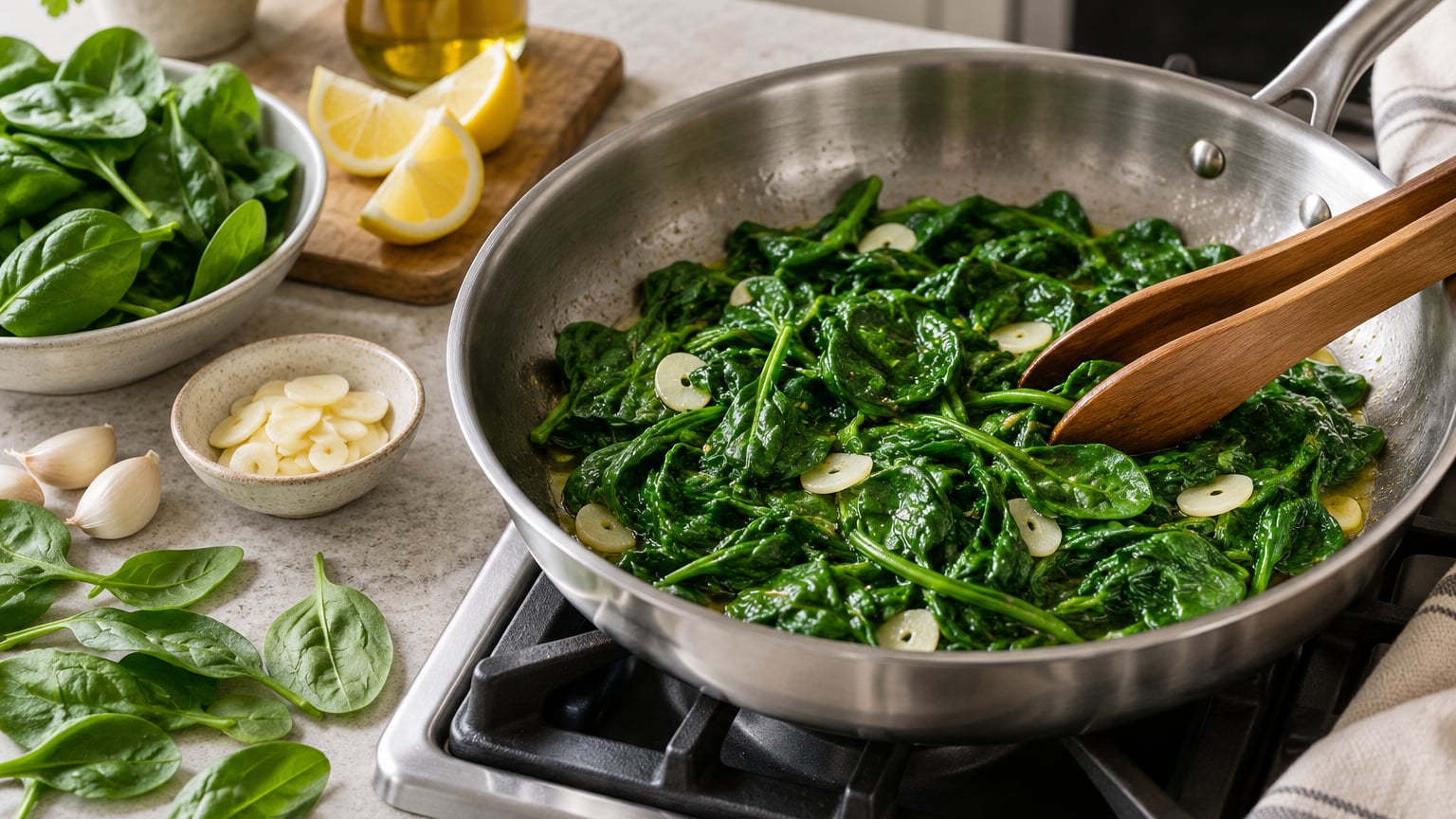
To cook spinach without it getting watery, treat it like any other quick green: very hot pan, very little added moisture, and a very short cook. Heat breaks open the leaf cells and pushes out the water inside them, so the job is to make that water evaporate before the greens go limp. Ten minutes of work, no soaking, and the leaves stay bright and separate.
That last part is where most home cooks go wrong. They wash spinach, drop it into a cold pan at medium heat, add a splash of water, and walk away. What comes out is grey, slimy soup. Every one of those steps is adding moisture the leaf does not need.
If you have never been given a method, start with the six steps below and use them the same way every time. Once you have the timing in your hands, the variations at the end are easy.
What You Need
You do not need special equipment. You need a pan with a wide base, more than you think, because crowding is the number one reason spinach steams instead of sautéing.
- A wide skillet or wok. Twelve inch across for two generous servings. A deep narrow saucepan traps steam and gives you a boiled leaf.
- Spinach. Baby spinach cooks in under a minute. Mature bunch spinach needs stem removal and about four minutes. Frozen works too, with a different starting point.
- Olive oil or butter. Two tablespoons for a large panful. Fat coats the leaf and slows the leak.
- Aromatics. Garlic slices, chopped chilli, or a little grated ginger, added at the same time as the greens.
- A colander or fine strainer. For draining, plus a tea towel or salad spinner for getting the leaves dry after washing.
- Salt, pepper and an acid. Lemon juice at the end is the fix for a flat-tasting batch.
One thing worth knowing before you start: raw spinach collapses to roughly a tenth of its volume when cooked. A mountain of leaves that fills the pan becomes a small, dark handful. Season for what you will actually be eating, not what went in.
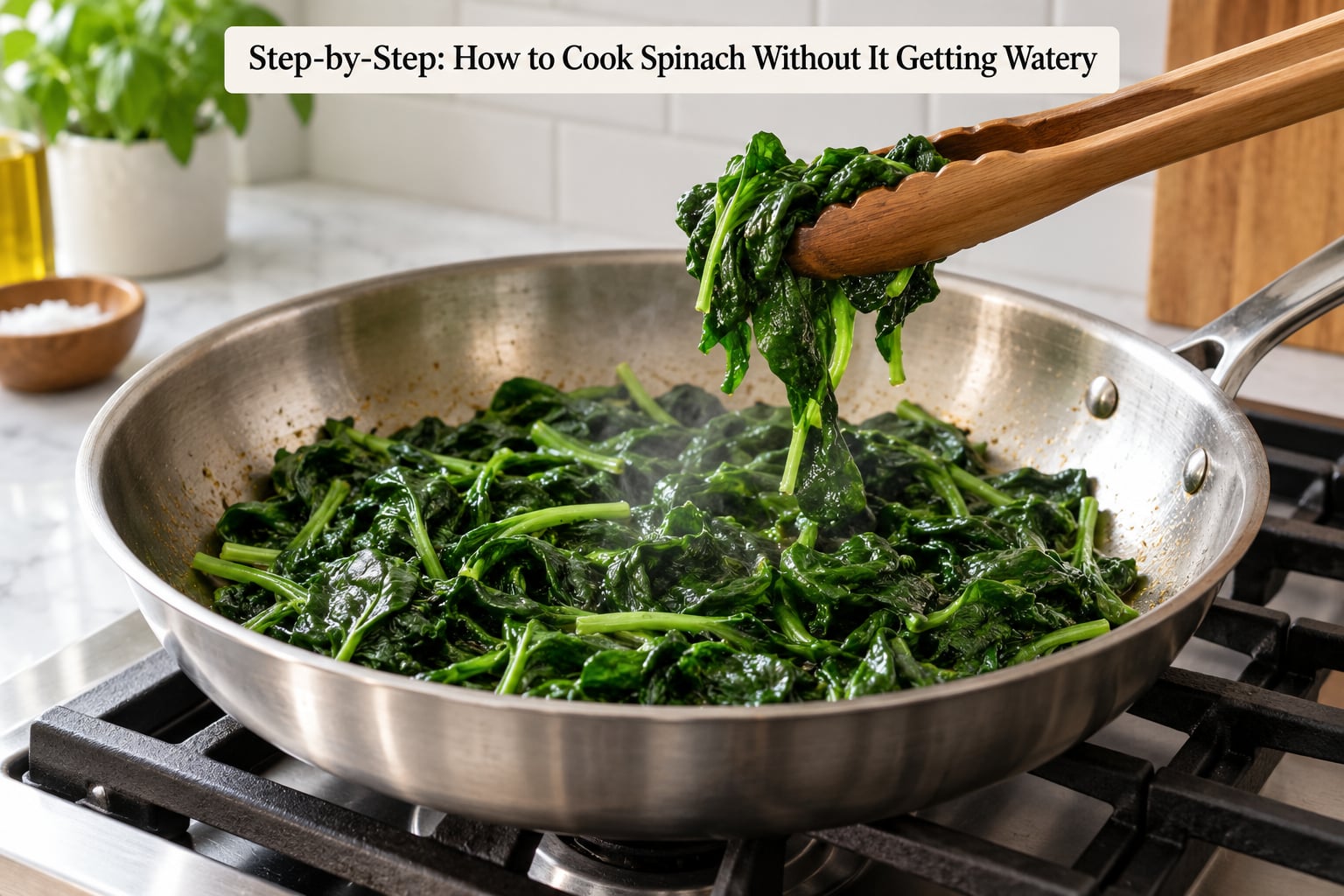
Step-by-Step: How to Cook Spinach Without It Getting Watery
1. Wash and Dry the Spinach Thoroughly
Rinse the leaves in cold water and swish them around rather than just pouring water over the top. For bunch spinach with grit in the folds, fill a bowl, submerge the leaves, lift them out and refill. Two rounds is usually plenty.
Now get it dry. This is the step people skip, and it is where most of the water in the pan comes from. Tip the leaves into a salad spinner and pump it, or roll them in a clean tea towel and press. The towel comes out damp and the leaves are ready. If you skip this, expect a puddle.
Pull off any thick central stems from mature spinach. Hold the stalk and strip the leaf away from it rather than cutting close to the stem.
2. Heat the Pan Before Adding Spinach
Set the skillet over high heat with the oil in it. Give it a minute or two until the oil shimmers and just begins to smoke. A cold or lukewarm pan is what makes spinach weep: the greens sit there slowly releasing liquid instead of searing instantly.
If you have been warned that spinach splatters violently into a screaming-hot pan, the fix is smaller leaves and a lid held nearby, not a lower flame. Turn the heat down a notch if your pan is thin, but keep it hotter than feels sensible.
3. Add Spinach in a Loose Layer
Add all of it at once and keep it loose. If it will not sit in a single layer, cook it in two batches rather than piling it higher. A mound in the middle of the pan drops the temperature, traps steam, and boils the bottom half while the top stays raw.
Toss with the oil and aromatics immediately so every leaf is coated. Garlic goes in now; it browns in the thirty seconds or so you have while the spinach wilts.
4. Toss and Cook Until Just Tender
Keep it moving with tongs. Baby spinach is done in 30 to 60 seconds. Mature spinach takes 3 to 4 minutes. You are looking for leaves that have wilted down and gone glossy dark green, still floppy rather than limp and heavy.
Stop while it still looks slightly springy. Spinach has no raw stage to rescue it, so the difference between just wilted and overcooked is about fifteen seconds. Once the pan looks empty and there is liquid pooling underneath, you have gone too far.
5. Remove and Drain Any Excess Liquid
If you see a puddle, tip the whole pan through a colander set over the sink, or lift the greens out and leave the liquid behind. Then press the spinach down with the back of a spoon or ladle to force out what is trapped inside the leaves.
For a really dry result, put the drained greens in a clean tea towel and twist it firmly over the sink. This single step is the difference between creamed spinach that thickens properly and a sauce that stays thin and grey. The same squeeze-and-twist move solves the sogginess problem in crispy tofu that releases water, if you are cooking both in the same week.
6. Season After the Spinach Is Cooked
Salt late. Salt added early pulls water out of the leaf cells faster than heat does, which is exactly what you have spent the last five minutes trying to avoid. A pinch of flaky salt and a lot of black pepper at the end, after it is off the heat and drained.
Finish with a squeeze of lemon to brighten it, a grating of nutmeg for the classic British treatment, or more chilli if you want heat. Taste it before serving. Spinach that has been well cooked and drained usually needs more salt and more acid than people expect, because the water dilutes everything.
Common Mistakes
Almost every watery batch traces back to one of these six.
Adding spinach to a cold or lukewarm pan
Warm leaves slowly and sweat. Preheat the pan with the oil until it shimmers. The greens should hit a hot surface and start moving within a few seconds.
Crowding the pan
Two mounds in a small pan cook differently from one thin layer. Cook in batches if the leaves would sit more than two deep. This is the fix most worth learning, and the one most often skipped.
Washing spinach and putting it in wet
Surface water has to boil off before the leaf cooks. Dry them properly and the whole cooking time shortens by a minute or more.
Adding water to the pan and covering it
A lid traps the steam that spinach has already released. The leaf sits in its own liquid and softens instead of drying out. Cook uncovered.
Salting before the greens finish
Salt draws water out of the cells by osmosis. Season at the end, off the heat, after draining.
Leaving it to cook after it has wilted
Past the wilt, texture only goes one direction. Spinach goes soft, then slimy, then sour-tasting. Pull it out while it still looks bright.
How to Keep Spinach From Releasing Too Much Water
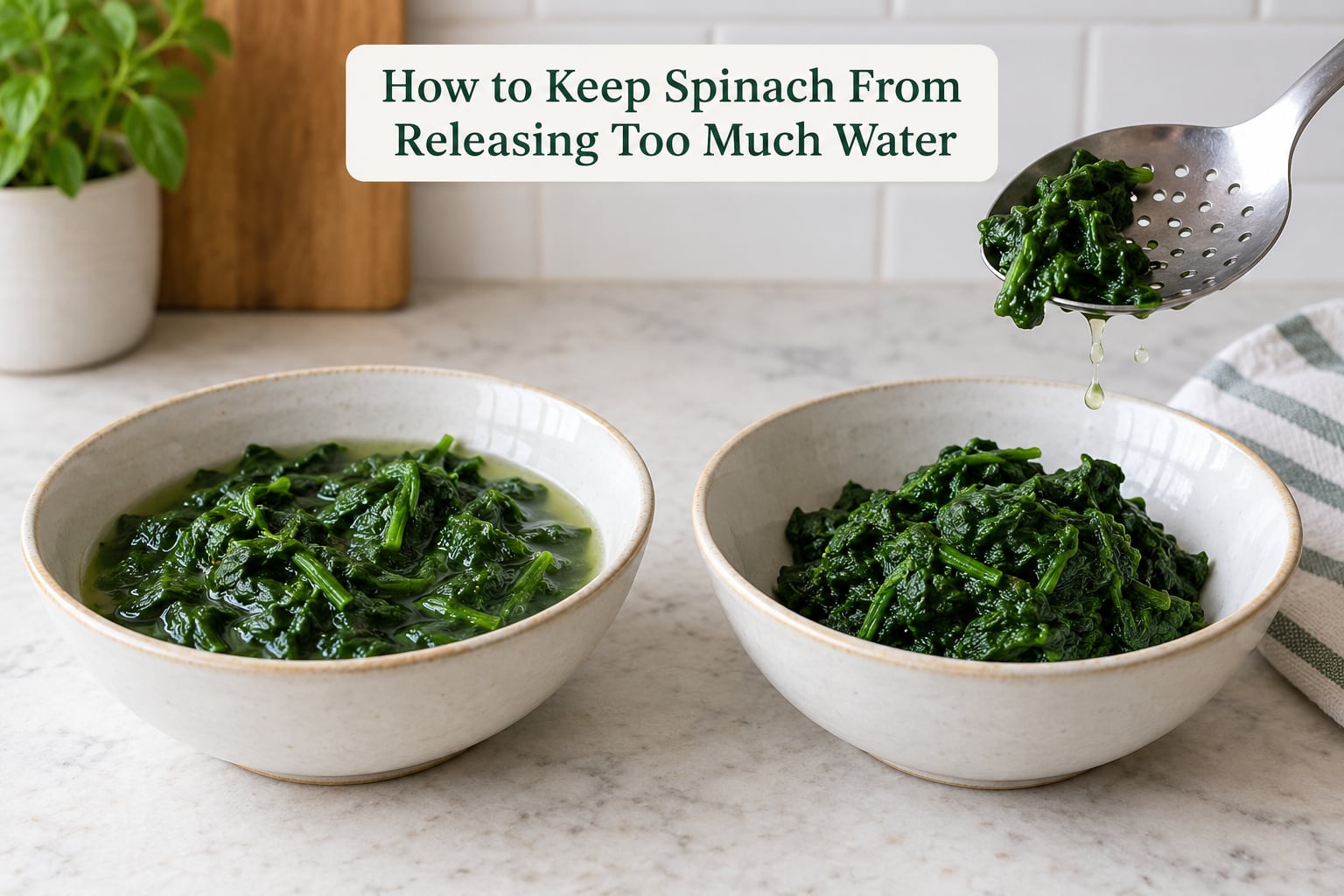
Once the basic method is automatic, a few adjustments cover most other situations you will run into.
If you are cooking frozen spinach, do not thaw it first. Put the frozen blocks straight into a hot oiled pan and keep them moving until the ice has cooked off, roughly 4 to 5 minutes. Thawing first adds water you then have to boil away. Frozen tends to cook softer than fresh no matter what you do, which is why forum cooks often reach for fresh when texture matters.
If you are cooking for a crowd, the batch rule matters more than anything. Ten-inch skillet, one layer, 60 to 90 seconds per batch, drain and press each batch before moving to a serving dish. Season the whole pile at the end once you know the final volume. Sautéed greens fit into most weeknight plans too, and dinner in under thirty minutes leaves plenty of room for the batch method.
If you want to cook ahead, blanch the spinach for 30 seconds in boiling salted water, plunge it straight into iced water, then squeeze it completely dry in a towel. Store the squeezed spinach in an airtight box lined with paper, up to a day in the fridge. Reheat it in a hot oiled pan for under a minute, uncovered, and it behaves like fresh.
Blanching is worth the extra step when you are making creamed spinach, filling a pastry, or portioning for meals across a week, because the squeeze gets far more water out than draining alone. It costs some water-soluble nutrients such as folate and vitamin C, and it is the reason old advice recommends blanching to reduce oxalates.
If you want to keep the colour bright, cook it fast, keep the heat high and add an acid at the end. Spinach that simmers slowly for ten minutes turns olive-drab no matter what you did beforehand. Lemon juice at the finish brings the green back up.
If it is going into a salad, a pizza or a sandwich, blanch and squeeze. Raw-prepped spinach wilts under the weight of its dressing and turns to nothing. Squeezed spinach holds its shape for the twenty minutes before it gets eaten.
If you are making pasta, eggs or a curry, cook it down a little further than the recipe book suggests and drain it properly. Pasta sauce and scrambled eggs both thicken as they cook, so spinach that is dry now still has room to loosen. Creamed spinach needs the squeeze method, not a drain.
On oxalates: they are what makes spinach taste slightly bitter and what binds calcium in the diet. Boiling for around two minutes reduces them noticeably, which is worth doing if spinach is a weekly staple for you or if you have been told to limit high-oxalate greens. It is not necessary for an occasional side dish.
One more safety point, because it comes up constantly. Spinach sitting in warm water grows bacteria faster than you would like. Wash it, cook it, eat it, and do not leave it soaking on the counter. If you wash spinach well before cooking, that solves the question entirely.
If greens show up week in week out, working them into a planned shop rather than a last-minute scramble is what keeps the pan temperature and the drying step honest. Cooking seasonally on a tight budget covers the planning side.
Frequently Asked Questions
Why does my spinach get watery when I cook it?
Spinach is roughly 90% water, and heat ruptures the delicate cells that hold it. The liquid comes out into the pan, and if the pan is cool or crowded the greens sit in that liquid and steam back into a soggy texture. A hot pan, a loose single layer and no added water keep the liquid evaporating instead.
Should I wash spinach before sautéing it?
Yes, but dry it properly afterwards. Rinse the leaves in cold water, swishing them rather than pouring water over the top, and lift them out rather than letting them drain in a colander. Then use a salad spinner or press them in a clean tea towel. Leaves going into the pan wet is the most common reason spinach turns out soggy.
How hot should the pan be before adding spinach?
Hot enough that the oil shimmers and just starts to smoke, with a wide pan over high heat. A lukewarm pan lets the leaves warm slowly and sweat instead of searing, which is exactly the water release you are trying to avoid. Thin pans can sit a notch lower, but if the greens are not moving within a few seconds of landing, the pan is not hot enough.
How long should I cook spinach so it does not become soggy?
Baby spinach takes 30 to 60 seconds once it hits the pan. Mature spinach needs 3 to 4 minutes, and frozen blocks about 4 to 5 minutes from frozen. Stop when the leaves are wilted, glossy dark green and still slightly springy. Once they go flat and heavy, about fifteen seconds too far, there is no way back.
Can I cook frozen spinach without it becoming watery?
Yes, with one adjustment: cook it from frozen rather than thawing it. Put the blocks into a hot oiled pan and keep them moving until the ice has gone, roughly 4 to 5 minutes. Thawing first releases water you then have to boil off. Frozen will be softer than fresh whatever you do, so it suits curries, sauces and fillings better than a salad.
Should I salt spinach before or after cooking?
After, and off the heat. Salt draws water out of the leaf cells by osmosis, so salting early speeds up the exact process that makes spinach watery. Drain the greens first, then season with a pinch of flaky salt, plenty of black pepper and a squeeze of lemon to sharpen what the water dulled.
The Short Version
Start by getting the pan hot with the oil in it, and get the leaves properly dry after washing. That pairing fixes most of what people complain about.
Then cook in one loose layer, uncovered, for the shortest time the leaves need, and drain whatever comes out before you salt. If you learned how to cook spinach without it getting watery from one thing, make it the drying step, because that is the piece most often left in the sink.