
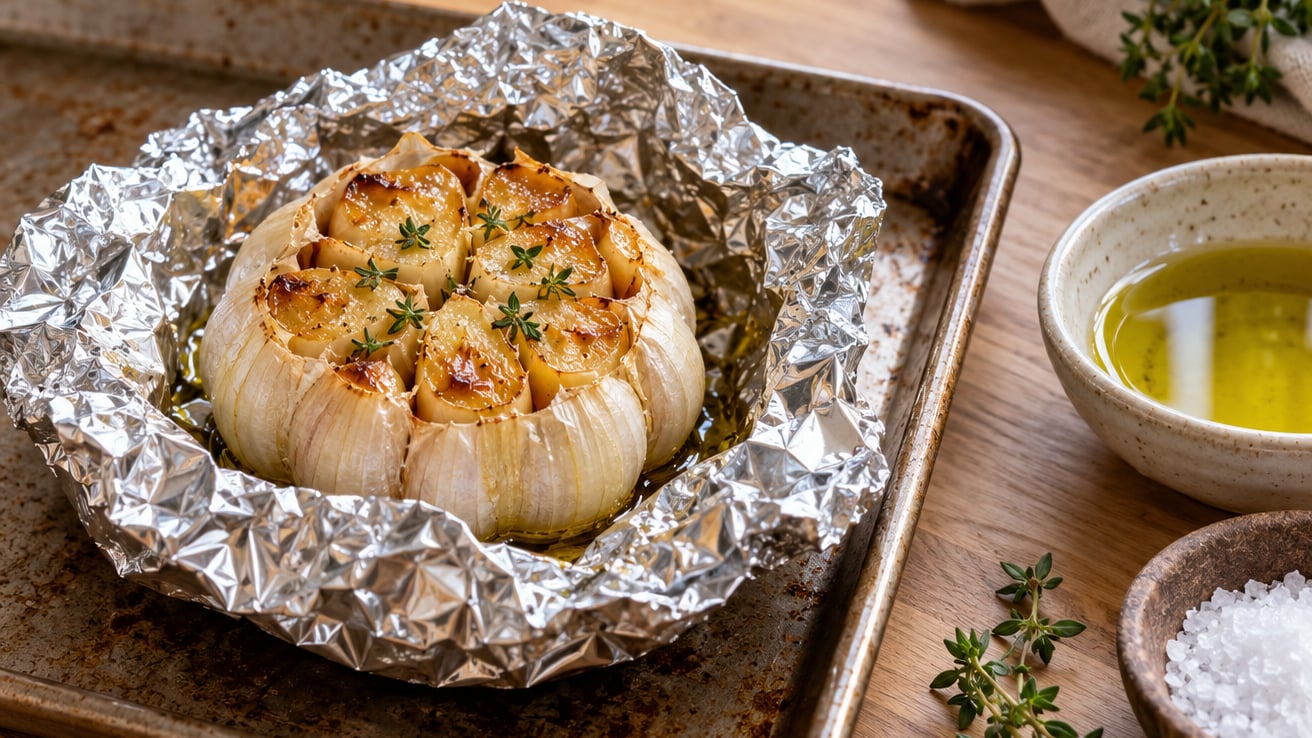
To roast garlic in the oven, trim off the top half inch of a whole head so the cloves show, drizzle the exposed cloves with olive oil, wrap loosely in foil, and bake at 400°F until the cloves are golden and soft enough to squeeze out, about 35 to 45 minutes. Begin at 400°F if you are new to it, and start checking at the 30-minute mark.
Roasting takes raw garlic from sharp and snapping to soft, sweet and buttery. The heat breaks down the sulfur compounds that make raw garlic pungent and caramelizes the natural sugars, so a roasted clove tastes nothing like the one you chopped this morning. That change makes roasted garlic the easiest way to add real garlic depth to a dish without anyone asking for a glass of water.
The whole thing takes about an hour from cutting the top to spreading the paste, and most of that hour is the oven doing the work. You need a head of garlic, a small amount of oil, and either a sheet of foil or a small baking dish. Nothing here is fussy.
What You Need
For one whole head, you need a bulb of garlic with the papery skin still on, about a tablespoon of olive oil, and a pinch of salt. A little cracked black pepper and a thyme sprig tucked into the foil are optional, and good.
You also have a choice of garlic format, and the choice changes the time and the texture:
- Whole head, wrapped in foil. The cloves stay protected and steam in their own skin, which keeps them moist and gives the softest, paste-like result.
- Whole head, unwrapped, on a sheet pan. More direct heat, so the exposed tips brown and the outer cloves get slightly drier and more intensely roasted.
- Loose cloves, peeled. Cooks faster, browns more evenly, and gives you individual cloves to tuck into dishes rather than one blended bulb.
For equipment, a rimmed sheet pan, a small ovenproof dish, or a muffin tin all work. A muffin tin holds a bulb upright and stable, which is nice if you are roasting several heads at once. An oven thermometer helps, because ovens run hot or cool and garlic tells you nothing until it is already overdone.
Step-by-Step
The method below covers the whole-bulb foil method first, then the loose-clove version, so pick the one that fits what you bought.
Step 1: Preheat the Oven and Choose Your Roasting Style
Set the oven to 400°F and let it come to temperature while you prep. Most home ovens take 15 to 20 minutes to heat properly, and starting garlic in a cold oven is the reason so many bulbs come out pale and firm.
At 400°F a wrapped head takes about 35 to 45 minutes. Drop to 350°F and plan on 45 to 60 minutes for a gentler, more evenly cooked bulb with less browning on the tips. Loose peeled cloves move faster than a whole head, usually 25 to 35 minutes at 400°F, because there is no skin and paper holding heat against them.
Step 2: Prepare the Garlic
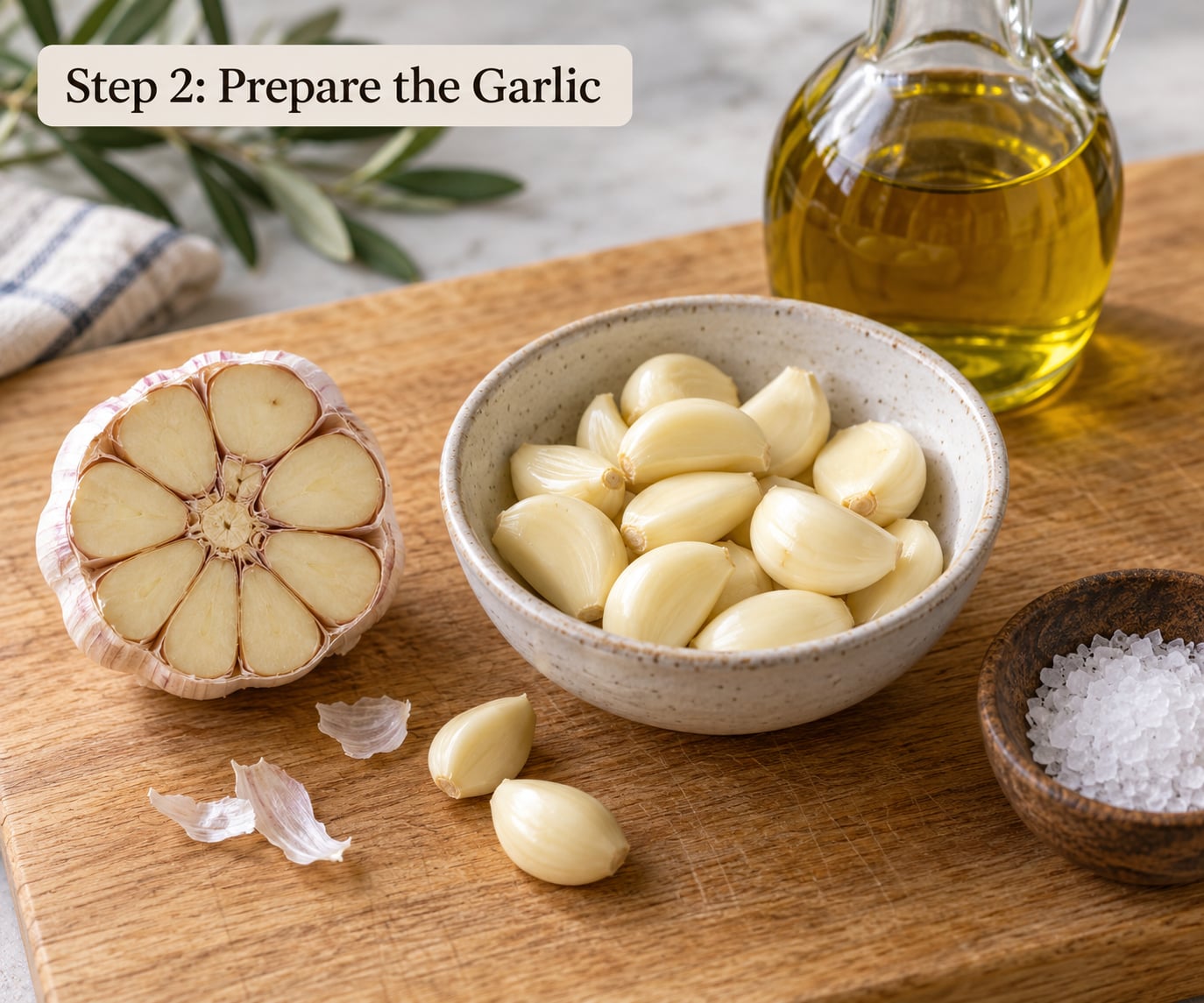
Slice off the top half inch of a whole head with a sharp knife, cutting straight across so the cloves are exposed but still seated in the base. Do not cut into the cloves themselves. Leave the root end intact, because that base is what holds the bulb together in the oven.
Some cooks peel off the loose outer papery layers first, which is cosmetic but makes the finished bulb easier to handle. You can also give the bulb a quick rinse under cool water if the papery skin feels dusty. It does not need to be washed, and no one will notice either way once it is roasted.
Drizzle about a tablespoon of olive oil over the exposed cloves and let it run down between them. Oil is what carries heat into the flesh and turns the sugars brown, so skipping it works, but you get drier, paler cloves. Season the cut face with a pinch of salt, and add pepper or a thyme sprig if you like.
Step 3: Arrange the Garlic for Even Cooking
For the foil method, set the bulb cut-side up on a sheet of foil, bring the foil up around it loosely, and pinch the packet closed. Loosely is the operative word. A tight packet traps no steam and can dry the cloves; you want a loose tent that lets moisture escape slowly. Press a small dimple in the foil under the bulb so it sits flat.
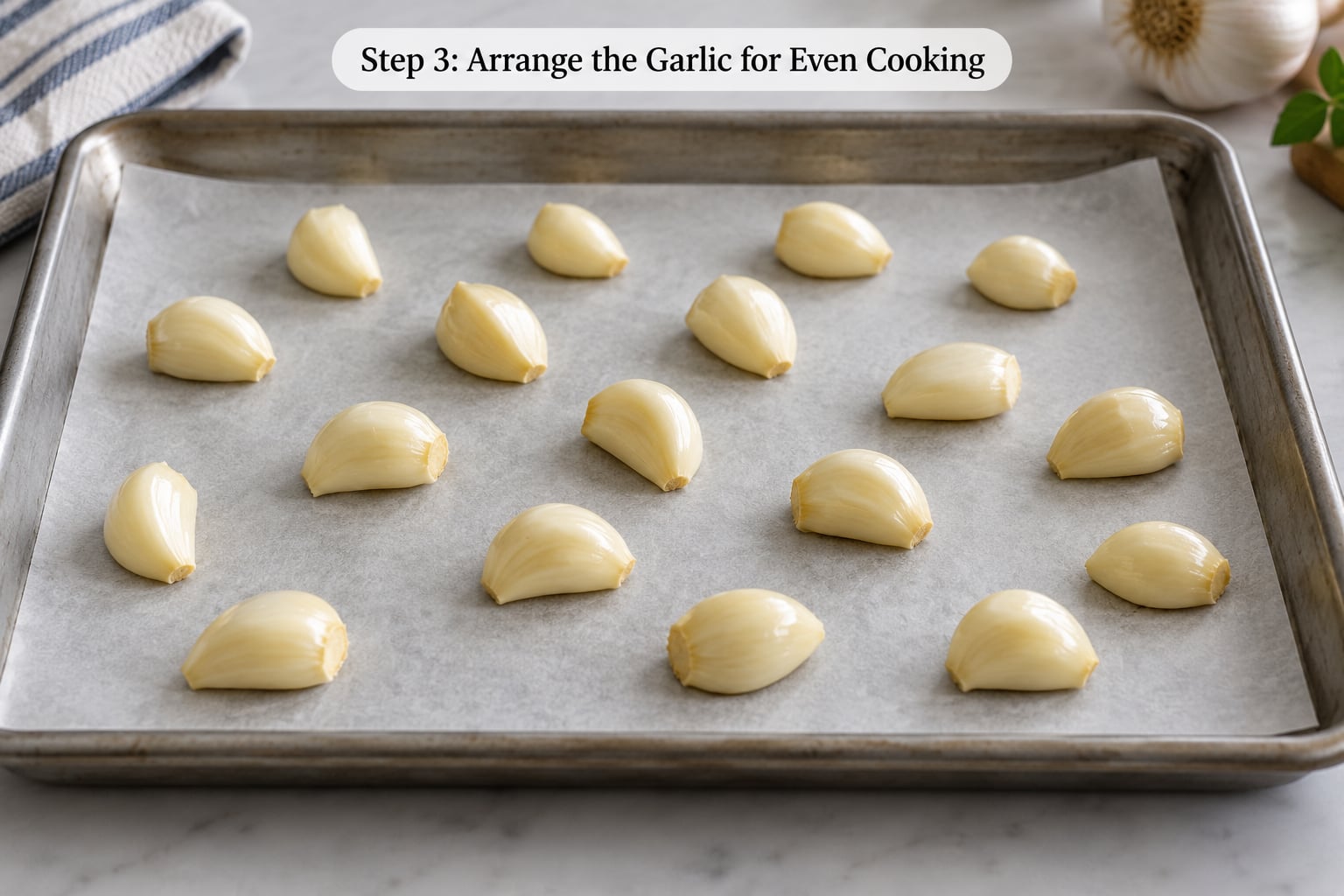
If you are skipping the foil, set the bulb cut-side down in a muffin tin cup or a small ovenproof dish with a little oil in the bottom, so the cut face does not weld itself to the pan. For loose cloves, spread them cut-side down in a single layer on a lined sheet pan. Crowding them together creates steam pockets, and those cloves turn grey and soft instead of golden.
Give the packet a light poke in the middle with a knife tip before it goes in, so you have an opening to vent steam midway through. Put the pan on a middle rack, not the bottom, so the heat circulates instead of scorching the underside.
Step 4: Roast Until Golden and Tender
Start checking at 30 minutes. Pull the packet open carefully, away from your face, since escaping steam will scald, and press a clove or two with the back of a spoon. Raw garlic is hard and springs back. Done garlic dimples under pressure and gives easily.
Color is the second cue. You are looking for pale golden to deep golden brown on the exposed tips, and if you see dark brown or black, the sugars have gone past caramelized into bitter. Pull the tray at that point and taste one clove, because roasted garlic sweetens as it cools and a clove that seems slightly pale in the oven is usually right on target by the time it reaches the table.
Starting temperature shifts all of this. Garlic straight from the fridge into a hot pan takes longer to reach a soft center than garlic that has sat at room temperature for an hour. Big elephant garlic also needs an extra 10 to 15 minutes because of the size of the cloves.
Step 5: Cool, Squeeze, and Serve
Let the bulb rest 10 to 15 minutes. Cooled flesh is firmer and far less likely to squirt out of the skin when you press it, so this pause actually saves you cleanup time.
Hold the root end, squeeze the bulb from the bottom, and the cloves push right out of their skins. If one resists, press the clove gently against the counter and pop the papery layer off. Squeeze the clove and the paste comes out, soft enough to spread with a knife or fold into almost anything.
Serve it on toast with butter and salt, mash it into potatoes with butter and cream, or whisk it into a vinaigrette. Skim any oil that pooled in the foil packet and keep it. That oil carries the same roasted flavor and is good on roasted vegetables, which is the same idea as oven-roasted potatoes with a garlic finish.
For storage, mash or squeeze the cloves into an airtight container and refrigerate for up to two weeks. For longer keeping, freeze in a silicone ice cube tray, bag the cubes once solid, and use them within six months. Keep in mind that plain roasted garlic in the refrigerator is a low-acid food, so treat it as a perishable item and do not leave garlic sitting in oil at room temperature, where botulism is a real concern.
Ways to Use Roasted Garlic Once You Have It
A single head gives you about ten usable cloves, which is more than you would think. Try stirred into mashed potatoes, whisked into a salad dressing with olive oil and vinegar, folded into hummus, spread under browned cheese on toast, mixed into softened butter with salt for garlic bread, folded into scrambled eggs near the end of cooking, dolloped onto grilled fish, blended into pasta sauce, thinned into aioli, or stirred into roasted vegetables in the last few minutes.
Two non-obvious ones are worth trying. Roast extra cloves alongside the head and blend them with olive oil, thyme and a cracked peppercorn into a roasted garlic oil that keeps a month in the fridge. Or mash the cloves with a splash of the cooking liquid from a soup and freeze it in portions, which gives you instant sauce base on a weeknight.
When a head of garlic costs you an hour of oven time, it is worth getting two things right: the temperature and the pan. Our guide to baking pizza on a stone at home covers that same idea, a hot preheated oven and even browning, in more detail.
Common Mistakes
Garlic burns before it turns sweet. This is almost always either a too-hot oven or a foil packet sitting too close to the heating element. Roast at 400°F on a middle rack, and if your oven runs hot, verify it with a thermometer and drop to 375°F. Dark brown tips are bitter; golden tips are what you want. Covering loose cloves loosely with a second sheet of foil slows the browning if you are cooking at the higher end.
The cloves come out hard and still pungent. Cutting only a sliver off the top traps steam but also leaves too much raw flesh for the time you allowed, and a tightly sealed packet can underheat. Cut a full half inch, keep the packet loose, and give it the full time range. Garlic that is soft but not quite as dark usually still needs 10 more minutes.
Cloves are grey and wet instead of golden. That is overcrowding or foil pressed down too tightly, both of which steam the garlic rather than roast it. Spread loose cloves in one layer with space between them and leave the foil tented.
You want softer cloves. Peel them, cut the larger ones in half, cover them with oil and cook at 300°F for about 45 minutes. That low, slow version, closer to a confit, gives you cloves that collapse into paste. Garlic-in-oil done this way needs refrigeration and a short shelf life, so keep it cold and use it within a few days.
You want deeper caramelization. Use the unwrapped method on a sheet pan at 400°F, cut-side down, and let the cut faces sit against the hot metal. Give them 5 extra minutes past the point where the inside feels soft. Watch them the whole time, because the difference between deep brown and black is about three minutes.
On handling, press a knife tip into the packet before opening so steam vents away from your hands, and cool the bulb before squeezing. The hot oil in a foil packet can burn you just as easily as the steam can.
Frequently Asked Questions
Should I peel garlic before roasting it?
No. For a whole head, leave the papery skin on and only cut off the top half inch. The skin steams the cloves and keeps them soft and moist while they cook. You can pull off the loose outer layers if you find them fiddly, but peeling every clove before roasting means they dry out and lose the buttery texture.
Can I roast garlic at 450°F instead?
You can, but expect a smaller margin for error. At 450°F a whole head finishes in about 25 to 35 minutes, and the exposed tips go from golden to burnt fast. Watch it from 20 minutes onward, tent the foil more loosely, and pull it as soon as the cut face turns deep golden.
How long does roasted garlic last?
Squeezed or mashed and sealed in an airtight container, roasted garlic keeps in the refrigerator for up to two weeks. Frozen in ice cube trays and bagged once solid, it holds quality for around six months. Use a clean utensil each time you scoop, since the garlic sits in the container without much else to slow spoilage.
Can frozen garlic cloves be roasted?
Yes, and they work well. Thaw them in the refrigerator overnight rather than on the counter, then roast them at 400°F for 25 to 35 minutes until the edges brown and the centers soften. Frozen cloves hold more water than fresh ones, so pat them dry and give them a little extra roasting time.
Why is my roasted garlic bitter?
Bitterness means the sugars went past caramelized into burned territory. Common causes are an oven running hotter than the dial says, garlic sitting too close to the heating element, and a foil packet opened too late. Roast at 400°F on a middle rack, check at 30 minutes, and pull the tray while the tips are golden rather than dark brown.
Conclusion
To roast garlic in the oven, cut the top half inch off a whole head, oil the exposed cloves, tent them loosely in foil, and bake at 400°F for 35 to 45 minutes until the tips are golden and a clove gives under a spoon. Rest the bulb 10 minutes, squeeze the cloves from the root end, and use the paste within two weeks from the fridge or portion it into the freezer for six months.
If you have never done this before, start at 400°F rather than higher, trim the top cleanly in one cut, and stop the roast the moment the cut face turns golden. That single habit, pulling the tray on color instead of on the clock, is what separates sweet roasted garlic from bitter garlic.