
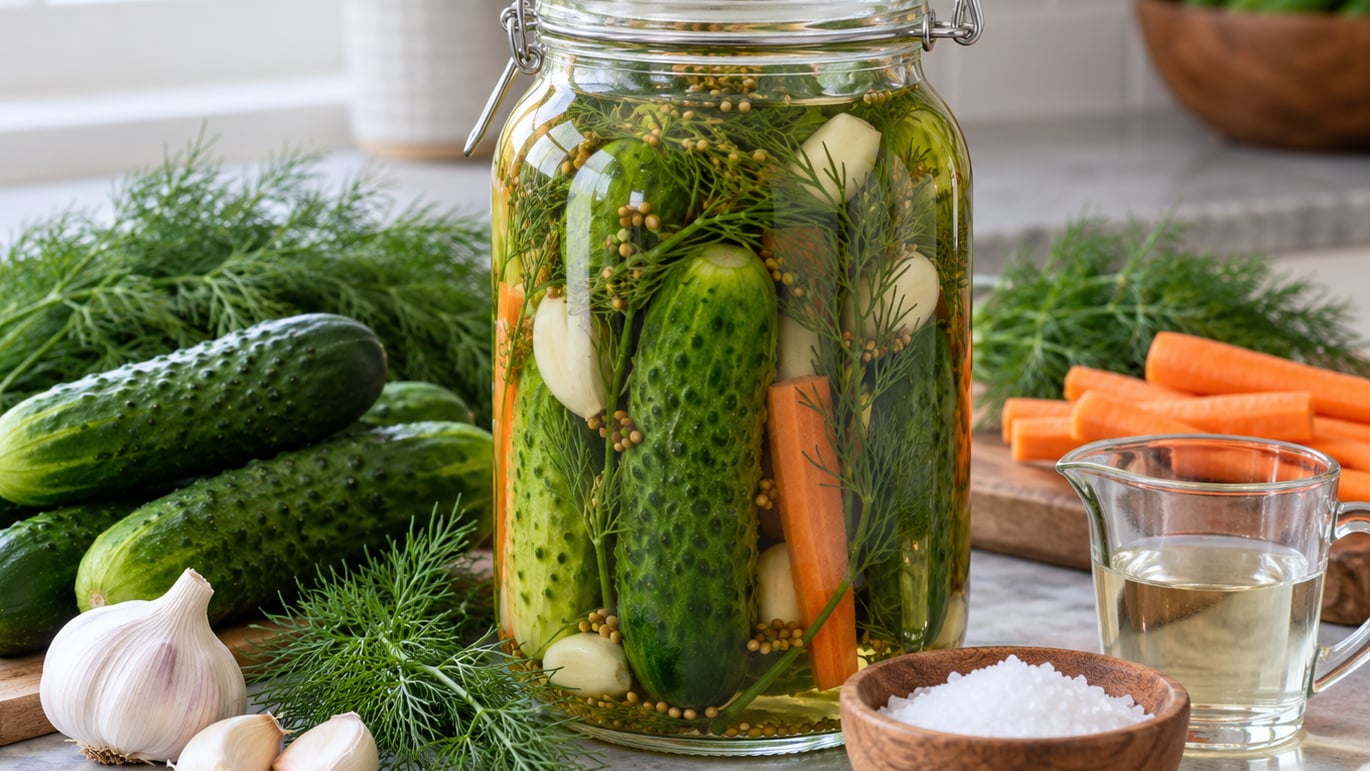
Refrigerator pickles take about 20 minutes of active work and then sit in the fridge until they are ready to eat. You slice crisp cucumbers and other vegetables, pour a hot vinegar brine over them, and let the fridge do the rest. No canning equipment, no boiling jars, no sealing lids.
That is the whole appeal. You control the salt, the vinegar, and the spices, and the pickles stay crunchier than anything from a shelf because heat processing is what softens cucumbers. Most batches taste good after 24 hours and keep improving for about a week.
If you are building a spread rather than a single jar, pickling pairs well with things like a charcuterie board on a budget, and a jar in the fridge is genuinely a make-ahead project. Below is the full method, including the ratio I use and the mistakes that turn out to matter most.
Table of Contents
- What You Need
- Step-by-Step: How to Make Refrigerator Pickles
- Common Mistakes and How to Fix Them
- Frequently Asked Questions
- How long do refrigerator pickles take to be ready?
- Do refrigerator pickles need to be canned or boiled?
- How long do refrigerator pickles last in the refrigerator?
- What vegetables are best for refrigerator pickles?
- Why are my refrigerator pickles cloudy or slimy?
- Can I make refrigerator pickles without sugar?
- Conclusion
What You Need
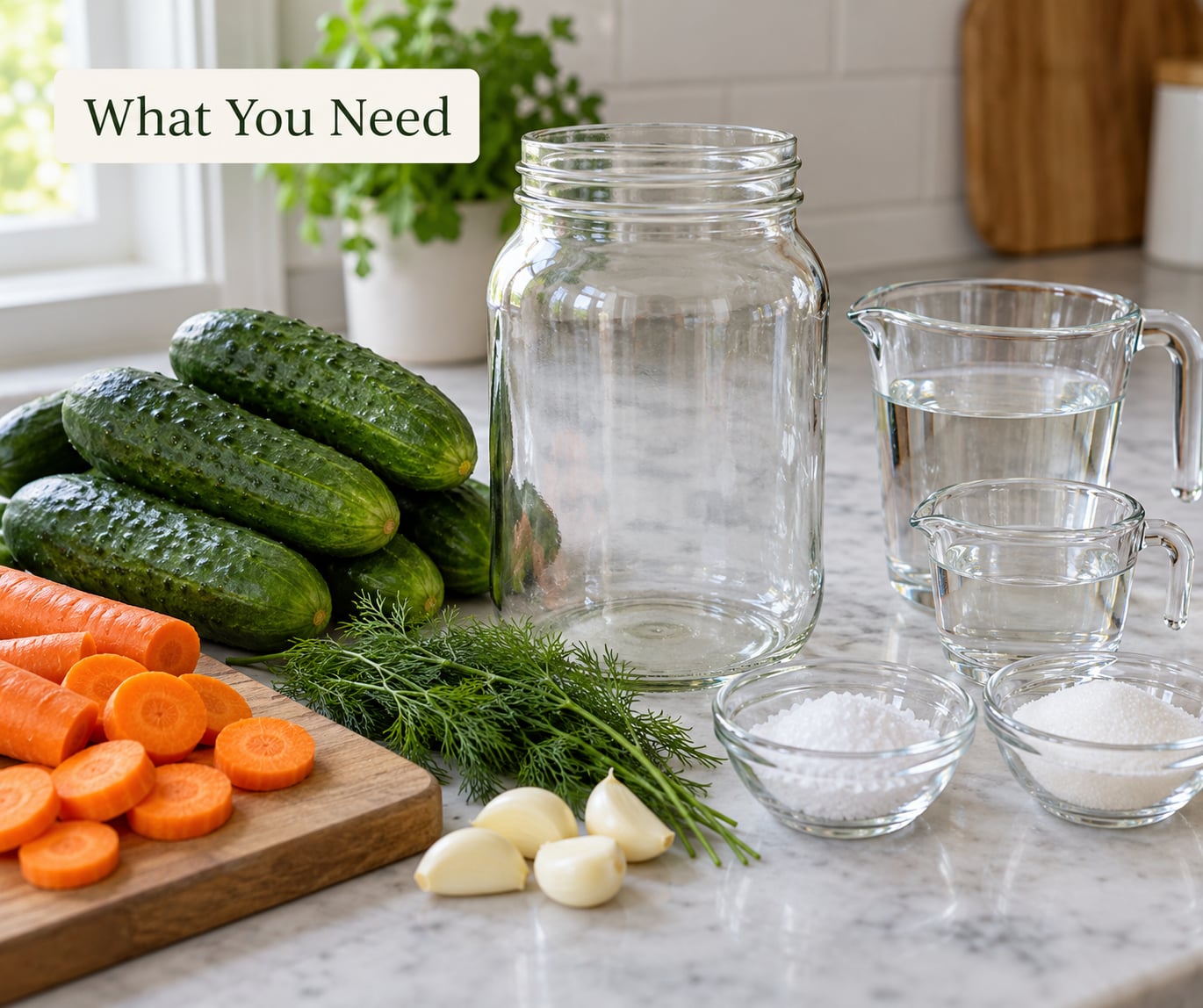
The basic batch fits one clean quart jar, and every measurement below assumes that size. Doubling it for two jars is easier than halving it for one.
The basic brine (the 3-2-1 rule)
The most searched brine shortcut online is called the 3-2-1 rule, and it works because it is forgiving. Use 3 parts vinegar, 2 parts water, 1 part sugar. Salt and spices sit outside that ratio because they are seasoning rather than structure.
- 3 parts white distilled vinegar — 1 and a half cups (360 ml)
- 2 parts water — 1 cup (240 ml)
- 1 part granulated sugar — half a cup (100 g)
- Pickling or kosher salt — 2 tablespoons (36 g)
- Fresh dill — 4 to 5 fronds, or 2 tablespoons dill weed
- Garlic — 4 to 5 cloves, lightly crushed
- Pickling spices — 1 to 2 teaspoons, optional but good
I prefer white distilled vinegar because its acidity is consistent and it keeps the brine clear. Apple cider vinegar works and gives a softer, fruitier note, but it clouds the liquid and tastes rounder. Both are fine for refrigerator pickles.
Vegetables that work
Firm, low-moisture vegetables pickle best. Cucumbers lead the list, sliced into spears or rounds.
- Cucumbers — pickling or Kirby varieties, or Persian for smaller jars
- Carrots — cut into coins or sticks
- Radishes — halved or in thin coins
- Onions — sliced thin, or pearl onions left whole
- Bell peppers and jalapenos — rings, seeded
- Green beans — trimmed, snapped in half
- Cauliflower and broccoli florets — blanch two minutes first
- Grapes — the classic sweet pickle, add 3 quarters cup more sugar
Skip anything watery. Fresh tomatoes and soft summer squash turn to mush in a vinegar brine, no matter how careful you are.
Equipment
You need a wide-mouth glass jar with a screw lid, a small saucepan, and a ladle or measuring cup. A jar lifter and a jar wrench matter only if you plan to move jars around hot.
Two small tools are worth the drawer space. A crinkle cutter turns plain coins into wavy ones, and a mandoline makes cauliflower and radishes uniform. Neither changes the flavor, and both cut prep time roughly in half.
Run any jar and lid through the dishwasher, or wash them in hot soapy water and let them air dry completely. You do not need to sterilize jars for refrigerator pickles, because the vinegar and the refrigerator do the work that heat would otherwise do.
Step-by-Step: How to Make Refrigerator Pickles
1. Choose and prepare the vegetables
Buy small, firm cucumbers if you can. Pickling varieties have thicker skins, fewer seeds, and denser flesh, which is exactly what you want to stay crisp. English and hot house cucumbers peel thin and go soft faster.
Wash everything under cold running water and dry it thoroughly. Moisture you leave behind dilutes the brine and makes the surface of the vegetable a place where bacteria can settle.
Trim the ends and cut cucumbers into spears or 1/4-inch coins. A lot of home cooks salting cucumbers first and letting them sit, but that draws out water and softens them, which is the opposite of what refrigerator pickles are known for. Skip it.
You can tell the cut is right when the pieces stand on their own in the jar without needing to be pressed down. If they have to be crammed in, they will bruise and turn limp.
2. Make the simple vinegar brine
You do not have to boil the brine for refrigerator pickles, but heating it briefly is what makes the best batch. Bring the water, sugar, and salt to a boil and stir until both dissolve completely, then remove the heat and add the vinegar.
Boiling the water and sugar first matters because neither dissolves well in cold liquid. Adding the vinegar last, off the heat, keeps its flavor from turning harsh. Once the brine hits your vegetables, it should be hot enough to wilt a fresh dill frond on contact.
Adjusting the balance is simple. More vinegar gives sharper acidity and more tender texture, which is not what you want here, so keep vinegar near a third of the liquid. More sugar softens the sharpness and is essential for grapes. Less salt is the standard adjustment if you are watching sodium, though the pickles need some salt to stay safe and to taste like pickles.
3. Pack the jars without overcrowding
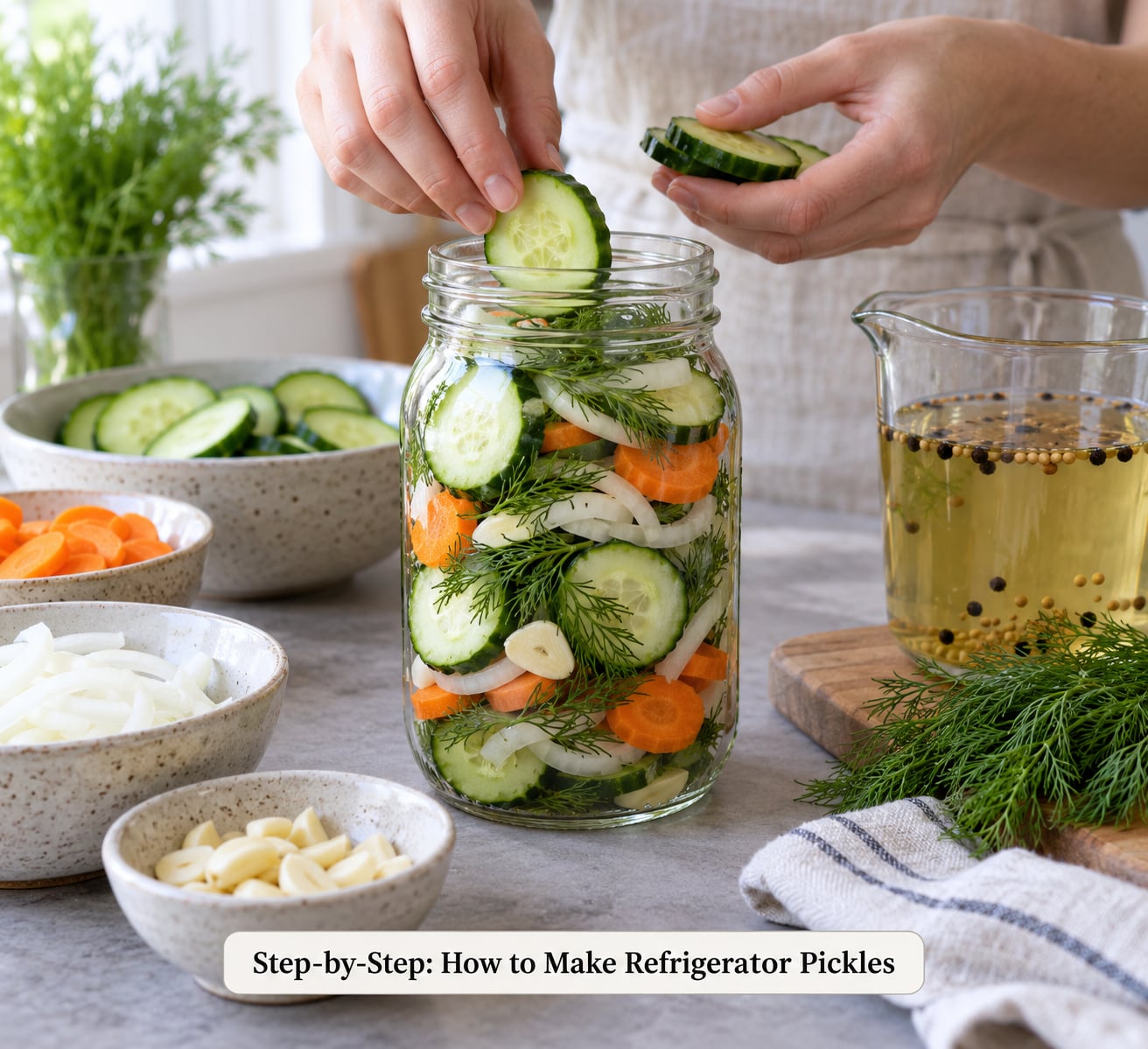
Layer aromatics and spices at the bottom of the jar. Dill on the bottom seasons the whole jar, since flavor migrates downward and pickles eaten early sit near the top and taste milder. Tuck a few garlic cloves in there too, then hold the rest back for the sides and the top.
Pack the vegetables in on top, pressing gently to fit. Stop when you have about three quarters inch of headspace at the top, so the brine has somewhere to rise as it cools and the liquid expands on the way down. Scatter mustard seed, peppercorns, or red pepper flakes between the layers if you are using them.
Those trapped air pockets are the reason some batches cloud or grow film. Fill to the headspace line, no further, and use a fresh jar for every batch.
4. Pour the brine and cool
Ladle the hot brine over the packed vegetables until everything is covered. Stir gently with a clean utensil to release air bubbles trapped between the pieces.
Then let the jar cool on the counter until it reaches room temperature, which takes roughly an hour. Putting a hot jar straight into the fridge warms the surrounding food and raises the temperature inside the jar, and a jar that spends hours above 40 degrees Fahrenheit is not a safe place to keep pickles.
Refrigerator pickles do not require a water-bath canning process when they are made for immediate refrigerator storage. Vinegar pickles are not acidic enough to be stored on a shelf, so do not attempt to seal them for pantry storage. Put them in the fridge the same day.
If you want the pickles cool faster, sit the jars in an ice bath in the sink for 15 minutes before refrigerating. Cold brine gives noticeably crisper cucumbers than warm brine, and it shortens the waiting time.
5. Wait for the pickles to pickle
Flavor arrives faster than the surface suggests. Within four hours the cucumbers are lightly flavored and still very crunchy, which some people like. At 24 hours they are properly sour and dill-forward, and this is where most batches get eaten.
By day three, the flavor has moved deeper into the flesh and the texture is noticeably softer than the same pickles on day one. That gradual change is normal and it is not spoilage.
A good visual cue is the brine itself. When the liquid looks evenly cloudy from tiny oil droplets and dissolved sugars, the pickles are working. The vegetables should look glossy and slightly translucent at the edges, with no discoloration at the surface above the brine.
6. Serve and store your refrigerator pickles
Drain a few into a bowl and taste them straight. Serve refrigerator pickles alongside sandwiches, burgers, and grilled meat, or pile them onto a board with cheese and crackers. Sliced pickles also make a fast coleslaw that stays crunchy all day, since both rely on vinegar rather than heavy dressing to keep the texture lively.
Always use a clean fork and spoon rather than reaching in with fingers. The brine and vegetables keep for about three weeks in a refrigerator held at 40 degrees Fahrenheit or below, and many people eat them for two months with good results.
The texture softens the entire time, so plan on eating the jar within about a month if crunch matters. Keep the liquid covering the vegetables at all times, since anything sitting above the brine dries out and can discolor. If you make this as part of a batch of appetizers you can prep ahead, label the jar with a permanent marker and the date so you use the oldest first.
Save the leftover brine for a quick second batch. Reusing it for thin-sliced cucumbers or radishes for another 4 hours works well, since the brine is still acidic. Do not reuse it as a base for a full batch of raw vegetables.
Common Mistakes and How to Fix Them
Soft pickles, cloudy brine, and bland flavor are the three failures people hit most often. Each one traces back to something that happened before the brine was poured.
Why my pickles are limp
Cucumbers were packed too tightly, or the brine was too weak to penetrate the dense flesh. Cut uniform pieces, leave headspace, and keep the vinegar near a third of the liquid.
The fix for an already-soft batch is not to put it back in the brine. Once the pectin breaks down, crunch does not come back. Add crunch to the next batch by chilling the cucumbers in ice water for 20 minutes before packing them, and by using small, firm pickling cucumbers.
Two other tricks help. A tannin leaf, usually a grape, cherry, or oak leaf, keeps pickles crisp, and a pinch of calcium chloride sold as Pickle Crisp works better than alum. Use about a quarter teaspoon of calcium chloride per quart jar.
Why my brine is cloudy
Cloudy brine in refrigerator pickles comes from the garlic and the mustard or spice seeds breaking down and dispersing, and from using apple cider vinegar. It looks alarming and is usually harmless.
A true spoilage signal is different. Look for a film on top of the liquid, a fuzzy spot on a vegetable, a slimy texture, or an off smell when you open the jar. Discard the batch if you see any of those.
To keep the brine clear, slice garlic thinner, keep seeds intact, and use white vinegar. Cloudiness from seeds will not affect flavor.
Why my pickles are bland
You probably packed the spices and dill at the top of the jar, where the early pickles never reach them. Pack aromatics at the bottom, use fresh dill rather than dried, and give the batch at least 48 hours before judging it.
Another cause is undissolved salt. If you skipped the boil, the sugar and salt sit in the bottom of the jar and the top of the batch never gets seasoned. Bring the brine to a boil first and stir until both are gone.
Why my pickles are too salty
Salt concentration depends on your ratio and on the vegetables releasing water into the brine, which dilutes it over time. For a lower-sodium batch, cut the salt to 1 tablespoon and add 2 extra tablespoons of water.
Do not go further than that. The salt is doing preservation work alongside the vinegar and the refrigerator, and a bland brine with too little salt does not keep well.
Why my spices taste bitter
Whole pickling spices contain oils that turn bitter when the brine simmers for a long time. Boil only the water, sugar, and salt, then add vinegar and spices off the heat. You can also tie the spices in a small cheesecloth bag if you prefer clean slices.
Why do my pickles smell off or have film
Either the jars stayed above refrigerator temperature for too long, or a utensil introduced something from the pantry. Cool to room temperature before refrigerating, refrigerate the same day, and never use a spoon that has touched potato salad.
Scrub jars in the dishwasher, air dry them fully, and use a fresh lid if the old one ever smelled like tomato sauce. Also date each batch so you can toss anything older than about six weeks without hesitation.
Frequently Asked Questions
How long do refrigerator pickles take to be ready?
You can eat them after about 4 hours, when they are lightly seasoned and still very crunchy. Most cooks wait 24 hours, which gives the brine time to reach the center of each cucumber for a proper sour, dill-forward flavor. Flavor keeps developing for about a week, and the texture softens the entire time, so a batch made today is at its best within the first few days.
Do refrigerator pickles need to be canned or boiled?
No. Refrigerator pickles are not shelf stable, because vinegar brine alone is not acidic enough to make them safe for pantry storage. Bring the water, sugar, and salt to a boil just long enough to dissolve them, then add the vinegar off the heat. Once cooled, the jars go straight into the refrigerator and stay there. Never attempt to water-bath can these for storage.
How long do refrigerator pickles last in the refrigerator?
Expect about three weeks of good quality at 40 degrees Fahrenheit or below, and many people eat refrigerator pickles for two months without a problem. The safety window is generous, but the crunch fades steadily, so plan on using jars within about a month if texture is the point. Discard a batch that develops film, fuzz, slime, or an off smell.
What vegetables are best for refrigerator pickles?
Firm, low-moisture vegetables hold their texture best. Cucumbers lead the list, followed by carrots, radishes, onions, bell peppers, green beans, cauliflower, and broccoli florets. Blanch cauliflower and broccoli for two minutes first so they absorb flavor evenly. Avoid watery produce like fresh tomatoes and soft summer squash, which turn to mush in a vinegar brine regardless of technique.
Why are my refrigerator pickles cloudy or slimy?
Cloudy brine usually means the garlic or the mustard seeds have broken down and dispersed, which is harmless, especially with apple cider vinegar. Sliminess is different and comes with fuzz, film, or an off smell, which signals spoilage. Discard anything slimy. To keep the brine clear, slice garlic thinly, keep whole seeds intact, and use white distilled vinegar.
Can I make refrigerator pickles without sugar?
Yes, and the pickles will be noticeably sharper. Sugar in a pickle brine balances the acidity of the vinegar rather than adding bulk, so leaving it out makes the flavor more aggressive and can soften the cucumbers faster. Use 2 tablespoons of honey as a milder substitute if you want some rounding without the sharpness. The same caution applies to salt, which does real preservation work.
Conclusion
Start with the vegetables: small, firm cucumbers cut into uniform pieces, washed and dried properly. Then make the brine, pack the jar with dill and garlic at the bottom, pour it over hot, and let the jar cool on the counter before it goes in the refrigerator.
That is the whole method. Wait about 24 hours, taste one, and adjust the sugar or vinegar on your next batch. If crunch is the goal, add an ice bath for the cucumbers and a small pinch of calcium chloride, and take the two habits into every pickle you make from here on.