
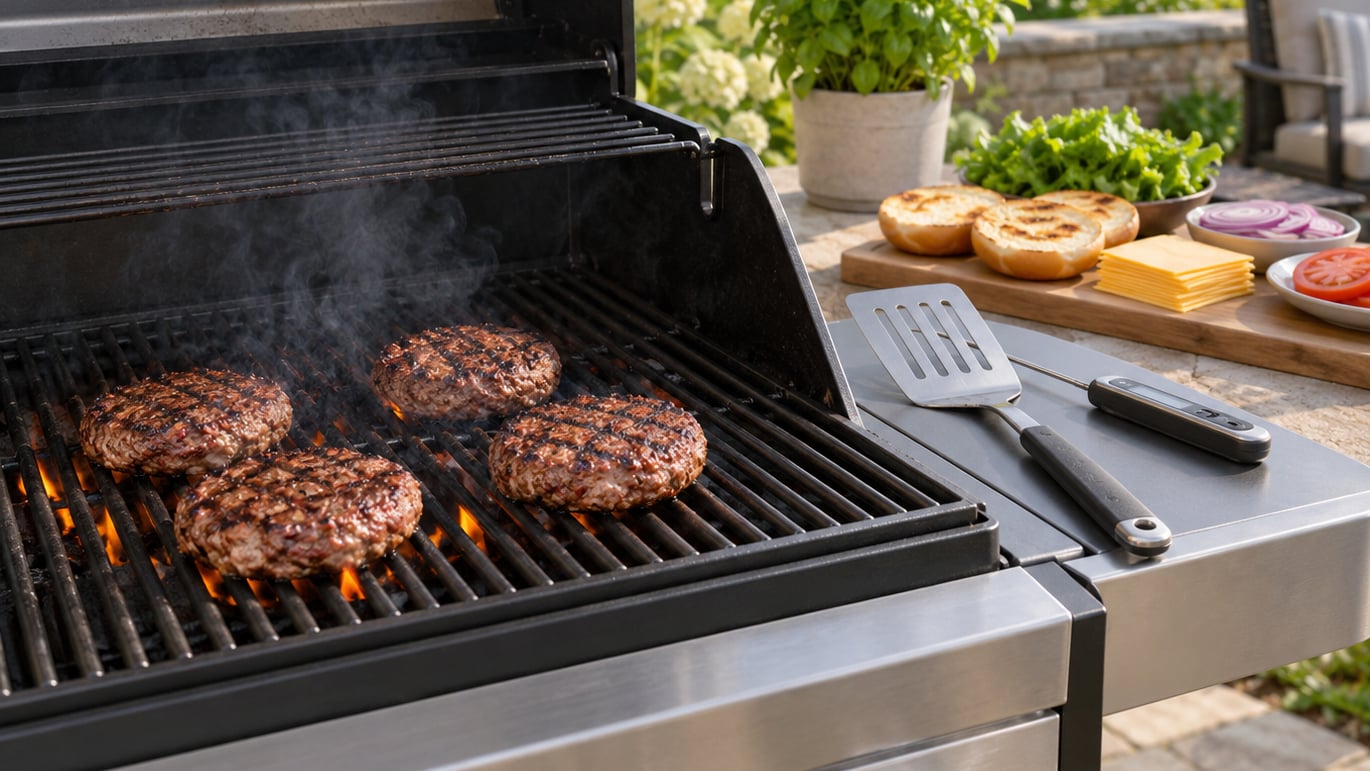
To grill burgers on a gas grill, preheat to 400-450F, brush the grates clean, and cook 3/4-inch patties for 3-4 minutes per side with the lid closed until the center reaches 160F. From ignition to plate, that is about 25 minutes, and most of it is waiting for the grill to heat up.
The reason gas is easier than charcoal is control. Each burner is a dial, so you can run one side hot for searing and turn another down as a cooler finishing zone. Get those two zones right and you stop guessing.
What You Need
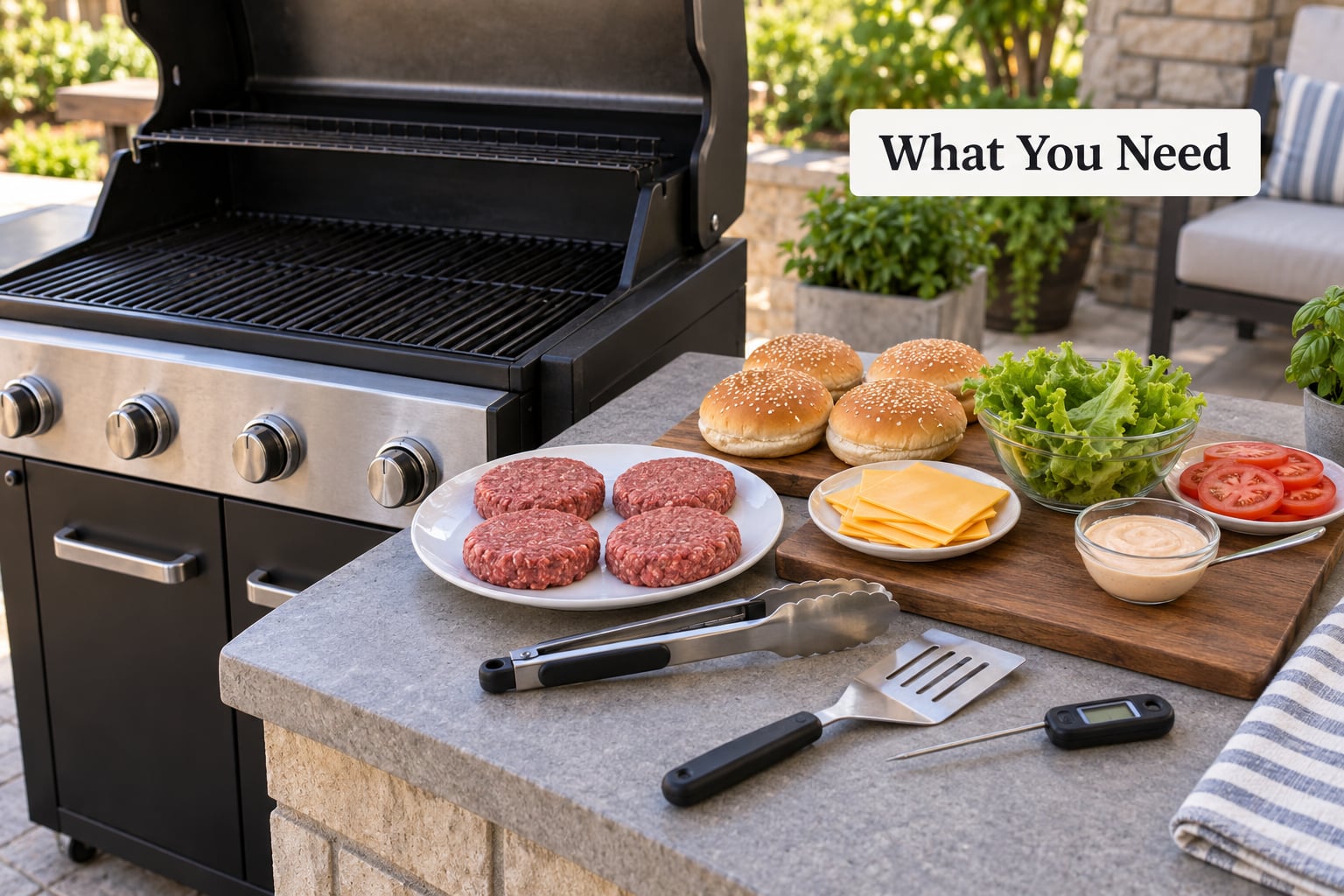
None of this is exotic, and most kitchens already have it. What matters is that the tools support one goal: heat control plus a readable doneness check.
- A gas grill with at least two burners. Three or more gives you a real hot zone and a cool zone instead of a compromise. Three-burner models put the middle burner directly over the middle of the grate, which is also the trick for an even preheat.
- 80/20 ground chuck or ground beef. That ratio renders fat as the patty cooks, which is what keeps the inside juicy. Lean 90/10 patties dry out faster and need a shorter visit on the grill.
- Buns sized to the patty. Brioche buns toast well and take sauce without going soggy. Let them sit at room temperature while the grill heats so they are not cold in the middle.
- Cheese that melts. American and Swiss melt cleanly at heat. Aged cheddar often needs the patty off the fire for a minute to soften.
- Tongs and a wide, thin spatula. A thin spatula slides under a patty instead of tearing it. A slotted spatula drains drips and grease flare-ups.
- An instant-read thermometer. This is the single item that separates a guess from a result. Push the tip into the side of the patty, touching neither metal nor bone.
- A grill brush or brass bristle brush and high-heat oil. Leftover carbon is the number one cause of sticking, and the oil is what lets you clean it off the hot grate.
Prep the toppings separately and keep them cold. A pile of warm lettuce on a hot bun turns into a salad by the time you sit down.
Step-by-Step: How to Grill Burgers on a Gas Grill
1. Preheat the gas grill and set up two heat zones
Turn every burner to high, close the lid, and give it 10-15 minutes. On a grill with an integrated thermometer, wait for 400-450F before the patties go on.
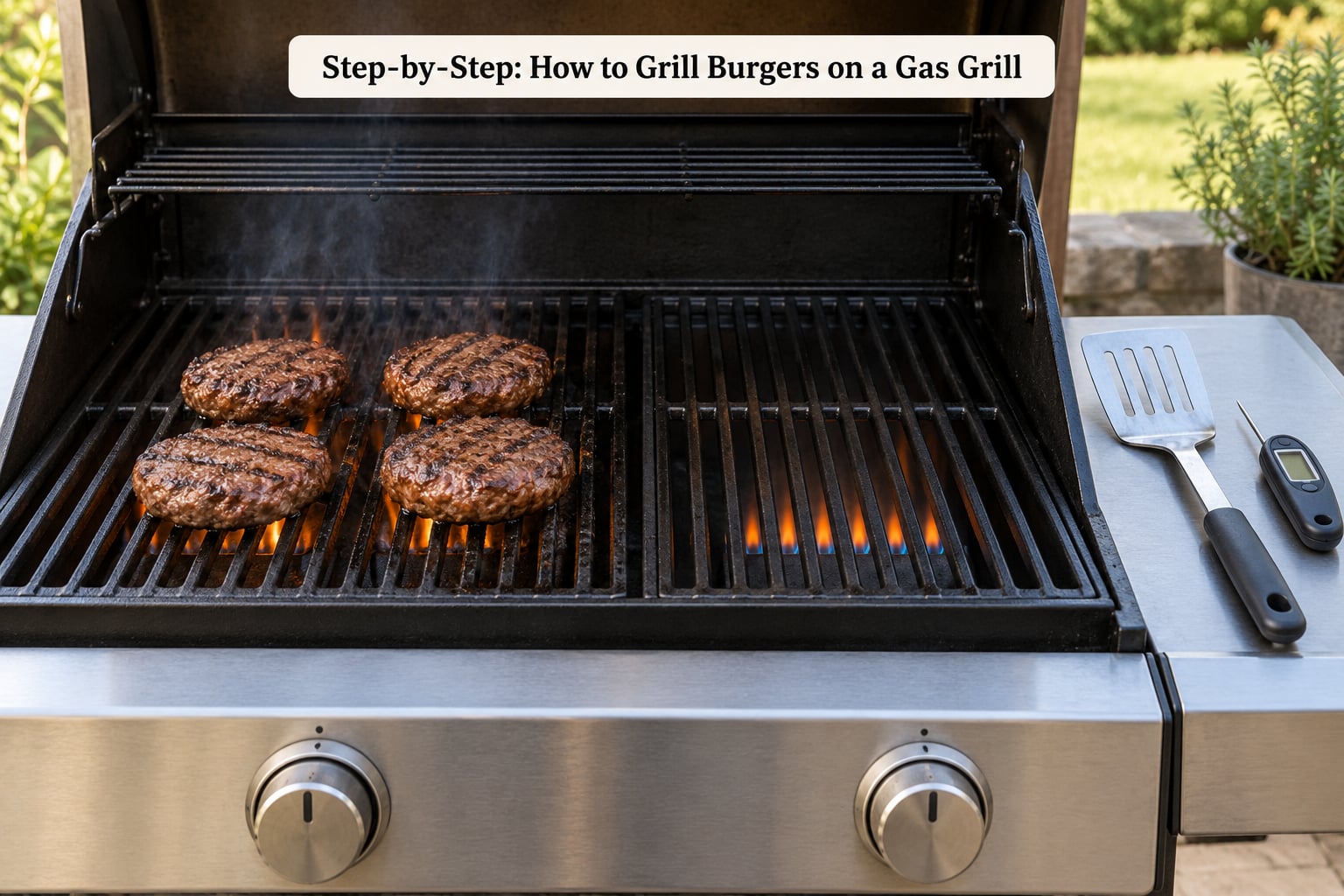
Then build your zones. Leave the burner you are cooking over on high for searing, and turn the far burner down to medium-low or off entirely. That cooler area becomes your parking spot for finishing burgers and toasting buns.
Ignition is the part worth doing slowly. Open the lid, turn the burner to high, then press the igniter and hold it a few seconds. If it does not catch within about five seconds, turn the controls off, wait a minute for the gas to clear, and try again. For natural gas models, follow the ignition steps in your manual rather than guessing at the sequence.
2. Prepare the burger patties without overworking them
Handle the meat as little as possible. Overworking melts the fat into the paste and you lose the texture that makes a burger worth eating.
Lightly indent a dimple in the center of each patty with a thumb. That single move stops the patty from doming as it cooks. Do not press holes through the meat, and do not pack the beef tightly. If yours are ballooning anyway, the usual culprits are listed in why burgers puff up in the middle.
Season both sides right before the patties hit the grate, using salt and pepper or a coarse blend. Salt applied an hour ahead starts pulling moisture out of the surface, which costs you the crust.
While the grill heats, scrape the grates with the brush until the carbon is gone, then wipe them with a paper towel dipped in oil. Burgers that stick almost always stuck to carbon, not to clean steel.
3. Place the burgers on the hot grates
Lay patties down with tongs, flat side first, on the direct-heat side. Leave about an inch between them so hot air can circulate and the flame underneath stays even.
Set a timer as soon as the first patty lands. That timer is for your hands, not the meat. Most home-grilled burgers go wrong between the grates and the plate.
4. Cook the first side without flipping too early
Leave the patty alone for 3-4 minutes with the lid closed. Closing the lid turns the grill into a small convection oven, so heat reaches the top of the patty while the bottom sears.
Watch for the crust, not the clock. When juices bead on the surface, run the spatula under the edge and the patty releases on its own. If you have to saw at it, it is not ready yet.
Never press the patty with the spatula. Every push squeezes out juice, and that is how you get a dry burger with a nice crust.
5. Flip, season, and add cheese
Flip once and only once. Two flips is one flip too many. Season the second side now, lightly, if you want more pepper or garlic.
Put the cheese on during the last minute, lid closed, so it melts over the patty without the burger spending extra time on the fire. It should drape and soften, not form a rubbery sheet.
6. Check the burgers for doneness and rest them
Insert the thermometer into the side of the patty, aiming for the thickest part without touching the grate. Pull it when it reads a few degrees below your target, because carryover cooking keeps adding heat after the patty leaves the fire.
For ground beef, the USDA recommends 160F for safety. USDA guidance puts ground poultry at 165F and whole cuts of beef, pork and lamb at 145F with a three-minute rest.
| Doneness | Internal temperature | Approximate time on a 400-450F gas grill, lid closed |
|---|---|---|
| Rare (center still red) | Below 145F, not recommended for ground beef | 2-3 minutes per side |
| Medium-rare | 130-135F, not recommended for ground beef | 3 minutes per side |
| Medium | 140-149F, not recommended for ground beef | 3-4 minutes per side |
| Medium-well | 150-155F, not recommended for ground beef | 4 minutes per side |
| Well-done (USDA safe) | 160F or higher | 4-5 minutes per side |
Those times assume a 3/4-inch patty. A thin smash-style patty cooks in two minutes a side, and a thick bacon-cheese patty may need 20 minutes total. Move finished burgers to the low burner and rest them 3-5 minutes so the juice settles instead of running into the bun.
7. Toast the buns and assemble
Split the buns, lay them cut-side down on the cooler end of the grate, and give them 30-60 seconds. Cut sides toasting, butter side away from the fire.
Build in this order: sauce on the bottom bun, lettuce or tomato, patty, cheese, then whatever you like on top. Assemble to order and serve fast. A burger that sits assembled for five minutes goes soft at the bottom and warm at the top.
Common Mistakes
Nearly every disappointing burger traces back to one of a handful of habits. Here is what goes wrong and the correction.
Burgers sticking to the grates
Cold patties release worse than warm ones, and dirty grates grab the meat before the crust forms. Take the patties out of the fridge 15 minutes ahead, scrape the grates until they shine, and wipe them with oil before preheating. Moving a stuck patty almost always tears it, so give it the full first-side time instead of yanking it early.
Blackened outside, raw center
That means the heat is too high or the lid is open. Drop the burner to medium-high after preheat, close the lid, and check with the thermometer before you cut into it. Cutting early is also how the center looks undercooked when it was merely resting.
Burgers shrinking into hockey pucks
Fat renders and protein tightens when the patty hits high heat, so cooking fast and hot costs you volume. Back off to medium-high, cook once, and stop pressing. Keeping the patty slightly underdone before the rest also limits the squeeze.
Dry patties
Use 80/20 beef, keep the meat cold while you shape it, and skip the pressing. A short rest at the end returns juice to the center. Extremely lean patties are already on borrowed time, so give them less time on the grate, not more.
Flare-ups spitting acrid flavor
Rendered fat drips onto the burner and flashes back up. Do not move a burger into a flare-up to douse it; that is how the fire travels to the lid. Move the patty to the cool side of the grill, close the lid, and let the flare die out before returning it.
Preventing them is easier: start on a cooler grid with a well-used cast iron grate, trim away loose chunks of fat, and lean the excess out toward the grease channel. A drip pan with a couple of inches of water under the grate also catches what drips. For a crowd, cook in batches rather than crowding the grate, since packed patties steam each other and never sear.
Grill that will not get past 350F
If the grill plateaus at 350F, something is limiting airflow or fuel. Work through it in order: check the propane tank is full and the regulator is not dented, confirm the burners are clean and not blocked, replace the battery if it is a battery igniter, and make sure the lid is fully closed so the grill can pressurize.
On an older grill, the small holes along a burner tube can clog with insect nests and corrosion. Shut everything down, let it cool, and clean the tube with a wire brush. A grill that reads 350F on the lid thermometer when the grate is actually much hotter is simply miscalibrated, so verify with an independent thermometer before blaming the burners.
Frozen patties cooking unevenly
Frozen store-bought patties release water as they cook, which steams the meat instead of searing it. Thaw them in the fridge overnight where you can, or cook them with the lid closed at a moderate 350-375F and turn them every 3-4 minutes so the outside does not scorch. They will not crust as well as fresh beef, and that is just the trade.
Frequently Asked Questions
How long do you cook hamburgers on a gas grill?
On a gas grill preheated to 400-450F, a 3/4-inch beef patty takes about 3-4 minutes per side with the lid closed, so 10-15 minutes total including the flip. Check with an instant-read thermometer and pull at 160F for a safe ground beef burger. Thinner patties cook faster and thicker ones slower.
Should I grill burgers with the lid open or closed?
Keep the lid closed for most of the cook. Closing it traps heat so the top of the patty cooks at the same time as the bottom, and it contains flare-ups instead of letting them lick the roof of the grill. Open the lid only for the first minute or two to build a crust, and again when you want more char marks.
How do I avoid flare ups when grilling burgers?
Trim loose fat, start the patties over a cooler section of grate, and turn down the burner under the drip zone. When a flare-up starts, move the patty to the far, cooler side of the grill and close the lid rather than moving it through the flames. A drip pan with water under the grate catches grease before it burns.
What is the 5-6-7 rule for burgers?
The 5-6-7 rule is a restaurant grill shortcut for timing. Cook about 5 minutes on the first side, 6 minutes on the second, and rest the burger for 7 minutes before serving. It assumes a thick patty on a hot grill. Treat it as a memory device and still confirm doneness with a thermometer.
Why won’t my gas grill get hotter than 350 degrees?
Common causes are an empty propane tank, a dented regulator, clogged burner ports, or a lid that will not close tightly enough to build heat. Verify the real grate temperature with a separate thermometer, since some built-in lid thermometers read low. If the burners look clean and the tank is full, the regulator or the igniter is the next thing to replace.
What are the most common mistakes when grilling hamburgers?
The big ones are pressing the patty with a spatula, flipping it more than once, salting too far ahead, grilling at full blast with the lid open, and skipping the rest. Each one costs you either juice or crust. Form patties loosely, dimple the center, flip once, cook with the lid closed, and rest before you build.
Start here: preheat to 425F with the lid closed, get the grates clean, and give your first patty a full 4 minutes untouched. Everything else, from cheese timing to toasting the buns, follows from those three things. Once you own that one move, learning how to make burgers that stay juicy is the natural next step.