
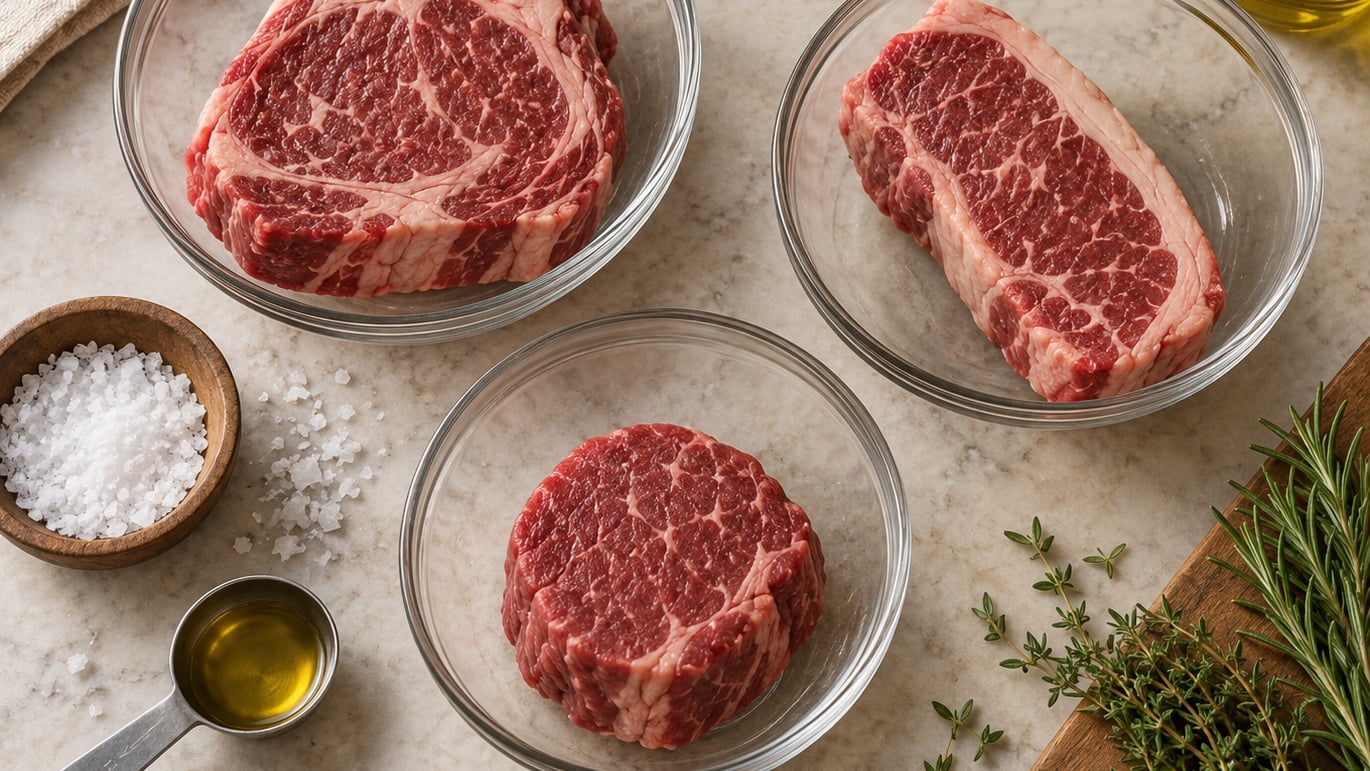
Most steaks need 30 minutes to 6 hours in the refrigerator, and 2 to 4 hours is the range where flavor really lands. Thin cuts like flank and skirt take 30 to 60 minutes so they stay tender, thick cuts like ribeye and tenderloin need little or no time, and tough cuts such as chuck handle 6 to 24 hours without any risk of turning mushy.
The reason there is no single number is that marinade timing depends on two things: how thick and dense the cut is, and whether your marinade is acid-based or salt-and-oil based. Acid has a ceiling. Salt does not.
So when you ask how long to marinate steak for the best flavor, the honest answer is a range tied to the cut, not a single clock.
Below is the timing by cut, the four-part marinade formula, and how to test the flavor before the steak gets past its best window. The ranges here still hold in 2026, and they match what experienced grillers report on cooking forums.
What You Need
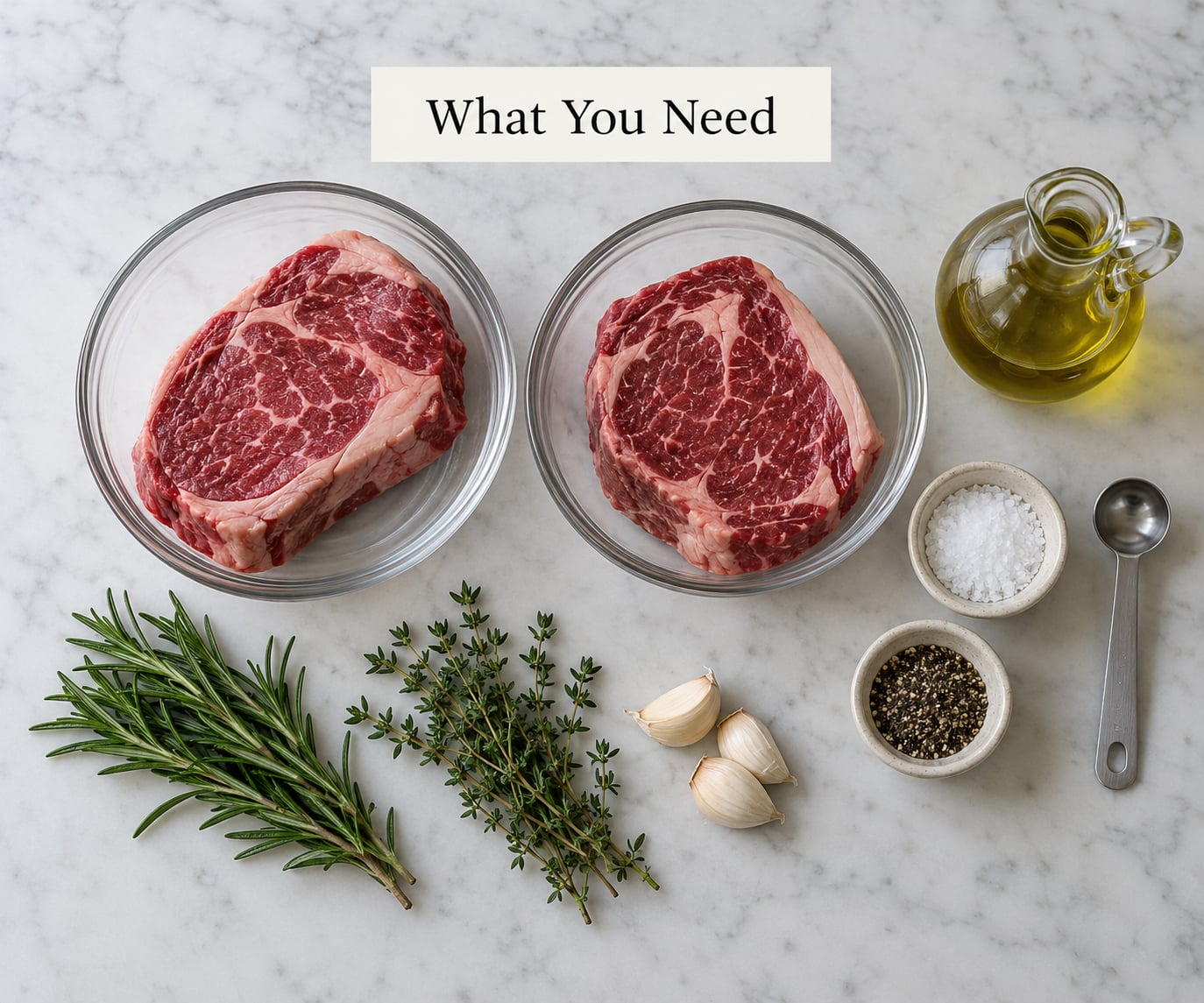
Timing only works if you know what you are timing, so gather these before you start. Everything here is common grocery-store or pantry material.
- The steak. Thicker cuts like ribeye, New York strip and tenderloin; mid-thickness cuts like sirloin, flat iron and tri-tip; thin or connective-tissue cuts like flank, skirt and chuck steak.
- Salt. Kosher salt or coarse sea salt, roughly 1 teaspoon per pound of beef.
- An acid. Lemon or lime juice, red wine vinegar, balsamic vinegar, rice vinegar or Worcestershire sauce.
- A fat. Olive oil, avocado oil or a small amount of melted butter.
- Aromatics. Garlic, shallot, black pepper, smoked paprika, chili flakes, and fresh rosemary or thyme.
- Umami boosters. Soy sauce, Worcestershire sauce, tomato paste or a spoon of Worcestershire with water.
- A container. A zip-top bag works better than a bowl because the marinade sits flat and touches the whole steak. A shallow glass dish is fine too.
- Room in the refrigerator. Keep the steak below 41°F at all times, which means it never sits on the counter while you shop or prep.
A kitchen thermometer is worth having. It turns marinating time from a guess into something you can measure.
Step-by-Step: How Long to Marinate Steak
1. Choose the Right Steak Cut
Thickness and density decide how far flavor can travel. Marinade seasoning works on roughly the first 1/8 inch of surface, so a 1-inch ribeye gets seasoned on the outside and stays rare and beefy in the middle. A 1/4-inch flank steak is nearly all surface, which is why it seasons fast and overcooks just as fast.
Fat content changes the picture too. Ribeye and New York strip have enough intramuscular fat to stay tender with almost no marinade, while lean sirloin and tenderloin benefit from a short salt-forward soak rather than a long acid bath.
If you want a number before you start: thin or lean cuts get 30 minutes to 2 hours, thick fatty cuts get 30 minutes to 4 hours, and tough or connective-tissue cuts get 4 to 24 hours.
2. Pick a Marinade and Set the Time
Build the marinade in four parts: salt or soy for seasoning, acid for brightness, fat to carry flavor, and aromatics for the character. That is the whole formula, and each part has a different job.
Acid-based marinades — anything with citrus, vinegar or Worcestershire — have a hard ceiling of about 2 to 6 hours for most cuts. The acid denatures protein on the surface, which is what softens it, but keep going and that surface turns pasty and loses its texture.
Salt-and-oil marinades have no such ceiling. Soy sauce, Worcestershire, garlic, pepper and oil can work on chuck and skirt for 24 to 72 hours in the refrigerator, which is what many regular grillers actually do.
Match the strength to the cut. Strong, sharply acidic blends suit flank, skirt and sirloin where you need the lift. Delicate blends suit ribeye, where you want seasoning, not perfume.
3. Marinate Under Refrigeration
Put the steak in a zip-top bag with the marinade, press out the air and seal it flat so the liquid touches every face. Turn the bag over once an hour or so for even contact, or give the bag a gentle massage when you go to check on it.
Keep the whole thing in the refrigerator the entire time. Raw beef should never sit above 41°F, and the USDA two-hour rule means no more than two hours at room temperature before cooking, one hour if the room is above 90°F.
Do not crowd the bag. If steaks are pressed tightly together, the liquid cannot reach the edges and those spots stay bland.
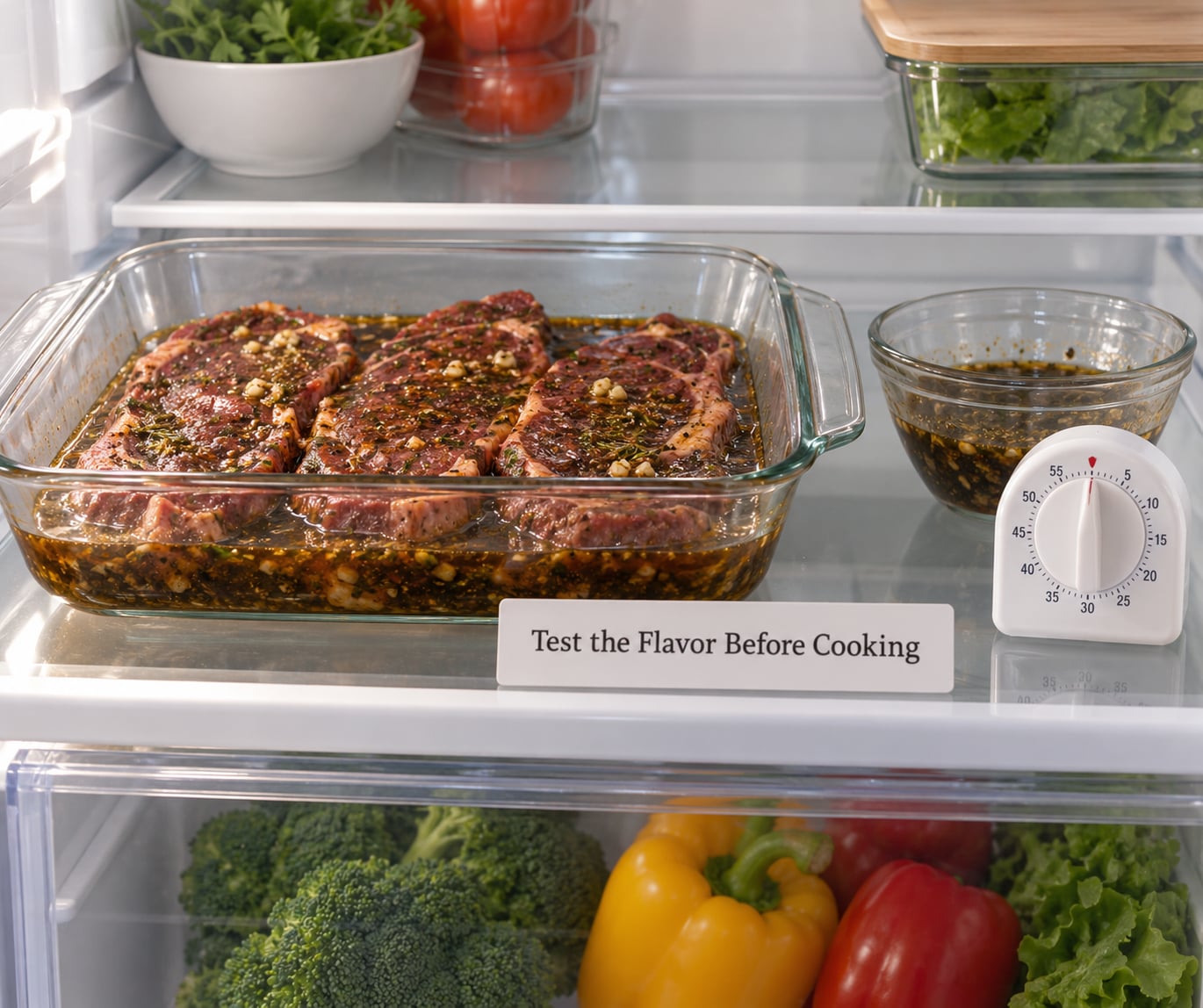
4. Test the Flavor Before Cooking
Do not wait for the maximum time on the label. Pull the steak a little early and check it. Press a fingertip lightly into the surface: properly marinated beef feels slightly tacky and smells of garlic, herbs or soy rather than raw meat.
If the marinade is strong, taste a small dab of the liquid from the bag. Remember that the sauce reduces on the grill and concentrates, so a marinade that tastes right raw can taste salty once the juices dry up.
Stop marinating the moment the surface aroma smells seasoned. That is your cue, not the clock. Then drain the steak, pat the surface dry with paper towels and cook. A wet surface steams instead of browning, and you lose the crust.
Marinating Time by Steak Cut
Here is how long to marinate steak by cut, with separate columns for an acidic marinade and a salt-and-oil marinade. Both columns assume the steak stays refrigerated the whole time.
| Steak cut | Typical thickness | Acid-based marinade | Salt and oil marinade |
|---|---|---|---|
| Flank steak | 1/4 to 1/2 inch | 30 to 60 minutes | 2 to 6 hours |
| Skirt steak | 1/4 to 1/2 inch | 30 to 90 minutes | 4 to 12 hours |
| Sirloin steak | 1 to 1 1/2 inch | 1 to 3 hours | 4 to 12 hours |
| Flat iron steak | 1 inch | 1 to 3 hours | 4 to 12 hours |
| Tri-tip | 1 to 1 1/2 inch | 2 to 4 hours | 6 to 24 hours |
| Ribeye | 1 to 1 1/2 inch | 30 to 90 minutes | 2 to 6 hours |
| New York strip | 1 to 1 1/4 inch | 30 to 90 minutes | 2 to 6 hours |
| Tenderloin | 1 to 1 1/2 inch | 30 minutes or skip it | 1 to 4 hours |
| Chuck steak | 1 to 2 inch | 4 to 6 hours | 12 to 24 hours |
Two more approaches often beat marinating. A dry brine is salt mixed with pepper and spices, rubbed onto the steak and refrigerated uncovered on a rack for 4 to 24 hours. It seasons deeper than any wet marinade and leaves the surface dry for a better crust, which is why many experienced cooks use it on ribeye instead of marinating at all.
A wet marinade is for cuts that need acid or umami help. Plain salt and pepper needs no timing at all beyond seasoning an hour ahead, and it is where I start before I consider adding anything wet.
Common Mistakes That Ruin Marinated Steak
Leaving steak in acid far too long. Beyond about 6 hours, a vinegar or citrus marinade makes the surface pasty and dulls the beef flavor underneath. Fix: pull acid-marinated steaks early, and go with a salt-and-oil blend when you want a long soak.
Marinating at room temperature. This is the one mistake that is a safety problem, not a flavor problem. Fix: refrigerate from the first minute, and treat two hours at room temperature as an absolute limit.
Over-salting. Soy sauce and Worcestershire are salty, and the liquid reduces on the grill. Fix: dilute with oil and water, skip added salt, and taste the marinade before it goes on the meat.
Burning the marinade. Sugar, honey and Worcestershire scorch over direct heat before the steak gets done. Fix: use a two-zone fire, sear on one side away from direct flame, and finish on the cooler side.
Slicing with the grain. Cutting along the fibers makes even a well-marinated steak chewy. Fix: find the grain on the cut face and slice straight across it, which matters most on flank and skirt.
Reusing leftover marinade. It has touched raw beef. Fix: pour it out, or boil it hard for several minutes if you want a basting sauce. Never spoon it back over cooked meat.
Once the steak is off the heat, rest it 5 to 10 minutes before slicing. If you want the crust and the timing both, my method is in how to cook a steak in a cast iron skillet, and layering salt properly matters as much as the marinade does in how to season food as you cook.
Frequently Asked Questions
What is the 3-3-3 rule for steak?
The 3-3-3 rule is an old kitchen shorthand rather than an official guideline: season the steak with salt 3 hours before cooking, grill it for about 3 minutes per side, and rest it for 3 minutes before slicing. Cookers use it as a pacing trick, since it keeps everyone at the table at the same time. Treat the times as a guide and adjust for thickness and your grill.
Is a 30 minute marinade enough?
For thin or lean cuts, yes. Flank steak, skirt steak and strips picked up in 30 to 60 minutes because flavor only soaks into the outer 1/8 inch anyway. Thick fatty cuts like ribeye and New York strip do not need more than that either. Longer marinating only matters for tough cuts full of connective tissue, such as chuck, tri-tip and skirt.
Can you marinate steak overnight?
Yes, when the marinade is salt and oil rather than sharply acidic. Soy sauce, Worcestershire, garlic, pepper and olive oil can work on chuck, skirt and tri-tip for 12 to 24 hours in the refrigerator without hurting the texture. Skip the overnight soak for citrus and vinegar blends, which turn the surface pasty after roughly 6 hours.
Do steakhouses marinate their steaks?
Rarely for long. Most steakhouses dry-brine or heavily season the steak hours ahead, then cook it hard and fast with butter basting at the end. The wet acidic marinade is closer to a home-cook technique than a restaurant one. What you get from a steakhouse is technique and temperature control rather than a long soak.
Should I cut steak before I marinate it?
Usually no. Whole steaks season more evenly and keep their juices during cooking. Cutting first is worth it for a fajita-style strips or chunks, since more surface area means faster seasoning. If you do slice, cut against the grain and leave the time short, since thin strips go past the window fast.
What can I soak steaks in to make them tender?
For tenderness, an acidic soak works: 2 to 4 parts Worcestershire sauce or vinegar to 1 part water, with salt and aromatics, for 2 to 6 hours on a firm cut. Keep the liquid diluted so the acid does not dominate. Enzyme-based tenderizers such as papaya or bromelain work in 30 minutes but can turn the surface mushy if you overshoot.
Conclusion
Start thin or lean at 30 to 60 minutes, thick fatty cuts at 30 minutes to 4 hours, and tough cuts at 4 to 24 hours. Cut the time in half if your marinade is heavy on lemon or vinegar, and keep it refrigerated the whole way.
Then check the steak before the clock says so. The moment the surface smells of garlic, soy or herbs instead of raw meat, it is done marinating. Drain it, pat it dry, and get it on the heat.
If you are planning the wine to go with it, start with how to pair wine with steak for beginners.