
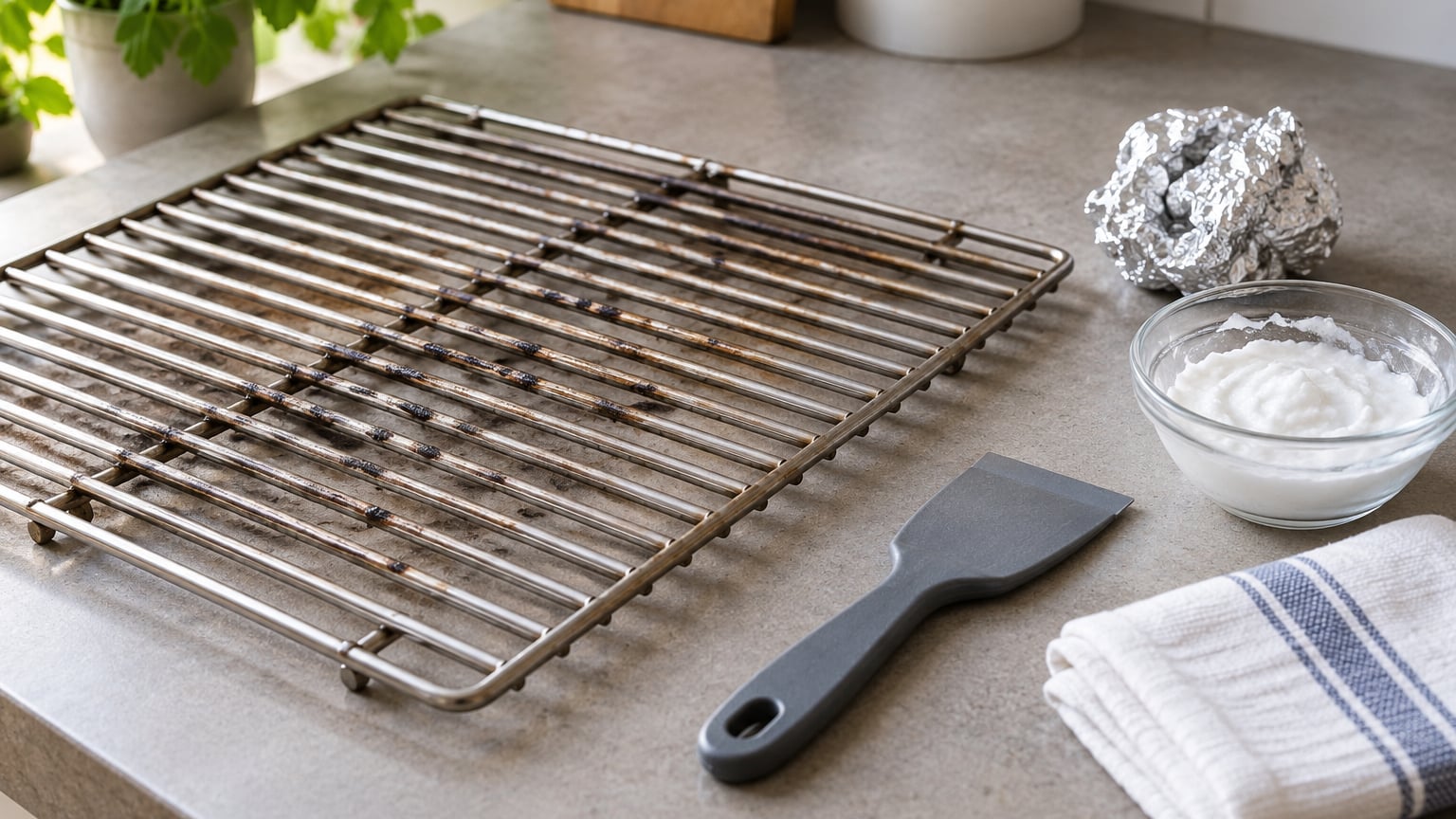
You can clean grill grates without a brush by using a crumpled ball of aluminum foil, a paste of baking soda and water, a burst of steam, dish soap with a nylon pad, or a grill-safe scraper. Each method uses heat or a mild acid to soften baked-on grease, then a non-bristle tool to lift it away. Most routine cleanups take under ten minutes once the grates cool.
The reason people reach for the wire brush in the first place is a grate that has been left too long, usually overnight or over a whole weekend. That’s also the situation where a brush is least effective, because loose steel bristles just rake across hardened carbon. The methods below attack the residue chemically first and mechanically second, which is why they work on the caked-on grime a brush can’t shift.
Nothing here needs a specialty product. A roll of foil, a box of baking soda, and a plastic scraper from the kitchen drawer cover most cases, and 2026 has not changed the physics of grease on hot metal.
Table of Contents
- How to Clean Grill Grates Without a Brush: Tools and Prep
- Step-by-Step: Five Brush-Free Ways to Clean Grill Grates
- Common Mistakes When Cleaning Grill Grates Without a Brush
- How to Know Your Grill Grates Are Clean and Ready to Cook
- Frequently Asked Questions
- Can I clean grill grates with vinegar instead of a brush?
- Is aluminum foil safe for cleaning grill grates?
- How do I clean rusty cast-iron grill grates without a wire brush?
- What is the best cleaning method for nonstick or porcelain grill grates?
- How often should I clean grill grates without a brush?
- Does baking soda remove grease and burnt food from a grill?
- Conclusion
How to Clean Grill Grates Without a Brush: Tools and Prep
Start by identifying what the grates are made of. The material decides how hard you can scrub and which chemicals are safe.
- Stainless steel tolerates scrubbing, heat and mild acids without much fuss. This is the forgiving grate.
- Cast iron also takes heat and scrubbing well, but it rusts if you clean it and then store it wet. It needs re-oiling straight after.
- Porcelain-coated grates chip. Abrasive salt, pumice and hard foil rubbing can wear through the coating and expose bare metal underneath.
Whichever material you have, put the grill in the open or in a well-ventilated spot and turn every burner off and the lid open before you do anything else. Gas lines and charcoal both need a moment to settle.
Gather what you’ll need before starting, so you are not holding a hot grate while hunting for a towel:
- A sheet of heavy-duty aluminum foil for the ball method
- Baking soda and water for the paste method
- A spray bottle and distilled white vinegar
- A plastic pan scraper, a wooden paddle, or the edge of a sturdy spatula
- A stiff nylon pad and a small amount of dish soap
- Long tongs, heat-resistant gloves, and a drip tray or old pan
- Paper towels and a heatproof surface to set the grates on
The last item matters more than it sounds. A grate laid on a cold counter or a wooden deck can warp the metal, and a wet grate on a hot deck can crack porcelain.
Planning a cook after the cleanup? Our guide to how to reheat steak without overcooking it assumes you have a clean grate ready and waiting, so do the grate first.
Step-by-Step: Five Brush-Free Ways to Clean Grill Grates
How to clean grill grates without a brush with aluminum foil
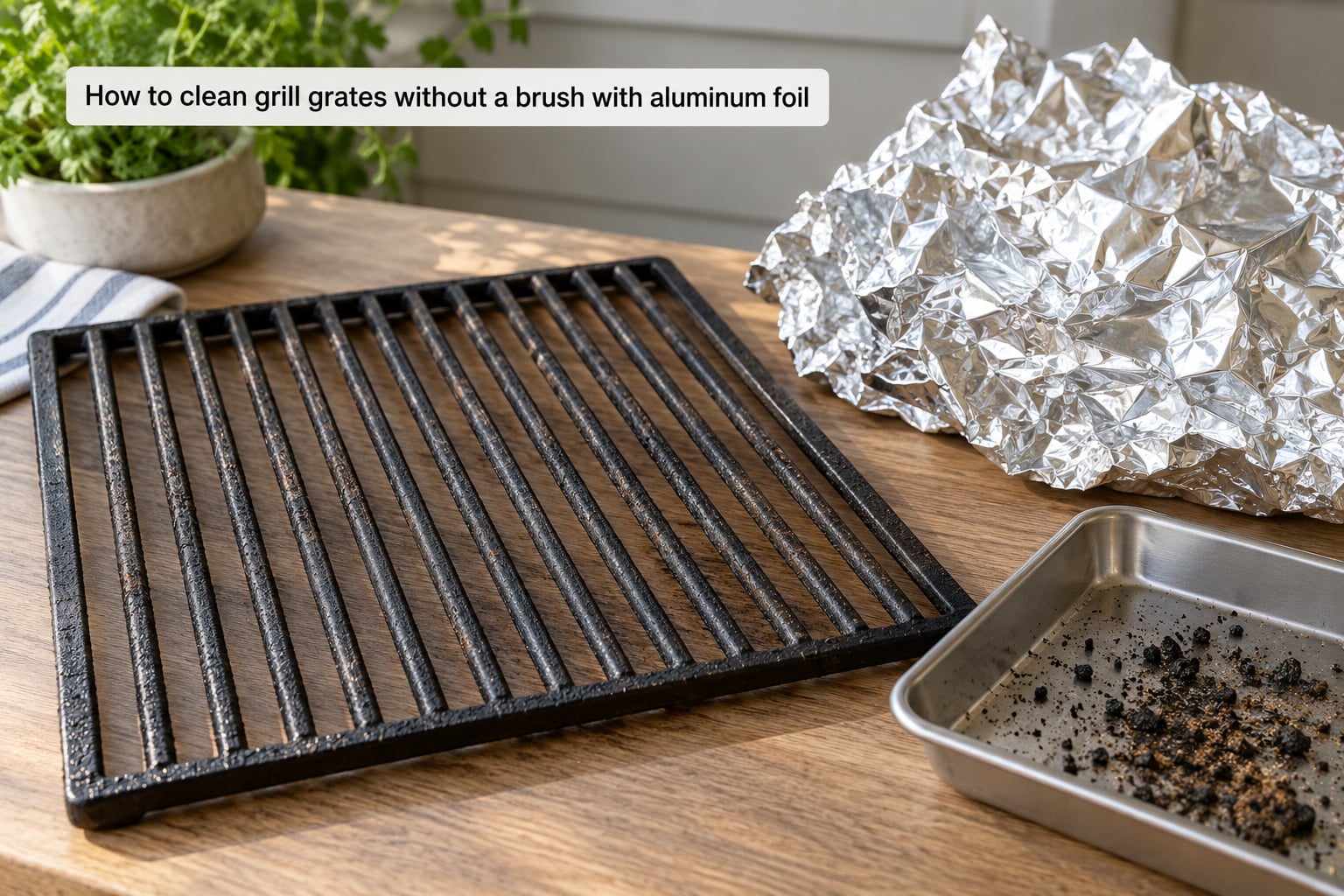
The foil ball is the long-standing substitute in grilling circles, and it works because the creases in crumpled foil form hard ridges that bite into carbon without being abrasive enough to scar most finishes.
- Pull the grate out once it is cool enough to handle comfortably, roughly 15 minutes after the burners are off.
- Tear off a square of heavy-duty foil roughly the size of your palm.
- Crumple it into a tight ball, then flatten one side slightly so you can get a corner between the grate bars.
- Scrub along the length of the bars, not across them, applying light downward pressure and moving steadily from one end to the other.
- Wipe the loosened black flakes into a tray as you go so they don’t blow across the patio or back onto the food.
Note: Standard foil works, but heavy-duty foil crumples into sharper edges and leaves fewer loose flakes. Afterward, run a gloved finger along the bars and pick off any foil fragments before the grate goes near food.
This method is not the gentlest option on porcelain-coated grates, so keep the pressure light and count the passes. On stainless and cast iron it can handle a genuinely stubborn layer. If you have cast iron grates, know that scrubbing strips the seasoning film, which you will rebuild in the drying step below.
How to remove baked-on grill residue with baking soda
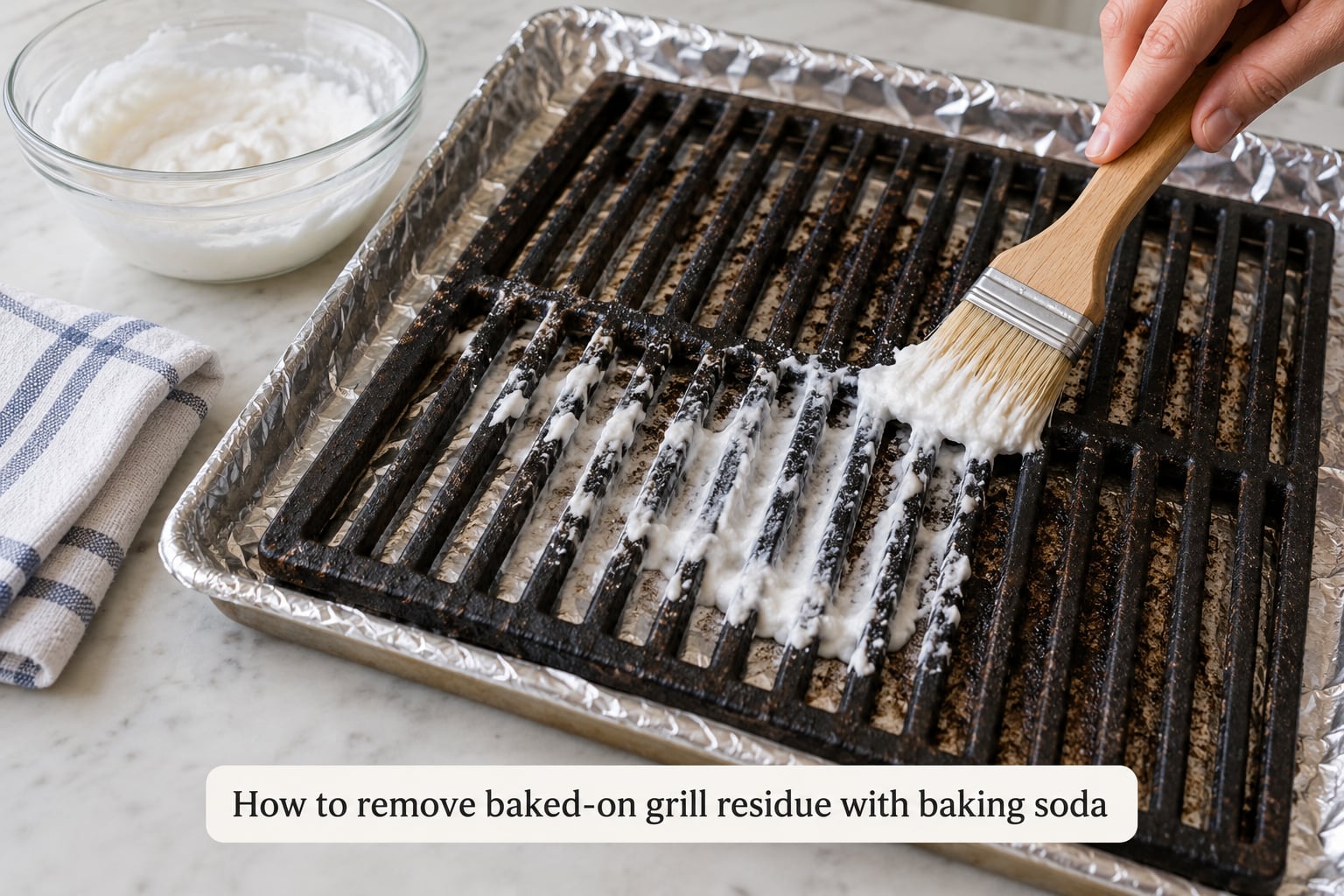
Baking soda is the gentlest option here, and the one to reach for on porcelain. It is mildly alkaline, so it softens grease without the scratch risk of salt or pumice.
- Mix baking soda with just enough water to make a thick paste, roughly a quarter cup of powder to a tablespoon of water.
- Turn the cooled grate on a foil-lined tray or sheet pan and spread the paste across the bars with your fingers or the back of a spoon.
- Leave it sitting for 15 to 30 minutes. On a grate that has been through a season of smoking, give it the full half hour.
- Scrub the softened carbon with a nylon pad or a folded damp paper towel, working in the direction of the bars.
- Rinse or wipe with a damp cloth, then dry the grate completely before putting it back.
This is the slowest of the five and the one that tolerates the most neglect. If a grate has been ignored for months, a second paste application usually beats scrubbing harder on the first one.
Using steam to loosen greasy grill grates
Steam does the softening work on its own, which makes it the fastest method for a grate that has been used but not neglected. The water carries heat into the grease layer and lifts it off the metal as condensation.
- Put the grate in a heat-safe container or a covered grill and set it on a stovetop or over a burner, depending on what you have.
- Add a cup of water and bring to a steady boil, or put a covered pan of water on the grill and leave it closed until it steams heavily.
- Hold the steam for 10 to 15 minutes so the grease layer softens all the way through.
- Let the grate cool to a safe handling temperature, then wipe it with a grill-safe cloth or folded paper towel. Most of the residue comes off in the wipe alone.
Note: Never throw water onto a hot grate or a hot firebox. The flash of steam can crack porcelain and spit boiling liquid across your hands. Add the water before the heat, not after.
If you have an oven with a self-cleaning or steam cycle, a short steam burst in there does the same loosening without you standing over a stove.
Cleaning grill grates with dish soap and a nylon pad
Dish soap and a non-wire pad handle a grate that is dirty rather than carbonized. This is the cold method, and for freshly used grates it is often the best one.
- Take the grate out and let it cool completely, then set it in a sink or a basin lined with a towel.
- Add a squirt of dish soap and a splash of warm water, and let it sit five minutes.
- Work the bars with a stiff nylon pad, moving along the length of the bars so the pad’s grit engages in one direction.
- Rinse thoroughly with warm water until no soap film and no black flecks remain in the sink drain.
- Dry it well with a towel, then stand it upright somewhere with airflow so the underside dries too.
Nylon is the important word. Steel wool and metal pads will scratch porcelain coating and strip seasoning from cast iron in a single pass.
On cast iron, detergent is the one ingredient to think twice about. A thorough rinse followed by an immediate thin oil coat handles it, and the same treatment works for a pan that has stuck eggs to it, as we cover in how to clean a cast iron skillet after cooking eggs.
Using a grill-safe scraper or household alternatives
When the residue is thick but not bonded, friction alone works. The trick is picking a tool with a hard edge and no metal that can scratch.
- Plastic pan scraper for a thin film of carbon. Flexible enough to follow the curve of the bars and it will not mark porcelain.
- Wooden paddle scraper for stubborn buildup on stainless or cast iron. This is the brush replacement most people miss, and it outlasts any household tool because wood will never scratch iron.
- Pumice stone for cast iron and stainless only. Powerful on scale and carbon, and it will strip porcelain in a single pass.
- The edge of a sturdy spatula for scraping flat grates. Keep the angle shallow so you are shearing the residue, not digging into the metal.
- Burr-style grill pads if you want a dedicated tool that has no bristles at all.
A DIY wooden paddle is easy: a strip of scrap pine or fence board, about two inches wide, with a couple of inches cut to an angled edge. Sand the edge smooth so it cannot splinter into the grate.
Whatever you use, always scrape with the grain. Pushing a blade crosswise across cast iron leaves a scratch pattern that seasons unevenly and catches food for years afterward.
Common Mistakes When Cleaning Grill Grates Without a Brush
Cleaning a hot grate. Metal expands fast and thin bars can warp or crack porcelain coating in seconds. Give the grate at least 15 minutes after the burners are off, and test it with the back of your hand near the bar before touching it.
Using steel wool or a metal pad on coated or cast iron grates. This is the fastest way to damage the finish and it cannot be undone. Nylon is the safe substitute in every case.
Leaving soap or moisture behind. A thin film of detergent traps heat and turns acrid during the next cook, and water left on cast iron leaves rust spots within days. Rinse until the runoff is clear, then dry fully.
Scrubbing harder instead of softening first. Brushing hardened carbon for ten minutes achieves less than ten minutes of baking soda paste. If the residue is not wiping away, change method rather than adding pressure.
Spraying water on a hot grate. Steam bursts off a hot bar and can crack porcelain or spit scalding water past your gloves. Add water before heat, never after.
Oiling the grates while they are still hot. Oil poured near a lit burner or glowing charcoal ignites instantly. Cool the grate to a safe handling temperature first, then wipe on a thin coat.
Waiting until the grate looks black to clean it. A thirty-second wipe with a folded paper towel while the grate is still warm, before the carbon hardens, prevents nearly all of the work described in this guide.
How to Know Your Grill Grates Are Clean and Ready to Cook
Run a gloved finger along the length of the bars and check three things: the metal should feel smooth rather than gritty, the black should be thin and even rather than patchy and flaking, and there should be no visible grease film or lingering burnt smell.
A thin, dark, even layer of carbon is normal on a cast iron or steel grate and many cooks leave it deliberately, because it behaves like a built-in non-stick surface and gives darker grill marks. Flaky, patchy carbon is what you remove; an even dusting is not worth fighting.
Then dry the grate properly. Towel it off, stand it upright in the open air for a few minutes, and check the underside, which holds water against the firebox where it cannot evaporate.
For bare cast iron and stainless steel, finish with a thin coat of vegetable oil or canola oil while the grate is still slightly warm. Wipe it with a paper towel until the surface looks dry and barely tacky. That thin film is what keeps rust off between cooks.
Skip the oil on porcelain-coated grates. The coating is not porous and oil only makes it sticky. Put the grate back, close the lid, and you are ready to cook.
Frequently Asked Questions
Can I clean grill grates with vinegar instead of a brush?
Yes, and vinegar is best as a soak rather than a scrub. Spray or brush distilled white vinegar onto cooled grates, let it sit 15 to 30 minutes, then wipe with a cloth or nylon pad. On badly carbonized grates, cover them in vinegar and soak overnight. Vinegar dissolves grease and light rust well, but it needs a mild abrasive or a hot grate to move thick carbon.
Is aluminum foil safe for cleaning grill grates?
Yes, if you keep it under the burners where no flame can reach it and you clear away the flakes. A foil ball scrubbed with long tongs leaves no chemical residue and no metal fragment. Standard foil works, though heavy-duty foil crumples into sharper edges and sheds less. Always check the bars for stray pieces before cooking on the grate.
How do I clean rusty cast-iron grill grates without a wire brush?
Coat the rusty areas with distilled white vinegar and leave them for two hours or overnight, then scrub the loosened rust with a nylon pad or a wooden paddle. Rinse, dry fully on the stovetop, and wipe on a thin coat of vegetable oil while the metal is still warm. Repeat the oiling after each cook until the patina comes back and the rust stops returning.
What is the best cleaning method for nonstick or porcelain grill grates?
Baking soda paste is the safest choice. Mix baking soda with a little water, spread it over the cooled grate, leave it for 15 to 30 minutes, then wipe with a damp cloth or a nylon pad. Avoid steel wool, metal pads, abrasive salt and pumice, all of which can wear through the coating. Do not oil the grate once it is clean.
How often should I clean grill grates without a brush?
Wipe warm grates with a folded damp paper towel after every cook, which takes about thirty seconds and prevents most buildup from hardening. Do a full brush-free clean once a month during grilling season, or at the start and end of it. If food was left on the grate overnight, clean it before the next cook rather than letting the carbon set.
Does baking soda remove grease and burnt food from a grill?
It does, given time. Baking soda is mildly alkaline, so it softens grease and loosens carbon without scratching porcelain or cast iron. Give it 15 minutes for a grate used that week and a full 30 minutes on one that has seen months of smoking. Apply it twice before you switch to anything more aggressive.
Conclusion
For a grate that was used this week, the fastest path is a foil ball or a ten-minute steam burst followed by a wipe. For a grate that has been ignored for months, the baking soda paste is the method that actually moves hardened carbon without touching a bristle.
Match the tool to the material and most of the risk disappears. Nylon, plastic and wood on porcelain and cast iron; foil, salt or a wooden paddle on bare stainless and cast iron where the surface can take friction.
Whatever you use, the sequence never changes. Cool the grate for fifteen minutes, clean it with the lightest method that will work, dry it completely, and put a thin coat of oil on bare cast iron or steel before it goes back in the firebox. Do the thirty-second paper towel wipe after every cook and you will rarely need any of this again.