

To tell a server about a dietary restriction, say it as soon as you are seated: name the exact ingredient, say whether it is a medical allergy, an intolerance, a religious requirement or a preference, and ask how the kitchen handles shared fryers, grills and prep surfaces. The whole conversation takes about a minute.
Most diners over-explain in the wrong direction. They hedge, apologize, or lead with a label like “I’m dairy-ish” and hope the kitchen fills in the blanks. Servers on r/Serverlife say the same thing in their own way: if you don’t say you have an allergy, they can’t order you an allergy-friendly dish. Naming it plainly is the single most useful thing you can do.
Here is the order that works, the exact words to use, and what to do when the kitchen can’t give you a guarantee.
What You Need
Before you open your mouth, five things need to be clear in your own head. Vague intentions produce vague kitchens. Learning how to tell a server about a dietary restriction well is less about finding perfect words than about having these five answers ready before the menu opens.
The exact item. Not “Asian food” and not “spicy things” but peanuts, shellfish, wheat, sesame, tree nuts, dairy. If you know the ingredient, you can get a real answer.
What kind of restriction it is. An allergy, an intolerance, a medical requirement such as celiac disease, a religious rule such as halal or kosher, or a preference. Each one gets a different sentence and a different amount of kitchen attention.
How bad the reaction is. Whether it sends you to the emergency room, keeps you up all night, or simply isn’t something you enjoy. You need this answer ready before you walk in, not while the kitchen is waiting on a ticket.
Whether cross-contact matters. Some people need a dedicated fryer and a separate prep area. Others are fine with a shared grill. For severe allergies, cross-contact with the ingredient is the real problem, not the ingredient itself.
A chef card, if you can. A single card or phone note listing your allergens, the severity, and the exact language you want used takes about a minute to make and removes the guesswork entirely. Writing it down is also how you can review what a menu actually offers before you go, whether you are checking produce seasonality or scanning a whole menu for hidden ingredients.
Step-by-Step: How to Communicate Clearly at the Restaurant
1. Speak Up as Soon as You Are Seated
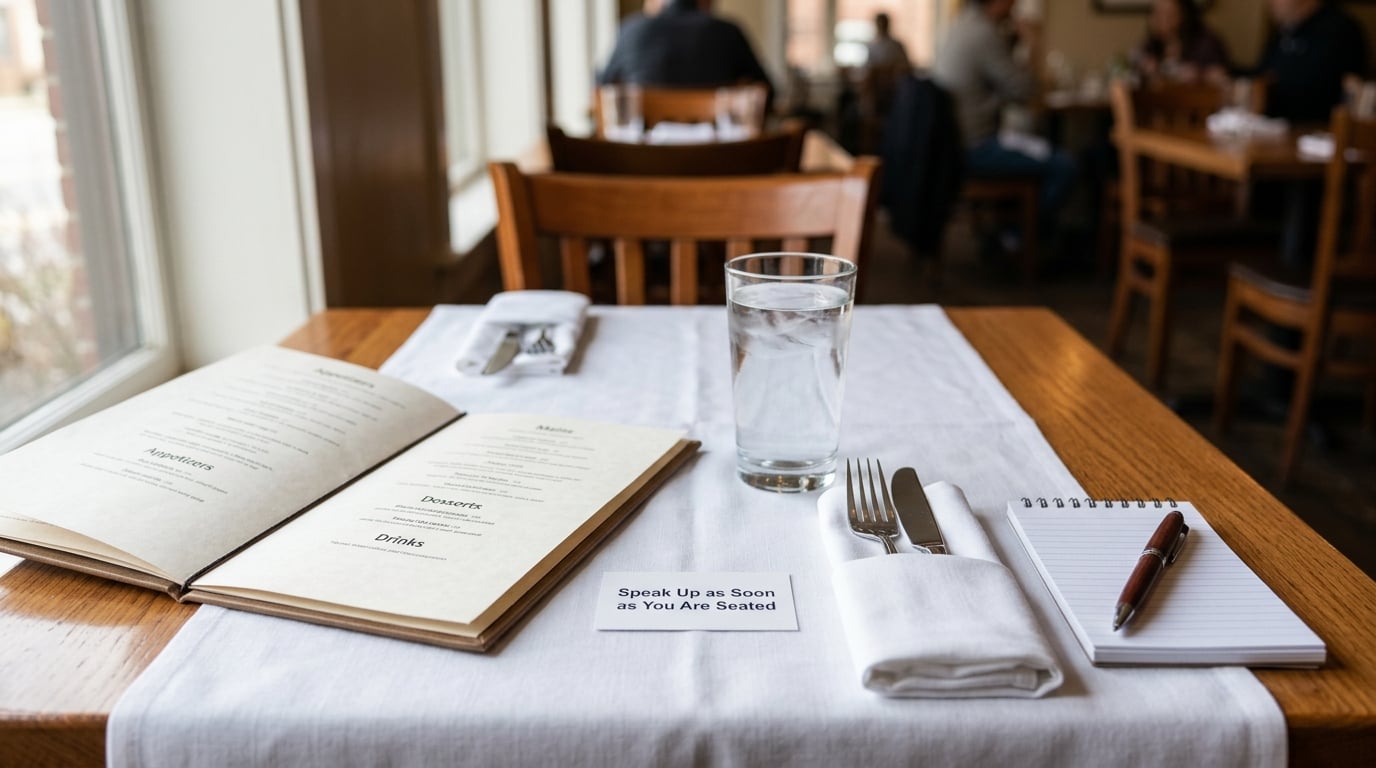
Early notice buys you time. The server can check the menu, look up the recipe with the kitchen, and come back with real options instead of guessing at the table while your drink goes warm.
A working opening: “Hi, before we order, I have a food allergy, so I want to go through the menu with you.” That sentence does three things: it flags medical need, it explains why you’re about to be specific, and it invites the server to help rather than block them.
A smooth response sounds like this. “Sure, I can grab the kitchen manager, or I can look at the menu with you and check with the line.” What you want to hear is a question about what you’re avoiding, not a pivot back to the drinks list.
2. Name the Restriction and the Specific Ingredient
Say the ingredient, then the category. “I’m allergic to shellfish, and I also need to avoid pork” is clear. “I have shellfish allergy and no pork” covers a medical and a religious restriction in one breath.
Match the wording to the reality of your situation:
- Allergy: “I have a shellfish allergy.” Say it plainly. Adding the word severe is legitimate only if you have had a severe reaction, and if you carry an epinephrine auto-injector, mention that when it fits.
- Intolerance or medical condition: “I have celiac disease, so any gluten contact is a problem for me.” Celiac disease is not a preference, and kitchens treat the sentence differently once they hear it named.
- Religious or ethical: “I need this halal” or “I’m vegan.” These are firm requirements rather than dislikes, and it is fine to say so without justifying it.
- Preference: “I don’t eat pork.” Simple and honest. The kitchen will usually still cook around it, but the effort they put in depends on how you frame it.
If a condition has no name that fits, describe the outcome instead. People with ARFID or similar conditions often tell the server the food, the texture, or the smell that makes the plate inedible, which is honest and far more useful than asking them to research a diagnosis mid-shift.
3. Explain How Serious the Concern Is
Severity is what decides whether a substitution happens or whether the kitchen declines the order. Describe your reaction plainly, without drama and without claims you can’t back up.
“If I react to it, I need an ambulance” is a legitimate thing to say about a severe allergy. “I feel bloated for a day if I have dairy” is an accurate description of an intolerance. What helps in both cases is naming the timeframe and the effect rather than leaning on adjectives.
Say the part people forget. “It’s the shared fryer I’m worried about, not just the menu item.” That one sentence moves the conversation from a substitution to a preparation protocol, which is usually where a serious allergy actually gets handled.
4. Ask Specific Questions About Ingredients and Preparation
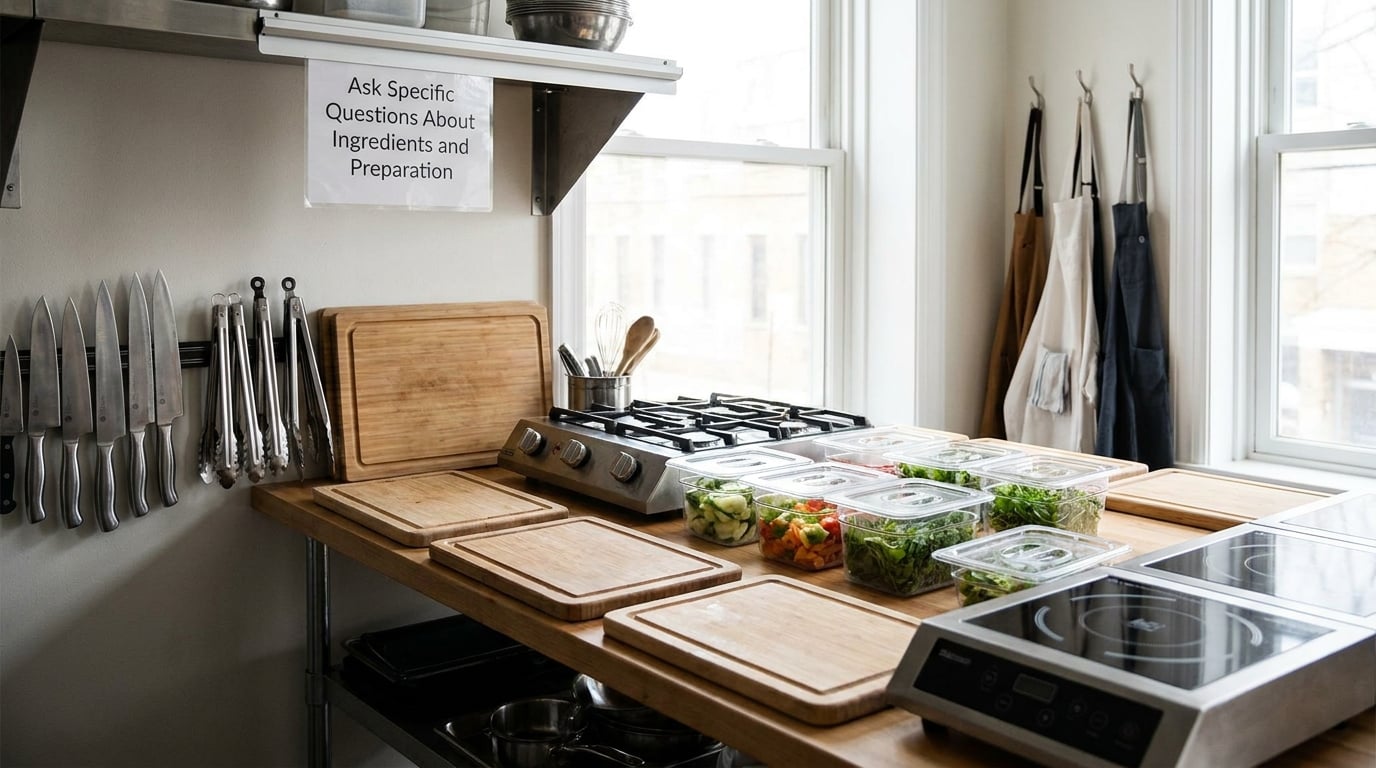
Specific questions get specific answers. Vague ones get reassurance, which is worth nothing.
- “Does this dish contain any of that, including in the sauce, stock, breading or oil?”
- “What do you use for the fryer? Do you cook breaded fish or chicken in the same oil?”
- “Is there a separate prep area or separate utensils for allergy orders?”
- “Can the sauce be made without butter and cream, or is that baked into the base?”
- “Is the allergen listed on your allergen menu, and is that menu kept current?”
Servers pass these questions along word for word when you phrase them as questions. That is the whole job: become a clear message the server can repeat without editing.
5. Order Clearly and Confirm the Changes
Keep the order short and put the modification in the same breath as the dish. “Steak, medium rare, no butter, cooked in a clean pan with no shared oil” survives a busy kitchen. “Steak, dairy free” does not.
Then say the whole thing back. “So that’s the salmon with no butter, no sesame, no shared fryer, and the vegetables on a separate plate from the bread. Did I get all of that?” Listening for your own requirements repeated back in full is the last checkpoint before the ticket goes up.
If something is missing in the repeat-back, correct it right there. It takes ten seconds at the table and minutes to fix after the plate lands.
6. Thank the Server and Plan for Uncertainty
Most kitchens will do more than they promise, but few will promise a guarantee. “Can you make this dairy free, but I understand if the sauce is baked in” gives the person standing in front of you room to be honest instead of defensive.
When they can’t fully accommodate you, escalate politely: “Could I speak with the manager or the chef? I’d like to understand exactly what we can do here.” Servers are not withholding information, they just don’t own the prep decision.
If the answer still isn’t one you can accept, ask for the printed ingredient list, choose something else, or leave without a scene. Walking out costs you dinner. Getting sick costs you days, and it happens in the dining room rather than the kitchen. If you carry an auto-injector, keep it where you can reach it, and check with your doctor about an emergency plan specific to eating out.
Common Mistakes
Waiting until the order is placed. The kitchen has already committed ingredients and often started a protein. Speak up while the menu is still open.
Relying on menu labels. “Gluten friendly” and “may contain” tell you almost nothing about shared equipment. Ask how the dish is actually cooked.
Assuming a substitution makes a dish safe. A bunless burger on a shared griddle is still a shared griddle. Name the equipment you need, not just the ingredient you removed.
Failing to mention cross-contact at all. If trace amounts are a problem for you, that is a medical fact about you, and the kitchen can only plan for it if you say it.
Apologizing for the question. Servers are told no often enough. “I have an allergy” costs you nothing socially; a sick diner costs the restaurant far more.
Letting politeness replace clarity. A cheerful “no worries!” in place of an actual answer is a dead end. Be warm and specific at the same time.
Assuming the request reached the kitchen. Servers relay many tickets at once. The repeat-back in step five is what closes that gap.
Quick Tips for a Calm, Clear Conversation
Keep a short allergy card in your wallet or a note in your phone with your allergens, your severity, and one line about cross-contact. Servers and chefs treat a written reference as more credible than a verbal description, and it saves you from reciting a list while they write.
Read the menu online before you leave the house. If you are picking seasonal produce too, our guide to telling when produce is in season is a good companion read for scanning fresh-ingredient menus. Check the allergen information and note any dish you would want the kitchen to explain.
When you have several restrictions, lead with the most serious one. Threads on r/ARFID describe the same pattern: a diner with a long list gets a blank stare, while a diner who says “I avoid X, and Y is a preference” gets a usable answer.
Call ahead fifteen to thirty minutes before a known-hard reservation. One phone call about a wedding cake, a birthday dinner or a business lunch removes most of the friction before you sit down.
Use these short phrases: “I need to avoid X for medical reasons.” “Is that a shared fryer?” “Could I speak with the chef?” “Can you write down what you changed?” “Thank you, that was exactly what I needed.”
When a group eats together, give the kitchen one combined message rather than five separate ones. The diner with the strongest medical need should be named first, and the rest can follow as preferences.
If someone reacts dismissively, stay factual and ask again. “I understand this is a busy shift. I’d still like to know whether the oil is shared.” Servers do not choose the kitchen’s limits, and they will often go find out once you frame it as information they can bring back.
Frequently Asked Questions
How do I tell a server I have a food allergy?
Tell them as soon as you are seated, before ordering. Name the exact allergen, say it is an allergy, describe the reaction briefly, and state whether cross-contact matters. Ask how the dish is prepared, including whether the fryer, grill or prep area is shared. If your allergy is severe and you carry an auto-injector, mention that. Write your allergens on a chef card if you have one.
What is a chef card and do servers actually read them?
A chef card is a small card or phone note listing your allergens, the severity of your reactions, and the exact modifications you need. Servers and chefs do read them, and written requests tend to be taken more seriously than spoken ones because they are precise and easy to relay to the kitchen. Keep one in your wallet and a photo on your phone for travel.
Should I say allergy when it is really an intolerance?
Only if it is one. Using a medical word for a preference discredits you if it turns out to be a preference, and a server cannot apply a protocol they think is overblown. Describe what actually happens instead: bloating, pain, reflux, exhaustion. For celiac disease, IBS, or histamine intolerance, use the name of the diagnosis, because those carry real handling requirements.
What do I do if the server does not take my allergy seriously?
Stay factual, stay calm, and ask again with a different question. Say that you have had a serious reaction before and you need to know whether the fryer is shared. If the answer stays vague, ask to speak with the manager or chef. At that point you have a decision to make: order something you can verify, or leave. Eating elsewhere is always the safer option.
What should I write in dietary restrictions when asked for an event RSVP?
Be specific and separate medical from preference. Write the exact ingredient rather than a cuisine, for example shellfish allergy or celiac disease, then list religious requirements and preferences on separate lines. Add cross-contact notes such as no shared fryer, and say whether an allergic guest will be attending. Give the host enough detail to pass on, since they rarely know what to ask a caterer.
Conclusion
Do the first thing early: mention the restriction as soon as you sit down, before the order is discussed. Name the exact ingredient, say clearly whether it is an allergy, an intolerance, a requirement or a preference, and state whether cross-contact is a problem.
Then ask about the fryer, the grill and the prep area, order with the modification in the same breath as the dish, and listen for the server to repeat it all back. When the kitchen cannot give you a guarantee, ask for the manager, or choose somewhere else. That sequence takes a minute and covers you for the whole meal.