
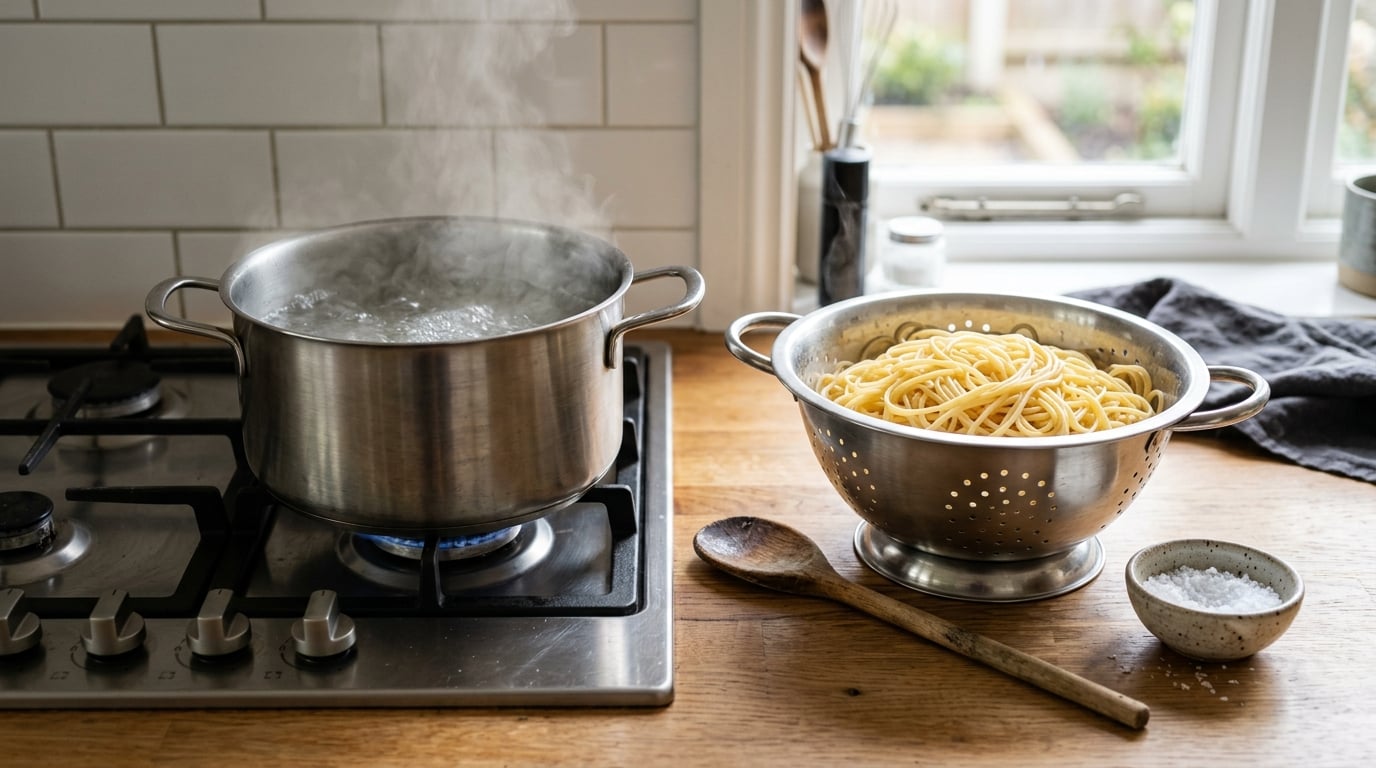
To cook pasta so it does not stick, fill a pot with plenty of salted water, wait for a full rolling boil, then add enough pasta that the strands can still move freely. Stir it through the first one to two minutes, judge doneness by tasting a strand instead of the box, and never add oil to the water.
The reason is starch. Dried pasta is dusted with semolina, and the second it hits boiling water that surface starch starts washing off into the water around it. Where two strands touch and sit still, the starch between them gelatinizes and welds them into one lump, and that bridge will not break apart on its own.
Moving water, moving pasta and enough of both keep those bridges from forming. The whole job runs about 15 minutes start to finish, and the only stretch that needs real attention is the first two minutes after the pasta goes in. The second half of the problem happens after the drain, where noodles that boiled perfectly will still clump if they sit in a colander for two minutes. Both halves have their own fix.
What You Need
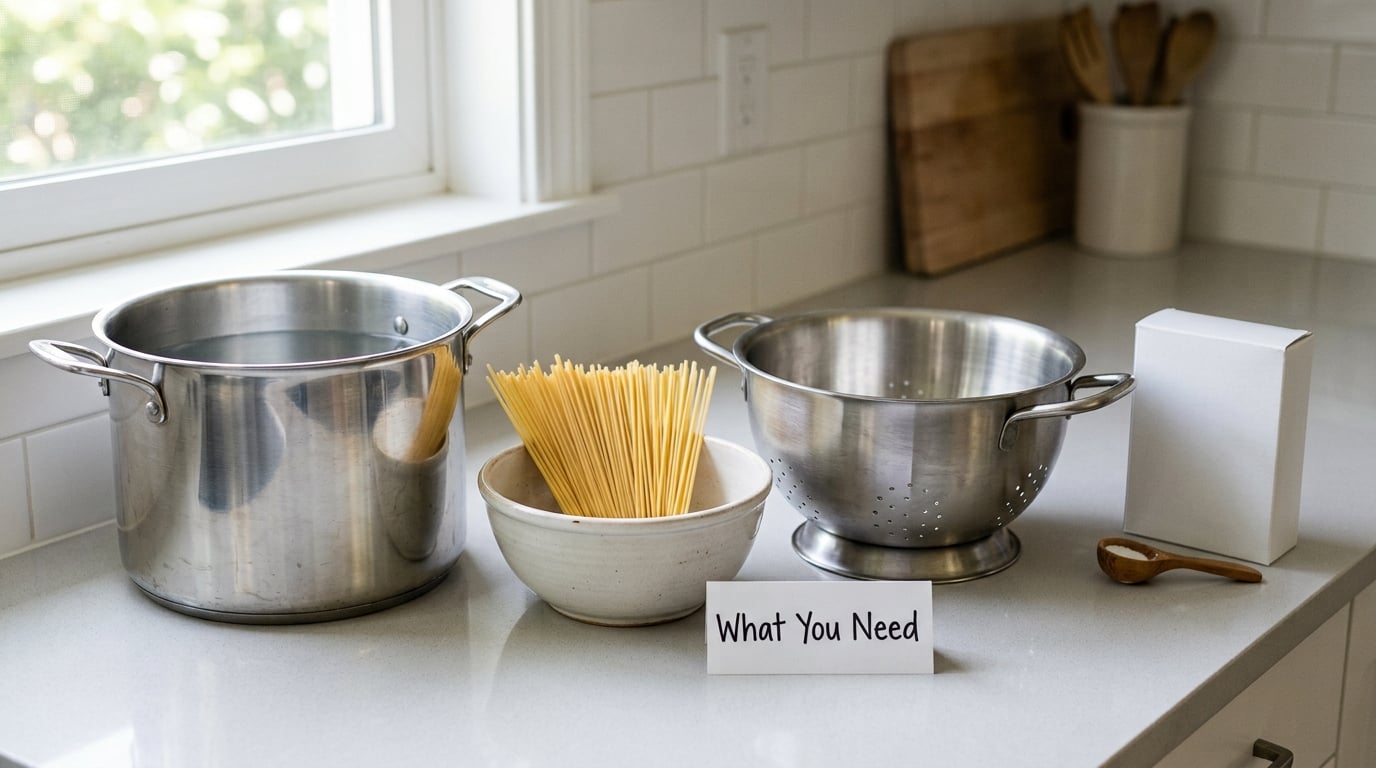
A pot with more headroom than feels necessary. Aim for 4 to 6 quarts of water per pound of pasta, so a 12-quart pot for a pound of spaghetti and an 8-quart pot for a pound of penne. Fill it no more than two-thirds of the way up. Long strands need more room than small shapes because a pound of spaghetti is one long tangle waiting to happen.
Salt, added once the water is boiling, at roughly 1 tablespoon for every 4 quarts. It seasons the pasta itself, not just the water, and it is the only seasoning the noodles get before the sauce. Adding it earlier is not better, and it can pit the inside of an aluminum pot.
A long-handled wooden spoon or a pair of tongs for the first two minutes, a slotted spoon for lifting small shapes, and a colander with holes wide enough that noodles fall through in a loose stream rather than piling into a wet mat.
A timer and a mug or ladle. The mug matters more than anyone expects: you fill it from the pot before you drain, because that cloudy starchy water is what makes sauce cling later.
The sauce, ready and warm before the pasta goes in. The gap between draining and saucing should be about a minute, and anything that takes longer than that belongs in a pan with heat under it, not sitting in a colander.
What you do not need: a bottle of olive oil, a knob of butter, or a sink full of cold water waiting to catch the noodles. I have ruined more spaghetti than I care to admit by reaching for all three.
The logic behind the equipment here is the same logic behind how to make an omelet that does not stick, just running in the other direction. Hot enough surface, enough room to move, and nothing sitting still against something it will bond to.
Step-by-Step
Step 1: Use Enough Water and Bring It to a Rolling Boil
Fill the pot, set it on high heat, and salt it once bubbles break the surface. A full rolling boil means bubbles rising fast enough to visibly churn the top and steam coming off in a steady plume, not lazy bubbles creeping around the edge. Water that is hot but not moving lets pasta sit against itself, and the temperature is already high enough to gelatinize the starch that glues it.
Step 2: Add the Right Amount of Pasta
Measure rather than eyeball. A pound in 6 quarts of water is comfortable; a pound in 4 quarts is tight. Snap long strands in half for a narrower pot instead of folding them, and let the pasta fall in a loose fan rather than going in as a fist-sized clump. Your cue is simple: one minute after the pasta goes in, the water should still be moving freely on its own. If you have to lean over the pot to see the water, there is too much pasta in it.
Step 3: Stir Immediately and Keep It Moving
For the first one to two minutes, stir every few seconds. That is the window where the most starch washes off and the strands are soft enough to mat together. Push the spoon down the middle of the pot and fold the bottom up rather than grinding noodles against the bottom, and match your pressure to the pasta: barely there for linguine, firmer for rigatoni. After that first stretch, stir every 30 to 60 seconds, and each time, lift a few strands to the surface and let them drop back.
You are looking for a loose, swishing mass where individual strands still move on their own, not a raft sitting in the center of the pot.
Step 4: Taste and Time the Pasta
Set the timer for one minute under the package time and start tasting at the halfway mark. Pull out one strand, bite it or press it between two fingers: al dente is firm with no chalky white core, and it bends without snapping. Package time is a starting point, not a target, since it assumes one pot size and one altitude and is written on the conservative side anyway. Taste twice, because a long strand cooks unevenly along its length.
When the sauce is already simmering in a wide pan, add a splash of starchy pasta water to the sauce before the pasta goes in, and keep tossing over medium heat. Slightly underdone noodles at that stage soak up sauce like a sponge, and they turn exactly right in the pan within a minute.
Step 5: Reserve Pasta Water and Drain Without Crowding
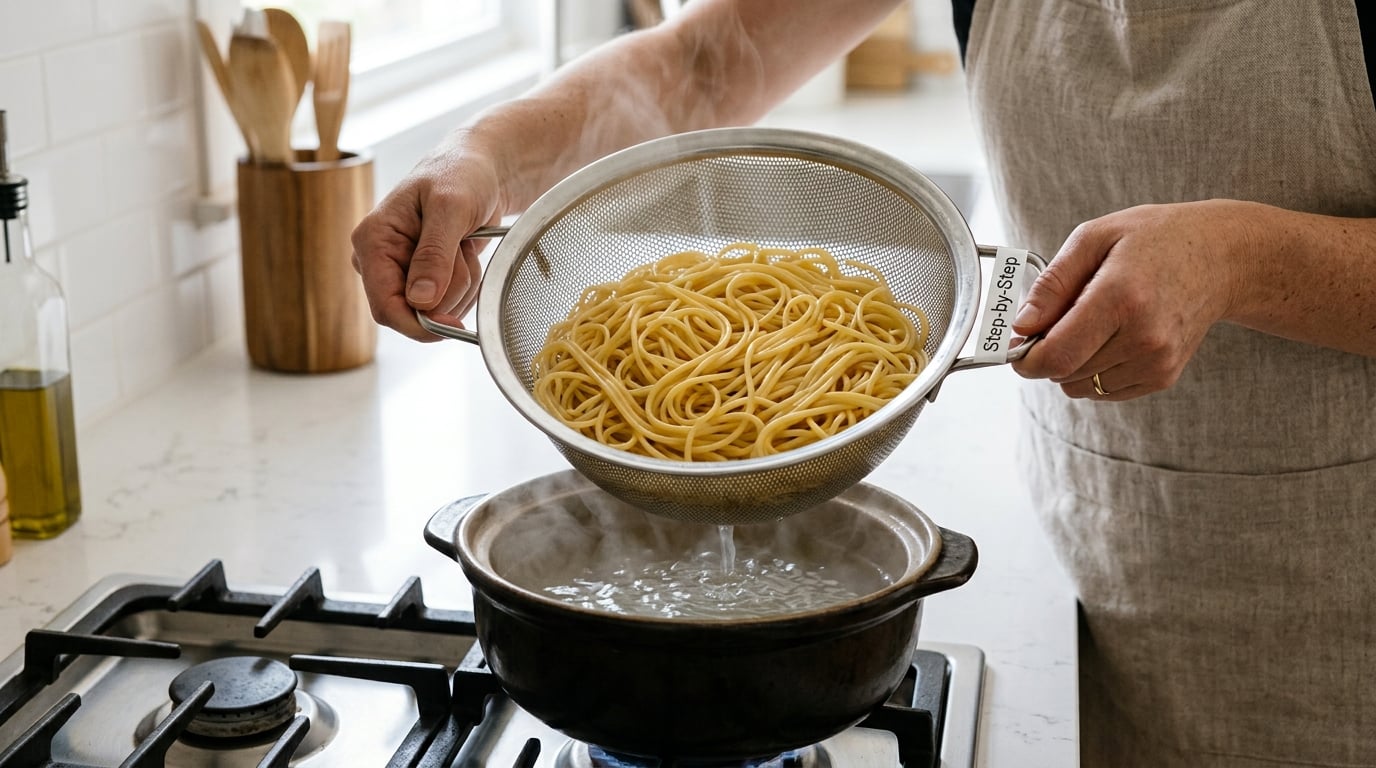
Fill a mug or two from the pot before you drain. That cloudy water is the emulsifier that makes an oil-based sauce cling instead of sliding off, and a tablespoon of it does more than any drizzle of olive oil. Then drain with the least crowding you can manage: for a full pot, lift out small shapes with a slotted spoon and move them straight to the sauce, and reserve the colander for cooking in batches. Shake the colander once over the sink, then move. The strands should separate within seconds of landing in it.
Step 6: Toss and Serve Immediately
Put the pasta into the warm sauce, add a splash of the reserved water, and toss over medium heat for 30 to 60 seconds until the sauce looks glossy and clings to the strands. A wide pan gives you room to toss without crushing the pasta. Cold dishes are the exception: rinse under cool running water to halt the cooking and wash off the excess starch, then dress immediately so nothing sits dry in a bowl while you measure the dressing.
Common Mistakes
If you have ever wondered how to cook pasta so it does not stick, the reason is almost always one of six beliefs that sound sensible and are not. Two of them, the oil and the rinse, are the source of most of the confusion I see in comment sections, because both are advice people have been handed for decades.
| Common belief | What actually happens |
|---|---|
| A spoonful of oil in the water stops sticking | It floats on the surface, coats the noodles in a thin film, and does nothing about the starch bonding them together. The trade is sauce that slides off instead of clinging. |
| Rinse pasta under cold water to unstick it | For a hot sauced dish it washes away the surface starch the sauce needs. For a cold salad it is right, and it is the only time it is. |
| Salt the water before it boils | It works either way for flavor. Waiting until the boil means less risk of pitting an aluminum pot and no chance of a salty splash. |
| Throw a strand at the wall to test doneness | A sticky strand can stick to a wall, a shirt and a colander. Taste it, or press it between two fingers. |
| Stir once at the start and then leave it | The first two minutes are the whole window. After that the strands are firm enough to move on their own if the pot is big enough. |
| Package cook time is the target | It is an upper limit, and it assumes a large pot at sea level. Start tasting a minute early and taste often. |
Sticking in the pot, in the colander and after reheating are three different problems
Pasta that clumps while boiling is a starch and motion problem. Fix it with a bigger pot, more water, and stirring in the first two minutes. Pasta that clumps the instant you drain it is a timing problem: cooked noodles keep releasing starch, so the fix is having the sauce waiting and moving the pasta fast.
Pasta that turns into a single block after storage or reheating is a third thing entirely. Cream, butter and cheese sauces set solid when cold, and that set coating is what glues the strands into a mass. Reheat those in a splash of sauce or reserved water in a wide pan, and the strands come apart as the fat re-melts.
If you want a second symptom-and-fix reference while you cook, this cast iron steak method deals with the same dinner-timing problem from the other side: everything is ready, and then it still has to rest before it is eaten.
| Symptom | Likely cause | Fix |
|---|---|---|
| Clumps within a minute of adding pasta | Pot too small, water too little, or pasta added as a fist-sized lump | More water, one pound per 6 quarts, add in a loose fan, stir immediately |
| Sticks to the bottom of the pot | Not enough water, or too much pasta crowding the strands | Raise the heat to keep a rolling boil and stir from the bottom every 30 seconds |
| Noodles welded together in the colander | Sitting there while something else finished | Move them to warm sauce immediately, or skip the colander and lift them out with a slotted spoon |
| Sauce slides off the pasta | Oil in the cooking water, or the pasta was rinsed | No oil, no rinse, and finish the pasta in the sauce with a splash of pasta water |
| Solid block after refrigeration | Cold sauce, especially cream, butter or cheese, set around the strands | Toss with a little oil before refrigerating, store shallow, reheat in sauce or hot water |
How to rescue pasta that has already clumped
It is not ruined. Drain off the starchy water, then dunk the clump in a colander sitting in a bowl of hot water for 30 to 60 seconds. The heat loosens the gel that bridged the strands. Working under cool running water for a few seconds while you separate the strands with your fingers or tongs works too, and the cost is a little of that surface starch, which you can replace with a splash of pasta water in the sauce.
One thing to skip: scraping a solid mass straight into a hot pan. That turns a clump into a fried block. Get the strands apart first, then toss.
Holding it warm, cooking ahead and storing
For a pasta bar or a family eating on different schedules, cook it slightly underdone, drain it, and spread it in a single layer in a shallow pan tossed with a small amount of oil. Keep it warm in a low oven rather than on the stovetop, where it keeps cooking and drying out. Gentle tossing every few minutes does more than anything else you can do.
For meal prep, the same toss with a little oil stops the strands welding during storage. Spread the pasta shallow in containers so it cools fast, refrigerate it for no more than three to four days, and reheat each serving either in a splash of sauce or by dipping it into a pot of simmering water for a minute. A wide pan with a splash of water and a lid works about as well.
Freezing cooked pasta in a flat layer on a baking sheet before bagging keeps it loose. Thawed pasta is never as good as fresh-cooked, but a dressed sauce freezes and reheats better than plain noodles do.
Frequently Asked Questions
Do you stir pasta while it cooks?
Yes, for the first one to two minutes, every few seconds. That is when the most surface starch washes off and the strands are soft enough to weave into a mat. After that, stir every 30 to 60 seconds, lifting a few noodles to the surface so nothing sits welded to the bottom. A pot too small defeats all of this, because there is nowhere for the strands to go.
How much salt should go in the pasta water?
Roughly 1 tablespoon for every 4 quarts of water, added once the water is at a rolling boil. It should taste like the sea rather than like a soup. The salt seasons the noodles themselves, so it is the only seasoning they get before the sauce, and finishing the pasta in the pan with a splash of pasta water is what carries salt through to the surface.
Should you rinse pasta after cooking?
Not for a hot, sauced dish. Rinsing washes off the surface starch that lets an oil-based sauce emulsify and cling, and the result is a slippery noodle with sauce sliding off it. For a cold pasta salad, rinse under cool water to stop the cooking and remove excess starch, then dress it right away so the strands do not sit together in a bowl.
How do I keep noodles from sticking together after draining?
Move them fast and do not let them rest. Have the sauce warm and waiting, lift small shapes straight into the pan with a slotted spoon, and give the colander a shake before touching it. Once the pasta hits the pan, add a splash of the starchy water you reserved and toss for 30 to 60 seconds, which keeps the strands sliding against each other instead of bonding.
Does adding oil to boiling water stop pasta from sticking?
It does not, in any home kitchen. Oil floats on the surface, never mixes into the water, and leaves the noodles coated in a thin film without touching the starch that binds them together. What it reliably does is make your sauce slide off. High-volume restaurant kitchens accept that trade for speed, but at home you are better off skipping it entirely.
How do I cook pasta ahead of time without it sticking together?
Pull it one minute under the package time so carryover heat does not overcook it, drain, and toss immediately with a small amount of oil. Spread it in a shallow single layer rather than a heap, cool it quickly, and refrigerate for no more than three to four days. Reheat each serving in sauce or by dipping it into simmering water for a minute, then toss to free the strands.
Conclusion
Start with the pot, because nothing else in this method survives a pot that is too small. Fill it to about two-thirds with 4 to 6 quarts of water per pound, bring it to a real rolling boil, salt it, and add only as much pasta as can still move. Stir through the first two minutes, taste instead of trusting the box, and skip the oil entirely.
From there it is all about speed at the end. Reserve a mug of the starchy water before draining, move the pasta into warm sauce within about a minute, and toss with that water until the sauce looks glossy. For pasta you are holding or cooking ahead, a light toss in oil and a shallow spread on the pan is what keeps tomorrow’s strands separate too.