
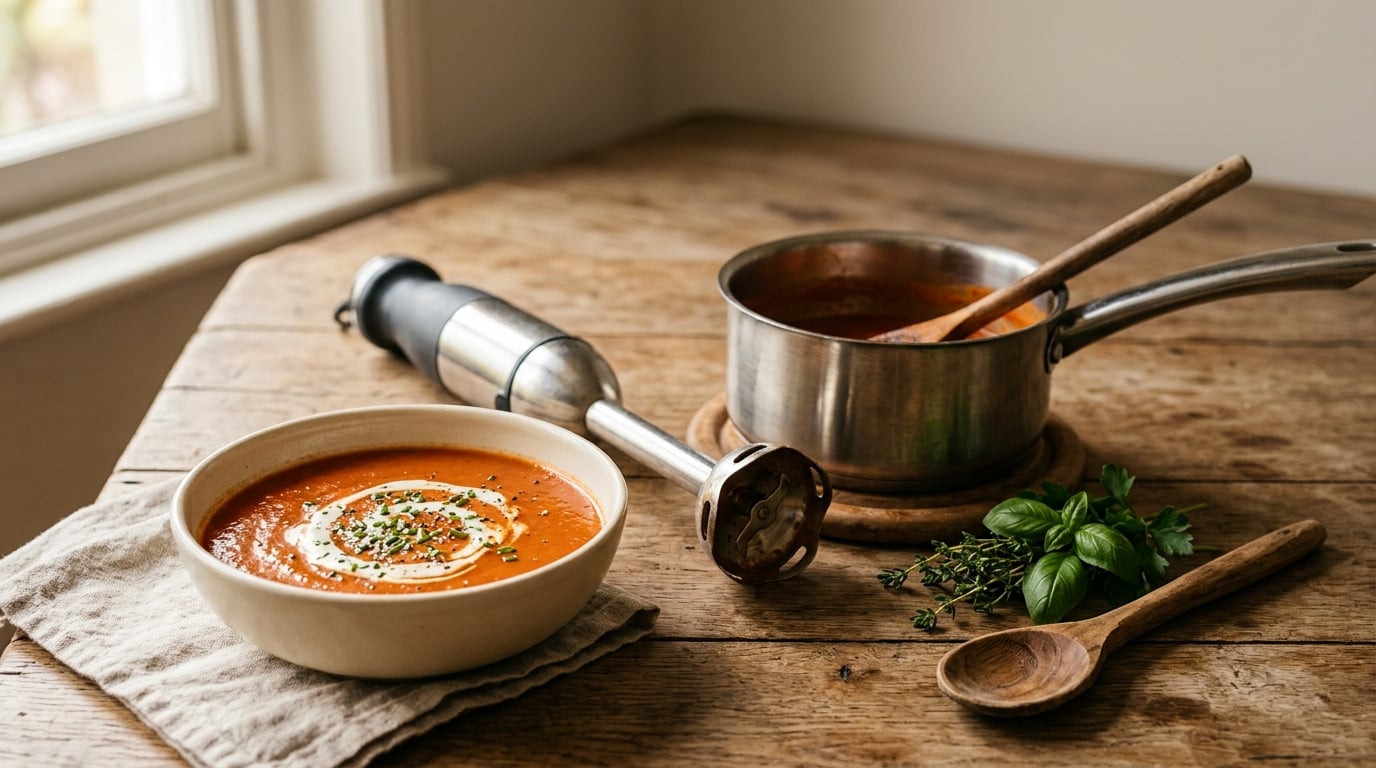
Creamy soup does not need cream. To learn how to make creamy soup without heavy cream, you purée starchy potatoes, white beans, or soaked cashews into the broth and blend until the solids break down and thicken the liquid, which gives you the same velvety mouthfeel for a fraction of the fat.
That is the whole trick, and it takes about 40 minutes start to finish. Cream adds fat and thickness. Blended solids add body and opacity, which is what your tongue actually reads as creamy. Get the blend right and nobody misses the cream.
Last tested in our test kitchen in October 2026.
What You Need
The equipment matters less than the thickener. If you own an immersion blender, this gets easy. If you do not, a potato masher and a lot of elbow grease still get you there, just chunkier.
- An immersion blender for blending right in the pot, or a countertop blender if you blend in batches.
- A pot with a lid for the simmer, and a wooden spoon or potato masher.
- Aromatics — onion, leek, celery, garlic, and a little butter or olive oil.
- Stock or water to cover the solids. Vegetable stock keeps it vegan, chicken stock adds depth without dairy.
- One thickener — Yukon Gold potatoes, cauliflower, cannellini or navy beans, raw cashews, full-fat coconut milk, a cornstarch slurry, or a quick roux.
- Finishing acid — lemon juice or vinegar. This is the step most people skip and the one that makes a cream-free soup taste finished rather than flat.
On blender safety, because it is the thing that stops people from trying this: never seal hot soup in a countertop blender. Steam builds pressure and lifts the lid. Blend in batches no more than half full with the lid vented and a towel over the opening, or let the soup cool for a few minutes first. An immersion blender in the pot has no lid to blow off at all, which is why restaurants reach for one every time.
Step-by-Step: How to Make Creamy Soup Without Heavy Cream
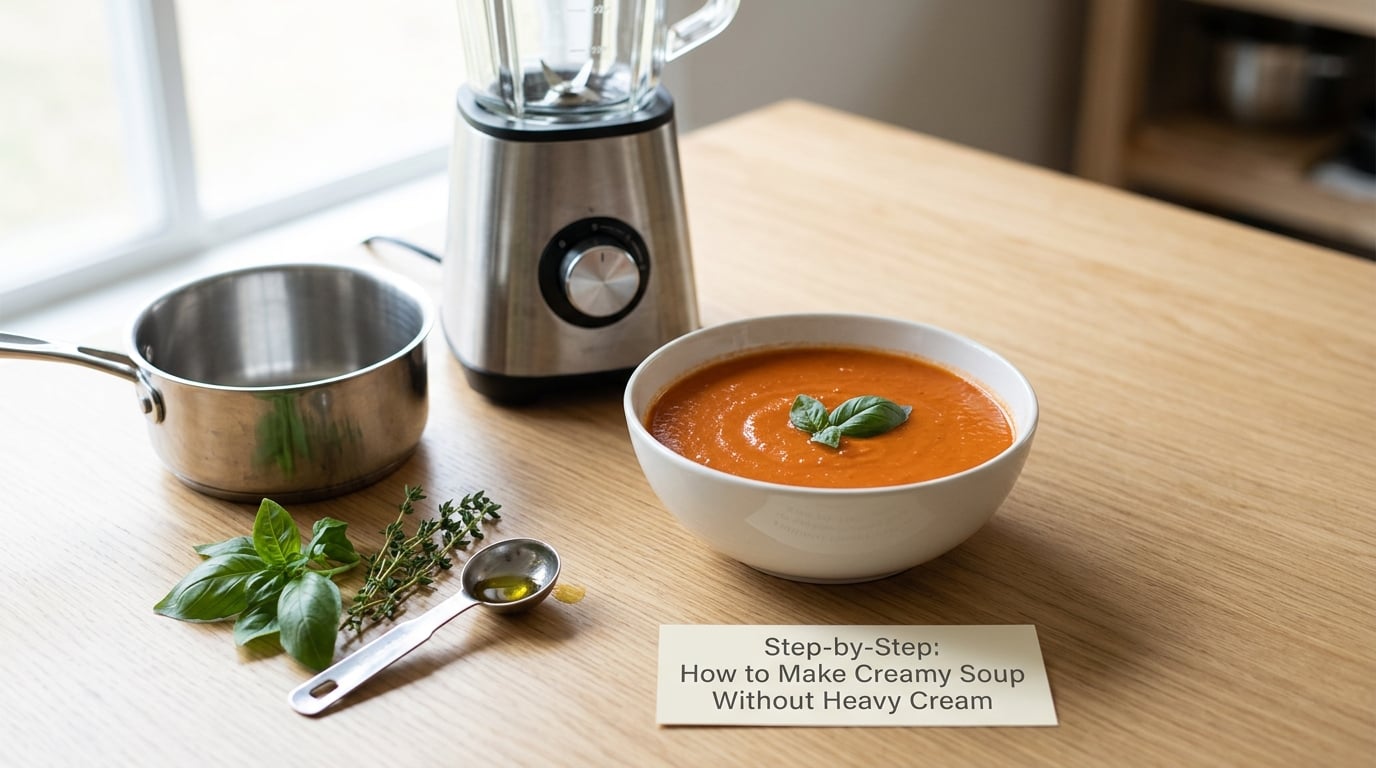
Step 1: Build the Flavor Base
Sweat the onion, leek or celery in butter or olive oil over medium-low heat for 6 to 8 minutes, until soft and translucent but not browned. Add garlic and any celery seed, thyme or fennel seed for the last minute.
This is where a cream-free soup earns its richness. Cream adds a round, soft fat note, and slow-browned aromatics add depth and sweetness in its place. Rush this step and no amount of blending will save the bowl. You want the onions soft enough to collapse under a spoon.
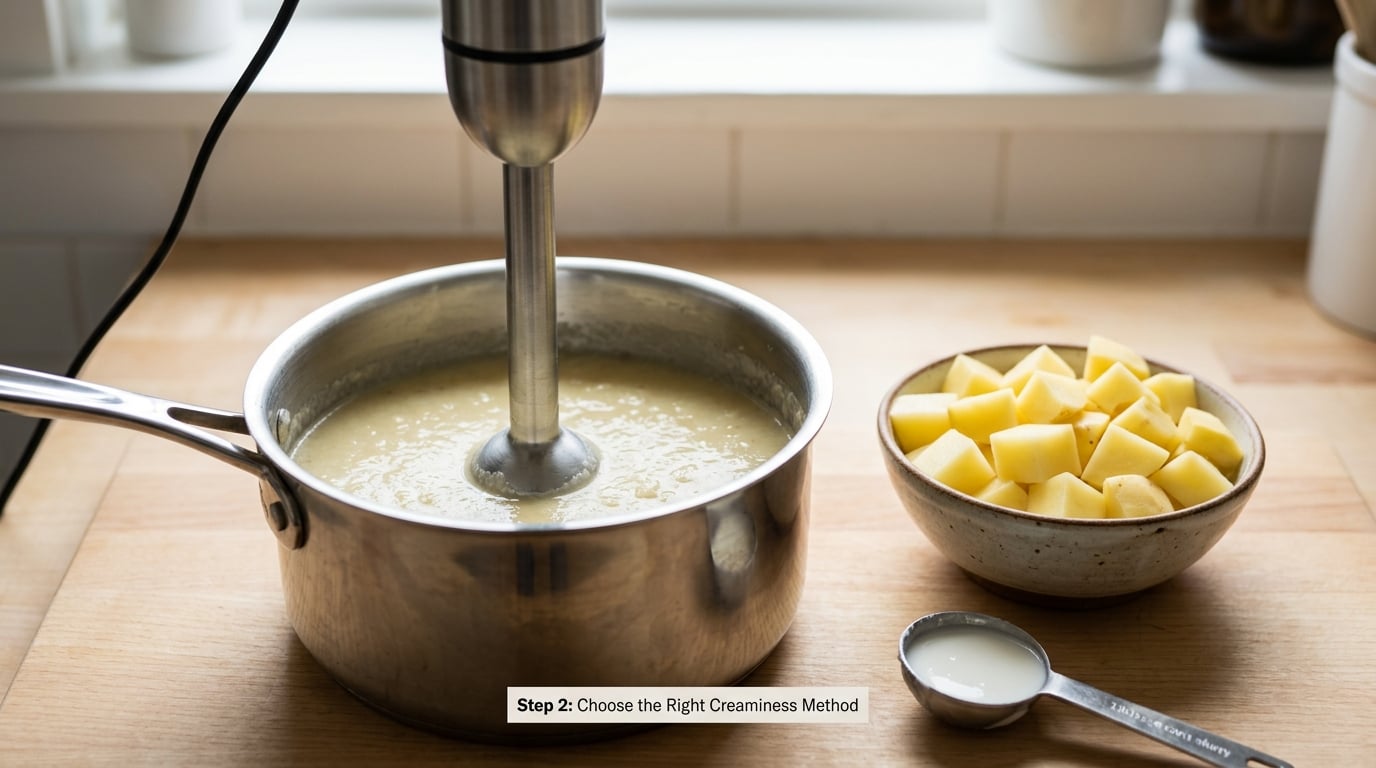
Step 2: Choose the Right Creaminess Method
Pick the thickener before you add liquid, and the rest of the recipe writes itself. Here is what each one does per quart of finished soup.
- Starchy vegetables, about 1 cup of diced potato per quart. Yukon Gold beats russet here because the starch gels without turning gluey. Add it with the raw vegetables and simmer until a piece crushes between two fingers.
- Cauliflower or butternut squash, about 1 cup per quart. Squash is mild and sweet, cauliflower is neutral enough to disappear into chicken soup. Both break down faster than potato.
- White beans, about half a cup cooked or one small can per quart. Blend them with their liquid. They thicken like starch and add a round, savory body that reads as dairy without tasting like beans.
- Raw cashews, about a quarter cup per quart. Soak them in hot water for 20 minutes, then blend with a cup of broth. This is the most luxurious option and the one people reach for when they want a bisque that feels expensive. Skip it if you are nut-free and use white beans instead.
- Full-fat coconut milk, about half a can per quart. Add it off the heat, warm but never boiling, or it can split and turn grainy. It carries a distinct coconut flavor, so it suits Thai, curry and squash soups better than a delicate chicken bisque.
- A cornstarch slurry, 1 tablespoon cornstarch mixed with 2 tablespoons cold water per quart. Whisk it in and simmer two minutes. Whisk cold water first, always, and let it cook the full two minutes or the soup will taste raw and starchy.
- A roux in the pot, 1 tablespoon fat plus 1 tablespoon flour per quart. Cook the paste in your soup pot for a minute before adding liquid. It is the one method that adds fat back, so skip it for dairy-free cooking.
Restaurants also lean on two techniques home cooks rarely use. Reduction — simmering uncovered until the liquid drops and concentrates — works beautifully on the stovetop but not in a slow cooker, which never gets hot enough to evaporate. A liaison, which is egg yolk whisked into a little warm broth and stirred back in off the heat, adds gloss and body with no starch at all. The same emulsion logic is what keeps hollandaise from breaking, if you want to see the technique outside a soup pot.
Step 3: Simmer Until the Ingredients Tender
Add your thickener, the remaining vegetables and enough stock to cover everything by an inch. Bring to a boil, then drop to a low simmer, cover, and cook 20 to 30 minutes.
You are waiting for two things: the vegetables to be completely tender, and the starch to release. Heat does the work here that cream would otherwise do, breaking down cell walls and turning potato and squash into a natural gelatin. Taste at the 20-minute mark. If a potato skewer slides through with no resistance, you are done simmering.
A crock pot gets this mostly right. It will soften the vegetables well, but it will not reduce a thin soup, so plan on adding a slurry or blended beans at the end rather than relying on concentration alone.
Step 4: Blend for a Silky Texture
Now decide how much texture you want. For a fully smooth soup, immersion-blend the whole pot, keeping the blade under the surface so it does not splash. For something with body, scoop out about a third of the solids first, blend the rest, then stir those pieces back in. That split-and-blend trick is the single biggest upgrade to a cream-free soup, and it costs you about two minutes.
Add delicate ingredients at the right moment. Fresh herbs, cream, oat cream and nut butter go in after blending, at low heat, because boiling any of them dulls the flavor or splits the fat. Nut creams and coconut milk go in last for the same reason.
Blend until there is no visible grain and the soup coats the back of a spoon. If you are using a countertop blender, work in small batches with the lid vented. The sound changes when you are done: the dull chop of vegetable pieces thins out to a smooth, even hum.
Step 5: Adjust the Consistency and Season
Thin with hot stock a ladle at a time, stirring between each, until the soup falls off the spoon in a slow ribbon rather than a fast stream. Thicken with a second slurry of cornstarch and cold water if you overshot, or simmer uncovered for a few minutes.
Season in layers. Salt first, then taste. Add lemon juice or a splash of vinegar and taste again — the acidity is what makes a soup without cream taste bright instead of flat. Finish with cracked black pepper and a small grating of nutmeg, which is the classic nudge on potato and squash soups. A spoonful of olive oil drizzled in at the end adds the roundness that fat would have provided.
For make-ahead, cool the soup quickly and refrigerate it for up to three to four days. Blanch greens and skip raw cream when freezing, since both turn mushy or split on reheating. Reheat gently on the stovetop with a splash of stock, and stir often — starch-thickened soups tighten as they heat. If you are cooking for a crowd, the timing works better than you would expect; our guide to brunch for a crowd without stress covers the same make-ahead logic.
Common Mistakes
The soup is watery. The most common complaint by far, and almost always fixable. Scoop out a cup of the soup, blend it smooth, and stir it back in. Repeat once. That fixes most thin soups in ninety seconds without changing the flavor.
Cornstarch tastes raw or makes the soup cloudy. Two causes. You either dumped the cornstarch straight into the pot, where it forms lumps, or you did not let it cook. Always slake it with cold water first and simmer for a full two minutes after it goes in.
Your soup is thick but not creamy. These are two different problems and the fix for one does not solve the other. Thickness is viscosity, creaminess is a fine, even suspension of solids. If the soup coats the spoon but tastes flat, the answer is blending more of it smooth, not adding more thickener.
Dairy or coconut milk curdled. The pot was too hot or you added it too early. Pull the pan off the heat, let it cool for a minute, and whisk the dairy back in off the boil. If it has already broken, strain out the curds or blitz the whole pot again.
Everything tastes bland. Season with salt before you reach for any thickener, and finish with acid. Cream-free soups almost always need more salt and more lemon than you expect.
The soup is gummy or gluey. You over-blended, or you used too much potato and simmered it too long. Blend longer, not shorter, and serve it the same day. There is no undoing gluey starch.
Your blender nearly exploded. Hot sealed liquid plus steam. Use an immersion blender, vent the lid, work in half-full batches, or cool it first.
Frequently Asked Questions
What can I use instead of heavy cream in soup?
The best substitutes are blended white beans, cubed Yukon Gold potato, soaked cashews, or full-fat coconut milk. Add about half a cup of beans or a cup of diced potato per quart of soup and simmer until it breaks down, then blend. A cornstarch slurry works in a pinch: one tablespoon mixed with two tablespoons of cold water, simmered two minutes.
How do I make soup creamy without milk or cream?
Use solids instead of fat. Simmer starchy vegetables or white beans until they collapse, then blend a portion of the soup until smooth and stir it back in. For extra silkiness without dairy, add a tablespoon of olive oil at the end and finish with lemon juice. The blended solids are what read as creamy on the palate.
What is the best way to thicken soup without flour?
Blend a portion of the finished soup and stir it back in. It is the fastest fix and adds no new flavor. If you want more control, simmer white beans, potato or squash directly in the pot before blending, or use a cornstarch slurry of one tablespoon per quart slaked with cold water. Reduction works on the stovetop but not in a slow cooker.
Can I use cornstarch to make soup creamy?
Yes, but cornstarch thickens rather than creames, so it needs blending or a starchy vegetable alongside it to get a creamy texture. Whisk one tablespoon of cornstarch with two tablespoons of cold water per quart, add it off the boil, and simmer two full minutes. Adding it straight from the bowl is what causes lumps and a raw taste.
How do I keep dairy-free soup from being watery?
Put a thickener in from the start instead of rescuing the soup at the end. Simmer it with a cup of diced Yukon Gold potato, cauliflower, butternut squash, or half a cup of white beans per quart. The single best rescue for an already-thin pot is to scoop out a cup, blend it completely smooth, and stir it back in.
Can creamy soup be made ahead and reheated?
Yes. Cool it quickly, refrigerate for up to three to four days, and reheat gently on the stovetop with a splash of stock since starch-thickened soup tightens as it warms. Freeze it without cream, raw greens or herbs, which turn mushy or bitter. Stir well every minute or two while reheating, and loosen with liquid rather than more thickener.
Start with the aromatics, add a starchy thickener at roughly one cup per quart, and let it simmer until a fork goes through with no resistance. Blend a third of the solids, leave the rest whole, then finish with salt and lemon. That is the whole method, and it is why a cream-free soup can still taste like the ones you remember.