
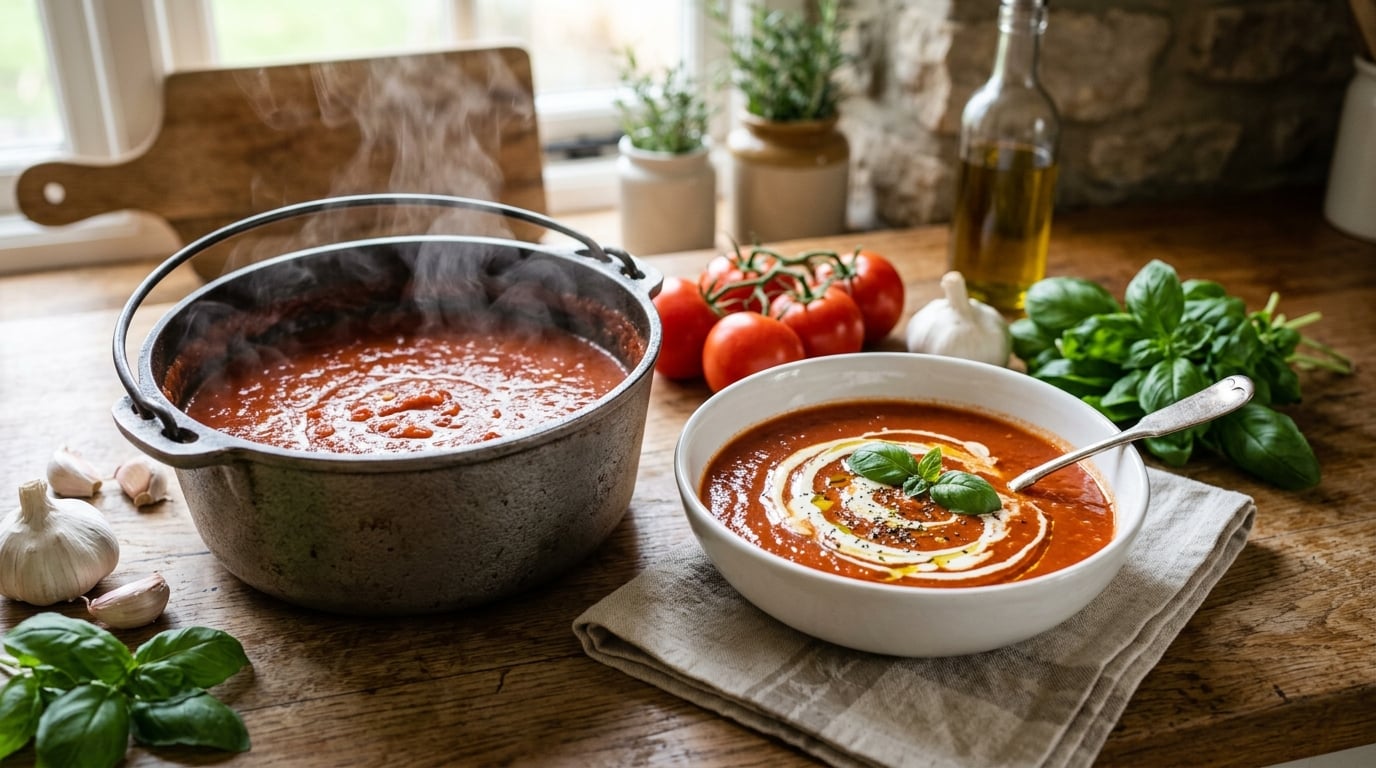
Restaurant tomato soup tastes better because of technique, not expensive tomatoes: roast the tomatoes and aromatics to concentrate them, simmer low and long, blend to a true purée, and add cream and butter off the heat. That is the whole secret. Skip any one of those four and you get something closer to a quick canned-soup upgrade.
I make this roughly once a week in 2026, usually without measuring anything, and it still beats what most restaurants ladle out. The reason is that a home cook seasons at the end and a restaurant kitchen seasons at every stage. Once you learn where the flavor actually comes from, the recipe stops being a mystery and starts being a set of repeatable moves.
It also helps to know what you are fixing. Most bowls that taste like the homemade version fail on the same three things: watery texture from a short simmer, flat flavor from seasoning too late, and sharpness from acid nobody balanced. Each one has a specific correction, and I walk through all three below.
If you are curious about the wider pattern, I wrote about why restaurant food tastes better than home cooking, and a lot of it comes down to the same idea: a professional kitchen adds the same ingredient in three stages instead of all at once.
Table of Contents
- What You Need
- Step-by-Step: How to Make Tomato Soup Taste Like a Restaurant
- Common Mistakes
- Frequently Asked Questions
- What is the secret ingredient in restaurant tomato soup?
- Can I use canned tomatoes instead of fresh for soup?
- How do I thicken tomato soup without cornstarch or flour?
- How do I stop cream from curdling in tomato soup?
- How long should tomato soup simmer for the best flavor?
- How do I store and reheat homemade tomato soup?
- Conclusion
What You Need
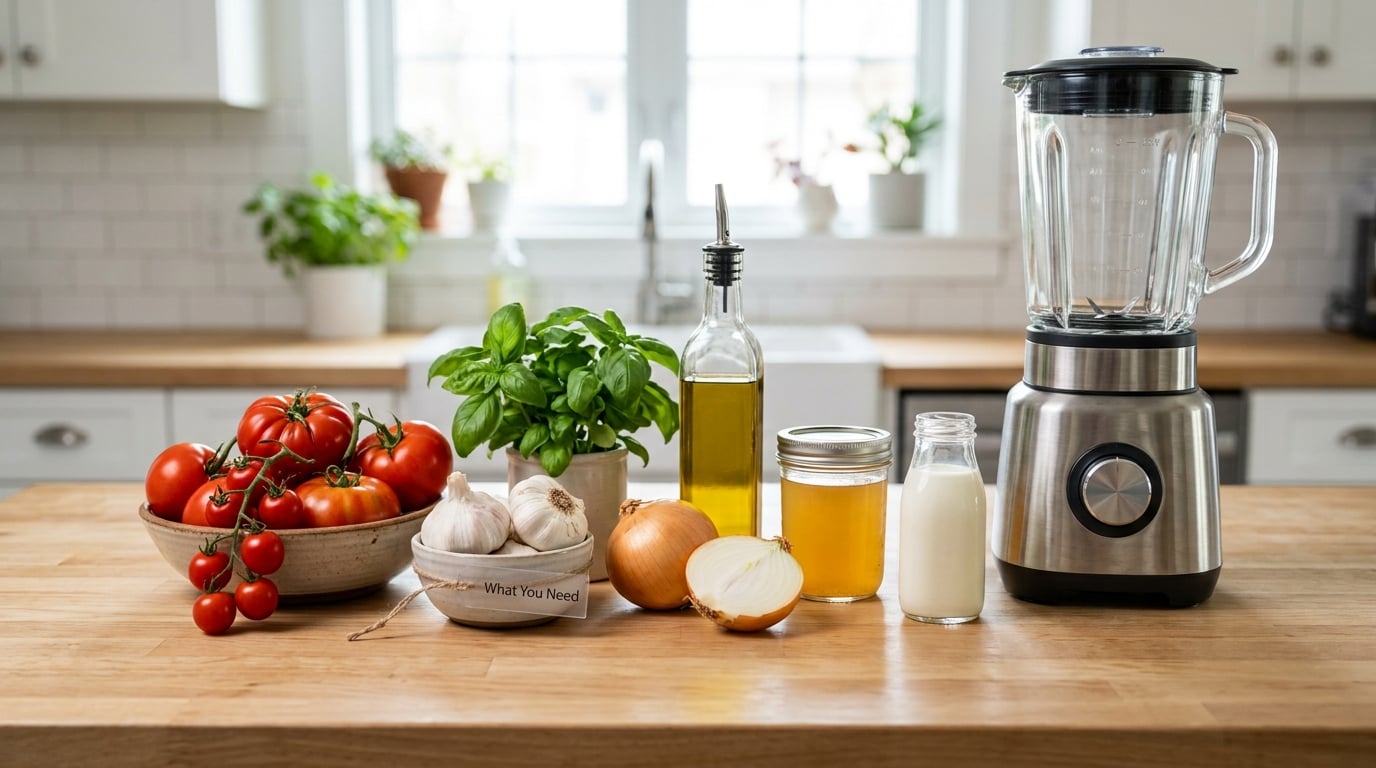
You need very little, and almost all of it is pantry food. A restaurant bowl depends on the handling of the ingredients far more than on an exotic shopping list, so resist the urge to buy anything unusual before you have the basics down.
The base
- Two 28-ounce cans of whole San Marzano tomatoes, or about 3 pounds of ripe Roma tomatoes if you are using fresh. Restaurants almost always reach for canned, because the flavor is consistent and the tomatoes were picked ripe.
- One 6-ounce can of tomato paste. This is the single biggest flavor lever in the pot, and the answer to what the secret ingredient is. It is cooked, concentrated tomato, and it adds an intensity fresh tomatoes never quite reach.
- 4 cups of broth. Chicken broth gives a rounder, more savory result; vegetable broth keeps it vegetarian. Use low-sodium broth and season the soup yourself, since canned broth already carries a surprising amount of salt.
The aromatics and the fat
- One yellow onion, one or two carrots, and 4 to 6 garlic cloves
- 3 tablespoons extra-virgin olive oil plus 2 tablespoons unsalted butter
- A splash of dry sherry, dry white wine, or even red wine vinegar. This is the trick regular home cooks never do, and it is the single most repeated upgrade in cooking forums.
The seasoning and the finish
- Kosher salt, black pepper, a teaspoon of sugar or honey, and a small splash of red wine vinegar or balsamic for acid control
- Heavy cream, stirred in after the heat comes off. Half-and-half works, whole milk is riskier.
- Fresh basil, a drizzle of good olive oil, and Parmesan or croutons for the top of the bowl
The equipment
An immersion blender in the pot is the easiest option and limits the mess. A high-speed countertop blender gives a silkier result, and a fine-mesh strainer is how a restaurant kitchen gets that last bit of polish, though it costs you some yield. The strainer step is the same idea as patience with an omelet that does not stick: give it one extra minute and the payoff is obvious.
Step-by-Step: How to Make Tomato Soup Taste Like a Restaurant
This method takes about 45 minutes of active work and roughly an hour end to end. The order matters more than the clock. Roast, build the base, simmer long, blend, then balance and finish.
1. Roast the tomatoes and aromatics
Roasting drives off water and concentrates what is left, turning mild raw tomato into something sweet and deep. It is the step that separates a restaurant bowl from a pot of stewed tomatoes, and it takes 30 minutes in a hot oven.
Heat the oven to 425 F (220 C). Spread the tomatoes, halved onion, carrots, and unpeeled garlic cloves on a sheet pan, toss with 2 tablespoons of olive oil and a good pinch of salt, and roast until the edges char in spots and the garlic is soft and spreadable.
Squeeze the garlic out of its skins and discard them. If you are using fresh tomatoes, roast them until they collapse and the juices caramelize on the pan. Scrape up those brown bits; they are the best flavor in the dish and most people throw them away.
2. Build the aromatic base
The aromatic base is where savory depth comes from, and it depends on cooking the onion past translucent without browning the garlic. Browned garlic turns the whole pot bitter within a few minutes, and there is no fixing it afterward.
Warm the remaining tablespoon of olive oil and the butter in a heavy pot over medium heat. Cook the diced onion with a pinch of salt for 8 to 10 minutes until soft and translucent, add the carrots for another 5 minutes, then add the garlic and cook 60 to 90 seconds until fragrant.
Stir in the tomato paste and let it cook against the hot pan for a full 2 minutes. This step is skipped constantly and it is the difference between a soup that tastes layered and one that tastes like warm tomato water. The paste will darken from bright red to brick.
3. Simmer with broth and season for depth
How to make tomato soup taste like a restaurant comes down to a long, uncovered, gentle simmer with seasoning at every stage rather than one big pinch at the end. Restaurants thicken with reduction, and they build flavor in the pot the same way.
Add the crushed tomatoes, the roasted vegetables, the broth, and 1 teaspoon of kosher salt. Bring to a boil, then drop the heat until the surface barely trembles, and leave the lid off.
Simmer 30 to 45 minutes, stirring now and then. Canned tomatoes break down as they cook, and the uncovered simmer is what thickens the soup without a single grain of starch. Add the sherry or wine splash now, and taste for salt every ten minutes, because broth and tomatoes both bring their own.
4. Blend until smooth and adjust the texture
Blending changes the soup from a collection of cooked vegetables into a single velvety liquid, and the type of texture you pick depends on whether you pass it through a strainer. Blended is smooth; strained is silky.
Blend in the pot with an immersion blender, keeping the head fully submerged, or transfer in batches to a countertop blender and blend on high for a full 45 to 60 seconds. Underblending is the usual reason homemade soup still has grainy bits.
If you want the restaurant texture, press the purée through a fine-mesh strainer. You will lose about a cup of volume and gain an even, glossy body. If it is now too thick for your liking, loosen with warm broth a ladleful at a time, never with milk.
5. Balance the acidity and seasoning
Soup tastes flat when the salt arrives at the end and the sugar is missing, not because the tomatoes are bland. Sugar in tomato soup is not for sweetness; it is a small measurement that softens the sharpness of acid so the savory notes come forward.
Taste the soup hot, then let a spoonful cool to room temperature and taste again. Warm soup hides acidity, which is why so many people season a bowl to satisfaction and then find it sharp once it has cooled a little. Adjust while it is hot and you will overcorrect.
For sharpness, start with 1 teaspoon of sugar or honey and stir it in. If the soup tastes flat rather than sour, add salt first and wait a minute before reaching for sugar. If it tastes thin and bright instead of round, a small splash of red wine vinegar or balsamic is the fix, used one teaspoon at a time.
6. Finish and serve like a restaurant
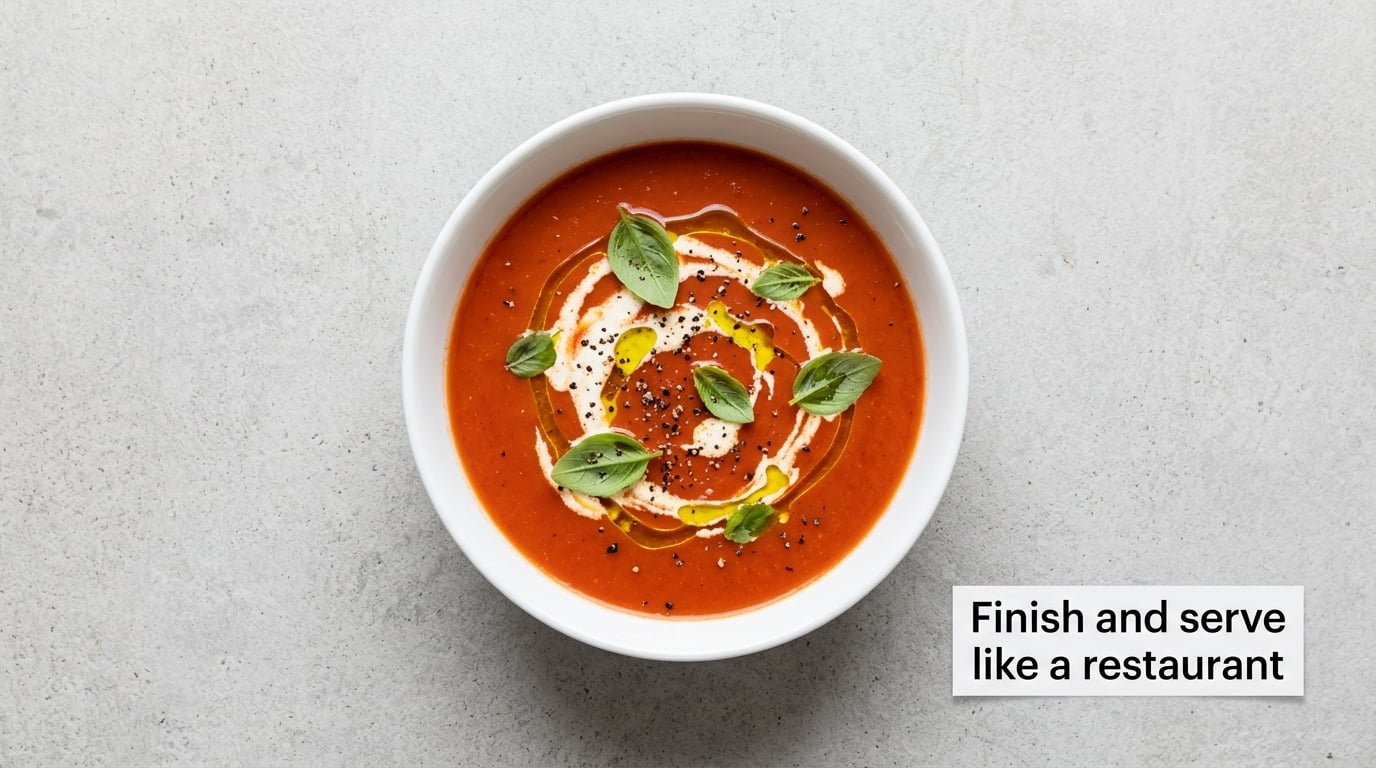
The finish is where richness enters, and it goes in after the heat comes off the stove. Cream added to a boiling pot can split, and boiling after the cream goes dulls the flavor you just spent an hour building.
Take the pot off the heat and let it sit for two minutes, then stir in 1 cup of heavy cream. While it is still warm, whisk in 2 tablespoons of cold unsalted butter a piece at a time, which is the French finishing technique known as monter au beurre. It will thicken the soup slightly and leave a faint gloss on the surface.
Taste once more, stir in torn basil, and serve at once in warm bowls. Top each one with a drizzle of good olive oil, a small pour of cream, cracked black pepper, and croutons or grated Parmesan. A bowl that looks finished makes the whole difference, and if you are cooking for a group, my brunch-for-a-crowd plan works just as well for a soup night.
Common Mistakes
Almost every disappointing bowl of tomato soup fails in one of six ways, and each has a specific cause rather than a general seasoning problem. Work down the list and you will usually find the culprit in a minute.
Watery or thin soup
The usual cause is a short simmer or a covered pot. Water needs time and heat to leave, and a lid traps the steam. Simmer uncovered for a further 15 to 20 minutes, or blend in a ladle of the reduced purée. A spoonful of tomato paste whisked into hot broth thickens it without the starchy taste that cornstarch and flour leave behind.
Flat, bland flavor
Seasoning was added at the end and the soup never reduced. Salt in layers during the simmer, and taste again every ten minutes. If it is still flat after salting, the answer is more cooking time, not more ingredients.
Too acidic or too sharp
Unbalanced acid reads as harsh, and most cooks reach for more cream when what they need is a teaspoon of sugar. Add sugar gradually and retaste. If the soup is thin and bright at the same time, a small splash of vinegar deepens it rather than flattening it.
Bitter flavor
Almost always one of two things: garlic that browned in the oil, or a hard boil that scorched the bottom of the pot. Neither is recoverable, so keep the heat gentle and watch the bottom during the reduce.
Curdled or split cream
You added dairy to a hot pot. Take the soup off the heat, let it cool a minute, and whisk the cream in slowly. It may look broken at first and come together as it finishes cooking off the flame.
A thick, starchy bowl
You reached for a roux or cornstarch slurry, which is exactly what restaurants avoid in a tomato soup because it dulls the fruit and coats the palate. Reduction, a strained purée, and a butter finish all thicken a soup without starch.
Frequently Asked Questions
What is the secret ingredient in restaurant tomato soup?
Tomato paste cooked in the pan for two full minutes before anything liquid goes in. It is concentrated, cooked tomato, and it builds a depth of savory flavor that fresh tomatoes alone do not reach. A finishing knob of cold butter stirred in off the heat is the second half of the answer, and it is what gives a restaurant bowl its gloss.
Can I use canned tomatoes instead of fresh for soup?
Yes, and most restaurant kitchens do. Canned whole San Marzano tomatoes are picked ripe and at peak, so their flavor is more consistent than supermarket fresh tomatoes that were picked green. Use two 28-ounce cans for about 3 pounds of fresh Roma. Reserve fresh tomatoes for roasting, where they are genuinely worth the effort.
How do I thicken tomato soup without cornstarch or flour?
Simmer it uncovered so water evaporates and the natural sugars and pectin in the tomatoes do the work. Next, blend a ladleful of the finished purée back into the pot, or pass the whole soup through a fine-mesh strainer. A final whisk of cold butter off the heat adds body and a glossy surface without any starch at all.
How do I stop cream from curdling in tomato soup?
Take the pot completely off the heat, wait a couple of minutes, and whisk the cream in gradually rather than pouring it into a bubbling soup. Tomato is acidic, so dairy splits easily above boiling. Heavy cream is more forgiving than milk because its higher fat content keeps the proteins from tightening into curds.
How long should tomato soup simmer for the best flavor?
Give it 30 to 45 minutes at a bare simmer with the lid off. That is long enough for the tomatoes to collapse and the flavors to marry, and short enough to keep some brightness. If you have time, the flavor is noticeably better the next day, after the soup has rested in the refrigerator overnight.
How do I store and reheat homemade tomato soup?
Cool it quickly and refrigerate it in a covered container for no more than 3 to 4 days, per USDA guidance. Freeze it in portions for up to 2 to 3 months. Reheat gently on the stove over low heat and stir often, adding a splash of broth if it has tightened. Never boil it, and add any extra cream after the heat is off.
Conclusion
Start with concentrated tomatoes, whether that means roasting fresh ones or using canned San Marzano, and cook the tomato paste properly before anything else joins the pot. Season in layers during a long uncovered simmer, blend properly rather than roughly, and taste again once the soup has cooled slightly.
Only then add the cream and butter off the heat, and adjust acidity with a measured teaspoon of sugar before serving. If you make those six moves in that order, how to make tomato soup taste like a restaurant stops being a technique question and becomes a habit.