
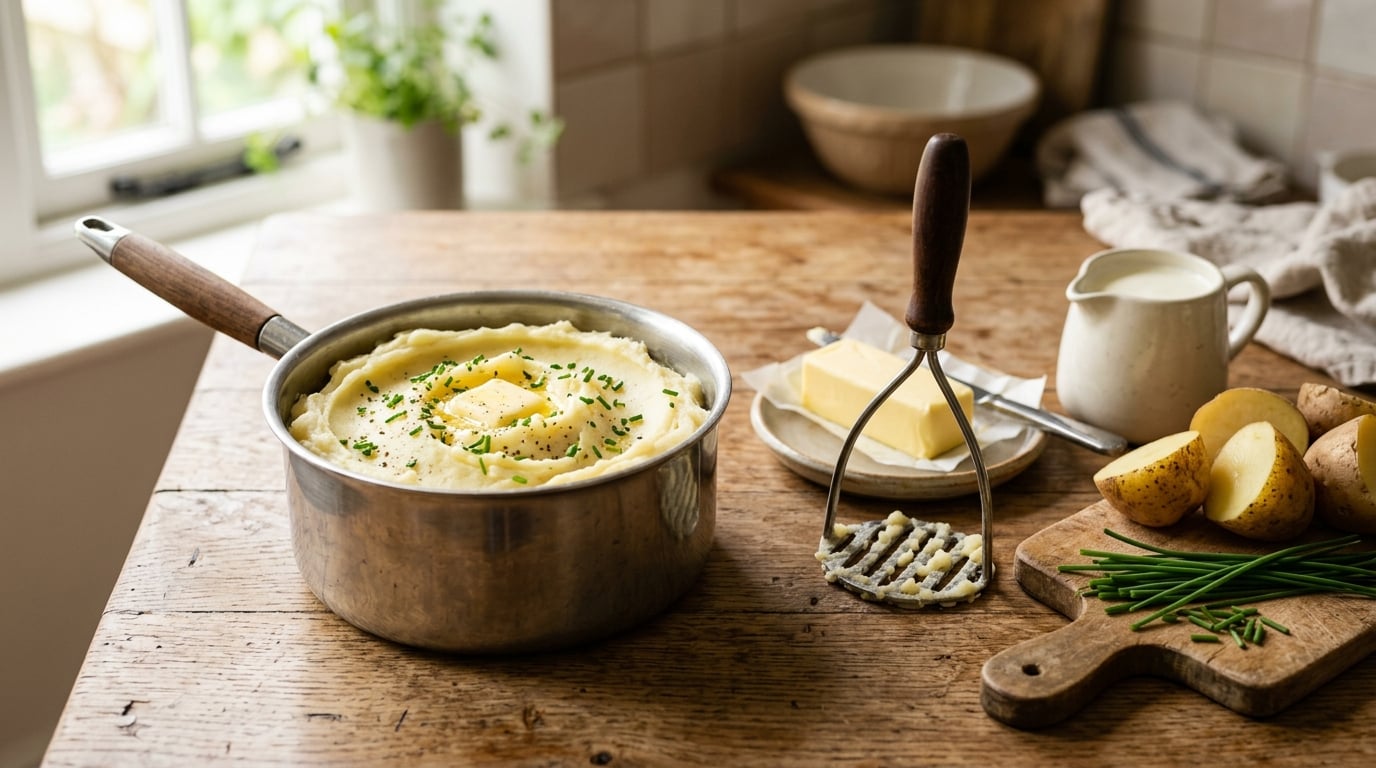
Restaurant-style mashed potatoes come down to four things: a low-starch potato, a gentle simmer instead of a hard boil, potatoes dried properly after draining, and plenty of warm butter and cream folded in gradually. Get all four right and the same pot that usually gives you gluey, watery mash turns out glossy and silky, with no ricer and no restaurant equipment involved. It takes about 35 minutes start to finish.
So why do restaurant mashed potatoes taste so good? Because a kitchen line controls the four variables home cooks usually fumble: starch content, cooking temperature, how much water is still hiding in the pot, and the fat-to-liquid ratio. Hold a hard boil on a starchy potato and the cells rupture, dumping free starch and water into the pan. That is the gluey, thin, dull stuff most of us end up serving.
Table of Contents
- What You Need for Restaurant Style Mashed Potatoes
- Step-by-Step: From Raw Potato to Restaurant Mash
- Common Mistakes and How to Fix Them
- Frequently Asked Questions
- What potatoes are best for restaurant-style mashed potatoes?
- Can I make mashed potatoes without butter or heavy cream?
- Why are my mashed potatoes watery or gluey?
- Should I mash potatoes while they are hot or let them cool first?
- How do I keep mashed potatoes creamy when reheating them?
- Can I make restaurant-style mashed potatoes ahead of time?
- Conclusion
What You Need for Restaurant Style Mashed Potatoes
For six servings, use 2 pounds (900 g) of potatoes. A standard stick of butter, 8 ounces (225 g), goes in for every 2 pounds, plus 1 cup (240 ml) of dairy. That sounds greedy, and it is on purpose: fat coats the freed starch grains and stops them bonding into a paste.
Potatoes: Yukon Gold, Russet, or a Blend
Yukon Gold is the default choice for a creamy mash, and it is what most cooks reach for without thinking hard about it. Its low-to-medium starch content and waxy flesh mash into something moist and smooth rather than paste-like.
| Potato | Starch level | Texture after mashing | Best for |
|---|---|---|---|
| Yukon Gold | Low to medium | Creamy, moist, holds shape | Silky restaurant-style mash |
| Russet | High | Dry and fluffy, risks glue | Lighter, fluffier mash |
| Yukon Gold and russet blend | Medium | Balanced body with some fluff | Buffet lines and big crowds |
| Red or new potatoes | Low | Waxy, never fully smooth | Mash with the skins on |
The Dairy, and How Much of It
Heavy cream gives the richest result. Whole milk works, and sour cream or buttermilk adds tang that suits a holiday table. One thing worth learning from people who cook this weekly: treat the cream and butter amounts as a variable, because potatoes themselves vary from batch to batch. Start with the numbers below, then adjust by feel.
| Dairy | Amount | What it adds |
|---|---|---|
| Heavy cream | 3/4 cup (180 ml) | Richest, silkiest texture |
| Whole milk | 1/2 cup (120 ml) | Lighter, still creamy |
| Buttermilk | 1/2 cup (120 ml) | Tangy, slightly thick |
| Sour cream | 1/2 cup (120 ml) | Soft tang, reheats well |
Tools and Seasoning
You need a large pot, a colander, a potato masher or ricer, and a wooden spoon. A ricer is a cheap upgrade that pushes potatoes through fine holes for a texture no masher reaches, but a masher works fine if you keep your wrist loose and stop before the potatoes turn tacky.
Also: unsalted butter, kosher salt, black pepper, and optional fresh chives, thyme, rosemary, or two garlic cloves. Salt the cooking water like you would pasta, at about 1 tablespoon of kosher salt per 4 quarts.
Step-by-Step: From Raw Potato to Restaurant Mash
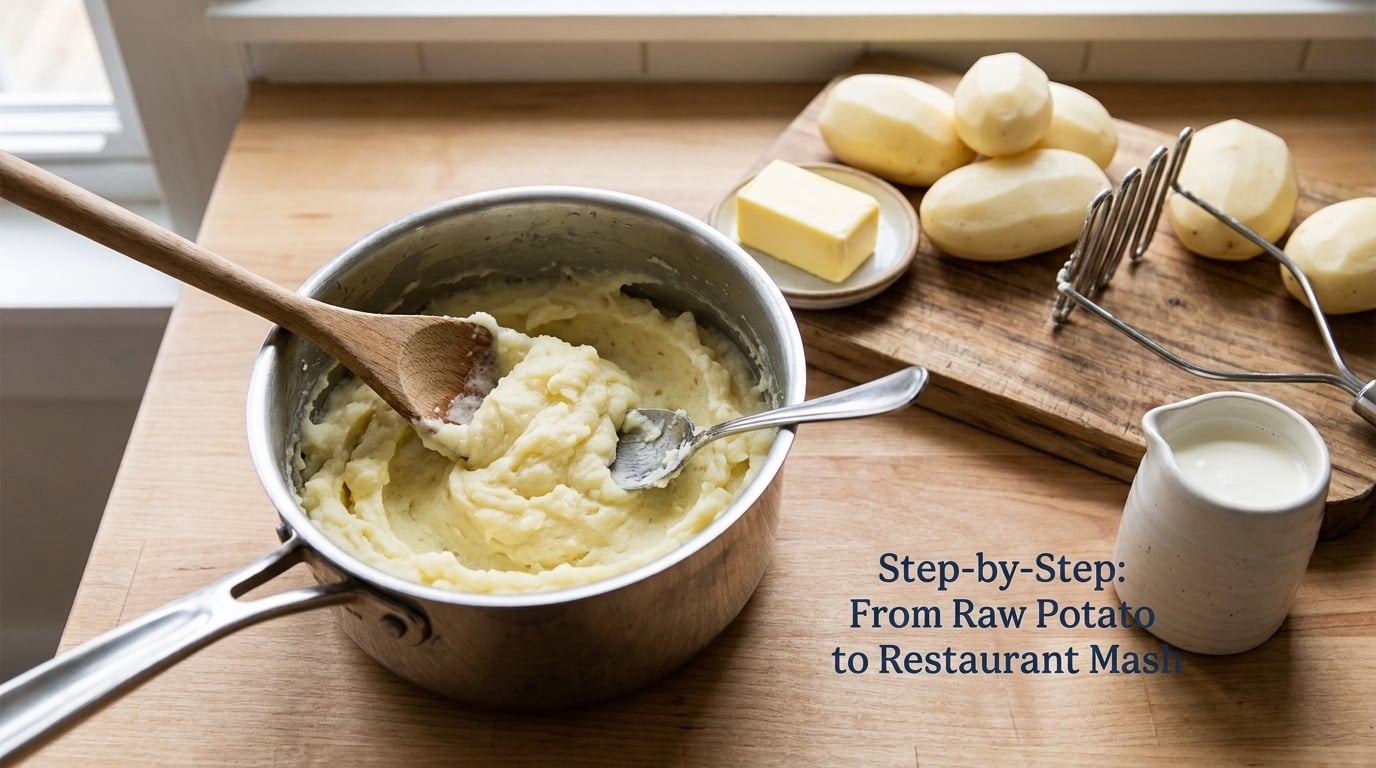
Step 1: Choose and Prepare the Potatoes
Scrub the potatoes well and cut them into even 1-inch cubes. Even size is the whole job here: small, uniform pieces cook at the same rate, so you never end up with some mushy and some firm at once. Leave the skins on if you like, or peel them. Cooking with the skin on holds more moisture in the potato, and plenty of home cooks prefer to peel after boiling.
Put the cubes in a pot, cover them by an inch with cold water, and add the salt. Starting in cold water is a real restaurant habit. The potatoes heat slowly, the outside never shocks and sloughs before the center softens, and you get even cooking from the first minute.
Step 2: Boil the Potatoes Until Tender
Bring the pot to a boil, then drop the heat so the water holds at a steady simmer with small bubbles breaking the surface. A rolling boil is what breaks potatoes down too fast and pulls starch into the water, which is how you get gluey mash before you have even touched the masher.
Cook for 15 to 20 minutes and start testing at 15. A knife should slide into a cube with no resistance at all. If it meets any drag, give it two more minutes. Undercooked potatoes mash into strings, and no amount of butter hides that.
Drain the potatoes in a colander, then put them back into the dry, empty pot you just drained them over. Set it on the warm burner for a minute or two and swirl it. That steam-off step evaporates surface water so the dairy you add goes into the potato rather than pooling in the bottom.
Step 3: Start Mashing While the Potatoes Are Hot
Mash while they are still hot. Cooled starch sets into a firm paste and will not fold in the butter properly, which is why leftover mash is so hard to bring back to life.
Rice or mash them first, with no butter or milk added yet. Work in short, light presses, and stop as soon as the texture is right. Long, hard stirring ruptures every remaining cell and releases the raw starch that makes mash gummy. Slightly lumpy is a deliberate preference for plenty of home cooks, and that is fine, but if you want the restaurant look you keep going.
One finishing technique you will see in restaurant kitchens and rarely at home: after the mash is done, beat it hard with a wooden spoon for a full minute. The mash picks up air, lightens, and turns glossy.
Now add the warm dairy. Warm it first in a small saucepan with the butter, the garlic, and any herbs, until everything is melted but not boiling. Pour it in a third at a time, folding gently after each addition. Cold dairy tightens the starch and gives you a tight, gluey bowl. You want mash that slumps slowly off the spoon, not one that stands upright.
Step 4: Season and Finish Like a Restaurant
Season generously with kosher salt and freshly ground black pepper, and taste before serving. Restaurant mash usually carries more salt than home versions because it sits on a buffet for 20 minutes and dries out.
Taste again after it has sat two minutes. The mash is the point where you adjust, so keep butter, salt, and cream nearby and correct until it tastes like you want it to remember.
Common Mistakes and How to Fix Them
Most disappointing bowls of mash fail on one of five fronts, and each one has a fix you can apply mid-cook.
Gluey or gummy mash
You boiled too hard, cooked too long, or mashed too aggressively. Next time use a waxy potato, keep the simmer gentle, and mash only until the lumps are gone. Glue cannot be repaired after the fact, only prevented. A little extra warm cream will loosen a slightly tight bowl, but it will not reverse starch that has already gelled.
Watery or thin mash
Usually undrained potatoes or dairy added too fast. Drain thoroughly, steam the potatoes dry in the pot, then add dairy a third at a time. The potato soaks up what it can take and stops. If the mash is still loose at the end, let it sit on a low burner for two or three minutes, stirring, until it tightens.
Lumpy mash
Undercooked potatoes, or a masher being used like a hammer. Cut the pieces smaller, test for doneness before you start, and press rather than stab. For genuinely lump-free results, push the mash through a ricer first, then use the masher to finish.
Gray or dull potatoes
Long cooking and oxygen exposure dull the color. Cook them just to tender, cut them smaller so the time is shorter, and keep the whole potato in one piece as long as you can. A squeeze of lemon into the cooking water or the finished mash helps too.
Bland or heavy mash
Fat was added all at once, so it pooled instead of dispersing. Melt the butter with the dairy first and add it warm in stages. Then season harder than feels right, and add something with a point of view: roasted garlic, sour cream, a spoon of mustard, or chopped chives stirred in at the end.
Make-Ahead and Reheating Without the Glue
Make-ahead mash is the most common holiday-season failure. Hold the potatoes and the dairy apart until the last hour, because dairy stirred in early goes off and tightens while it waits. If you must finish early, make the mash slightly drier than you want it and cover it directly, with plastic pressed onto the surface, so no skin forms.
Refrigerate leftovers within two hours and eat them within three to four days. To reheat, warm a splash of milk or cream in a saucepan over low heat, add the cold mash, and stir gently until it loosens. Do not use a microwave for the whole bowl, and do not let it boil. Reheated food should reach 165°F (74°C) all the way through. A skillet gives you a slightly crisp surface, which is how a lot of home cooks revive a portion.
Restaurant-Style Variations Worth Trying
Once the base method is solid, change one thing at a time. A spoonful of sour cream folded in at the end adds tang and keeps leftovers creamy on day two. Buttermilk instead of milk gives a slightly thick, bright result. Roasted garlic cloves blended into the dairy is the easiest upgrade on the list, and a herb butter stirred through at the end brings rosemary and thyme to every bite.
What do chefs add to mashed potatoes? Usually very little. The classic restaurant version is potatoes cooked in salted water with a bay leaf, drained, then pressed through a ricer with a generous amount of butter, sometimes finished with a splash of milk or cream and nothing else. No egg, no flour, no cheese. The creaminess comes from the ricer and the butter, not from a long list of additions.
On a restaurant menu, order them alongside a steak and you will usually get a puree, not a mash. A few chefs pipe the potato onto the plate and dot sauce around it. Piping the mash yourself, in a buttered ring mold, is a two-minute trick that makes a home dinner look plated rather than spooned from a pot.
Frequently Asked Questions
What potatoes are best for restaurant-style mashed potatoes?
Yukon Gold is the best all-around choice. Its low-to-medium starch content and waxy flesh mash into something creamy and moist without turning gluey. Russets make a lighter, fluffier mash, but they need careful draining and gentle mashing. A blend of the two gives you more body on a buffet line, where the mash has to hold its shape for a while.
Can I make mashed potatoes without butter or heavy cream?
Yes. Olive oil gives you a lighter result that still coats the starch, and buttermilk, whole milk, or plain yogurt all work in place of cream. The fat matters more than the specific fat: without enough of it, the freed starch bonds and the mash turns gluey. Expect to add it warm and in stages, and season a little harder to compensate for the missing butter flavor.
Why are my mashed potatoes watery or gluey?
Watery and gluey are usually the same root cause: too much free starch and water released from the potato. It comes from boiling at a rolling boil instead of a simmer, cooking well past tender, or mashing too hard. Use a waxy potato like Yukon Gold, start in cold salted water, keep the simmer gentle, drain, and steam the potatoes dry before mashing.
Should I mash potatoes while they are hot or let them cool first?
Mash them while they are hot, right out of the colander and into the dry pot. Warm potato is soft enough to fold in butter and dairy, and it absorbs liquid properly. Once cooked potato cools, the starch firms up into a paste that refuses to blend smoothly, which is exactly why cold leftover mash can never be revived as well as fresh.
How do I keep mashed potatoes creamy when reheating them?
Add a splash of warm milk, cream, or buttermilk in a saucepan over low heat and stir gently until the mash loosens. Avoid the microwave, and never bring it to a boil, since both dry it out and can make it gluey. Loosen it a little more than you think you need, since the sauce thickens as it heats. Reheat until it reaches 165°F throughout.
Can I make restaurant-style mashed potatoes ahead of time?
You can, with one adjustment: make the mash slightly drier than you want it to be, and press plastic wrap directly onto the surface so no skin forms. Hold the butter and cream back and add them when you reheat, because dairy that sits and rewarms turns grainy. Refrigerate within two hours, use within three to four days, and reheat gently with a splash of fresh dairy.
Conclusion
If you change one thing in your routine, change the potato. Yukon Gold, cut into even 1-inch cubes, started in cold salted water and held at a gentle simmer, fixes most of what goes wrong before the masher ever comes out. Then drain, steam the pot dry, and fold in warm butter and cream a third at a time. Season twice, taste once more after it settles, and you have how to make restaurant style mashed potatoes at home down to a repeatable method that works every October.