
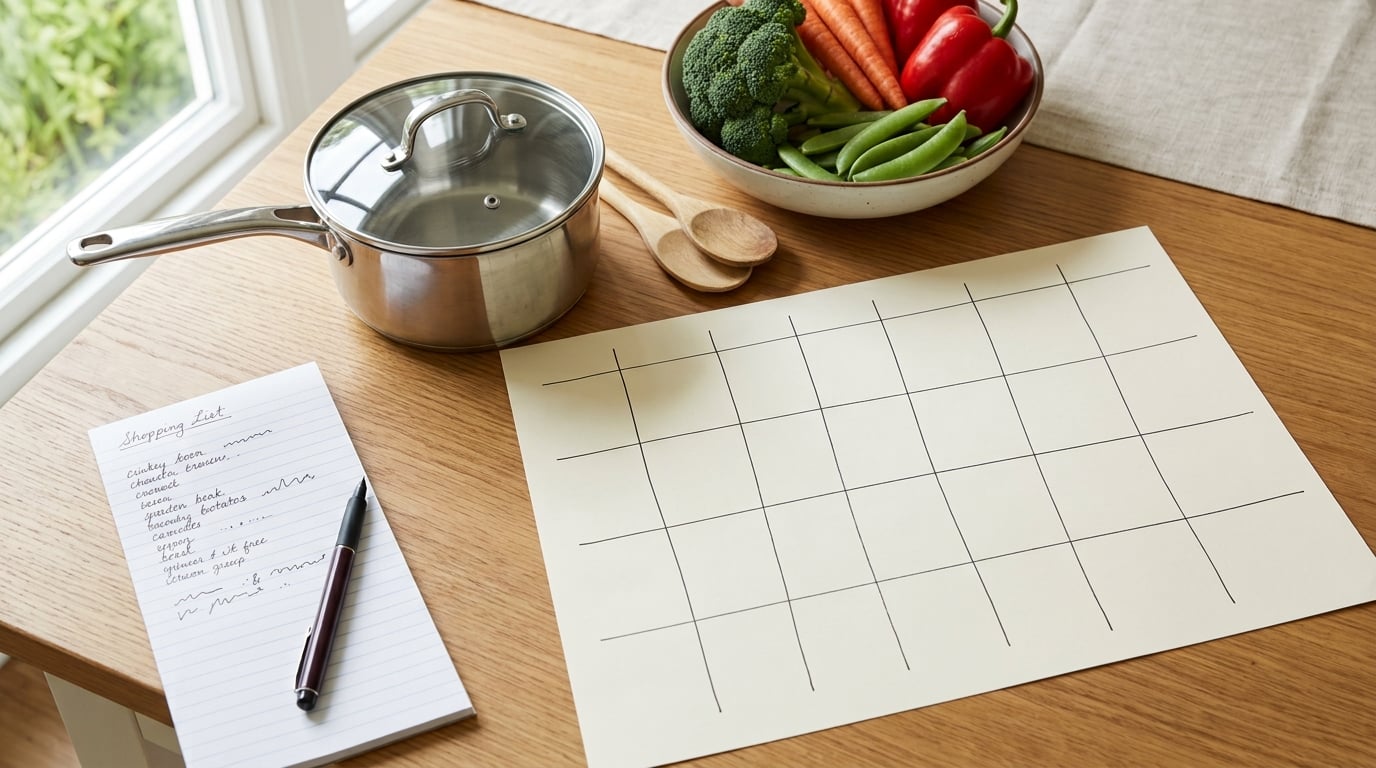
To plan weeknight dinners by day of the week, give each night a job before you pick a recipe: Monday is the easy one-pan start, Tuesday reuses Monday’s cooking, Wednesday is a fast pantry dinner, Thursday is the flexible family favorite, Friday can be no-cook, Saturday takes the ambitious meal, and Sunday resets the kitchen. The whole plan takes about twenty minutes to set up on a Sunday afternoon.
The reason this works is that it removes the 5pm question entirely. You are not deciding what to cook at 6pm when you are already hungry, you are deciding at 4pm on a Sunday when you have a coffee and a notebook. A meal theme is simply a named format you reserve for a day, and a name is easier to remember than a recipe.
I have kept a written plan on the refrigerator for years now, and the households that stick with it are almost never the ones with the most time. They are the ones whose plan is visible and already decided.
What You Need
You need very little. A blank calendar or a sheet of paper with seven boxes is the whole planning kit. Everything else already exists in your kitchen and you just have to look at it before you shop.
Start with what you already have
Take thirty seconds to open the refrigerator and the freezer and write down what is there. Half-used bags of frozen vegetables, a block of cheese, half a bag of tortillas, cooked rice from two nights ago. This inventory decides more of your week than any recipe list does, and it is the step people skip most often.
The staples that make a pantry dinner possible
A short list of shelf-stable basics does more work than a long list of fresh ingredients. Keep dried pasta, canned beans, canned tomatoes, rice, oats, tortillas, olive oil, vinegar, garlic powder, smoked paprika, cumin, dried herbs, stock cubes, soy sauce and a jar of sauce you like on hand. With those in the cupboard, Wednesday dinner is a fifteen-minute job even if you came home late.
A freezer with a little space in it
Leftovers need somewhere to go that is not the front of the fridge. When you cook six servings on Saturday, two of them can go straight into freezer containers for the week after next, which turns one cook into two meals and is the cheapest planning trick there is.
A written Plan B
Keep a second list of three or four meals that need no cooking, or almost none. Frozen dumplings, soup and a sandwich, eggs on toast, a rotisserie chicken from earlier in the week. This is the piece most plans are missing. Commenters on recipe blogs say it constantly: a plan with no fallback is a plan that fails by Wednesday.
One notebook or shared calendar
Whatever holds the plan has to live where everyone can see it without opening an app. A sheet of paper on the refrigerator, a whiteboard on the kitchen door, a shared note on a phone. If it takes more than ten seconds to check, it will not get checked.
Step-by-Step: How to Plan Weeknight Dinners by Day of the Week
The method is simple: match each night to the amount of energy and attention you will realistically have, not to what sounds good on Sunday. A nurse working Tuesday night shift and a parent with a Thursday night soccer game do not need the same plan, and pretending otherwise is why most systems collapse by Wednesday.
Monday: Start With a Simple Sheet-Pan Dinner
Monday sets the tone for the week, so keep it deliberately boring and low-effort. One pan, ingredients you trust, and minimal cleanup. Sheet-pan chicken thighs with potatoes and peppers goes in the oven at 425F and comes out about 35 minutes later, and the tray washes itself while you eat.
What matters is not the dish but the rule. Your Monday is the night you are tired from the weekend but still motivated enough to do something. Put the easiest repeatable recipe there and do not try to impress anybody. Most families cook this same meal three or four times a month without noticing, and that is the point: repetition is what makes the rest of the week affordable in time and money.
Tuesday: Turn Monday Into Leftovers
Do not cook on Tuesday. Chop the leftover chicken and roasted vegetables, put them over rice or greens in grain bowls, and add whatever dressing is in the door of the refrigerator. It takes eight minutes, it uses the food you already cooked, and it doubles as lunch if you pack some.
This is the trick that makes the whole framework sustainable, and people who cook on forums describe it as the reason their grocery bill dropped. Pairing recipes so an ingredient gets used twice in the same week is the single most reliable way to cut waste. The rule I use: every fresh ingredient bought on Sunday should appear in two dinners before the week ends.
Wednesday: Use a Fast Pantry Dinner
Midweek is the slump and the plan should admit it. Wednesday dinner comes from the cupboard, needs one fresh thing at most, and should be on the table inside 25 minutes. Pasta with canned beans, wilted greens, garlic and a quick tomato sauce is the template: boil water, cook pasta, fry garlic and greens in the same pot, stir in beans and canned tomatoes, season.
What you are really doing on Wednesday is protecting the rest of the week. A meal that costs fifteen minutes of attention leaves enough energy left for Thursday, when the plan actually needs you.
Thursday: Cook One Flexible Family Favorite
Thursday is the night for a build-your-own format, because it is the night when people disagree. Tacos work better than almost anything else here: everybody assembles their own, the base is one pot of beans and a packet of tortillas, and the toppings can be whatever is in the crisper drawer. Cheese, lettuce, sour cream, salsa, a quick pickled onion if you have five minutes.
Give every theme a small family of interchangeable dishes rather than one locked recipe. The parents in one recurring forum thread described it exactly this way: Mexican night might be tacos, fajitas or chilli, and pasta night might be bolognese, meatballs or risotto. A theme with three options survives a bad week. A single recipe does not. It also means you are not locking your plan to specific days, which is the format most people actually want.
Friday: Skip Cooking or Keep It Minimal
Designate Friday as the night with the lowest expectation in the week. That might be takeout, and that is genuinely fine to do once a week. It might be soup from the freezer with bread and a salad, which takes four minutes and clears almost no dishes. It might be eggs and toast.
Two rules keep this from sabotaging the plan. Do not order enough takeout to leave the refrigerator overloaded with containers you will not eat, and do not make a no-cook night so convenient that the cooked food starts going bad. Friday is a breather, not a free-for-all.
Saturday: Choose the Week’s Cooked-From-Scratch Meal
Saturday gets the meal that needs the oven, two burners and real prep time. Roast chicken with potatoes and green beans, or a braise, or a curry that needs forty minutes of simmering. The point is that this effort would have sunk a Tuesday, but on a Saturday you have the time and usually someone else around to help.
Cook more than you need on purpose. Six servings means two for tonight, two for Sunday’s dinner, and two in the freezer for a night two weeks out when nothing else is planned. Portion planning is what higher-volume households do, and it is worth copying: it turns one cooking session into three meals instead of one.
Sunday: Reset Ingredients and Plan Ahead
Sunday evening is for the light dinner and the reset. Scrub the fridge, check the freezer, move things that need eating to the front. Then write next week’s plan in one sitting while the week is still fresh, filling in each of the seven boxes with a theme and a dish.
Store the cold food properly and quickly. Refrigerate perishables within two hours at 40F or below, and use refrigerated leftovers within three to four days. Anything older than that goes into the freezer the day you notice it. Then build the grocery list by walking the kitchen once, tick by tick, and checking the sales circular on the way to the store. Meal planning means you plan once and shop once, and the store you shop in is your decision, not an accident.
Common Mistakes
Almost every failed meal plan comes down to one of five habits. Each one has a simple correction.
Scheduling an elaborate meal every night
Five from-scratch dinners in a row is a hobby, not a weeknight plan. The correction is a simple effort budget: two nights that take real time, two that are quick, one built from leftovers, one minimal, and one you are allowed to skip entirely. If you need a name for it, some people call it the 5-4-3-2-1 build, meaning five dinners, four of them from scratch at most, three using leftovers, two quick pantry meals, and one night with no cooking at all. The numbers matter less than the idea that effort has to be rationed deliberately.
Ignoring leftovers entirely
If you cook Monday and then cook something completely different on Tuesday, you will eat Monday’s food on Thursday anyway. Plan the leftover day on purpose and change the format, not just the plate. Bowl, soup, fried rice, stuffed into a wrap, folded into an omelet. Same food, different meal, and nobody has to face a second identical dinner.
Shopping before taking inventory
This is where money disappears. The correction takes two minutes: photograph the inside of the refrigerator before you leave the house, and look at the freezer while you are standing there. People who keep a master list and shop by checking off what is already in the pantry and freezer report the biggest drop in impulse spending, because the store is for completing the plan, not for generating it.
Storing food too long
A Wednesday container found in the back of the fridge on Saturday is not a free meal, it is a gamble. Keep refrigerated leftovers to three or four days, freeze on day three if you cannot eat them, and label containers with the date you made them. Cooked food goes in the refrigerator at 40F or below within two hours of serving.
Locking every day to one dish
Plans written as fixed meals break the first time somebody has a late meeting. A whiteboard with four to seven candidate dinners, crossed off as they are eaten, is more useful than a locked grid, because it holds options instead of obligations. Keep the themes, loosen the dishes.
Frequently Asked Questions
What is the 5-4-3-2-1 meal planning method?
It is a simple way to ration cooking effort across a week rather than treating all seven dinners as equal. Five dinners, up to four of them cooked from scratch, three nights that reuse cooked food, two quick pantry meals, and one night with no cooking at all. The name is useful mostly because it forces you to decide in advance which night gets the effort, so the tired nights are not the ones carrying the hardest recipe.
What is the 3-3-3 rule for meal prep?
The 3-3-3 rule is a food storage guideline rather than a planning method: use refrigerated leftovers within three days, freeze anything you will not eat in that window, and plan to cook three fresh meals before anything gets restocked. It works well because it caps how much food you can accumulate, and the third step keeps you shopping on a rhythm instead of whenever the fridge looks empty.
What is a good theme for Thursday meals?
Build-your-own tacos are the safest answer because the base is one pot of beans and the toppings are open to negotiation. Other reliable midweek themes are sheet-pan sausage and vegetables, a curry that reheats well, or a night where everyone assembles their own grain bowl. The key is flexibility: Thursday is usually the night with the most competing commitments, so the theme needs swap options rather than a single locked recipe.
How do I plan dinners when I do not know my schedule until Friday?
Plan the days that are fixed and leave the rest loose. Most weeks have three or four predictable evenings, and those can hold the sheet-pan meal, the leftover night and the Saturday cook. Keep two to three extra candidate dinners written on the plan, and treat Friday as the flexible slot by default. Tools that help here are the ones people report sticking with, usually ones that sit on a phone or a shared note rather than something that needs a login.
How long can I keep leftovers in the refrigerator?
Refrigerated cooked food is safest within three to four days, kept at 40F or below and refrigerated within two hours of cooking. Freeze on day three if the week runs longer, and label containers with the date. Reheat leftovers until steaming hot all the way through, and follow the same internal temperature guidance as cooking from scratch: 165F for poultry, 160F for ground meat, 145F for whole cuts of meat and fish.
How do I plan dinners for a family with picky eaters?
Avoid themes that force one dish on everybody. Choose formats where each person assembles their own, such as tacos, grain bowls or a make-your-own pizza night, and cook one familiar side everyone will eat. Do not give up on the theme for the week, just add a plain option to it. Parents cooking with kids aged three to seven say the real constraint is having both hands free, so sheet pans and slow cookers tend to win over anything needing constant stirring.
Conclusion
Planning weeknight dinners by day of the week is less about finding recipes and more about assigning a job to each night so the tired nights stay easy and the hungry nights still get something worth cooking. Start tonight: check the refrigerator, write down three things, and fill in Monday’s sheet-pan dinner, Tuesday’s leftover lunch and Thursday’s build-your-own night. Leave the rest blank until Sunday, then repeat the same seven slots with different dishes.