
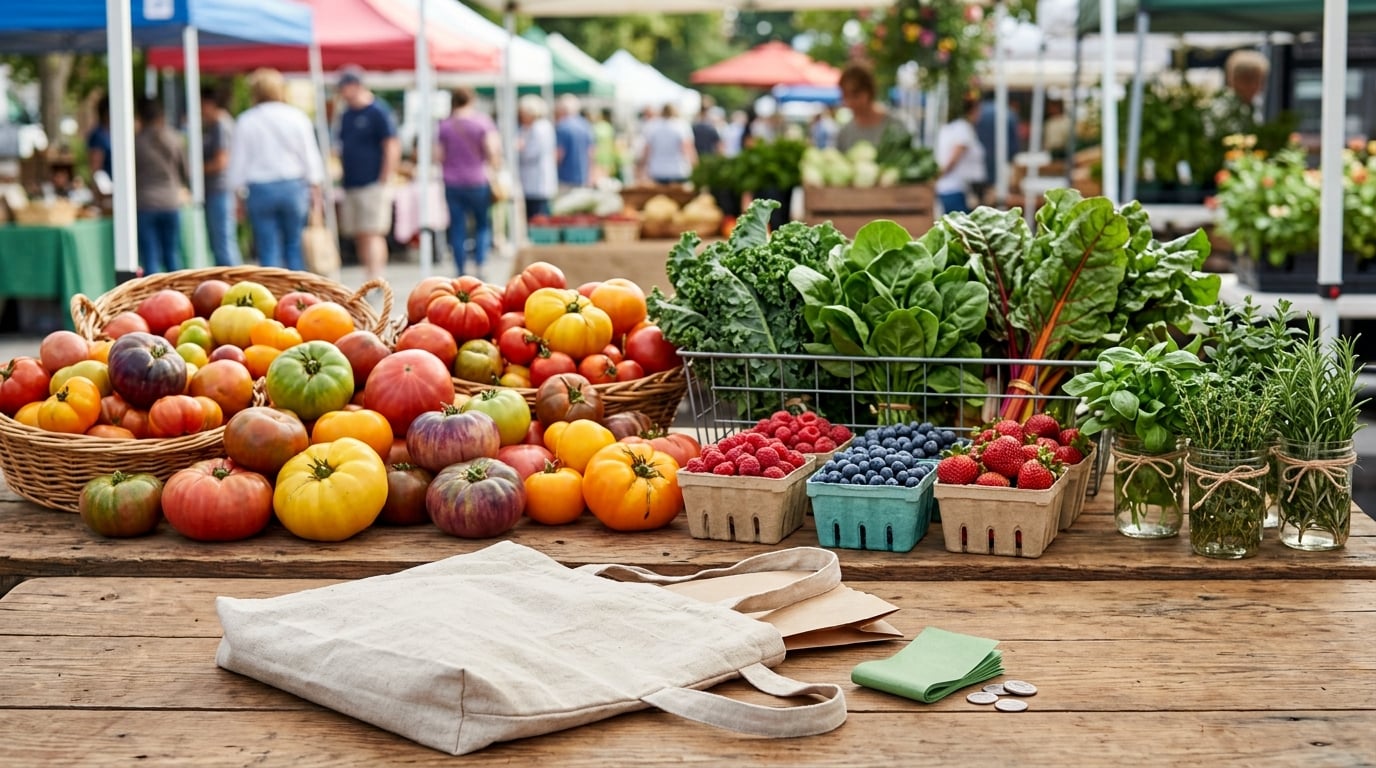
To shop a farmers market for the first time, bring a reusable tote, small bills, a short list of meals you actually want to cook, and plan to walk the whole market once before you buy anything. Budget about 30 minutes for a first visit, and expect to come home with a smaller, better basket than you thought you would.
Most first-timers describe the same moment: standing at the entrance of a market full of tents, looking at kohlrabi and unfamiliar squash, and feeling quietly outnumbered. Nobody expects you to know anything. The vendors do.
The simplest way to learn how to shop a farmers market for the first time is to treat it as a conversation, not a checkout line. Show up, walk, look, ask, then buy a little of what looks best this week. Everything else follows from that.
Table of Contents
- What You Need
- Step-by-Step: How to Shop a Farmers Market for the First Time
- Common Mistakes First-Timers Make
- Frequently Asked Questions
- Do I need cash at a farmers market?
- What time should I go to a farmers market for the best selection?
- Do I have to haggle over prices at a farmers market?
- Is a farmers market cheaper than the grocery store?
- How do I know if a vendor actually grew the produce?
- What do I do with produce after my first market visit?
- Conclusion
What You Need
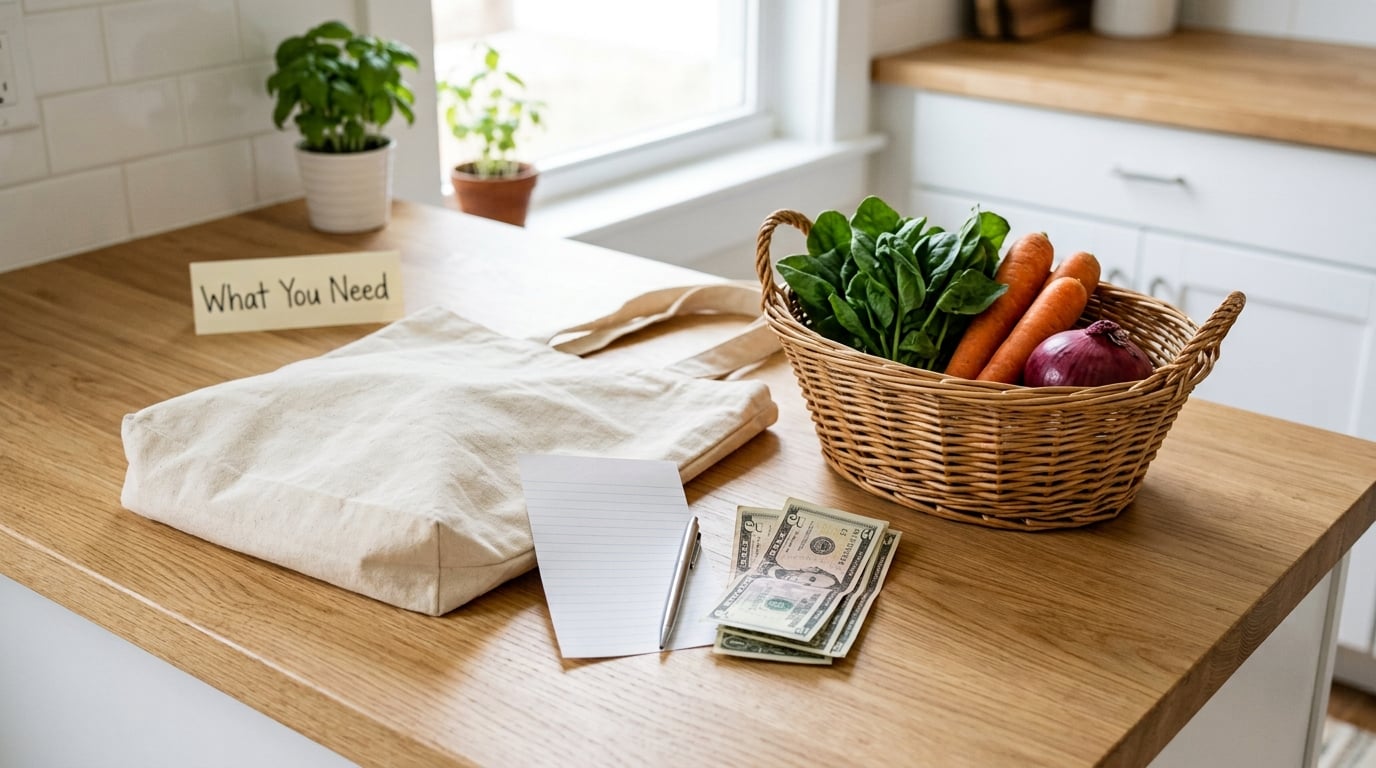
A farmers market asks very little of you, but five things make the visit noticeably easier.
- A reusable tote or basket. Most vendors bag nothing, or they use flimsy plastic bags that split under a bag of potatoes. Two bags beat one.
- Cash in small bills. Ones, fives, tens and twenties. A vendor who cannot break a twenty is a common reason people skip the whole stall.
- A short, flexible list. Write down two or three meals, not a grocery inventory. The list is a memory aid, not a contract.
- An insulated cooler bag if you are buying eggs, meat, dairy, or anything cut. Especially in warm weather.
- Your EBT or SNAP card, if you use one. Most markets run a central token booth that converts benefits into market scrip.
Add a water bottle and a pen, and skip the car if you can. Half the fun is walking the row twice.
Step-by-Step: How to Shop a Farmers Market for the First Time
Here is the whole process in order: plan the visit, walk the market once, ask the vendors, choose what is in season, compare prices, then pay and store it properly. Beginners who buy everything in the first ten minutes end up with a bag of stuff they cannot finish. Beginners who slow down usually talk to three or four growers instead.
1. Plan Ahead: How to Shop a Farmers Market by the Season
Check the hours, the location, and whether you need to reserve a stall for SNAP tokens. Most outdoor markets run Saturday mornings in fair weather, and a few run twice a week or year-round indoors.
Next, decide what you will cook. A market rewards planning more than any other grocery trip because the selection moves week to week. If you decide on a weeknight pasta, a stir-fry, and something to roast, you have a filter for everything on the tables.
Set a number and write it down. For a first visit, most people land somewhere between fifteen and forty dollars for a household of two, depending on how much prepared food and protein they add. Keeping your own ceiling is the fastest way to calm price anxiety.
Group the list loosely: something leafy, something starchy, something for roasting, one unfamiliar thing, and something sweet. That last one is not optional. Trying a fruit or vegetable you cannot pronounce is the whole point of coming.
2. Walk the Market Before Buying Anything
Make one complete lap before you spend a cent. Regulars do this without exception, and it is the single most useful habit a first-timer can copy.
On the first loop, note what is abundant. When six stalls are selling the same tomatoes, they are in season and likely at their best. When one stall has a towering pile of kale, that is the seller to return to.
Write down prices as you go, or at least remember which stall was cheaper. Price comparison is nearly impossible once you are carrying a full basket and talking to three people. On the second lap, buy.
3. Ask the Vendors Questions
Talking to growers is the part people remember later. Long-time shoppers point to it as the biggest difference between a market and a grocery store, because the person standing there picked the food yesterday morning.
Five questions cover almost everything:
- Did you grow this, or did you buy it to resell?
- When was it picked, and when do you suggest eating it?
- Is it organic, and is it certified or just grown without synthetic sprays?
- What variety is this, and how should I cook it?
- What will be best next week, when should I come back?
Asking is not rude. Vendors expect it, and the answer is often more useful than anything printed on a sign. The last question is the one that turns a shopping trip into a relationship.
4. Choose Seasonal Produce Wisely
Pick for the meal, not for the photo. Firm texture, vivid color, and a clean aroma signal good produce. A heavy tomato that smells like its leaves is usually better than a pale hard one, even if the pale one looks perfect.
Buy ripe for eating now and slightly firm for cooking later. That single habit kills most food waste for beginners.
Ask about seconds. Seconds are blemished, misshapen, or surplus items sold at a discount, and they are the cheapest way to buy a large volume. A bag of seconds tomatoes is soup, sauce, or roasted vegetables, not a waste of money.
5. Compare Prices and Portions by Unit
Bundles lie to you. A three-pound basket of something priced at five dollars is not automatically a bargain if you cook for two. Ask for the price per pound, or per item, and then buy the quantity your planned meals need.
Some stalls do offer end-of-day deals, and a few will price a full bag lower than a partial one. It is not rude to ask, and it is rarely a negotiation. A simple “Do you have a better price if I take the whole box?” is usually enough.
Do not haggle over the food itself. Regulars and vendors both treat that as off-limits, and you can lose the stall and the season’s goodwill in one exchange.
6. Pay, Pack, and Store Your Purchases
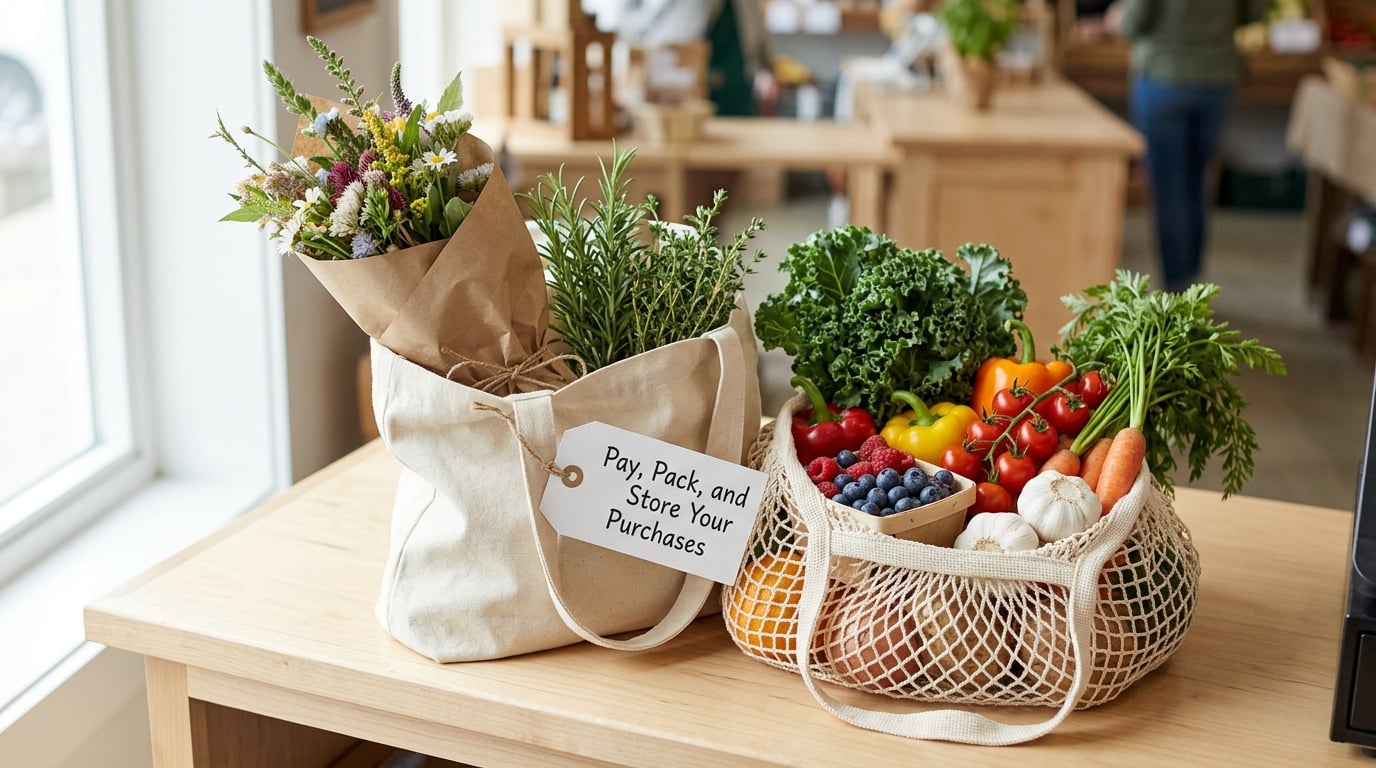
Payment varies by market, so bring options. Cash always works. Many vendors take cards through a small mobile reader, though a signal problem can stall a line. EBT and SNAP usually work through a central information booth: you swipe your card there, get paper tokens or scrip, and spend those at the stalls. Programs like Double Up Food Bucks match eligible produce purchases with SNAP benefits at participating markets. Check the market’s own site, since rules and hours vary.
Pack cold items first. Meat, dairy, and eggs go into the cooler bag and into a refrigerator within two hours, or one hour if it is above 90 degrees outside. Delicate herbs and berries go on top, out of the crush, and out of direct sun for the walk home.
Store the way you would store grocery produce, with a few allowances. Leafy greens want a paper towel in the bag, not a sealed plastic one. Berries rinse only right before you eat them, and never refrigerate tomatoes. Half a used onion or a bag of celery ends up in the freezer for stock without anyone noticing.
For food safety, follow the same numbers you would follow at home: poultry to 165°F, ground meat to 160°F, and whole cuts of beef, pork, lamb, and fish to 145°F. Vendor-packaged items will carry their own cooking instructions, and follow those when they differ.
Common Mistakes First-Timers Make
Shopping with no plan. You buy a bag of beautiful things and no idea what to do with them. Fix: choose two meals before you enter.
Buying too much. The first basket is usually three times the size it needs to be. Fix: start with five to eight items and add a second trip next week.
Assuming everything is local and organic. Many markets allow resellers alongside growers, and “organic” without certification is a claim, not a guarantee. Fix: ask the growing question, and look for a certification sign when organic matters to you.
Skipping the questions. The quietest vendor is often the one with the best advice and the biggest selection. Fix: ask one question per stall you buy from.
Waiting until closing time. The bargains are real, but so is the thin selection. Fix: go mid-morning for choice, and learn the closing-time discount as a second habit.
Storing everything the same way. A plastic bag of wet greens wilts in a day. Fix: dry, paper-lined, and separate the fruit from the leafy things.
Three habits cover most of it: walk first, ask questions, and buy for a meal you already have in mind. That is really the whole method.
Frequently Asked Questions
Do I need cash at a farmers market?
Bring cash in small bills even if you plan to pay by card. Many vendors take cards or mobile payments, but a signal problem or a dead reader is common, and cash is universal. Small denominations matter most, since a vendor may be unable to break a twenty. If you use SNAP or EBT, go to the central information booth first to convert your benefits into market tokens or scrip, then spend those at individual stalls.
What time should I go to a farmers market for the best selection?
Arrive within the first hour for the widest selection and the most popular items, like berries, tender greens, and herbs that sell out early. Mid-morning is the calmest window and still has plenty of variety. The last half hour is where discounted seconds appear, but the good stuff is usually gone. For a first visit, go mid-morning: you get real choice without the crowds of opening time.
Do I have to haggle over prices at a farmers market?
No. Treating the market like a bargaining table is considered rude by regulars and many vendors, and it can cost you the relationship. It is completely normal to ask whether a seller offers a better price on a full bag, a box, or at closing time, or to ask what a bundle weighs. That is information, not negotiation. Pay what is asked, tip if you like, and come back next week.
Is a farmers market cheaper than the grocery store?
It depends on the item and the season. In-season produce like tomatoes, corn, peppers, and greens is often cheaper at the market, and herbs are almost always a bargain by the bunch. Out-of-season items, processed goods, and pantry staples are usually pricier. The practical approach is to buy produce, eggs, and bread at the market and keep shelf-stable groceries, meat, and dairy on your normal store list.
How do I know if a vendor actually grew the produce?
Ask directly: did you grow this, or did you buy it to resell? Most growers answer plainly, and many post the farm name, the growing methods, or a certification sign. Markets that allow resellers usually list them separately in their directory. For organic claims, look for a third-party certification logo rather than a handwritten sign, and remember that pesticide-free and organic are different claims.
What do I do with produce after my first market visit?
Cook the tender items first: greens, herbs, berries, and any summer squash. Store greens in a bag with a dry paper towel and use them within a few days. Keep tomatoes, potatoes, onions, and winter squash at room temperature in a spot out of direct sun. Freeze extras: herbs in olive oil, berries on a tray, grated zucchini, and any celery or onion ends for stock. Wiping bins weekly and checking the drawer before shopping keeps waste down.
Conclusion
Start with one planned meal, a tote, and small bills. Walk the market once, ask two vendors what is best this week, and buy five or six things rather than twenty. That is how to shop a farmers market for the first time without wasting food or feeling overwhelmed.
Go back the following week and buy a little more. After a few visits you will know which stall sells the best greens, what the fruit looks like in your region, and what to cook on a Tuesday. That is when the market stops feeling like a lot of tents and starts feeling like a short trip to the best food in your neighborhood.