
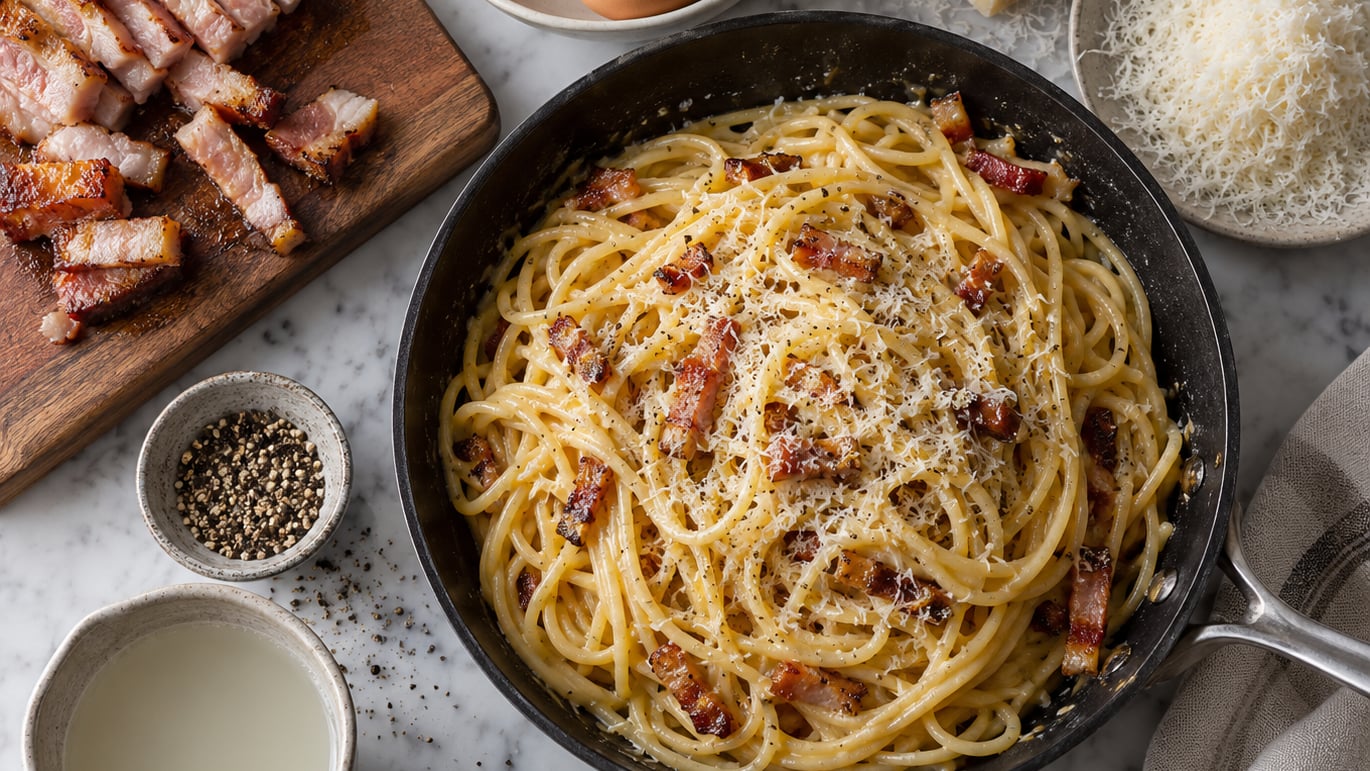
If you want to learn how to make carbonara without scrambling the eggs, take the pan off the heat before the egg goes in, loosen the eggs with hot pasta water first, and keep the pasta moving for the next minute. That single sequence is the whole difference between a silky Roman sauce and a bowl of scrambled eggs with pasta in it. It takes about 25 minutes and one wide skillet.
Most scrambled carbonara comes down to one of three mistakes: the pan was still hot, the egg mixture was too thick to spread before it set, or the pasta water got binned. All three are easy to fix once you know what is happening at the egg level, which is worth understanding because the same skill carries over to how to make cacio e pepe without clumping and every other emulsified pasta sauce.
What You Need
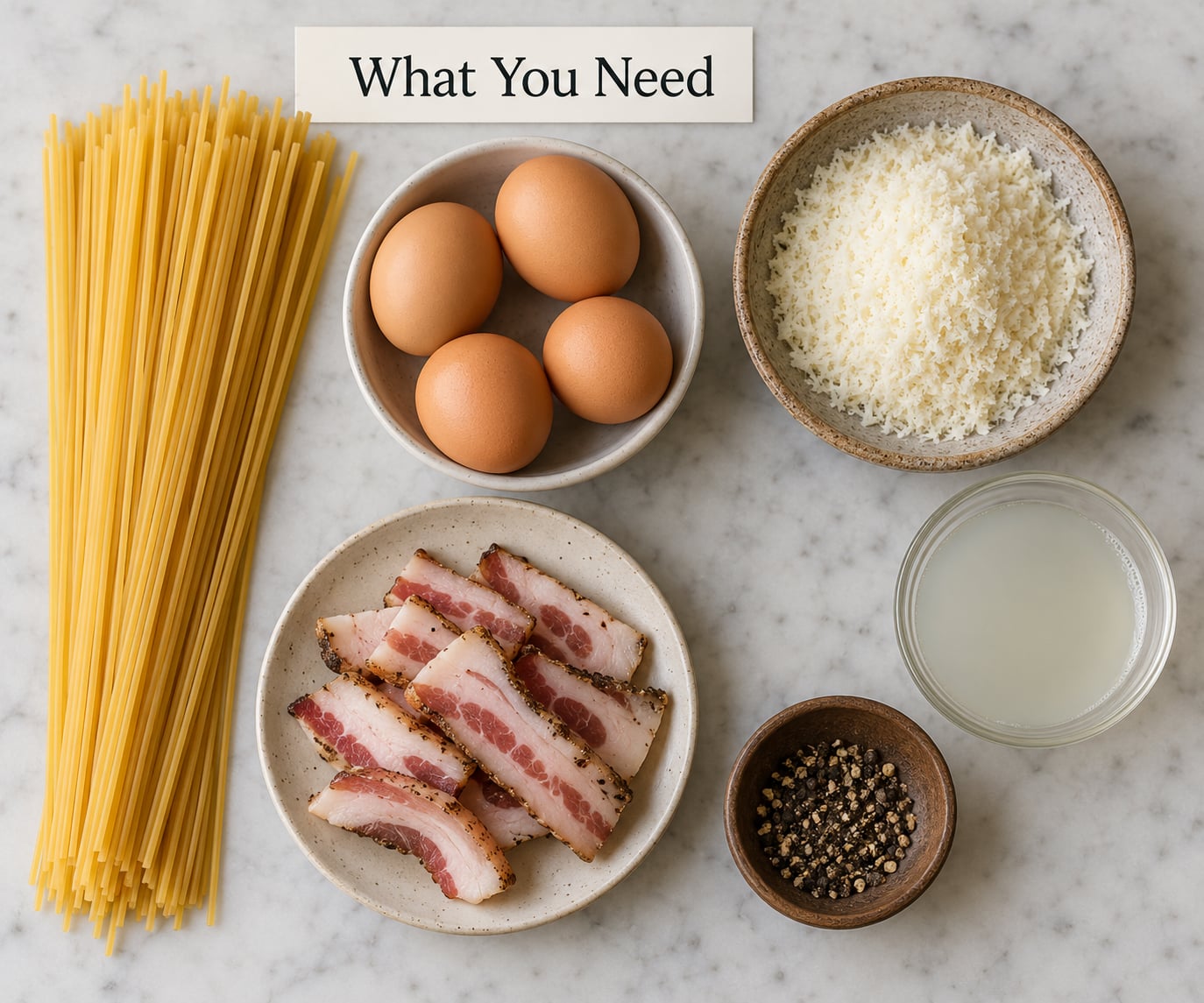
Quantities below cover four servings. Roman carbonara has four real components — pasta, cured pork, egg, cheese — plus starchy water and pepper. There is no cream in this method, and that is not a compromise; cream is what people reach for when the technique has gone wrong.
- Spaghetti or bucatini, 400 g (about 14 oz) — bucatini’s hollow centre catches more sauce, spaghetti is the Roman default
- Guanciale, 150 g (about 5 oz) — cured pork cheek. Look for it at the butcher counter or the cheese aisle
- Eggs, 3 whole plus 2 yolks — the hybrid ratio gives richness with a lighter, more stable sauce than all whole eggs
- Pecorino Romano, about 100 g (3.5 oz) — grated fine. Parmesan works, but it is milder and saltier, so add less
- Freshly cracked black pepper, 2 teaspoons
- Kosher or fine sea salt, for the pasta water
- Reserved pasta water, at least 1 cup (240 ml) — cloudy, not clear
Guanciale is the real answer, and if the shop does not have it, pancetta is a decent second. Bacon works in a pinch, but it is smokier and saltier, so skip the extra salt in the water.
You also need a wide skillet or sauté pan, ideally 30 cm (12 inch), a whisk or fork, a box grater, and a mug or measuring jug for the pasta water. The wide pan matters more than people expect: more surface area means the sauce coats the pasta instead of pooling at the bottom.
One safety note. The egg mixture is barely cooked, not raw, but if that bothers you or you are serving pregnant guests, young children or anyone immunocompromised, use pasteurized eggs. It costs you nothing in flavour.
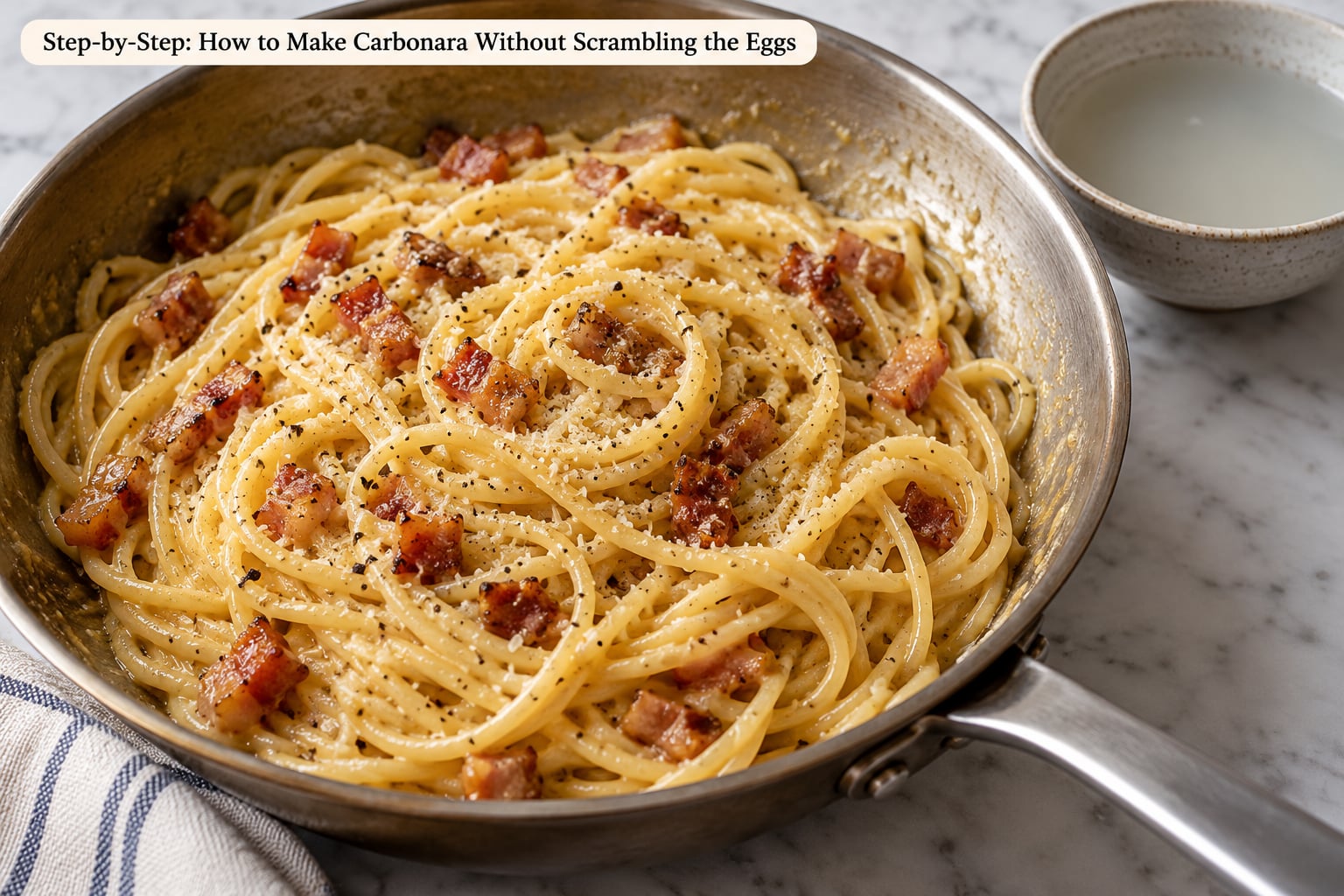
Step-by-Step: How to Make Carbonara Without Scrambling the Eggs
1. Prepare the ingredients before you start
Carbonara is a five-minute dish once the heat is on, so everything gets measured first. Grate the Pecorino finely, then beat the 3 whole eggs, 2 yolks and the pepper together in a bowl. Add the cheese and stir until it looks like damp sand.
Now the part that gets skipped. Stir 4 to 6 tablespoons of the starchy pasta water into the egg and cheese mixture until it pours in a slow ribbon. That is your tempering step: the water carries heat in gradually and the starch keeps the egg from tightening into strands too fast.
Slice the guanciale into short batons about the size of a matchstick. Get the pot of water on to boil and salt it well. You are not making a sauce at any point in this recipe, only emulsifying one.
2. Render the guanciale until crisp, then turn off the heat
Put the guanciale in a cold, dry skillet with medium-low heat. Starting cold lets the fat render slowly and evenly instead of the edges searing while the centres stay pale, and you do not want seared meat here.
Cook for 7 to 9 minutes, stirring now and then, until the pieces are crisp at the edges and the fat has filled the bottom of the pan. Spoon out all but a tablespoon of the fat and leave the meat in. If you are using pancetta, this takes about 5 minutes.
Turn off the heat at this point. Whatever is left in the pan is still climbing in temperature, and that carryover is what you want. Keep the skillet off the burner and off any warm surface.
3. Cook the pasta just under al dente
Drop the spaghetti into the boiling salted water and set a timer for 8 minutes, checking after 7. You are transferring it about 90 seconds short of the package time, because the pasta finishes cooking inside the sauce.
Lift the pasta straight out of the pot and move it into the skillet with the guanciale. Do not drain it in a colander, because every drop of water you lose is starch you need. Tipping the whole pot contents in works too if your skillet is deep enough.
If you want to try this with handmade pasta, it is worth learning how to make fresh pasta without a machine first, but note that fresh egg pasta carries its own moisture and needs a minute less cooking.
4. Combine egg mixture with enough pasta water
Give the egg and cheese mixture one more stir, since the cheese settles fast. If it has thickened while you waited, loosen it with another tablespoon of pasta water.
Test it before it matters. Drip a little onto a cold plate, wait 30 seconds, and touch it. If it sets into something soft and spreadable you are in the right zone. If it forms a rubbery omelette edge, add more water and test again.
Too thick is the leading cause of scrambled carbonara. Thin it further than feels right; the sauce tightens noticeably during the toss.
5. Toss the pasta off heat
This is the technique that matters most. The skillet sits off the heat with the pasta and crisp guanciale inside, and you pour the egg mixture over it, then start tossing immediately with a pair of tongs or by shaking the pan over the sink.
Toss constantly for about a minute. You are not stirring, you are lifting and turning, which keeps the strands moving past each other so no single spot sits long enough to cook into a solid ribbon. Home cooks describe it exactly that way: off the heat, mixture in, toss right away.
When it looks right, the sauce will cling to the pasta in a thin glossy film. It should not pool at the bottom of the pan, and the egg should never appear as distinct yellow curds.
6. Adjust the sauce and serve immediately
Too thick? Loosen it with a tablespoon of warm pasta water and toss again. Too loose? Let the skillet sit back on the burner for 20 seconds without the eggs in it, then toss off heat again. Never simmer a thin carbonara, because the egg is already in it and it will split.
Taste before you add salt. Pecorino is salty enough that you often need none. Grind more black pepper over the top, and if you like, another tablespoon of Pecorino straight from the grater.
Get it into warm bowls right away. Carbonara waits badly, because the fat in the sauce keeps moving and the emulsion loosens as it sits, so what you serve after ten minutes is not what left the skillet.
Common Mistakes and How to Fix Them
Why do my eggs scramble even when I turn off the heat?
Egg proteins start setting somewhere around 60°C (140°F) and firm up fast from about 71°C (160°F), which is a narrow band for pasta straight off the boil. Off heat, a wide skillet, and warm pasta give the egg just enough time to thicken without ever reaching that firm stage.
Real carbonara has no cream. The creaminess you are after comes from fat and water being held together by starch, not from dairy, which is why the pan has to come off the burner entirely and the pasta has to stay in motion.
How to fix carbonara that already turned into scrambled eggs
Do not throw it out. Pour the broken mixture into a bowl, and while it is still hot, work in a tablespoon or two of cold reserved pasta water at a time. The water dilutes the set egg and the starch re-stabilises it.
Then toss everything together again off the heat. You will not get the sauce back exactly as it should have been, but you get something creamy and workable instead of a bowl of pale scrambled eggs, and it tastes good with more pepper and cheese folded through.
Why is my sauce too thin, or too thick
Thin sauce means there was not enough starch or fat in contact. Fix it in the bowl, off the heat, with a splash of reserved pasta water and a slow toss. Thick and clumpy sauce means not enough liquid or too much heat, which is why you loosen the egg mixture before it ever meets the pan.
Grainy texture is a different problem. Cheese that has clumped instead of dispersed will not emulsify once it is cooked, so the fix is prevention: grate it finely, mix it into the eggs with pasta water, and never let it hit a dry hot pan on its own.
Which pasta shapes work when you want the sauce to cling
Spaghetti and bucatini are the safe choices, and bucatini actually holds more sauce because the sauce sits in the hollow core. Tonnarelli and rigatoni work fine too. Very thin pasta such as angel hair lacks the surface area and turns into a gluey tangle, and overcooked pasta will not hold any sauce regardless of what you do in the skillet.
One last myth worth clearing up: guanciale and cream do not travel, and reheating carbonara does not work. A microwave reheats the fat and leaves the egg grains behind. If you have leftovers, eat them within a day, and know that the sauce will be looser than the day you made it.
Frequently Asked Questions
Why do my eggs scramble in carbonara?
Egg proteins start coagulating near 60C (140F) and firm up fast above that. Pasta and a hot pan hold enough heat to reach that band, so a warm skillet turns your sauce into scrambled curds. Move the pan off the heat, loosen the egg and cheese with hot pasta water before pouring it in, and toss constantly for about a minute. Constant motion is the part most recipes skip.
Can I make carbonara without Pecorino Romano?
Yes. Parmigiano Reggiano works and many Roman cooks use both cheeses together, so a blend is well within tradition. Parmesan is milder and saltier, so use about 20 percent less and taste before adding any extra salt. A hard aged Asiago also works. Whatever you pick, grate it finely and mix it into the eggs with pasta water, since coarse shreds clump instead of dispersing.
Does authentic carbonara use heavy cream?
No. Roman carbonara is pasta, guanciale, egg, Pecorino Romano and black pepper. The sauce is a starch-stabilised emulsion, not a dairy sauce, and cream actually works against you because it adds loose water the egg proteins would otherwise bind. If your carbonara only turns creamy with cream, the heat or the pasta water amount is usually off. Fix the technique and drop the cream.
Can I make carbonara with bacon instead of guanciale?
Bacon will work, but expect a smokier, saltier result, so skip the salt in the pasta water and use slightly less pepper. Pancetta is the better swap because it is cured pork belly without the smoke, closer in flavour to guanciale. Cook it in a cold pan over medium-low heat for about 5 minutes and drain most of the fat before the eggs go in.
How do I keep carbonara sauce from becoming too thick?
Loosen the egg and cheese mixture with 4 to 6 tablespoons of hot pasta water before it touches the pasta, and test a drop on a cold plate. If it sets with a rubbery edge, add more water. After tossing, thick sauce is rescued with a tablespoon of warm pasta water at a time, off the heat. Thick and grainy sauce cannot be loosened into silk, which is why the tempering step matters.
Conclusion
The whole technique sits in three moves: save a cup of cloudy pasta water, loosen your eggs and Pecorino in it until they pour, and keep the skillet off the heat while you toss. Get those right and the eggs set into a glossy sauce that coats every strand instead of breaking into curds.
Start your next attempt by measuring everything before the burner goes on, pull the pasta a minute early, and plate it straight away. Carbonara waits for nobody, and neither should the sauce.