
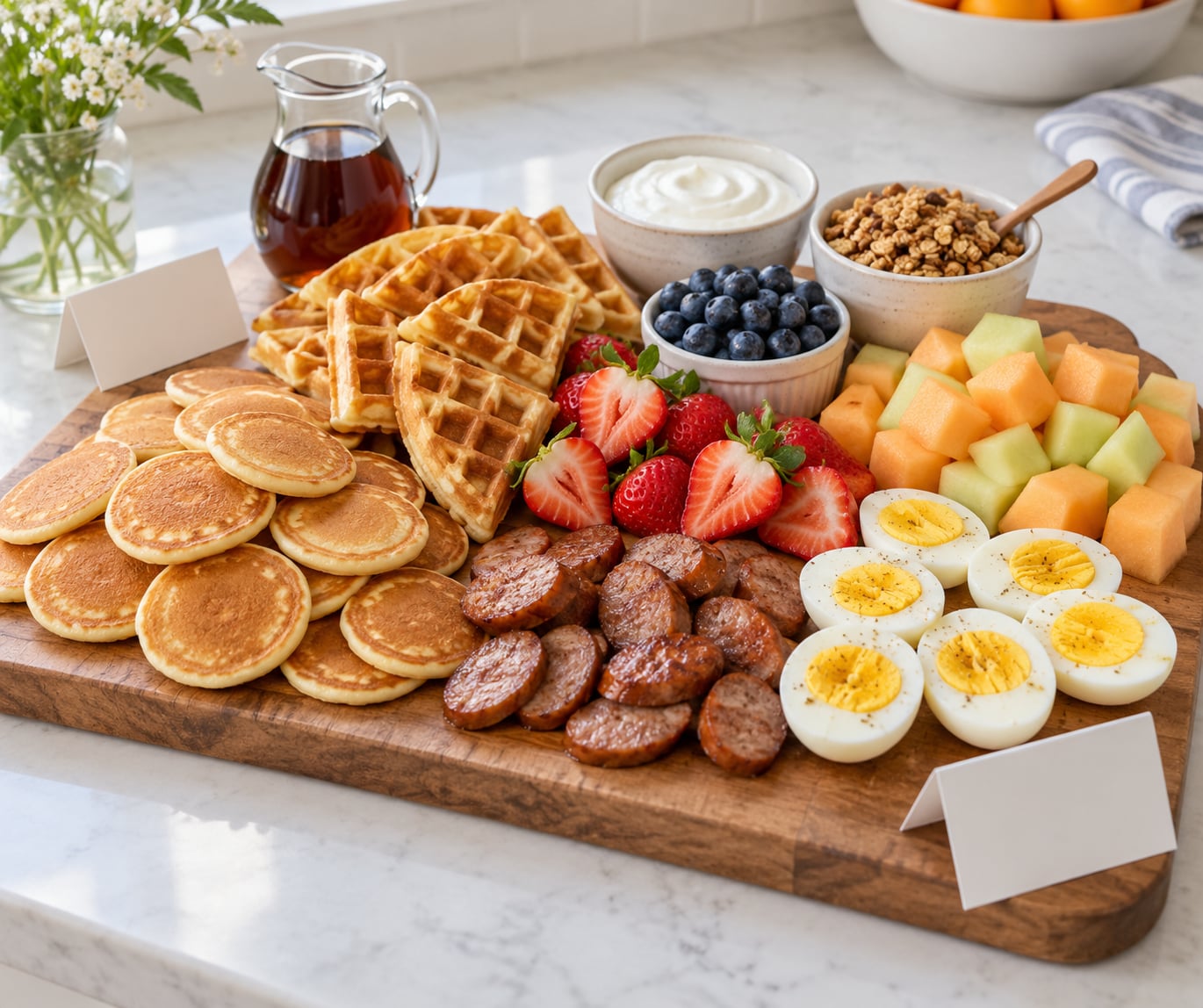
A breakfast board is a large flat serving board set out with mini pancakes and waffles, bagels, fruit, sweet spreads and a few savory items like sausage, bacon and eggs, so guests assemble their own breakfast at the table instead of waiting on a timed hot meal. Learning how to make a breakfast board for guests is mostly a planning job: fix your quantities per person, prep the make-ahead items the night before, then arrange from largest to smallest and add the wet toppings last. Once the food is cooked, the assembly itself takes about half an hour.
The payoff is a hosting day that stays calm. Nobody hovers in the kitchen flipping pancakes while company waits, and your guests get to eat at their own pace. If you are new to boards of any kind, building a cheese board for beginners uses the same arranging logic and is worth a read first.
What You Need
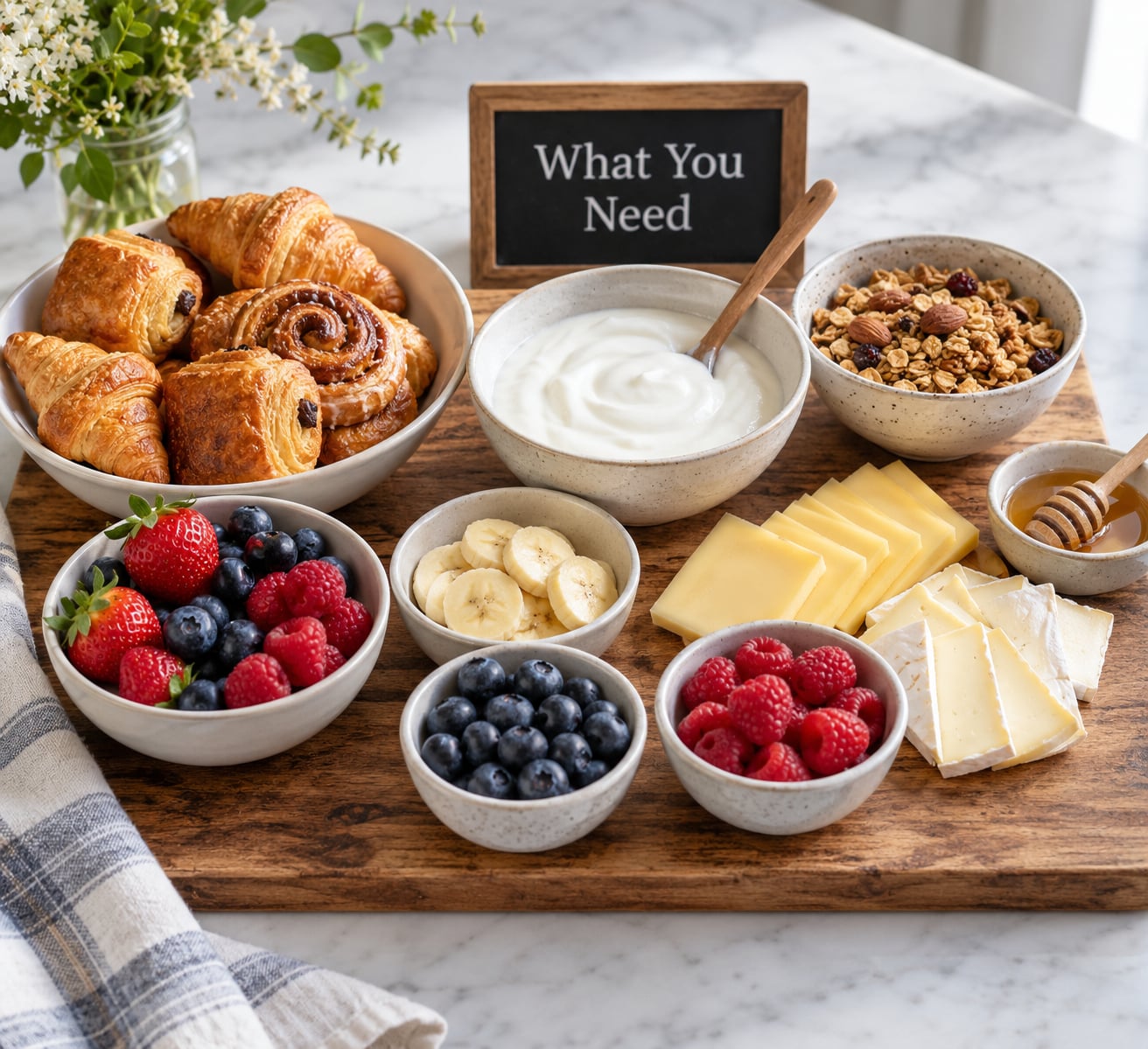
You need less than people expect. Almost everything on a breakfast board can be bought ready, cooked the night before, or cut that morning in under ten minutes.
The food, by category
- Starches: silver dollar pancakes, Belgian waffle quarters, mini bagels, mini muffins, biscuits or toasted sourdough cut into fingers.
- Savory proteins: bite-size breakfast sausage links, bacon strips, sliced ham, vegetarian sausage patties or smoked salmon folded into small bites.
- Eggs: hard-boiled halves, a few egg cups, or a bowl of scrambled eggs kept warm until serving.
- Sweet spreads: maple syrup in a small pitcher, whipped butter, nutella or cookie butter, jam, peanut or seed butter, and a bowl of granola.
- Cold extras: Greek yogurt in a bowl with a spoon, coconut flakes, mini marshmallows, chocolate chips.
- Fruit: strawberries and blueberries for color, melon cubes, banana slices, orange segments, grapes and apple slices tossed with a little lemon juice.
How much to buy for 4, 6 or 8 guests
Nobody publishing breakfast boards bothers with per-person quantities, so here is the table I work from. Multiply by your head count and add a small buffer; a board that runs slightly thin at the end beats one with half the fruit left over.
| Item category | Per guest | 4 guests | 6 guests | 8 guests |
|---|---|---|---|---|
| Starches (pancakes, waffles, mini bagels) | 3 pieces | 12 | 18 | 24 |
| Savory protein (sausage, bacon, ham) | 2 pieces | 8 | 12 | 16 |
| Eggs (halves or mini egg cups) | 2 halves | 8 | 12 | 16 |
| Fresh fruit | 1/2 cup | 2 cups | 3 cups | 4 cups |
| Spreads and syrup | 1 to 2 tablespoons | 1/2 cup | 3/4 cup | 1 cup |
| Small bites (muffins, yogurt, granola) | 3 to 4 pieces | 12 to 16 | 18 to 24 | 24 to 32 |
Board, bowls and other tools
- A flat board or tray with very very low sides. Marble, slate, a large wooden cutting board or a rimmed sheet pan all work. Deep bowls hide the food and turn the board into a pile.
- Three to five small bowls or ramekins for syrup, nutella, yogurt, granola and any loose topping, plus one small spoon or tong per bowl.
- A small pitcher for maple syrup so nobody pours from the bottle.
- Parks, tongs and a wide flat spatula for moving pancakes without tearing them.
- Small label cards and a pen, or a spare sheet of paper cut into tent cards.
- A second small board or tray for the savory half, which keeps meat juices away from the fruit and stops the whole spread tasting like breakfast sausage.
A side note if you are serving drinks alongside: making tea properly for guests takes the same low-stress approach, and a pot going on about fifteen minutes before the board is ready keeps the table busy while everyone settles.
Step-by-Step: How to Make a Breakfast Board for Guests
Five stages, in this order. Skipping ahead is what turns a breakfast board into a crowded pile.
1. Plan a balanced breakfast spread
Aim for roughly half savory and half sweet, with enough protein that the board works as an actual meal rather than a sugary snack. A simple rule I use: three starch pieces, two savory pieces, two egg halves, half a cup of fruit and one sweet spread per guest, then add extras only if the group skews hungry.
Ask about dietary needs a day ahead, not at the door. Build one clearly separate section for gluten-free, vegan or nut-free guests rather than hoping they pick around the labels, and put a card on that section so nobody has to ask out loud in front of everyone.
2. Prepare the make-ahead foods
The night before: cook the bacon and sausage, hard-boil the eggs, bake the pancakes and waffles, and wash and dry the fruit. Refrigerate each item separately in airtight containers, because a sealed box of steam is what turns waffles into rubber.
In the morning: re-crisp bacon and sausage in a hot oven or skillet so they are warm and audible when guests walk in, cut the bagels, portion yogurt and granola into bowls, and slice banana and apple just before serving so they stay bright rather than brown.
Keep the wet things out of the pre-assembly. Syrup, whipped cream and yogurt go on at the end; if they sit on the board for an hour they soak through the bread and slide everything off the edge.
3. Arrange foods for easy serving
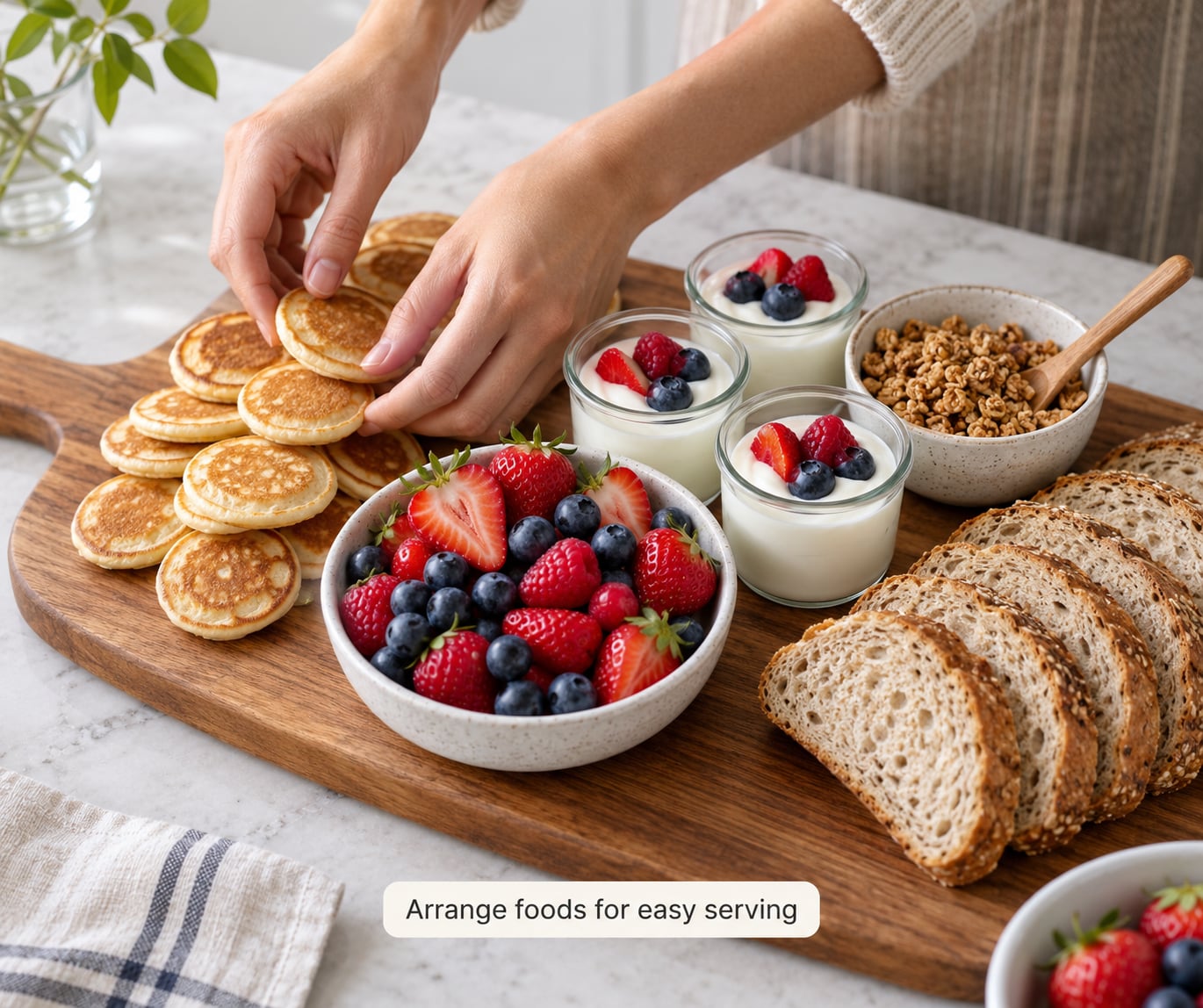
Work largest to smallest, and give each cluster a physical spot instead of letting foods drift together. The order that has never failed for me:
- Anchor the board. Put the bowls, the syrup pitcher and any large items down first so you know your footprint.
- Set the starches in a cluster or a loose row, still warm if they just came out of the oven.
- Place the savory items on their own section or second board, cooked proteins next to the eggs.
- Fan the fruit in a curved line rather than a heap; it fills space and looks deliberate.
- Fill the gaps with the small stuff: granola, mini muffins, coconut flakes, chocolate chips, sliced nuts.
- Add the wet items last, with a short spoon or tong for each bowl.
If you need the same base-layer instinct you use for a cheese board for beginners, lay out a few slices of bread or crackers first; everything else sits on top instead of rolling into the cracks. Balance the colors by putting pale items like yogurt and banana beside something deep like blueberries or bacon.
4. Add labels and guest-friendly portions
Write each label the way you would describe it out loud: “contains nuts”, “gluten-free”, “dairy”, “vegan”. Small tent cards in front of the four riskiest bowls stop cross-contamination with a spoon and save you from answering the same question six times.
Give every bowl its own utensil, and never let a guest dip a cracker that has touched the board. If someone in the group has a serious allergy, keep those foods on a separate board with separate utensils rather than labeling them among everything else.
For picky eaters, park the unfamiliar items together and leave the familiar ones out front: plain pancakes with butter, or bacon strips, usually wins over a cardamom bun nobody has seen before.
5. Finish and serve the breakfast board
Set the board out about fifteen minutes before you plan to serve, so the first guests can start while the last few arrive. Do the last fruit slicing and the syrup pour right as it goes on the table, and put the coffee pot going at the same moment.
Hot and cold on one board is the real challenge. Rather than piling cold pancakes on the board and hoping, nestle a small bowl inside a larger warm bowl with hot water beneath it, or set a single small batch of fresh pancakes on a warmed plate beside the spread and refill it as it goes. For cooked meats, keep them in a low oven no warmer than about 200 F until guests are seated.
Cooked foods held at room temperature should not sit out more than two hours, or one hour if the room is above 90 F, and any perishable item you skipped should go back into the fridge within that window. Cook poultry to 165 F, ground meat to 160 F, and whole cuts and fish to 145 F, per USDA guidance. Nobody needs a lecture on the morning of a party; just keep an eye on the clock.
Once plates clear, send the savory board back into the kitchen and restock from whatever is in the fridge. If you want a proper second course, a simple fruit dessert for guests takes about ten minutes and reuses the same fruit you already bought.
Common Mistakes
Most disappointing breakfast boards fail on the same handful of points, and every one of them has a quick fix.
- Crowding the board. When food touches edge to edge nobody can pick anything up. Use a larger board or move half the spread to a second tray.
- Grouping everything in one clump. Keep four or five distinct zones, and repeat a color in each zone so it still looks connected.
- Putting wet toppings on early. Syrup, whipped cream and yogurt belong in bowls added last, not poured across the board.
- Skipping labels. With mixed diets, unmarked food means nervous guests either avoid everything or contaminate something.
- Going all sweet. A board of pastries and Nutella looks pretty and satisfies nobody by ten in the morning. Add sausage, bacon or eggs.
- Leaving perishable food out too long. Two hours maximum at room temperature, one hour in a hot room, then refrigerate or discard.
- Serving cold pancakes. Hold a small warm batch and replenish, or warm a serving platter in the oven for a few minutes.
- Using strong-smelling items next to fruit. Raw onion, blue cheese and strong fish compete with everything else on a board meant to be grazed at.
One more worth mentioning: seasoned with a theme. Pick a season or an occasion, lean into it with two or three items instead of ten, and it looks intentional. Spring strawberries and rhubarb, autumn apple slices with cinnamon butter, a winter board with baked cinnamon rolls, a holiday morning with gingerbread pancakes and red berries.
Frequently Asked Questions
How much food should I put on a breakfast board for guests?
Plan about three starch pieces, two savory pieces, two egg halves, half a cup of fruit and one spread per guest. That means roughly 12 to 18 mini pancakes for four to six people, 8 to 12 sausage links or bacon portions, 2 to 3 cups of cut fruit and about a quarter cup of syrup and spread each. Buy a little extra rather than less; leftovers reheat, a bare board does not.
What foods work best on a breakfast board?
Build in five categories: starches such as mini pancakes, waffle quarters, mini bagels or biscuits; savory proteins like sausage, bacon, ham or vegetarian patties; eggs, boiled or in small cups; sweet spreads such as maple syrup, whipped butter, jam and nutella; and fresh fruit such as berries, melon, banana and orange. Greek yogurt, granola and mini muffins fill the gaps nicely.
Can I prepare a breakfast board the night before?
Yes, with one exception: keep wet items out of it. Cook the meats and eggs, bake the starches, and cut sturdy fruit such as melon, pineapple and oranges the night before, storing each in a separate airtight container in the fridge. Do not slice banana or apple until morning, and add syrup, yogurt, granola and whipped cream just before serving so nothing goes soggy or stale.
How do I handle guests with dietary restrictions?
Ask in advance, then give each restricted guest a clearly separate section rather than a corner of the main board. Swap in gluten-free bread or oat flour pancakes, plant-based sausage, dairy-free yogurt and seed butter in place of peanut butter, and label every bowl. For a serious nut allergy, use a dedicated board and dedicated utensils, because crumbs and shared spoons spread allergens fast.
How long can a breakfast board sit out safely?
Perishable foods such as cooked meats, eggs, dairy, cut fruit and anything with syrup should not sit at room temperature for more than two hours, or one hour when the room is above 90 F. Keep cooked meat in a low oven until guests are seated, hold yogurt in a bowl over ice if the meal runs long, and refrigerate anything untouched when the meal ends. Dry items like crackers and unopened spreads are the safe leftovers.
What size board do I need for six guests?
A board around 12 by 18 inches comfortably serves four to six people, and an 18 by 24 inch board handles eight to ten. What matters more than the size is the shape: pick something flat with a low rim so food stays in view and nobody has to tip the whole tray to reach the last pancake. No board at all is fine too; parchment on the counter works just as well for a casual brunch.
Start with the quantities. Count your guests, measure out three starches and two savory items per person, cook the eggs and meat the night before, and arrange the board biggest items first with the syrup bowls going on last. That is the whole job, and it buys you a hosting morning spent with your guests instead of at the stove.