
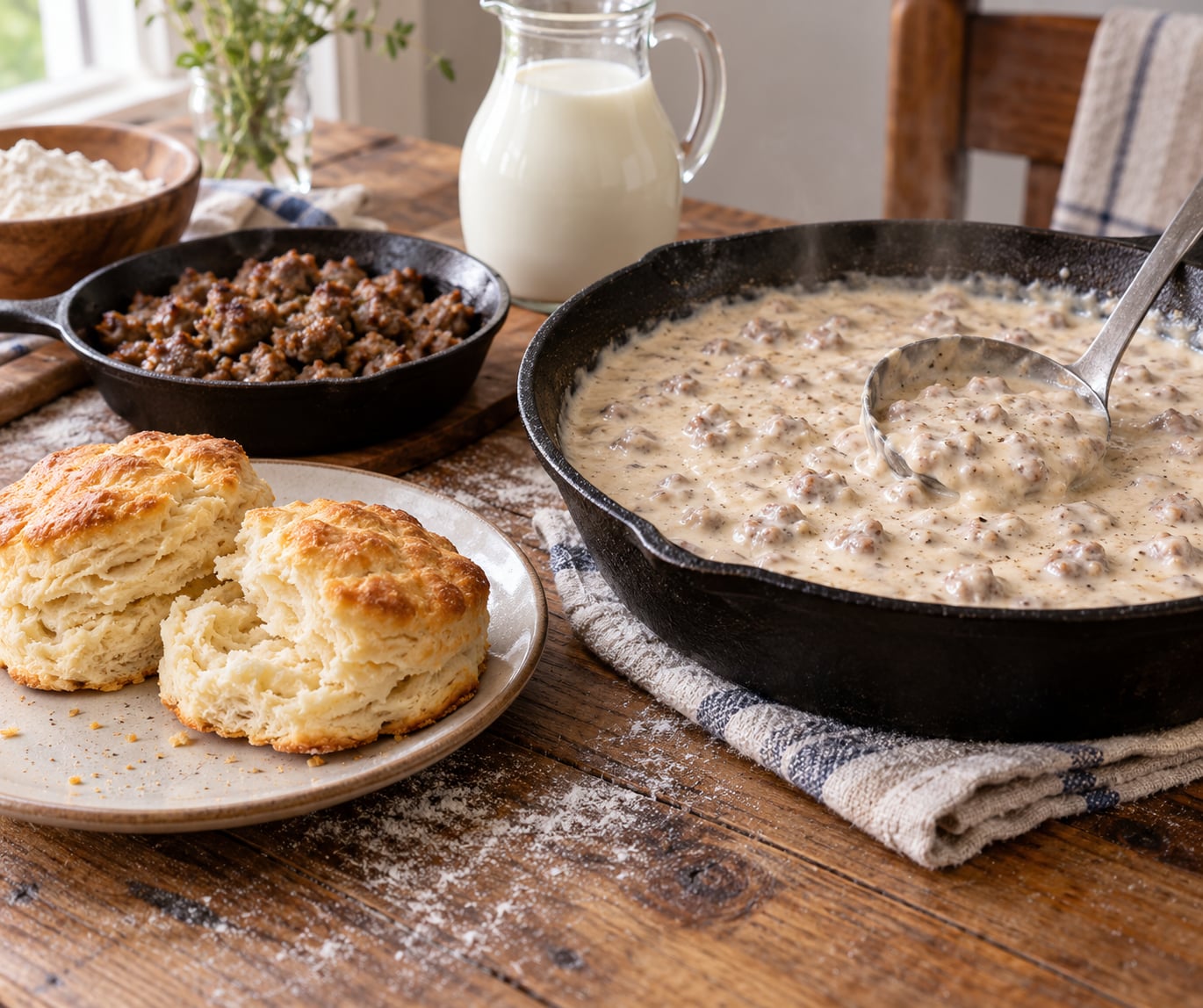
Biscuits and gravy from scratch takes about 45 minutes and feeds four: eight flaky buttermilk biscuits baked at 450°F, plus white gravy built from browned sausage drippings, a butter and flour roux, and milk. From scratch means dough mixed from flour rather than a canned biscuit, and gravy thickened by hand rather than from a mix packet.
Both halves are simple on their own. The reason most home kitchens produce a dense biscuit and a gluey gravy in the same sitting is timing and heat management, not skill. Get the oven fully preheated before the dough goes in, and the rest is arithmetic.
Last updated for 2026.
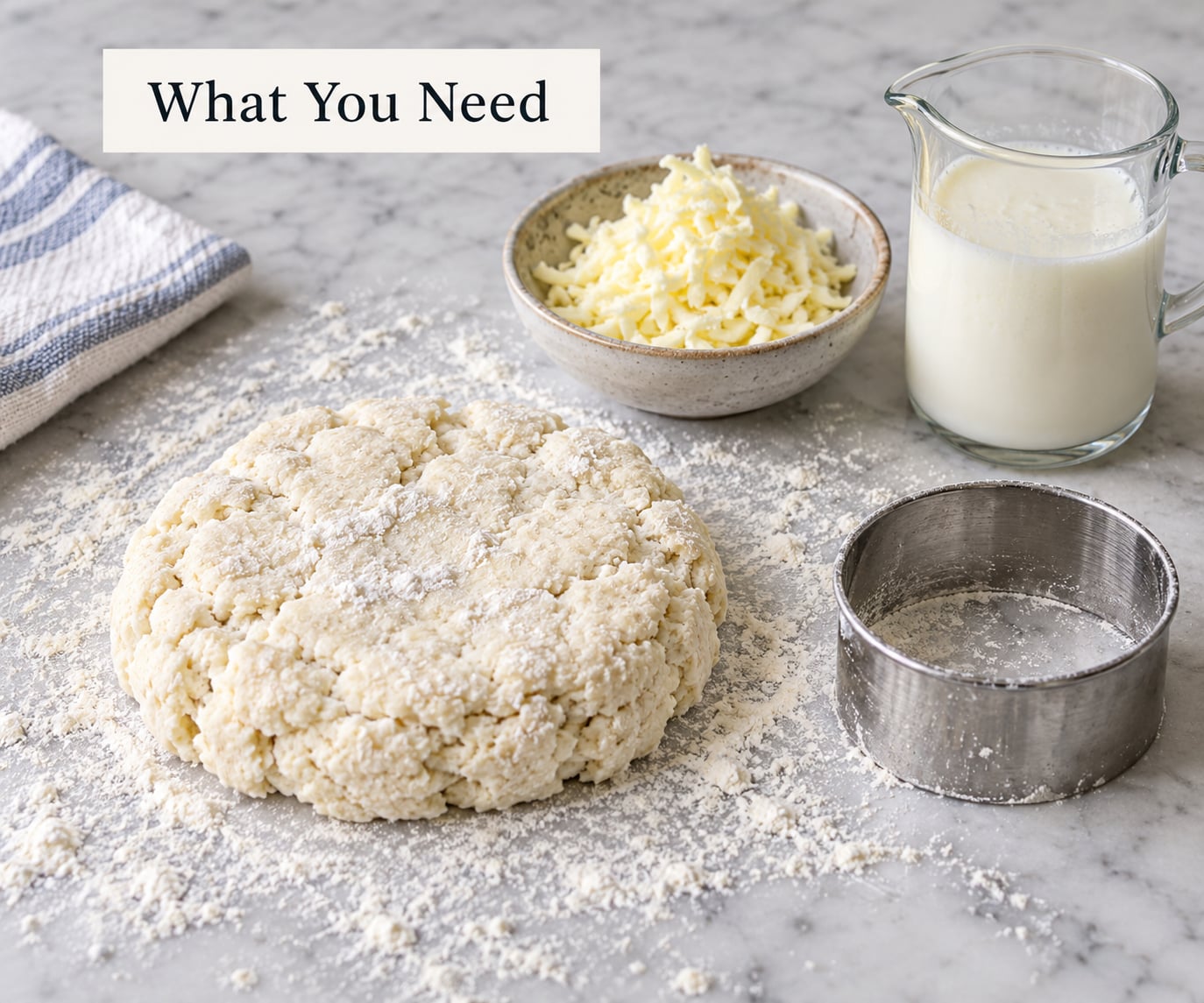
What You Need
Everything below makes four servings, and the only two things you genuinely cannot substitute are a can of breakfast sausage and a box of baking powder. Quantities are written for a standard 10-inch cast iron skillet, which gives you eight 2-inch biscuits.
For the biscuits
- 2 cups all-purpose flour (about 250 g), spooned and leveled
- 1 tablespoon baking powder
- 1 teaspoon granulated sugar
- 1 teaspoon kosher salt
- 6 tablespoons cold unsalted butter, cut into small cubes or grated on the coarse side of a box grater
- 3/4 cup buttermilk, plus a tablespoon or two for the tops
For the sausage gravy
- 1 pound pork breakfast sausage, the kind sold loose in the chilled case rather than in sealed links
- 4 tablespoons unsalted butter
- 1/4 cup all-purpose flour (about 30 g)
- 3 cups whole milk, warmed for 3 minutes in a saucepan or microwave
- 1/2 cup chicken stock, or the liquid the sausage cooked in, for extra body
- 1 teaspoon freshly ground black pepper, plus 1/4 teaspoon more at the end
- Optional: 1/4 teaspoon rubbed sage, 1/8 teaspoon red pepper flakes, a pinch of cayenne or smoked paprika
Tools that help
A 2-inch round biscuit cutter gives you even height, though the rim of a drinking glass or a jar lid works nearly as well. A heavy skillet with a tight flat base is worth the investment, and a wire whisk is close to essential for the milk. A food processor is useful for cutting cold butter into the flour in about ten seconds, but a fork, a pastry blender, or your knuckles will do the same job slower.
A digital thermometer is the one tool that takes the guesswork out of both halves. Biscuits are done at 190°F in the center, and loose sausage browned in the skillet will hit 160°F, the safe minimum for ground pork. Without one, you lift a biscuit and look at the bottom for an even golden brown, and you break one open to check the crumb.
How to Make Biscuits and Gravy From Scratch
The method runs in this order: mix and shape the biscuits, put them in a hot oven, brown the sausage and build the gravy while they bake, then assemble everything at the table. Gravy made last sits better, and a gravy started too early thickens past the point of being spoonable.
Make the Biscuit Dough
Set the oven to 450°F with the rack in the middle and let it run for a full 15 minutes. Whisk the flour, baking powder, sugar, and salt in a large bowl, then work the cold butter in with a pastry blender until the mixture looks like coarse crumbs with a few pea-sized pieces still visible.
Those bigger pieces are the layers. If the butter melts into the flour before you add liquid, you get a shortbread biscuit instead of a flaky one, so keep your hands and your ingredients cold. Freeze the cubed butter for five minutes if your kitchen is warm, which is what a lot of Southern kitchens do in July.
Pour in the buttermilk and stir with a fork until a shaggy, slightly tacky dough forms, with a few dry patches still visible at the edges. Stop there. Overmixing develops gluten and gives you a tough, dense biscuit, and it is the single most common complaint from people making these for the first time.
Turn the dough onto a floured surface and pat it into a 3/4-inch thick disc. Do not knead it. If you want taller biscuits, how to make biscuits that rise tall covers the layering tricks in more detail.
Press the cutter straight down without twisting, or use a glass to cut eight rounds. Scrape the cut rounds onto a parchment-lined or greased sheet pan, leaving a full inch between them so the rising dough does not merge. Brush the tops with the extra buttermilk.
Bake the Biscuits
Slide the pan into the preheated oven and bake for 10 to 12 minutes. Bake on the middle rack, and resist opening the door for the first 8 minutes, because the cold air drop flattens biscuits that are still setting.
They are done when the tops are deep golden, the centers have risen and cracked slightly, and the bottoms sound hollow when you tap the pan with a spoon. A thermometer inserted into the center should read about 190°F. Lift one biscuit to check the bottom, since the underside browns faster than the top and that is where pale, underdone spots hide.
If your biscuits are frozen unbaked, bake at 425°F instead and add two to three minutes. Going lower and slower, at 350°F, is the reason home bakers end up with flat, spreading discs: there is not enough stored heat to lift the dough before the butter melts.
Make the Sausage Gravy
While the biscuits bake, heat a 10-inch skillet over medium-high heat. Add the sausage and break it into 1-inch craggy chunks with a wooden spoon. Let it sit undisturbed for two minutes so the flat sides brown before you stir, and cook until every piece is browned, roughly 6 to 8 minutes total.
Do not drain the fat. Rendered sausage fat is the entire flavor base of white gravy, and cooking with the sausage solids still in the pan is what keeps the finished sauce peppery and savory rather than flat. Drain only the excess if you are working with a very lean bulk sausage.
Lower the heat to medium. Add the butter and let it foam, then sprinkle the flour over the sausage and stir with a whisk. Cook the roux for about 60 seconds, scraping the bottom of the pan, until it turns a pale tan and smells like toasted flour instead of raw paste.
Now whisk in the warm milk a few tablespoons at a time. Add each splash, stir until it disappears completely and you can see the bottom of the skillet, then add the next. Rushing this step is what produces lumps, and the same advice comes up repeatedly in home cooking forums.

Cast iron deserves its own warning. Its low residual heat lets the roux hit the hot metal and seize into paste-like clumps that will not dissolve, which is the most common complaint about this recipe in cast iron specifically. Two fixes work: add an extra tablespoon of butter with the flour to loosen the roux, or use a stainless steel or nonstick skillet for the gravy and keep the cast iron for the biscuits.
After the milk is in, pour in the stock and simmer gently for 5 to 10 minutes, stirring often. Add the black pepper, sage, and red pepper flakes now, and taste. Seasoning belongs at the end of a long simmer rather than the start, because thirty minutes of simmering blunts anything added early.
Hold the spices back. The gravy should coat the back of a spoon and drip slowly off it, and it thickens further as it cools on the table, so pull it off the heat a shade thinner than you think you want. A splash of hot milk at the table is an easy fix; there is no easy fix for gravy that started too thick.
Turn the heat off under the sausage pan and add the extra 1/4 teaspoon of pepper at serving time, which keeps the finished gravy tasting fresh. If you make the gravy from scratch ahead of time, how to make chicken stock from bones gives you a richer stock for the same 1/2 cup.
Assemble and Serve
Split each biscuit with a fork or a serrated knife, press the halves slightly open, and ladle about a third of a cup of gravy into the center. Pouring the gravy alongside instead of over the top is the more traditional service, and it keeps the biscuit crust crisp if the table is slow to eat.
Finish with a crack of black pepper, a few chopped chives or scallion greens, and hot sauce for anyone who wants the heat. Serve immediately, while the biscuits are still steaming, and keep the leftover gravy over the lowest burner or on a warming pad.
Common Mistakes
Nearly every disappointing plate of biscuits and gravy traces back to one of five things.
Dense, tough biscuits come from overworking the dough. Stir the buttermilk in only until the dough looks shaggy and stop, then pat it instead of kneading it. If the dough feels sticky, dust the surface with flour rather than working it further.
Flat, spreading biscuits mean the oven was not hot enough, or the dough sat out too long before baking. Give the oven a full 15-minute preheat at 450°F, keep the biscuits one inch apart, and get the pan in within a minute of shaping.
Biscuits browned on top but raw underneath were pulled too early or baked too close to the heat. Check the center with a thermometer at 190°F, and if the bottoms are dark, tent them loosely with foil for the last three minutes.
Lumpy gravy is a pacing problem. Whisk the milk in slowly, a few tablespoons at a time, and scrape the bottom of the pan until each addition has fully absorbed before adding more. A wire whisk and a splash of cold milk whisked in at the end will rescue an already-lumpy batch.
Flat-tasting gravy usually means the fat was drained, or the sausage was not browned long enough. Let the sausage sit and brown on all sides, keep the drippings in the pan, and season at the end with more pepper than you think you need.
Gravy that turned gluey was over-thickened in the pan and then set further as it cooled. Warm it gently with a little milk whisked in a tablespoon at a time, and simmer for two minutes to bring it back to a pourable sauce.
Beyond the fixes, the habits that keep working are simple: measure the flour by spoon rather than scoop, grate the butter cold, chill the shaped biscuits for 15 minutes if you have time, and reheat leftovers gently with a splash of milk rather than in a microwave on high.
Frequently Asked Questions
What are the ingredients for biscuits and gravy?
For the biscuits you need all-purpose flour, baking powder, sugar, salt, cold unsalted butter, and buttermilk. For the gravy you need a pound of pork breakfast sausage, butter, flour, whole milk, and a little chicken stock, seasoned with black pepper and optional sage or red pepper flakes. The fat rendered from the sausage replaces any cooking fat in the gravy, and the butter plus flour forms the roux that thickens it.
How thick should sausage gravy be before serving?
It should coat the back of a spoon and drip slowly off it, not stand up in a thick ribbon. Remember that it keeps thickening after it leaves the heat, so pull it off the burner a little thinner than looks right in the pan. If it sets up on the table, warm it gently and whisk in cold milk a tablespoon at a time.
Do you drain the sausage fat before making the gravy?
No. The rendered fat is what the flour thickens into a roux and it carries most of the flavor, so leave it in the skillet with the browned sausage. Draining it is the usual reason homemade gravy tastes thin and bland compared to a restaurant version. Only skim off the excess if you are using very lean bulk sausage rather than a breakfast-style blend.
Can I make biscuits and gravy ahead of time?
Yes, and for a holiday morning it is the difference between a calm table and a stressful one. Shape the biscuits, freeze them unbaked on a tray, then bag them once solid; bake from frozen at 425F for 12 to 15 minutes. Make the gravy a day ahead, refrigerate it, and reheat on the stovetop with a splash of milk until it coats a spoon again. Assemble only at the table.
How do I make biscuits without buttermilk?
Stir 1 tablespoon of lemon juice or vinegar into 3/4 cup of whole milk, let it sit for five minutes until it looks slightly curdled, and use that in place of the buttermilk. It is not the same as real buttermilk, so the biscuits will be very slightly less tangy. A simpler shortcut is self-rising flour: use 2 1/2 cups in place of the flour and omit the baking powder, then add a little less liquid.
Can biscuits and gravy be frozen?
The gravy freezes well. Press it flat into a freezer bag, leave a little room at the top, and it keeps for about three months; reheat it on the stovetop with a little milk rather than in the microwave. Biscuits freeze best baked and completely cooled, and reheat in a 350F oven for five to eight minutes. Biscuits will not rise as well if you freeze the dough and thaw it first.
Conclusion
Four things decide whether biscuits and gravy from scratch works: keep the butter and buttermilk cold, stop mixing the dough while it is still shaggy, brown the sausage without draining the fat, and add the milk slowly enough to watch each splash disappear. Simmer the gravy until it coats a spoon, split the biscuits while they are hot, and let the table take care of the rest.