
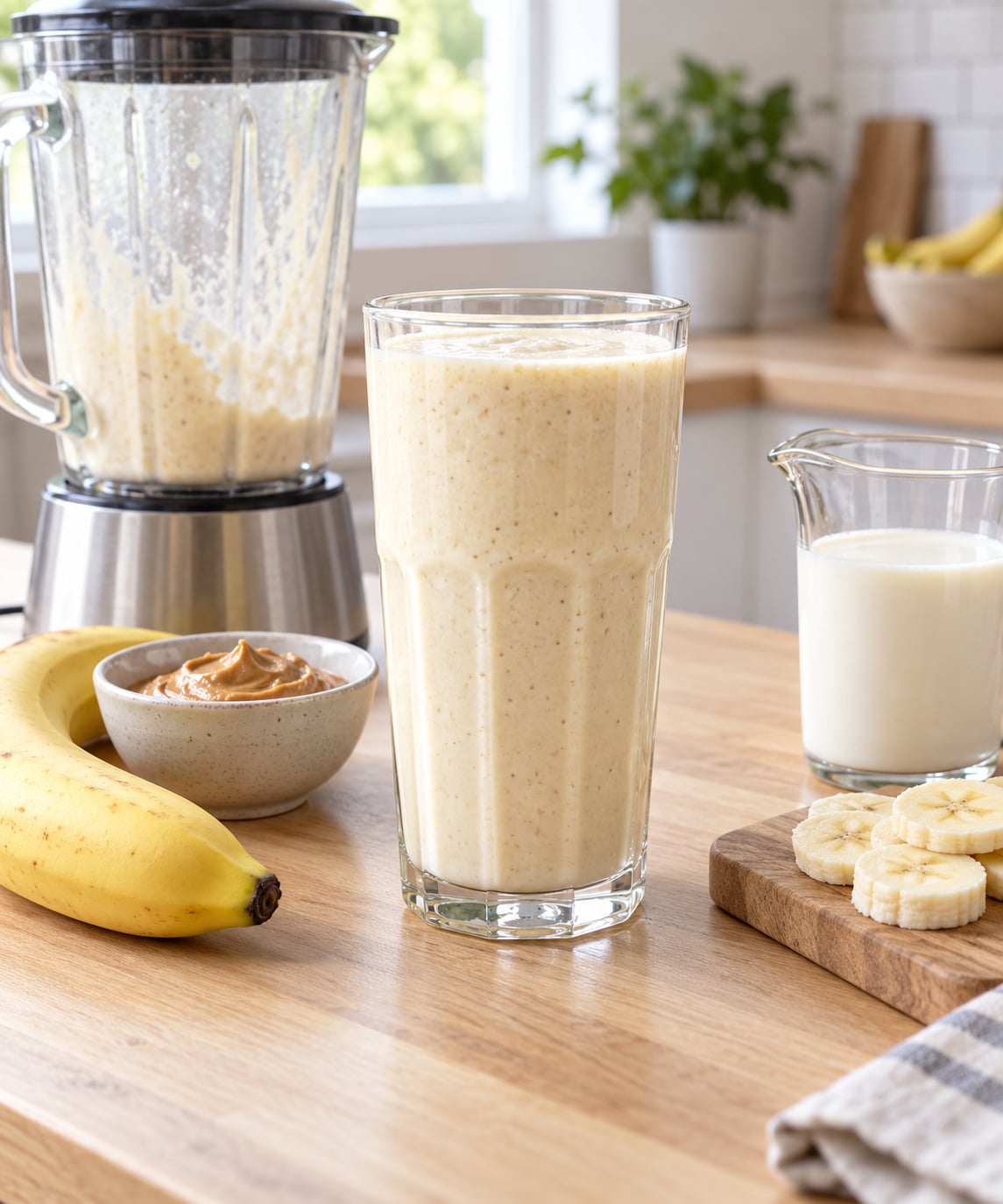
Yes, and most people do it by accident anyway. The trick to learning how to make a smoothie without yogurt is that yogurt only ever did three jobs: it added body, it added protein, and its tang took the edge off sweet fruit. Replace those three jobs and the drink comes out just as creamy. Frozen banana, avocado, nut butter, or a couple of tablespoons of silken tofu all do the job yogurt was doing.
The basic formula takes about five minutes and one blender. Two cups of frozen fruit, one cup of liquid, and one thickener is the whole recipe. Everything else is adjustment, which is where the fun is.
Table of Contents
- What You Need to Make a Smoothie Without Yogurt
- Step-by-Step: How to Make a Smoothie Without Yogurt
- What Changes When You Drop Yogurt
- Flavor Variations by Fruit Base
- Common Mistakes When Making a Smoothie Without Yogurt
- Frequently Asked Questions
- What can I use to make a smoothie without yogurt?
- What happens if I do not put yogurt in my smoothie?
- How do I thicken a smoothie without yogurt?
- Can I use cottage cheese instead of yogurt in a smoothie?
- How can I make a yogurt-free smoothie sweeter without added sugar?
- What is the healthiest liquid to use in a smoothie?
- Conclusion
What You Need to Make a Smoothie Without Yogurt
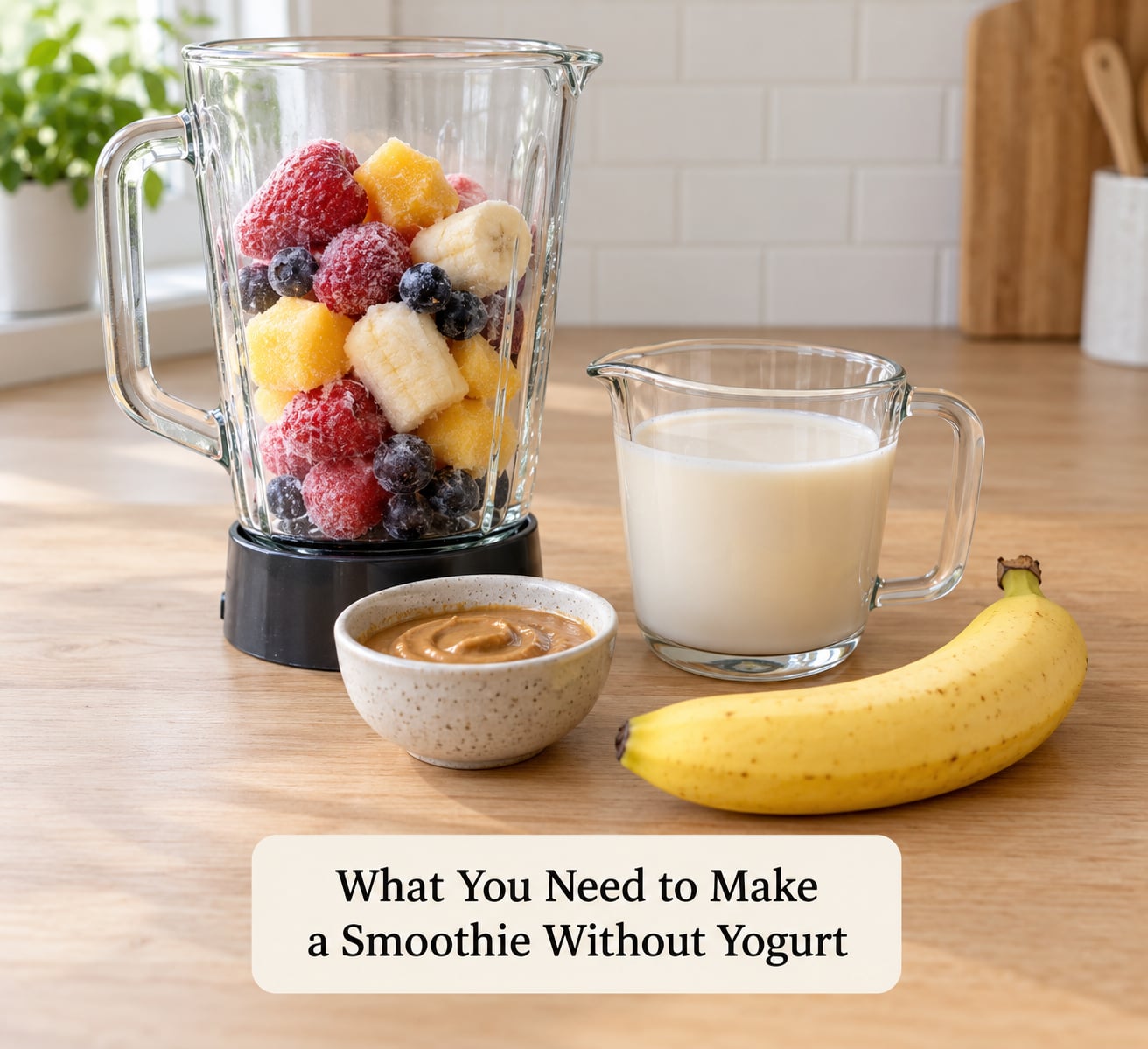
You need less than you would for a yogurt smoothie. A blender with a decent blade is the only real equipment, and a tamper helps if your jar is narrow. A second small blender or a nut grinder is nice for seeds, but you can skip both.
Ingredients for How to Make a Smoothie Without Yogurt
- 2 cups frozen fruit, such as banana, mango, or berries
- 1 cup liquid, such as milk, oat milk, coconut milk, or juice
- 1 to 2 tablespoons thickener: nut butter, avocado, silken tofu, chia seeds, or rolled oats
- 1 to 2 teaspoons sweetener if needed: maple syrup, honey, or a soft date
- A pinch of salt, which is optional but sharpens everything
Yogurt substitute for every half cup of yogurt
This is the table I wish I had years ago, since nobody publishes the ratio.
| Replace 1/2 cup yogurt with | What it adds | Best used in |
|---|---|---|
| 1 frozen banana, blended | Body, sweetness, starch | Breakfast smoothies, bowls |
| 1/3 avocado or 2 tablespoons coconut cream | Fat, creaminess, no sweetness | Green and savory blends |
| 1 tablespoon almond or peanut butter | Fat, protein, flavor | Chocolate, coffee, banana |
| 1 tablespoon chia or ground flaxseed | Soluble fiber, omega-3s | Anything you want thicker |
| 1/3 cup silken tofu | Protein, neutral creaminess | Fruit smoothies, protein shakes |
| 1/3 cup cottage cheese | Protein, body | Not dairy-free, but works |
| 1/4 cup rolled oats | Starch and fiber | Meal-replacement smoothies |
One thing worth clearing up early: yogurt-free and dairy-free are not the same thing. If you keep regular milk and cottage cheese, your smoothie is yogurt-free. If you swap those for oat milk and silken tofu too, it is dairy-free and works for anyone with a dairy allergy, not just lactose intolerance.
Step-by-Step: How to Make a Smoothie Without Yogurt
The base recipe I keep coming back to is frozen banana, mango, oat milk, and a spoonful of nut butter, but the method matters more than the combination. Follow the order below and almost any set of ingredients will behave.
Choose Your Liquid and Thickener
Add the liquid first. Milk and coconut milk give the richest result, oat milk is the sweetest and best for banana, almond milk is neutral, coconut water is light and hydrating, and juice works when you want it sharp. Aiming for roughly half the volume of the frozen fruit is the reliable ratio, so two cups of fruit takes one cup of liquid.
Then add exactly one thickener, not three. Banana and nut butter together is the classic, avocado and coconut milk is the green option, and silken tofu or cottage cheese is the protein option. Combining chia with nut butter or flax with oats tends to go gritty rather than smooth.
Blend for a Creamy Texture
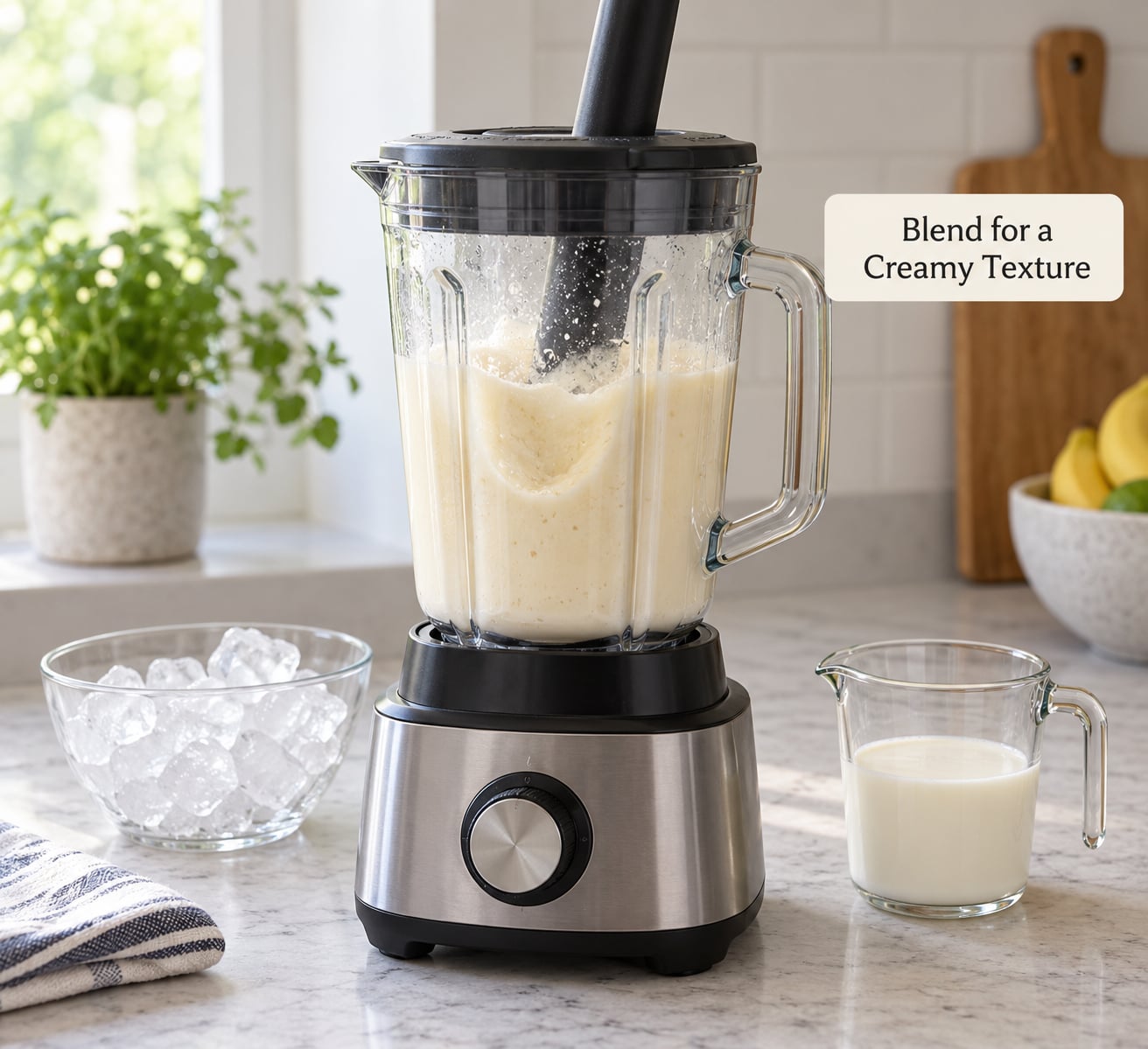
Load in this order: liquid, then soft fruit, then frozen fruit, then seeds, nuts, or nut butter last. Liquids protect the blades, and putting hard items on top lets them fall toward the blades instead of sticking above the vortex.
Blend on high for 45 to 60 seconds, scraping down the sides once around the 30-second mark. If you have a high-powered blender, stop before you overwork it, since extra blending can make nut butter turn soapy. Taste with a small spoon, not a straw, so you actually get a full flavor sample.
Adjust Sweetness, Thickness, and Flavor
Too thin means adding more liquid in small increments, or pulsing a few ice cubes if the flavor is already right. Too thick usually means you need a splash more liquid rather than more fruit, since fruit adds sweetness you may not want.
For sweetness without a sweetener, a soft date blended in early works well, as do dates with the pits still in, which throw off seeds if you are not careful to remove them. Maple syrup and honey are the easy options, and a pinch of cinnamon or ginger rounds out a flat-tasting drink without adding sugar.
Serve right away for the best texture. If you make too much, pour it into an ice cube tray and freeze, then blend the cubes with a splash of liquid when you want it later. A finished smoothie keeps in the fridge for about a day, though it separates, so give it a shake or a quick blend.
What Changes When You Drop Yogurt
Worth saying plainly, because this is where people get disappointed. Yogurt is doing three specific jobs in the jar, and if you replace it with fruit alone you are only covering one of them.
Body. Yogurt holds fruit in suspension. Without it, you get a thin drink that separates in the glass within five minutes, which is the complaint that comes up most often from people who tried this once and gave up.
Protein. Plain Greek yogurt is one of the more protein-dense things people put in smoothies. Drop it without replacing that protein and the drink stops being filling, especially as a breakfast replacement.
Tang. The acidity in yogurt balances perceived sweetness. Take it out and a banana-based smoothie reads as flat and cloying rather than rounded, and that is often mistaken for needing more sweetener. It does not. It needs a little acid, like a squeeze of lemon or lime.
Here is how to cover all three at once, depending on what matters most to you.
| Swap for the protein | Approximate protein per 1/3 cup | Dairy-free | Best for |
|---|---|---|---|
| Cottage cheese | About 11 g | No | The creamiest possible swap |
| Silken tofu | About 5 g | Yes | Neutral flavor, no curds |
| Unsweetened soy milk | About 3 g | Yes | Liquid protein, no thickening |
| Hemp hearts, 3 tbsp | About 6 g | Yes | Protein plus omega-3s, mild flavor |
| Protein powder, 1 scoop | About 20 g | Usually | The biggest protein jump by far |
| Nut butter, 2 tbsp | About 7 g | Yes | Protein and fat together |
Protein figures vary by brand, so check the label on what you actually have. The pattern to remember is that fruit and nut butter alone will not get you to where a yogurt smoothie sat, but tofu plus a scoop of powder, or cottage cheese plus nut butter, will.
Flavor Variations by Fruit Base
Once the method is second nature, the fruit does the work. Each base behaves slightly differently, so these are the swaps I reach for.
- Mango and pineapple. Sweet enough on their own, so skip the banana and use only a splash of coconut milk. Pineapple carries cinnamon and ginger well, and a squeeze of lime keeps it from getting too heavy.
- Berries. Tart, so they need a thickener more than they need sweetener. A frozen banana plus one tablespoon of chia does it, and the berry color goes through the whole drink.
- Green. Spinach and kale taste like nothing once blended hard, which is a good thing. Add half an avocado, a handful of hemp hearts, and a squeeze of lime to cover the earthiness that a banana alone will not.
- Coffee and chocolate. Cacao and espresso both need fat to emulsify against, so this is where two tablespoons of almond or cashew butter earn their place. Skip it and the cocoa powder sits at the bottom.
- Peach and apricot. Soft enough to blend without much liquid, and they go well with rolled oats if you want more body than fruit can give.
If you like the coffee-smoothie direction and want the espresso side done properly, I wrote up how to make coffee taste better at home separately.
Avocado is the same idea as the green base above, taken further. If you are building a savory-leaning bowl with it rather than a breakfast drink, the grain bowl for dinner method translates well.
Common Mistakes When Making a Smoothie Without Yogurt
Almost every disappointing yogurt-free smoothie fails the same way. The drink tastes thin, watery, or slightly gritty, and it is usually one of these six things.
- Overloading the blender. Too much frozen fruit at once leaves chunks no blend time can catch. Fill the jar no more than halfway, split big batches in two.
- Adding too much liquid. This is the number one reason a smoothie tastes thin. Start with half the fruit volume and only thin it after tasting.
- Using an unbalanced flavor mix. Banana plus nut butter plus vanilla with no acid is a lot of sweet and soft. Citrus juice or a handful of berries fixes it.
- Not blending long enough. Under 45 seconds on high leaves a grainy texture, especially with seeds or oats. Give it the full minute.
- Grinding chia or flax in whole. Whole seeds pass through the blades and stay hard. Pulse them to a powder first, or grind them in a dry jar.
- Relying on ice for thickness. Ice melts fast and waters down the flavor. Frozen banana or a frozen milk cube keeps its structure far longer.
Nut butter goes soapy when it is overworked in a hot blender running long. Room-temperature nut butter, a shorter pulse, and a pinch of salt take care of it.
Frequently Asked Questions
What can I use to make a smoothie without yogurt?
A frozen banana is the most reliable swap for half a cup of yogurt, adding body, sweetness, and starch. Avocado and coconut cream add fat and creaminess without sweetness, nut butter adds fat and protein, chia or ground flaxseed add soluble fiber and thickness, and silken tofu or cottage cheese add protein with a neutral finish. Use one thickener per batch rather than several at once.
What happens if I do not put yogurt in my smoothie?
You lose three things: body, protein, and a little tang. The drink comes out thinner and sweeter-tasting, and typically drops several grams of protein per serving. Everything else stays the same. Compensate by adding a protein source such as silken tofu, cottage cheese, protein powder, hemp hearts, or extra nut butter, and add a thickener to rebuild the body.
How do I thicken a smoothie without yogurt?
Add a frozen banana for starch, two tablespoons of nut butter or avocado for fat, or one tablespoon of chia or ground flaxseed for soluble fiber. Rolled oats and psyllium husk work too. Freeze the fruit ahead, blend on high for a full 45 to 60 seconds, and pulse ice cubes last if you still need more body.
Can I use cottage cheese instead of yogurt in a smoothie?
Yes, and it is the closest cup-for-cup match of anything you can buy. About a third of a cup replaces half a cup of yogurt, adds more protein, and blends in completely with no visible curds. It is not dairy-free, though. For a dairy-free version with the same effect, use silken tofu, which has a softer, creamier set.
How can I make a yogurt-free smoothie sweeter without added sugar?
Sweeten it with fruit structure rather than syrup. A soft date blended in early gives a caramel sweetness, and very ripe fruit such as overripe mango or a spotty banana is sweeter than firm fruit. A splash of orange or apple juice adds perceived sweetness, and cinnamon, ginger, or vanilla extract round out flavor without adding any sugar at all.
What is the healthiest liquid to use in a smoothie?
Plain water keeps it the lightest, and it works well with fruit that is sweet on its own. Unsweetened soy milk is the highest-protein plant option, and coconut water is hydrating with a clean finish. Oat milk is creamier and slightly sweeter, and dairy milk is the strongest source of calcium. Avoid sweetened plant milks if you are trying to keep added sugar low.
Conclusion
Start simple: two cups of frozen fruit, one cup of milk or oat milk, and one frozen banana blended in as your thickener. Blend on high for a full minute, taste it, and adjust with more liquid or more fruit from there.
Once that base works for you, swapping the thickener is where the real experimenting happens. Nut butter for a richer shake, avocado for a greener bowl, silken tofu when you need protein, and cottage cheese when dairy is fine.
If you are batching smoothies for a morning where nobody wants to cook, the freezing and blending order here works well alongside planning ahead for brunch for a crowd without stress.