
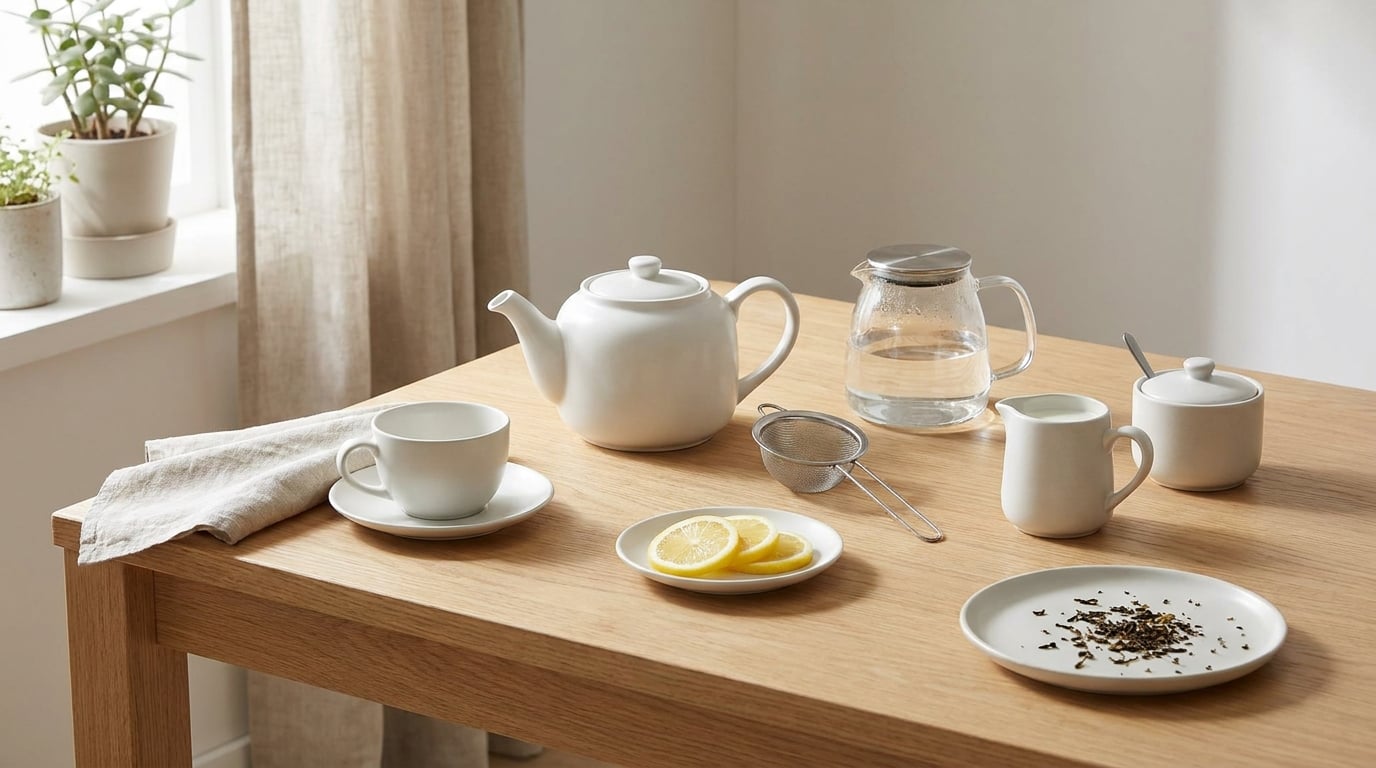
To make tea properly for guests, brew it right and then serve it right. Heat fresh filtered water to the temperature the tea needs, use about one teaspoon (2-3 g) of leaf per cup plus one extra for the pot, steep for the time that tea type calls for, and take the leaves or bags out before you pour. Then pour from your guest’s right, tea first, and let people add their own milk, sugar, honey, or lemon.
For six people the whole job takes about 20 minutes, start to finish, and none of it is hard once you have done it once. The nerves most hosts feel are not about tea at all. They are about doing it in front of people, with a kettle hissing and a clock running.
If tea is one part of a bigger meal, how to make brunch for a crowd without stress covers the rest of the timing, and it works the same way: sequence the food so the hot part lands last.
Table of Contents
- What You Need
- How to Make Tea Properly for Guests: Step-by-Step
- Common Mistakes
- Hosting Tips for a Tea Service
- Frequently Asked Questions
- How much tea should I use per cup when serving guests?
- How much tea and water do I need for 10 guests?
- Can I make the tea ahead of time or do I brew it when guests arrive?
- Does milk or sugar go first in tea?
- Why do many people add milk to tea first?
- How do I keep tea hot for a second round without it going bitter?
What You Need
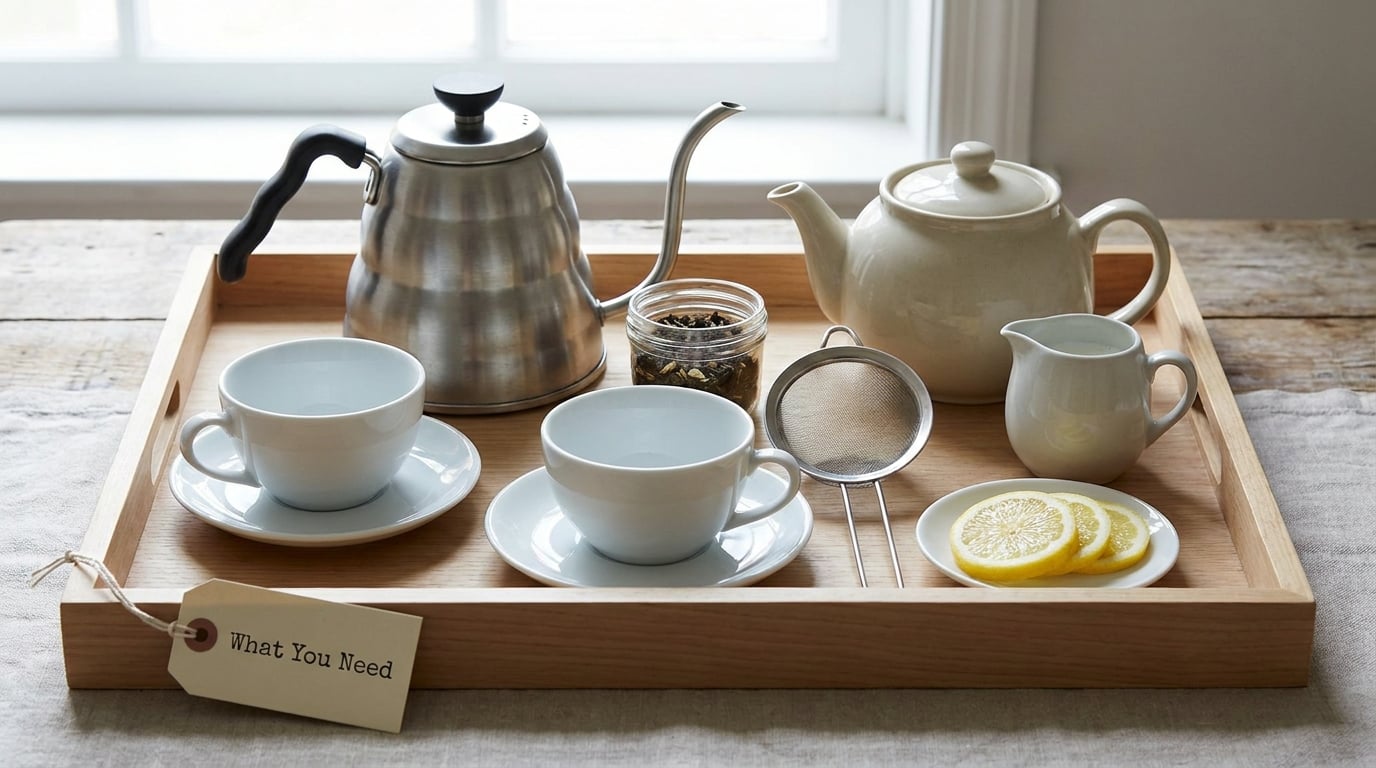
The list is shorter than most people imagine. You can serve a group of eight well with what almost every kitchen already holds.
Essentials for brewing
- A kettle, and a teapot or a heatproof jug if you do not own a teapot
- Tea: one black, one herbal, and a third of any kind you like
- Fresh filtered water, or cold tap water that has been run through a filter
- A timer, phone or kitchen timer, because guessing is the main cause of bitter tea
- A strainer or a tea ball, so loose leaves do not end up in someone’s cup
- Enough cups for every guest, plus two spares
Essentials for serving
- Milk in a jug, warmed in a microwave for 20 seconds if your guests drink it hot
- Sugar in a bowl, plus honey or a simple syrup for anyone avoiding white sugar
- A small plate of lemon slices for guests who take lemon instead of milk
- Teaspoons, one per guest, plus a few spare on a side plate
- A cold water pitcher so cups can be refilled without a second brew
- Napkins, and a small cloth for anything that spills
Nice to have for a group
A tea cosy keeps the second pot hot without over-steeping it, which solves the problem most hosts hit right at the end of service. A second, smaller pot is the fix people usually discover only after their first big gathering ran cold while everyone was still sitting down. A serving tray lets you bring everything to the table in one trip, which is worth more than it sounds when you are carrying hot water.
How to Make Tea Properly for Guests: Step-by-Step
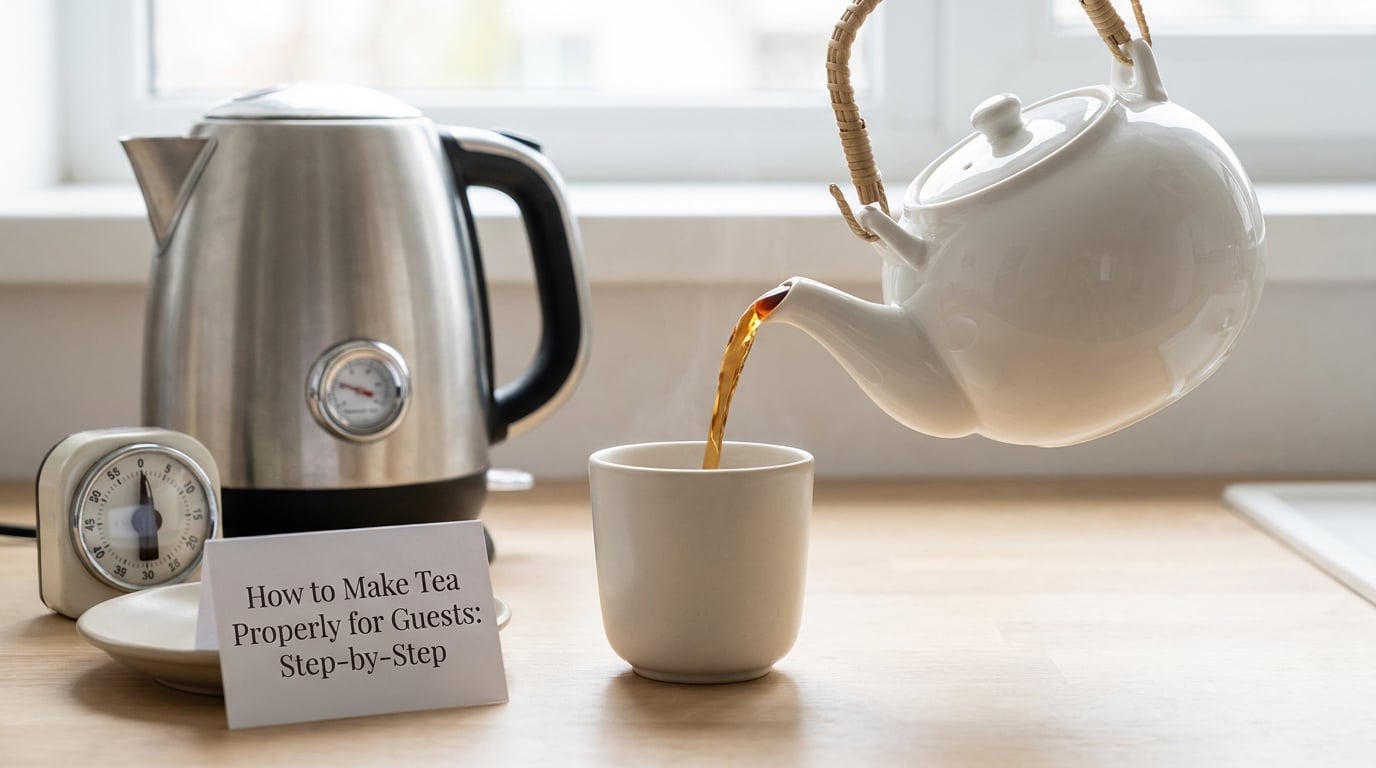
Six steps, in this order. The order matters: the water is ready before you measure the leaf, the leaf is measured before the clock starts, and the clock starts before the water goes in.
Choose the Right Tea for Your Guests
Put out three teas, no more. One familiar black, one green, one herbal. A black tea such as English Breakfast or Earl Grey is the safe default because it takes milk and sugar well and tastes familiar to most people; a herbal such as rooibos, peppermint or chamomile covers guests who do not drink caffeine.
Ask about caffeine, allergies and preferences before the day, not during service. A guest who cannot drink caffeine is much better served a pot of peppermint than a polite half-full cup. Offering choices works better than guessing, and putting the tins or boxes out where guests can see them lets people choose for themselves.
If nobody at the table is a tea drinker, offer a smell. Open the caddies and let people pick what smells good. It takes about ten seconds, and it settles the whole pot question before the water boils.
Heat the Water to the Right Temperature
Boiling water suits black and herbal teas. Green, white and oolong teas want cooler water, because water much above about 85°C pulls bitter compounds out of the leaf instead of the flavour. If you have only a kettle that boils, bring it to a boil, then let it stand for two to three minutes before pouring over green or white tea.
Freshly drawn water tastes better than water that has been boiled twice or held warm all morning. Hard water dulls flavour, so filtered water is worth the extra minute if you have a jug filter or a kettle that does it for you.
| Tea type | Water temperature | Steep time | Loose leaf per cup |
|---|---|---|---|
| Black (Assam, English Breakfast, Earl Grey) | 93-100°C, just off the boil | 3-5 minutes | 1 rounded teaspoon, 2-3 g |
| Oolong (Tie Guan Yin, Da Hong Pao) | 90-96°C | 4-5 minutes | 1 rounded teaspoon, 2-3 g |
| Green (Sencha, jasmine, matcha) | 80-85°C, rested water | 2-3 minutes | 1 level teaspoon, 1.5-2 g |
| White (Silver Needle, Bai Hao) | 80-85°C, rested water | 3-4 minutes | 1 rounded teaspoon, 2-3 g |
| Herbal (rooibos, peppermint, chamomile) | 100°C, full boil | 5-7 minutes | 1-2 teaspoons, or 1 bag |
Herbal and fruit infusions are not true tea, but they are the easiest thing on this list: they take boiling water happily and cannot turn bitter from a minute too long.
Measure Tea and Start the Timer
Use one rounded teaspoon of leaf per cup, plus one extra teaspoon for the pot. That spare teaspoon is the “one for the pot” rule, and it matters because leaves absorbed by a cold pot have less room to give flavour back to the water.
Scale it like this. One cup is about 240 ml, roughly a standard mug.
| Guests | Loose leaf (1 tsp per cup plus one for the pot) | Water | Milk and sugar to put out |
|---|---|---|---|
| 4 | 5 teaspoons, about 10-12 g | 1 litre | 200 ml milk, 4 teaspoons sugar |
| 6 | 7 teaspoons, about 14-16 g | 1.75 litres | 300 ml milk, 6 teaspoons sugar |
| 10 | 11 teaspoons, about 22-25 g | 2.5 litres | 500 ml milk, 10 teaspoons sugar |
| 20 | 21 teaspoons, about 45 g | 4.5-5 litres | 1 litre milk, a full sugar bowl |
Tea bags are roughly one bag per cup, and the same extra one for the pot. For tea bags, drop them in last, pour the water over them, and start the clock on the pour, not on the drop.
Warm the pot and the cups while the water comes to the temperature. Pour a little hot water into the pot, swirl it, tip it out, and then measure your leaf straight into the warmed pot. A cold pot can knock a few degrees off the water, which is noticeable on a delicate green or white tea.
Steep Without Overdoing It
Pour the water, put the lid on, and set the timer. Then stop touching it. Lifting the lid to check is the single most common reason home tea tastes thin and then harsh, because each time you break the surface the tannin-rich liquor drips down into the leaves.
You can tell it is ready by smell rather than by taste. A properly brewed cup smells full and round at the back of the nose. If it smells sharp, grassy or almost treacle-like, it needs another minute. Weak, watery tea has almost no aroma at all.
Take the leaves or bags out at the timer. A tea ball, an infuser basket or a strainer over the pot is the easy way; a leaf-catching spoon works too, though a few leaves will slip through. A tea bag left sitting in a cup keeps steeping as the guest drinks, so remove it before the cup leaves your hand.
Add Milk, Lemon, or Sweetener
Tea first, then milk. The milk-first habit comes from an older practice of pouring milk into a china pot to cool the brew and take the edge off it, and from adding milk to a hard-working family’s pot of afternoon tea so it went further. With a warmed pot and a short steep, that reasoning no longer applies, and pouring milk first simply cools the tea you just brewed.
Unless a guest asks otherwise, offer additions on the side rather than guessing. It handles mixed preferences without a single wrong cup, and it lets the person who wants to taste the tea actually taste it.
| Addition | Suits | Best avoided with |
|---|---|---|
| Milk | Black teas, oolong, masala chai | White tea, green tea, most herbal infusions |
| Sugar | Black and oolong | Nothing, but it flattens delicate teas |
| Honey | Herbal, green, oolong, black | Tea brewed above about 80°C, which dulls the honey |
| Lemon | Black tea, green tea, peppermint, rooibos | Oolong and white tea |
Warm the milk rather than serving it cold from the fridge. Twenty seconds in a microwave gets it to about body temperature, and cold milk flattens a good cup. If you want to sweeten tea with syrup rather than granulated sugar, how to make simple syrup for drinks is a one-to-one recipe that takes five minutes.
Serve and Present: How to Make Tea Properly for Guests
Pour the tea rather than handing over a pot. Filling each cup, taking it to the guest, and standing on their right is the whole etiquette, and it is the part that stops a cup of tea from turning into a small puzzle for someone who has never been served one.
Pour down the side of the cup so the tea does not foam or lose its aroma, and keep the pot spout above the cup rather than touching it. Say what the tea is as you hand it over, one line only: “This is Earl Grey, it takes milk nicely” or “This is peppermint, no milk.” Most hosts who fret about this find that naming the tea does more work than any rule about spoon placement.
Put the milk jug, sugar bowl and lemon plate within reach, and set spare teaspoons on a side plate. Then sit down. Guests will help themselves to a second cup or ask for a refill, and that is the moment a tea service stops being a performance and starts being an afternoon.
If you are building the table around the food, how to make a cheese board for beginners pairs well with a plain black tea, and it follows the same rule: put the strongest food and the strongest tea at the end of the service, not the start.
Common Mistakes
Water that is too hot for green or white tea
Boiling water on a delicate tea makes it bitter and astringent, and no amount of milk fixes it. Let the kettle stand two to three minutes after it boils, or brew that tea first while the water cools, and use the hotter water for the black pot.
Steeping too long
Set a timer. Tannins keep extracting after the tea is ready, so a cup left for ten minutes is twice as bitter as one left for four. Lift the lid as rarely as you can and remove the leaves on time.
Too much leaf in the pot
One rounded teaspoon per cup plus one for the pot is plenty. Leaf expands as it steeps, and an overloaded pot is hard to pour from, which is where the drips down the side of the teapot come from.
Pouring over the top of the cup
Pouring down the side keeps the surface still, stops foam, and keeps more of the aroma in the cup. Also pour about two-thirds full, so there is room for milk and so nobody has to hold a full cup of near-boiling liquid in both hands.
Assuming every guest takes milk and sugar
Assume nothing. Put the additions out and let people serve themselves, keep a herbal pot going for anyone avoiding caffeine, and have a small jug of milk rather than pouring it into the pot. A pot pre-loaded with milk cannot be rescued if one guest drinks theirs plain.
Letting the tea go cold while you serve
Brew the first pot, pour the whole round, then brew the second pot fresh rather than trying to stretch one. A tea cosy or a wrapped towel over a pot buys you the ten minutes between courses; a second small pot does the rest.
Warming the milk is skipped, so the tea tastes flat
Twenty seconds in the microwave. Cold milk straight from the fridge knocks back the aroma in a good cup, and guests notice even if they could not tell you why.
Hosting Tips for a Tea Service
Plan on two cups per guest over an afternoon, one if tea is a single course after a meal. Set the table before anyone arrives, fill the water pitcher, and put the sugar bowl and milk jug on the table from the start rather than bringing them round later.
Make tea your own first if you are nervous, then a bigger pot, and pour the small pot while the second one steeps. It also gives you a cup to drink, which is what a host is supposed to be doing.
Have a decaf or herbal pot going as a standing option, not an afterthought. Someone who cannot drink caffeine should not have to explain it.
For food, go lightest tea and freshest food first, and save the strong tea and the heavy sweets for last. Scones and clotted cream sit naturally at the end, after the sandwiches.
Frequently Asked Questions
How much tea should I use per cup when serving guests?
Use one rounded teaspoon of loose leaf per cup, about 2-3 g, and add one extra teaspoon for the pot. That spare covers the leaves lost to a cold pot or stuck in a strainer. A standard cup is about 240 ml. For tea bags, one bag per cup plus one extra works the same way.
How much tea and water do I need for 10 guests?
For 10 guests, brew about 11 teaspoons of loose leaf, roughly 22-25 g, with 2.5 litres of freshly boiled water. Put out around 500 ml of milk and a bowl holding 10 teaspoons of sugar. Brew in two pots rather than one so the first round is served hot and the second stays fresh.
Can I make the tea ahead of time or do I brew it when guests arrive?
Brew when guests arrive or five minutes before, not hours ahead. Tea that sits for a long stretch turns flat and then bitter, and it will not hold its heat in a pot. What you can do ahead is set out the cups, spoons, milk, sugar, lemon and water pitcher, and have the leaf measured into the pot ready to go.
Does milk or sugar go first in tea?
Tea first, then milk and sugar, then the other additions. Milk going in first was a way of cooling a hot brew in a thin china pot and of stretching a shared afternoon tea, and it now just cools the tea you have just made. Most hosts serve additions separately anyway, so each guest decides the order and the amount for themselves.
Why do many people add milk to tea first?
It comes from an older habit of pouring milk into a delicate china teapot to take the edge off very hot tea, so the pot would not crack and the drink would be drinkable sooner. The same custom let a family get more cups out of one pot of afternoon tea. It is regional and personal rather than a rule, and neither order changes the tea much.
How do I keep tea hot for a second round without it going bitter?
Brew a second, smaller pot rather than holding the first one. If you must hold tea, a tea cosy or a clean towel wrapped over the pot keeps it hot for roughly ten minutes, and any longer and the leaves keep extracting. Never leave a bag sitting in a cup that is waiting to be drunk from, and never re-steep the same leaves in the same pot for a round two.
Start with the pot, not the kettle. Warm the pot and the cups, put one rounded teaspoon of leaf per guest plus one extra into the pot, and let the water finish coming to the temperature that tea needs. Set the timer, leave the lid on, and take the leaves out when it goes off. Pour the round, then put the milk, sugar, honey and lemon on the table and let everyone help themselves. The whole of how to make tea properly for guests comes down to a warmed pot, a measured spoon and a timer you actually set. The rest is just company.