
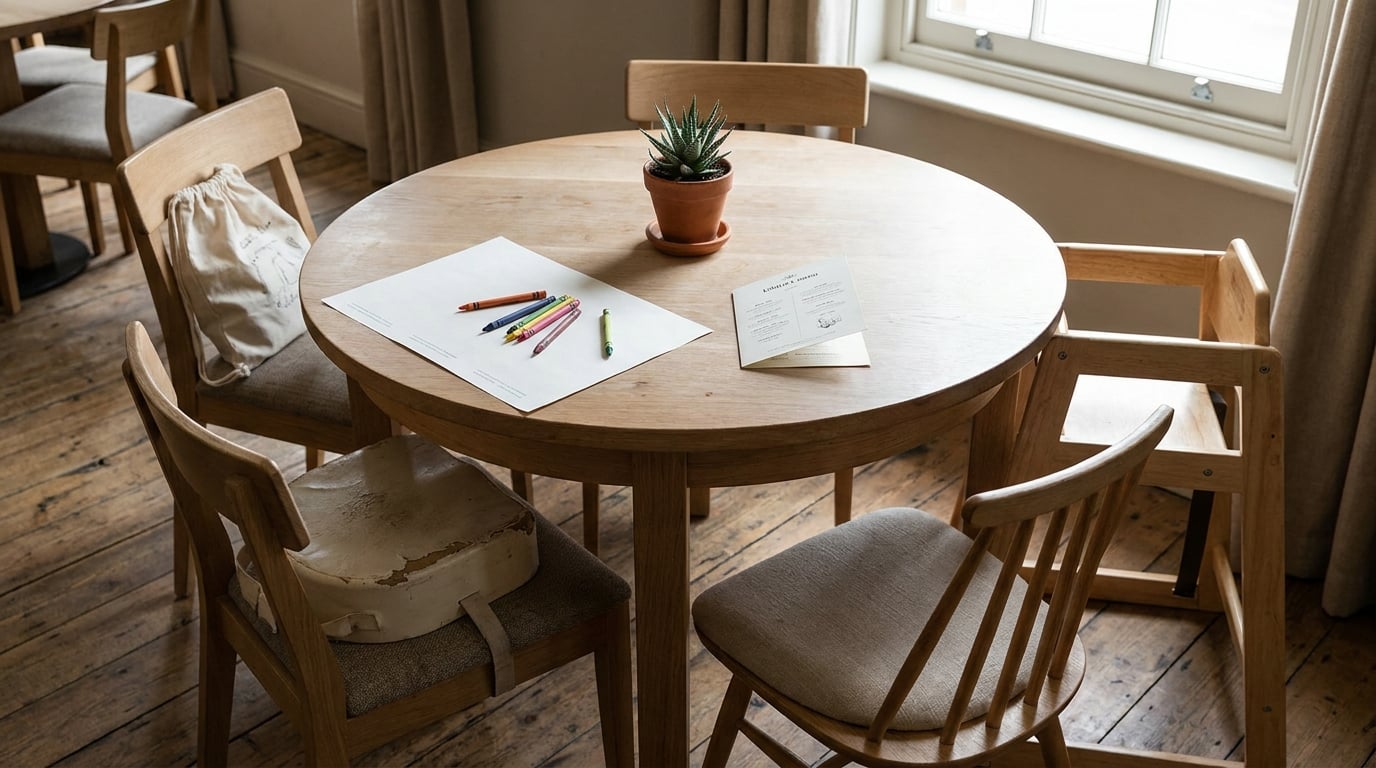
The trick to how to dine out with young kids is not the meal itself. It is the three gaps in every restaurant visit: the wait to order, the wait for the food, and the wait for the bill. Almost every meltdown happens in one of those gaps, and each gap has a fix you can use this weekend.
Our family eats out once or twice a week, and the visits that go well are rarely the ones with the most impressive table. They are the ones we planned for: we left before the rush, we ordered the moment we sat down, and we were gone before anyone started wondering where the check was.
Table of Contents
- How to Dine Out With Young Kids: A Stress-Free Guide
- What Should You Do Before Leaving for the Restaurant?
- How Do You Choose a Kid-Friendly Restaurant?
- What Can Young Kids Eat at a Restaurant?
- How Can You Make the Meal Easier for Young Children?
- How Do You Handle a Tantrum, Meltdown, or Mess?
- When Should You Eat at a Restaurant With Young Kids?
- Frequently Asked Questions
How to Dine Out With Young Kids: A Stress-Free Guide
Dining out with young kids becomes manageable once you stop treating the meal as the problem. Preparation and flexible expectations do most of the work, and the whole thing comes down to seven tactics you can reuse at any restaurant.
Here is the short version, with the age each one suits and how much effort it takes:
- Go early. A 5 to 5:30pm dinner or an 11am lunch beats a 7pm Friday by a mile. Works for every age, low effort.
- Order within two minutes of sitting down. The child’s food goes on the order at the same time as yours, not as a second round. Every age, low effort.
- Order an appetizer you can share. Bread, olives, or a small plate buys you ten to fifteen minutes of calm while the kitchen works. Ages 1 and up, low effort.
- Ask for the check when the food lands. It gets added to the bill and you leave the minute the last person finishes. Every age, low effort.
- Pack a restaurant bag. Crayons, paper, a sticker book, wipes, a familiar cup. Ages 1 to 5, medium effort to build once.
- Cap the outing at one hour. Roughly 15 minutes in your lap, 30 minutes in the chair, 15 minutes back in your lap. Ages 1 to 3, low effort once you accept it.
- Leave early without apologising. A short happy visit beats a long one that ends in tears. Every age, zero effort.
If you only try one thing this month, make it number two. Ordering fast is the single most useful move parents report.
What Should You Do Before Leaving for the Restaurant?
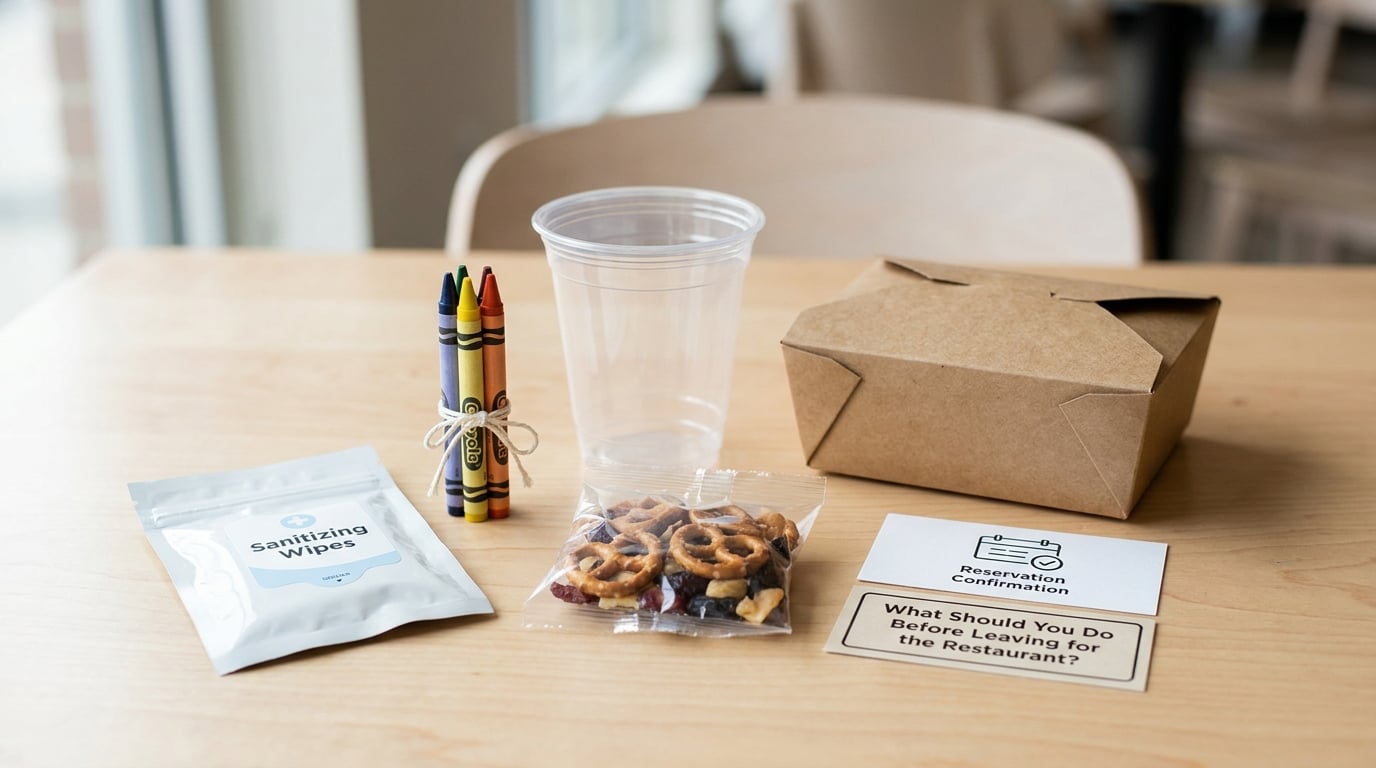
Call ahead when you need equipment, not every time. A quick ring to confirm a high chair, a booster seat, or a changing table saves the worst version of the visit, which is discovering the problem at the host stand with a baby in your arms.
Parents on What to Expect and r/toddlers mention the same two surprises over and over: no high chair, and no patience for a long wait. Ring ahead, tell them you have a one-year-old, and ask what they have. Staff answer this question all day and genuinely do not mind.
What to put in the restaurant bag
Build the bag once and leave it by the door. Specifics matter more than the general idea of bringing activities, so here is the list parents actually use:
- Crayons and a small pad of paper, or a roll of painters tape stuck to the table edge for sticky hands.
- A sticker book with the whole backing peeled off, so small fingers can grab a sticker instead of peeling the page.
- The child’s usual cup or bottle from home. A familiar object in an unfamiliar room is the fastest way to settle a child down.
- Wipes, a bib, and a change of clothes for the outfit that is about to be ruined.
- One or two quiet toys. Skip anything with twenty small parts and anything that rolls under the table.
- A snack the child never gets at home, reserved for restaurants only, so it still has novelty value.
- A folded takeout container and a plastic bag, for the meal you pack to go or the leftovers you take home.
One more thing before you leave: say out loud what will happen. Tell a toddler you are going to sit down, the food will take a while, and you are going home when the food is finished. Two-year-olds understand far more of the plan than we expect.
What about the stroller?
Do not assume you can walk a pram straight inside. Many restaurants will take an umbrella stroller and put it somewhere out of the way, and a wearable carrier is often easier on everyone, including you. For a baby who will not sit in a high chair, the carrier is usually the answer.
How Do You Choose a Kid-Friendly Restaurant?
Judge a restaurant on six things, not on the word kid-friendly on the window. A place qualifies when it has a children’s menu or easy food to share, high chairs or a bump seat on site, a kitchen that moves fast enough, tolerance for noise, something to look at, and enough floor space for a child to move.
- Equipment. High chairs, booster seats, a changing table in the restroom, and a kids’ section that is not the single loudest table in the room.
- Speed. Fast-casual, counter service, and food halls are often easier with a high-energy toddler than full service, because there is somewhere to walk to while you wait.
- Portions and menu. Small plates and interactive food such as dumpling plates, flatbread, or a build-your-own taco setup let a child pick their own bits, which reduces the battle over what goes on the plate.
- Noise. Here is the counter-intuitive part: a lively, noisy room is often easier than a hushed grown-up restaurant. A quiet room with a carpet and soft lighting makes a child more restless, while a busy one gives them something to watch.
- Seating. Booths and half-booths win, because a child can stand without blocking a walkway. A table against a wall beats one in the middle of a room.
- Patio or outdoor seating. Parents report calmer children outside, with less worry about spilled food and less worry about the noise carrying.
Keep one regular. The endgame of dining out with small children is a restaurant where the staff know your child and start their favourite dish without being asked. Regulars skip the awkward half of the meal entirely, and the same kitchen will treat a spill the way it treats a busy Saturday.
What Can Young Kids Eat at a Restaurant?
Most young children will eat what they eat at home, and a restaurant menu is full of it. Read the menu before you go and pick two safe options you know the place makes, so ordering is not a negotiation on an empty stomach.
- Familiar anchors. Grilled cheese, plain pasta, a burger patty, chicken, rice, or buttered toast. Order the adult version and pick the pieces off the plate yourself, which saves a separate kids’ order entirely.
- Share a plate. One adult dish split two ways often works better than two children’s meals, and it is quicker out of the kitchen.
- Ask for modifications. Sauces and dressings on the side, nothing fried, extra plain on the side for a picky eater. Servers hear this fifty times a shift and nobody minds.
- Cut it small. A toddler with a chunk of food they cannot handle will spit it out, gag, or refuse. Cut food into pieces the size of a small pea before it reaches the table.
- Ask for something raw. Cucumber slices, avocado, a piece of baguette, or a side of plain vegetables, built from things already in that kitchen.
- Let it be cold. Ask for an extra cold plate so hot food can cool on it. Fast service makes food arrive hotter than small mouths can handle.
Two safety notes, because restaurant food is a real exposure. Serve whole eggs and meat to children only when they are properly cooked, which means 165F for poultry and 160F for ground meat, and 145F for whole cuts and fish. And if you take leftovers home, refrigerate them within two hours and reheat them to steaming before serving.
Tell the server about allergies properly rather than hoping. Serious allergies are handled with a written note to the kitchen where needed, and cross-contact is a conversation, not a guess. If anyone in the family has a severe allergy, order the child’s food first and watch it leave the kitchen.
How Can You Make the Meal Easier for Young Children?
How do you order food at a restaurant with a toddler?
Order the whole table at once, lead with the child’s dish, and bridge the wait. This is the sequence that works most of the time:
- Sit down, get settled, and order immediately. Do not linger over the drinks first.
- Put the child’s food on the order at the same time as the adult food, with one specific request, such as plain on the side.
- Add one shareable appetizer that can be picked at slowly, like bread or olives, to cover the first ten to fifteen minutes.
- Ask the server what takes the longest, so you know which plate to expect last.
- Ask for the check to be brought with the food, or as soon as you know dessert is not happening.
- Eat the child’s portion first if you have to. A fed child is a calm child, and you can finish your plate after.
The part people miss is the last one. The adults stop enjoying the meal because they are managing it the whole time, and a restaurant visit that leaves both parents tired was not a good evening out.
Once the child’s plate is done, the adults should get a real ten minutes to talk. If you are planning a longer meal, that is the slot for something worth pairing with the food, and our guides on how to pair wine with steak for beginners and how to pair beer with food are written for exactly this, rather than for a tasting menu you will never cook.
Weekend brunch is its own category with young children, because an 11am sitting is quiet and the food arrives fast. If you are cooking at home too, our recipe for French toast with brioche is the one that survives a hungry toddler at the table.
How Do You Handle a Tantrum, Meltdown, or Mess?
When it starts, your first move is to lower the volume of the outing, not to raise it. Most restaurant meltdowns are overstimulation or boredom, and getting louder rarely helps either one.
- Say less. A calm, short sentence and a hand on the table does more than a whispered three-part warning.
- Change the activity. Move from crayons to a game, or from the game to the walk to the car. Motion resets a lot of two-year-olds.
- Step outside. One parent takes the child for five minutes of fresh air, ideally to a park or the car. This is the single most reported fix in parent forums, and it takes ten seconds to arrange.
- Split the meal. With two adults, one takes the child out to eat a packed meal while the other finishes their plate and brings leftovers home. Parents call this the exit-parent rotation.
- Accept the spill. A knocked-over glass is not worth a lecture in public. Wipe what you can, hand the child a cloth, and carry on. The food is the mess, and the lesson is cleaning up, not a public telling-off.
- End the meal early. If everyone is finished, leave. Pack the rest, thank the server, and go.
A quick word on screens
Screens work for some families and not others, and pretending otherwise is not useful. If you use one, put the volume below the room, keep it angled away from other tables, and put it away when the food arrives. A tablet that stops at the moment the plate lands is a tool, not a pacifier.
Etiquette toward staff and other diners
Pick up what your child drops. That is the etiquette rule most servers actually care about, and most parents get right. Wiping sticky hands and hooking a booster seat back up go a long way too.
And the judgement you are imagining is mostly not there. A crowded room is full of parents doing the same thing, and staff see dozens of families a shift. The people most likely to comment are the ones who have not been there for years, and they are not the audience you cooked for.
When Should You Eat at a Restaurant With Young Kids?
Aim for early evening, around 5 to 5:30pm, or an 11am lunch. Both give you a quiet room and a kitchen that is not stacked with tickets. Some parents swear by a 2pm slot instead, because almost nobody is there and the child has room to move.
Then set a rhythm, and keep to it. The one parents describe most often is roughly 15 minutes in your lap while the drinks arrive, 30 minutes in the chair for the meal, and 15 minutes back in your lap before you leave. Aiming for a total of about an hour, including the wait, keeps everyone on the right side of the mood.
More useful still is deciding when not to go. Skip it when the child is teething badly or genuinely ill, when they missed a nap and are heading for overtired, or when a flight or long drive comes straight after, because you will be managing all three at once.
Time of day matters less than predictability. Children cope far better with a familiar restaurant at an unusual hour than with a new one at the perfect time.
Frequently Asked Questions
At what age can children start eating at restaurants?
Most families start around six months, when a baby can sit upright in a high chair and is eating some solid food. Before that, meals are easier because you are in control of what they eat, so pick places you can leave from quickly. From around age one, when a high chair is a real expectation, start with one restaurant you know well and build from there.
Should I bring my own food when dining out with young kids?
Yes, as a backup rather than the main event. A packed snack or meal covers the twenty minutes when the kitchen is slow or the child decides they want toast. Most restaurants are relaxed about a child eating something you brought, as long as it is not a full second dinner on the table. Ordering the child’s real food still matters, because it buys you a familiar, acceptable option.
How can I keep a toddler occupied at a restaurant?
Use a rotation rather than one long activity. Crayons and paper first, then a named table game such as I Spy, twenty questions, or Hangman drawn on a napkin, then a walk to the car window or the entry door. Ask for an appetizer the child can pick at, keep the familiar cup in their hand, and save the tablet for the last ten minutes at low volume. The order itself matters more than any one toy.
Is it okay to use a phone or tablet during a restaurant meal?
It is, if you keep it small, quiet, and short. Angle the screen away from nearby tables, run it below the room noise, and put it away the moment the food arrives. Many families find it makes the difference between a calm hour and a difficult one, and many others find it makes the meal harder because the adult ends up watching instead of talking. Try it once without a screen and compare.
How do I handle a child who will not eat the restaurant food?
Stop trying to make the restaurant meal the main event. Order one thing you know they will eat, share an adult dish and let them pick at it, and keep a snack in the bag for the moment they decide they are done. Ask for sauces on the side, cut food into small pieces, and let the same familiar cup sit on the table. Forcing the issue in a public room almost always costs more than it gains.
Start with the ordering speed, not the packing list. Order the moment you sit down, add something to share while you wait, and ask for the check with the food, and most weeks the visit ends before anyone has to negotiate.