
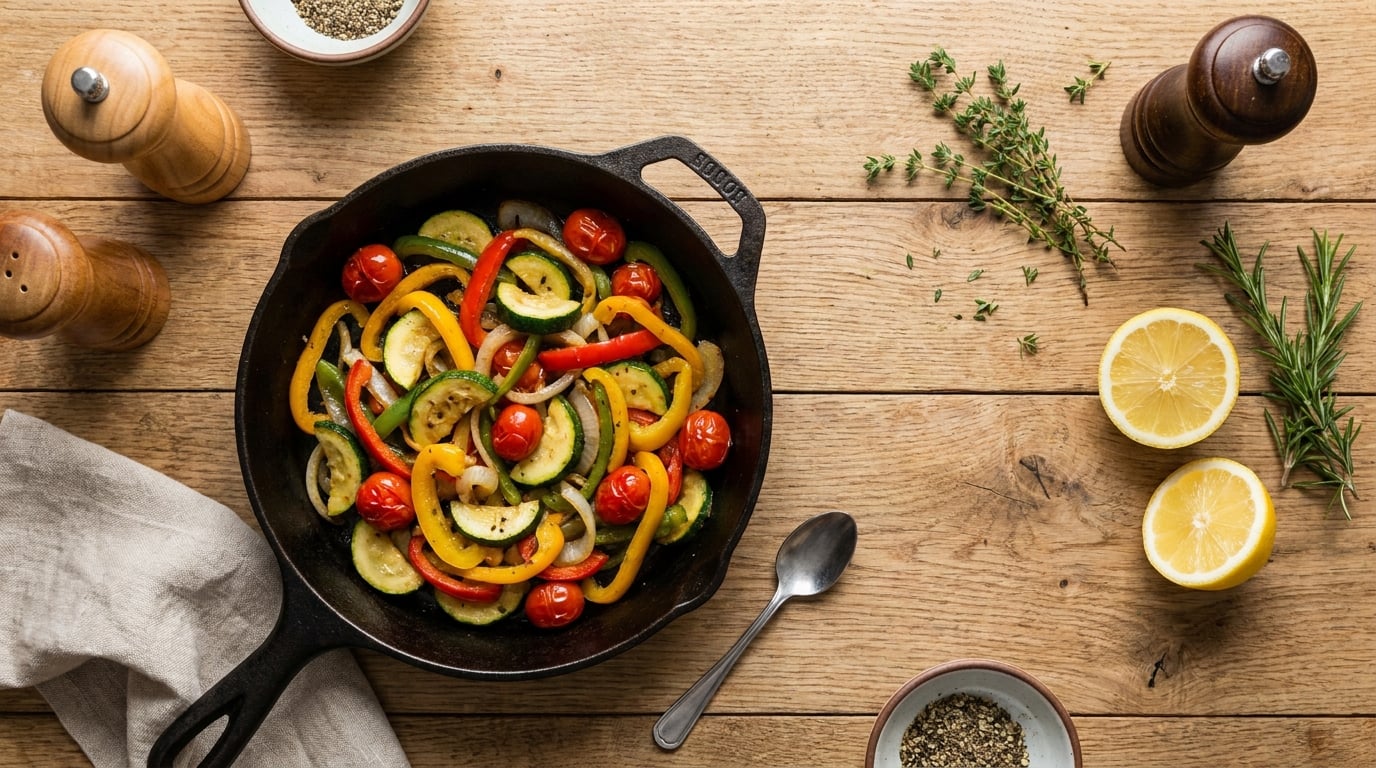
To season food as you cook, salt and build the flavor base in stages rather than at the end: season the fat and the first ingredient lightly, taste and adjust again when the liquid reduces, then finish with acid and fresh herbs off the heat. It takes about the same total time as seasoning at the end. The difference is that the flavor ends up inside the food instead of sitting on the surface.
I’ve cooked this way for years, and the honest truth is that most home recipes don’t fail on technique. They fail because a dish gets salted once, at the end, by reflex, to fix a problem that was really created in the first three minutes. A single pinch at the end tastes strong on the first bite and flat on the second.
There is a real debate about this. On r/KitchenConfidential you will find experienced cooks openly saying they’ve heard the layering advice and weren’t convinced. They’re not wrong to ask, and the useful answer is the mechanism rather than the authority: salt diffuses into food over time, spices need fat and heat to release their aromatic compounds, and reduction concentrates whatever salt is already in the pan. Timing is doing chemical work, not magic. If you want the wider reason so many home dishes read as flat next to restaurant plates, I wrote about that in why restaurant food tastes better than home cooking.
What You Need
None of this is specialized equipment. The list is short because the technique depends on judgment, not gear.
- Two kinds of salt. A coarse kosher or sea salt for cooking, which dissolves slowly and seasons in layers, plus a flaky finishing salt for the last moment on the plate. If you only have fine table salt, use about a third of what a recipe calls for and taste more often.
- Black pepper. Whole peppercorns in a grinder if you have them. Pre-ground pepper on a shelf loses most of its aroma within a few months.
- Aromatics. Onion, garlic, celery, carrot, leek, ginger, scallion, and a strip of citrus peel. These build the base that everything else sits on.
- Sturdy dried herbs and spices. Thyme, rosemary, oregano, bay leaf, cumin, coriander seed, smoked paprika, chili flakes.
- Delicate fresh herbs. Basil, parsley, cilantro, dill, mint, tarragon. These go in late and they are what stops a dish from tasting one-note.
- Fat. Olive oil for sautéing, butter for finishing, and a neutral oil when you need high heat.
- Two acids. A lemon or lime and a vinegar, ideally something mild like red wine or rice vinegar, plus a sharper one like cider or red wine vinegar for finishing.
- Umami sources. Tomato paste, soy sauce, parmesan, anchovies, dried mushroom, miso. These are how you get depth without more salt.
- A tasting spoon. A dedicated one, kept out of the pan during cooking so you are not tasting a dish that has been simmering in its own juices.
- An instant-read thermometer. This is how you check doneness without piercing food, sloppily letting out juices, or guessing.
One more thing worth having: a small dish of your own salt blend within reach. Cooks who season in layers usually keep a coarse salt, a sweetener like sugar, and a heat source like chili flakes or mustard powder together and adjust each one independently.
Step-by-Step: How to Season Food as You Cook
1. Start With a Balanced Base
Season the cooking fat and the first ingredient before the main ingredient goes in. Put a pinch of salt in the oil, swirl it, then add your onion or your meat.
The purpose of that first pinch is not to make the oil salty. It is to season the ingredient that is about to become the base of the dish, and salt added to a hot fat also helps carry flavor into everything that touches the pan after it. A tip that circulates on r/LifeProTips, and one I use constantly, is to season a little bit into the oil first to wake up the spices, then add the aromatics and season again.
Keep it light. You want the onion to taste seasoned and slightly sweet, not brined. You can always add more later; you cannot take it back. If the base ingredients are already salty, skip the pinch and lean on acid and herbs instead.
2. Brown and Season in Stages
Salt meat, fish, or vegetables at the moment they start cooking, and salt them again after they brown. Those are two different acts of seasoning doing two different jobs.
The first salt seasons the interior. Salt applied before heat has time to move inward through the food, so the center ends up seasoned rather than the surface only. The second salt happens after browning, when fond and Maillard browning have built a lot of flavor that needs support rather than more building.
Get the pan properly hot and dry the food before it goes in. Wet meat steams, it does not brown, and a steamed piece of meat seasons poorly no matter how much salt you throw at it. Let it sit untouched for a couple of minutes to take on color before you move it. Our cast iron steak method covers the browning part in more detail if your searing is inconsistent.
Salt timing also depends on the cut and the method:
- Thin cuts like chicken cutlets, chops, thin steak, or sliced vegetables: salt right before or as they hit the pan. They cook in minutes and there is no time to season later.
- Thick cuts like a whole breast, a thick roast, a leg of lamb: salt at least 30 to 45 minutes before cooking, or dry-brine overnight in the refrigerator uncovered with salt on all sides. That draws surface moisture and gives the seasoning time to work inward.
- Wet-brined in a salt solution: the seasoning is already inside, so season the pan, the vegetables, and the sauce instead.
- Delicate or quick-cooking foods like fish, mushrooms, or zucchini: season near the end. They release water, and salt applied early gets diluted into a puddle in the pan.
Do not deglaze right away. Those browned bits stuck to the pan are fond, and they hold more flavor than any spice you can add later. Cook until the fond actually releases, usually once you add liquid and hear that sizzle change.
3. Layer Aromatics, Spices, and Herbs
Some ingredients go in early because they need time to cook, and some go in at the end because heat destroys them. Getting this split right is most of what “season food in layers” means in practice.
Early, in the fat: garlic, ginger, onion, celery, scallion whites, and sturdy ground spices. Add ground spices to hot oil and let them sit 30 to 60 seconds until fragrant. That step is called blooming, and it is the difference between cumin that tastes like cumin and cumin that tastes dusty.
Middle: dried herbs like thyme, rosemary, and oregano, which need liquid and time to infuse; tomato paste, which needs a minute in the pan to darken and lose its raw edge; and whole spices, which can go in early and come out before serving if the texture is bothersome.
Late: fresh herbs, citrus zest and juice, vinegar, chili flakes if you want them to keep their bite, and finishing oil. Basil added in a simmering pot turns black and tastes like nothing. Added in the last thirty seconds off the heat, it stays green and tastes like basil.
Here is the whole timing picture in one place. Each entry gives the moment to add the ingredient, why that moment matters, and what goes wrong when you get it late or early.
- Coarse salt. Start of cooking, again after browning, lightly before serving. It needs time to diffuse into the food, so a late pinch only coats the surface. Too much early and the liquid reduces into something too salty to fix.
- Garlic and ginger. Into the fat before the main ingredient, over medium heat, because they need fat and gentle heat to soften without burning. Early and it burns bitter; late and it tastes raw and sharp in a finished sauce.
- Ground spices. Thirty to sixty seconds in hot oil, because the aromatic compounds only release once they are bloomed. Skipped, you get the dusty taste of raw powder; overcooked, you get bitterness.
- Dried herbs. With the liquid, early and often, because they need time and moisture to give up their flavor. Added at the end, they contribute almost nothing but a woody texture.
- Whole spices. Early with the aromatics, where they infuse slowly without turning bitter. Leave them in too long and the dish picks up a woody, medicinal note.
- Fresh herbs. The last thirty seconds, off the heat, because heat and long cooking destroy their color and volatile oils. Added early, they wilt to black or gray with almost no aroma.
- Acid, lemon or vinegar. Near the end, in small additions, because acid is lost to a long simmer and the balance shifts as it goes in. Too early and the sharpness cooks off; too much at once and the dish tastes vinegary.
- Fat, butter or finishing oil. Off the heat or at the very end, where it carries aroma and rounds sharp edges. Added at a hard boil, the milk solids in butter can grain and split.
- Umami, tomato paste, soy, mushroom, anchovy. Early, cooked into the base, because these need time to melt into everything else. Added at the end, they read as a distinct salty ingredient rather than depth.
One rule of thumb for ordering within the early group: sturdy first, delicate second. Onions and carrots before garlic, garlic before chili flakes, whole spices before ground.
4. Adjust Seasoning With Liquids and Acid
Every liquid you add changes the seasoning, and most cooks forget to taste after each one. Stock, broth, wine, canned tomatoes, and pasta water all arrive already salted, often more so than you expect.
The trap is reduction. As water evaporates in a simmering pan, the salt stays behind and gets stronger, even though you have not added a single pinch since the start. A sauce that tasted right ten minutes ago can be inedible at the end. Taste at least twice during any reduction, and stop the reduction earlier than feels necessary.
Add acid in small amounts near the end, a teaspoon at a time, and taste between additions. You are not trying to make the dish taste sour. You are looking for the moment where the salt stops being the loudest thing in the dish, which is usually the moment a squeeze of lemon makes everything else legible.
If a dish tastes salty and flat, that is nearly always an acid and heat problem, not a salt problem. A little lemon, a little vinegar, or a spoon of tomato paste usually fixes it. More salt never will.
5. Season Different Foods as You Cook at the Right Moments
Vegetables. Salt them once they hit the pan, not before, so the salt does not pull water out before the browning starts. Roast them, and season the oil you drizzle over them, not just the dry surfaces. Choosing produce at its peak changes how much seasoning a vegetable needs more than the seasoning itself does; I keep a short guide to telling if produce is in season nearby for that reason.
Protein. Salt before, cook to temperature, and rest before tasting so you are not judging a piece that is still cooking. Poultry reaches 165°F (74°C) in the thickest part, ground meat 160°F (71°C), and whole cuts and fish 145°F (63°C). Season the pan juices after resting and spoon them back over.
Grains and pasta. Salt rice and grains by seasoning the cooking water, and season pasta water well before the pasta goes in. The starch that leaches out binds with the salt and coats the pasta. Never drain and serve plain pasta and then add sauce to taste at the table, which is how a lot of home pasta ends up bland despite a good sauce.
Sauces. Build the base, deglaze, add liquid, then taste more often than feels necessary. A sauce that seems bland when hot often tastes fine at serving temperature. Let it cool for a moment before you judge it.
Soups and stews. Season early and lightly, taste as the liquid reduces, and reserve the finishing salt for the pot. Dried beans and stock bring their own salt, and that is the most common over-salted stew in home kitchens.
Curries and spice-forward dishes. Bloom the spices in oil, toast whole spices first if you have them, and add salt after the spices are bloomed so the salt is not competing with an unfinished layer. Sour cream, yogurt, or coconut milk at the end softens heat; a spoon of it also softens a spice blend that got too loud.
Salads and vinaigrette. Dress the leaves lightly and serve the extra dressing on the side. Salt goes in the dressing, where it can dissolve and cling, not sprinkled over dry leaves.
6. Taste, Rest, and Make the Final Adjustment
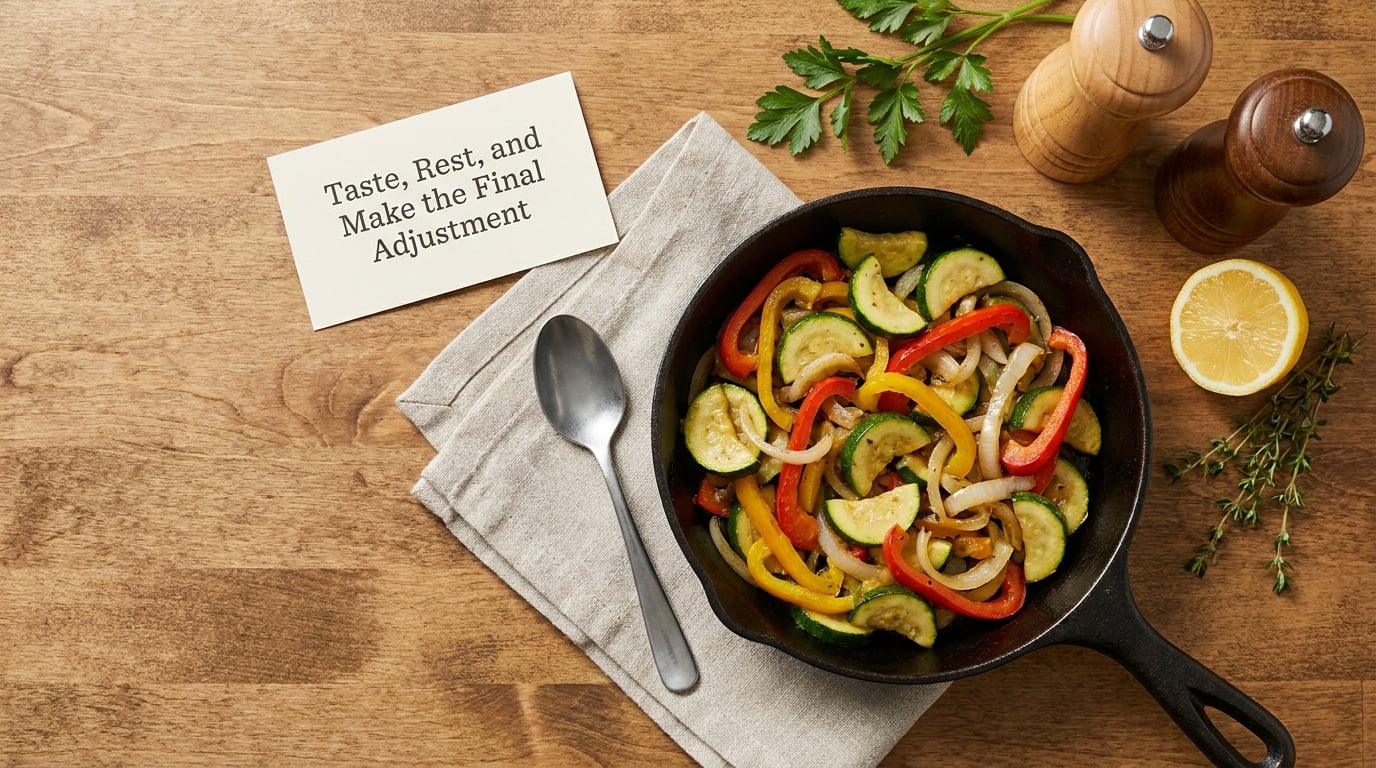
Taste near the end, not the start. Hot food tastes less salty than cool food, so judging a sauce straight off a high flame will send you adding salt you do not need.
Here is the tasting protocol that works for me. Use a clean spoon each time so you are not carrying the last sample forward. Cool the sample a few seconds or blow on it. Taste the food itself separately from the sauce, because a well-seasoned sauce on an unseasoned ingredient still tastes flat. Then taste the whole bite together, since that is how it will be eaten. Make one change at a time, and taste again before making the second.
Let the dish rest for a few minutes before the final adjustment. Flavors continue to settle and integrate while it sits, and herbs added in that window still read as fresh. Then make a restrained final pinch of salt, a grind of pepper, a squeeze of lemon, and a handful of herbs.
Stop when the main ingredient tastes like itself. Chicken should taste like chicken, not like a salt shaker with a chicken shape. That is the point where the seasoning is doing its job and going further takes it away.
Common Mistakes When Learning How to Season Food as You Cook
Saving all the salt for the end. A late pinch coats the surface. The first bite tastes fine and the second tastes of nothing. Fix it by salting before and during cooking, then finishing lightly.
Over-salting a flat dish to fix it. Flat usually means missing acid, missing browning, or missing umami, not missing salt. Fix it with lemon, vinegar, tomato paste, or more heat.
Adding every seasoning at once. A pinch of everything at the start means nothing tastes like anything. Fix it by staging: fat and aromatics first, spices second, acid and fresh herbs last.
Using delicate fresh herbs too early. Basil, cilantro, and dill need the last thirty seconds off the heat. Earlier and they go gray and lose their aroma.
Burning garlic and ground spices. This usually happens from crowding the pan or adding spices before the fat is hot enough to bloom them. Fix it by giving the pan room, using medium heat, and watching the spice color change from pale to fragrant, not to dark brown.
Ignoring the browned bits. Fond carries more flavor than the seasonings you sprinkled. If the liquid goes in before the fond releases, you have washed it down the drain.
Forgetting ingredients that arrive salted. Stock, parmesan, olives, capers, soy sauce, anchovies, and bacon all count toward the dish’s salt. Inventory them before you add your own.
Using stale spices. Ground spices fade within months in an open jar, and cooks who keep adding more just get dustiness. If a spice smells like nothing when you crush it between your fingers, it is spent. Buy smaller jars, keep them away from the stove, and replace ground spices roughly every six months.
Tasting food that is too hot to taste. You cannot judge seasoning at a rolling boil. Cool the sample, or blow on it, before you decide.
One more worth naming, because it sends people to the wrong page entirely: seasoning food and seasoning a cast-iron pan are unrelated. A pan is seasoned with layers of polymerized oil built up by heat; food is seasoned with salt, acid, and aroma. Nothing you do to a pan seasons a dish.
If you are cooking for someone on a low-sodium or salt-restricted diet, layering is more useful, not less. You cannot lean on salt for depth, so the other levers have to do the work: bloom your spices properly, brown hard, use umami generously from tomato paste, mushroom, soy in small amounts, and aged cheese, and finish with acid. You end up with a dish that tastes like more than its sodium number, because the flavor is coming from four places instead of one.
Frequently Asked Questions
When should I season food while cooking?
Season in stages rather than at one moment. Salt the fat and first ingredient lightly at the start, salt again when the main ingredient browns and the liquid goes in, and make a small final adjustment after the dish has reduced and rested. Acid and fresh herbs come last, usually off the heat.
Should I season meat before or after it browns?
Both, and for different reasons. Salting before cooking seasons the interior, because salt needs time to move into the meat. Salting after browning supports the flavor that browning and fond have just created, and seasons the pan juices you will spoon back over the meat before serving.
When should I add fresh herbs and spices?
Ground spices and dried herbs go in early, with ground spices blooming 30 to 60 seconds in hot fat. Fresh herbs like basil, parsley, cilantro, and dill go in during the last 30 seconds with the heat off, because long cooking destroys their color and their volatile oils.
How do I know if food needs more salt?
Taste a cooled sample and ask whether the main ingredient tastes like itself. If the dish is flat but not obviously salty, the answer is usually acid or umami, not salt. If every flavor is muted and nothing stands out, add a small pinch, wait a minute, and taste again before adding more.
Can lemon juice or vinegar fix bland food?
Often, yes. A squeeze of lemon or a teaspoon of vinegar brightens a dish that tastes dull without making it sour, and it makes existing salt and spice more noticeable. Add it in small amounts near the end, taste between additions, and stop the moment the other flavors come forward.
How can I avoid oversalting a dish?
Taste constantly, especially after adding stock, cheese, olives, or any salty ingredient, and again during any reduction since water evaporates while salt stays. Season the food itself, not just the sauce, add salt in small pinches with a rest in between, and keep acid and umami on hand so you do not reach for the salt shaker out of habit.
Conclusion
To season food as you cook, use three stages: a light seasoning of the fat and the first ingredient, a second seasoning when the main ingredient browns and the liquid goes in, and a restrained finish with acid and fresh herbs once the dish has reduced and rested. Taste between each one, cool the sample before you judge it, and change only one thing at a time.
Start with the next thing you cook. Put a pinch of salt in the oil before the onion goes in, taste it once the pan has deglazed, and taste again just before you turn off the heat. That single change, in a dish you already make, teaches the timing faster than any amount of reading about it.