
The fastest way to get a table at a busy restaurant is to run two channels at once: set a cancellation alert on the booking platform across a range of dates, and call the venue directly to ask for its internal cancellation list. Flexibility on day, time, and party size decides the outcome far more often than persistence does.
Setting this up takes about ten minutes, and nearly all of it happens days or weeks before you sit down. The night-of version — walking into a packed room with no booking — is a different game with much thinner odds, and I cover that near the end.
Before the details, the short version:
- Find out how that one restaurant books tables: online platform, phone only, events email for large parties, or nothing at all.
- Set notifications across a range of dates rather than a single night. One date rarely clears.
- Call and ask to be on the internal cancellation list, then ask whether bar and counter seats are released on their own schedule.
- Be ready the second the booking window opens, because prime slots can be gone within minutes.
- Stay genuinely flexible. A 5:30pm seating, a Tuesday, or a table for two instead of four are the three cheapest moves available.
- If you are walking in tonight, ask how long the wait actually is before you give up the evening.
Table of Contents
- What You Need
- Step-by-Step
- Common Mistakes
- Frequently Asked Questions
- How far in advance can you reserve on Resy?
- How does a waitlist work on OpenTable and Resy?
- What is the 30/30/30 rule for restaurants?
- Can you walk into a busy restaurant without a reservation?
- Is it okay to reserve a table for one at a busy restaurant?
- How do I get a reservation for a group of eight or more?
- Conclusion
What You Need
You need four things assembled before you contact anyone, and three of them take about a minute.
Party size, plus how flexible you are on it. Tables for two clear far more easily than tables for four, and four clear far more easily than six or eight. If your group can split into two smaller bookings, you have twice the number of chances.
A date range, not a date. Pick a two-week window and a spread of acceptable times. A single locked-in date with one acceptable time is the hardest possible request to fill, and it is also the most common reason a slot goes unsold.
Contact details the restaurant can actually use. A phone number you answer, an email, and a card on file if the venue takes deposits. Every extra step a host has to complete to confirm you is a step where somebody else can take the seat instead.
The right channel. Some restaurants book through Resy, Tock, OpenTable or SevenRooms. Some are phone-only. Some never list the address that handles large parties, and that address is often the one that matters if you are booking for six or more.
Line up one backup while you are at it. A second venue with the same food, a different neighborhood, or an earlier seating keeps an evening from turning into a search. And if the restaurant is worth the trip, it is worth reading why restaurant food tastes better than home cooking before you decide which nights are non-negotiable.
Step-by-Step
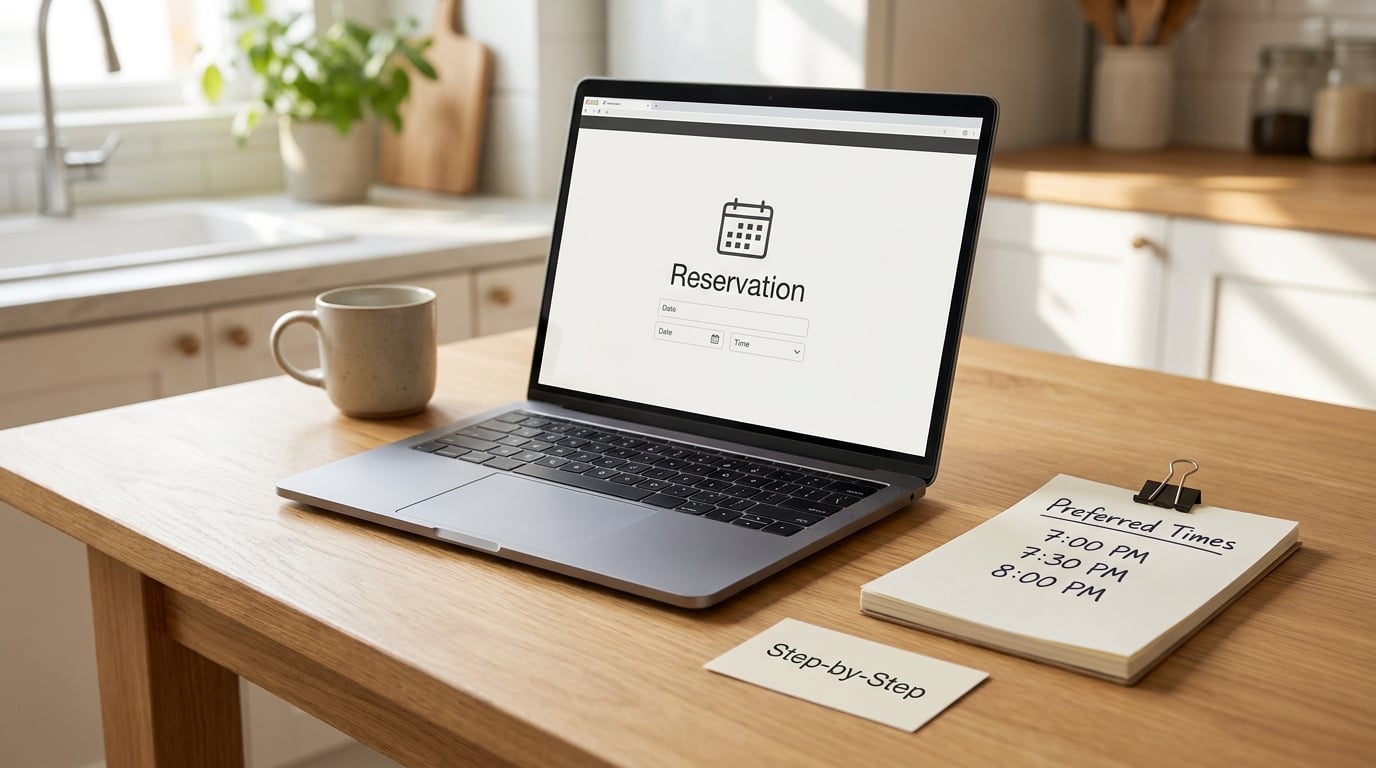
Six steps, in the order that actually works. Skipping ahead to the phone call without doing step one is why so many people end up calling the wrong number at the wrong hour.
Step 1: Research How the Restaurant Handles Reservations
Start on the restaurant’s own website, not on a search results page. You are looking for four specific things: which platform runs the calendar, how far in advance the calendar opens, whether large parties go through a separate events contact, and whether bar seating is booked or released independently.
Then check the platform itself. Resy, Tock, OpenTable and SevenRooms all behave differently in ways that matter. A prepaid or deposit-based booking rarely cancels, so its calendar is genuinely full. A calendar that accepts card-on-file bookings churns far more, which is where your last-minute chances live.
| Channel | How it works | How often slots open | Speed required | Best for |
|---|---|---|---|---|
| Resy or Tock Notify | Push alert when a slot is released; first to accept gets it | Often, concentrated in bursts | Seconds — openings vanish quickly | Anyone planning days or weeks out |
| OpenTable waitlist | Notification list plus in-person walk-in queue at some venues | Varies by venue | Seconds for alerts, patience for the queue | Casual dining rooms with frequent churn |
| Direct phone call | Reaches the host stand and the internal cancellation list | One new slot at a time, but often unseen online | Slow is fine | Prime slots, big parties, anything urgent |
| Walk-in bar or counter | Separate seat inventory that turns on its own rhythm | Frequently | Arrival time and patience | Solo diners, pairs, spontaneous nights |
| Card concierge | A card benefit that books harder-to-get reservations for you | Depends on the program and venue | Book days ahead | Anniversaries and hard tickets |
Write down the booking window length while you are on the page. That number drives the next step.
Step 2: Book as Soon as Reservations Open
Most restaurants release their calendar about 30 days out, though plenty run on 14 days and some stretch to 60 or 90 for special events and holidays. The moment that window opens, the good slots are claimed fast — a 7:00pm Friday table for two on a popular room can disappear within minutes.
Set an alarm for the drop time and treat it like a ticket sale. Experienced diners booking large venues describe setting an alarm for midnight to catch the instant a 60-day window opens, because the alternative is arriving late to a sold calendar.
Have everything typed before the window opens: name, party size, phone, email, one preferred time plus two backups, and any access needs. Creating a platform account, finding the payment method, and typing the details all cost you minutes that you do not have at that moment.
Then check back on the day itself. The heaviest release typically happens 24 to 48 hours before service, when people with plans cancel or lose interest, and again in the last few hours.
One habit regulars mention more than any other: book your next visit before you leave the current one. It is not a trick, it is just how the calendar stays full — the people ahead of you have already rebooked.
Step 3: Call During the Restaurant’s Booking Window
Most restaurants do not publish their drop time, and the times people guess online are frequently wrong. Find the real one the simple way: call once in the mid-afternoon, ask when the calendar opens for your date, and write the answer down. Or watch the calendar for a week and notice the hour at which new dates appear.
Call at that hour rather than at lunch, when the person answering is also seating people. Say your date, party size, and the window you can genuinely do, then ask for the cancellation list in the same breath.
The script that works, in one breath: “I’m looking for a table for two on the 14th. I can come any night that week, any time before 6:30 or after 9. If something opens up, could I be on your cancellation list?” Specific dates plus real flexibility plus an explicit request is the combination that gets a yes, because it costs the host nothing to file.
Two follow-up questions are worth asking while you have them: how many tables the room holds back for walk-ins, and whether bar seats are released separately from the dining room. The number of tables held back is small — often just a couple — and staff will tell you the real figure if you ask instead of assuming it is zero.
Step 4: Join Every Relevant Waitlist
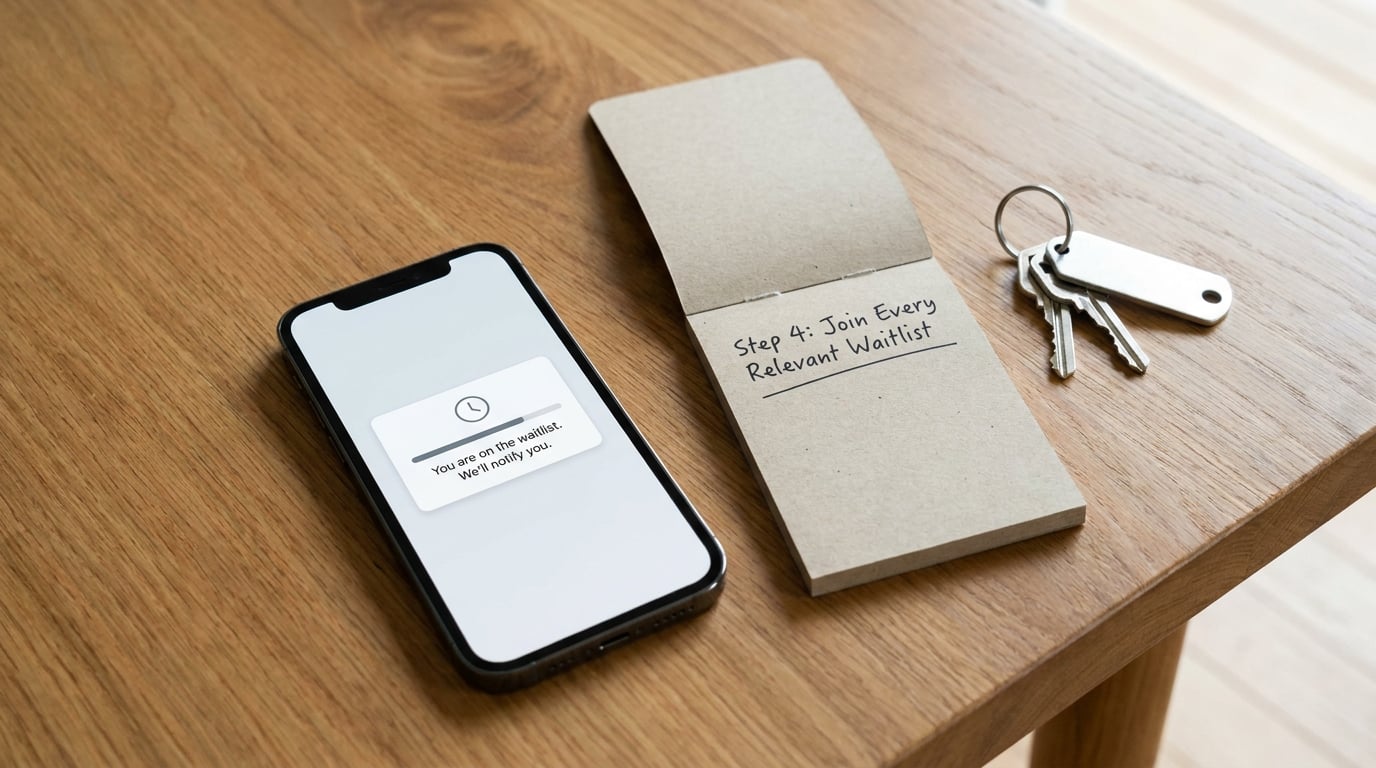
There are two different things people call a waitlist, and conflating them wastes time. A notification list — Resy Notify, Tock, an OpenTable waitlist — sends you a push when a slot opens, and the first person to accept gets it. A queue-based walk-in list puts your name in a physical or digital line at the door. The first is a race you can win from your couch. The second is a wait you can only shorten by showing up earlier.
Set notifications over a wide range of dates rather than one. Turn on phone notifications, and answer inside a few seconds — a released slot is frequently claimed before most people finish reading the alert.
Do not stack five duplicate requests for the same evening. It slows the restaurant down, it makes your own position harder to read, and it can get a request dropped. One platform list plus one phone call to the internal list is the sensible maximum.
Keep a card on file wherever the platform allows it. When a slot opens and the restaurant has to confirm quickly, a booking that needs no further input beats one that requires a phone call back, and the friction decides more often than you would think.
Step 5: Ask About Bar Seating or Alternative Areas
Bar and counter seating is a separate pool of seats on a separate schedule, and it is the single most reliable fallback at a packed restaurant. Diners describe it as the real key, because the bar turns on its own rhythm — a table of four staying through a slow stretch does not affect your chances the way it does in the dining room.
Ask whether the bar takes walk-ins, whether it will seat your full party, and what the wait looks like at your hour. The honest limits: some rooms will not seat a party of six at the bar, the menu may be shorter, and service is at the pace of the bartender. Knowing that in advance keeps the evening from going wrong halfway through.
| Time slot | How easily it clears | Why |
|---|---|---|
| 4:00pm to 5:30pm | Easiest | Sparse demand, and the room is already reset for the first seating |
| 5:30pm to 6:30pm | Moderate | Early diners will cancel, and they cancel early |
| 7:00pm to 8:00pm | Hardest | Prime time, least flexibility, highest competition for cancellations |
| After 9:30pm | Often easy | Late seatings are unpopular, so tables sit unfilled until close to service end |
Patio, lounge and private-room seating are worth the same question. If you are already in the room, ask what is available tonight rather than what was available online three weeks ago.
Step 6: Arrive Prepared and Follow Up Politely
Arrive 10 to 15 minutes early and dress to the room. If you have a booking, say your name and party size at the stand before you explain anything. If the host quoted you a 45-minute wait, be back in 40 — the wait estimate is a promise about when they will come find you, and people notice when the clock runs past it.
Ask for the real number before you commit an evening. Walk-in waits reported by diners at peak hours run one to two hours or more; off-peak, or at the bar, the same walk-in can be quick. There is no shame in hearing “not tonight” and moving to the backup you already picked.
For a group of eight or more, a phone call weeks in advance is close to mandatory. Online calendars rarely hold large tables, and the room will need a deposit, a set menu, and a staffing plan before it can say yes. Unannounced large parties are the walk-in version that servers describe as genuinely disruptive, and they are the fastest way to be turned away politely.
Say something about a special occasion on the first booking, not at the stand on arrival. A short, gracious note about an anniversary or a birthday gives the host something to work with, and it costs you nothing to add.
It helps to know what the host stand is actually doing. Staff can only over-prepare for walk-ins by a small margin, and turning one away is a capacity decision, not a personal slight. A polite party of two who will take the bar is an easy yes. A party of eight who arrived unannounced at 7:40pm is a problem the host has to solve, and they solve it by saying no.
One more edge case: what if your confirmed reservation is not honored on arrival because the party grew or the system double-booked? Stay calm, ask whether anything has opened, and take the bar or a waitlist spot while they sort it. Ask them to note the problem against the booking — that report is what makes the next attempt easier, and a good host will want to fix it for you.
Common Mistakes
Most lost tables come down to six avoidable errors.
- Calling at the wrong hour. A call at 12:30pm lands on someone who is also seating the room. Fix: call in the mid-afternoon lull, or exactly at the drop time.
- Making a vague request. “Do you have anything Friday?” gets a polite maybe. Fix: give a date range, a party size, and two or three acceptable times in the same sentence.
- Booking the same evening five times. Duplicate requests create work for the restaurant and confusion for you. Fix: one platform notification list, one phone call.
- Never asking for the cancellation list. This is the highest-value sentence in the entire process and most people never say it. Fix: ask explicitly on every call, every time.
- Missing the quoted wait. Arriving at 20 minutes past a 45-minute estimate puts you behind every walk-in who was on time. Fix: set a phone alarm for the quoted time minus five.
- Taking a no personally. A full room is a seat count, not a judgment about you. Fix: ask about the bar, a different time, or the next night’s cancellations, then move on.
Two smaller habits help as much as the big ones: keep your phone on loud during the days before a booking, and pick a backup before the first attempt, not after it fails.
Frequently Asked Questions
How far in advance can you reserve on Resy?
Most restaurants release their calendar about 30 days ahead, though plenty open at 14 days and some stretch to 60 or 90 for holidays and special events. Check the venue’s booking page, which usually states the window, and set your alarm for that hour rather than checking periodically. Prime weekend seatings can be claimed within minutes of the window opening.
How does a waitlist work on OpenTable and Resy?
There are usually two lists. A notification list sends you a push alert when a slot is released, and the first person to accept gets it, so speed matters. A queue-based waitlist puts your name in line at the venue for walk-ins, which depends on your arrival time. Join both, enable alerts on your phone, and answer within seconds.
What is the 30/30/30 rule for restaurants?
It is a service pacing guideline, not a booking tactic. The idea is that a room shapes the first half hour of a meal, and the rule is a shorthand for how timing expectations affect the flow of a seating. It has no bearing on whether you can get a table, so do not let it change your booking strategy.
Can you walk into a busy restaurant without a reservation?
You can, and at off-peak hours or at the bar your odds are good. At peak, diners regularly report waits of one to two hours or more, and the room can only over-prepare for walk-ins by a small margin. Arrive early, dress to the room, ask for the real wait time, and be willing to take the bar or a different day.
Is it okay to reserve a table for one at a busy restaurant?
Yes. A single booking takes a two-top, and two-tops are the seats that clear most easily, so hosts are usually glad to have it. Book normally, choose a bar or counter seat if you want speed, and add a guest later if plans change. The only thing to avoid is booking one seat and asking for a full table on arrival.
How do I get a reservation for a group of eight or more?
Call, and call early. Large tables are rarely held on the online calendar because the room needs a deposit, a set menu, and a staffing plan. Expect to be quoted a date rather than a time, expect a per-person deposit or prepaid menu, and have two or three candidate dates ready so you can say yes to the first one offered.
Conclusion
Start with the restaurant’s own booking page, not a search result, and work out exactly how that one venue takes reservations and when its calendar opens. Set a notification across a range of dates, call once to be added to the internal cancellation list, and stay flexible on time and party size so you can take whatever opens.
Keep one backup picked before the first attempt, and if you are hosting rather than booking, how to set a table for a casual dinner party is a good use of the waiting time.