
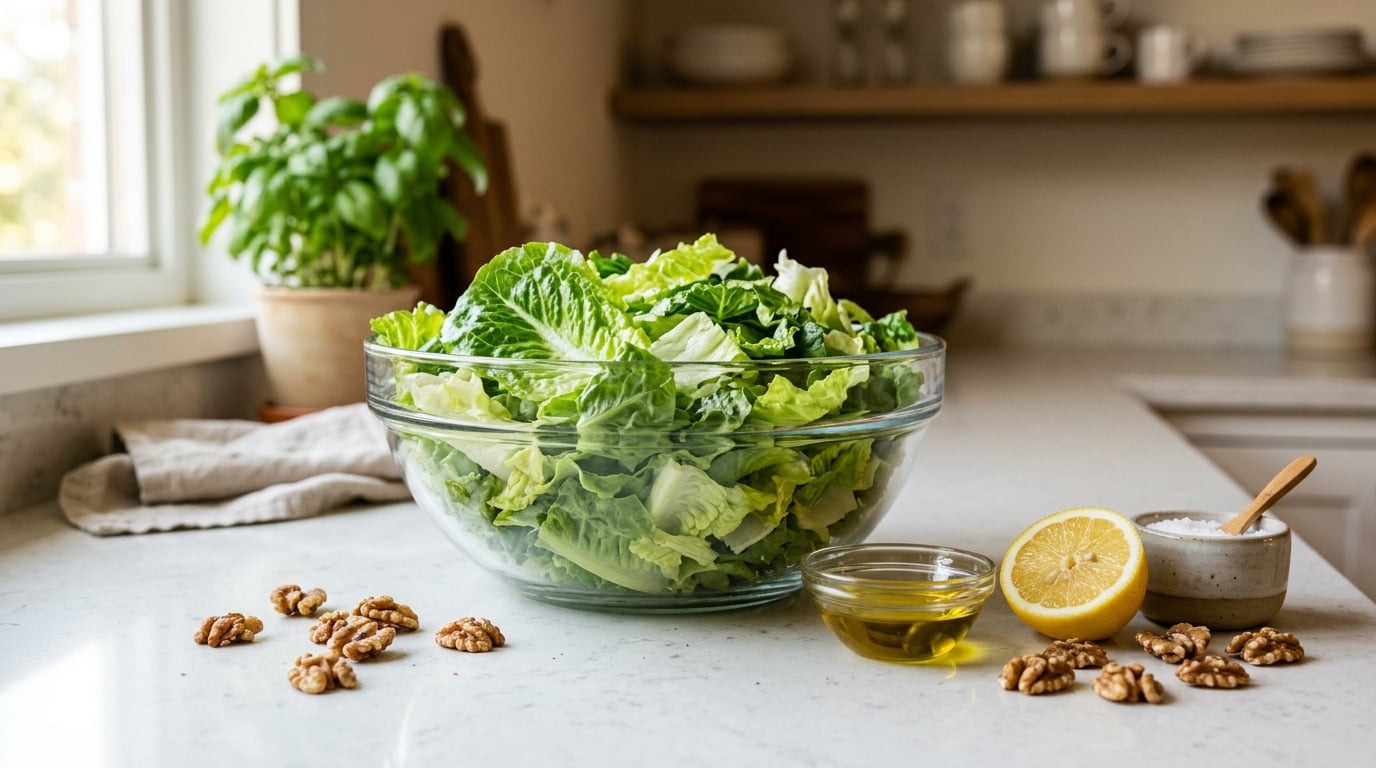
Dressing a salad properly means adding a measured amount of dressing to dry greens in the right order, so every leaf is lightly and evenly coated instead of swimming. Most soggy salads fail on one of two things: wet leaves, or too much dressing poured on in a hurry. Fix those and the rest is easy.
The short version: dry your greens thoroughly, salt them first, add the acid before the oil, measure a small amount and toss with your hands. Crunchy toppings go on at the very end. This guide covers how to dress a salad properly, including how much dressing to use, which greens survive a heavy creamy dressing, and what to do when a salad has already gone soft.
Updated for 2026.
What You Need to Dress a Salad Properly
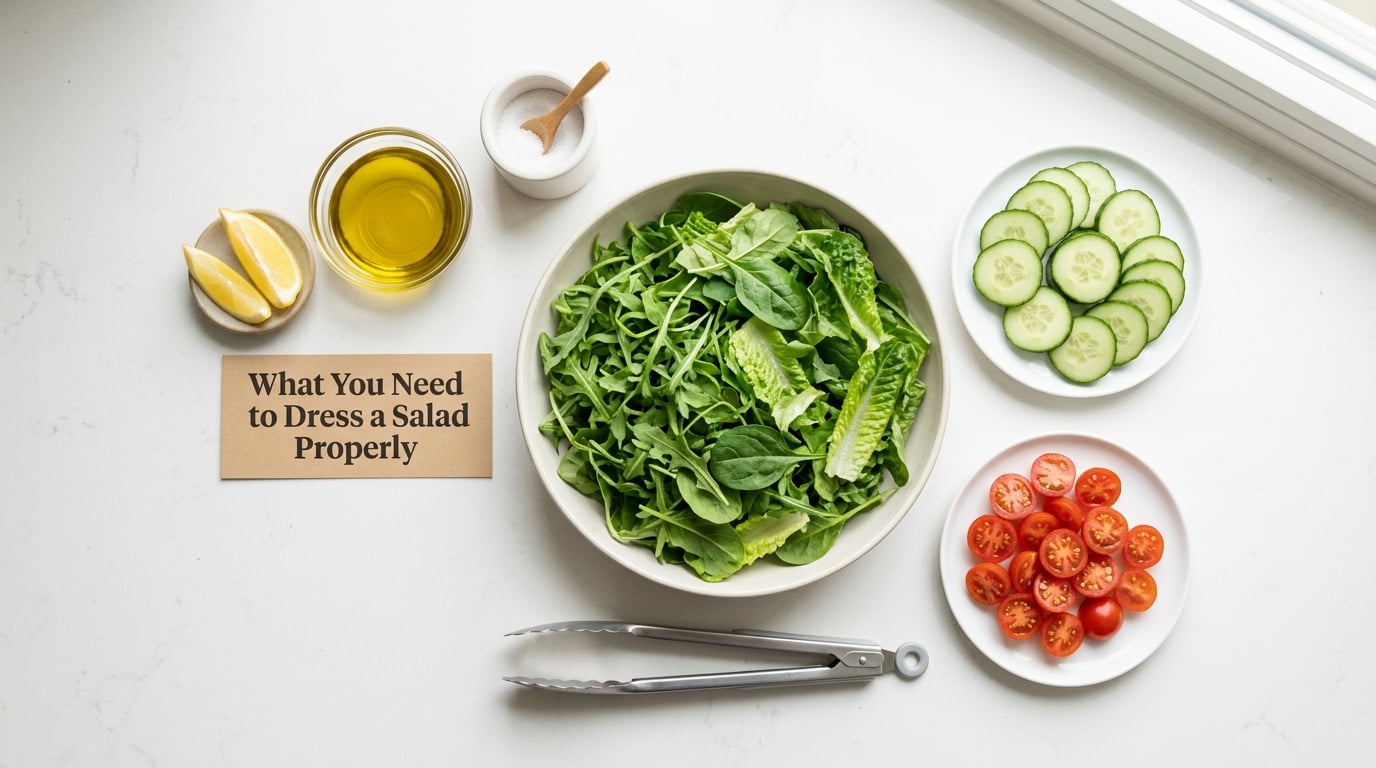
A good salad needs very little equipment, but the ingredients have to be ready before the dressing comes out. Dressing is the last step and you cannot undo it, so everything in front of it should already be washed, cut, chilled and measured.
- Greens: one sturdy type (romaine, iceberg, endive, kale) and optionally one delicate type (arugula, baby spinach).
- Vegetables: tomatoes, cucumber, bell pepper, red onion, or roasted vegetables for a grain salad.
- Something to add: chickpeas, grilled chicken, hard-boiled egg, cheese, or beans.
- Fat and acid: extra-virgin olive oil plus lemon juice, lime juice, or a vinegar such as red wine, white wine or balsamic.
- Seasoning: kosher salt and freshly ground black pepper. A teaspoon of Dijon mustard helps a vinaigrette hold together.
- Two tools: a wide bowl and either your clean hands or salad tongs. A salad spinner saves time but a clean towel in a bag works fine too.
Step-by-Step: How to Dress a Salad Properly
Choose the Right Base
Match the greens to the dressing and to the occasion. Sturdy greens such as romaine, iceberg, endive and curly kale hold their texture through heavy creamy dressings like Caesar, ranch or blue cheese, and they can sit through a dinner party without collapsing. Delicate greens such as arugula, baby spinach and butter lettuce wilt under the same weight and want a light vinaigrette instead.
Build the sturdy ingredients first and the fragile ones last. Cucumbers and tomatoes release water as they sit, so drain them on a paper towel after cutting, and add them just before serving. Roasted vegetables for a grain salad are fine dressed in advance because they have already given up their moisture in the oven.
Prepare and Dry the Ingredients
Wash greens in cold water, not warm. Warm water pulls more from the leaves and softens them before you have even started. Spinach and arugula need three changes of water at minimum to get the sand out.
Dry them thoroughly. A salad spinner works best if you fill it about halfway, spin, empty, repeat, so the leaves are not mashed against the drum. Without a spinner, put the washed greens in a clean towel, roll it up and press firmly over the sink, then repeat. Every drop of water left on a leaf is a drop of dressing that gets diluted instead of coating.
Keep the greens cold. If you have more than a few minutes, refrigerate them in a container lined with a damp paper towel, which keeps already-washed leaves from drying out and wilting the opposite way. Chilled greens also hold up better against a cold dressing.
Balance the Dressing: Acid First, Then Oil
Make the dressing in a jar or small bowl and whisk it, adding the acid before the oil. This matters more than it sounds. Acid runs thin and spreads through the bowl; oil is heavier and sits in heavier pools. Starting with the acid means you can taste the dressing before the oil flattens it, so you can correct sharpness while it is still fixable.
For a basic vinaigrette, start with three parts oil to one part acid and adjust from there. Two tablespoons of olive oil and about one to two teaspoons of lemon juice per ten loosely packed cups of greens is a reasonable starting point. A spoonful of Dijon mustard gives you an emulsifier that helps the oil stay suspended instead of separating in the bowl.
Salt before the dressing, not after. Salt seasons the leaves themselves, draws a little moisture out of them and softens the cell walls of tougher greens, which is why a properly salted romaine tastes sweeter than an unsalted one. Sprinkle it from about eight inches up with a loose hand so it lands evenly rather than in crystals. Add black pepper at the end.
Whisk a creamy dressing thinner than the bottle suggests. Caesar, ranch and blue cheese go on more evenly when loosened with a spoon of water, milk or a squeeze of lemon, and the thinner coat is what keeps a Caesar salad from turning to mush before the table is finished.
Add the Right Amount of Crunch
Layer your bowl so the fragile things land on top. Put the dressed sturdy greens down first, then the vegetables, then anything that bruises easily such as pear, avocado, soft herbs or torn bread.
Add croutons, bacon bits, nuts, seeds and grated cheese as late as you can. Those are the first things to go soft, and once they have taken on moisture they never come back. If you are serving a buffet, keep a separate bowl of croutons beside the salad rather than on it.
Toss and Serve
Use your hands. Tongs squeeze the leaves, and squeezed leaves bruise and tear, which is how you get limp greens at the edges of a salad that was assembled carefully. Lift from the bottom of the bowl, turn everything over, and repeat a few times with your fingers spread wide.
Add the dressing in two or three additions rather than all at once. Toss, taste a leaf, and add more if it needs it. You are looking for leaves that look lightly glossy, not shiny. If the bottom of the bowl has a puddle in it, you have gone too far and the only fix is more greens.
Serve most salads within a few minutes of dressing. If you need a short rest, ten minutes is fine for a sturdy green salad and it gives the salt and acid time to work into the leaves. Anything past twenty minutes and a vinaigrette starts pulling water out of the vegetables.
Common Mistakes and How to Fix Them
The dressing pools at the bottom. Too much dressing, added all at once, over greens that were not dry. Add more greens, or serve it undressed with the dressing on the side.
The leaves are limp and the bowl is watery. Wet greens, undressed vegetables sitting too long, or a salad sitting out more than an hour. Drain the bowl, lift out the soggy leaves, and eat it immediately rather than trying to store it.
Everything tastes flat and dull. Usually missing acid, not missing salt. Add a squeeze of lemon and toss again before reaching for more oil.
The salad tastes bitter. Bitter leaves are usually a sign they were already stressed or old, and no amount of acid fixes that. Next time, use fresher leaves and keep them cold right up to the end.
The dressing was heavy on top and bare underneath. It was poured on rather than tossed in. Whisk it, then use the two-step addition and your hands.
Frequently Asked Questions
How much dressing should I use for a salad?
Start with about 1 tablespoon of acid and 2 tablespoons of oil for every 10 loosely packed cups of greens, then taste and add more. Delicate greens such as arugula and baby spinach need less than romaine or iceberg. Whisk or shake the dressing first, pour it in two additions, and stop as soon as the leaves look lightly coated rather than shiny.
Should I put dressing on a salad before storing it?
Store salads undressed. Dressing softens leaves and pulls water out of vegetables within minutes, and a refrigerated dressed salad rarely recovers. Keep the greens, the toppings and the dressing in separate containers and combine them at the table. A short exception is a grain or roasted vegetable salad, which can sit dressed for a few hours because those ingredients have already lost their moisture.
How do I keep a salad from getting soggy?
Dry the greens completely, measure the dressing rather than pouring it, and add crunchy toppings last. Drain cut tomatoes and cucumber on a paper towel before they go in the bowl, and keep sturdy greens like romaine and endive for any creamy dressing. A squeeze of lemon or a splash of vinegar at the end can brighten a salad that has gone flat before it has gone soft.
What is the best dressing for leafy greens?
For delicate leaves like arugula, spinach and butter lettuce, use a light vinaigrette of oil and lemon or vinegar so the leaves do not wilt under the weight. For sturdy greens like romaine, iceberg, endive and kale, an emulsified creamy dressing such as Caesar, ranch or blue cheese works well. Mixing both is also fine, as long as the delicate leaves go in at the end.
How do I make salad dressing from scratch?
Combine three parts oil to one part acid in a jar with a pinch of salt and a spoonful of Dijon mustard, then seal it and shake until the dressing looks emulsified and slightly thickened. Taste and adjust the acid, then the salt. The ratio is a starting point, not a rule: a balsamic-heavy dressing wants more oil, and a lemon-forward dressing wants closer to two to one.
Should a salad be served cold or at room temperature?
Most leafy salads are best cold or barely chilled, since cold greens and cold dressing share a similar temperature and nothing wilts. Take the bowl out of the fridge about ten minutes before serving so it is not icy, but leave the greens in. Salads built around grains, roasted vegetables or sturdy greens are the exception and are usually better close to room temperature.
Conclusion
Start with the step most people skip: dry your greens. Everything after that is a matter of restraint and order. Salt the leaves, add the acid, add a measured amount of oil, and toss with your hands until the leaves look lightly glossy. Crunchy toppings go on at the very end, right before the bowl hits the table.
For your first salad, keep it simple. Romaine or iceberg, one bright vegetable such as tomato or cucumber, one crunch such as toasted nuts, and a dressing of three parts olive oil to one part lemon juice with a pinch of salt. Once you can do that without over-dressing it, every other combination becomes straightforward.