
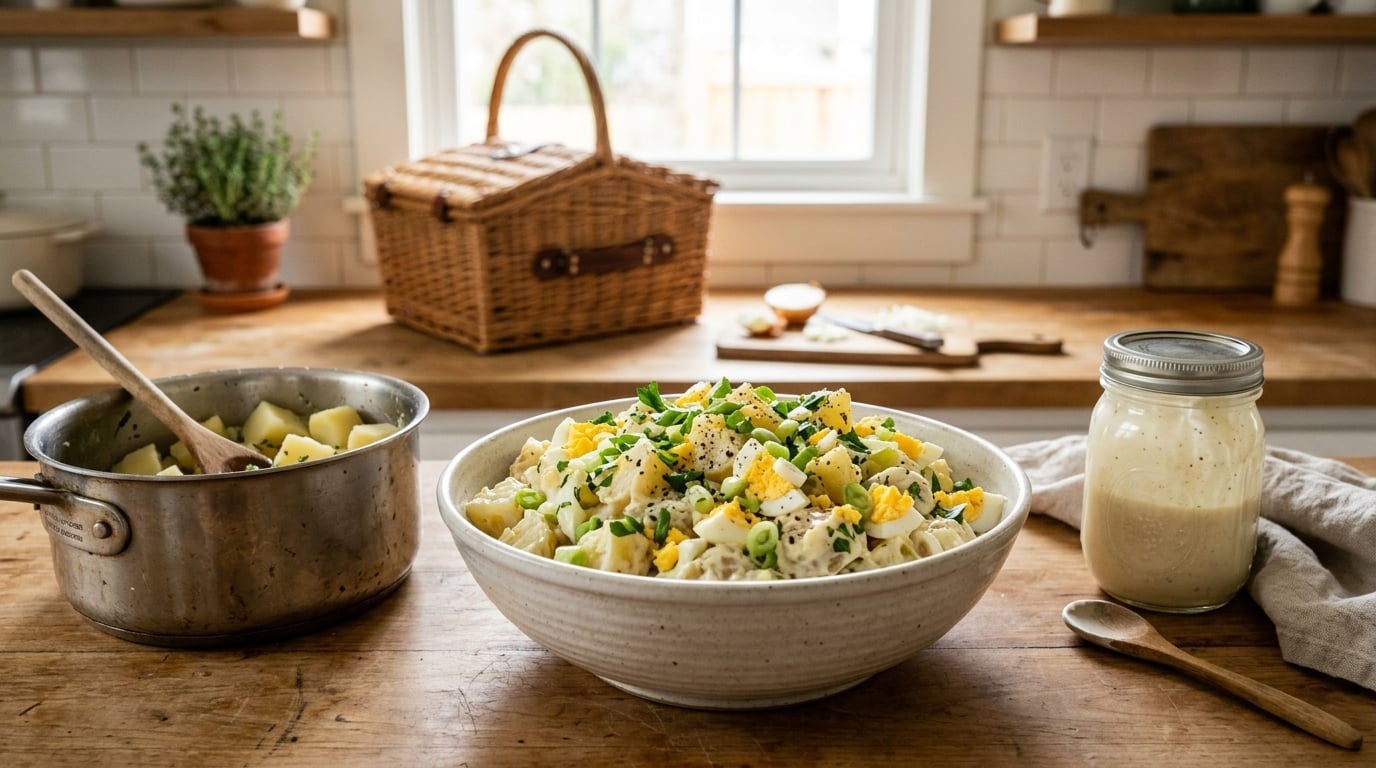
If you want to know how to make potato salad ahead of time, the short version is this: cook the potatoes, let them cool to warm, dress them, and refrigerate the finished salad covered at 40F or below. It holds three to four days and the flavor is honestly better on day two.
The trick is knowing which parts to prep early and which to add at the last minute. Get that split right and a holiday cookout stops being stressful. Updated for 2026.
If you are building the whole day around food, start with how to plan a dinner party menu a week ahead so the cold dishes get scheduled first.
What You Need
For a standard batch feeding 8 to 10 people, you want about 3 pounds of potatoes. That sounds like a lot until you remember a potato salad serving is mostly potato.
Here is what goes into the bowl:
- 3 pounds waxy potatoes, Yukon Gold or red, cut into 1-inch cubes
- 1 cup mayonnaise (use real mayonnaise, not the fat-free kind)
- 1/2 cup sour cream or plain Greek yogurt
- 2 tablespoons Dijon mustard
- 2 tablespoons apple cider vinegar
- 1 teaspoon kosher salt for the cooking water, plus more to taste
- 1/2 teaspoon black pepper
- 4 hard boiled eggs, peeled and chopped
- 1/2 cup diced celery
- 1/3 cup sliced green onions
- 1/4 cup chopped flat leaf parsley
- 1 teaspoon salt and 1/2 teaspoon pepper for the dressing
Tools are simple: a large pot, a wire cooling rack, a colander, and a container with a tight lid that fits in your refrigerator. A salad spinner is nice but not required, since drying the potatoes on a towel works just as well.
Here is the split that makes the make-ahead work.
Two days out you can boil the potatoes, cool and cube them, hard boil the eggs, and mix the dressing. Store each component separately in airtight containers, and do not combine them yet.
The night before, combine the potatoes, dressing, eggs, celery, and herbs. Fold gently, cover, and refrigerate overnight.
The morning of, stir in the green onions and parsley, taste for salt, and serve cold. If you are serving it at a buffet, pull it from the fridge about 20 minutes beforehand so it is not painfully cold.
How to Make Potato Salad Ahead of Time: Step-by-Step
Here is the whole schedule in one place. If you follow it in this order, nothing is sitting out longer than it should be.
| When | Task | Storage |
|---|---|---|
| 2 days out | Boil and cool the potatoes, hard boil the eggs, whisk the dressing | Each component in its own airtight container, refrigerated |
| Night before | Fold potatoes, dressing, eggs, celery, and herbs together | Covered container, 40F or below |
| Morning of | Add green onions and parsley, season, serve cold | Keep cold until serving, no more than 2 hours out |
The total active time is about 40 minutes, most of it waiting on the pot.
Cook and Cool the Potatoes Without Making Them Mushy
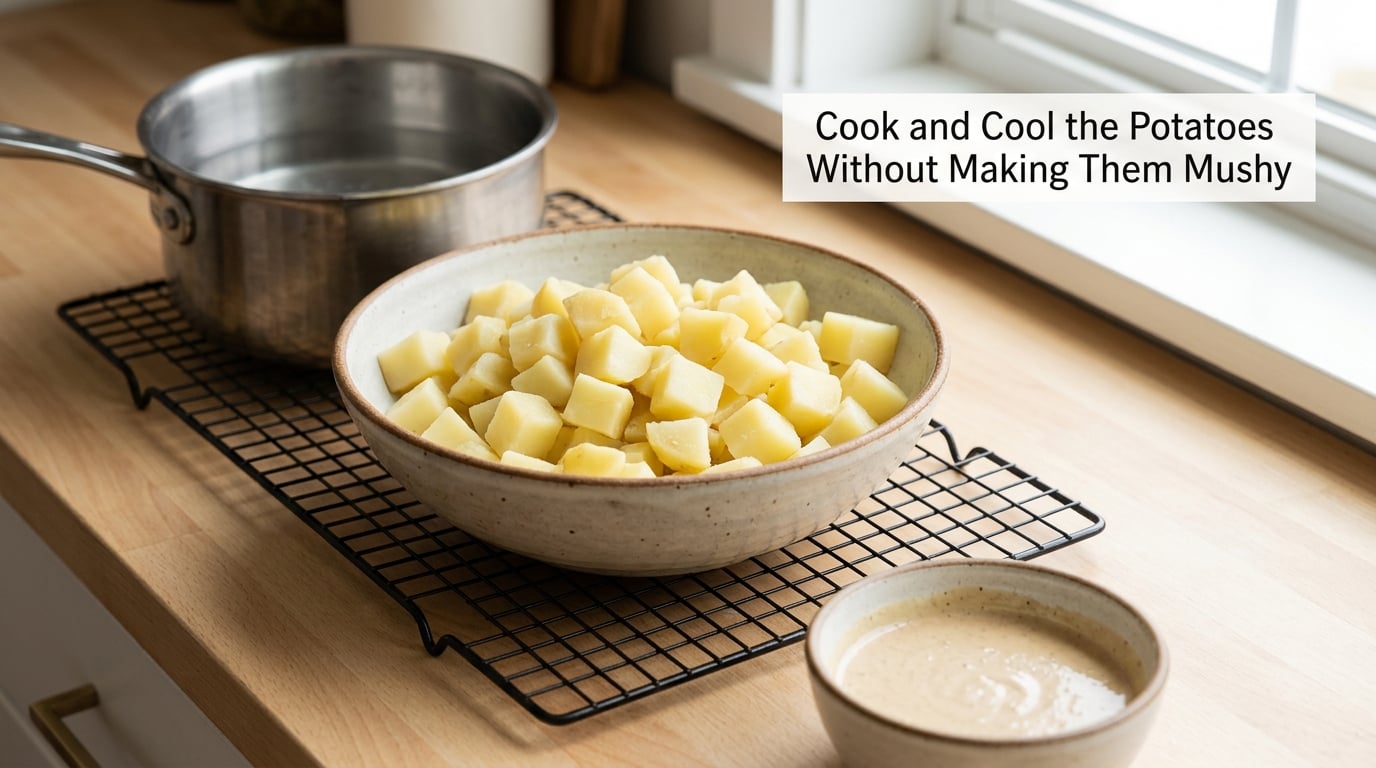
Simmer waxy potatoes until they are fork-tender but still firm, about 12 to 15 minutes after the water returns to a boil. Do not boil them hard or for long, since overcooked potatoes turn to paste the moment you dress them.
Salt the water generously. Under-salted cooking water is one of the top reasons a potato salad tastes bland after a night in the fridge. A tablespoon of kosher salt per quart of water is about right.
Drain the potatoes, then let them sit on a rack or in a colander for 20 to 30 minutes. They should be warm to the touch but no longer steaming when you start dressing them. Warm potatoes are porous and drink in the dressing. Room-temperature or cold potatoes simply sit in it, and you end up with a bowl where the dressing pooled at the bottom.
Rub off the skins with a towel while they are still warm, then cut into 1-inch cubes. Any smaller and the pieces break down overnight.
Make the Dressing Separately
Whisk the mayonnaise, sour cream or yogurt, Dijon, apple cider vinegar, salt, and pepper in a bowl until smooth. Taste it on a spoon before it ever touches a potato. The dressing should taste slightly sharper than you think it should, because the potatoes will absorb a lot of it.
For a vinegar-based German-style salad, skip the mayonnaise entirely and build the dressing from 3/4 cup apple cider vinegar, 1 tablespoon Dijon, 1 teaspoon sugar, 1 teaspoon salt, and warm bacon drippings or olive oil. This version is lighter, travels better, and keeps for the full three to four days.
For a lighter version, swap half the mayonnaise for plain Greek yogurt. Yogurt already has more solids in it than mayo, which is exactly why it helps a salad stay creamy instead of turning loose.
Both dressings keep covered in the fridge for up to four days, so making them two days out costs you nothing.
How to Make Potato Salad Ahead of Time Without a Watery Texture
Put the warm potatoes in a large bowl first, then pour the dressing over them. Fold with a large spoon instead of stirring hard, turning the bowl a few times rather than beating the mixture.
Let the salad sit at room temperature for 30 minutes, then fold in the eggs, celery, and parsley. Cover it and move it straight to the refrigerator. That half hour is when the dressing soaks in, and it happens at the counter, not in the cold box where absorption nearly stops.
Before serving, look at the bottom of the bowl. If there is a layer of liquid underneath, scoop it off with a slotted spoon rather than pouring it back in. That thin layer is water that leaked out of the potatoes overnight, and removing it is the single fastest way to bring a soupy salad back to creamy.
Then taste. Potato salad that has been sitting for a day almost always needs a little more salt, and a spoonful of the reserved dressing usually fixes a batch that looks dry on top. A splash of pickle juice or a spoon of sour cream also works. None of these take more than a minute, and all of them happen at the table, not in the kitchen at 6am.
Store and Serve the Potato Salad Safely
Homemade potato salad keeps three to four days in the refrigerator at 40F (4C) or below. That is the USDA Food Safety and Inspection Service guidance for cooked, chilled salads, and it holds whether the base is mayonnaise, vinegar, or yogurt.
| Dressing base | Keeps at 40F or below | Best use |
|---|---|---|
| Mayonnaise and sour cream | 3 to 4 days | Classic American-style, best eaten within 2 days for the creamiest texture |
| Yogurt-based | 3 to 4 days | Lighter salads, stays thick longest of the three |
| Vinegar and oil | 3 to 4 days | German-style, picnics and travel |
| Roasted potato salad | 3 to 4 days | Most travel-friendly option, holds its shape well |
Always use an airtight container. A loose lid lets the salad pick up refrigerator odors and dries the surface, which is the other reason a next-day batch can taste flat.
The two-hour rule matters more for a picnic than for the fridge. Keep the salad at 40F or below, pack it in a cooler with frozen packs, and set the serving bowl inside a larger bowl of ice. If it sits above 40F for more than two hours, one hour in temperatures above 90F, discard it rather than serving it. Dressing the salad with extra mayo will not make it safe again.
A note on the mayonnaise myth, since it causes more worry than it should: commercial mayonnaise is acidified and is not what makes potato salad risky. What matters is the temperature and the time, not the mayo. Cold and refrigerated for three to four days, it is fine.
Serve it cold, straight from the fridge or after about 20 minutes out. Potato salad is not a dish to reheat, and warm mayo-based dressing turns thin and greasy.
For the rest of a gathering, our guides on how to make brunch for a crowd without stress and how to make a cheese board for beginners cover the other cold dishes that sit out safely for hours.
One more tip for large crowds: plan on about 1/2 cup per guest for a side dish, and 3/4 cup if it is one of only two sides. That is how you stop running out at a 30-person potluck without a trip to the store on the morning of.
Common Mistakes
These are the failures that turn a make-ahead batch into a disappointment, and each one has a straightforward fix.
- Dressing potatoes that are too hot. Hot potatoes melt the mayonnaise and release water. Cool them until they are warm but not steaming, then dress.
- Using russet or other floury potatoes. High starch means a grainy, gluey salad that falls apart. Yukon Gold, red, or any waxy potato holds its cube overnight. Roast floury potatoes instead if that is all you have, since roasting dries them and offsets the starch.
- Cutting the cubes too small. Pieces under three-quarter inch break down faster in dressing. Keep them at a full inch and cut with a sharp knife rather than pressing down, which bruises the potato.
- Skipping the salt in the cooking water. The salad will taste flat no matter how much you season at the end. Salt the water, then taste again before serving.
- Stirring instead of folding. Vigorous stirring turns the cubes into paste. Turn the bowl and lift the potatoes with a spoon.
- Adding crisp mix-ins too early. Bacon, crispy onions, croutons, and similar toppings go on at the table. They go soft and chewy after a night in the fridge.
- Storing it uncovered or in a bowl that is too large. A big bowl with a plate on top is not an airtight seal. Use a container that fits snugly so the potatoes do not oxidize or dry out.
- Making it five days ahead. The window is three to four days. If you need to plan further out, cook and freeze the plain roasted potatoes, then make the dressing and assemble close to the day.
Do not freeze a finished potato salad. The mayonnaise and eggs split when thawed, the potatoes turn watery, and the texture never comes back. Freezing works for plain cooked potatoes on their own; the dressing is what ruins it.
Frequently Asked Questions
How far ahead can you make potato salad?
One to two days ahead is the sweet spot, and the salad often tastes better on the second day once the dressing has soaked in. The USDA Food Safety and Inspection Service allows cooked potato salad to stay refrigerated at 40F or below for three to four days, so you have a little room if you need it. Cook and cool the potatoes, store the dressing separately, and cover everything airtight until you are ready to combine.
Can you make potato salad two days ahead?
Yes, and it is safer to do so in stages. Boil and cube the potatoes, hard boil the eggs, and whisk the dressing two days ahead, keeping each component in its own airtight container. Fold everything together the night before you plan to serve and refrigerate. Adding the green onions and parsley in the morning keeps them bright instead of dull and limp.
Why does my potato salad get watery the next day?
Three things cause it: potatoes that went in hot and melted the dressing, cooking water that was not salted or drained well, and cubes cut too small. Warm rather than steaming potatoes fix the first. Salt the water, drain thoroughly, and rub the skins dry. Once the salad has chilled, scoop off any liquid sitting at the bottom of the bowl before serving and stir in a spoonful of the reserved dressing.
Should you wait for the potatoes to cool before adding the dressing?
Wait until they are warm rather than hot. Freshly boiled potatoes are porous and absorb the dressing, which is what you want, but the residual heat also draws water out of the flesh and breaks the mayonnaise emulsion. Twenty to thirty minutes on a rack brings them to the right temperature. Dressing them straight from the pot is the most common cause of a thin, oily salad.
How long can potato salad sit out at a party?
Two hours at most, and only one hour when the air temperature is above 90F. Keep it at 40F or below the entire time by packing it in a cooler with frozen packs and setting the serving bowl inside a larger bowl of ice. If it sits above 40F for longer than that, discard it. Adding more mayonnaise or dressing does not make it safe again.
Can you freeze potato salad?
A finished potato salad does not freeze well. The mayonnaise and eggs split into a watery mess when thawed, and the potatoes turn grainy and mushy no matter what you do. What you can freeze is the plain cooked potatoes, roasted or boiled and unseasoned, in a sealed container for up to three months. Thaw them in the refrigerator overnight, then make a fresh dressing and assemble the salad a few hours before serving.
Conclusion
Start by cooking your potatoes the day before, cooling them until they are warm rather than hot, and letting them dry well. Fold in the dressing, cover the container airtight, and keep it refrigerated at 40F or below until you serve. Add the green onions and parsley in the morning, taste for salt, and skip the crispy toppings until the table. That is how you make potato salad ahead of time and still get a creamy, well-seasoned bowl on a day when you have a dozen other things to handle.