
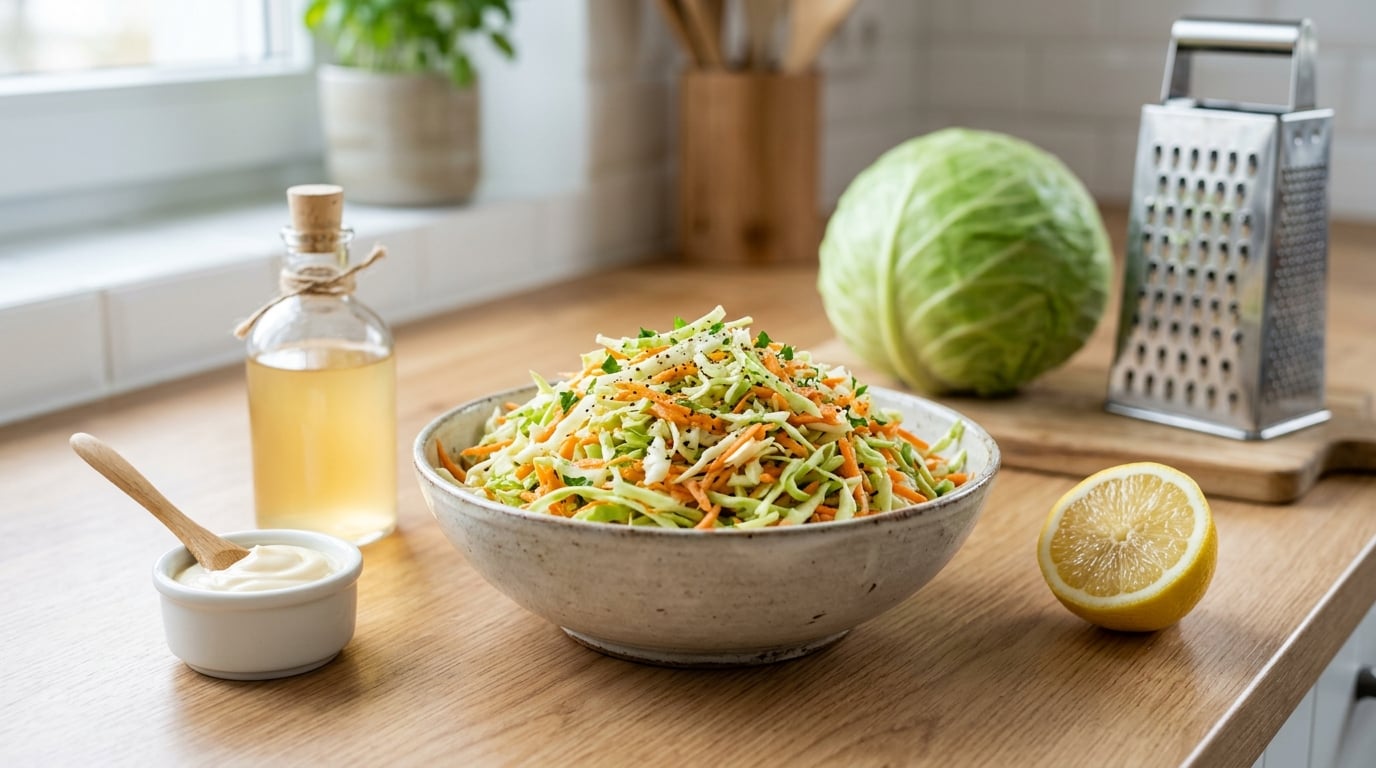
To make coleslaw that stays crunchy, salt the shredded cabbage, let it sit 15 to 30 minutes to drain, squeeze or spin it dry, then add the dressing as close to serving as you can. Cabbage is roughly 92% water, and every drop of that water ends up in the bottom of the bowl. The whole technique is about removing water first and keeping acid away from the shreds for as long as possible.
The active part takes 30 minutes and most of it is hands-off. Once the cabbage is dry and dressed, the slaw is at its crunchiest for about two hours, so plan the dressing around when people actually eat.
What You Need
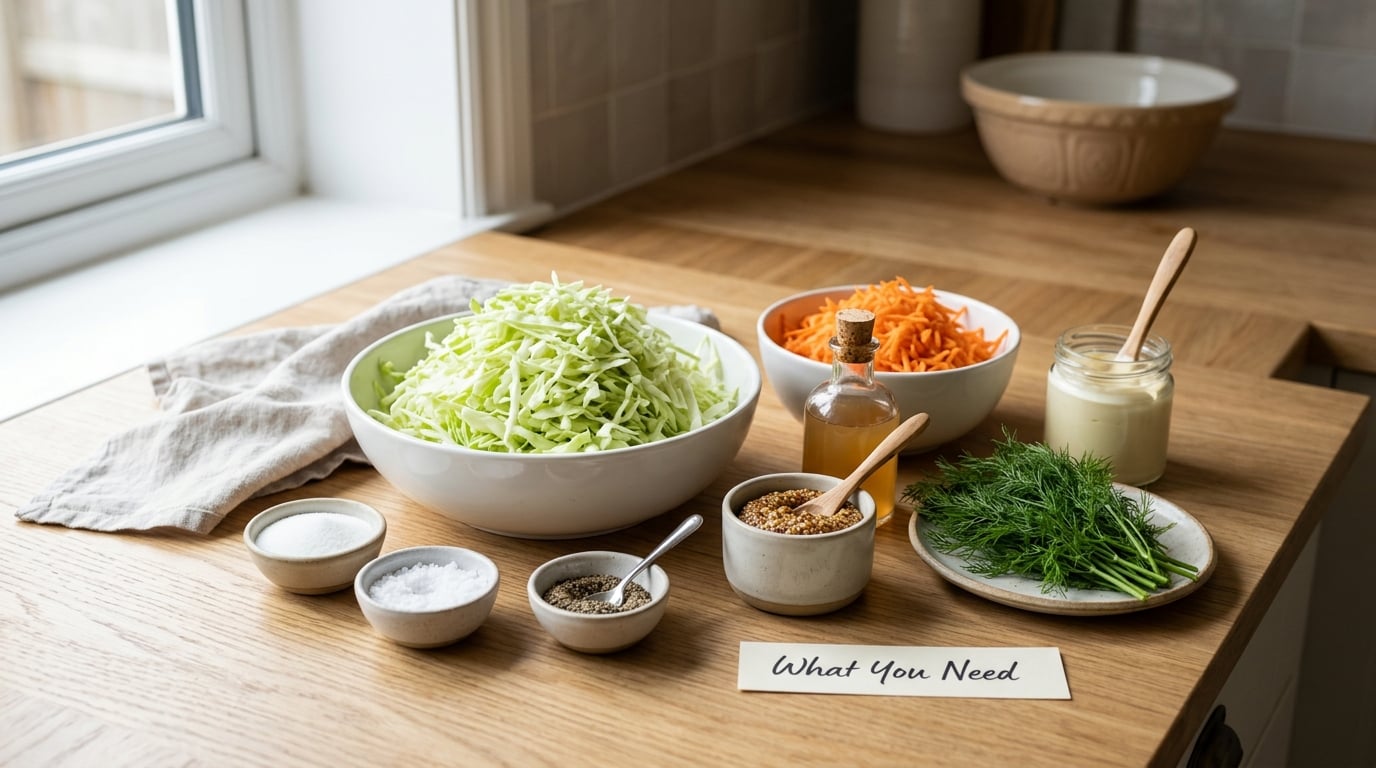
This makes a standard batch, roughly six side servings, enough for a cookout with about eight people. The quantities matter less than the order you do things in.
- 1 medium head green cabbage, about 700 g, firm and heavy for its size
- 1 large carrot, grated on a box grater
- 1/4 small red onion, sliced paper thin (optional)
- 1/2 cup mayonnaise, or a vinegar base if you want the longest hold
- 2 tablespoons apple cider vinegar or rice vinegar
- 1 teaspoon Dijon mustard
- 1 tablespoon sugar
- 3/4 teaspoon fine salt for the cure, plus 1/2 teaspoon for the dressing
- Fresh dill or parsley, chopped (optional, fold in at the end)
- Black pepper, to taste
For equipment, a box grater or the shredder disc on a food processor handles the cabbage faster than a knife and gives you more consistent pieces. A colander catches the brine as it drains, and a salad spinner or a clean cotton towel handles the drying, which is the step people skip.
If you want to swap something, three changes cost you very little crunchiness. Greek yogurt for some or all of the mayonnaise stays sharp and light. A little extra vinegar for some of the sugar gives a cleaner, less sweet slaw. Shredded carrot can be replaced with more cabbage and a small amount of grated apple, though apple softens faster than anything else you can add, so fold it in right before serving.
The one substitution to avoid is jarred pre-shredded slaw treated like fresh cabbage. Those shreds have already started losing water in the bag, so skip the salt cure, pat them dry well, and dress them later than you would a fresh batch.
Step-by-Step
1. Choose Crisp, Dry Ingredients
Pick a head that is tight, heavy and pale green at the core, with no soft patches or brown edges on the outer leaves. Loose, pale, lightweight heads have been sitting too long and lose their bite before you even get them home.
Wash the whole head under cold running water, then dry the outside. A quick soak in cold water for ten minutes firms up the leaves and helps damaged cells reabsorb water, which works in your favour later.
Grate the carrot and slice the onion while the cabbage is still whole, so nothing sits cut and exposed. Pat the carrot and onion dry with a towel. Wet add-ins put water straight back into the bowl, which defeats the whole point of the cure.
2. Cut the Cabbage for the Right Texture
Shred the cabbage into thin, even pieces, roughly 2 to 3 mm wide. A food processor shredder disc is fastest; a mandoline gives you the most control, and a box grater works if you are not fussy about shape.
Consistency is the point. Pieces cut to wildly different sizes release water at different rates, and the thick shards turn soft while the thin ones go soggy. Thin, even shreds absorb dressing evenly and still hold their structure, which makes the cut the second lever worth getting right after salting.
Throw away the tough core and any hard ribs near it. Those pieces never soften enough to eat and they muddy the texture of the whole bowl.
How you know it worked: the shreds should be light, springy and bright, with no wet sheen or clumping on the board.
3. Make a Light, Balanced Dressing
Whisk together 1/2 cup mayonnaise, 2 tablespoons vinegar, 1 teaspoon Dijon, 1 tablespoon sugar, 1/2 teaspoon salt and a few grinds of pepper. Taste it on a raw shred before it ever touches the cabbage. It should read slightly sharper and slightly more intense than you want the finished slaw to be, because the cabbage dilutes it.
A good balance leans acid. Sugar is there to blunt the vinegar, not to make the slaw sweet, so if the dressing tastes sharp on its own it will taste balanced once mixed through two or three cups of raw cabbage.
Whisk the dressing on its own and let it sit for a few minutes before using it. The mustard and sugar dissolve into the fat and the vinegar, and a dressing that has melded coats more evenly than one tossed together at the last second.
On mayonnaise: it works, but it is the fastest route to soft slaw. Mayonnaise is an emulsified fat that needs free water to stay glossy, so when the cabbage releases liquid the dressing thins and looks loose. A vinegar-and-oil base has no such dependency and holds its texture for hours. If you are serving more than two hours after dressing, a vinegar base buys you real time.
How you know it worked: the dressing is smooth, glossy and coats the back of a spoon without sliding off.
4. Combine and Rest the Coleslaw
Put the shredded cabbage in a large bowl or a colander set over a bowl. Sprinkle the 3/4 teaspoon of fine salt over it and massage with your hands for 20 to 30 seconds, working the shreds until they look damp and slightly softer. That massage starts the osmosis; skipping it is the same as skipping the cure.
Leave it 15 to 30 minutes. Fifteen is enough for a slaw you serve within a couple of hours, and 30 pulls noticeably more water, which is the right call for a make-ahead batch. A clear pool of liquid in the bottom of the bowl after 30 minutes means it is working. Longer than an hour starts costing you flavour and can make the cabbage taste dull rather than fresh.
Do not rinse the cabbage. That is the single most common question people ask and the answer is a straight no. Rinsing washes away the salt, but the salt has already done its job, pulling water out of the cells and taking its own flavour with it. Skim any foam off the top of the liquid, then transfer the cabbage.
Squeeze it. A handful at a time, wring hard over the sink, then spin or pat the shreds dry. Get this part right and you can watch the volume of the finished slaw drop by nearly a third, which is all water that would have been pooling in the dressing.
Add the carrot and onion, pour over the dressing, and fold with a large spoon. Use long scooping strokes from the bottom, not fast circular stirring, and stop as soon as every shred is coated. Overmixing bruises the cabbage surfaces, and bruised surfaces leak faster than intact ones.
Taste and adjust. Usually it needs a pinch more salt, and it very often needs a squeeze of lemon or a splash of vinegar once the cabbage has diluted the dressing by even a small amount.
Chill for 20 to 30 minutes before serving, no longer than an hour. A short rest lets the flavours marry while the texture is still holding. This is the sweet spot: past roughly two hours from dressing, the acid has softened the shreds enough that the crunch fades noticeably.
Fold in the dill or parsley right before the bowl hits the table, along with any nuts, seeds or grated apple, so they stay crunchy too.
How you know it worked: the slaw is cold, glossy and evenly coated, the shreds snap between your teeth, and there is no puddle under the cabbage.
5. Store It Without Turning Soggy
For serving within two hours, keep it in the fridge in a sealed container at 38 to 40 F and skip the second chilling entirely. For a make-ahead batch, the move is to split the job: shred and salt the cabbage, drain, dry, and refrigerate that on its own. Keep the dressing in a separate jar.
Then dress in the last 20 minutes before you need to serve. Shredded cabbage without dressing holds its crunch for a day or more; dressed coleslaw holds it for hours. That single split is the difference between slaw that is still crisp at a cookout and slaw that is sitting in a puddle.
Press the cabbage down flat in the container so the air is pushed out and the liquid has nowhere to go. Store it level, not on its side, and keep the container away from anything warm in the fridge.
Avoid a self-draining or colander-style container. A steady supply of air over wet shreds is exactly the setup that keeps the pooling going, and those containers are built for watery vegetables like lettuce and tomatoes, not dressed slaw.
Use a shallow container if you can. A deep tub presses more weight on the shreds at the bottom, and it is the bottom layer that turns to mush first.
About two hours of room-temperature sitting is the limit, and a hot day cuts that in half. Dressed slaw at a cookout is a perishable dish, so keep it in a cooler over ice rather than out on a table, and discard it if it sits warm for more than two hours. If you are holding it over a buffet tray, put the bowl in a larger bowl of ice and refill the smaller one as the ice melts.
Worth knowing for a crowd: the shred-and-hold timeline is the same whether you are feeding eight or thirty. If you are planning a bigger table of sides, our guide to how to make brunch for a crowd without stress covers the timing for everything else on the table.
Freezing is the one place cooks genuinely disagree, and the reason is worth knowing. Vinegar-based slaw freezes acceptably because the acid slows the enzymes that break down pectin in the cell walls. Mayo-based or fruit-containing slaw does not, since fat and sugar go off and the texture turns greasy. Either way, freeze it undressed and expect softer cabbage once it thaws.
How you know it worked: lift the top of the container, and the shreds under the surface are as crisp as the ones on top, with no liquid at the bottom.
Common Mistakes
Salting, then rinsing it away
The cure is 15 to 30 minutes, and the cabbage goes into the bowl undressed by any water. Rinsing reverses the process, puts the water back in, and dilutes the flavour you just concentrated. The fix is simple: get the timing right and leave the salt where it is.
Dressing hours before serving
This is the mistake that ruins a make-ahead batch. You already know the shreds are 92% water, and the instant the salt and vinegar touch them, those cells start leaking into the dressing. The slaw looks perfect in the fridge at noon and is swimming by six. Dress in the last 20 minutes, and if you must do it earlier, hold the salt and vinegar back and use oil and herbs instead.
Overmixing while chasing even coating
Stirring hard for two minutes feels thorough and is quietly bruising every shred, which tears cells and speeds up the leaking. Fold from the bottom with a big spoon, check at the halfway point, and stop while some pieces still look bare.
Building the whole dressing on mayonnaise
Mayo is delicious and it is the fastest way to a soft bowl, because it needs free water to stay emulsified and any water at all breaks that. Halve it with Greek yogurt, or go vinegar and oil with a spoon of mayo for gloss, and the dressing stays put for hours longer.
Too much sugar or too much vinegar
Both are easy to overshoot because raw cabbage dilutes more than you expect. If it is too sour, add a pinch of sugar and a few more grated carrot shreds. If it is too sweet, add a splash of vinegar rather than more sugar. If it is too salty, fold in a tablespoon of unsweetened shredded apple or carrot, which absorbs the salt without making the bowl flat.
Storing it loosely, tilted or in a draining container
Seal it, press it flat, and keep it level. Airtight and level slows the water loss that drives softening, while a self-draining container keeps air moving over wet shreds and makes things worse. When you are building a party spread, a cheese board for beginners and a bowl of slaw need very different holding conditions, and the slaw is the one that needs cold.
Freezing a dressed batch
Dressing and freezing go badly together: emulsions split, sugar dulls, and the shreds soften as the ice crystals rupture cells. Freeze the plain shredded cabbage if you must, dress after thawing, and expect a softer result than a fresh batch.
Frequently Asked Questions
Why is my coleslaw soggy?
Coleslaw goes soggy because shredded cabbage is about 92% water, and salting and dressing both pull that water out into the bowl. Salt draws it out by osmosis during the cure, and the acid in the dressing then softens the cell walls of whatever moisture is left, which releases more. Dressing it too early, stirring it hard, and using heavy mayonnaise all speed the same process up. Salt, drain and dry the cabbage first, then dress close to serving.
Can I make coleslaw the night before?
You can, if you stop before the dressing. Shred, salt, drain for 30 minutes, squeeze and spin the cabbage dry, then refrigerate it in a sealed container. Keep the dressing in a separate jar and combine the two 20 minutes before you plan to serve. Dressed coleslaw loses its crunch steadily after about two hours, while dry shredded cabbage holds its bite in the fridge for a day or more.
What is the best cabbage for coleslaw?
Green cabbage is the standard because it holds the most crunch and has the strongest flavour. Red cabbage is equally crisp, slightly sweeter, and its colour bleeds into the dressing. Napa cabbage is the mildest and softest, so it gives up its texture faster. For the longest-lasting crunch, choose a head that is tight, heavy and pale at the core, with no soft patches or brown outer leaves.
Should I rinse and dry the cabbage before making coleslaw?
Wash the whole head before shredding, and dry the shreds after the salt cure. But do not rinse the cabbage after salting. Salt has already drawn the water out of the cells by then, and rinsing washes away both that water and the concentrated flavour along with it. Rinse, then dry thoroughly, is the right order for the vegetable; salt, then dry without rinsing, is the right order for the cure.
How do I keep coleslaw crisp when serving it outdoors?
Keep the bowl cold and the dressing late. Set the serving bowl inside a larger bowl packed with ice and keep adding ice as it melts, and hold the finished slaw at or below 40 F. Dress it no more than 20 minutes before guests eat, because crunch fades quickly past the two-hour mark. Dressed slaw should not sit at room temperature for more than two hours, and in hot weather that limit is closer to one.
Can I use bottled dressing instead of homemade dressing?
A bottled creamy dressing works, but it is usually heavier on sugar and oil than a homemade one, and it tends to go loose faster in the bowl. If you use it, add the acid yourself in small amounts and taste as you go, since jarred dressings are frequently under-seasoned with vinegar. Any dressing benefits from being mixed well and left to stand a few minutes before it touches the cabbage.
Conclusion
Three things decide whether your coleslaw stays crunchy, and the first one takes 30 minutes of mostly waiting. Salt the shredded cabbage, massaged, and leave it 15 to 30 minutes, then squeeze and spin it dry without rinsing. Dress it in the last 20 minutes before it is served, and keep it cold and sealed until then.
Do those three and the bowl you bring to the table is still snapping 20 minutes after everyone sits down. Skip the first one and the rest cannot save it.