
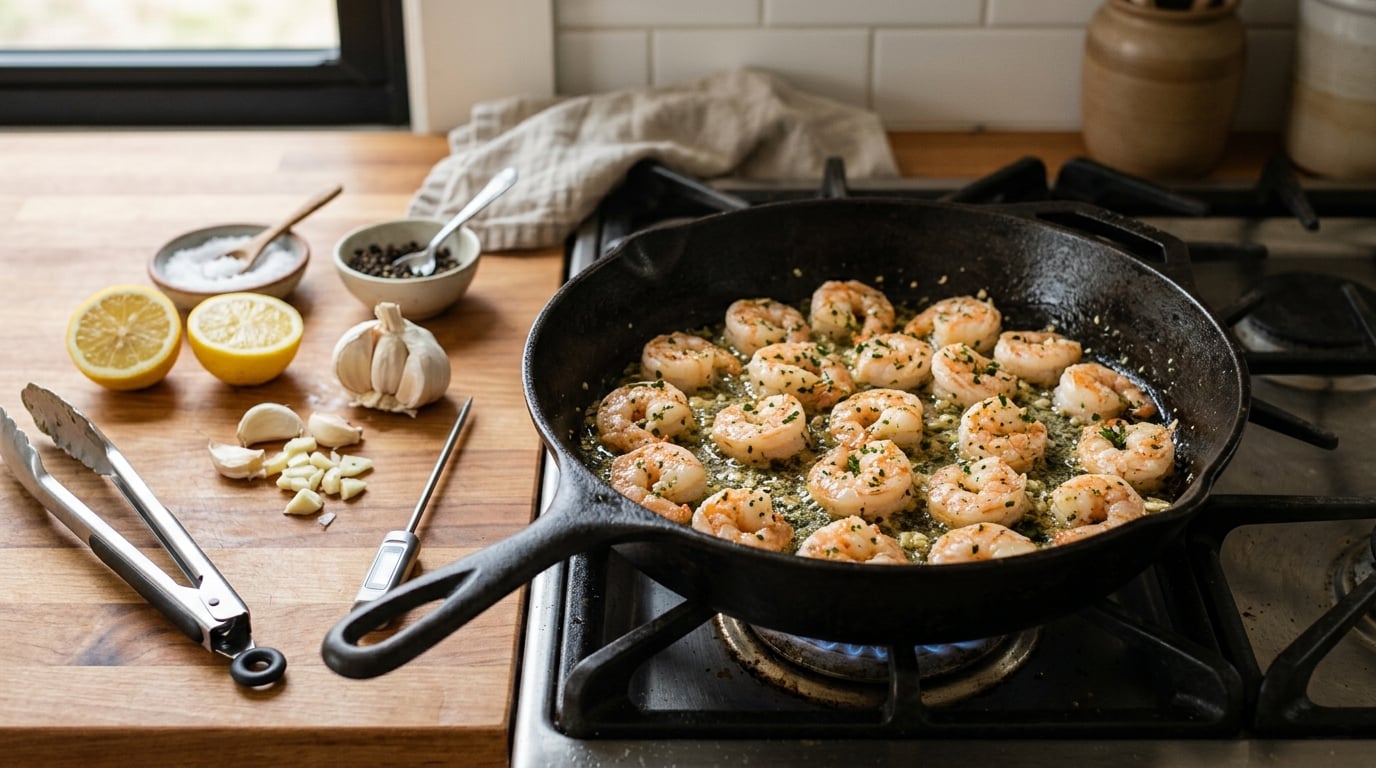
Rubbery shrimp is overcooked shrimp. Heat contracts the muscle proteins, they squeeze out moisture, and the flesh goes white and springy instead of sweet and succulent. The whole dish takes under ten minutes, so learning to cook shrimp without making it rubbery comes down to three things: dry shrimp, a hot pan, and pulling them out at the first sign of pink.
Shrimp are one of the fastest-cooking proteins in the kitchen, which is exactly why they go wrong so easily. There is no recovery window once they tighten, so everything is decided during those three or four minutes in the pan.
What You Need
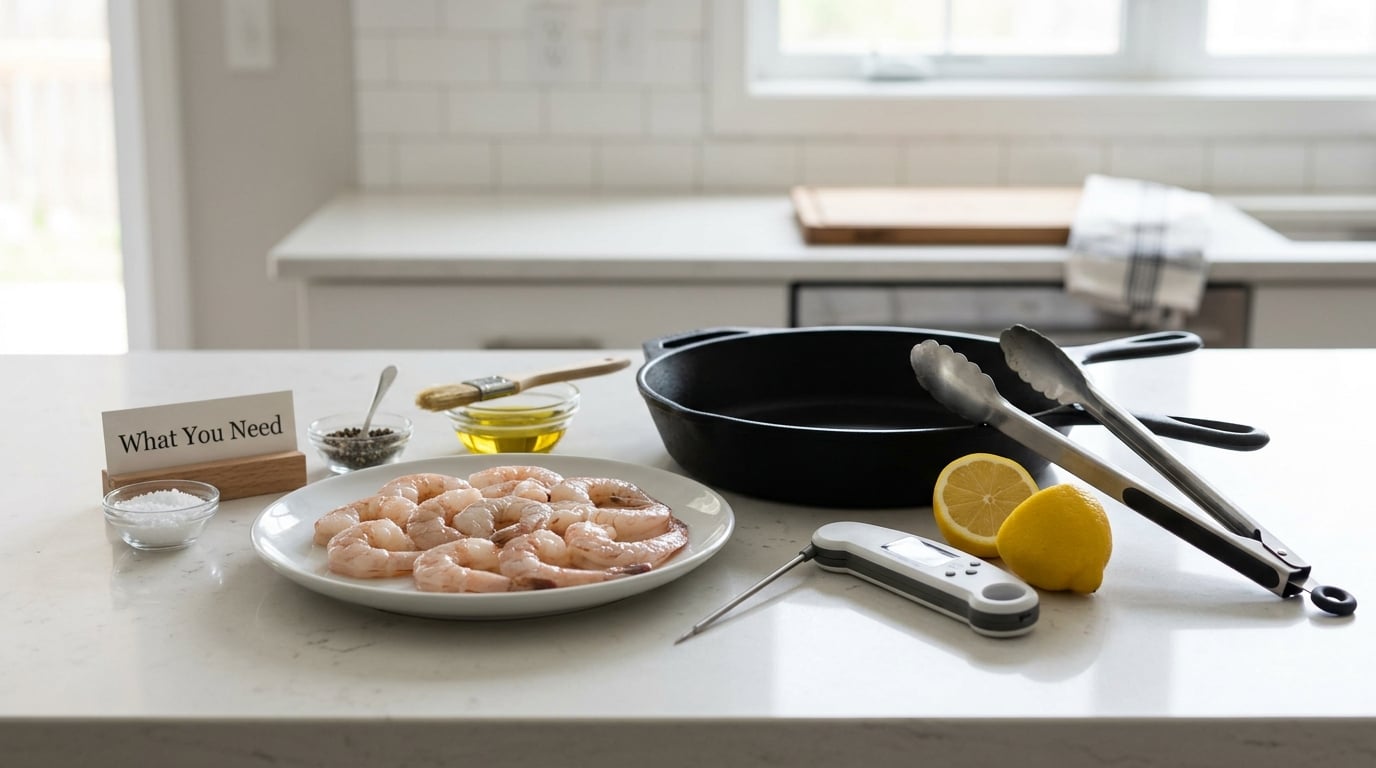
You do not need anything exotic. Here is the short list.
- A wide skillet. Twelve inches is about right for a pound of medium shrimp. A narrow pan is the number one reason home cooks steam instead of sear, and steamed shrimp turn chewy fast.
- Tongs and a wide spatula so you can move shrimp in one motion rather than stirring them.
- An instant-read thermometer. Color lies to you, temperature does not. This is the one tool that fixes the problem for good.
- Paper towels for drying the shrimp before they ever touch oil.
- High smoke point oil such as canola, avocado, or grapeseed, plus unsalted butter added at the end.
- Kosher salt, black pepper, garlic, and lemon. That is a complete seasoning base. Scampi is just this list with butter and parsley at the end.
The skillet matters more than anything else on that list, and the same heat rules apply to any protein you sear hard. Our guide to how to cook a steak in a cast iron skillet is worth a read if your pan has never seen a proper sear.
What size shrimp should you buy?
Shrimp are sold by count per pound, and the number is the count, not the size. Sixteen to twenty count means roughly 16 to 20 shrimp in a pound, so those are the big ones. Fifteen-count jumbo is the largest you will find, and forty-count small is the other end.
Bigger shrimp are more forgiving, not less. A jumbo shrimp spends longer in the pan before it needs turning, so a one-second error costs you less. Small shrimp cook in under a minute, which is why experienced cooks buy medium and large even when the recipe calls for small.
Step-by-Step: How to Cook Shrimp Without Making It Rubbery
Step 1: Choose and Prepare the Shrimp
Frozen shrimp is the more reliable buy. Shrimp sold on ice as fresh has almost certainly been frozen anyway, and it is usually treated with phosphates to hold water, which is a common reason it feels spongy rather than snappy. Buy frozen, thawed properly, and thawed fast.
Thaw overnight in the fridge, or under cold running water for about 15 minutes. Hot water and countertop thawing are what give you gummy edges before the pan is even on, because the outside of the shrimp starts to cook and denature while the center is still frozen.
Pat every shrimp completely dry. Moisture on the surface is what makes shrimp sizzle and steam at the same time, and any steam is moisture leaving the meat.
Dock the back of each shrimp and pull the dark vein, which is the digestive tract, and nothing else. Leave the tail on if you want it for presentation, since the tail does not stop the cooking.
Step 2: Heat the Skillet and Season the Shrimp
Set the skillet over medium-high heat and let it get hot before anything goes in. Add a thin layer of oil and wait until it shimmers and flows loosely, which takes about 30 seconds.
Season the shrimp now, in the bowl, with salt and pepper. Salting early in the bowl is a mistake some cooks make, but the real problem is salting long before cooking, which pulls water out of the shrimp and leaves you with dry, tacky meat.
Drop the shrimp in and listen. A proper sizzle on contact means the pan was ready. Silence or a hiss of steam means it was not, and the shrimp will cook gently and unevenly in their own liquid.
Step 3: Cook the Shrimp in Small Batches
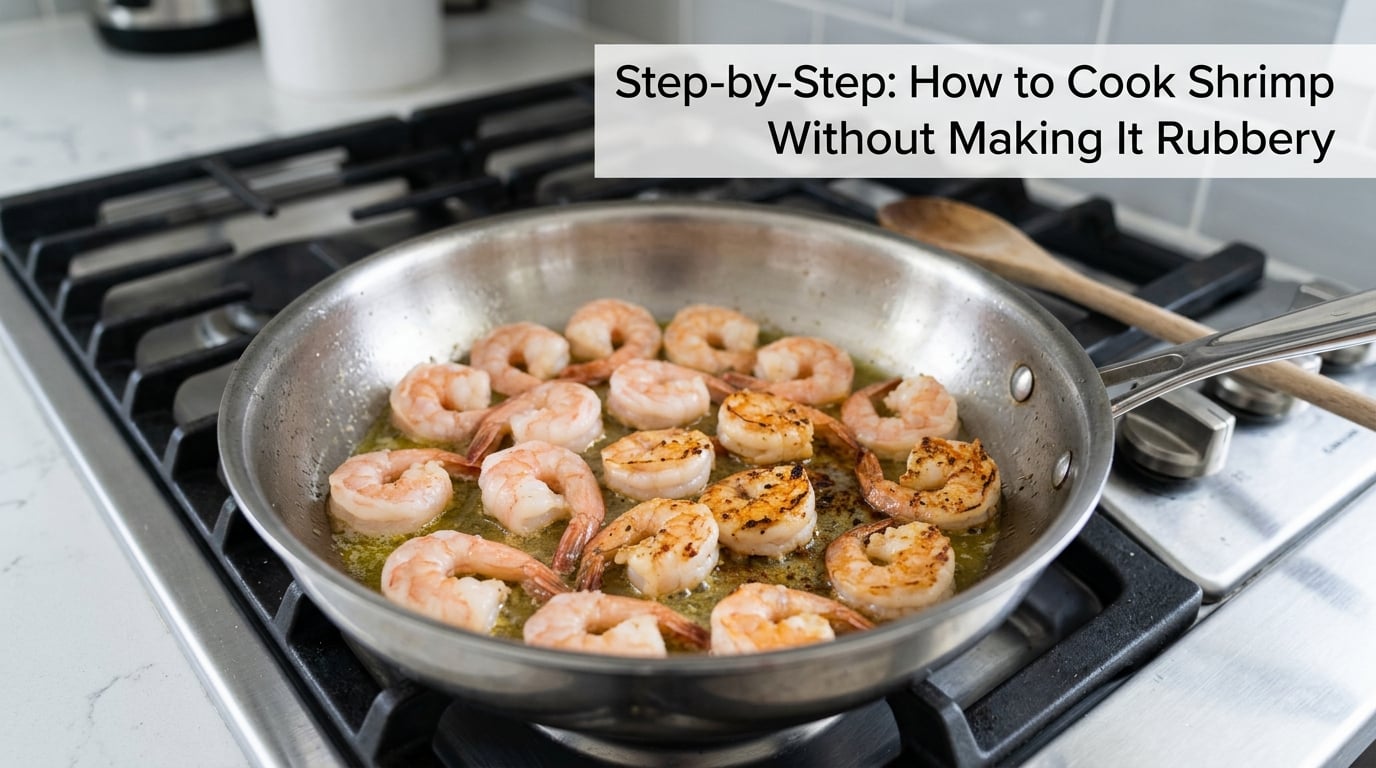
Lay the shrimp in a single layer with space between them. If they touch, they cook each other’s steam instead of searing, and you get the pale, rubbery result people complain about most.
Cook without moving them for the first 30 to 45 seconds so the underside sets and browns. Then turn once and cook the second side. Shrimp need exactly one turn, not three.
Here is the lookup for how long to cook shrimp on the stovetop, in a hot skillet, based on the count per pound:
| Shrimp size | Count per pound | Stovetop time | Total time with carryover |
|---|---|---|---|
| Jumbo | 15 to 20 | 2 to 2.5 minutes per side | About 5 minutes |
| Large | 21 to 25 | 1.5 to 2 minutes per side | About 4 minutes |
| Medium | 26 to 30 | 1.5 minutes per side | About 3 minutes |
| Small | 31 to 40 | 45 to 60 seconds per side | About 2 minutes |
Notice the pattern. The pan does not get hotter for bigger shrimp, you simply give each side longer. Total time includes the carryover, which is the next step and the one most people skip.
Step 4: Check Doneness and Remove Them Promptly
Watch three cues together, because no single one is reliable on its own.
- Color. Raw shrimp are grey and translucent. Cooked shrimp are pink and opaque all the way through. Remember that overcooked shrimp stay pink, so color only tells you where you started, not where you ended.
- Shape. A cooked shrimp curls into a loose C. A tight O means it has gone past done and is heading for rubbery. A straight shrimp is undercooked.
- Temperature. The USDA recommends an internal temperature of 145°F for shrimp, measured at the thickest part of the largest shrimp in the batch.
Pull the shrimp the moment they hit that combination. The pan is still hot and the shrimp carry their own heat, so they keep cooking after they leave it. That residual heat is why shrimp that look done on the plate can still turn tough while you are plating the rest of dinner.
Move them to a warm plate, not a cold one. A cold plate drops the temperature fast enough to be safe, but it also stops nothing that has already started, so the only real fix is removing them early.
Step 5: Rest, Finish, and Serve
Shrimp do not need a long rest, but they do benefit from 30 seconds or a minute off the heat before the sauce goes on. Resting lets the heat even out so the last shrimp is not hotter than the first.
Build the sauce in the same pan while the shrimp wait. Lower the heat, add a knob of butter, a squeeze of lemon, minced garlic, and a splash of the pan juices, and let it foam for about 30 seconds. Then return the shrimp for a final toss and take them straight off the heat.
Butter and cream-based sauces are the real danger here, because a sauce that needs a minute to reduce is a minute too long for shrimp sitting in it. If you are making a garlic butter sauce, add the shrimp at the very end.
Cook from frozen is possible but not ideal. You cannot check texture, the uneven thaw cooks the outside long before the center, and the result is usually a compromise between rubbery and watery. If you must, use a hot skillet, give it an extra 30 seconds, and drain well.
Serve them right away. Shrimp that sit out with nothing to do get overcooked by nobody’s fault but yours, which is exactly the problem when you are cooking brunch for a crowd without stress and every dish has to hold on the buffet.
Common Mistakes
Almost every rubbery batch traces back to one of these.
- Crowding the pan. A pound of shrimp in a skillet that holds half a pound drops the pan temperature and traps steam. Cook in batches of what fits in one layer with gaps, and keep the finished batches on a warm platter.
- A cold pan and cold shrimp together. Two cold things hitting each other means a long, slow cook. Heat the pan until the oil shimmers, and let refrigerated shrimp sit out about 10 minutes first.
- Heat too high. Shrimp have no fat of their own. Very high heat scorches the outside before the middle cooks, which dries the outside and leaves the center undercooked.
- Leaving them to sit. This is the most common cause, and it happens after the cooking is technically over. Turn the burner off and pull the shrimp immediately.
- Stirring constantly. Every move interrupts the sear and keeps the surface wet, so the shrimp poach in their own juices.
- Salting 30 minutes ahead. Salt draws water out of the flesh. Season right before the shrimp hits the pan.
- Thawing in hot water. The outside starts setting before the center thaws, and that uneven start shows up as gummy edges.
- Reheating in the microwave. Microwave reheating is uneven and dries the edges fast. Use a covered skillet over low heat for 1 to 2 minutes instead.
What about the grill, the oven, and the air fryer?
The same rules apply, and dry heat makes them less forgiving. On the grill, use medium-high heat and cook 1.5 to 2 minutes per side for large shrimp, taking them off well before they firm up. Skewers help because you can turn everything at once, and you should oil the skewers so nothing sticks.
In the oven, broil at 450°F for about 4 to 5 minutes, not longer. In an air fryer at 400°F, shrimp go from perfect to rubbery in under a minute, so check at 3 minutes and pull without hesitating.
For boiling and poaching, the smartest method is the off-heat steep. Boil the shrimp for 1 to 2 minutes, pull the pot off the burner, cover it, and let them steep 5 to 10 minutes. Gentle heat finishes them evenly without the aggressive boil that toughens the outside.
Can you rescue shrimp that are already rubbery?
Mostly you cannot undo it, but you can hide some of it. Shrimp in a bright acidic sauce, such as lemon, vinegar, or a cocktail-style dressing, reads as tender because the acid cuts through the texture. Shredding over something, or folding through a salad, breaks up the springy bite. Reheating makes it worse, so serve them cold or at room temperature rather than giving them another pass through a hot pan.
Frequently Asked Questions
How long do you cook shrimp?
Shrimp cook in 2 to 3 minutes per side in a hot skillet, depending on size. Jumbo 15 to 20 count shrimp need about 2.5 minutes per side, medium 26 to 30 count need about 90 seconds, and small shrimp need under a minute. Pull them at the first sign of pink and a loose C curl, then remember they keep cooking off the heat.
How do you know when shrimp is done?
Use three cues together. The flesh turns from grey and translucent to pink and opaque, the shrimp curls into a loose C shape, and a thermometer in the thickest part of the largest shrimp reads 145°F. Color alone is unreliable because overcooked shrimp stay pink too, which is exactly how tough shrimp slip past people.
Why do my shrimp turn out rubbery?
Almost always overcooking. Shrimp muscle is nearly pure protein, and past roughly 145°F those proteins contract and squeeze out water, which is the rubbery bounce. Crowded pans, a skillet that was not hot enough to sear, moving the shrimp too much, and leaving them in the pan after the heat is off all lead to the same place.
Can I cook frozen shrimp without thawing them?
You can, but it is the least reliable option because the outside cooks before the center thaws. If you have to, use a very hot skillet, add about 30 extra seconds, and drain the shrimp on paper towels afterward. Thawing overnight in the fridge or for 15 minutes under cold running water gives you far more control.
Do you cook shrimp with the shell on or off?
Both work and the timing is nearly identical. Shell-on shrimp hold moisture a little better and look better on a plate, and the shells make excellent stock. Peeled and deveined shrimp are easier to season directly and sear faster. Either way, pat them dry and pull them from the heat the moment they turn opaque.
How do you reheat shrimp without making them rubbery?
Skip the microwave. Warm a skillet over low heat, add the shrimp with a splash of water, cover it, and give it 1 to 2 minutes until just warmed through. Stir once if needed, then serve immediately. Cold leftover shrimp reheated gently this way keep far more of their texture than microwave reheating, which dries the edges first.
Conclusion
To cook shrimp without making it rubbery, remember four things. Pat the shrimp completely dry, cook them in a single layer in a pan hot enough to sizzle on contact, watch for opaque pink flesh and a loose C curl, and pull them off the heat the moment both are true. Check the largest one with a thermometer at 145°F and the rest will be right.