
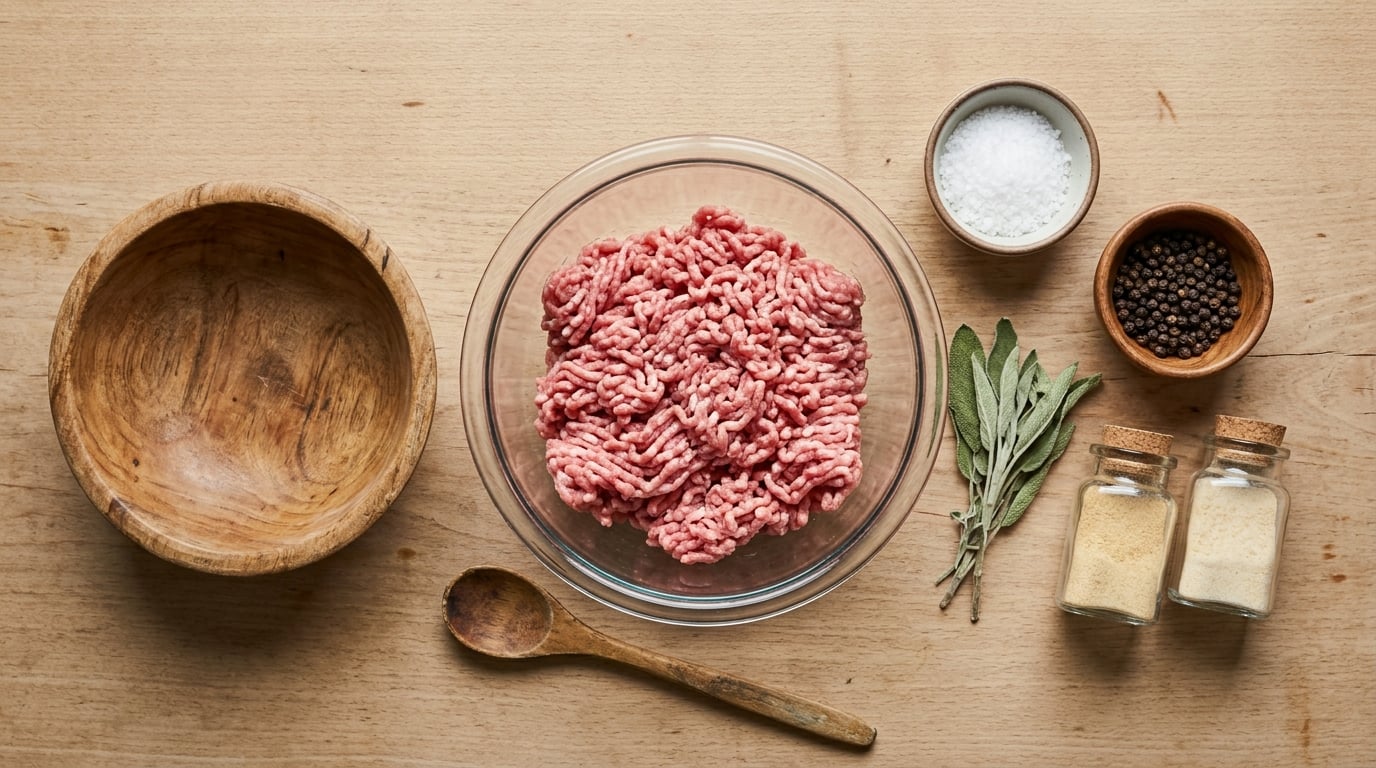
How to make sausage patties from ground pork is mostly a seasoning problem, not a technique problem. Mix pork with sage, black pepper, salt and garlic powder, shape it into thin patties, and fry them at medium heat until they hit 160°F (71°C) inside. The whole job takes about 30 minutes and needs one skillet.
Plain ground pork out of the package is sweet and fatty with almost no aroma, which is why so many first attempts taste like a plain pork burger. The fat ratio, the salt, and the rest time are what turn it into something that tastes like breakfast sausage.
What You Need
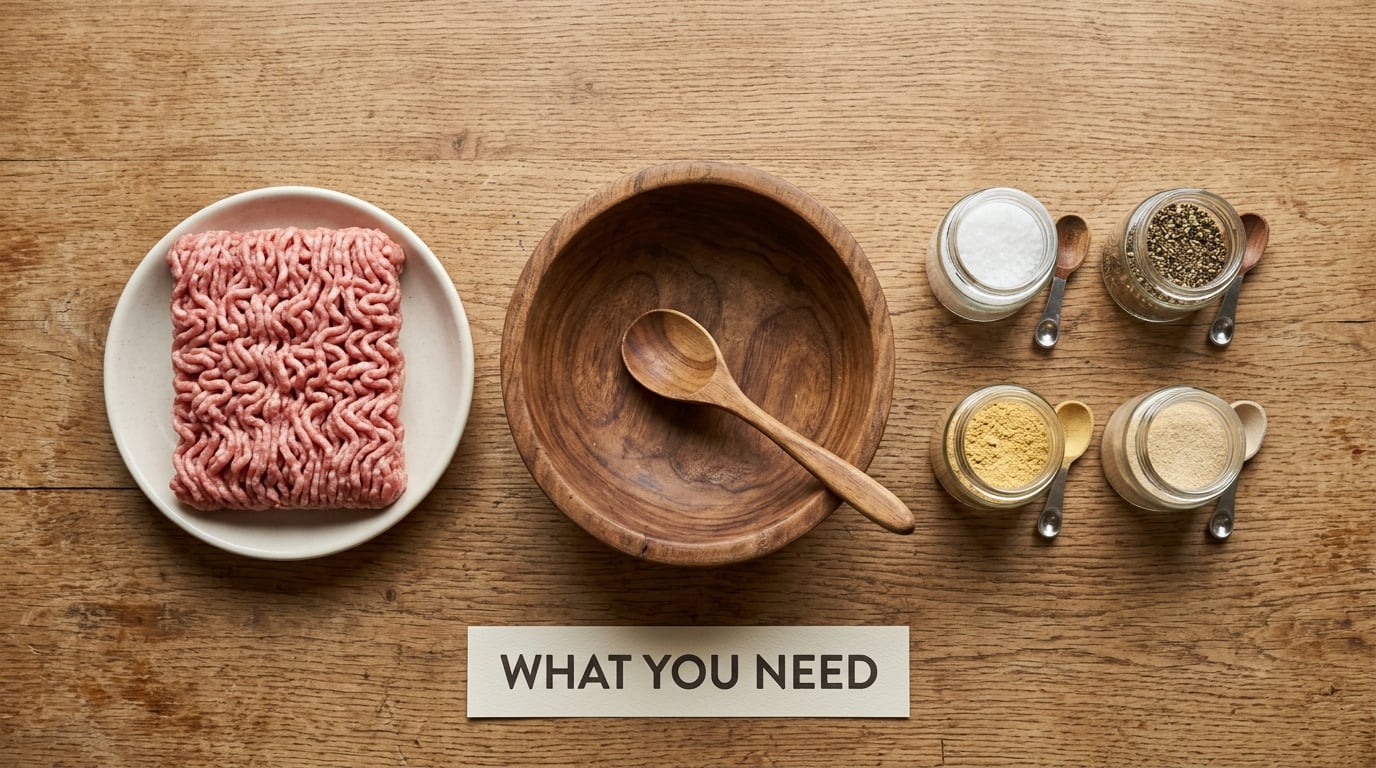
This makes four to six patties of about a quarter inch thick. Double it for a family of four or a freezer batch.
- 1 lb (450 g) ground pork, ideally 20 to 25 percent fat
- 1 teaspoon dried sage, rubbed between your fingers
- 1/2 teaspoon dried thyme
- 1 teaspoon coarsely ground black pepper
- 3/4 teaspoon salt, more if the pork tastes bland
- 1/2 teaspoon garlic powder
- 1/2 teaspoon onion powder
- 1/4 teaspoon red pepper flakes, optional
- 1 egg white or 2 tablespoons breadcrumbs, optional binder
- 1 tablespoon neutral oil or bacon fat for the pan
On the pork itself: a 20 to 25 percent fat grind gives you juicy patties that do not shrink into nothing. Shoulder or butt ground is the sweet spot, with enough fat to stay moist and enough meat to hold a shape. Very lean pork will cook up dry and chalky no matter how you season it. A butcher can grind a whole pork butt to order if the packaged ground pork looks grey and lean, which is a common trick discussed over on r/sausagetalk.
On the binder: you do not need one. Egg white or breadcrumbs help lean pork hold together, but a 20 percent fat patty binds on its own once the salt draws the meat together. Skip it if your pork has good marbling, and skip the whole egg too, since it adds a spongy texture most people find unpleasant in a patty.
Equipment is minimal: a wide cast iron skillet or heavy stainless pan, a bowl, and a scale if you are following measurements closely rather than eyeballing. A ring mold or a metal cookie cutter makes uniform patties easier, but a 1/2 cup measure works nearly as well.
How to Make Sausage Patties From Ground Pork, Step by Step
Prepare the Ground Pork Mixture
Keep the pork cold. If you ground it yourself or bought it fresh, chill the bowl in the freezer for 10 minutes first. Warm meat melts fat on contact, and melted fat is what makes a patty fall apart in the pan.
Sprinkle the seasonings over the meat and fold them in with your hand until no large streaks of pepper or spice remain. That takes about 30 seconds of gentle mixing. Do not knead it like bread dough.
Overworking is the single most common way homemade patties turn out rubbery. On r/Cooking, cooks point to three variables that decide texture: the fat in the meat, the size of the grind, and how much you mix. Break the meat up, toss the spices through, and stop.
Then rest the mixture, covered, in the refrigerator for 10 to 15 minutes. Resting lets the salt dissolve and the spices hydrate, which is why the flavor tastes more even after a short chill than it does straight out of the bowl.
Shape the Patties
Scoop 1/4 cup portions and press them into patties about 1/2 inch thick, roughly the width of a deck of cards. Make them a little wider than you want the finished patty, since they shrink noticeably in the skillet.
Compact the edges with the heel of your palm. Loose, ragged patties leak juice onto the pan and steam instead of sear, which is why yours never brown. Press until the surface holds a fingerprint without crumbling.
Even thickness matters more than exact size. Patties of different depths cook at different rates, so the thin ones burn before the thick ones reach 160°F. If you are freezing them, lay each patty on its own sheet of parchment so nothing sticks together.
Cook Until Browned and Safe
Heat a tablespoon of oil in a heavy skillet over medium heat until it shimmers. Lay the patties down with space between them, and leave them alone for the first few minutes so a crust can form.
Cook thin patties about 3 to 4 minutes per side and thicker ones 4 to 6 minutes per side. When the first side is deeply golden and releases easily from the pan, flip once and let the second side brown.
Ground pork must reach an internal temperature of 160°F (71°C), according to USDA guidance for ground meat. The only reliable way to know is a thermometer: press it into the thickest part of the patty and read the center, avoiding the bone of the pan.
Cooked through looks different from browned. The outside is a deep brown crust, while the inside is pale grey-white with no pink left. Drain the finished patties on a plate lined with paper towels so the rendered fat does not pool underneath and soften the crust.
For a crisp edge, keep the heat at medium rather than cranking it up. High heat burns the outside long before the center cooks, and cast iron holds steady heat better than thin nonstick pans for this job.
Rest, Serve, and Store
Let the patties sit for 3 to 5 minutes after cooking. That short rest lets the juice redistribute, so the first bite is not drier than the second.
Serve them alongside fried eggs, toast, and hash browns, or stack two in a biscuit for a breakfast sandwich. If you are cooking for a group, these fit naturally into how to make brunch for a crowd without stress, and they pair well with an omelet that does not stick since both want a hot flat top at the same time.
Refrigerate cooked patties for up to 3 to 4 days in a sealed container. For longer storage, freeze them uncooked in a single layer on parchment, then transfer to a bag so nothing fuses together. Cook from frozen at medium heat, adding 2 to 3 minutes to the first side. Frozen patties lose a little moisture, so freezing raw and cooking fresh usually beats freezing cooked.
Shape a double or triple batch of raw patties and freeze them the moment they are made. Sunday prep for a week of breakfasts takes about 20 minutes and about a third of what the drive-through costs.
Common Mistakes
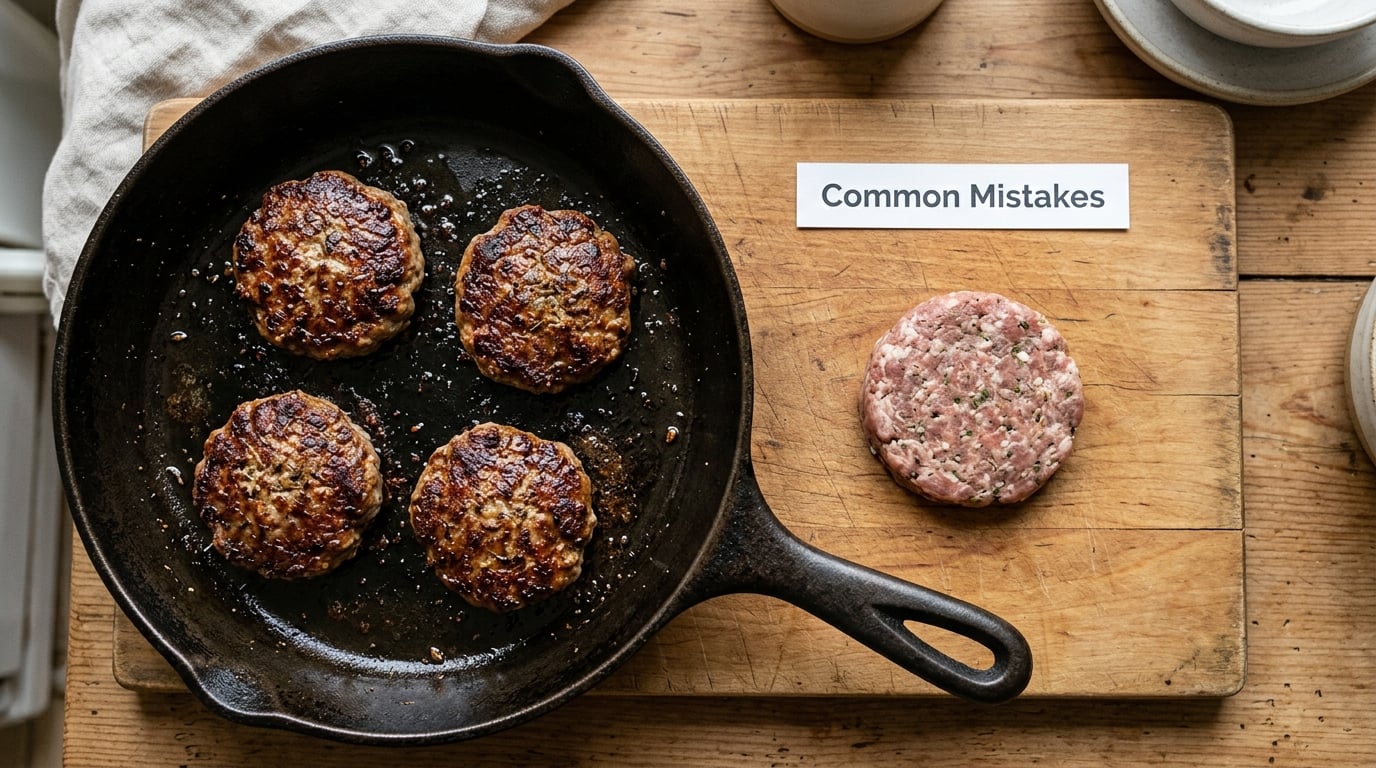
Rubbery, chewy patties. Usually two causes: overmixing the meat, or salting and letting it sit too long before cooking. A long salt cure is what turns sausage links chewy, and in a thin patty it just reads as tough. Season, shape, and cook within about 15 minutes.
Crumbling, broken patties. The pork is too lean, the patties were too loose, or you flipped them too early. Add an egg white or a couple of tablespoons of breadcrumbs, press firmly, and let the first side brown for a full 3 minutes before touching it.
Shrinking and drying out. Fat is what shrinks, and fat is also what keeps things juicy. A 20 to 25 percent grind loses volume and gains flavor. If you only have lean pork, add a tablespoon of water or grated apple to the mix and keep the cooking time short.
Uneven cooking. Patties of mixed thickness are the culprit. Weigh them, or press them to the same height against a flat surface. Also, do not crowd the pan, since a crowded skillet drops the temperature and steams the meat instead of browning it.
Sticking to the pan. The pan was too hot when the patties went in, or the meat was above refrigerator temperature. Let the skillet warm up gradually and add a thin film of oil right before the patties.
Tasting flat. You either under-salted or used ground spices so fine you could not smell them. Rub the sage and pepper between your palms before adding them, and season to taste before shaping.
Three habits keep results consistent: stay at medium heat, keep every patty the same thickness, and season lightly the first time. You can always adjust salt on the second batch. If sage is not your thing, drop it and lean on pepper, thyme, and a pinch of nutmeg instead. That is a common request over on discusscooking.com, and the patties still taste like sausage.
Frequently Asked Questions
What kind of ground pork is best for sausage patties?
Pork shoulder or pork butt ground with 20 to 25 percent fat is the best choice. That range gives you enough fat to stay juicy while the patties still hold their shape. Very lean ground pork loses moisture and shrinks into dry, chalky patties no matter how you season it. If you can only find lean pork, add a tablespoon of water or grated apple to the mixture.
Do I need eggs, breadcrumbs, or another binder?
No, not with a properly fatty grind. A 20 to 25 percent fat ground pork binds on its own once the salt pulls the meat together. Egg white or a couple of tablespoons of breadcrumbs are worth adding when you are using lean pork, though. Skip the whole egg, which tends to leave a spongy texture in a thin patty.
How long should I cook pork sausage patties in a skillet?
Cook at medium heat for about 3 to 4 minutes per side for thin patties, or 4 to 6 minutes per side for thicker ones. Only flip once the first side is deeply golden and releases from the pan without resistance. Ground pork must reach 160°F, so confirm with a meat thermometer rather than judging by color alone.
Can I make sausage patties with ground turkey instead?
Yes, and it works well. Turkey is much leaner, so expect less flavor and a drier patty unless you add moisture. Mixing in a tablespoon of water or grated apple, plus an egg white to bind, fixes most of it. Season a little more generously than you would with pork, and do not cook it past 165°F.
How long do cooked sausage patties last in the refrigerator?
Cooked patties keep for 3 to 4 days in a sealed container in the refrigerator. Freeze them uncooked for longer storage, laid on parchment so they do not stick together, and cook from frozen at medium heat with a few extra minutes on the first side. Freezing cooked patties costs noticeably more moisture.
Conclusion
Pick ground pork with a 20 to 25 percent fat ratio, season it lightly with sage, pepper, salt, garlic and onion powder, and mix it gently. Shape patties of identical thickness, wider than you want them finished, and fry at medium heat until browned and 160°F inside. That is the whole method. Make the first batch this week, then adjust the salt and the spice levels to taste.