
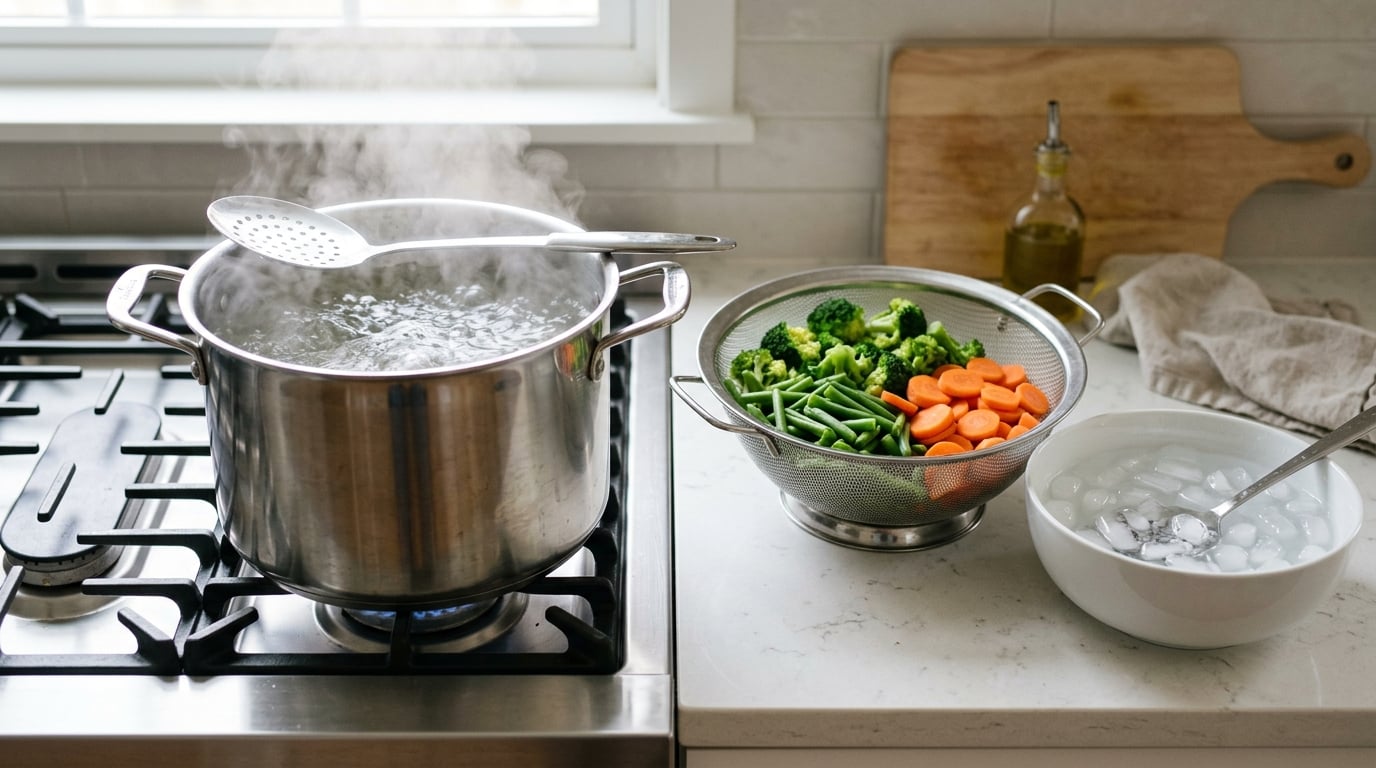
To blanch vegetables before sautéing, cook them briefly in heavily salted boiling water, then stop the cooking instantly in ice water. The vegetables come out partly cooked, brightly colored and still crisp, so they finish in a hot pan in a couple of minutes instead of turning to mush. The whole process takes about 10 minutes plus whatever the boil takes to come up.
Here is the honest part first: not every vegetable needs it. A thick slice of squash going into a hot oven or a head of garlic going into a pan of oil does not need a blanch, and blanching delicate vegetables can wash out the flavor you were trying to keep. What blanching does buy you is color, a shorter pan cook, and a vegetable that will not collapse while the rest of the dish finishes.
Cooks on cooking forums keep landing on the same answer: blanching earns its keep for green, crisp vegetables destined for a fast pan cook, and for almost nothing else.
Table of Contents
- What You Need
- Step-by-Step: How to Blanch Vegetables Before Sautéing
- Common Mistakes
- Frequently Asked Questions
- Is blanching really necessary before sautéing vegetables?
- Do you put salt in the water when blanching vegetables?
- Do you boil the water first when blanching vegetables?
- How do I quickly plunge blanched vegetables in cold water to stop the cooking?
- How long should you blanch green beans before you sauté them?
- What vegetables do not need blanching?
What You Need
The equipment list is short, and most of it is already in your kitchen.
- A large pot with at least 4 inches of water. The water needs room to keep boiling after the vegetables go in, which is why a small saucepan does not work well.
- A spider strainer or slotted spoon for lifting vegetables out fast.
- A large bowl lined with a colander, filled with ice and cold water. Make this before the pot boils, not after.
- Kitchen tongs for the trip from ice bath to drying towel.
- Clean towels or a salad spinner for the drying step, which matters more than most people expect.
- Kosher or sea salt, roughly 1 tablespoon per gallon of water.
- A wide skillet with oil or butter for the sauté.
No special equipment required. If you want to skip the tongs, a spider strainer and a second colander work fine together, one above the other.
Step-by-Step: How to Blanch Vegetables Before Sautéing
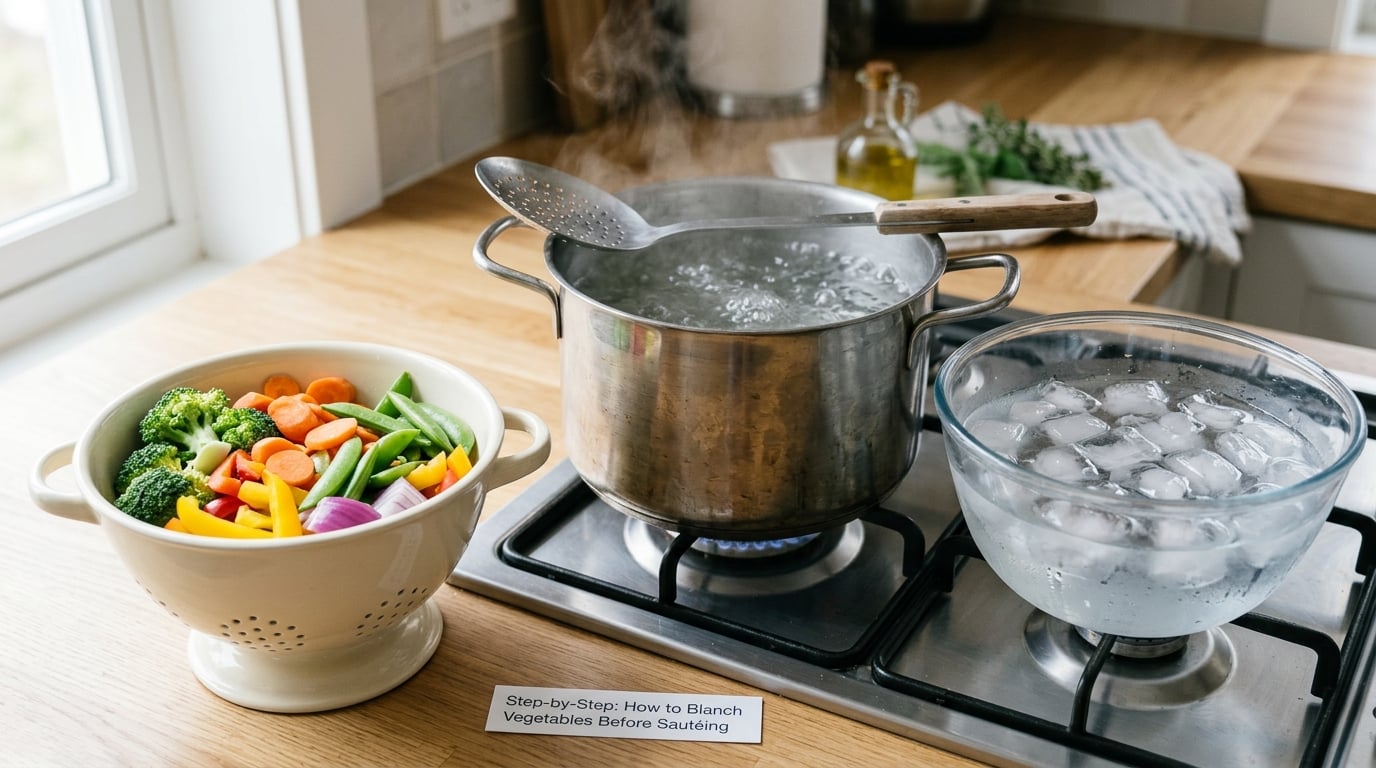
Read the whole sequence once before you start. The order matters, because the ice bath has to be sitting there waiting before the vegetables ever touch the water.
Step 1: Choose and Prepare the Vegetables
Broccoli florets, green beans, asparagus, snow peas, cauliflower and carrots are the vegetables that actually benefit. Cut them to a uniform size so they finish at the same rate, and that is the single most important preparation step in the whole process.
If your broccoli has a stalk attached to the florets, split the thick stalk lengthwise and cut it into coins the same thickness as the florets. Stalk pieces are denser than florets, so a size mismatch means pale stems and overcooked crowns. Green beans get trimmed at both ends, asparagus gets its woody inch snapped off, and carrots get sliced into coins or ribbons no thicker than a quarter inch.
Step 2: Bring Water to a Rolling Boil
Fill the pot so the water is at least 4 inches deep, about 1 gallon for every pound of vegetables. Add about 1 tablespoon of salt per gallon and bring it to a full rolling boil.
The salt does not season the vegetable much, since the vegetable is only in the water for a couple of minutes. It seasons the water so the vegetables do not taste flat, and the higher boil point from the salt helps the vegetables cook fast. Some cooks add a tablespoon of oil, but skim anything floating on the surface off before the vegetables go in, because that film will coat your pan later.
Step 3: Blanch Until Tender-Crisp
Lower the vegetables into the boiling water and start the timer the moment they go in. The general window is 30 seconds to 5 minutes, depending on density: leafy greens and delicate vegetables take the shortest, root vegetables take the longest.
You are looking for tender-crisp, not cooked. The cues are visual. Broccoli turns vivid green and the stalks bend when you poke them with a fork. Green beans turn glossy and bright. Carrots are tender enough to pierce but still offer slight resistance. Spinach and other greens need only 30 to 60 seconds, just until they wilt and darken.
Lift the vegetables out with the spider and move immediately. Do not leave them sitting in the water while you go looking for the ice bath.
How long to blanch each vegetable before sautéing
These times assume salted boiling water, uniform cuts, and vegetables added in one loose layer. Times vary a little between sources because vegetable size varies, so treat the color change as the real signal.
| Vegetable | Blanching time | Prep note | Ideal use |
|---|---|---|---|
| Spinach and other leafy greens | 30-60 seconds | Pick over stems, do not chop | Sauté with garlic, or fold into pasta |
| Green beans | 2-3 minutes | Trim both ends, leave whole | Stir-fry with garlic and chili |
| Asparagus | 2-3 minutes | Snap off the woody ends | Sauté with butter and lemon |
| Snow peas or snap peas | 1-2 minutes | Top and tail, leave whole | Stir-fry, eaten as a side |
| Broccoli florets | 2-3 minutes | Cut stalks to match the florets | Stir-fry, roast afterward, pasta |
| Cauliflower | 3 minutes | Break into even florets | Stir-fry with curry spices |
| Brussels sprouts | 5-6 minutes | Halve, cut core to the base | Sear hard in a hot pan, then braise |
| Carrots | 3-5 minutes | Slice into coins or ribbons | Sauté with butter and thyme |
| Zucchini | 1-2 minutes | Slice into half moons | Quick sauté, no pre-cook needed often |
| Bell peppers | 1-2 minutes | Cut into even strips | Stir-fry, so they keep their crunch |
| Cabbage | 1-2 minutes | Shred or cut into wedges | Stir-fry, or soften for slaw |
| Green peas (fresh or frozen) | 1-2 minutes | No prep needed | Stir-fry, finishing butter added at the end |
Step 4: Shock, Drain, and Sauté
Drop the vegetables straight into the ice bath. Keep them submerged, and leave them for about the same length of time you blanched them, one to two minutes is plenty. The cold water plus enough ice to keep it frigid stops the carryover cooking that is the whole point of the shock. A tap-water faucet running cold over them works in a pinch, but ice-cold standing water does a noticeably better job on a big batch.
Then dry them. Spread them on a towel and pat, or spin them in a salad spinner. This step decides whether your sauté sears or steams, and it is the one that gets skipped most often. Water on the surface of the vegetable turns to steam in the pan, the pan temperature drops, and you get a gray soggy layer instead of a browned one.
Heat a wide skillet over medium-high heat with a tablespoon of oil or butter, add the vegetables in a single layer, and do not crowd it. Leave the first batch alone for a minute so it can actually brown, then toss. Season with salt at this stage, since the blanching water did almost nothing to flavor the vegetable itself.
A squeeze of lemon at the end, or a spoon of the blanching water reduced into the pan, turns the same vegetables into something closer to restaurant cooking. That leftover blanching water is a real by-product worth keeping: after a batch it holds a mild vegetable flavor, and a splash of it deglazes the pan into a quick sauce.
Cooking a full mixed stir-fry on one burner? Blanch the hard vegetables first, shock and dry them, and hold them on a clean sheet pan. The second batch then goes into the pan in a couple of minutes because everything is already partly cooked. Add the delicate vegetables last. If you are skipping the shock for softer greens on purpose, which is a legitimate choice, put them in during the final minute of pan cooking instead.
Common Mistakes
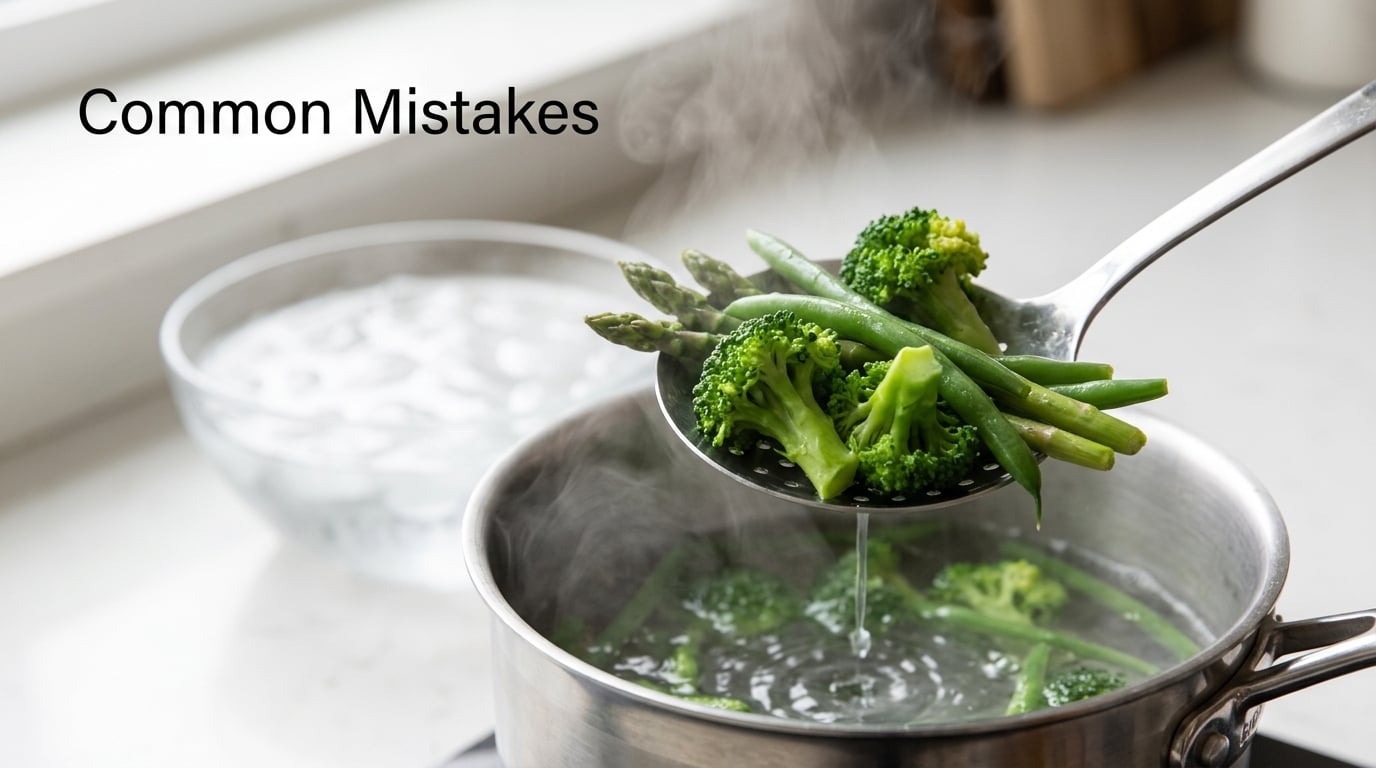
Almost every disappointing plate of blanched vegetables traces back to one of these.
- Crowding the pot. Too many vegetables drop the water temperature, and the timer you set becomes meaningless because the water is no longer boiling. Work in small batches.
- Not enough water. If the boil does not come back after the vegetables go in, they cook slowly and unevenly and leach flavor into the water. The NCHFP advice is to use at least a gallon per pound.
- Starting the timer too late or too early. Start it when the vegetables enter the water, not when you remove them. For a fuller boil, the University of Georgia guidance is to start counting once the water returns to a rolling boil.
- Skipping or rushing the ice bath. No shock means the vegetable keeps cooking in its own residual heat, which is exactly how you get mush in a bowl while you are still draining the pot.
- Reusing cooled water for the next batch. You cannot make the timing consistent, and the flavor from the first batch carries over. Bring it back to a hard boil, or change the water entirely.
- Putting wet vegetables in the pan. Steam, not sear. Dry them properly.
- Blanching past tender-crisp. The vegetable still has to finish in the pan, and the pan is the hottest step in the whole process. Blanch to the point where a fork enters with resistance.
- Overcrowding the skillet. Same problem as the pot, a different pan. If the vegetables touch in a layer, they cook in steam.
A few smaller notes. Blanching is a technique, not a safety step, and short blanching is not going to kill bacteria on a vegetable. It does cost a little of the water-soluble vitamin C and B vitamins, and a very long blanch flattens flavor, so keep it short. If you are blanching for freezing rather than for the pan, extend the times by a few minutes, since frozen vegetables need to be fully cooked to hold their texture.
Frequently Asked Questions
Is blanching really necessary before sautéing vegetables?
It depends on the vegetable and what you are after. Blanching earns its place for green, crisp vegetables such as broccoli, green beans, asparagus and snow peas destined for a fast pan cook, because it locks in color, shortens the time in the skillet and stops them collapsing while you finish the rest of the dish. Thin, delicate items like zucchini, peppers or mushrooms are usually just as good straight into a hot pan, and anything destined for a roast or a long braise does not need it at all.
Do you put salt in the water when blanching vegetables?
Yes, about 1 tablespoon of salt per gallon of water, and add it before the water boils. The salt seasons the vegetable lightly, and it raises the boiling point a touch so the vegetables cook faster. Because the blanch is so short, the salting has more effect on taste than it does on the cooking, so taste your pan sauce at the end and adjust with finishing salt instead.
Do you boil the water first when blanching vegetables?
Always bring the water to a full rolling boil before the vegetables go in, and set the ice bath up first. Start timing the moment the vegetables enter the water. A fuller rule used in home food preservation is to begin counting once the water returns to a boil after the vegetables are added, which matters most for thick roots and for a large batch. Never drop vegetables into lukewarm or barely simmering water.
How do I quickly plunge blanched vegetables in cold water to stop the cooking?
Have a large bowl filled with ice and cold water sitting beside the pot before you start. Use a spider strainer or slotted spoon, lift the vegetables out in one motion, and drop them straight under the cold water. Keep them submerged for about the same time you blanched them, then drain in a colander. A running cold tap works in a pinch, but ice-cold standing water stops the cooking far better.
How long should you blanch green beans before you sauté them?
Two to three minutes in salted boiling water, which leaves them bright green and just tender, not soft. Trim both ends first and keep the beans whole so they are roughly the same density all the way through. Then dry them thoroughly and give them a minute in a hot pan with butter or oil before tossing, so they brown rather than simmer in their own water.
What vegetables do not need blanching?
Salad greens, mushrooms, onions, peppers, tomatoes and thin-cut zucchini do not need it, because they cook quickly enough in the pan. Neither does anything going into a hot oven, a grill or a long braise, where direct high heat produces better flavor than a two-minute soak in water. Cooks who prefer soft greens also skip the blanch and the shock on purpose, and that is a perfectly good way to cook them.
Start with the equipment: pot, spider, ice bath, and a towel for drying. Then blanch the firmest vegetable in your dish for the time in the chart, stop it in ice water, dry it properly, and give it a hot pan. If the vegetable is not crisp, not green, and destined for a fast sauté, the step pays for itself every time.