
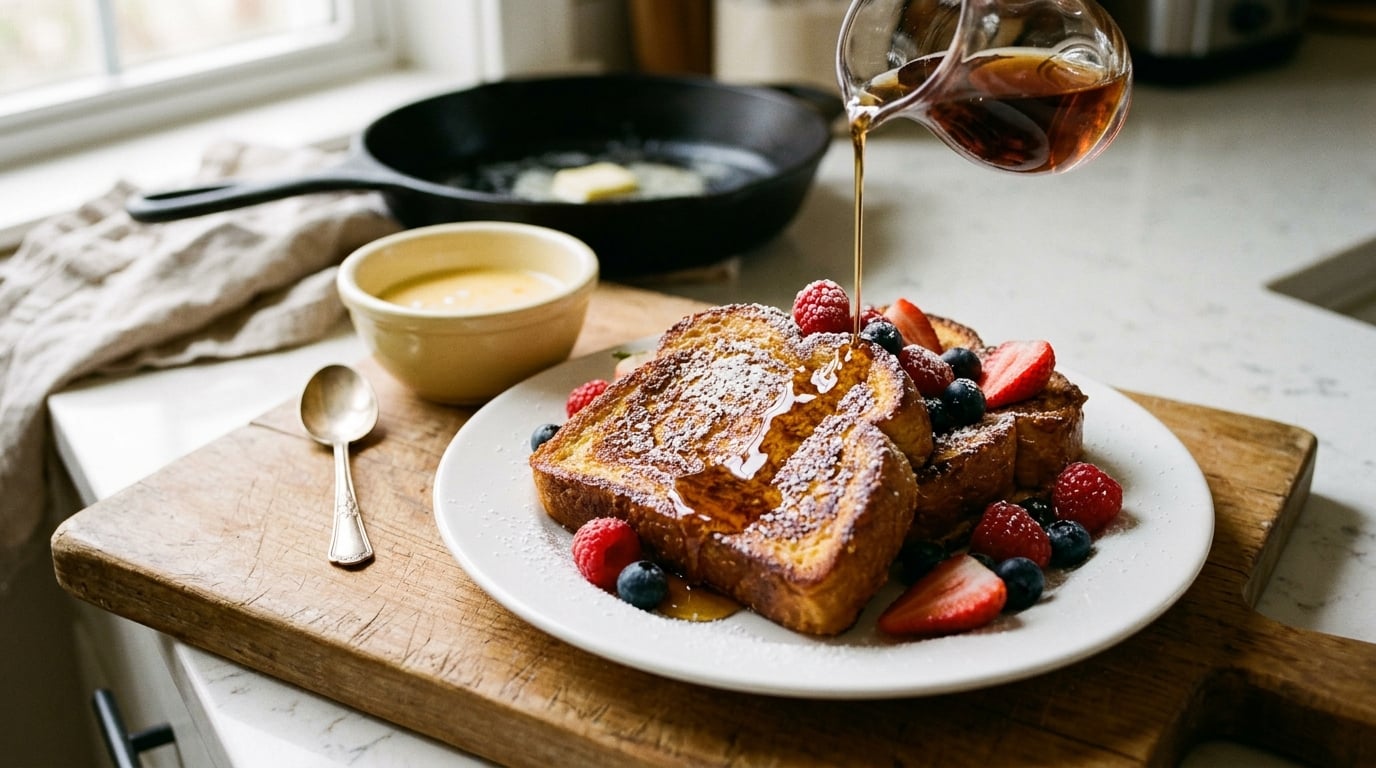
To make French toast with brioche, cut the loaf into 1-inch slices, dip each side in an egg-and-milk custard for 5 to 10 seconds, and cook in a buttered skillet over medium-low heat until both sides are golden and the center is set. The whole thing takes about 20 minutes for four servings, and day-old brioche gives you the crispest result.
The reason brioche works so well here is its fat. Enriched with butter and eggs already, it soaks up custard without turning to paste, and the sugars in the crust brown fast in a buttered pan. Thick slices are the difference between a slice of bread and something that eats like a restaurant brunch plate.
What You Need
The ingredient list is short, but the cut and the custard ratio are what decide whether the toast comes out creamy or rubbery. Here is what I use for four servings:
- 8 slices thick-cut brioche, about 1 inch thick, from a loaf that is one or two days old if you can get one
- 3 large eggs
- 1 cup whole milk (half-and-half or heavy-cream blend for a richer center, or oat milk for a dairy-free version)
- 1 tablespoon sugar
- 1 teaspoon vanilla extract
- 1/2 teaspoon ground cinnamon, plus a pinch of nutmeg or pumpkin pie spice if you like
- Pinch of salt
- 2 tablespoons butter and 1 tablespoon neutral oil for the pan
- Toppings: maple syrup, powdered sugar, fresh berries, sliced banana, and a spoonful of yogurt or whipped cream
Tools are simple too. You want a wide skillet or griddle so two slices cook at once, a large shallow bowl or a rimmed baking pan for dipping, a whisk, a fork, a thin metal spatula, and a plate lined with paper towel to drain the finished toast. A wire rack set over a baking sheet works even better if you are cooking in batches, because the steam escapes instead of pooling under the bread.
Step-by-Step: How to Make French Toast with Brioche
How to prepare the brioche and egg mixture
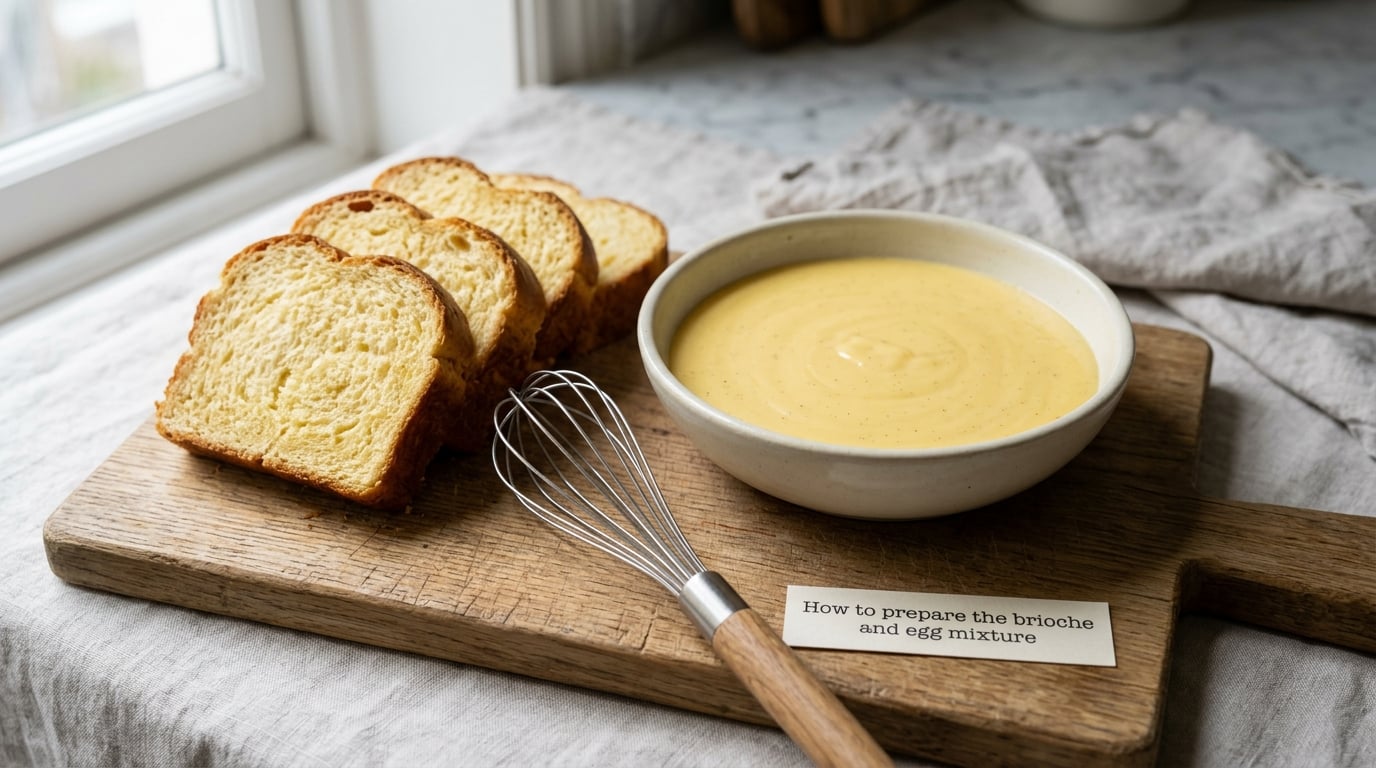
Cut the loaf with a serrated knife in one confident sawing motion per cut. Pushing the knife straight down crushes the soft crumb and leaves you with ragged, torn slices that will fall apart in the custard. If your brioche is fresh from the bakery, dry the slices in a 300°F oven for 10 to 15 minutes first, which firms the crumb and takes the sogginess out of the final plate.
Whisk the eggs, milk, sugar, vanilla, cinnamon, and salt together in the shallow bowl until the mixture is foamy with no streaks of white left. If you are using whole eggs, whisk hard for about 30 seconds so the eggs break down and the custard is smooth rather than lumpy. A strainer is worth the extra minute here, and I add an egg yolk when I want an even more custardy middle.
How long to soak brioche so it doesn’t turn to mush
Brioche absorbs liquid faster than sandwich bread, so a quick dip beats a long soak. For day-old bread, hold each slice in the custard for 5 to 10 seconds per side. Fresh brioche needs even less, closer to 3 to 5 seconds per side, because the crumb is already soft and moist.
Use roughly one cup of custard for six to eight slices, and dip more if your bowl looks dry at the end. Let the excess drip back into the bowl for a second or two before it hits the pan, and poke a few holes in each face with a fork so the custard reaches the center. If a slice starts to break, scoop it up with the spatula and support it under the bread with your hand instead of lifting it by an edge.
How to cook brioche French toast until golden and tender
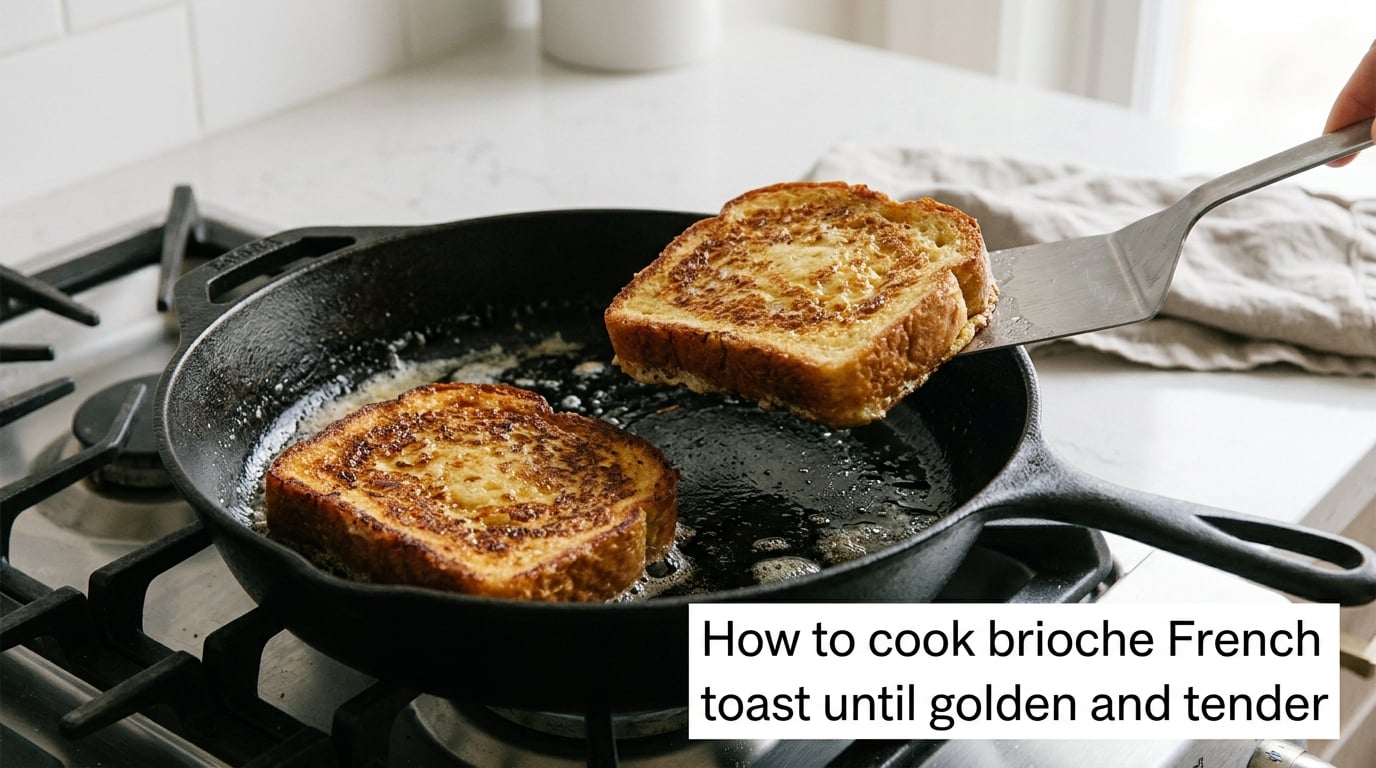
Melt the butter with the oil over medium-low heat and swirl the pan to coat the whole surface before the first slice goes in. The oil keeps the butter from burning and stops the toast from tasting greasy. Cook the first side for 2 to 3 minutes, pressing gently with the spatula so the bread stays flat against the pan.
You will know it is ready when the surface is deep golden brown, the edges look set and slightly crisp, and the slice releases from the pan on its own without a fight. Flip and give the second side the same 2 to 3 minutes. If the butter browns before the toast does, turn the heat down; if the toast is pale after the full time, nudge it up a notch.
How to serve it warm
Move the finished slices to the paper towel plate or the wire rack and serve right away, while the middle is still loose and creamy. Dust the powdered sugar after the toast is plated, not before, so it stays visible instead of melting into the bread. Maple syrup goes on at the table, and berries or sliced banana go on last so they keep their shape.
For leftovers, let the slices cool uncovered on a rack, then refrigerate them in an airtight container for up to 3 to 4 days. Reheat in a toaster oven or dry skillet at 350°F for 5 to 8 minutes, which keeps the crust crunchy, or in a toaster on a single slice setting. A microwave reheats fast but steams the bread, so the crust never recovers. You can also freeze cooked slices in a single layer with parchment between them for up to 2 months.
Common Mistakes and How to Fix Them
Most disappointing French toast comes down to four variables: soak time, heat, handling, and how well the custard was mixed. Here are the problems I see most often and what actually fixes them.
Why is my brioche French toast soggy?
Three things cause sogginess: a long soak, slices that are too thin, and a pan that is not hot enough to set the outside quickly. Cut the brioche to a full inch, shorten the dip to 5 seconds per side, and let the slice drip for a few seconds before it goes in. Keeping the pan at medium-low and letting the first side take its full 2 to 3 minutes also helps, because the custard has time to set into something sliceable rather than liquid.
How do I keep the egg custard from turning raw?
Raw custard usually means the egg mixture was not blended evenly, the bread sat in it too long to absorb, or you only gave one side enough time. Whisk until there are no visible streaks and the surface looks lightly foamy, then let each slice sit a beat after dipping so the liquid soaks inward. Cook both sides fully, and if you are unsure, poke the thickest part of the center with a knife: no wet egg should come out. Egg dishes are cooked to 160°F for food safety, and a set, shiny center is the sign you are there.
How can I keep brioche from falling apart?
Stale or day-old brioche is sturdier than a fresh loaf, and that is the single biggest reason cooks prefer it. Beyond that, treat the slices gently: scoop them up with a wide spatula, slide the spatula all the way under the bread, and use tongs only on the edge. Cutting the slices with a serrated knife rather than pressing down with a straight blade keeps the crumb intact, and dipping them in a wide shallow pan instead of stacking them in a bowl reduces the handling.
Why does the outside burn before the center cooks?
That is a heat problem, not a bread problem. Very hot butter burns long before the custard in the middle of a thick slice sets, and brioche browns faster than ordinary bread because of its butter and sugar. Drop to medium-low, give the first side the full 2 to 3 minutes, and press the slice flat so it contacts the pan evenly. Thickening the milk with a tablespoon of flour or cornstarch also helps the center set faster without making the toast taste floury.
Why does my French toast taste greasy?
Grease comes from three places: too much butter in the pan, a pan that is too cool so the butter soaks in rather than browns, and slices that sit on a greasy plate instead of a rack. Use more oil than butter for the cooking fat, which browns without the dairy solids, and skim any pooled butter off the pan between batches. Letting the toast drain on a wire rack or paper towel for a minute fixes the rest.
Tips for the Best Brioche French Toast
A few small changes take the toast from good to the version people ask about afterward.
- Use day-old brioche. A loaf from yesterday absorbs custard without collapsing, and you can revive a very fresh loaf in a 300°F oven for 10 to 15 minutes.
- Enrich the custard. Swap some of the milk for half-and-half, or add one extra egg yolk, for a pudding-like center that stays tender.
- Flavor the fat. Brown the butter with a cinnamon stick, or spread a thin layer of honey butter on the pan before each batch.
- Warm the plates. A stack of toast on a cold plate loses heat fast, and warm plates buy you the ten minutes that make a brunch feel unhurried.
- Cook in batches and keep finished slices on a rack. A 200°F oven holds them without steaming, which is what ruins the second batch.
- Add citrus. A teaspoon of orange or lemon zest in the custard cuts the richness of brioche and pairs well with berries.
- Pick toppings that handle the fat. Tart fruit, maple syrup, yogurt, and salted nuts cut through brioche, while heavy syrups and whipped cream on top of whipped cream do not.
Cooking for a crowd scales cleanly. For 2 servings use 2 eggs and 1/2 cup milk, for 4 use 3 eggs and 1 cup, for 6 use 4 eggs and 1 1/2 cups, and for 8 or more go to 5 eggs and 2 cups. A 13×9 baking dish doubles as a dipping bath for a large batch, and an electric griddle keeps the temperature steady across rounds.
Frequently Asked Questions
Can I make French toast with a fresh whole brioche loaf?
Yes, a fresh loaf works well, but it is softer and holds its shape less well. Dry the slices in a 300°F oven for 10 to 15 minutes first, and shorten the dip to 3 to 5 seconds per side so the crumb does not turn to paste. Day-old brioche gives a firmer slice and a crisper edge, which is why many cooks wait a day.
What is the best thickness for brioche French toast?
About 1 inch thick is the sweet spot. Thinner slices drink the custard too fast and go soggy in the center, while slices much thicker than an inch cook unevenly, with a browned crust sitting next to raw egg. If your loaf is cutting thinner than that, ask for the heel and end slices together and leave them untrimmed.
Should I use butter, oil, or both in the pan?
Use both, and lean toward the oil. Butter gives the flavor and browning, while a tablespoon of neutral oil keeps the milk solids from burning and stops the toast from tasting greasy. Cook over medium-low heat, and if the butter browns before the bread is done, lower the heat rather than pouring it off.
Should the egg mixture be sweet for French toast made with brioche?
Go light, because brioche is already sweet. One tablespoon of sugar per three eggs is enough to round out the vanilla and cinnamon, and more than that pushes the toast toward cake territory. If you plan to top it with maple syrup and berries, hold the sugar back to a teaspoon and let the toppings do the sweet work.
Can I soak brioche French toast overnight before cooking?
You can, but do it in the custard in the refrigerator rather than on a plate, and cook the slices straight from the cold. Overnight soaking gives you a very custardy center, so dip is not needed in the morning. Cook the soaked bread on medium-low for a few extra minutes per side and let the first side take its full time, or the outside will brown before the middle sets.
Conclusion
Start by cutting sturdy brioche about an inch thick and whisking a smooth three-egg custard. Everything else follows from three controls: a short dip of 5 to 10 seconds per side, steady medium-low heat, and cooking both sides until they are golden and the center is set. Get those right and you will not need the fixes above.