
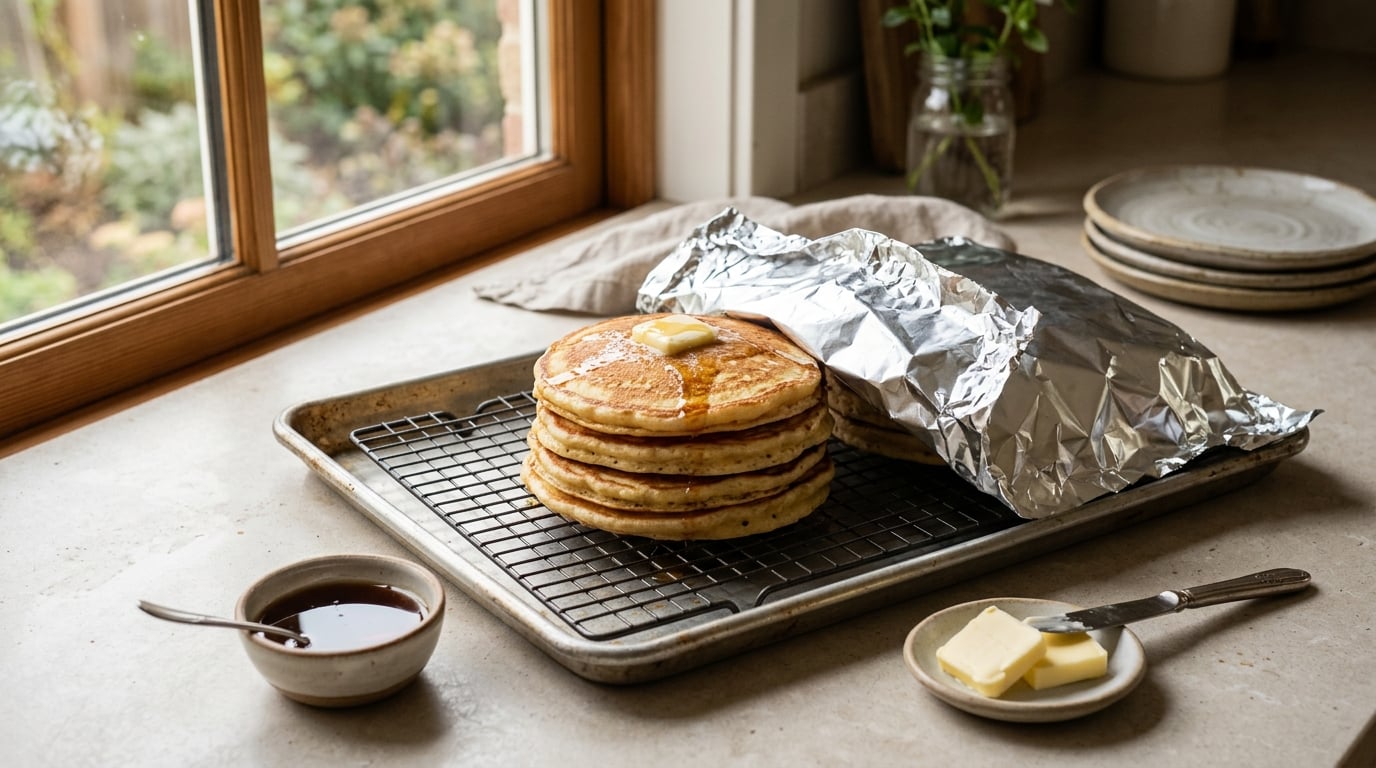
Keeping pancakes warm for a large breakfast comes down to one setup: a low oven at 200-250°F with the pancakes in a single layer on a wire rack, loosely tented with foil. That holds the batch at serving temperature for 30 to 60 minutes without steaming them soft. The whole job takes about five minutes of setup, and almost none of it is active.
The reason it matters is that pancakes lose their three best qualities fast. A pancake that has been sitting out goes cold in the middle, stops melting butter, and the edges that were crisp turn leathery. For a table of ten, the first pancakes out of the batch should be as good as the last ones.
Table of Contents
- What You Need
- Step-by-Step: Keep Pancakes Warm Without Drying Them
- Common Mistakes
- Frequently Asked Questions
- How long can pancakes stay warm in the oven without drying out?
- What temperature should I set the oven to when keeping pancakes warm?
- Should I cover pancakes while they are keeping warm?
- Can I keep pancakes warm on a warming tray for a large breakfast?
- How do I keep pancakes fluffy until everyone comes to the table?
- What should I do if the pancakes become soggy while waiting?
- Final Tip
What You Need
Most of this list is things you already own. Nothing here is specialized equipment.
- A working oven with a reliable low setting, or a warming tray set to 150-170°F
- A rimmed baking sheet and a wire cooling rack that sits on top of it
- Parchment paper or a sheet of aluminum foil for lining
- A clean, dry kitchen towel for a loose cover
- An instant-read thermometer, if you have one
- Two or three serving platters so you are not stacking the whole batch in one place
The wire rack over the sheet is the piece people skip, and it is the one that decides whether the bottoms stay crisp. A rack lifts the pancake half an inch off the metal so air moves under it and steam escapes instead of collecting into a wet patch.
Skip the parchment if you are short on time. It keeps pancakes from sticking, but a very light spray of cooking oil on the sheet does the same job and saves you a step on a busy morning.
Step-by-Step: Keep Pancakes Warm Without Drying Them
1. Choose the Right Warming Method
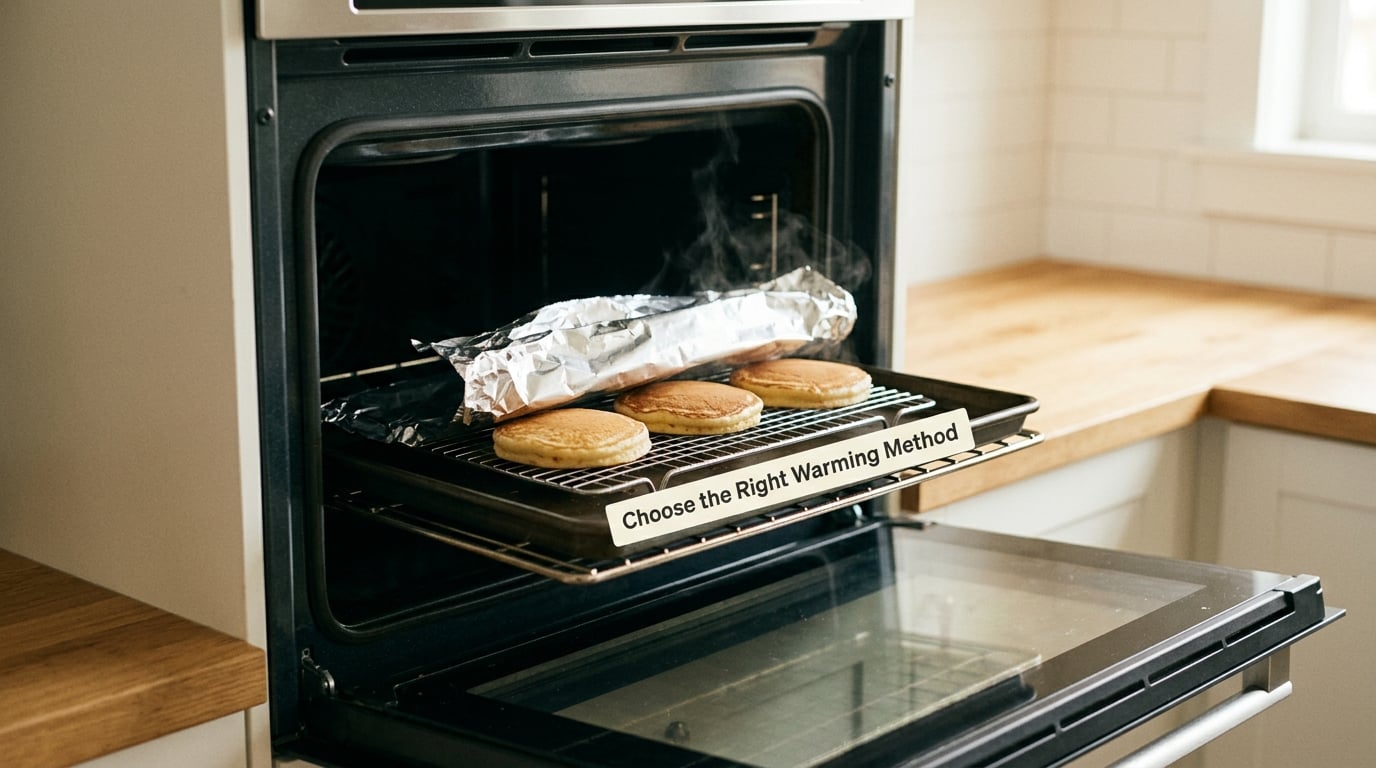
Pick the method by how many pancakes you are holding and what equipment you actually have on the counter. A low oven is the most reliable option and the one I default to for anything over a dozen pancakes. A warming tray works well for smaller groups, roughly six to ten pancakes, and it frees your oven for something else. A foil-covered platter in a warm oven is a fine last resort when you have only a handful left over.
What I do not recommend is a ceramic pancake warmer sitting on the counter. Those lose heat fast, and the pancakes inside lose their edge crispness within about ten minutes. An insulated carrier works much better, but only if you preheat it.
2. Heat the Oven or Warming Tray
Set the oven to 200°F and give it 15 minutes to preheat, or 250°F if you need to move fast. The oven does not need to cook the pancakes. It only needs to keep them above the temperature where the butter goes solid, and it will do that gently at the bottom of its range. Cranking it to 300°F is where the edges start to go leathery, and 350°F is reheating territory, not holding.
For a warming tray, 150-170°F is the useful band. Touch the surface with the back of your hand before the first pancake lands. It should feel warm and dry, not hot, and there should be no smell of scorched butter from a previous batch.
If you have a thermometer, poke it into a pancake after 10 minutes. You are aiming for somewhere around 190°F in the middle. If it is already at room temperature, the oven is too low or too full. If it is climbing past 205°F, drop the setting.
3. Cook and Transfer the Pancakes in Batches
The mistake that ruins most large batches is cooking all the pancakes first and then trying to warm them. Once a pancake is off the griddle it starts losing heat immediately, so the first ones are the ones that suffer.
Cook in batches of four to six on a standard griddle, and transfer each one to the rack as soon as it comes off. The whole pipeline works like this: the moment a pancake lands on the rack, the next piece of batter goes on the griddle. If the rack is full, wait. A full rack holds heat better than two half-full racks, and it is a better use of a warm oven than spreading pancakes thin across every level.
For a group of ten, expect the cooking itself to take about 25 minutes on one griddle. Two people working two griddles cut that roughly in half, and for anything past 20 guests I would recruit a helper or drop the sheet-pan approach below.
4. Stack Thinly and Cover Lightly
Once the rack is loaded, layer the pancakes so air can still reach them. Three or four per stack is fine for a short hold of 20 minutes or so. Past that, go to a single loose layer with the pancakes shingled slightly, like roof tiles, so the top of each one is still exposed.
Tight stacks are where texture goes wrong. Heat and moisture get trapped in the middle, condensation runs down the sides, and you get the exact soggy pileup that people describe in cooking forums when they try the foil method with no low heat behind it.
Tent the whole rack with foil and leave one corner loose so steam has somewhere to go. A clean kitchen towel draped over the foil works too and stays a little softer. Do not use plastic wrap. It seals the surface completely and the trapped steam has nowhere to escape.
5. Keep the Pancakes Uncovered Until Serving
Most holds are 30-60 minutes, and within that window the tent should come off a few times. Lift the foil at the 20-minute mark and look at the top pancakes. If they are glossy and damp, condensation has collected and you need air. If they look matte and dry, put the tent back and give it another few minutes.
For a hold longer than an hour, the rack arrangement starts working against you. Move the least-warm pancakes off the rack and stack them fresh, near the ones you will serve first, so heat concentrates where it is needed. Rearrange the batch a couple of times over the hold rather than leaving the first pancake sitting on the same cold corner of metal for an hour.
For food safety, cooked pancakes should stay at 140°F or above, and the danger zone between 40°F and 140°F is where bacteria multiply quickly. Treat two hours as the ceiling for any cooked food sitting at room temperature, and if your breakfast runs longer than that, move the warming setup up a notch or plan to reheat a fresh batch.
6. Add Syrup and Toppings at the Table
Keep the syrup, butter, fruit, and whipped cream away from the warming stack. Every drizzle on a pancake sitting in a warm oven adds liquid that softens the crust and makes the underside damp within minutes. It also makes the top pancake in a stack sticky to the one above it.
Put out a separate butter dish that has been warmed briefly, or just soften the butter on the counter while the batch cooks. A slab of cold butter straight from the fridge sits on a hot pancake without melting, which defeats the whole point of serving warm pancakes.
For a large group, set the toppings in small dishes at both ends of the table so nobody has to reach across the platter. It keeps the flow moving, which means the pancakes leave the rack in smaller waves instead of everyone waiting for the same dish.
7. Serve the Batch in the Right Order
Serve the pancakes that have been waiting longest first. Those are the ones closest to dropping out of the safe holding range, and they need the attention. The newer ones are fine for another 15 minutes.
Bring the rack to the table with the tent off, or transfer the stacks onto warmed platters in the kitchen. Do not carry the entire foil-covered rack to the table and leave it sitting there uncovered while the meal gets underway. That is the same mistake as the first pancakes, just relocated.
One host trick worth stealing: preheat the serving platters at 150°F for 10 minutes and wipe them with a thin layer of butter before they go in. Pancakes land on a warm surface and stay hot through the twenty seconds it takes someone to sit down.
Common Mistakes
Too much heat. Anything above 250°F for a holding oven dries the edges out first. Fix: drop to 200°F, and if you are worried the pancakes are not hot enough, that is a sign to reheat a small fresh batch rather than crank the thermostat.
Stacking too high. Six or more pancakes in one stack is a steam chamber. Fix: three per stack, or shingle them in a single layer with the foil tent loose over the top.
Wrapping tight in foil or plastic. Sealed wrap traps steam and gives you a wet top pancake. Fix: tent loosely with one corner open, or use a clean towel over the foil.
Covering too early. A tight cover dropped on a batch that just came off the griddle condenses almost immediately. Fix: let the first batch sit uncovered for five minutes, then tent.
Adding toppings in advance. Syrup and fruit in a warm oven soften everything they touch. Fix: keep the rack dry and finish at the table.
Cooking the whole batch before holding any of it. The first pancakes have been sitting for 30 minutes by the time the last one is done. Fix: transfer every batch to the rack as it finishes, and use the covered rack as your landing spot rather than a platter.
For a headcount above 25, warming stops being the right tool. Two sheet pans of baked pancakes go into a 350°F oven and come out in about 15 minutes, which means you can have the whole batch done at once and skip the holding problem entirely. Scale your griddle batches down to whatever two people can manage, and let the oven do the rest.
Frequently Asked Questions
How long can pancakes stay warm in the oven without drying out?
Plan on 30 to 60 minutes at 200 to 250 degrees F, which is the window where the middle stays above 140 degrees F and the edges stay tender. Past an hour, the edges go leathery no matter how the oven is set. If your breakfast runs longer, hold only the first batch in the oven and cook a second one as guests arrive rather than trying to keep the whole pile hot.
What temperature should I set the oven to when keeping pancakes warm?
Set it to 200 degrees F and give the oven 15 minutes to preheat, or 250 degrees F when you need the batch hotter sooner. The oven is holding, not cooking, so low and steady works better than high and fast. Check a pancake with an instant-read thermometer after 10 minutes and aim for about 190 degrees F in the middle. Above 300 degrees F you are reheating rather than holding.
Should I cover pancakes while they are keeping warm?
Tent them loosely, never seal them. A sheet of foil or a clean kitchen towel draped over a wire rack keeps enough warmth in to stop drying, while leaving a corner open lets condensation escape. Solid plastic wrap or foil pressed tight against the stack traps steam and produces soggy tops within about twenty minutes. If the pancakes look glossy and damp, lift the cover; if they look matte and dry, put it back.
Can I keep pancakes warm on a warming tray for a large breakfast?
A warming tray set to 150 to 170 degrees F works well for about six to ten pancakes, and it frees the oven for a sheet-pan batch. It is a poor fit above that because the pancakes have to sit in a single layer and most trays will not hold a crowd without stacking. Preheat the tray before the first pancake lands and cover it loosely, exactly as you would in the oven.
How do I keep pancakes fluffy until everyone comes to the table?
Give the pancakes airflow and keep the moisture balanced. A wire rack over a rimmed sheet lifts them off the metal so steam escapes from underneath, a loose tent holds warmth without wetting the tops, and stacks stay at three pancakes or fewer. Avoid covering the batch until it has cooled off its steaming phase for five minutes. Cover too early and condensation is what flattens them.
What should I do if the pancakes become soggy while waiting?
Spread them out in a single layer on a fresh rack and leave the oven door cracked open for a few minutes so the moisture can move off the surfaces. Once they feel dry again, tent them loosely and they will hold for another half hour. If they have already sat covered for a long stretch and the tops are damp, reheat that batch at 350 degrees F for five minutes to drive the moisture off before serving.
Final Tip
Start the low oven before the last pancake leaves the griddle, not after. Fifteen minutes at 200°F is the entire setup, and it means the first batch goes onto a rack that is already at holding temperature instead of waiting for the oven to catch up. Hold the batch in small waves, keep the tent loose, and put the syrup on the table rather than on the pancakes.