
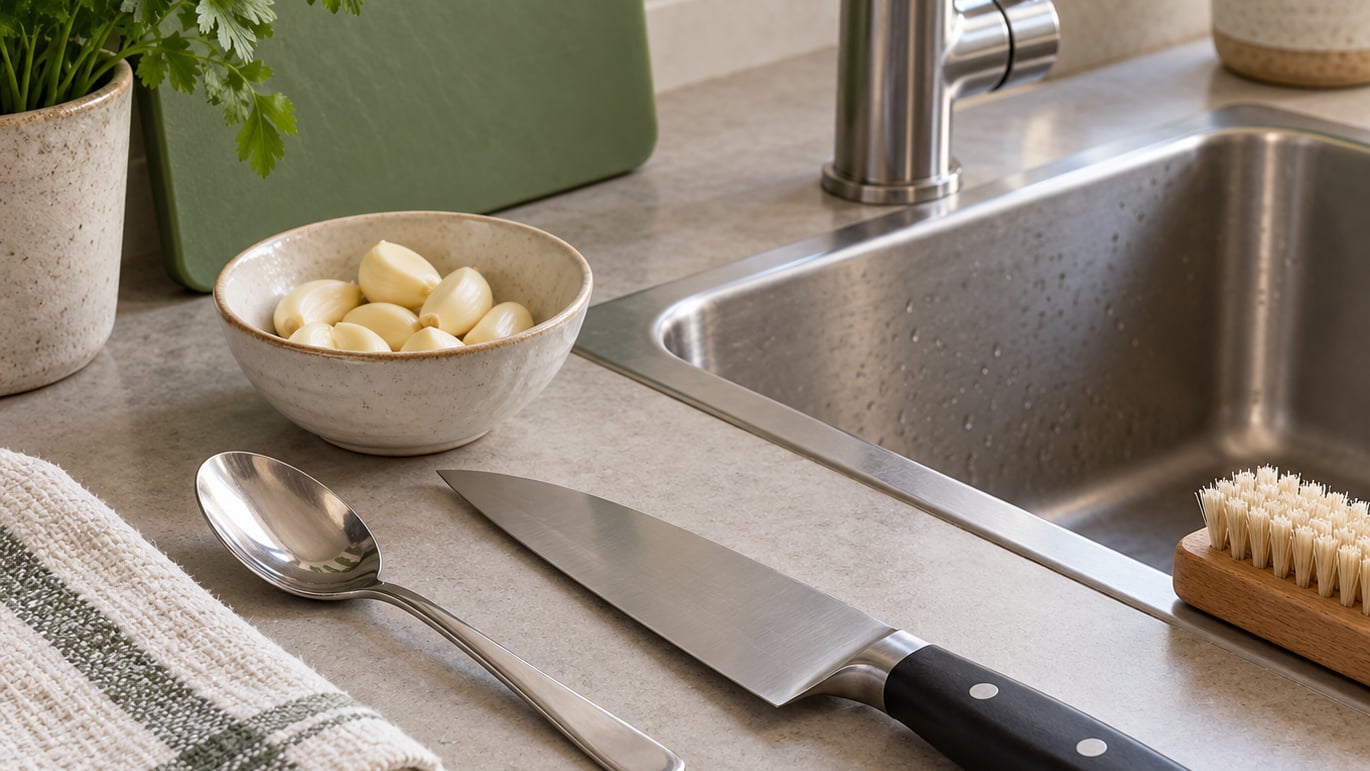
The fastest way to remove garlic smell from your hands is to rub them on a stainless steel object, like a spoon or your sink faucet, under cold running water for 30 to 60 seconds, then wash with dish soap. It takes under a minute and uses things already sitting by your sink.
- Hold a stainless steel spoon, a knife blade held dull-side up, or your faucet handle.
- Run cold water over your hands and rub them firmly on the metal for 30 to 60 seconds.
- Keep rubbing until the sharp garlic note drops away, paying attention to fingertips and under the nails.
- Wash with dish soap and cool water, then dry fully.
Soap and water alone is where most people get stuck. Cooks on cooking forums describe washing their hands twice, three times, and still catching their own garlic smell an hour later. That is not a failure of technique; it is chemistry.
When you chop or crush a clove, an enzyme reaction releases allicin and a family of sulfur compounds that settle into the natural oils on your palms, fingertips and cuticles. Those molecules are fat-soluble, so plain water rinses them off the surface without lifting them out of the oil film itself.
One honest note before we go further. The stainless steel method gets the most attention and there is a reasonable explanation for it, but the supporting evidence is thinner than the number of blog posts suggests. Treat it as the fast, free option and keep a second method on standby.
Table of Contents
- What You Need
- Step-by-Step: How to Remove Garlic Smell from Your Hands
- Common Mistakes
- Tips for Preventing Garlic Odor
- Frequently Asked Questions
- How long does it take for the garlic smell to leave my hands?
- Why does garlic smell stay on my hands after washing them?
- Does cold or warm water work better for removing garlic smell?
- Is baking soda or lemon juice better for removing garlic odor?
- How do I get garlic smell out from under my nails?
- Is the stainless steel garlic trick real or an old wives’ tale?
- Conclusion
What You Need
Nothing here requires a special purchase. Every option is a pantry staple or something already attached to your sink.
- Dish soap for breaking down the garlic oil film before anything else.
- Cold running water, which matters more than any single ingredient here.
- Baking soda for a mild scrub that neutralizes odor without stinging.
- Lemon juice or white vinegar for the acidic route, plus a cotton pad or paper towel.
- A nail brush or an old soft toothbrush for residue under nails and between fingers.
- A stainless steel object, meaning a spoon, a butter knife, a faucet handle or the rim of a pot.
- A clean towel, because damp hands reabsorb odor faster than dry ones.
Here is how the main options compare, so you can pick by time budget rather than by trial and error.
| Method | Time needed | Best for |
|---|---|---|
| Dish soap and cool water | 30 seconds | Reducing the smell before guests arrive |
| Stainless steel rub | 30 to 60 seconds | A fast neutralization with no extra ingredients |
| Baking soda scrub | 1 to 2 minutes | Dry or irritated hands that dislike acid |
| Lemon juice or vinegar | 1 minute plus rinse | The strongest odor neutralization on smooth skin |
| Nail brush under cold water | 1 minute | Odor trapped under nails and in cuticles |
Step-by-Step: How to Remove Garlic Smell from Your Hands
Start With Dish Soap and Cool Water
Dish soap is a surfactant, which means it surrounds the garlic oil and lifts it away instead of just spreading it around. Wetting your hands first matters, because dry soap on dry skin mostly sits there.
Wet your hands with cool water, pump on soap, and scrub for 20 to 30 seconds. Scrub the fingertips, the pads of your thumbs, and the webbing between fingers, since those hold more oil than your palms do. Rinse under cool water and dry on a clean towel.
How you know it worked: the sharp, immediate nose-punch is gone, leaving only a faint trace if you smell the back of your wrist. If the strong note is still there after this, go to step two.
Skip the warm or hot water here. Warm water opens your pores and spreads the oil into a wider film, and several home cooks report that hot water makes the smell noticeably worse rather than better. Cool water tightens the skin and rinses the oil away faster.
Use Baking Soda for a Gentle Deodorizing Scrub
Baking soda neutralizes odor rather than masking it, and the fine particles give you mild exfoliation at the same time. This is the method to pick when your skin is already raw from dishwashing all night.
Mix a teaspoon of baking soda with just enough water to make a thick paste. Massage it over both palms, the backs of your hands, and under each fingernail for about a minute. Leave it sitting for another minute, rinse thoroughly with cool water, and dry.
The dry grit does most of the physical lifting here, so do not scrub hard enough to make your knuckles pink. If you have small cuts, skip the paste and go straight to the soap-and-cold-water method.
Neutralize the Odor With Lemon or Vinegar
Lemon juice and vinegar are acidic, and acid breaks down sulfur compounds chemically instead of absorbing them. This is the strongest option on smooth skin, and it works in about the time it takes to squeeze a lemon.
Dilute fresh lemon juice with an equal amount of water, or use white vinegar straight from the bottle. Soak a cotton pad and wipe it across your palms, fingertips and under your nails, or just rub your hands through the mixture for 30 seconds. Rinse with cool water and dry.
Citric acid stings badly on a cut, hangnail or eczema patch. If you have any broken skin, keep the lemon out of it and use the baking soda method instead.
Get Into the Nails and Skin Creases
This is the step that decides whether you smell like garlic at a dinner party. Cuticles and the underside of nails hold the most oil of any part of the hand, and a normal wash barely touches them.
Run a nail brush or an old soft toothbrush under cold water, then work it along the underside of each fingernail and around the cuticle. Do the same between your fingers, moving from the base of the finger outward. Finish with the steel rub or a lemon wipe if you still detect the smell.
Once the smell is in a phone screen, a car steering wheel or a set of keys, washing your hands will not fix those objects. Wipe them down first so you are not re-deodorizing a surface that gives the smell back.
Dry Thoroughly and Avoid Recontamination
Drying is part of the fix, not an afterthought. Damp skin holds onto whatever odor is left in it far longer than dry skin, so pat rather than rub, and use a towel you have not used to wipe raw garlic.
Then change gloves before you go back to service or pick up a towel, and keep the garlic-covered cutting board, knife and bowl away from your cleaned hands. Garlic odor transfers readily from surfaces to skin and from skin back to surfaces.
Common Mistakes
Using hot water. It feels like a deeper clean, but heat opens the skin and spreads the oil into a wider film. Cool water rinses it away faster.
Washing more times instead of using a different method. A third round of the same soap is not a new approach. If soap and cool water did not do much, the next move has to be a different mechanism, such as steel or acid.
Scrubbing aggressively. Hard scrubbing irritates the skin barrier, and irritated skin holds odor more stubbornly than healthy skin. Use the nail brush on the nails and keep the palms gentle.
Skipping the nails. Most of the smell people cannot shake sits under the fingertips and in the cuticles, where a standard wash barely lands.
Reaching for harsh chemicals. Bleach, oven cleaner and solvents do not belong on skin, and they do not remove garlic odor any better than dish soap. Anything alcohol-based, such as mouthwash, burns cuts and dries skin fast.
Touching the garlic again after washing. Grabbing the cutting board or handing someone a plate re-contaminates clean hands within seconds. Change gloves or wash your hands again before greeting anyone.
Tips for Preventing Garlic Odor
Prevention is far easier than removing the smell afterward, and cooks who prep regularly can get nearly all of it down to nothing.
- Prep garlic cold. Crushing or chopping warm garlic releases more allicin, so break down your cloves before the pan heats up.
- Use a knife rather than a garlic press where you can. Crushing smears the oils across the blade and into your grip; a wide knife blade keeps the mess on the board.
- Wear gloves for large batches. An hour of mincing in a professional kitchen is a completely different exposure than one clove in a home kitchen.
- Keep a dedicated board and knife for alliums. Onion, shallot, leek and scallion produce the same sulfur compounds, so isolating them keeps the smell off your everyday tools.
- Wash tools and board right after use, while the garlic oil is still fresh, rather than leaving them in the sink.
- Run ventilation while working with alliums. Odor that stays in the kitchen air settles back onto every surface, including your hands.
A hot, soapy soak is the first move for any pan that has held alliums, and it is the same starting point in our guide to how to make chicken stock from bones, where a thorough clean comes before the bones ever go in the pot.
For a board that has soaked up years of onion and garlic oil, you have two honest choices: scrub it, or stop using it wet. Stale bread is a good reason to do the latter, and our guide to croutons from stale bread works entirely on a dry board, which buys you time before the next full wash.
Frequently Asked Questions
How long does it take for the garlic smell to leave my hands?
With the stainless steel rub plus a dish soap wash, most people are clear within 60 to 90 seconds. If you only wash with soap, expect the smell to persist for hours and sometimes into the next morning. Odor trapped under nails and in cuticles lasts longest, so give those areas a minute with a nail brush before you give up.
Why does garlic smell stay on my hands after washing them?
Garlic releases allicin and related sulfur compounds the moment a clove is crushed, and those molecules dissolve in the natural oils on your skin. Water alone rinses the surface but leaves the oil film, and soap and water lifts some of it but not all of it. The smell then keeps returning whenever warm water, friction or sweat releases the remaining oil.
Does cold or warm water work better for removing garlic smell?
Cold water works better and it is the single most overlooked step in most guides. Heat opens the skin and spreads the garlic oil into a wider film, which makes the odor easier to notice and harder to rinse away. Use cool or cold running water for every stage, from the initial wash through the final rinse and drying.
Is baking soda or lemon juice better for removing garlic odor?
Both work, and they work on different chemistry. Baking soda is alkaline and neutralizes the odor while scrubbing gently, which makes it the safer pick for dry, chapped or sensitive skin. Lemon juice is acidic and breaks the sulfur compounds down more thoroughly, giving a stronger result on intact skin. Avoid the lemon if you have any cuts, since citric acid stings badly.
How do I get garlic smell out from under my nails?
Wet a nail brush or an old soft toothbrush and run it under cool water along the underside of each fingernail, working from the base of the finger outward. Do the same around the cuticles and between your fingers, where oil collects. Finish with the stainless steel rub or a lemon wipe, then dry your hands fully on a clean towel.
Is the stainless steel garlic trick real or an old wives’ tale?
It probably works, but not for the reason most people think. Stainless steel is an iron and chromium alloy, and its chromium oxide layer is thought to attract sulfur compounds so they wash away instead of staying on your skin. Supporters admit the evidence is limited and that it works far better under running water than on dry metal. Plenty of people report no effect at all.
Conclusion
Start with dish soap and cool water. Twenty to thirty seconds of scrubbing the fingertips, thumbs and between the fingers, then a proper rinse and dry, knocks the smell down far more than most people expect.
If a trace is all that remains, follow up with baking soda on dry skin or lemon juice on intact skin, give the nails a minute with a brush, and keep the garlic-covered tools away from your clean hands until you are done for the evening.