
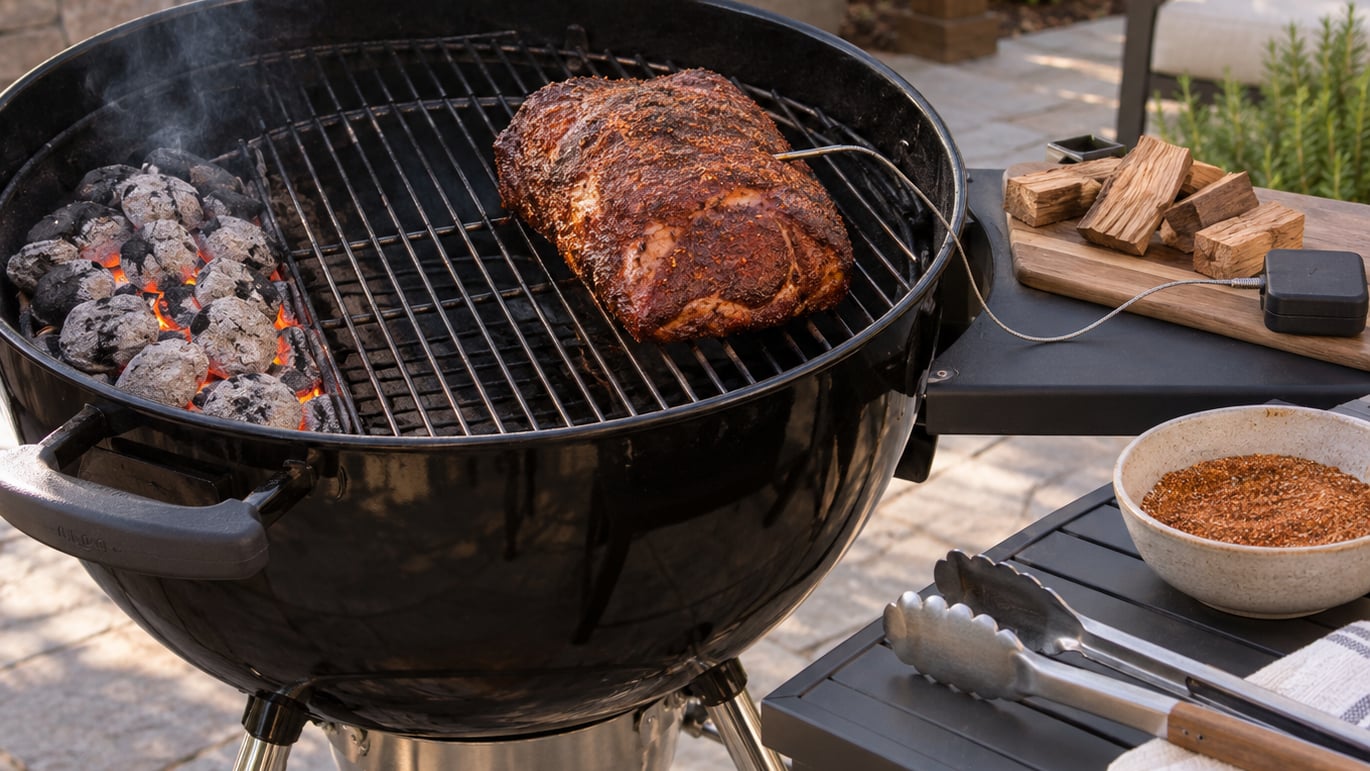
You can absolutely learn how to smoke meat on a charcoal grill. The whole trick is to bank the hot coals to one side, put the meat on the cool side, and hold the lid temperature between 225 and 250F until the meat hits its target. A kettle grill will not hold temperature as steadily as an offset smoker, but with a good probe thermometer and a little airflow management, it produces very good barbecue.
This guide walks through the setup, the fire, the wood, the vents, and the doneness checks, then adds a time-and-temperature chart by cut so you can pick a cook before you light anything. Most first-timers spend 10 or 12 hours on a pork butt and end up with something genuinely good.
Table of Contents
- What You Need
- How to Smoke Meat on a Charcoal Grill Step by Step
- Common Mistakes
- Frequently Asked Questions
- How long should I let the charcoal burn before I start cooking?
- Do I need to soak wood chunks before putting them in the grill?
- How much water should go in the water pan?
- What is the best first cut to smoke on a charcoal grill?
- What wood should I use, and how many chunks per hour?
- How do I keep a charcoal grill from burning the meat?
- Conclusion
What You Need
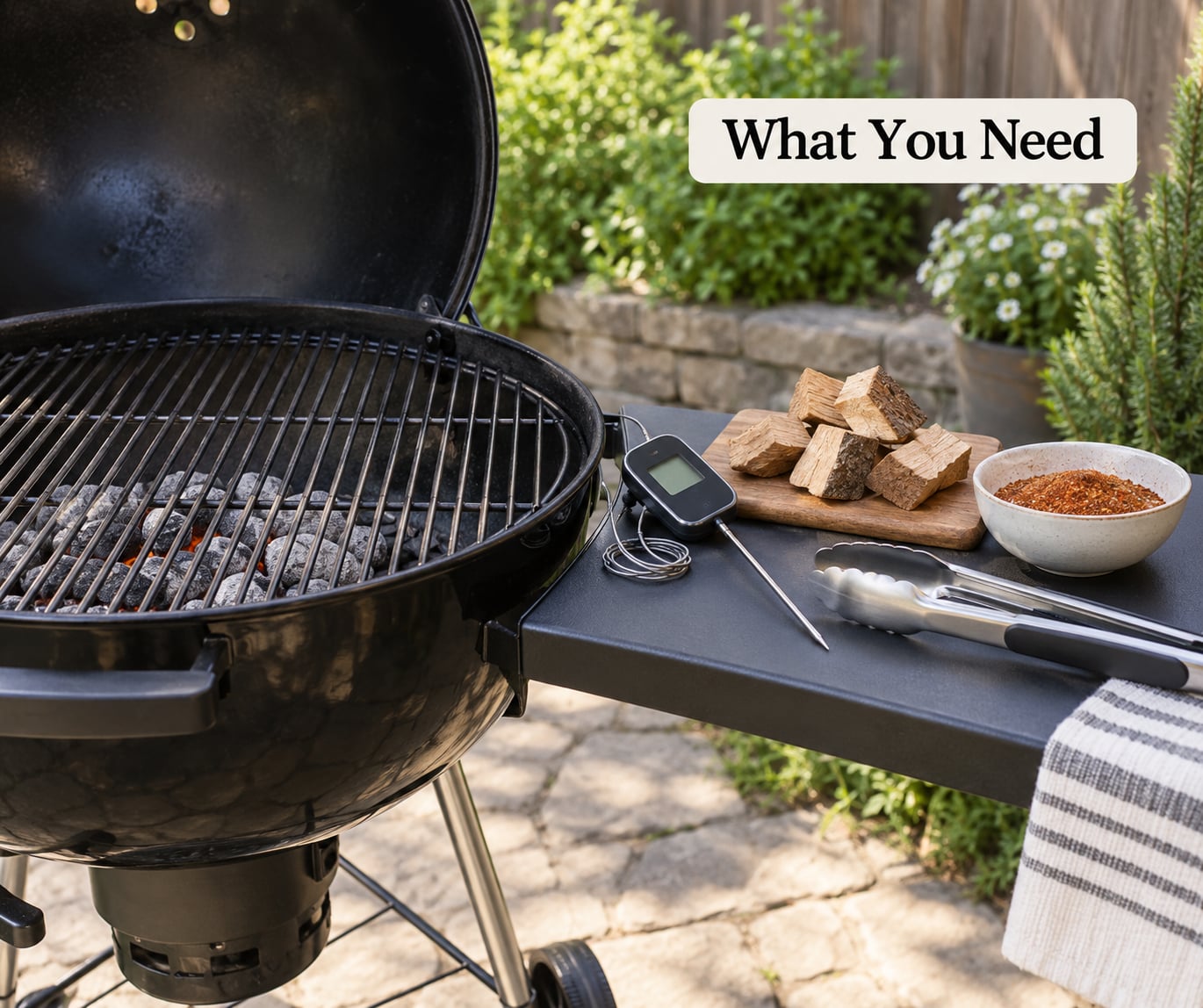
The short answer to equipment: a charcoal grill with adjustable bottom vents, a chimney starter, two temperature probes, and some wood. Everything else is a nicety.
- A kettle-style or kettle-adjacent charcoal grill. The bottom vents matter most. Grills without adjustable intake dampers are poor smokers because you have almost no way to control airflow.
- A chimney starter. It lights charcoal evenly and gets it to the ash-over stage in about 15 minutes. Starting a long burn on lighter fluid is the single most common beginner mistake.
- A digital probe thermometer with two probes. One probe stays in the meat, one sits at the grate level to tell you the pit temperature. If you read how to use a meat thermometer correctly before you cook, you will avoid nearly every problem on this list.
- Wood chunks or chips. A handful of chunks per hour is plenty. Chips work too, but they burn out in about 20 minutes.
- A water pan and a drip pan. The water pan holds humidity so the bark stays leathery instead of cracking. The drip pan catches fat so it does not flare under the meat.
- Heat-resistant gloves and long tongs. Coal placement with the wrong tools is how people burn their hands on the first attempt.
- A dry rub. Kosher salt, coarse black pepper, and whatever else you like. Seasoning goes on right before the meat hits the grate.
Worth saying plainly: a charcoal grill is not a smoker. A smoker is built to hold heat for hours with minimal fuel. A grill gives you radiant heat from the coal side, which is exactly what you need for searing later, and convection on the far side for the low-and-slow cook. If you want to grill steaks on the same cook, that second zone is why a two-zone setup is worth the effort.
How to Smoke Meat on a Charcoal Grill Step by Step
1. Choose and Prepare the Meat
For a first cook, chicken thighs or a small rack of ribs are the lowest-risk options. They finish in two to four hours and there is very little that can go wrong. A 9-pound pork butt is the classic choice once you trust your probes.
Trim the meat when it makes sense. Pulling the fat cap off a pork butt speeds up rendering and gives you clean smoke penetration instead of a greasy top. Trim less aggressively on ribs or tri-tip, where the fat is part of the dish.
Season close to cooking time, not hours ahead. A salt-heavy rub applied early draws moisture out, and a dry surface sets bark far better. Let the meat sit at room temperature for about 30 minutes before it goes on the grate, and leave the final seasoning for right before the lid comes down.
2. Build a Two-Zone Charcoal Fire
Fill the chimney about two-thirds full. Set the starter on the concrete or a fireproof surface, light the bottom paper with a lighter, and give it 15 minutes.
You are waiting for the ash-over stage: the coals turn grey, the flames die down, and a faint smoke comes off. Cooking over black, raw coals is how you get acrid flavor, and it is the most common first-timer error I see.
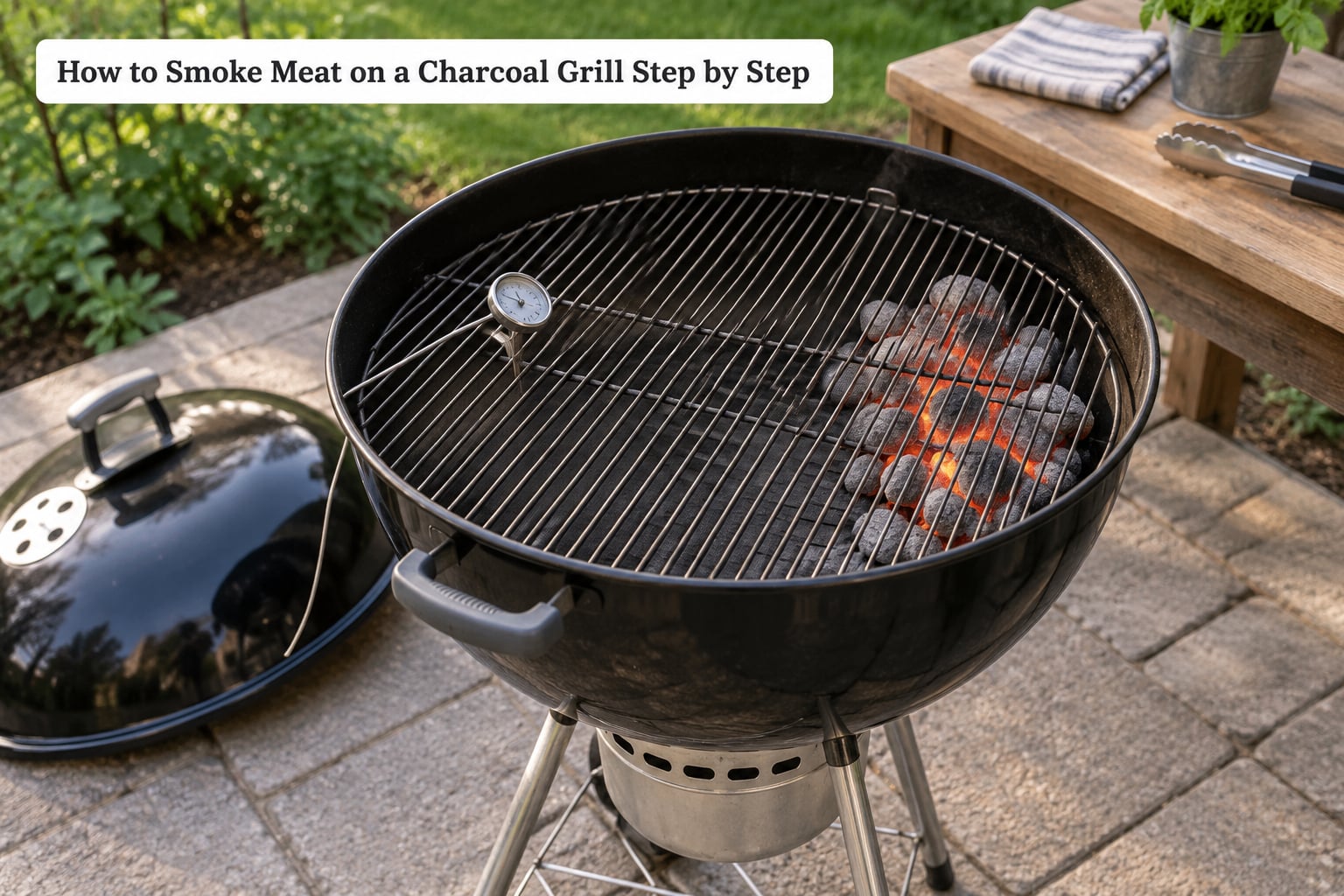
Tip the lit coals onto the banked side of the grill. With the grate handle over that side, the coal side becomes the direct-heat zone for searing, and the empty side becomes the indirect zone where the meat cooks. The kettle’s curved lid and grates bounce heat around, so the far side runs cooler but not cold. Leave a bare stretch of grate with no coals under it so drippings go into the pan rather than straight onto hot charcoal.
3. Set Up Indirect Heat and Add Smoke on Your Charcoal Grill
Put the grate back on, set the empty water pan on the side opposite the coals, and add the drip pan under the meat. Fill the water pan roughly a third to halfway with water. That is not a rule with a magic number behind it; it is enough to raise humidity without tipping you into a steamy grill.
Leave the bottom vents about a quarter open and the lid vents at least half open, with the lid vents positioned over the meat so smoke flows across it. Smoke travels through the grill with airflow, not on its own. Close the top with the bottom wide open and you get smoke rolling out of every gap and tasting like tar.
Now the wood. A couple of unlit chunks go on the coals right before the meat goes on, then one or two more every 45 to 60 minutes. Chips are a smoke generator rather than a fuel, so add a small handful more often.
Soak the wood first if you want, but know that it changes nothing about the flavor. Dry wood ignites faster and burns cleaner. Soaking delays ignition and steams the smoke, which is where the bitter creosote note comes from.
Different woods suit different meats:
| Wood | Flavor | Best for |
|---|---|---|
| Hickory | Strong, smoky, slightly sweet | Pork butt, ribs, brisket |
| Apple | Mild, sweet, delicate | Chicken, pork tenderloin, fish |
| Cherry | Sweet and mellow | Chicken, ribs, tri-tip |
| Oak | Clean, neutral, medium smoke | Brisket, beef short ribs |
| Mesquite | Very sharp, earthy | Small amounts only, beef and lamb |
A useful trick from experienced pitmasters is the burnt offering. Char a handful of meat fat trimmings directly on the coals before the main cook. They render fat onto the charcoal, which suppresses tar flavor and seasons the fire for the next several hours.
4. Cook the Meat and Watch the Temperature
Set the grate-level probe so you can read it without opening the lid. Meat goes on the cool side with a gap between pieces so air moves around it. Start at 250F. Cold meat will drop the temperature hard for the first 20 minutes, and beginning a little hot gives you the recovery.
After that, hold between 225 and 250F. Open the bottom vents a bit to add heat, close them to a sliver to cut it back, and add a few hot coals if the grill will not climb. Most grills need roughly six hot coals every 30 to 60 minutes on a long cook, and adding them on the coal side means you do not have to reach over the meat.
Leave the lid alone between checks. Every opening drops the temperature 20 to 50 degrees and adds 15 to 20 minutes to the cook. Check the pit temperature every 15 to 20 minutes and the meat only when you expect it to be close.
| Cut | Pit temperature | Rough cook time | Pull temperature |
|---|---|---|---|
| Chicken thighs or drumsticks | 250F | 1.5 to 2.5 hours | 175F, crispy skin |
| Whole chicken | 250F | 3 to 4 hours | 165F in the breast |
| Baby back ribs | 225 to 250F | 3 to 4 hours | 190F, probe slides freely |
| Pork butt (8 to 10 lb) | 225 to 250F | 8 to 12 hours | 195 to 205F |
| Beef brisket (10 to 14 lb) | 225 to 250F | 10 to 14 hours | 200 to 210F in the flat |
| Tri-tip | 225 to 250F | 3 to 4 hours | 145 to 160F, sliced across the grain |
These times assume a closed lid and a steady fire. They are the widest range I trust, not a promise, and the temperature column is the only real test.
5. Check Doneness and Rest the Meat
USDA minimum internal temperatures: 165F for poultry, 160F for ground meat, and 145F for whole cuts of beef, pork, and lamb. Most barbecue goes past that on purpose, because collagen and fat need more heat and time than safety requires.
So use the probe plus feel. For pork and brisket, push the probe into the thick part and twist it. When it slides through with almost no resistance, like pushing into soft butter, the connective tissue has broken down and the meat is done. Each cut has its own target, and the internal temperature guide for cooking meat has the full list.
Rest before slicing. Wrap brisket and pork butt in foil and rest 30 to 60 minutes. Poultry and ribs need only 10 to 15 minutes. Resting keeps the juices in the meat instead of running onto the cutting board, and it is explained in more detail in our guide to how to rest meat after cooking and why it matters.
Common Mistakes
Nearly every bad first cook comes down to one of these. Work down the list and you will already be ahead of most people on their first attempt.
- Cooking over black coals. Fix: wait for ash-over grey. No flame and no black means you can add wood without a chemical taste.
- Using lighter fluid. Fix: use a chimney starter with one match. The taste soaks into the fat and does not cook out over a 10-hour cook.
- Too much wood. Fix: one or two chunks per hour. Heavy white or blue smoke means acrid smoke flavor and a soot-black ring instead of a clean pink one.
- Cooking entirely over direct heat. Fix: two-zone it. Nothing should sit directly over a glowing coal, or the fat drips and causes flare-ups.
- Opening the lid constantly. Fix: check the pit every 15 to 20 minutes, the meat only when it should be close. Each opening costs you heat and time.
- Seasoning hours ahead. Fix: salt right before the cook. A dry surface sets bark, and a wet one steams instead.
- Choking the vents. Fix: bottom vents a quarter open, lid vents half open or more. Choked airflow is the number one cause of bitter, creosote-tasting smoke.
- Trusting the clock instead of the thermometer. Fix: the chart is a range. Probe temperature and texture decide when the meat comes off, and only you can check those.
- Flipping the meat. Fix: leave it alone. Flipping tears the bark and dumps the rendered fat. Turn only thick steaks, once, and only for an even sear.
One more worth adding: do not add cold coals mid-cook. Hot coals from the side of the fire respond faster and cause fewer temperature swings than cold ones dumped on top.
Frequently Asked Questions
How long should I let the charcoal burn before I start cooking?
Wait for the ash-over stage, about 15 minutes with a chimney starter. The coals should be grey with a light coating of white ash, no black chunks and no visible flame. If you put meat on top of black coals you will scorch the outside, create heavy smoke, and taste lighter fluid or raw charcoal chemicals in the finished meat.
Do I need to soak wood chunks before putting them in the grill?
No. Soaking is unnecessary and slightly counterproductive. Wet wood takes longer to catch fire, and the steam coming off it dulls the smoke and pushes it toward a bitter, tarry flavor. Add unlit chunks straight onto ashed-over coals a few minutes before the meat goes on, then add one or two more every 45 to 60 minutes.
How much water should go in the water pan?
Fill a water pan about a third to halfway and place it on the side opposite the coals. The pan raises humidity inside the grill, which keeps the bark leathery and slows drying, and it buffers temperature swings. Check it every hour or so and refill with hot water before it runs dry, since an empty pan does nothing at all.
What is the best first cut to smoke on a charcoal grill?
Chicken thighs or drumsticks are the safest first cook. They finish in one and a half to three hours, they tolerate temperature swings, and a slightly over-smoked piece still tastes fine. A rack of baby back ribs is a good second attempt. Save a large brisket or a 12-pound pork butt until you trust your pit temperature and meat probes.
What wood should I use, and how many chunks per hour?
Start with one or two unlit chunks per hour on the coals, or a small handful of chips every 20 to 30 minutes. Hickory and oak suit beef and pork, apple and cherry suit chicken and lighter cuts, and mesquite is strong enough that a little goes a long way. More wood is not more flavor; it is more smoke, more ash, and more bitterness.
How do I keep a charcoal grill from burning the meat?
Move the meat off the coal side entirely. With a two-zone fire, the coals sit on one half and the meat cooks on the empty half in rising convection heat. Keep the bottom vents around a quarter open and the lid vents half open or more so the fire burns clean, and put a drip pan underneath so fat never falls onto glowing charcoal.
Conclusion
Learning how to smoke meat on a charcoal grill comes down to four habits: bank the coals and keep the meat off them, run two probes and trust them, keep the vents open enough that the fire burns clean, and rest the meat before you slice it.
For your first cook of 2026, put two racks of chicken thighs on the indirect side, throw a couple of unlit apple or hickory chunks on the coals, set the grate probe, and stop touching it. A four-hour cook teaches you more about fire management than any amount of reading, and you will have pulled chicken worth eating at the end of it.