
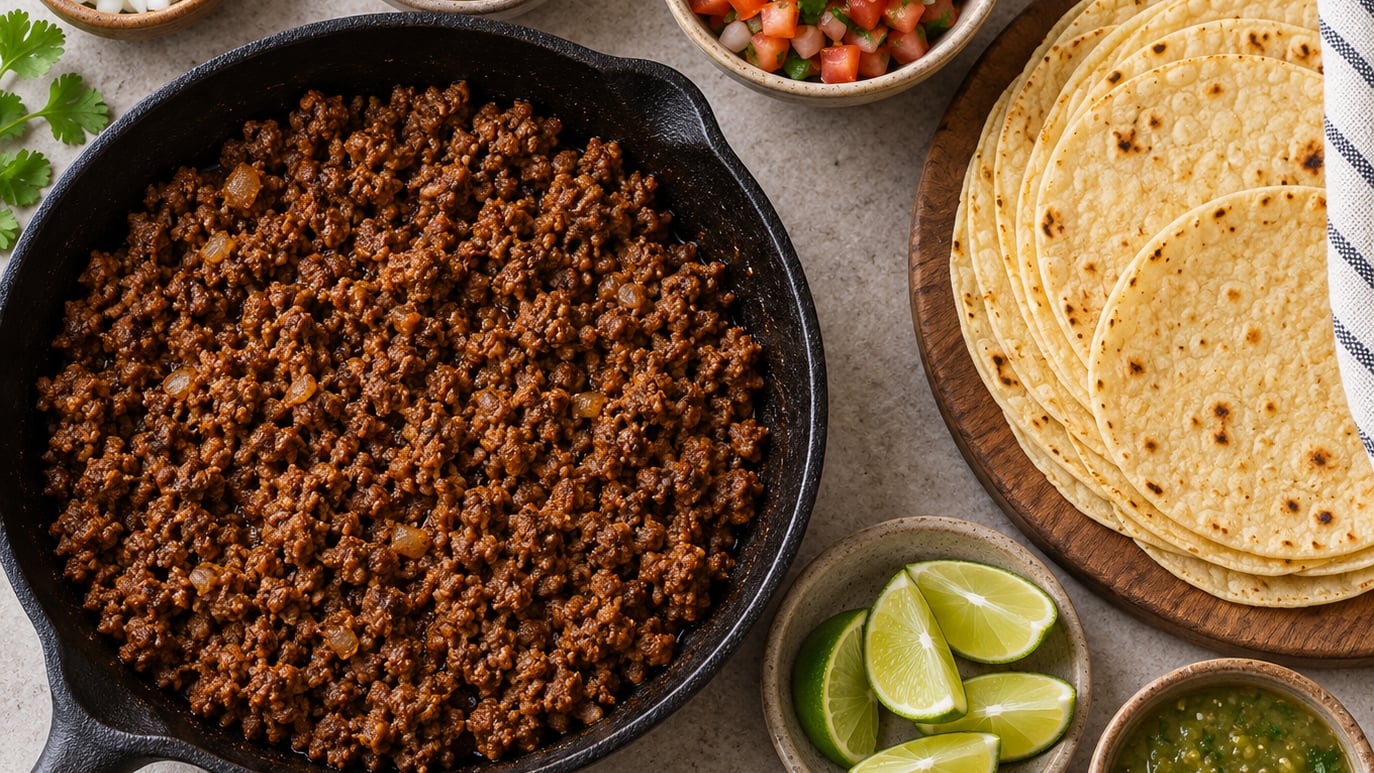
If you want to know how to make tacos taste like a restaurant, three things do most of the work: the meat gets browned hard and simmered in a real sauce, the tortillas get warmed until they’re pliable and faintly smoky, and everything is finished with acid and fresh herbs at the last second. Home tacos usually skip one of those three, and skipping any single one is enough to make the whole plate taste flat. This guide takes about 45 minutes for weeknight ground beef and gives you five techniques you can reuse on any filling.
If you want the visual side of restaurant cooking too, I wrote about how to plate food like a restaurant — presentation matters here, but flavor comes first.
What You Need
Most of the gap between home and restaurant tacos comes down to four things: the tortilla, the fat in your meat, the freshness of your acid, and whether you toast your spices. Everything else is a detail.
Tortillas
Corn tortillas are the standard for street and regional Mexican cooking, and they need to be treated gently: warmed over a flame or in a dry pan, never microwaved on high. Flour tortillas are the Tex-Mex default and are more forgiving for beginners because they stay soft when overcooked.
Buy the smallest package you can. Tortillas go stale fast, and a bag that’s been open a week will never heat up right.
Protein and Fat
Ground beef with roughly 20% fat is the sweet spot for juicy filling. Lean 90/10 works fine if you add liquid later, and it needs it. Chicken thighs beat breast for this because the skin and fat stay succulent through high heat, and pork shoulder or carnitas give you a richer, slower-cooked result.
Aromatics, Spice and Acid
Onion, garlic, jalapeño or Anaheim pepper, chili powder, cumin, smoked paprika, Mexican oregano, dried oregano for poultry, tomato paste, beef or chicken stock, and a pile of fresh limes. Mexican oregano has a citrusy, peppery note that plain Italian oregano doesn’t have; if you can’t find it, use what you have and add a little extra lime at the end.
Salsa and Toppings
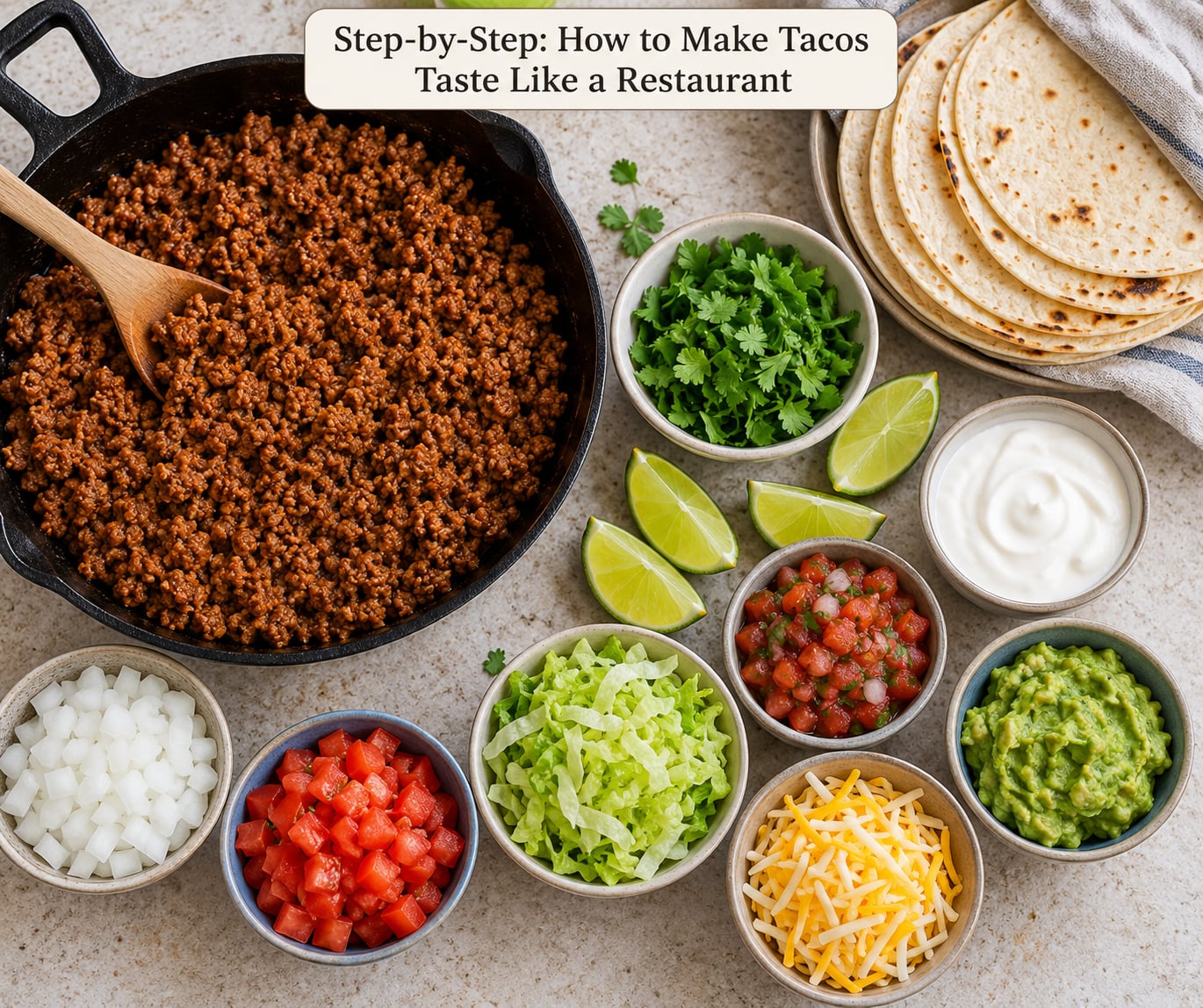
Chopped cilantro, diced white onion, quick-pickled red onion, shredded cabbage or lettuce, crumbled queso fresco or cotija, and Mexican crema. Store-bought salsa works, but a two-minute fresh one tastes noticeably brighter.
Equipment That Earns Its Space
A cast-iron skillet or comal (a flat griddle, which is really just a very flat skillet) is the single most useful tool. A comal lets you char tortillas and meat on the same surface, which is exactly what a short-order cook does. A high-speed blender gets you a smooth salsa in fifteen seconds. Everything else is optional.
If you’re plating brunch alongside these, my restaurant-style shakshuka guide uses the same cast-iron approach.
Step-by-Step: How to Make Tacos Taste Like a Restaurant
Step 1: Build a Balanced Taco Base
Start with a filling that’s seasoned but not finished, because the last layer of flavor comes from the toppings. For beef, brown it in a hot skillet in a single layer and leave it alone for two to three minutes before breaking it up — those brown bits are the Maillard crust, and they’re the single biggest difference between restaurant meat and grey crumbles. Pull the beef out, then soften onion and pepper in the rendered fat until translucent and sweet, about 5 minutes.
Swap the base depending on what you’re serving. Chicken thighs get roasted or pan-seared skin-down, then shredded and tossed with lime. Fish tacos use a thin corn tortilla and almost no sauce. Vegetarian filling works best when you char mushrooms or firm tofu hard in oil rather than simmering them, because moisture is the enemy of browning.
Step 2: Season the Filling in Layers
Seasoning goes in three stages, and skipping the first stage is why home taco meat tastes dusty. First, bloom the spices: add chili powder, cumin, smoked paprika, oregano and a pinch of garlic powder to the hot fat in the pan and stir for 30 to 45 seconds, until fragrant and one shade darker.
That 30-second step, called blooming, releases the aromatic oils that packet seasoning leaves trapped in dried vegetable matter. Second, add the protein back and stir to coat it. Third, add tomato paste and cook it for a minute until it darkens from red to brick, then deglaze with a third cup of stock and simmer until the liquid reduces to a coating sauce.
That sauce is the moisture that keeps the meat from going dry and rubbery. Taste the filling on its own before you build any tacos. If it doesn’t taste like anything on its own, the taco won’t fix it.
Step 3: Char the Tortillas Without Making Them Stale
Heat a dry comal or skillet over medium-high and lay a tortilla down for 10 to 15 seconds per side. You’re looking for a few dark blister marks, a pliable texture when you pinch the edge, and a faint corn smell. Then move it to a warm towel-lined plate or a low oven and cover loosely.
Stack them under a clean towel, never plastic, which traps steam and softens the char. Warming tortillas in the rendered beef fat — the trick home cooks keep quiet about — adds richness in about five seconds. The same principle applies elsewhere: stale bread is a gift for croutons rather than a problem.
Step 4: Make the Salsa and Toppings Do the Work
A fast salsa: half a cup of chopped tomato, half a small onion, a serrano or jalapeño, a squeeze of lime, salt, and a few cilantro leaves, all pulsed in a blender until rough. Keep some texture. A watery salsa is the fastest way to undo a good tortilla, so drain any canned salsa you use through a sieve.
Balance the richness with something sharp or crunchy. Pickled red onion takes ten minutes in lime juice and salt. Shredded cabbage holds up for an hour while the meat cools. Crema, cheese and cilantro go on at the very end so they stay bright.
Step 5: Assemble and Finish Like a Restaurant
Assembly order matters more than people think. Meat first, wet salsa next, crunch after that, soft toppings last, lime on top. The reason: wet ingredients hit the tortilla first and every layer above them stays intact when you pick it up.
Use two or three tablespoons of filling per taco, spread it only along one side, and fold or fold-and-roll so the shell holds without tearing. Add your toppings in small amounts — a heavy load is what turns a good tortilla into a pile of filling you can’t eat. Squeeze lime over the top right before the first bite and serve immediately, while the meat is still steaming.
Common Mistakes
The seasoning tastes dusty and flat. You added it too late. Toast spices in hot fat for 30 to 45 seconds before the protein goes in, and keep ground spices sealed and away from the stove; stale ground cumin is a real problem.
The beef is dry and rubbery. Two causes: overcooking and too little fat. Brown in a single layer, then simmer briefly in stock or tomato sauce. Ground meat only needs to reach 160°F (71°C) inside to be safe, so pull it earlier than feels right if you want it tender.
The tortillas crack when you fill them. They’re too cold or too dry. Warm them right before assembly, keep them covered, and if you must prep ahead, stack them with a damp towel between layers and warm straight from there.
The shells turn soggy. Salsa was added too early, or too much of it. Drain canned salsa, drain meat well, and add wet ingredients last. Double tacos are the fix if you’re serving a saucy filling.
Everything tastes the same. You’re treating the whole plate as one flavor. Alternate heat (salsa) with cooling (crema), and richness with acid. A lime wedge does more for a heavy taco than another pinch of salt.
Meal prep goes flat. Store meat and salsa separately, and warm tortillas fresh each time — a tortilla warmed on Monday is not the same tortilla warmed on Thursday. Cooked meat keeps three to four days refrigerated; freeze it in portions for longer.
Reach for that stale-bread trick when you need a fast side crumb for a taco salad or nachos; it’s the same logic as using every part of the meal. How to make croutons from stale bread takes about ten minutes.
Frequently Asked Questions
What is the secret to flavorful tacos?
The secret is layering: toast your spices in hot fat for 30 seconds before the meat goes in, brown the meat until it develops a dark crust, simmer it briefly in tomato paste and stock, then add fresh lime, cilantro and salsa at the very end. Acid and herbs added late are what make restaurant tacos taste bright instead of heavy.
What seasoning do Mexicans actually use for tacos?
Typically a blend of chili powder, cumin, Mexican oregano and sometimes garlic or onion powder, salt and a pinch of red pepper. Many cooks season only the meat and finish each taco with salt, lime and salsa instead. Home cooks also like to toast the whole blend in oil before adding it, which makes the flavors rounder.
Why are my ground beef tacos dry and rubbery?
Ground beef dries out two ways: you cook it too long, or it has too little fat. Use about 20% fat, brown it in a single layer without stirring for the first few minutes, then pull it off the heat before it looks done. Adding a third cup of stock and simmering briefly brings back the moisture that high heat drove off.
How do I warm tortillas like a restaurant does?
Heat a dry comal or skillet over medium-high and warm each tortilla 10 to 15 seconds per side until small dark blisters appear and the edge is pliable. Then stack them under a clean towel or hold them in a low oven. Warming them in a little rendered beef fat for five seconds adds the richness people mean by restaurant tortillas.
What do real Mexicans put on tacos?
Usually very little: onion, cilantro, a salsa made from fresh tomato, chile and lime, and sometimes a squeeze of lime over the meat. Cheese, crema and lettuce are common at Tex-Mex and American taco joints rather than at a Mexican street stand. The base rule is that toppings should cut the richness of the meat, not bury it.
How do I stop my tortillas going soggy?
Keep wet ingredients away from the shell. Add meat first, then a well-drained salsa, then crunchy toppings, and fold the tortilla right before serving. Soggy shells usually mean watery salsa, overfilling, or assembling too far ahead of eating. A second tortilla on top also buys you a minute or two.
Conclusion: Start With the Tortillas and Seasoning
If you do one thing, make a fresh spice blend and bloom it in hot fat before the meat goes in. That’s the single biggest jump in flavor, and it takes five extra minutes.
Then buy fresh corn tortillas, warm them over direct heat right before serving, and finish everything with lime, cilantro and onion at the last second. Learning how to make tacos taste like a restaurant comes down to browning, blooming and finishing fresh — nothing else in the process is complicated once you stop skipping those steps.