
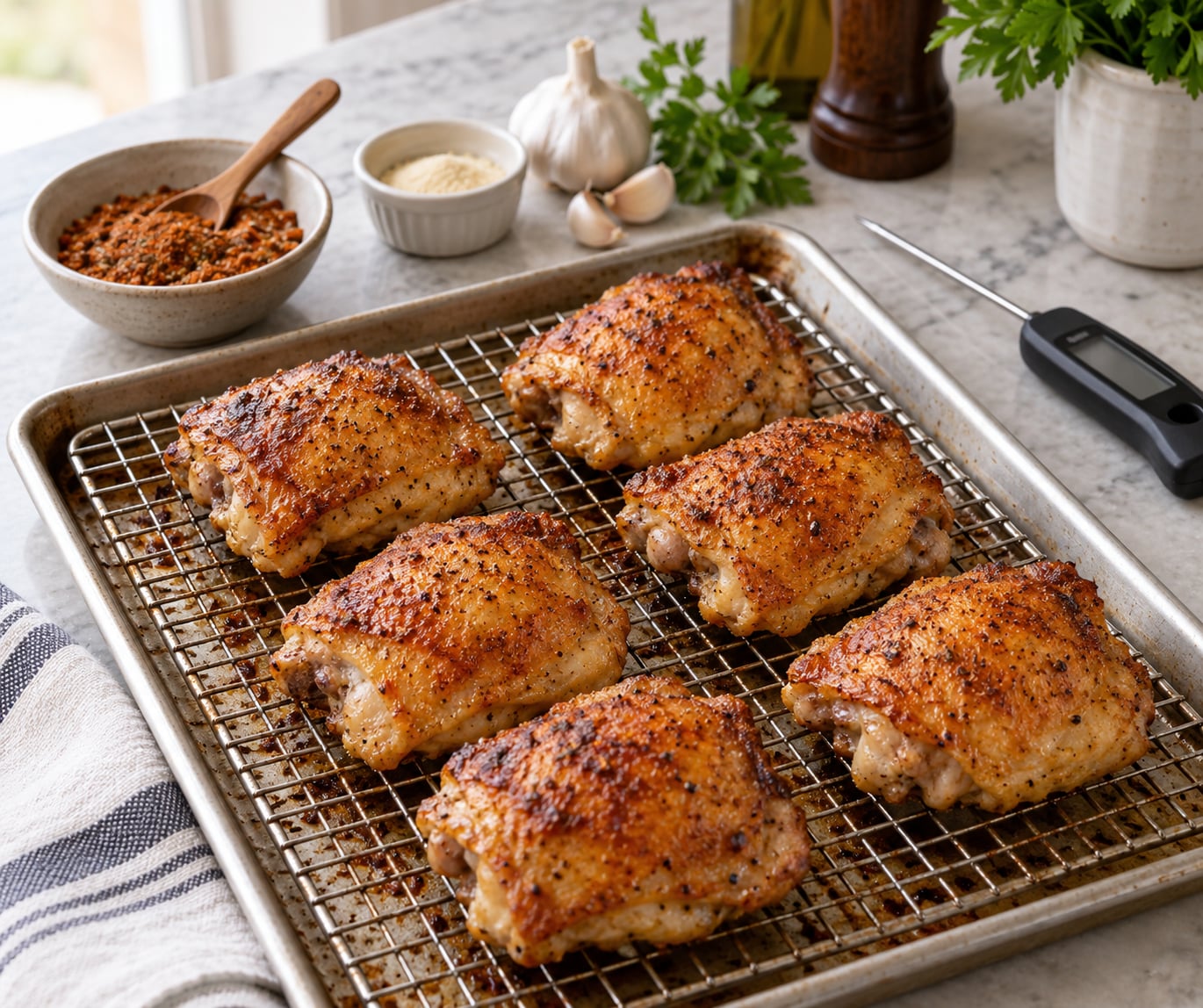
The fastest route to crispy chicken thighs in the oven is dry skin, high heat, and moving air: pat the thighs dry, season them with oil and salt, roast them skin side up on a wire rack at 425F (220C) for 35 to 40 minutes, then broil 2 to 3 minutes. That is about 45 minutes start to finish, and the only step that really matters is drying the skin.
Crisp skin comes down to two things happening at once. Surface moisture has to leave the skin so it browns instead of steaming, and the fat under the skin has to melt out so it can baste the meat while it cooks. Chicken thighs are dark meat with more fat than a breast, so they survive the high heat that makes the skin crackle, and the meat stays juicy even as the outside turns properly crisp.
If you have ended up with rubbery or pale skin before, the oven was rarely the problem. It was almost always damp skin, a crowded pan, or thighs that went in while the oven was still heating.
Table of Contents
- What You Need
- Step-by-Step
- How to make chicken thighs crispy in the oven: the five-step method
- Step 1 details: getting the skin genuinely dry
- Step 3 details: spacing and the rack
- Step 4 details: choosing your oven temperature
- Step 5 details: the broil finish and the rest
- Which cut should you use?
- Flavor variations that use the same method
- Storing and reheating
- Common Mistakes
- Frequently Asked Questions
- Conclusion
What You Need
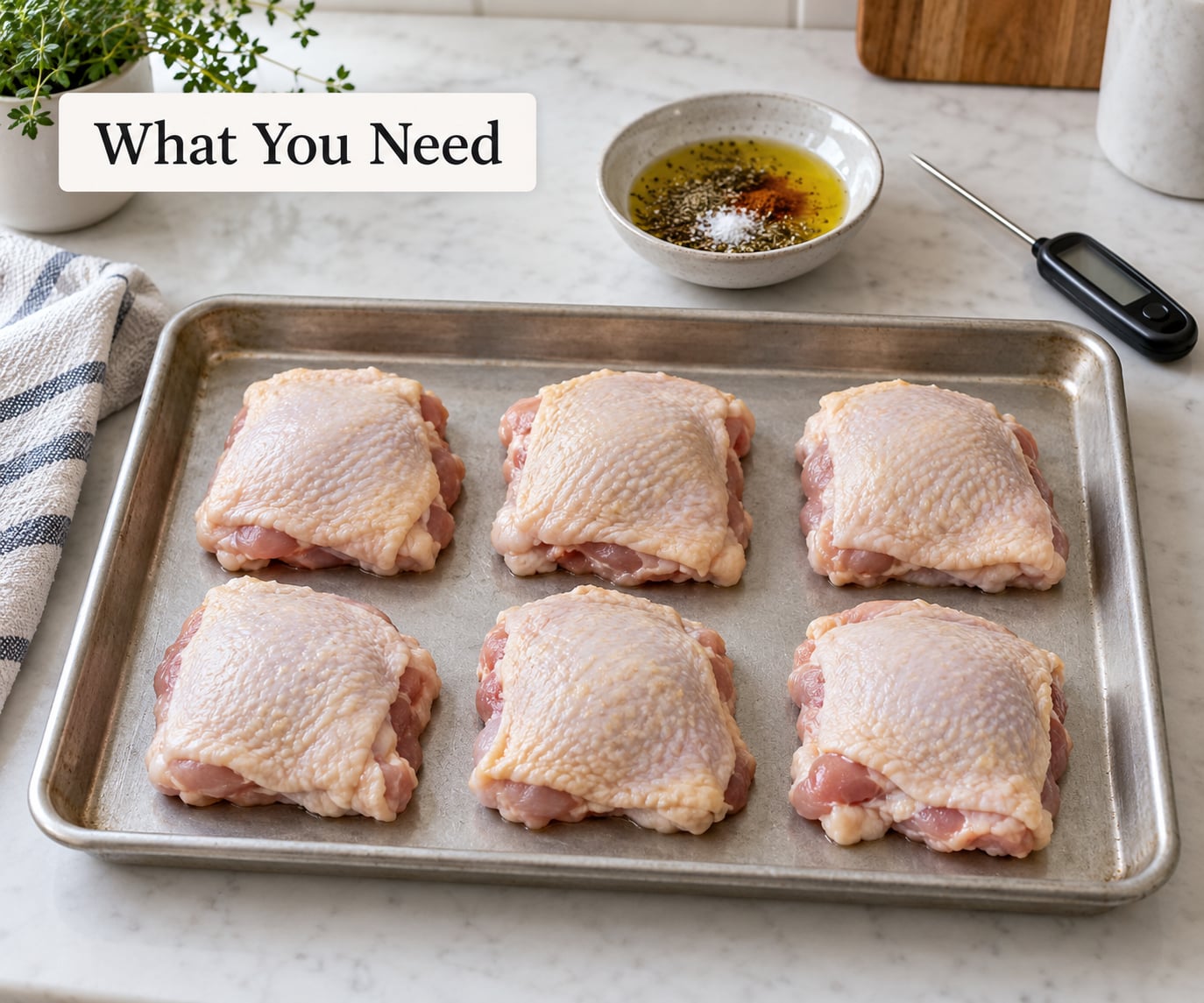
This method is built for six bone-in, skin-on thighs. That cut crisps the best because the bone holds the meat steady and the fat cap under the skin renders without the meat drying out.
Ingredients
- 6 bone-in, skin-on chicken thighs (about 2 to 2.5 pounds)
- 1 tablespoon olive oil or avocado oil
- 1.5 teaspoons kosher salt
- 1 teaspoon black pepper
- 2 teaspoons garlic powder
- 2 teaspoons onion powder
- 1.5 teaspoons smoked paprika
- 1 teaspoon dried oregano
- 1 teaspoon dried thyme
- Optional: 1 teaspoon baking powder for extra-crisp skin
The baking powder is the one unorthodox addition. A teaspoon mixed into the dry spices raises the surface pH just enough for the skin to brown faster and stay crunchy longer. Home cooks credit it with the same effect, and it costs nothing to try.
Equipment
- A rimmed baking sheet
- A wire rack that fits inside the sheet
- Paper towels or a clean kitchen towel
- An instant-read thermometer
- Foil or parchment to line the pan underneath
A wire rack is worth having but it is not magic. It lifts the skin off the metal so hot air reaches the underside, which is the difference between crisp all over and crisp only on top. If you do not own one, a cooling rack from any kitchen works.
Step-by-Step
How to make chicken thighs crispy in the oven: the five-step method
- Pat the skin completely dry. Lay the thighs skin side down on paper towels and press firmly on each piece for 30 seconds. Flip and repeat. Then season, or season and rest.
- Rub with oil and season both sides. Coat the thighs lightly with olive oil, then press the spice blend onto the skin and underneath the skin where you can lift it. Salt last, right before they go in.
- Arrange skin side up on a wire rack. Set the rack inside a rimmed baking sheet, leaving at least an inch between pieces. Line the sheet underneath with foil or parchment.
- Roast at 425F for 35 to 40 minutes. Put the pan on the middle rack with the oven fully preheated. Start checking the temperature at 30 minutes.
- Broil 2 to 3 minutes, then rest 5 minutes. Move the pan to the top rack, broil on high, and watch it the entire time. Rest the thighs 5 minutes before slicing.
Step 1 details: getting the skin genuinely dry
Damp skin steams at 425F instead of browning, and steam is the enemy of crisp. Lay the thighs skin side down on a stack of paper towels, press hard, flip, and press again. Then let them sit uncovered in the fridge for 30 minutes if you have the time.
Overnight is even better. Home cooks who leave thighs uncovered in the fridge for 8 to 12 hours report the crispiest skin they get from an oven, because the surface loses moisture slowly and the salt underneath seasons the meat like a dry brine. Lightly salt them first if you plan to do this.
Dry the thighs and let them come closer to room temperature while the oven heats. Cold thighs take longer to cook, which is why the center can still be raw when the skin has already gone dark.
Step 3 details: spacing and the rack
Space matters more than people expect. Thighs touching each other steam each other, so six thighs crammed onto one sheet will never crisp on the sides that touch. Two sheets in a hot oven beat one crowded sheet every time.
The rack does something a flat pan cannot: air circulates under the skin, so the underside renders and crisps the same way the top does. Line the baking sheet below the rack with foil so you are not scraping rendered fat off the oven floor later.
Rack position is simple. Roast on the middle rack for even heat, then move the pan to the top rack for the broil. A cold pan at the bottom of the oven is a cool pan, and the skin will land on it before the metal has had a chance to heat up.
Step 4 details: choosing your oven temperature
| Temperature | Time for bone-in thighs | What you get | Best for |
|---|---|---|---|
| 350F (175C) | 45 to 55 minutes | Tender meat, pale soft skin | Batch cooking where you are not chasing crispness |
| 400F (205C) | 40 to 45 minutes | Good color, decent crackle with a broil | The everyday choice, especially boneless |
| 425F (220C) | 35 to 40 minutes | Crisp skin and juicy meat | The best all-around result |
| 450F (230C) | 30 to 35 minutes | Very crisp, higher risk of dark edges | Small thighs and confident browning |
Between 350F and 400F, choose 400F if you want the skin to crisp. The lower temperature is gentler on the meat, but it also gives the skin plenty of time to render out all its fat and go soft.
Check the thickest part, right at the bone, without touching the bone. Poultry is safe at 165F (74C), but thighs taste noticeably better at 170F (77C) because the extra heat starts breaking down connective tissue. Pull them at 170F and the carryover heat carries them a few degrees further while they rest.
Step 5 details: the broil finish and the rest
Two to three minutes under the broiler is enough to brown rendered fat. Stay in the kitchen, pull the pan out when the fat runs clear and the skin is deeply golden, and expect the top to darken fast at that heat.
If the thighs are not done yet, push them back into the regular oven. Under a broiler the outside burns long before the center catches up, so a pale raw joint under brown skin means you need more roasting, not more broiling.
Rest the thighs 5 minutes on a board before cutting. The juices need a few minutes to settle back into the meat, and slicing straight out of the oven dumps them onto the plate.
Which cut should you use?
| Cut | Crispness | Cook time at 425F | Notes |
|---|---|---|---|
| Bone-in, skin-on | Best | 35 to 40 minutes | Bone holds moisture, fat cap renders evenly |
| Boneless, skin-on | Good | 25 to 30 minutes | Cooks fast, so check early with a thermometer |
| Boneless, skinless | None, by definition | 20 to 25 minutes | Good flavor, no crackle, dries faster if overcooked |
If you only have boneless skinless thighs, glaze instead of crisping. The skin is the entire point of this technique, so swapping it out changes what the dish is.
Flavor variations that use the same method
- Cajun: swap the oregano and thyme for 2 teaspoons Cajun seasoning plus a pinch of cayenne. Same heat, same time.
- Lemon herb: keep the garlic and onion powder, add the zest of one lemon and 1 tablespoon fresh thyme leaves. A squeeze of lemon at the end wakes it up.
- Honey garlic: mix 1 tablespoon honey into the oil for the last 15 minutes of roasting so it lacquers rather than burns.
- Sticky glaze: brush with a barbecue or teriyaki glaze during the last 10 minutes, and broil for 1 minute instead of 3 so it darkens without smoking.
Want to roast them alongside vegetables? Toss halved baby potatoes and broccoli with the same oil and spice blend, add them to the sheet during the last 25 minutes so they do not scorch. Our oven roasted potato method uses the same dry-heat logic.
An air fryer works too. Set it to 390F (200C) and cook bone-in thighs for 22 to 26 minutes, flipping once. You lose the oven render, so air fryers run a little cooler and a little faster.
Storing and reheating
Cool leftovers on a rack, not a lid, then refrigerate them for up to 3 to 4 days. Freeze them in a single layer on a tray first, then bag them once solid, and they keep 2 to 3 months.
To bring the skin back, set the thighs on a rack over a sheet, heat the oven to 375F (190C), and reheat 10 to 15 minutes. An air fryer at 375F takes about 5 minutes. Do not cover them with foil, which traps the steam that made them soggy in the first place.
Common Mistakes
Why are my chicken thighs soggy?
Nearly always moisture. Either the skin was not dried properly, the thighs were crowded on the pan, or they were covered with foil or sauce partway through cooking. Space them out, dry them thoroughly, and leave the skin uncovered for the whole roast.
Why is the skin pale and chewy instead of crisp?
Two common causes. The oven was not fully preheated, so the thighs started cooking in a cool oven. Or the thighs sat on a cold pan at the bottom rack and steamed in their own fat. Preheat 15 minutes at 425F, use a preheated sheet, and roast on the middle rack.
The edges burned before the meat was cooked through
That means the heat was too high for the thickness, not that you need more heat. Drop to 400F, add 5 to 10 minutes, and check the thickest piece at 30 minutes. Larger thighs may need 45 minutes at 400F before the broil.
The seasoning tastes bland
Two fixes. Salt the skin just before it goes in rather than seasoning early and letting the salt sit, and use a fat to carry the spices: a light olive oil coat on the skin before the dry rub. Bumping the garlic powder and smoked paprika by half a teaspoon each does more than adding salt.
Chicken fat splattered everywhere
Line the baking sheet underneath with foil so the drips land there, not on the oven walls or the element. Use a rimmed sheet with at least one inch of lip. Some home cooks punch small holes in a foil tray to let fat drain away, which also lowers the smoke risk.
Keep the broiler in view during the final minutes. Fat rendering under a broiler can ignite, so never leave the oven unattended, and keep a heavy sheet pan nearby if you are cooking a full tray of thighs.
Do you really need a wire rack?
No, but the skin stays softer on the side that touches metal. A flat sheet works fine if you blot the thighs dry right before they go in and leave air gaps around each piece. If you skipped the rack, our guide to why chicken skin stays limp covers the other causes.
Frequently Asked Questions
How do I get crispy skin on chicken thighs?
Pat the skin dry with paper towels, rub with olive oil and salt, and roast skin side up on a wire rack at 425F (220C) for 35 to 40 minutes. Then broil 2 to 3 minutes to brown the rendered fat. Bone-in thighs crisp best, and an overnight uncovered rest in the fridge dries the skin even further.
Is it better to bake chicken thighs at 350 or 400?
Go with 400F (205C) if crisp skin is the goal. At 350F the fat under the skin has time to render out completely, which leaves the skin soft and pale. 400F gives good color in 40 to 45 minutes, and a short broil at the end finishes the crackle. 425F is better still if your oven runs cool.
Do you bake chicken on the top or bottom rack?
Roast on the middle rack, where the heat is most even, and move the pan to the top rack only for the final broil. The bottom position sits close to the heating element and the oven floor, which slows the cooking and encourages splatter. Leave a little space on the sheet so air can move around each piece.
How long should you broil chicken to make it crispy?
Two to three minutes on high is enough to brown rendered fat on bone-in thighs. Boneless pieces brown faster and need closer to one or two minutes. Stay at the oven the whole time, because the skin goes from golden to burnt in under a minute. If the skin browns before the meat reaches 170F, finish at 400F instead.
Can you overcook chicken thighs?
Yes, and thighs punish it less than breasts but still turn dry and tight once pushed well past 170F (77C). Take them at 170F checked at the thickest point near the bone, then let carryover heat and a 5 minute rest finish the job. Boneless thighs cook in far less time, so start checking early.
How do I reheat chicken thighs so the skin is crispy again?
Put them on a wire rack over a sheet, heat the oven to 375F (190C), and reheat for 10 to 15 minutes. An air fryer at the same temperature takes about 5 minutes. Skip the microwave and skip any foil or lid, because trapped steam is what softens the skin. Refrigerated thighs keep 3 to 4 days.
Bone-in skin-on thighs also work well alongside crispy oven chicken tenders, which cook faster and share the same drying step.
Conclusion
Crispy chicken thighs in the oven come down to four habits: dry the skin properly, fully preheat the oven and the pan, space the thighs so air can move around them, and check the temperature instead of guessing the time. Roast bone-in skin-on thighs skin side up on a wire rack at 425F for 35 to 40 minutes, broil 2 to 3 minutes, and take them off the heat at 170F. If you want more, a teaspoon of baking powder in the rub and an overnight uncovered rest in the fridge both move the needle.