
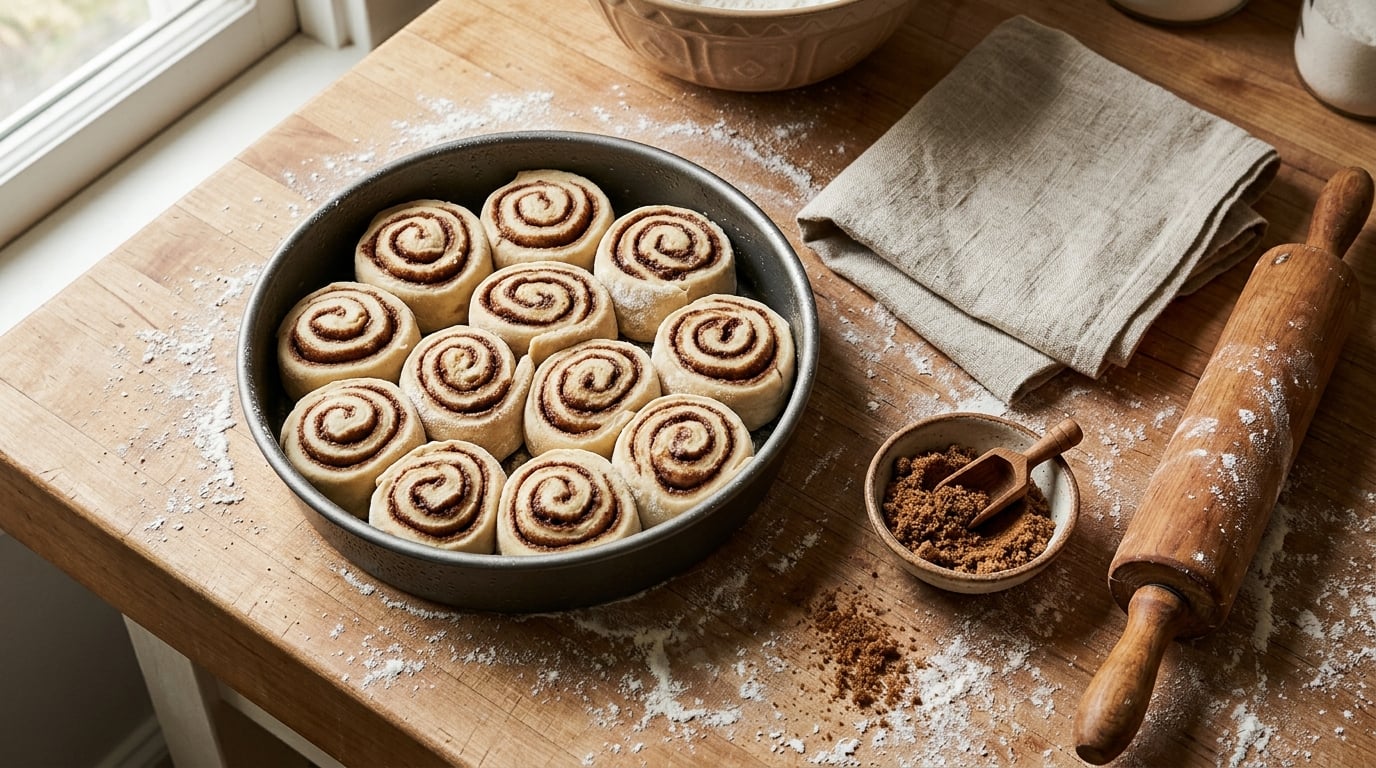
Making cinnamon rolls the night before is simple: assemble the rolls completely, cover the pan tightly, and refrigerate them 8 to 18 hours. In the morning, take them out, let them sit at room temperature for 1 to 2 hours until puffy, then bake at 375°F. About 45 to 60 minutes of work the night before buys you hot rolls without an early alarm.
Most of the hesitation around this method comes from two worries: the dough will collapse, or the filling will leak into the pan overnight. Both are manageable once you know what to look for, and the cold rise actually develops deeper flavor than a fast counter rise does. I updated this guide for 2026 with the timings that work most reliably.
If you are also planning the meal around them, my guide to making brunch for a crowd without stress has a simple timeline you can plug these rolls into.
Table of Contents
- What You Need
- Step-by-Step: How to Make Cinnamon Rolls the Night Before
- Common Mistakes
- Frequently Asked Questions
- How long should cinnamon rolls chill overnight?
- Can I make cinnamon rolls the night before and bake them in the morning?
- Should cinnamon rolls rise before baking after being refrigerated?
- How do I know if the dough has proofed enough overnight?
- Can I freeze unbaked cinnamon rolls instead of refrigerating them?
- How do I keep cinnamon rolls from getting soggy overnight?
- Conclusion
What You Need
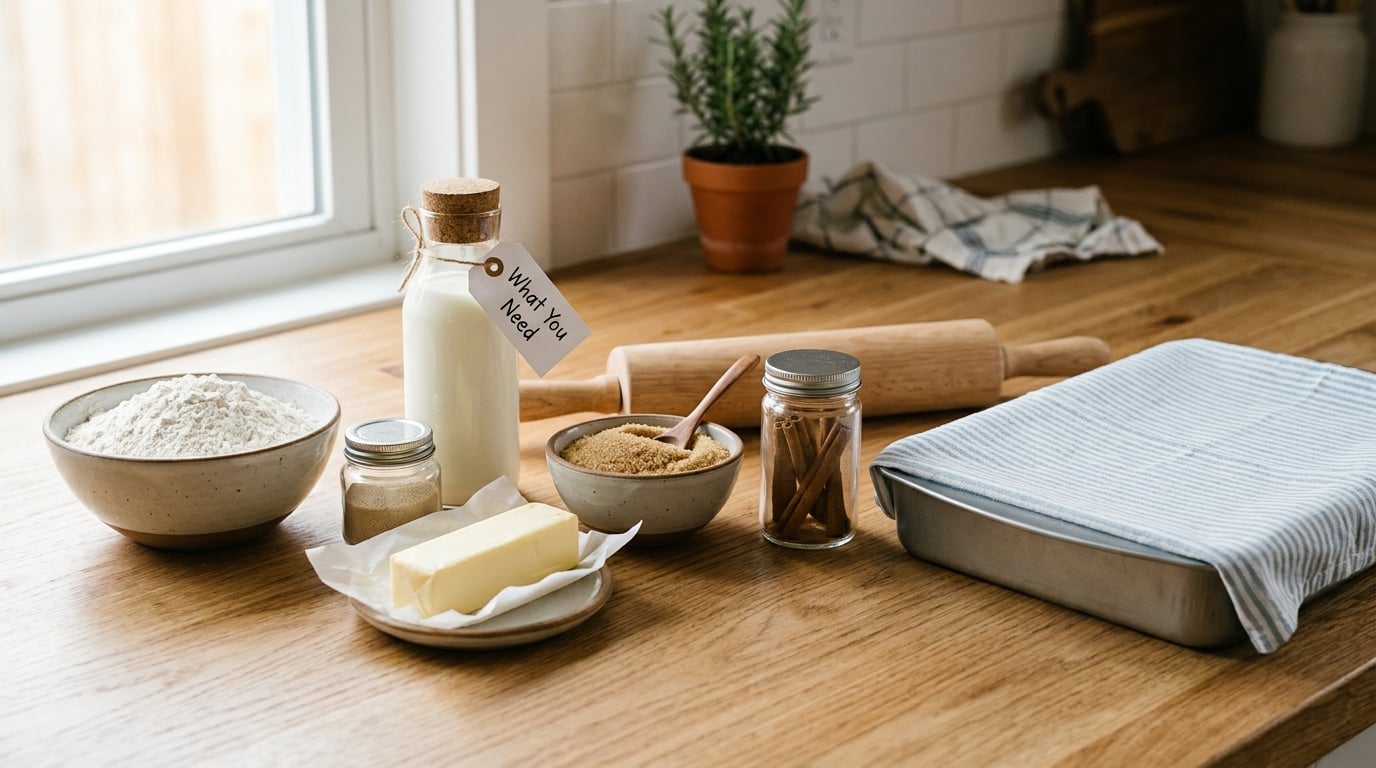
Any yeasted cinnamon roll recipe works with this method. What matters is that you can shape and pan the dough before the second rise.
For the dough
- 4 to 4.5 cups all-purpose flour
- 1 packet (2.25 teaspoons) instant or active dry yeast
- 1/3 cup granulated sugar
- 1 teaspoon salt
- 2 eggs
- 3/4 cup whole milk, warmed to about 100°F
- 6 tablespoons softened unsalted butter
For the cinnamon filling
- 3/4 cup packed brown sugar
- 3 tablespoons ground cinnamon
- 4 tablespoons softened unsalted butter
- Pinch of salt
For the icing
- 4 ounces cream cheese, softened
- 1/4 cup unsalted butter, softened
- 1 to 1.5 cups powdered sugar
- 1 teaspoon vanilla extract
Equipment
- 9×13-inch metal or glass baking pan (light-colored aluminum gives the most even browning; dark pans burn the bottoms)
- Rolling pin and pastry brush
- Unsflavored dental floss and a pair of scissors for cutting, or unflavored twine
- Parchment paper or nonstick spray for lining
- Two sheets of plastic wrap and a rubber band, or a large bowl and a tight-fitting lid
- Instant-read thermometer for the milk and for checking proofed dough
Skip the ceramic pan if you have a choice. Ceramic holds heat longer than metal, and overnight dough is already yeast-heavy, so the center rolls tend to bake raw before the outside browns.
Step-by-Step: How to Make Cinnamon Rolls the Night Before
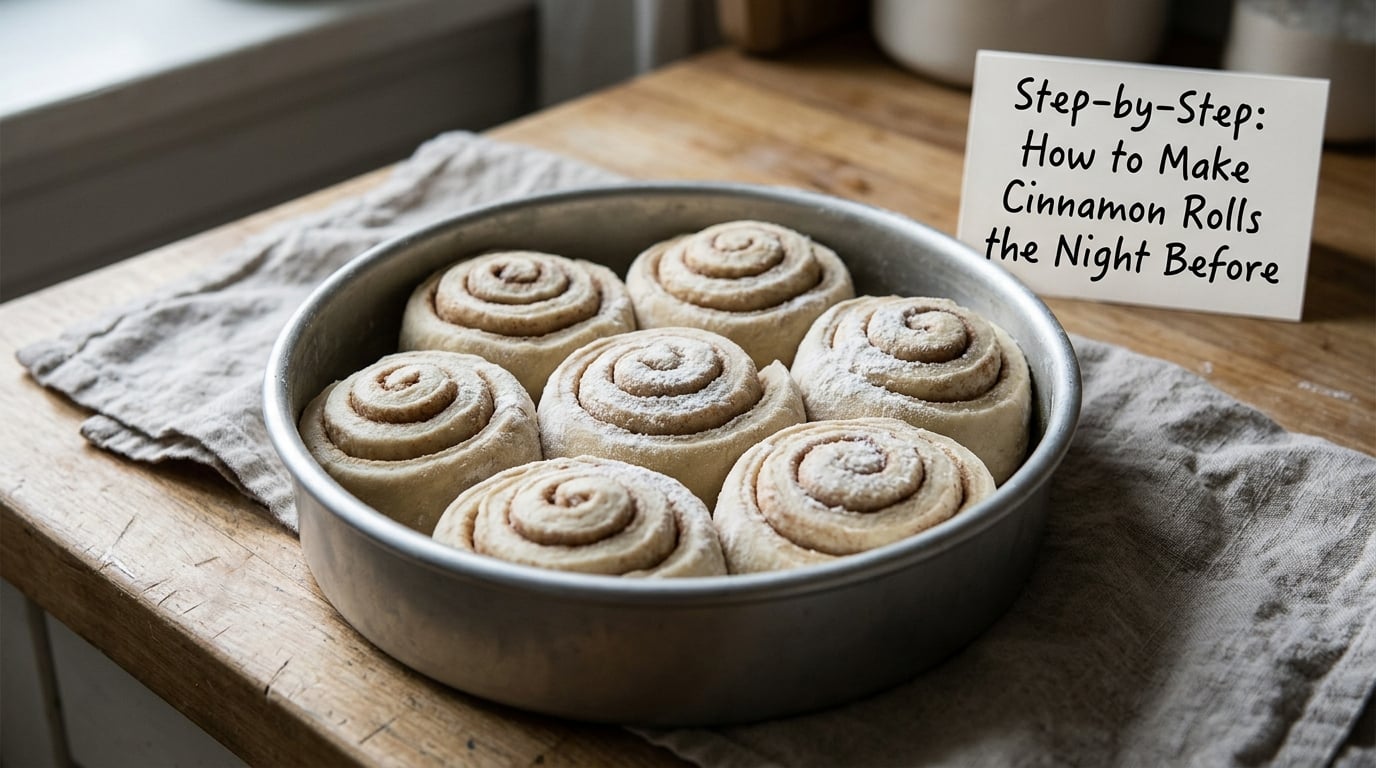
The method splits into two phases. Everything through shaping happens in the evening, and the fridge takes over the second rise while you sleep.
The night before
- Activate the yeast. Warm the milk to about 100°F with an instant-read thermometer. Sprinkle the yeast over it and wait 5 minutes. Instant yeast dissolves without proofing, but blooming it still catches a dead packet before it ruins the dough. Active dry yeast needs the full 5 to 10 minutes and a foam on top.
- Mix the dough. Combine flour, sugar, salt, eggs, and the milk mixture. Beat with a stand mixer on low for 5 minutes, then add the softened butter a tablespoon at a time on medium until the dough is smooth and tacky.
- Knead and check the gluten. Pull a small piece and stretch it thin. If you can see light through the membrane without it tearing, the gluten is ready. This takes 8 to 10 minutes by hand or 4 to 5 in a mixer.
- First rise. Put the dough in an oiled bowl, cover, and leave at room temperature until it roughly doubles, 60 to 90 minutes. A poke test works better than a clock: press a floured finger in 1/2 inch and if the dent springs back slowly and only partway, it is ready.
- Roll and fill. Roll the dough into a 12 by 18 inch rectangle. Spread the softened butter over it, then the brown sugar, cinnamon, and salt, pressing the sugar into the butter so it does not slide.
- Roll it tight. Starting from a long edge, roll the dough into a log, pressing firmly as you go. Tighter is the whole game. Tucking the ends of the log underneath keeps the spiral from unrolling in the pan.
- Cut and pan. Mark 8 or 9 rolls and cut with unflavored floss: slide the floss under the log, cross the ends over the top, and pull in opposite directions. A sharp knife drags the filling out and makes the layers smear. Place the rolls cut side up in the pan, snug but not touching.
- Cover and refrigerate. Cover the pan with two sheets of plastic wrap and tuck the wrap under the pan, or invert a large bowl over it. Wrap must be airtight, because the dough drinks moisture through the surface and dry edges never recover. Refrigerate 8 to 18 hours.
In the morning
- Take them out early. Set the pan on a wire rack while the oven heats to 375°F. A cold pan slows the rise; a room-temperature one gets you there faster.
- Let them rise. Wait 1 to 2 hours. The rolls are ready when they look puffy, have roughly doubled in height, and a gentle press leaves a dent that fills in slowly.
- Bake. Bake at 375°F for 18 to 25 minutes. Pull them when the tops are golden brown and the centers feel firm, not springy. Refrigerated dough sometimes needs a few extra minutes over a same-day bake.
- Frost while warm. Beat the cream cheese and butter, then add the powdered sugar and vanilla. Spread it over the rolls the moment they come out. Warm frosting melts in; cold frosting sits in a hard slab.
Still hungry at 6 a.m.? Turn on the oven, set it to 200°F for 10 minutes to warm, then turn it off, shut the door, and put the rolls inside. The gentle residual heat finishes the rise while you get ready. Never go above 200°F; any hotter and the dough cooks before it ferments.
If you’re planning a holiday brunch, the timing lines up with restaurant-style mashed potatoes at home, since both benefit from being prepped ahead.
How to Make Cinnamon Rolls the Night Before: Chill and Proof Properly
Cold slows yeast activity to a crawl, which is exactly what you want. Instead of doubling in 45 minutes on the counter, the rolls ferment slowly and evenly in a 35 to 40°F refrigerator and finish in the morning. The second rise is not skipped. It is relocated.
Judge the morning rise by the dough, not the clock. Kitchen temperature swings of 10°F can add or subtract 30 minutes, so a 75°F kitchen finishes faster than a 65°F one. Press the side of a roll rather than the top: if it springs back immediately, wait another 20 minutes.
On the window of time itself, the conflicting numbers online come from different kinds of dough. Rich, sweet, buttery dough like a classic cinnamon roll ferments faster and wants a shorter window, so 8 to 12 hours suits most recipes. A leaner or lower-sugar dough handles 16 to 18 hours without trouble. Past 24 hours the gluten has relaxed far enough that the rolls slump in the pan, and no amount of morning rising brings the structure back.
Do not let the rolls rise on the counter overnight. Eight hours at room temperature is several times too long, and the dough will overproof: it will spread into one connected sheet, the rolls will taste faintly of yeast, and the centers will collapse into dense, gummy discs.
Transporting them works, with one condition: keep them level and cold. Set the covered pan in a cardboard box with a rolled towel around the base so nothing tilts, and refrigerate them in the cooler rather than the trunk. A three-hour drive is fine. Leaving them unrefrigerated for it is not.
Common Mistakes
The rolls are dense and heavy in the center. The dough was underproofed, most often because it was cold straight from the fridge and never got a real morning rise. Give it a full 2 hours, and turn the pan halfway if the kitchen is cool. Cutting them too thick compounds this: 1.5 inch is plenty.
The dough spread into a single sheet. That is overproofing, usually from sitting out overnight or from a very warm kitchen. Next time, refrigerate as soon as the rolls are panned, keep the window under 12 hours, and cool the pan on a wire rack rather than a cold surface.
The filling pooled and leaked. Brown sugar liquefies as it sits, and a loosely rolled log lets it seep out the ends. Roll tighter, tuck the log’s ends underneath, and stir a tablespoon of flour into the filling to soak up the moisture. Cutting with floss rather than a knife also keeps the ends from pulling open.
The edges are dry and hard. Wrap was loose or the surface was left exposed. Two sheets of plastic wrap, tucked under the pan and cinched with a rubber band, fixes this. A large bowl inverted over the pan works the same way.
The bottoms browned but the centers were raw. Dark or ceramic pan, or an oversized roll. Use a light-colored aluminum pan and check the center at 20 minutes; if it still springs back, give it three or four more minutes under loose foil.
The whole pan slid apart in the oven. The rolls were spaced too loosely and pushed into each other as they rose, so the seams opened. Nestle them close enough that they touch, and they will hold their spiral while baking.
Two more that come up often. Refreezing unbaked rolls that have already risen once makes them dense, so freeze them at the shaped stage if you need to. And an overnight bake can carry a stronger yeast flavor than a same-day one, which some people love and others find sour; a pinch more sugar in the dough or a longer first rise both soften it.
Frequently Asked Questions
How long should cinnamon rolls chill overnight?
Most recipes do best at 8 to 12 hours, and 16 to 18 hours still works for a dough that is low in sugar and fat. Going past 24 hours is where problems start: the gluten relaxes too far and the rolls slump into a connected sheet in the pan. Sweet, buttery dough ferments faster than lean dough, so match the shorter window to the richer recipe.
Can I make cinnamon rolls the night before and bake them in the morning?
That is exactly what the method is built for. Shape the rolls, place them in a greased pan, cover tightly with plastic wrap, and refrigerate 8 to 18 hours. In the morning take them out, let them sit at room temperature 1 to 2 hours until puffy, then bake at 375°F for 18 to 25 minutes. The fridge replaces the second rise instead of skipping it.
Should cinnamon rolls rise before baking after being refrigerated?
Yes, always. Refrigeration only slows the yeast down, it does not stop it. If you bake straight from the cold pan the rolls will spread, bake unevenly, and come out dense. Let them warm at room temperature until they look puffy and have roughly doubled, which takes 1 to 2 hours, or until a gentle press leaves a dent that fills in slowly.
How do I know if the dough has proofed enough overnight?
Judge the dough instead of the clock, since room temperature changes the timing more than anything. A ready roll looks puffy, has grown to about twice its height, and a slow press into the side leaves a dent that fills in gradually. Press the top and it springs straight back means it needs more time; press it and it collapses means the dough is already overproofed.
Can I freeze unbaked cinnamon rolls instead of refrigerating them?
Yes, and freezing extends your window to a couple of months. Shape the rolls and place them in the pan, then freeze the whole pan unwrapped until solid before wrapping so the rolls do not stick together. Thaw in the refrigerator overnight, then let them finish rising at room temperature before baking. Avoid freezing rolls that have already risen once, since the second thaw flattens them.
How do I keep cinnamon rolls from getting soggy overnight?
Keep them in the pan under a tight cover, not stacked on a plate, and let steam escape as they cool. Store baked rolls at room temperature in a box or bag with a paper towel, and keep cream cheese frosting refrigerated until serving. Skip the airtight plastic if the rolls are still warm, since trapped steam softens the crust and turns the center gummy.
Conclusion
The whole method is one decision made at night: stop after shaping, cover the pan airtight, and let the refrigerator handle the second rise. Keep the window between 8 and 18 hours, take the pan out while the oven heats, and wait for the rolls to look puffy before they go in at 375°F.
Start tonight if you can. The dough is on the counter for under two hours, and the rest happens while you sleep, which is the entire point of making cinnamon rolls the night before.