
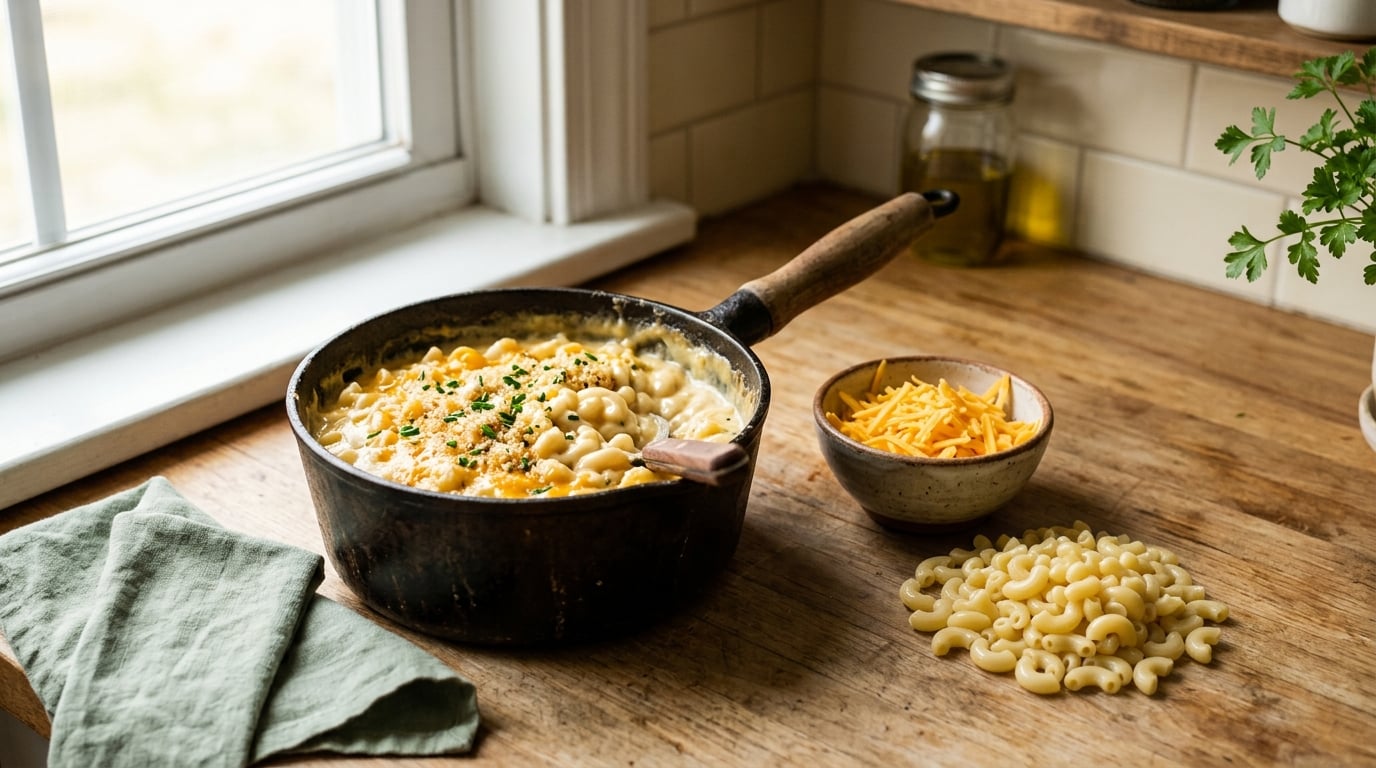
Grainy mac and cheese is a sauce that has lost its structure. It happens for a handful of repeatable reasons, and once you can name the cause you can stop it and fix the pot in front of you. The whole thing takes about 30 minutes from start to finish, and almost every failure is a heat or moisture problem rather than a skill problem.
Table of Contents
- Why Does Homemade Mac and Cheese Turn Grainy?
- How Starch and Dairy Create Mac and Cheese Texture
- The Most Common Reasons Mac and Cheese Turns Grainy
- How to Fix Grainy Mac and Cheese
- How to Prevent Grainy Mac and Cheese
- Which Cheese and Pasta Work Best?
- Frequently Asked Questions
- Why does my mac and cheese always come out gritty?
- How do I fix a grainy cheese sauce that has already broken?
- Does pre-shredded cheese make mac and cheese grainy?
- Why does baked mac and cheese turn grainy when the stovetop version is smooth?
- How much pasta water is safe to add without making mac and cheese soup?
- Why does reheated mac and cheese get grainy?
- Conclusion
Why Does Homemade Mac and Cheese Turn Grainy?
Cheese is already an emulsion. Casein proteins form a microscopic net that holds fat droplets suspended in water, and that net is what makes melted cheese look silky instead of separated. Heat above roughly 175 F collapses the net, the fat clumps together and pulls out of the water, and the sauce goes grainy, oily and thin. That is why homemade mac and cheese turns grainy for so many people, and why the fix is about temperature rather than stirring harder.
It helps to separate three things people all call grainy. True graininess is the sauce breaking into small bits, usually with a faint oily sheen. Clumping is cheese that has seized into strings or rubbery pieces before it melted, often from a splash of cold milk. A loose, watery sauce is not grainy at all; it is a ratio problem, and adding more cheese to it makes it worse.
Once that net collapses it does not rebuild on its own. Stirring, more cheese and more butter will not bring it back. What brings it back is a splash of warm liquid, gentle motion, and in bad cases a blender.
How Starch and Dairy Create Mac and Cheese Texture
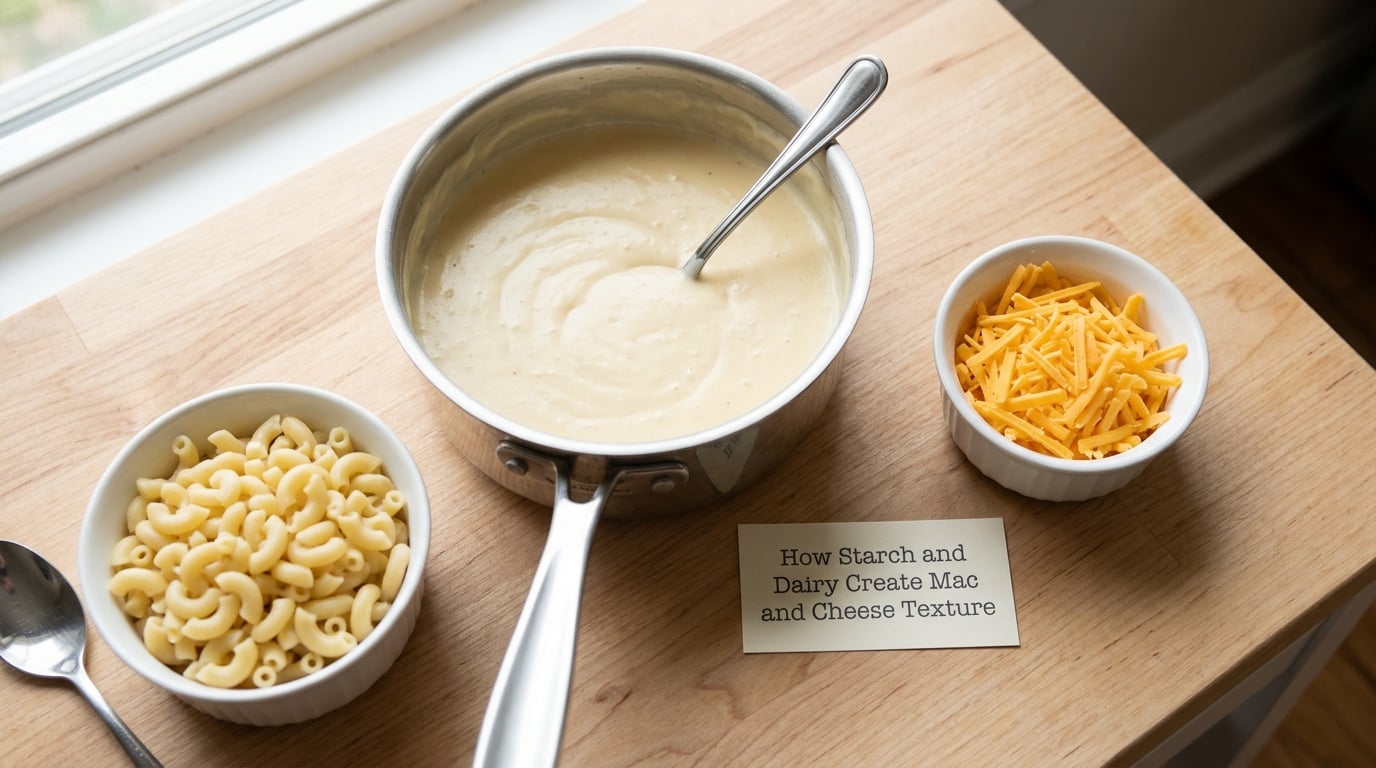
Two things set the texture of a cheese sauce: starch from the pasta, and the milk proteins in the sauce. Pasta releases starch as it cooks, and that starch is what thickens a no-roux mac and cheese and keeps the fat in place. A roux, which is butter and flour cooked together until the flour is swollen, does the same job more predictably. Experienced cooks describe the roux as a chaperone that gets between the cheese proteins so they cannot clump into each other.
Dairy works the other way. Milk is mostly water, and any fat you add wants to pool at the surface unless something holds it there. Heat speeds up that separation, and boiling is the fastest way to get there. A gentle simmer keeps the fat and water moving together. This is the whole difference between a sauce that stays creamy and one that beads with oil.
Reheating is where a good sauce quietly turns on you. Every time a cheese sauce heats, cools and heats again, the proteins tighten a little more. A casserole that was silky on the stove can be grainy coming out of a 375 F oven because the sauce has now been cooked twice.
| What the sauce looks like | What is actually happening | What fixes it |
|---|---|---|
| Small white curds, sauce still thick | Milk proteins set from excess heat | Off the heat, whisk in warm milk a spoonful at a time |
| Oily sheen, thin puddle | Fat and water have fully separated | Whisk hard off the heat, then blend with an immersion blender |
| Sandy grit clinging to the pasta | Cheese clumps before it fully melts, from cold cheese or high heat | Add cheese in small batches to sauce that is off the boil |
| Thick, gluey, pulling from the pan | Too little liquid, starch over-concentrated | A splash of warm milk or reserved pasta water |
| Thin sauce, cheese in streaks | Over-diluted, so there is nothing to bind the cheese | Simmer a minute or two, or add a cornstarch slurry |
The Most Common Reasons Mac and Cheese Turns Grainy
The sauce boiled. This is the top cause and the easiest to avoid. A rolling boil cooks cheese proteins past the point where they hold anything together. If you see cheese shreds swimming in fast bubbles, the damage is already starting.
Cold ingredients hit a hot sauce. Milk straight from the fridge dropped into a hot roux, or a lump of chilled cheese, drops the temperature sharply and creates a shock the proteins cannot absorb. Warm the milk and let the pan sit off the heat for a minute before the cheese goes in.
Pre-shredded cheese. Bagged shredded cheese is coated with starch or cellulose so the strands do not clump in the bag. That coating does not melt into the sauce, so it drops out as fine grit. Cooks online recommend shredding small batches into warm milk instead, which is the same advice that shows up repeatedly in r/AdamRagusea threads about grainy stovetop sauce.
Cheese that does not melt well. Low-moisture cheddar and Monterey Jack add flavour but go grainy faster because there is less water to keep things suspended. Pre-shredded low-fat cheese is worse still.
Too much liquid, or the pasta was overcooked. If the sauce is thinner than the pasta needs, cheese strings instead of coating. And pasta cooked past al dente keeps releasing starch and water into the sauce long after you drained it, which thickens and dulls the whole dish.
It sat, or it got reheated. A batch that stands for 30 minutes or goes into the oven is being cooked again. This is the reason baked mac and cheese so often breaks; the sauce is effectively cooked twice, and the same protein-tightening that ruins a stovetop batch finishes the job in the oven.
How to Fix Grainy Mac and Cheese
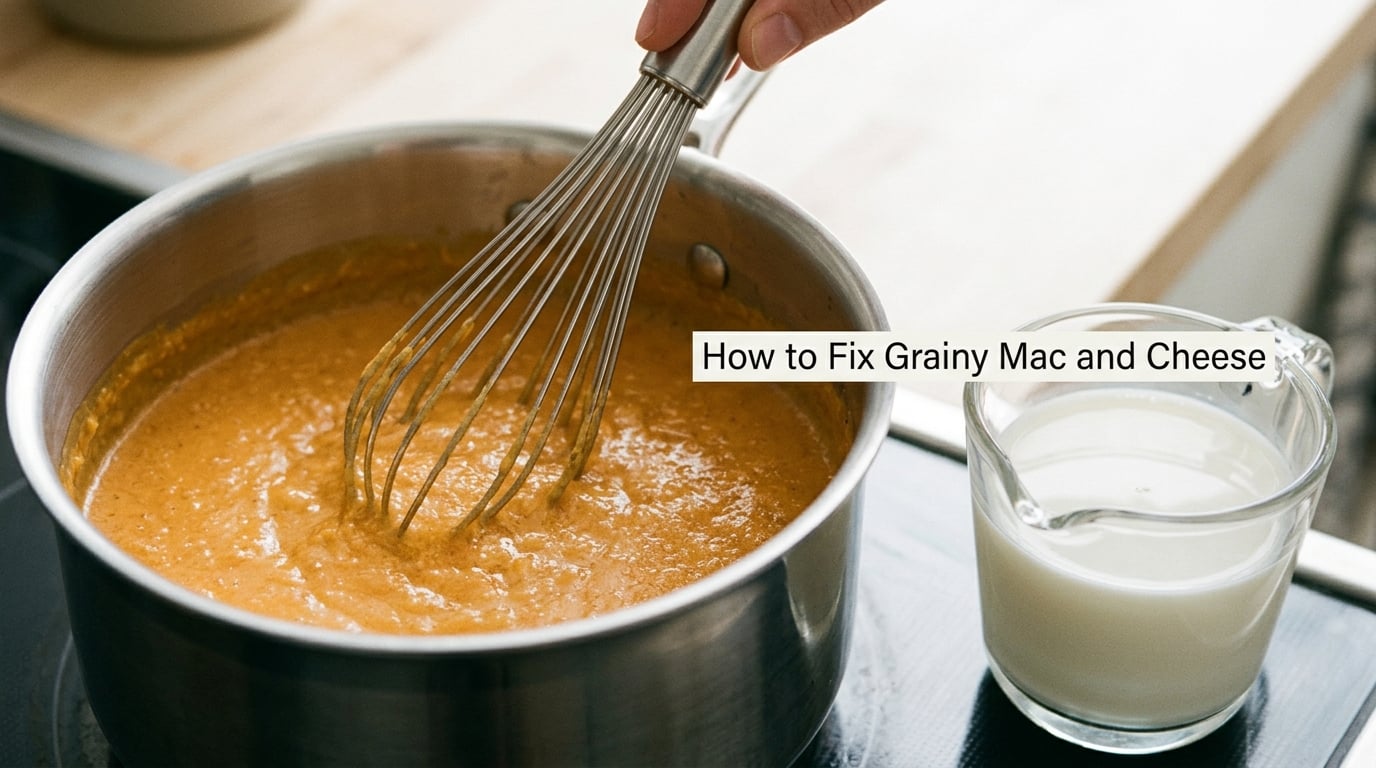
Work through this by severity. The earlier you catch it, the less liquid you need.
- Take the pot off the heat. Residual heat keeps cooking the proteins after you put the spoon down.
- Add warm milk or cream, one spoonful at a time. Warm, not hot, and not cold. Stir gently between each spoonful until it disappears before adding more.
- Whisk, do not stir. A whisk breaks the fat droplets into smaller pieces. A spoon just moves the clumps around.
- Use a splash of pasta water only if the sauce is also too thick. It adds starch that helps the fat stay suspended, and it will make a thin sauce thinner still.
- Blend it. An immersion blender is the rescue for a fully broken sauce. Blend low in the pot, just above the bottom, and the grain disappears.
- Strain out the solids as a last resort. Push the sauce through a fine-mesh strainer and keep the liquid. You lose some flavour, but you get a smooth sauce to pour over fresh pasta.
What not to do: do not keep cooking it, do not add flour or cornstarch directly to a broken sauce, and do not pile in more cheese hoping it melts into the mess. If the sauce has already formed rubbery scrambled-egg-style curds, the batch is finished. Taste them, chop them into the dish as texture, or start over rather than fighting it.
Cooking experts also point to sodium citrate as a stabilizer for people who make this often. A small amount in the milk keeps the proteins from tightening up. It is not in most home pantries, but it is the ingredient a professional kitchen reaches for when a sauce must hold for hours.
How to Prevent Grainy Mac and Cheese
Six habits cover almost every case.
- Grate your own cheese from the block. It costs a few minutes and removes the anti-caking coating entirely.
- Cook pasta two minutes shy of al dente. It finishes cooking in the sauce, which protects the texture and prevents the sauce from being over-diluted.
- Save a cup of pasta water before draining. The starch in it is the emulsifier you would otherwise have to build with a roux.
- Keep the sauce under a simmer. Aim for small bubbles on the surface, roughly 180 F, and never a rolling boil.
- Add cheese off the heat in three or four batches, stirring until each batch has almost disappeared before the next goes in.
- Use warm liquid. Take the milk out of the fridge ten minutes early, or warm it in the same pan first.
A quick troubleshooting sequence: if it is boiling, lower the heat. If it is still boiling, take it off and add warm milk. If the cheese came from a bag, grate the next batch yourself. If the sauce is thin, simmer it. If you baked it, bake it less and pull it the minute the center is hot, not after it has set.
Which Cheese and Pasta Work Best?
For a smooth sauce, low-moisture cheeses that melt cleanly are the reliable pick, and blends are easier than single cheeses. Cheddar alone gives you flavour and trouble; pair it with something that melts.
- Monterey Jack melts the smoothest of any common cheese. It is the safest base for a beginner.
- Aged cheddar adds the flavour people want, but its low moisture makes it the first to grain. Use it as part of a blend, not alone.
- Gruyere and Fontina melt cleanly and bring a nuttier note, and both tolerate heat better than cheddar.
- American-style processed cheese contains added emulsifiers, which is exactly why it stays smooth longer. It is a legitimate tool, not a shortcut to be embarrassed about.
- Parmesan is best used in small amounts for flavour. Alone it will clump, because it is so dry.
Pasta shape matters far less than most people think. Elbow, cavatappi and rigatoni all work. What matters is that the pasta has enough surface to hold sauce and enough starch to thicken it, and that you do not cook it past the point where it needs help. If you enjoy picking cheeses out for a platter, our guide to what cheeses go together on a cheese board is a good place to start, and our beginner’s guide to building a cheese board covers the basics.
Frequently Asked Questions
Why does my mac and cheese always come out gritty?
Grit usually means the cheese proteins were overheated or shocked. If the sauce boiled, if cold milk hit a hot roux, or if you used bagged pre-shredded cheese, the emulsion holding fat in place collapses and the sauce goes sandy. Undercook the pasta by two minutes, grate your own cheese, and take the pot off the heat before cheese goes in.
How do I fix a grainy cheese sauce that has already broken?
Take the pan off the heat and whisk in warm milk or cream a spoonful at a time, letting each disappear before the next. Warm liquid lowers the temperature and lets the fat re-suspend. For a fully broken sauce, blend it low with an immersion blender until the grit is gone, then strain through a fine-mesh sieve if grains remain.
Does pre-shredded cheese make mac and cheese grainy?
Very often, yes. Shredded cheese sold in bags is coated with starch or cellulose to stop the strands from sticking together in the bag. That coating does not melt into the sauce, so it settles as fine grit. Grating fresh from the block is the single change that fixes the problem for a lot of home cooks.
Why does baked mac and cheese turn grainy when the stovetop version is smooth?
Because the sauce gets cooked twice. A smooth stovetop sauce goes into a hot oven, reheats, and tightens the proteins again, so a sharp cheddar that was fine on the stove turns grainy and oily. Pull the casserole when the center is hot and the edges just set, not after the top has browned and the sauce has boiled.
How much pasta water is safe to add without making mac and cheese soup?
Start with a tablespoon and stir it in fully before adding more. Pasta water is thinner than cream, so a large amount loosens the sauce quickly. It is useful when the sauce is thick and gluey, since the extra starch helps the fat stay suspended. If your sauce is already loose, add milk or cream instead, never pasta water.
Why does reheated mac and cheese get grainy?
Reheating repeats the damage. Every cycle of heat and cooling tightens the cheese proteins a little more, so day-old mac and cheese is grainier than the batch you first made. Warm it slowly in a covered pan over low heat with a splash of milk, stirring often, and stop while it is still steaming rather than hot.
Conclusion
Start with the heat. Take the pot off the burner before the cheese goes in, keep everything at a bare simmer, and grate from the block instead of the bag. If a batch is already grainy, pull it off the heat and work warm milk in a spoonful at a time, then blend it if it needs more help. Smooth mac and cheese is a matter of low heat, warm liquid and patience, not talent.