
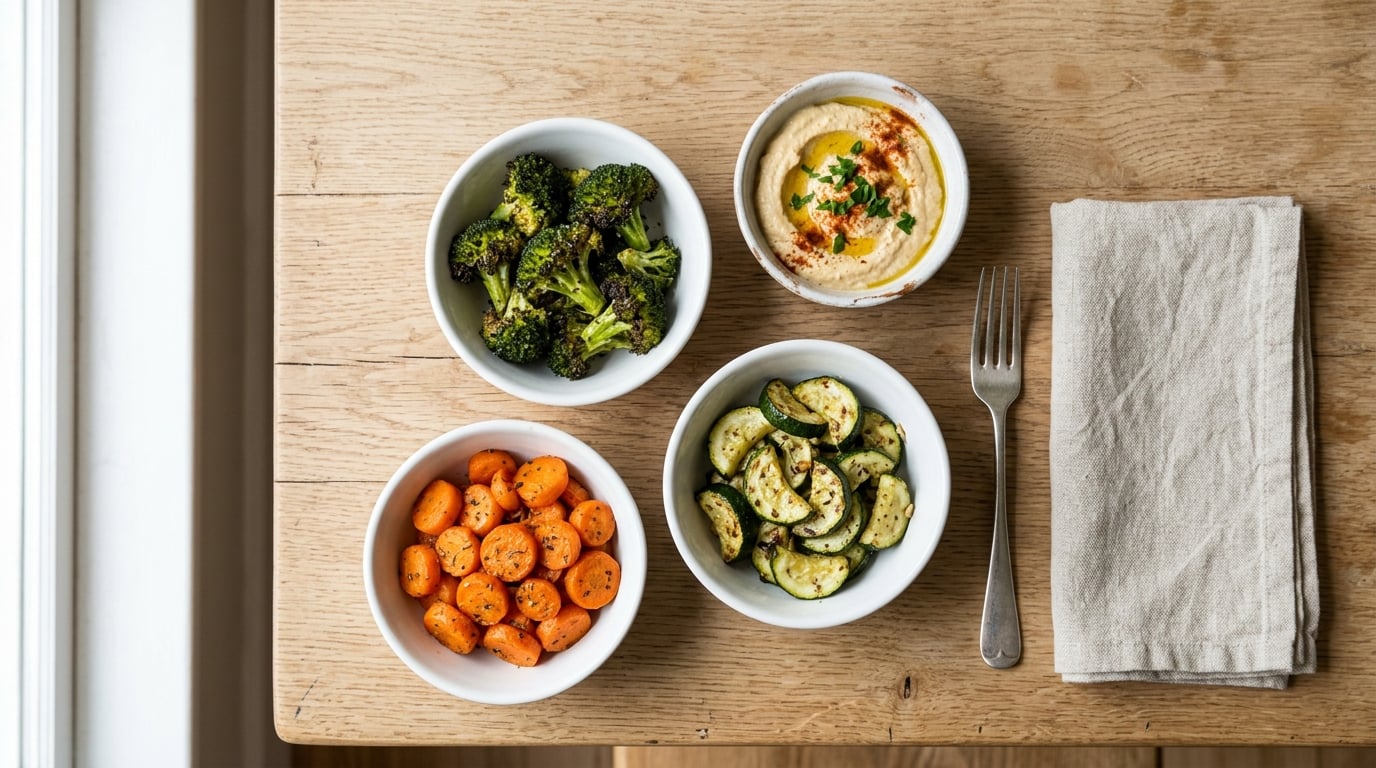
The fastest way to get kids to try new vegetables is to serve the same one, in a familiar way, ten to fifteen separate times without a single comment. Put a small portion on the plate next to a meal your child already likes, let it sit there, and eat your own food. How to get kids to try new vegetables is not a persuasion problem, and treating it like one is what turns dinner into a fight.
That said, most parents need a plan they can actually run on a Tuesday night when nobody is feeling patient. The six ideas below build on each other, and each one works better when you stop watching for a bite and start watching for willingness: touching it, smelling it, licking the sauce, moving it around the plate. That is progress, and it is the kind that shows up as eating three weeks later.
One thing to clear up first: this is slow by design. Most children who seem to refuse everything are not refusing vegetables. They are refusing novelty, and novelty is exactly what a young child’s nervous system is built to avoid.
Table of Contents
- What You Need to Get Kids to Try New Vegetables
- Step-by-Step: Six Low-Pressure Moves
- Common Mistakes That Slow Things Down
- Frequently Asked Questions
- What can I do if my child refuses to eat vegetables?
- How many times should I offer a new food before giving up?
- Is it normal for a child to refuse vegetables?
- Does forcing vegetables work?
- Are smoothies and hidden vegetables a good substitute for whole vegetables?
- When should I talk to a pediatrician or dietitian?
- Conclusion: Start With One Small Portion This Week
What You Need to Get Kids to Try New Vegetables
You need less than most parents buy. A short list of ordinary items covers everything in this guide, and none of it has to be special.
- One vegetable at a time. Pick something simple and mild to start, such as roasted carrot coins, broccoli florets, or buttered peas. Skip the exotic stuff until the easy ones are boring.
- Fresh or frozen, your choice. Frozen vegetables picked and frozen at peak ripeness hold their nutrients well, and no-salt-added canned vegetables are a perfectly reasonable backup. They cook faster, which matters on weeknights.
- One familiar sauce or grain. Pasta, rice, tortillas, or mashed potatoes give a new vegetable something to sit next to. This pairing is the whole trick of the first few weeks.
- Two or three dips. Hummus, ranch, guacamole, salsa, or a yogurt dip. A dip a child already loves makes an unfamiliar flavor much less threatening.
- Small portions. A teaspoon or two is enough. A heaped pile reads as a demand, and the goal right now is safety, not seconds.
- Child-safe prep tools. A serrated kid’s knife, a Y-peeler, and a small cutting board for supervised chopping and washing.
On safety, use the standard pediatric guidance: round, firm raw vegetables such as carrots, cherry tomatoes and grapes are a choking risk for young children, so quarter them lengthwise until a child is around four, and always sit an adult within arm’s reach during the meal. Cooked and soft-cut versions of the same vegetables are a much easier sell anyway.
Keep the food safe too. Serve vegetables steaming hot, refrigerate leftovers within about two hours, and use them within three to four days. A vegetable that has sat out all afternoon is not a battleground worth having.
Step-by-Step: Six Low-Pressure Moves
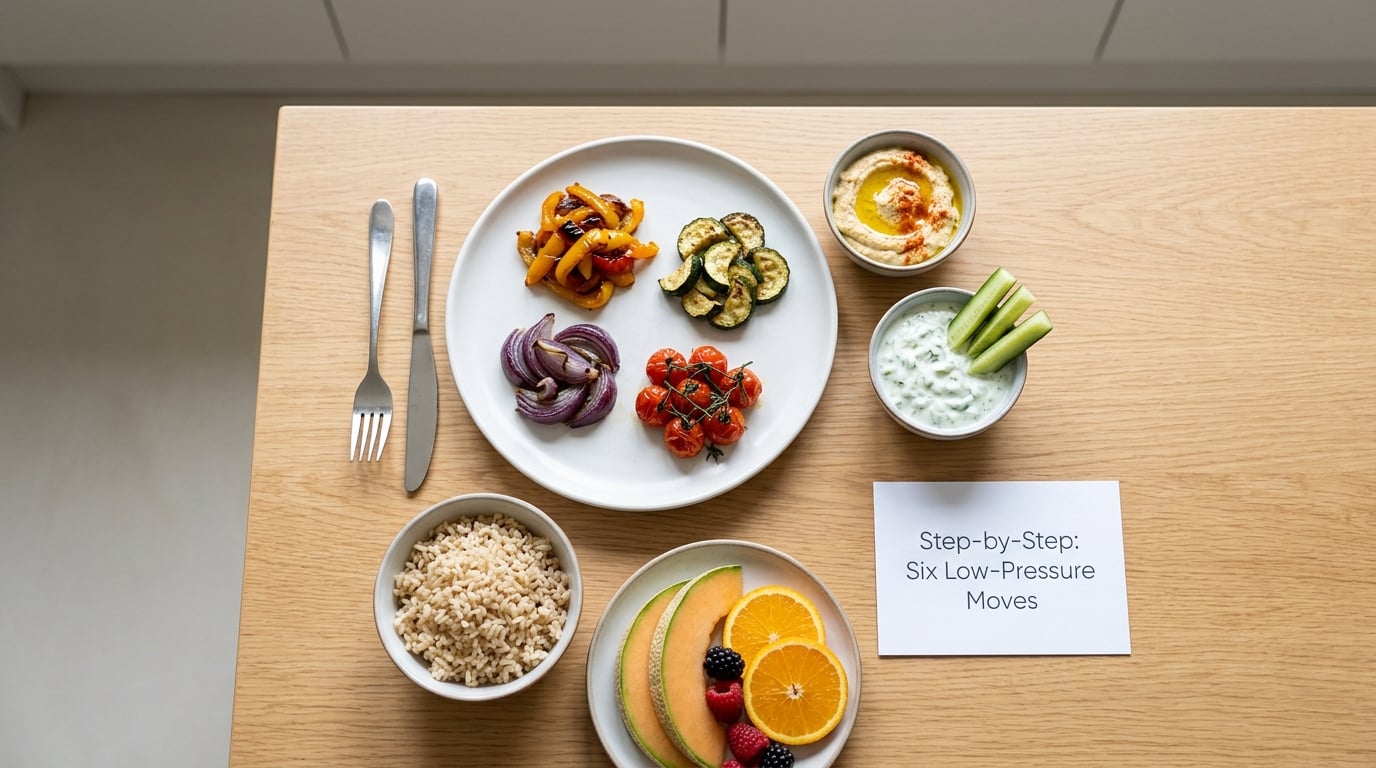
Run these in order. Each step adds one small thing, and each step is optional on any given night. Skipping ahead rarely hurts; stacking every idea on the first meal almost always does.
Start with a Familiar Vegetable
A vegetable your child already eats is the safest way to introduce a new one. Roast the familiar vegetable the way they like it, then add a small, separate portion of the new vegetable right next to it.
Broccoli and carrots make a decent first pairing because they share a family, even though the child does not know that. Another trick is to change the form rather than the ingredient: steamed cauliflower that gets rejected can come back as roasted cauliflower with a little cheese, and roasted carrots can become carrot coins with hummus. Same vegetable, new texture, new seasoning. The version you serve first matters less than the fact that it keeps showing up.
Change One Familiar Thing at a Time
Keep the rest of the plate predictable when you introduce something new. A weeknight pasta with jarred sauce, grated cheese, and a small dish of roasted zucchini is a much lower-stakes dinner than a brand-new recipe with two unfamiliar vegetables in it.
Change one variable per week: the vegetable this month, the cooking method next, the sauce after that. Families who swap three things at once give themselves no idea which one was the problem, and they usually conclude that their child hates vegetables when what their child actually disliked was the texture of the sauce.
Offer Tiny, Repeated Tastings
Research on children’s acceptance of new foods points to somewhere around ten to fifteen calm, pressure-free offerings before a child reliably accepts a food. That number surprises most parents, who give up after three or four refusals and decide the vegetable is simply not for them.
Ten to fifteen offerings takes weeks, not meals. A teenager with a newly accepted vegetable was offered it, unremarked, over a two-month stretch, and the same vegetable the week before acceptance was still routinely pushed around the plate. So track the offers, not the bites. A notebook on the fridge or a note in your phone is enough: vegetable name, date, and one word for what happened. Untouched is a data point, not a failure.
Make New Vegetables Familiar and Appealing
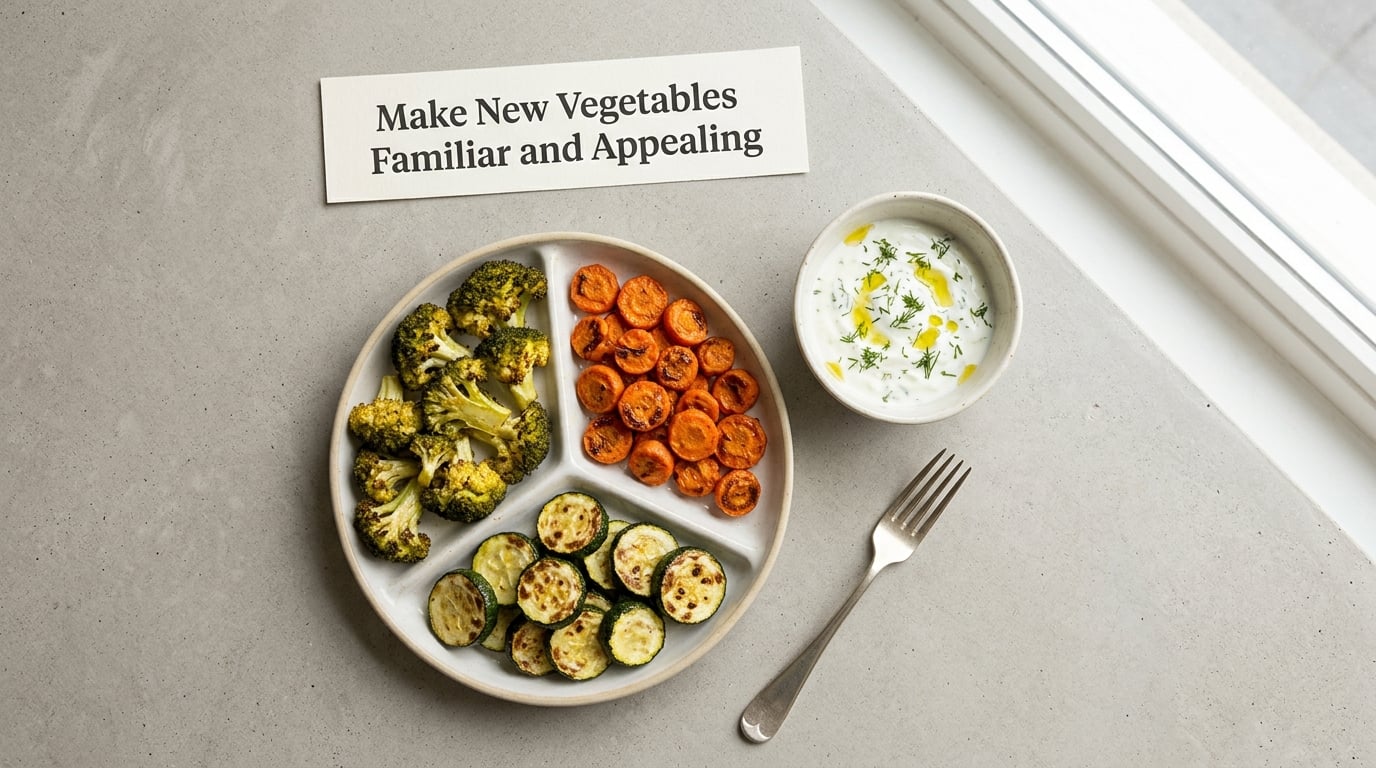
Roasting, air-frying, or crisping changes a vegetable’s flavor and texture more than any sauce can. High dry heat drives off water and concentrates sweetness, which is why roasted broccoli tastes so different from steamed broccoli and gets accepted far more often.
Try these combinations when a vegetable keeps getting refused:
- Carrots — roasted until the edges brown, or raw ribbons with hummus.
- Broccoli and cauliflower — roasted or air-fried at high heat until crisp at the tips, served with cheese sauce or ranch.
- Green beans — air-fried with a little oil and salt, or simply warmed through in butter.
- Spinach and other greens — wilted into buttered pasta or layered into a quesadilla, not served as a wet pile.
- Peas — lightly mashed with butter and a splash of milk so the skins disappear.
- Beets and squash — roasted until caramelized, then cooled and offered cold with a yogurt dip.
Presentation helps more than parents expect. A small glass cup of vegetables on the counter before dinner, when the child is genuinely hungry, gets eaten at a very different rate than the same vegetables plated as part of a full meal. That pre-loading trick is one of the cheapest wins available.
Let Children Choose and Reject
Offer two acceptable options and let the child pick one. Which of these two vegetables do you want tonight? Both choices are vegetables, so either answer keeps the exposure going, and the deciding power alone changes how the food is approached.
Allow rejection too, and be specific about what counts as a win. Touching it, smelling it, tasting the sauce, or moving it to another part of the plate are all acceptable outcomes for a given meal. Insisting on a bite, or praising a child for performance, tends to produce the opposite effect: the food becomes something to survive rather than something to explore.
In the kitchen, children who choose the vegetable at the store, wash it, or snap the green beans off are usually more willing to eat it. Even a five-minute job helps, with an adult handling knives, graters, and other sharp or pinch hazards.
Keep Offering Without Turning It Into a Battle
When a meal goes badly, the recovery move is short: acknowledge the vegetable once, serve it again at the next meal, and say nothing the time after that. Repeating a new food while a child is upset trains the association between the vegetable and the conflict.
Track what changes. A vegetable that went from untouched to touched to chewed-over to eaten over six weeks is moving exactly as it should, even though it looks like nothing is happening. Keep one new vegetable in play at a time, hold your line on short-order cooking, and expect the win to arrive in a month or two.
Common Mistakes That Slow Things Down
These are the habits that turn a normal stage of development into a long standoff.
Insisting on a Bite
Chasing a bite with a child who is already upset teaches one thing: that the table is a place where adults make demands. On the research side, repeated pressure is associated with more avoidance of the food, not less. Serve the portion, let the child decide what happens to it, and end the meal calmly.
Bargaining for Dessert
Trading dessert for vegetables turns a vegetable into a task with a reward attached, and a task a child does not want to do becomes a vegetable a child refuses on principle. Many families also find that dessert bargaining expands rather than narrows what the child will eat, since the deal itself teaches that vegetables are unpleasant. If your family already uses dessert as a routine part of dinner, there is nothing to fix today.
Hiding Vegetables in Everything
Adding grated zucchini to pancakes, spinach to smoothies, and shredded carrot to muffins is a legitimate tool and it does add nutrients. What it does not do is teach a child to like vegetables. Parents on parenting forums describe a common pattern: the disguise works for months, then the child spots it and starts distrusting the whole category, including the foods that were always fine.
Use blends strategically, and always keep at least one vegetable visible and unblended in the rotation so the child is learning to eat a real vegetable too.
Cooking a Separate Meal Every Night
Short-order cooking works for a while and then costs you every evening, and it removes the reason a child would ever try anything unfamiliar. Offer the family dinner, plate the same small portion of the new vegetable for your picky eater, and accept leftovers. Making two dinners teaches that a refusal gets a custom outcome.
Introducing Five New Vegetables at Once
A weekly challenge with a new vegetable each day sounds admirable and produces nothing but fatigue. One vegetable at a time, for a month, beats five vegetables across five nights every time.
Relying on Star Charts and the Three-Bite Rule
Reward charts and the three-bite rule come up constantly in searches, so here is the honest verdict: they train children to eat for the star, not to like the food. Once the stars stop coming, interest usually stops with them. A family meal with no tracking works better, as does the 5-2-1-0 approach of offering five familiar foods alongside one new one, the idea being that a wide, safe base keeps a new food from feeling like a test.
If a child eats only a handful of foods, loses weight, seems unusually tired or pale, avoids entire food groups, gags or vomits around meals, or has constipation, talk to your pediatrician. A registered dietitian can usually sort out whether this is ordinary neophobia or something that deserves attention, and feeding therapists work with texture aversion specifically. Nothing on this page replaces that conversation.
Frequently Asked Questions
What can I do if my child refuses to eat vegetables?
Serve a small portion of one vegetable alongside a meal and a dip your child already likes, then stop commenting on it and repeat the offering ten to fifteen times. Children need many calm exposures before accepting a new food, usually across several weeks. Touching, smelling, or moving the vegetable counts as progress.
How many times should I offer a new food before giving up?
Most children need somewhere around ten to fifteen separate, pressure-free offerings, and the accepted foods parents most often give up on were accepted in the second month. Track offers rather than bites, keep one new vegetable in play at a time, and expect visible change slowly: untouched, then touched, then chewed, then eaten.
Is it normal for a child to refuse vegetables?
Yes. Refusing unfamiliar foods is called food neophobia, and it is a normal protective instinct in young children, strongest around toddler and preschool ages. Eating fruit happily while avoiding every vegetable is also common, since fruit is sweeter and softer. What matters is whether the overall diet is varied and the child is growing well.
Does forcing vegetables work?
Not reliably. Research on children’s eating consistently links pressure at the table with more avoidance of the pressured food, and chasing a bite often produces gagging, spitting, or tears. The effective alternative is a calm, unremarked portion offered again and again, with the parent eating the same food without drama.
Are smoothies and hidden vegetables a good substitute for whole vegetables?
Blends add real nutrients, but they do not teach a child to accept vegetables, and fiber is often lost in the blending. Use them as a supplement alongside visible, unblended vegetables, not as a replacement. If a child later notices the hidden spinach, blended dishes can cost you their trust in foods that were always fine.
When should I talk to a pediatrician or dietitian?
Reach out if your child eats only a very small number of foods, loses weight, has constipation, seems unusually tired or pale, avoids entire food groups, gags or vomits around meals, or shows no progress after several months of steady offering. A registered dietitian can assess nutrient intake, and a feeding therapist can help with texture aversion.
Conclusion: Start With One Small Portion This Week
Pick one mild vegetable, roast or warm it, and put a small portion beside a dinner that already works, with a dip on the side. Say nothing about it, eat your own food, and serve it again in three nights.
That is the whole method. Ten to fifteen calm offerings, one new vegetable at a time, no pressure, and no reward chart. It is slower than most articles admit, and it is also the only approach that tends to hold up past the third week.