
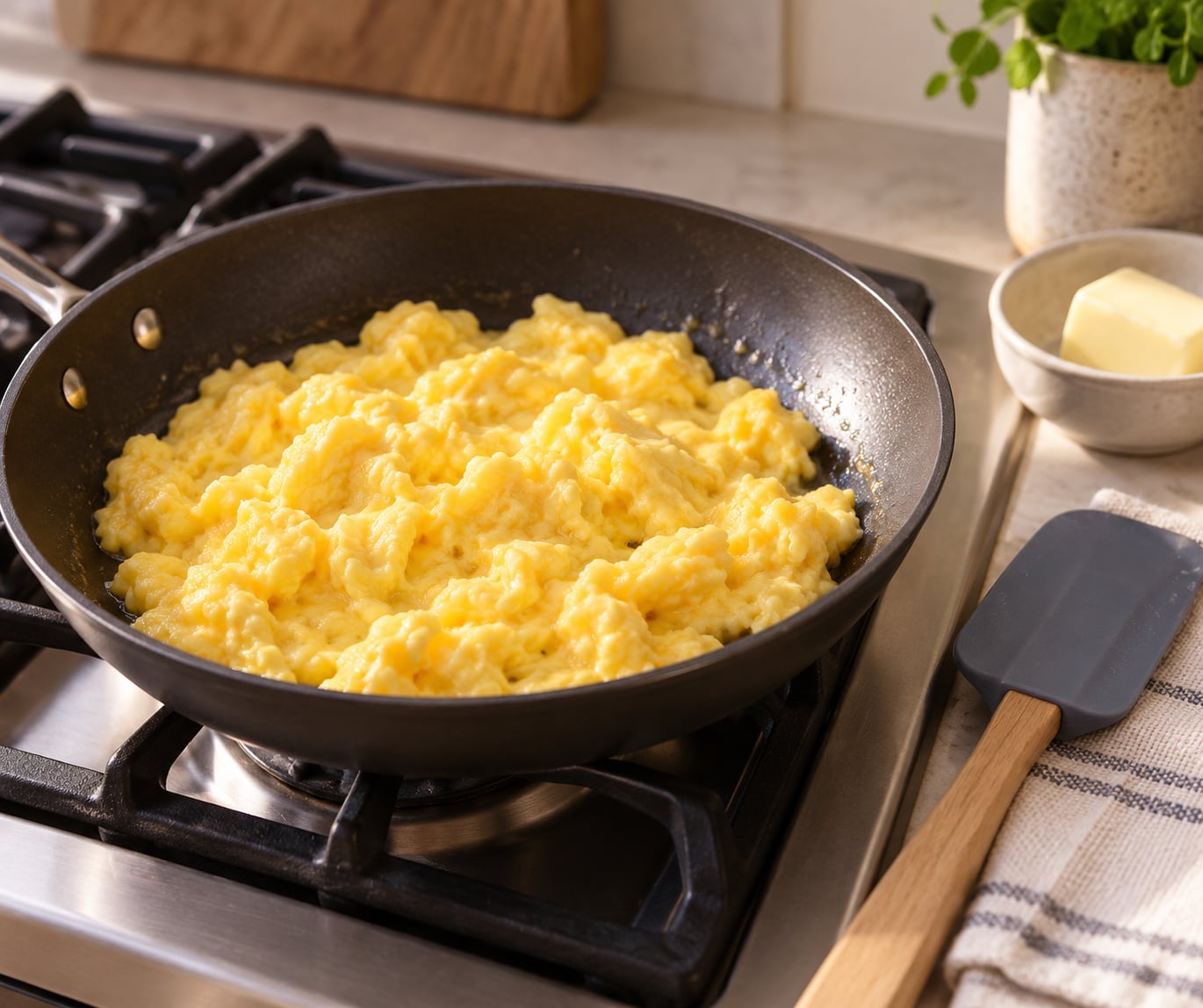
Soft, creamy scrambled eggs come down to three things: low heat, a gentle folding motion instead of frantic stirring, and taking the pan off the burner while the eggs still look slightly underdone. Cook it in butter or oil, use a small pan for the number of eggs you have, and let the residual heat in the pan do the last bit of work. Ten minutes from cracking to plate, no real skill required.
Most rubbery, bouncy scrambled eggs fail for the same reason. Too much heat arrives too fast, the egg proteins tighten into a dense net, and the water inside gets squeezed out. Slow the whole thing down and the curds stay tender.
What You Need
Keep the ingredient list short. Every extra liquid you add is water you have to cook off, so restraint matters more than quantity here.
- 3 to 4 large eggs for two generous servings. Two eggs per person is a proper breakfast portion.
- 1 to 2 tablespoons unsalted butter for the pan. Butter adds fat and flavour, which is what makes the curds feel rich rather than leathery.
- 1 tablespoon heavy cream or whole milk, optional. This is the difference between a tender scramble and a truly silky one, but a little goes a long way.
- A small nonstick skillet, 8 inch for two to three eggs, 10 inch for four or more. A big pan spreads the eggs into a thin layer that overcooks before you can stir it.
- A rubber or silicone spatula with a thin, flexible edge. A slotted metal turner tears the curds apart instead of lifting them.
- Salt and black pepper, plus a splash of water to thin the cream if it is sitting in the fridge.
- One extra egg yolk, optional. More yolk means more fat, and fat slows down how quickly the eggs set.
Step-by-Step: How to Make Scrambled Eggs Soft and Creamy
Step 1: Whisk the Eggs Until Uniform
Break the eggs into a bowl and beat them with a fork or whisk for about 20 seconds until the yolks and whites are completely combined with no streaks of white left. Add a pinch of salt and, if you like the extra richness, the cream or milk. Beat gently rather than violently, since a froth of tiny bubbles can give the finished eggs a slightly grainy feel.
The mix should look like a single pale yellow liquid with no separation. If you have 30 seconds to spare, let the bowl sit on the counter before cooking. Resting lets the bubbles settle and the proteins relax, which is a small step most home cooks skip and most notice the difference from.
Step 2: Start Over Low Heat
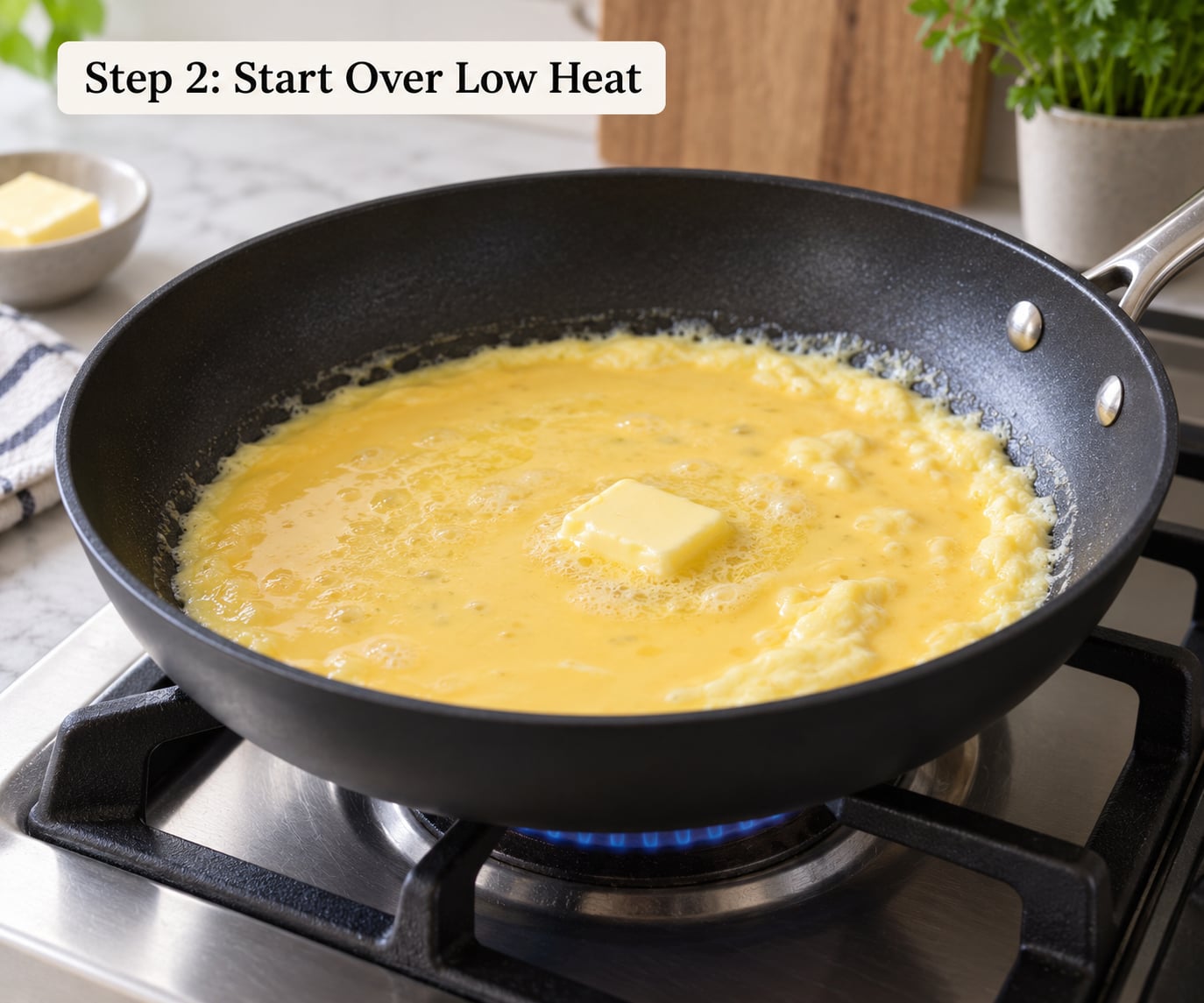
Put the skillet on the burner at low. Add the butter and let it melt and foam, then swirl the pan so it coats the base in a thin film. A little foam and a faint nutty smell means the butter is ready. If it browns before the eggs go in, the pan was too hot.
Pour in the eggs. You want the surface to stay glossy and liquid, barely moving, for the first 30 to 40 seconds. Give the pan a gentle shake after about 20 seconds. If the liquid slides easily and nothing is setting yet, your heat is right. If you see bubbles forming and steam right away, move the pan to a cooler burner or off the heat entirely for a few seconds.
Step 3: Stir Gently and Remove Them Early
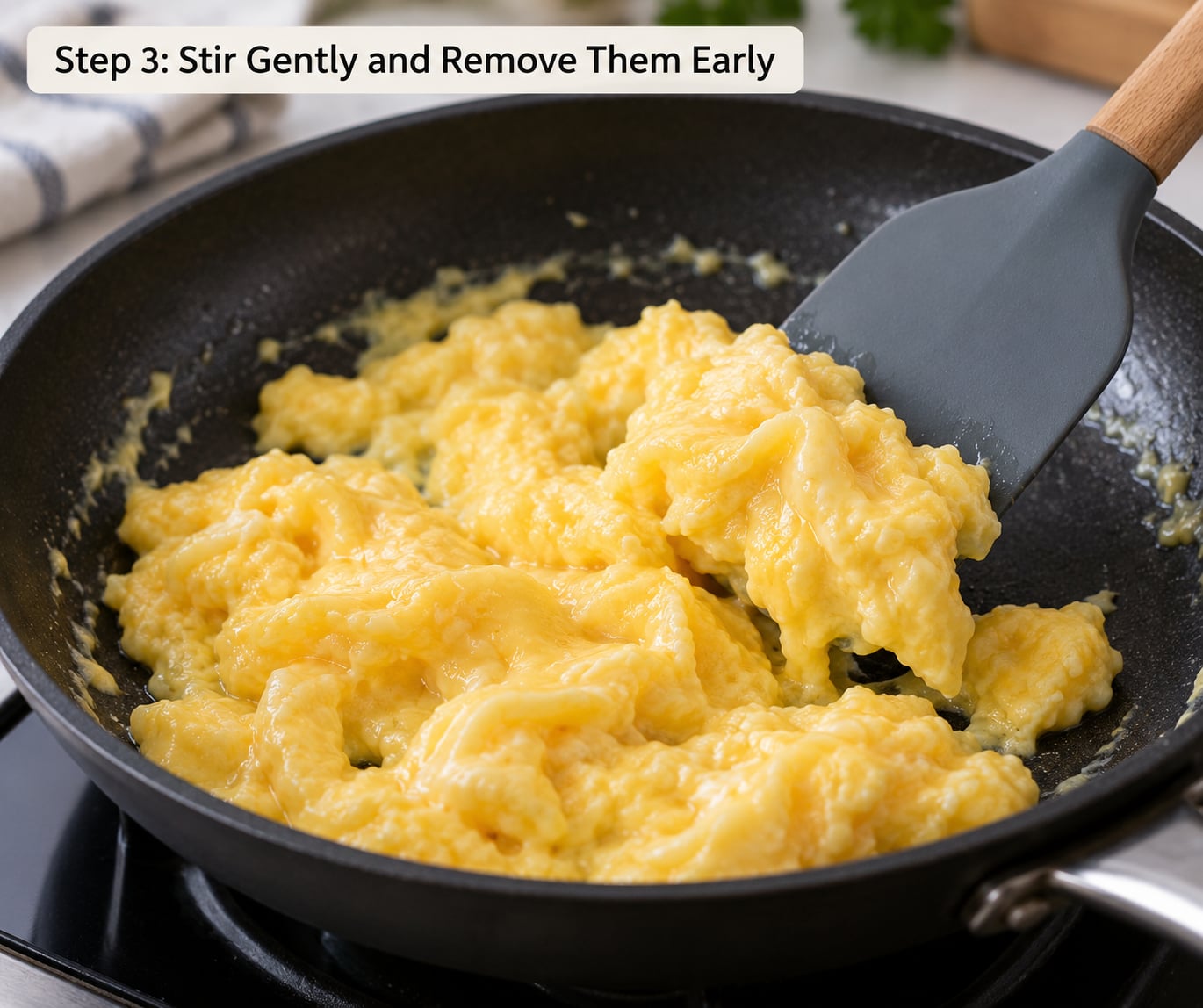
Use the spatula to slowly push the set egg from the outer edge of the pan toward the center, in long strokes every few seconds. Let the liquid run back into the empty space and cook. This is the whole technique. Scrambling does not mean scrambling; it means moving the egg slowly and letting the heat do the work.
Stop while the eggs still look slightly wet. Around 3 to 4 minutes at low heat, the curds will be glossy, tender and pale yellow with a faint sheen of liquid on top. Take the pan off the burner now. The residual heat carries over and finishes them for another 30 to 60 seconds, which is exactly why restaurant kitchens pull the pan early.
For an even softer result, stir a tablespoon of chilled sour cream, creme fraiche or thick yoghurt into the warm eggs in the bowl after they leave the heat. Cold fat halts the cooking instantly and adds a tangy, creamy finish.
Step 4: Season and Serve
Season now rather than at the start. Salt added before cooking pulls moisture out of the egg white and can leave you with dry curds, so taste at the end instead. Add salt, a grind of white pepper, and any of chopped chives, parsley, dill or basil.
Cheese works too, but add it in the pan during the last 20 seconds of cooking so it melts without dragging the curds apart. Feta and goat cheese give a creamier melt than cheddar. Serve straight away on toast, on an English muffin, or with sliced avocado. Scrambled eggs wait badly, so plate them within a minute of leaving the heat.
Common Mistakes and How to Fix Them
Almost every bad scramble comes down to too much heat, too much liquid, or one extra minute in the pan. These are the fixes that matter.
- The eggs turned rubbery. Heat arrived faster than the proteins could set gently. Drop the burner to its lowest setting, use a smaller pan, and start checking a full 30 seconds earlier than you think you should.
- The curds are dry and crumbly. Two causes: too much liquid loosened them too far, or they sat on the heat too long. Use a tablespoon of cream rather than a quarter cup, and pull the pan earlier.
- There is watery liquid pooling under the eggs. You added milk or water by the half cup. Any added liquid has to evaporate, and a thin layer in a wide pan takes too long. Reduce it to a tablespoon or skip it.
- The eggs browned or stuck to the base. The pan was too hot or too little fat was used. Melt the butter fully, coat the base, and keep the burner on low for the entire cook.
- You stirred constantly and got small dry bits. Fast, repeated strokes break the setting curds into crumbs. Use long, slow pushes every 4 to 5 seconds and leave the liquid alone in between.
- The edges overcooked before the centre set. The pan is too large for the number of eggs. Two eggs in an 8 inch skillet, four eggs in a 10 inch skillet.
- Raw vegetables made the eggs wet. Spinach, tomatoes and peppers release water as they cook. Cook them first and drain them, or add them after the eggs come off the heat.
- The eggs shrank and tightened after plating. That is carryover cooking finishing the set. Take the pan off the heat noticeably earlier than feels comfortable.
Two habits do most of the work. Never salt at the whisk stage, and never let the pan sit over high heat at any point, including while the butter melts.
Frequently Asked Questions
Should I add milk or cream to scrambled eggs?
A small amount helps, a large amount hurts. One tablespoon of heavy cream or whole milk per 3 eggs gives a softer, silkier curd, because the extra fat slows down how fast the proteins set. A quarter cup or more adds water the pan has to evaporate, which leaves the eggs loose and weepy instead of creamy. Many experienced home cooks use no dairy at all and get custardy results purely from low heat and gentle folding. If you are torn, a tablespoon of cream is the safe middle ground.
Do you put butter or oil in the pan for scrambled eggs?
Butter, and enough of it to coat the base. It contributes fat, which keeps the curds tender, plus flavour that oil cannot match. Use about 1 to 2 tablespoons for 3 or 4 eggs and let it foam without browning. Olive oil works if you prefer a cleaner taste, and a little nut oil gives a warm aroma, but neither adds the richness of butter.
What heat level should I cook scrambled eggs on?
Low, and the lowest your burner allows. The eggs should barely move when they first go into the pan. Medium heat works only if you have a very powerful burner and a lot of practice, which is exactly why restaurant scrambled eggs are not replicable at home. If you see steam and bubbles forming immediately, the pan is too hot and should come off the heat for a few seconds before you return it.
How do you know when scrambled eggs are done?
Take them off while they still look slightly wet. The curds should be glossy and pale yellow, tender to the touch, with no liquid running off the bottom of the pan. Residual heat in the skillet finishes them within about a minute of plating. If you wait until they look fully set in the pan, they will be overcooked on the plate because carryover cooking never stops.
What is the secret to soft scrambled eggs?
Low heat plus constant gentle movement, then off the heat while the eggs still look underdone. Egg proteins tighten and squeeze out water when heated quickly, which is what creates rubbery curds. Slow cooking lets them set gently around the natural fat in the egg. Add a little butter or cream for richness, use a rubber spatula with long slow strokes, and finish with a spoonful of chilled sour cream stirred in off the heat.
Can I make scrambled eggs ahead of time?
You can cook them slightly underdone, cool them quickly, and refrigerate them in an airtight container for up to two days. Reheat gently in a low pan with a splash of milk or in the microwave at half power for 20 to 30 seconds, stirring once. Full-power reheating is what turns reheated eggs rubbery, so keep the heat low and stop while they still look moist.
Some of the same low-and-slow logic shows up in creamy soup without heavy cream, where the trick is the same: control the liquid instead of adding more of it.
Conclusion
Start by turning the heat down. Everything else follows from that, because low heat and slow folding is what keeps the protein network from tightening and squeezing the moisture out.
Then change one habit: take the pan off the burner while the eggs still look a little wet. Give them a spoonful of sour cream off the heat, season at the end rather than the start, and serve them while they are still glossy. If you are cooking for a group, plating for everyone is half the job, so keep the plates warming and serve the eggs straight from the skillet. It works for eggs on toast, for a brunch spread, or for a quiet Tuesday morning, and it never needs more than a pan, a spatula and ten minutes. If you want the same slow, patient approach to another dish, our guide to smooth and creamy hummus is built on the same idea.