
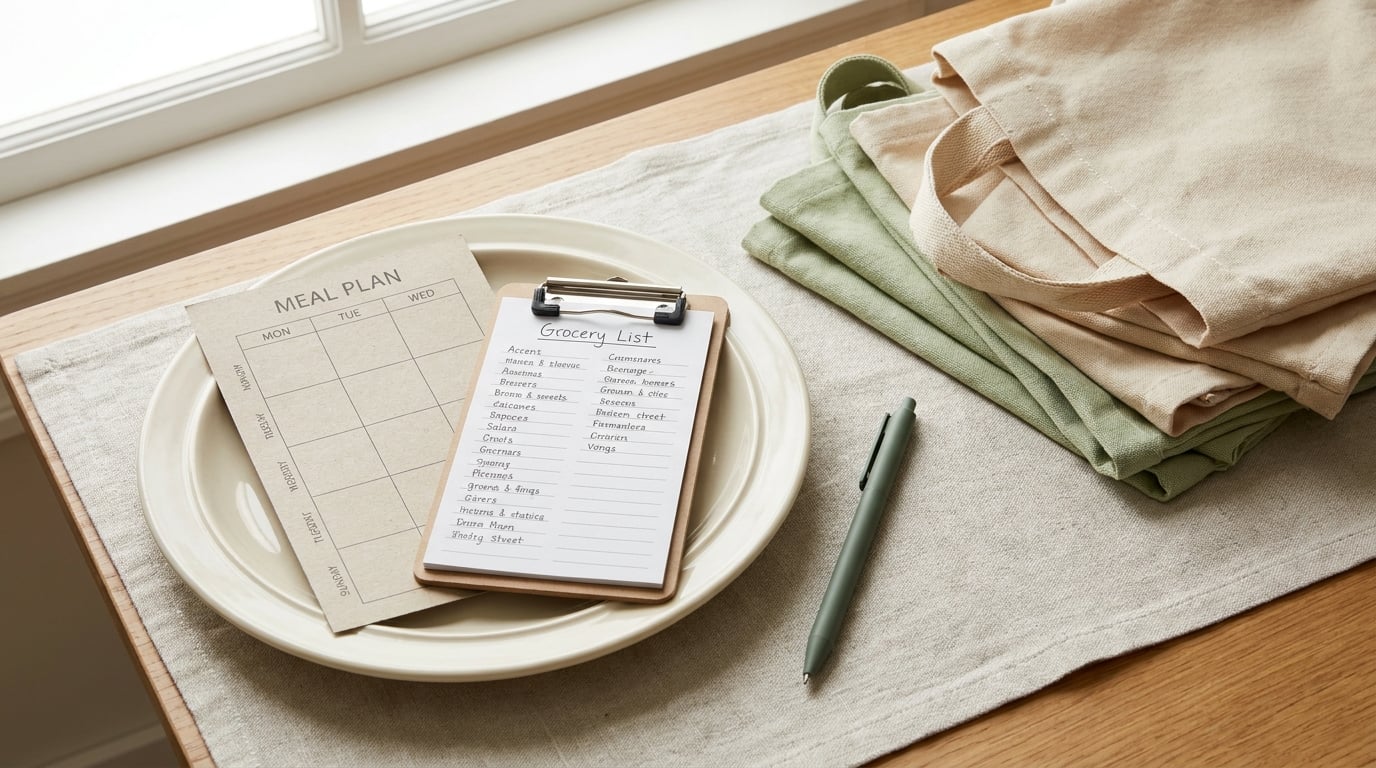
The fastest way to grocery shop with a meal plan is to build the list from the plan, sort it by store section, and walk the store in that order. Most people do it backwards: they plan the week, then shop on autopilot anyway, and the plan quietly falls apart by Wednesday.
Here is the version that works for a house with two working adults and a kid who will not eat anything green. About 25 minutes of planning on Sunday, 40 minutes in the store, and you know what you are cooking all week. If you build your dinners first, our day-by-day weeknight planning guide gives you a clean grid to drop those meals into.
What You Need
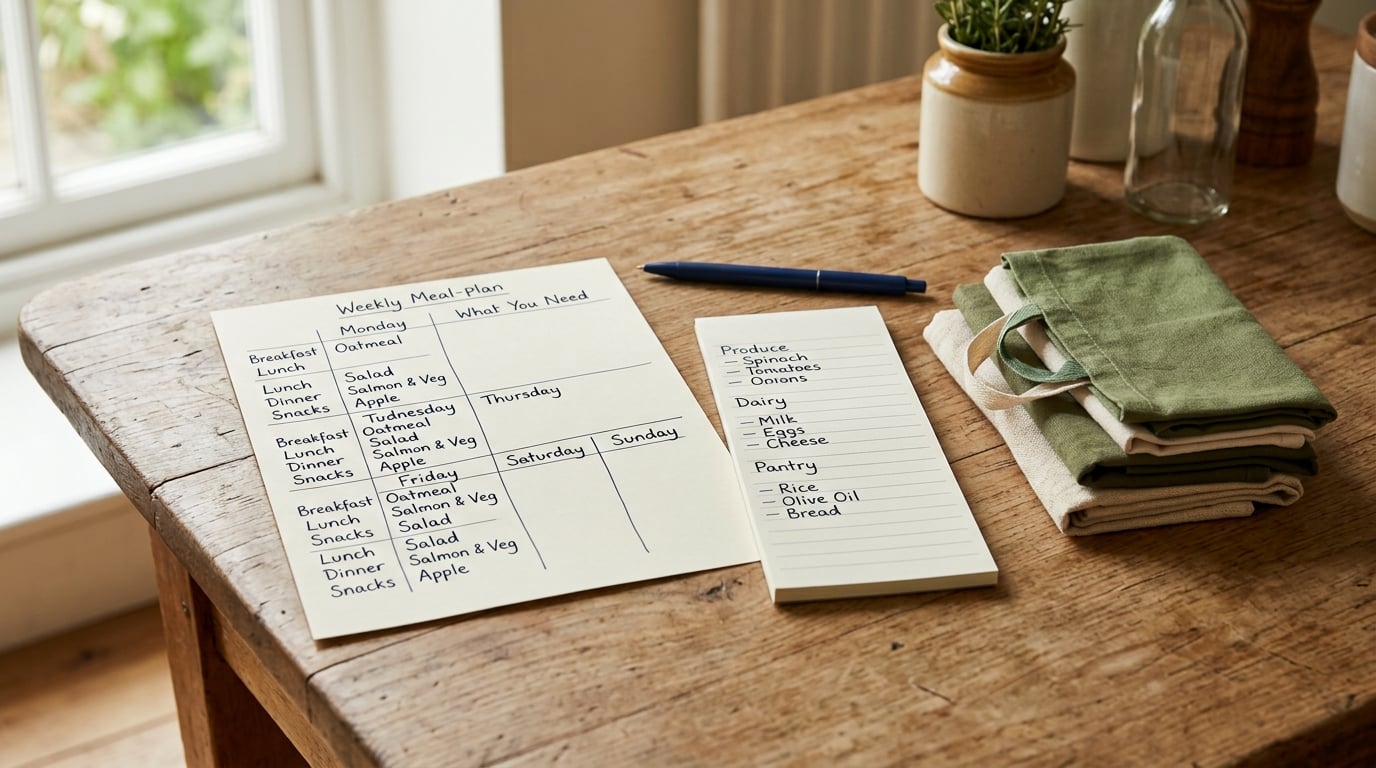
You need less than most people think. A finished week of meals, a list sorted by store section, and one decision made in advance about how you shop.
- A decided meal plan. Five weeknight dinners, a few lunches, and breakfasts. Not a wish list. Decided.
- An inventory of your kitchen. Fridge, pantry, and freezer, checked before you plan, not after.
- Household facts. How many people you feed, who is home on which nights, who is doing the cooking, and any dietary limits.
- Your store’s layout. A quick mental note of where produce, meat, dairy, and the pantry aisles sit relative to each other. Most stores keep the perimeter fresh and push the middle aisles.
- Reusable bags and a way to keep the list cold. A cooler bag if the walk home is more than 20 minutes.
- Your phone or a paper list. Whatever you will actually look at in the aisle. Paper scrolls; phones get left in the pocket.
One rule about the plan itself: it has to be a plan you can cook on your worst night of the week. A Sunday menu with eight from-scratch dinners is not a meal plan, it is a wish.
How to Grocery Shop With a Meal Plan, Step by Step
Choose Meals Before You Build the Grocery List
Choose meals based on the schedule you actually have, not the schedule you wish you had. Then add the foods already in your kitchen as the starting point instead of a problem to work around.
The first pass is the kitchen inventory. Open the fridge, the pantry, and the freezer and write down what is there and what needs to be used first. Half a jar of tomatoes, wilting spinach, rice from last week, chicken stock in the freezer. Those items get planned into the week before anything new does.
Then pick meals that share ingredients. A week built around chicken, rice, and peppers cooks from one small basket of groceries instead of seven unrelated ones. On the working-moms forum, the most copied system was organizing the whole week by protein, then listing only the ingredients not already in the pantry.
Build around what is fresh. A rotisserie chicken plus rice, potatoes, and a bag of vegetables becomes two or three meals for one person, which is how people on r/AskWomenOver30 stretch a single grocery trip. If you are planning a dinner party as well, planning that menu a week ahead changes the rest of your shop, so put it on the same calendar as the weeknight meals.
Combine Ingredients and Plan for Leftovers
Merge the ingredient lists from all your meals into one, then cross each item off against the kitchen inventory you took. A meal that needs garlic you already have does not put garlic on the list.
This is the step that separates a working plan from a wishful one. Most people write a list per recipe and end up with six kinds of vinegar and two bags of onions.
Plan leftovers on purpose. Every dinner you cook should either serve four portions of something else or freeze in single portions. One doubled batch on Sunday covers two lunches and turns a leftover night into a non-event. If dinner is planned for a night when the whole family is out, move that meal and skip the ingredient on the list.
Watch perishables. If you plan three meals that each use fresh spinach, you are buying too much. Spread short-shelf-life produce across days you will actually cook it, put the mushrooms in the first meal after the shop, and save the sturdier carrots for Thursday.
Group the Grocery List by Store Section
A grocery list sorted by store section is faster to shop and dramatically harder to impulse-buy from, because you are looking at one short column of items instead of scanning an undifferentiated wall of paper. This is the single highest-leverage habit in the whole method.
Reorder your merged list into the order you will actually walk the store, and keep the groups in one physical list. It looks like this:
- Produce – vegetables, fruit, herbs, salad items
- Protein – fresh meat, poultry, fish, or the meat counter
- Dairy and chilled – milk, cheese, yogurt, eggs, deli
- Bakery – bread, tortillas, rolls
- Pantry – canned goods, dry pasta, rice, oils, sauces, spices, baking staples
- Frozen – frozen vegetables, fruit, prepared items, your freezer backups
- Household and personal – the non-food items that are why you walked into the store in the first place
One person mentioned on r/Frugal that the fix for overspending is buying meal components instead of loose ideas you might use someday. Sorting the list by section enforces that automatically, because the section is a short, closed list of what this week actually needs.
Shop Your Planned Route and Check Quantities
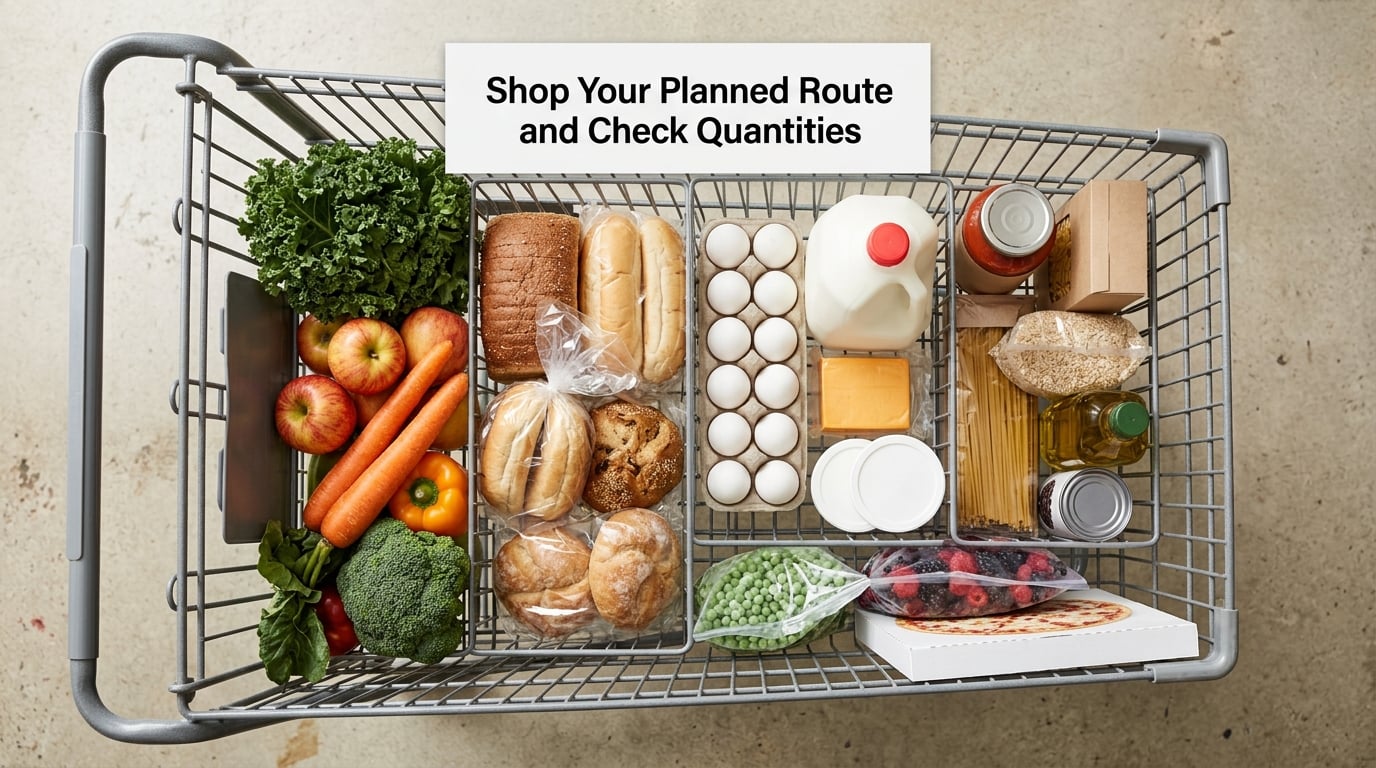
Shop in the order of your list and grab only what is on it. Staples and shelf-stable pantry items first, then dairy, then produce, then frozen, so the cold and delicate things spend the least time unrefrigerated.
That means meat, dairy, and frozen items go in the cart last, and the checkout line stays your only stop before the car. On hot days this matters more than people expect. Keep perishables out of a parked car entirely, including the drive through a fast food line on the way home.
Check quantities as you go, because a list says what you need, not how much comes in the package. Two people need roughly one bag of rice for a week, and a family of four needs closer to two. A small container of spices, a jar of sauce, or a pre-chopped bag of peppers is worth buying on purpose when it saves you 20 minutes and the cutting board cleanup on a Tuesday.
Compare unit prices when you are choosing between sizes or brands, not sticker prices. A larger container is not the better deal if half of it goes into the freezer unused. Store brands in the pantry and spices are the easiest recurring savings, and if a staple is on a stock-up sale, that is the week to buy two.
Substitute deliberately. If the list says spinach and the store has none, choose the substitute you can still cook on Wednesday, then edit the list so you remember the change tomorrow. The plan is allowed to bend. It is not allowed to dissolve because one item was missing.
Store Groceries and Finish the Meal Plan
Put cold and frozen items away first, then unpack the rest. Store raw poultry, ground meat, and seafood on the lowest shelf in a tray or container so nothing can drip onto food below it, and cook poultry to 165 F, ground meat to 160 F, and whole cuts and fish to 145 F.
Realistic fridge times matter more than people expect. Leafy greens and cut produce last three to five days, most raw meats three to five, cooked leftovers three to four, and frozen items stay safe indefinitely as long as they stay frozen.
Then put the plan somewhere you will see it. A photo on the fridge, a card on the table, a note inside the lunch bag. When the 6pm question arrives, the answer should already exist, or nobody is using it.
Keep a small box or bin at the back of the top shelf for the open bag of spinach, the last few carrots, and the half container of rice. That is the use-it-up zone, and it works far better than hiding food in a crisper drawer where it disappears.
Rules That Make the Plan Stick
Two short rules come up constantly in shopping guides and meal-planning videos, and both are simple counting systems rather than strict formulas.
The 5-4-3-2-1 rule is a shopping and planning framework with several versions floating around. The most common grocery version suggests five dinners, four lunches, three breakfasts, two snacks, and one flexible or backup meal for the week, with the leftovers folded in. Read it as a shape for a week, not a law. Families that cook differently will reshape every number and still be following the idea.
The 3-3-3 rule has two meanings worth separating. In the grocery version, it means three vegetables and three proteins across the week, so no single ingredient carries the whole plan. In the meal-prep version, it often means three servings prepared for three different eating occasions. Neither is a rule that improves food. They are just easy memory devices, and that is exactly why they work.
Common Mistakes
Most failed trips come down to one of a handful of predictable mistakes. Each has a simple correction.
Shopping with no finalized plan. You decide what to cook in the aisle, and you decide hungry. Fix: never build a list in the store. If there is no list, you are browsing, and browsing produces a different basket every time.
Buying ingredients in duplicate. You plan five recipes separately and end up with five kinds of the same thing. Fix: merge every meal’s ingredients into one list, then count the duplicates before you write.
Ignoring the pantry and freezer. The cheapest grocery trip is the one you do not take, and the second cheapest is the one where you use the container of stock that has been in the fridge door for three weeks. Fix: inventory first, every time.
Wandering the aisles. A trip without a fixed route is a trip that passes the snack, the bakery, and the seasonal end caps in no particular order. Fix: walk your section order. It is faster and it is the single best defense against the impulse buy.
Planning meals nobody will cook. The single biggest failure driver is ownership, not recipes. Posters on the working-moms forum describe plans that collapsed because the cooking and the shopping were never assigned to a named person. Fix: name who cooks each night before you plan it.
Neglecting storage. A perfectly planned shop fails if the food sits. Fix: refrigerate and freeze on arrival, and check the fridge for the use-it-up box every time you open it.
A few smaller habits pay off too. Shop on a fixed day and time, so it stops being a decision. Have a snack before a long shop. Keep one backup meal in the pantry with its ingredients on hand at all times, which is the plan-B slot that saves the night when everyone is exhausted.
None of this requires a big freezer. One home cook told me his chest freezer is a single wire rack, and he still freezes portioned meals from one Sunday cook a month. For large households, forum regulars on the Well-Trained Mind forum freeze meal starters rather than full meals, which take up a fraction of the space.
Frequently Asked Questions
Should I grocery shop once a week or twice?
Once a week is easier to keep up and works for most households, especially when one person does the cooking. Shop twice when the drive or walk is short and your fridge space is tight, since a split shop means less produce going bad between trips. A monthly shop only works if you have real freezer capacity and plan nearly every meal around frozen or shelf-stable food. Pick the cadence you can actually maintain, not the one that sounds most efficient.
How do I handle it when the meal plan falls apart mid-week?
Keep one plan-B meal in the pantry with its ingredients always stocked, so substitution costs nothing. When a scheduled dinner falls through, move a later meal forward instead of inventing a new one, and use the use-it-up box for anything that is about to turn. The plan should flex; the habit of cooking from a list is the part that matters. Most people who abandon meal planning do it because the plan had no room to change.
Should I use coupons and sale cycles when following a meal plan?
Yes, but only on items your plan already calls for. A coupon cannot fix a meal you decided not to cook, and shopping a sale outside the plan is how the trip drifts. The practical move is to run your pantry staples on a stock-up cycle: note the regular price of the items you buy every week, and buy extra when they go on sale. Keep those extras in the freezer, pantry, or use-it-up box so the deal does not become waste.
How do I shop with a meal plan as one person?
Plan for two nights out of every meal and freeze the second portion immediately, which turns one cook into two meals. Shop from a short list with three proteins and three vegetables rather than a full week of variety, and re-shop twice a month instead of once a week. Cook from the plan in an order that front-loads the freshest items. If your kitchen is small, people cooking in mini-fridges lean on dry, canned, and frozen food that does not spoil quickly.
How do I reduce food waste while grocery shopping on a plan?
Plan meals around the oldest items in your kitchen first, not the freshest. Buy package sizes you can finish before the shelf life runs out, and freeze portions the week you bring them home. Keep a use-it-up box at the back of the fridge and check it every time you open the door. When you shop, buy produce for the meals you have already scheduled rather than for a meal you might make. Most waste happens between the plan and the fridge, not at the store.
Conclusion: Start With Your Next Three Meals
Learning how to grocery shop with a meal plan comes down to five moves: inventory the kitchen, choose meals that share ingredients, merge and sort the list by store section, walk the store in that order, and put everything away where the plan can find it next week.
Do not start with a month. Open the fridge, the pantry, and the freezer, then plan the next three meals around whatever needs using up. Build a section-sorted list from those three meals, take one calm trip, and see how the week goes. If you shop a market or produce box instead of a store, the same logic applies with a different layout, as our first-time farmers market guide covers.