
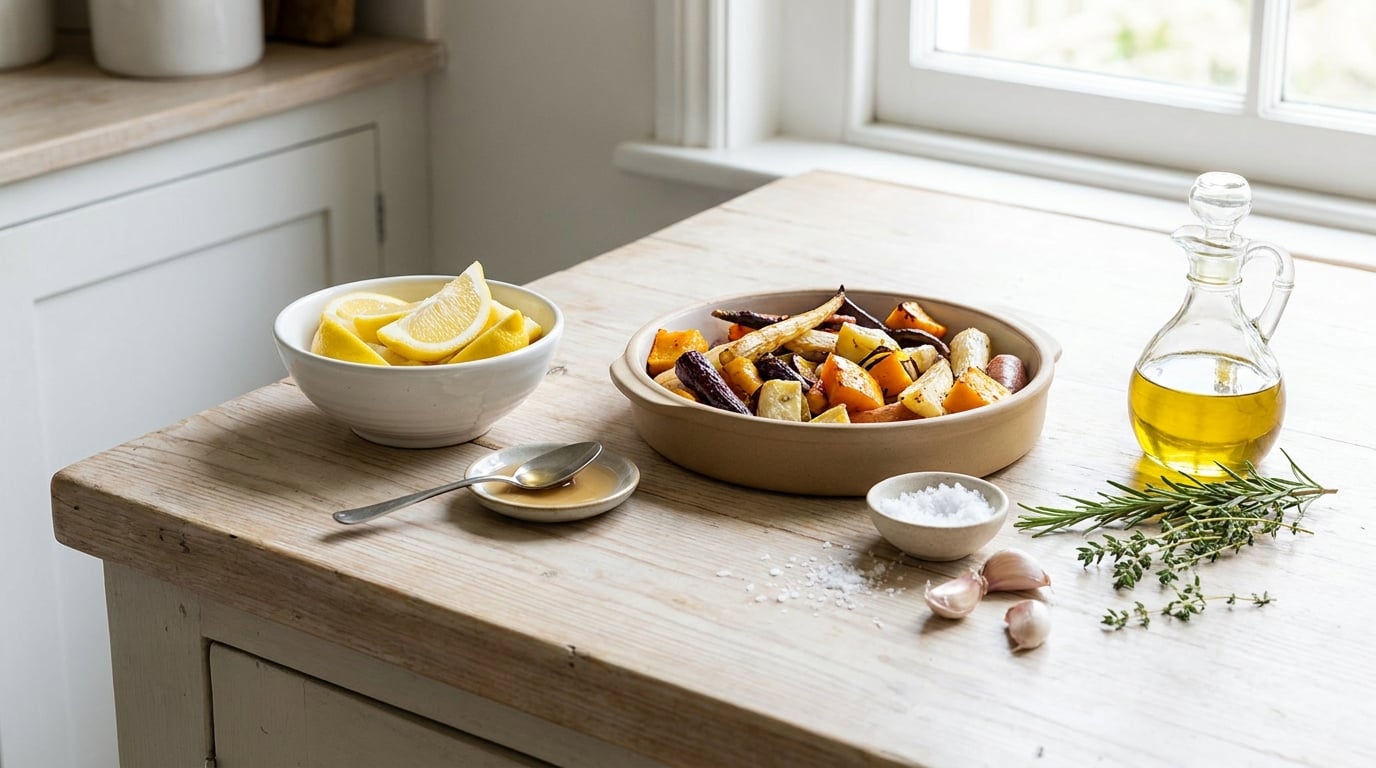
If a dish tastes flat, the answer is almost never a new recipe. Knowing how to fix a bland dish quickly means seasoning with salt first, then acid, then aroma, then richness, and finishing with texture or heat, tasting after every single change. Most rescues take about a minute at the stove.
I’ve cooked enough meals to know the moment: you take a bite, make a face, and the pan is still on the burner. That is the best possible time to fix it, because everything you need is either in the fridge or in the cupboard. Below is the order I work in, with the amounts I use.
Last updated: October 2026.
What You Need
You need far less than a full pantry. Six groups cover almost every rescue, and for most flat dishes one or two of them is all it takes.
- Salt: fine sea salt or kosher salt for everyday seasoning, plus flaky salt for finishing. A small pinch is a quarter teaspoon; that is usually the right first move.
- Acid: fresh lemon or lime juice, rice vinegar, red wine vinegar, sherry vinegar, apple cider vinegar, or a quick splash of pickle brine.
- Aromatics: garlic, onion, ginger, scallions, fresh herbs, whole spices, and dried spices that still smell when you open the jar.
- Richness: butter, olive oil, cream, grated Parmesan, a Parmesan rind, toasted nuts, or a spoon of nut butter.
- Umami: soy sauce, tamari, miso, tomato paste, Worcestershire sauce, fish sauce, dried mushrooms, or a pinch of MSG.
- Texture and heat: toasted nuts or breadcrumbs, fried onions, cracked pepper, chilli flakes, paprika, or a chilli oil.
Before you open the salt, run the test that cooks on r/Cooking keep recommending: spoon a small amount of the dish into a bowl and keep adding salt until it is definitely, obviously too salty. If it still tastes flat at that point, salt was never your problem. Go straight to acid or umami and save yourself the ruined pot.
Vegetarians can use the whole list. Swap fish sauce for soy plus a small splash of mushroom or mushroom-based Worcestershire, and use miso, tomato paste, or dried mushroom powder in place of anything meat-derived.
Step-by-Step: How to Fix a Bland Dish Quickly
Work top to bottom and stop as soon as the dish tastes right. Each fix targets a different missing element, so adding all of them at once just makes a muddy, salty bowl you cannot diagnose.
Taste and Correct the Seasoning
Add a quarter teaspoon of salt, stir it through, then wait about twenty seconds before tasting again. Salt needs a moment to dissolve and reach the whole dish, and judging it too early is the most common reason people think salt isn’t working and pour on more.
If the salt test says salt is the answer, add another pinch and wait. If the dish tastes flat even when it is clearly salty, it is not a salt problem; move on. A dish can be salty and still be one-dimensional, which usually means the salt is masking a missing acid or missing depth rather than providing any.
Add Acid to Wake Up Flat Flavors
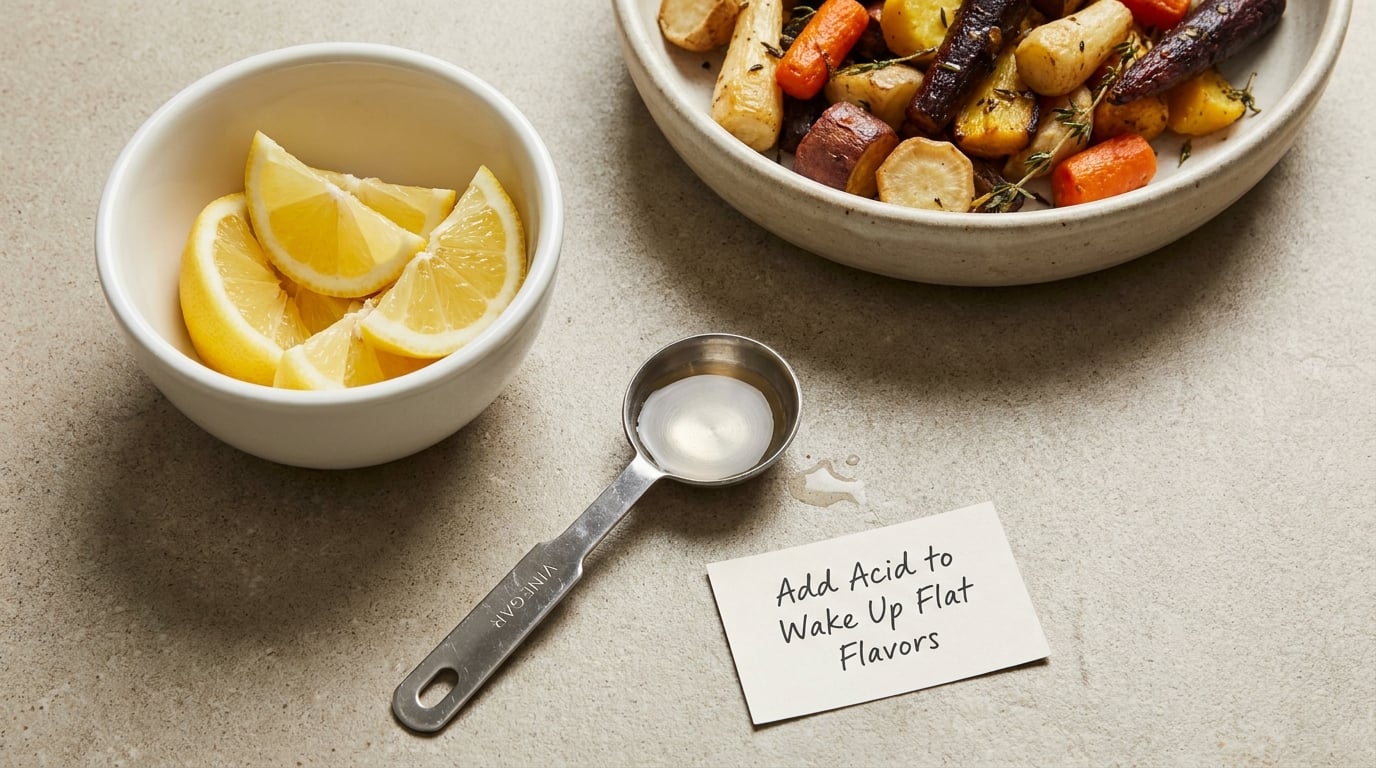
Acid is the fastest fix and the most underused one. It does two jobs at once: it cuts through fat, and it makes your mouth water so every other flavour registers more strongly. Start with the juice of half a lemon, or a teaspoon of vinegar, stir it in, and taste before adding more.
Match the acid to the dish. Rice vinegar is clean and mild for rice bowls, stir-fries and dressings. Red wine vinegar works in tomato sauces and stews. Cider vinegar brings a soft fruit note to braises and pickles. A spoonful of pickle brine does the job of a vinegar with salt and spice already in it.
Add acid near the end of cooking, not at the start. Boiling for twenty minutes flattens the brightness out of most vinegars, and citrus added early tastes cooked. The exception is a long braise, where a splash of vinegar early does help soften the meat.
One caution: acid in a dish that is already too salty can make it worse, so run the salt test first if the pot looks heavily seasoned.
Build Aromatic Flavor
Aromatics add a layer you are missing. Sauté minced garlic, onion or ginger in the fat already in the pan for a minute until the kitchen smells like something worth eating, then fold it back into the dish. For a cold dish, a teaspoon of minced raw onion or a spoonful of green onion mixed in at the table does the same job.
To bloom spices rather than scatter them, warm them briefly in oil or butter before they go into the dish; thirty to sixty seconds in a hot pan wakes up the oils that carry the aroma. Ground spices left sitting in a cold pot for an hour mostly go dusty, so add them to hot fat, not to a cold sauce.
Save delicate fresh herbs for the end. Basil, parsley, cilantro and mint lose their aroma within a minute or two of cooking, and stirring them in at the table keeps them bright.
If you suspect the spice itself is the problem, open the jar and smell it. Ground spices go flat long before the best-before date, and a stale cumin or paprika is a common reason a curry tastes muted no matter how much you add.
Introduce Richness or Body
Richness makes a thin dish feel finished rather than watery. Whisk a knob of cold butter into a hot sauce, add a spoonful of cream or crème fraîche to a soup, or finish with a drizzle of good olive oil and a few flakes of Parmesan. A tablespoon of nut butter stirred into a stew or a bowl of roasted vegetables does the same job in a pinch.
Use fat deliberately. Olive oil carries aroma compounds your tongue cannot taste on its own, which is why a dish that tastes flat right up until you add oil suddenly works.
But do not add fat to everything. If the problem is stale flavor, an overcooked vegetable, or saltiness, fat will coat the dish and blunt the other flavors instead. Fix the balance first, then decide whether mouthfeel is really missing.
Finish with Texture, Freshness, or Heat
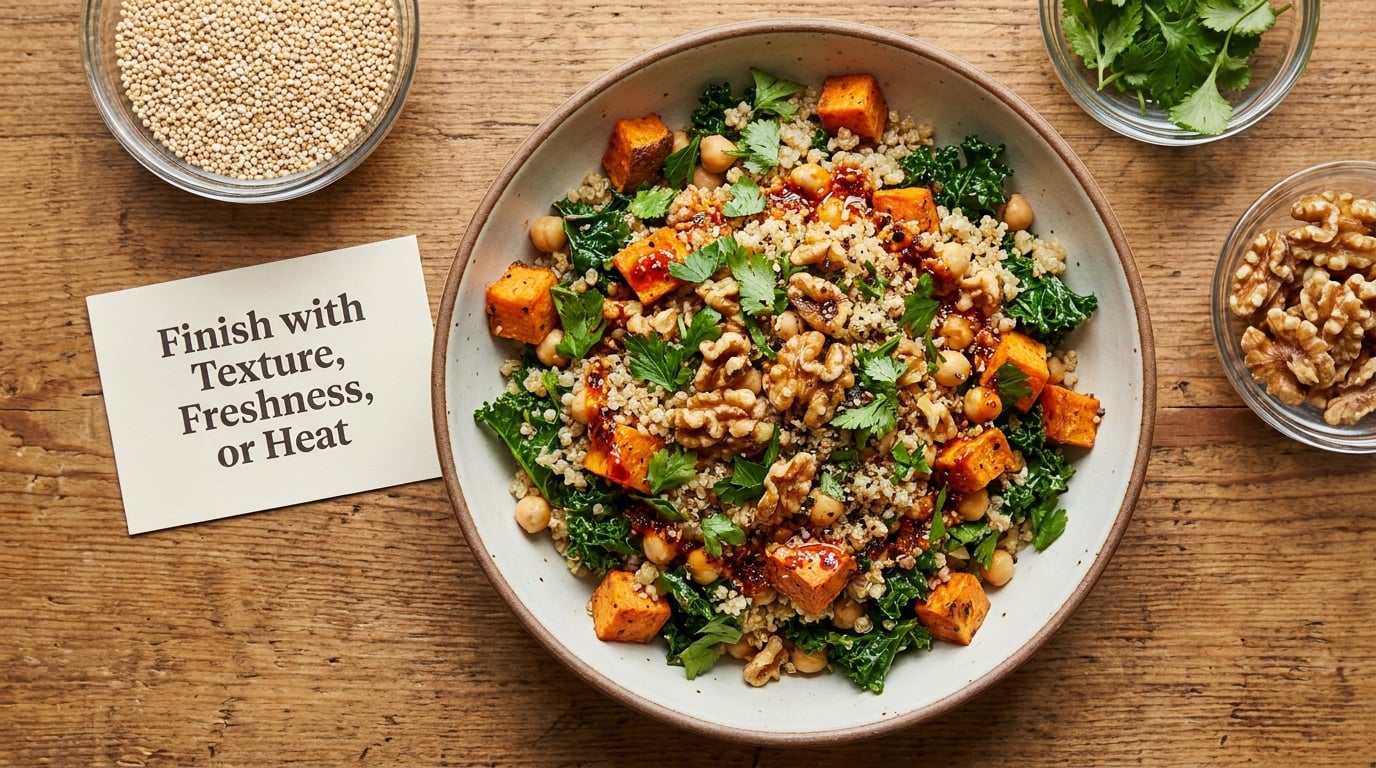
Texture is what makes a rescued dish memorable. Toast a handful of nuts or breadcrumbs in a dry pan and scatter them over, or fry sliced onions until crisp. Fresh raw elements do the same job: chopped herbs, grated raw cabbage, quick-pickled onions, or a squeeze of fresh lime on roasted vegetables.
Heat is a flavour, not just a burn. Cracked black pepper, chilli flakes, a pinch of Aleppo pepper or a spoonful of chilli oil add a slow warmth underneath, and people on the ChronofHorse forums cook with the same instinct: build seasoning during cooking, then hold some back and add the heat at the end so it stays sharp.
Keep toppings in proportion. A garnish that covers the dish in a single layer works; a bowl buried under toppings is hiding a problem you have not solved yet, and it will taste exactly as unbalanced as it did before.
Common Mistakes
Fixing everything at once. Salt, vinegar, soy and chilli oil all in the same pot, then tasting once, is the single most common way a rescue turns into a mess. Make one change, taste, then decide what the dish still needs. It takes an extra minute and it is the difference between a correction and a rewrite.
Over-salting and blaming the recipe. If a dish is already too salty, more salt will not bring other flavors forward, and there is no walking it back. Pull some of the sauce out and dilute the rest with unsalted stock, water or cream, then brighten with acid.
Using stale spices. Ground spices fade within months of opening once the aroma is gone, and no quantity of a flat spice will fix the dish. Replace them, and add the new ones earlier in cooking than feels natural so they have time to bloom.
Saving unpleasant food with toppings. Wrapping an overcooked, oversalted dish in cheese and sour cream hides the problem for two bites and then reveals it. If the base is genuinely bad, the honest answer is that it is not rescuable and the next attempt should start from a different base.
Not tasting until the end. Seasoning only at the end means every correction is a correction to the whole dish at once. Taste at every stage, with a clean spoon, and remember that flavors are stronger in a hot pan than they will be on the plate once the food cools.
Chasing heat when the dish is flat. More chilli does not add depth, it only adds burn. If the dish is missing something, work down the order: salt, acid, aroma, richness, texture. Heat is last, not first.
A final balance check takes five seconds: is anything single-handedly dominating, and is anything absent? Too acidic gets a little sweetness or fat, too bitter gets fat or sweetness, too rich gets acid, and too flat goes back to the list above in order.
Frequently Asked Questions
What should I try first when food tastes bland?
Taste it plainly, then add a quarter teaspoon of salt and wait twenty seconds before tasting again. Salt multiplies whatever is already there, so it is the cheapest test of whether the dish is simply under-seasoned. If it still tastes flat when it is clearly salty, stop adding salt and move to acid: the juice of half a lemon or a teaspoon of vinegar will do more than another pinch of salt.
Does lemon juice work on every dish?
No. Acid makes dairy and eggs curdle, so it is wrong for a finished cream sauce, a custard, or scrambled eggs stirred off the heat. It is excellent on roasted vegetables, grains, fish, greens and sauces. For a dish that already has a lot of acid, like a tomato sauce, a non-citrus vinegar such as red wine vinegar adds depth without souring. Add it near the end so it stays bright.
How do I rescue food that is too salty?
Remove some of the dish and dilute what remains with something unsalted: stock, water, cream, rice or potatoes for a stew, more unsalted rice for a rice bowl. Then add acid, which makes saltiness read as seasoning rather than as salt, and a little fat such as butter or olive oil, which rounds the edges off. Adding more salt or more soy sauce to an already salty dish is the wrong direction.
How do I spice up a bland stew or soup?
Simmer it with aromatics, then correct in order. Add a splash of red wine vinegar or Worcestershire sauce for depth, a spoonful of tomato paste or miso for umami, and salt in small amounts until the stew tastes complete rather than salty. A spoon of cream or butter stirred in at the end gives it body. Finish with fresh herbs off the heat, and taste again after each change.
Can a bland dish still be fixed after it has been served?
Yes, and leftovers are actually easier to fix than a dish you are still cooking. Reheat them, then add what is missing: acid for a flat stew, soy sauce and a splash of hot water for leftover fried rice or chicken, a spoon of miso for a pot of soup. Reheat leftovers to 165 degrees Fahrenheit before serving, and add fresh herbs and crunch only after reheating, since heat and time flatten them.
Conclusion
Taste, then salt, then acid, then aroma, then richness, then texture. That order is the whole method, and the only rule that makes it work is one change at a time, with a taste in between. Most dishes stop tasting flat within the first two adjustments, and the ones that need more are usually missing something in the cupboard you already own.